
Chapter 3 Business Models Traditional Organizational Structure Vertical
Chapter 3 Business Models
Traditional Organizational Structure Vertical and hierarchical. Function-based. Product-base
Forcing Business Changes for New Busine Competition fiercer and more global. Customers become in possible by the development of information technology
New Organizational Structure Hierarchical, procedural and other new coordination
Business Model Timmers (1999) defines a ‘business model’ as: An architecture for product, service and informatio
Business Model business model takes a central position in a business strategy. Business • –The internal aspects of a business venture; The type of relationships o product or service that a company deliverssources of revenuecompan •
8 Key Elements of a Business Model 1. Value proposition. Revenue model. Market opportun
1. Value Proposition • Why should the customer buy from you? Successful –Personalization/customization. Reduction of product search
2. Revenue Model • How will the firm earn revenue, generate profits, an –Advertising revenue model. Subscription revenue model. Transaction fe
3. Market Opportunity • What marketspace do you intend to serve and what –Marketspace: Area of actual or potential commercial value in which c
4. Competitive Environment • Who else occupies your intended marketspace? –Other companies selling similar products in the same marketspace. Inc
5. Competitive Advantage • Achieved when firm: –Produces superior product or Can bring product to market
6. Market Strategy • How do you plan to promote your products or servic –Details how a company intends to enter market and attract
7. Organizational Development • What types of organizational structures within the f –Typically divided into functional departments. As company grows, hirin
8. Management Team What kinds of experiences and background are impo Employees are responsible for making the business model work. Strong
e Grocers: Finding and Executing the Right M Why are more traditional grocery chains succeeding online today? W •
Business Models – 3 perspectives • participants in a joint business venture. processes an
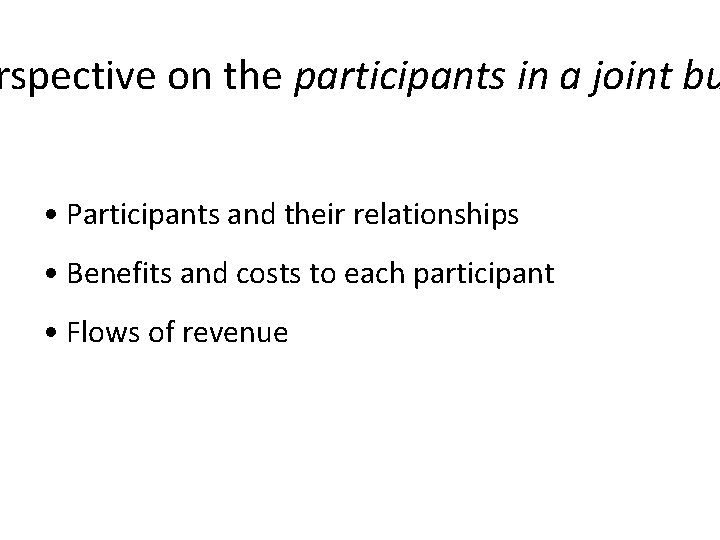
rspective on the participants in a joint bu • Participants and their relationships • Benefits and costs to each participant • Flows of revenue
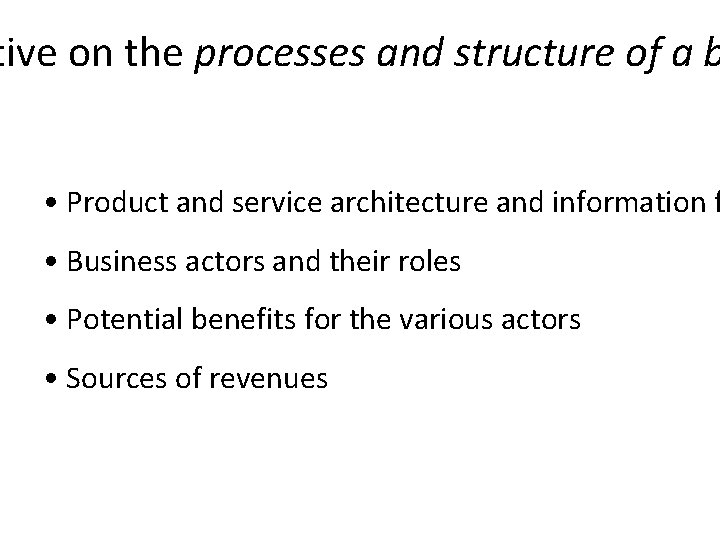
tive on the processes and structure of a b • Product and service architecture and information f • Business actors and their roles • Potential benefits for the various actors • Sources of revenues
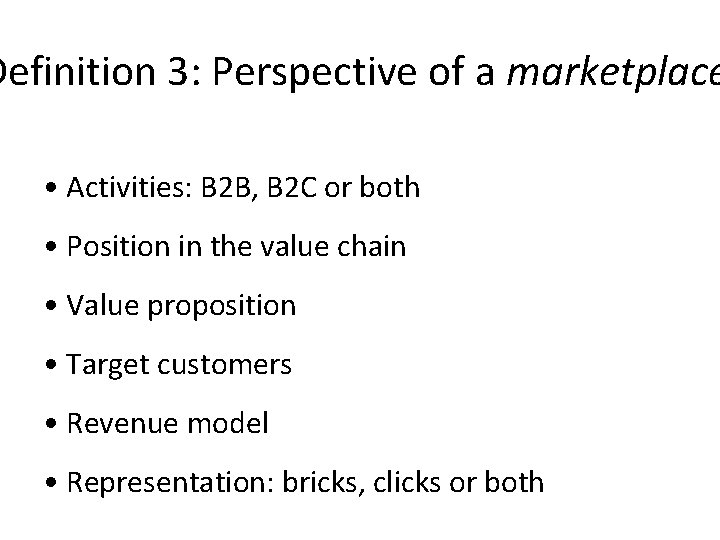
Definition 3: Perspective of a marketplace • Activities: B 2 B, B 2 C or both • Position in the value chain • Value proposition • Target customers • Revenue model • Representation: bricks, clicks or both
5 e-Business Models Classifications • Internet-enabled. Value-web. E-business enabled. Mark
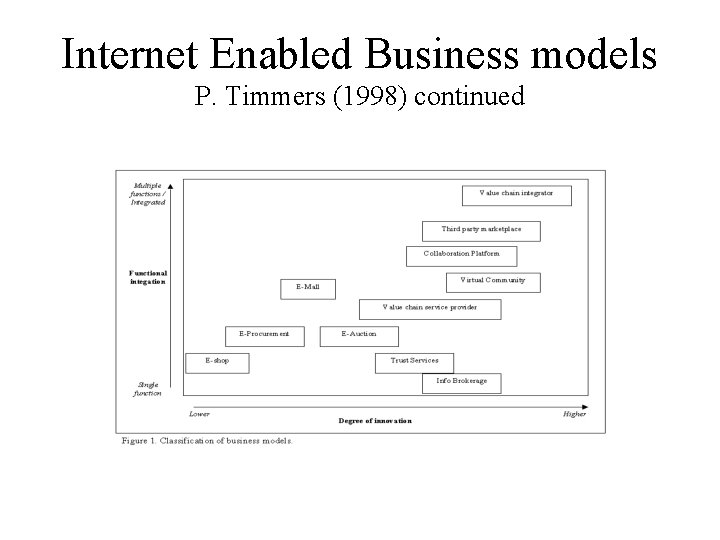
Internet Enabled Business models P. Timmers (1998) continued
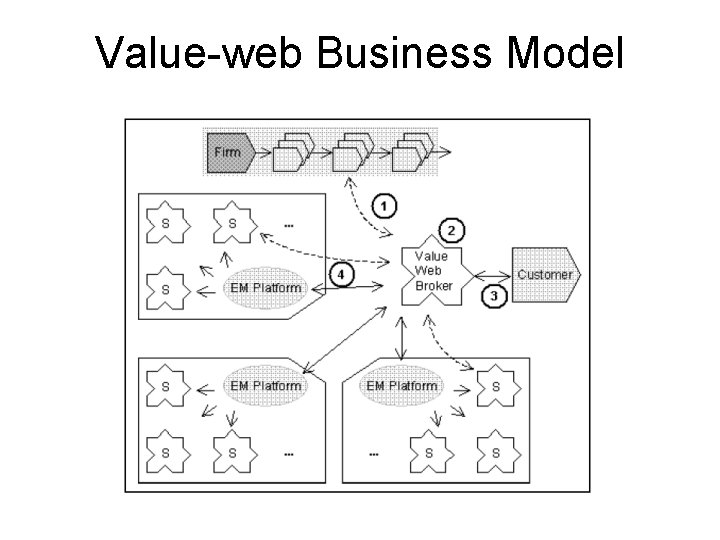
Value-web Business Model
Family of e-Business Enabled Business Mo • Classification scheme of business models that is esp –Tele-working. Virtual organization. Process outsourcing. Collab
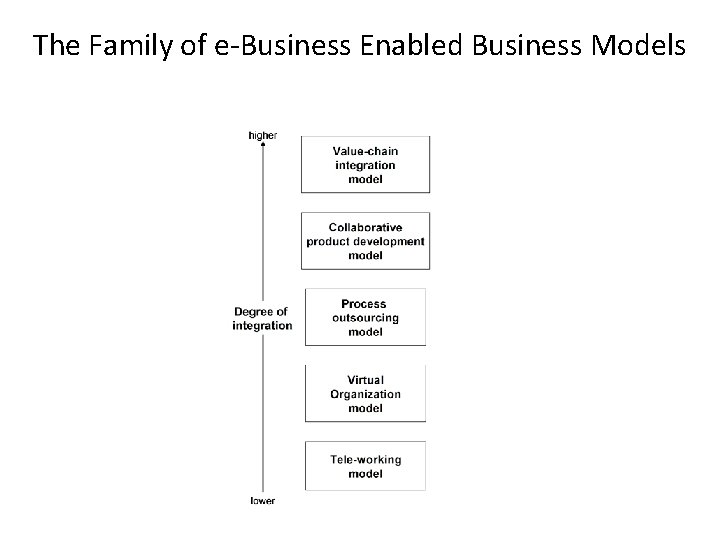
The Family of e-Business Enabled Business Models
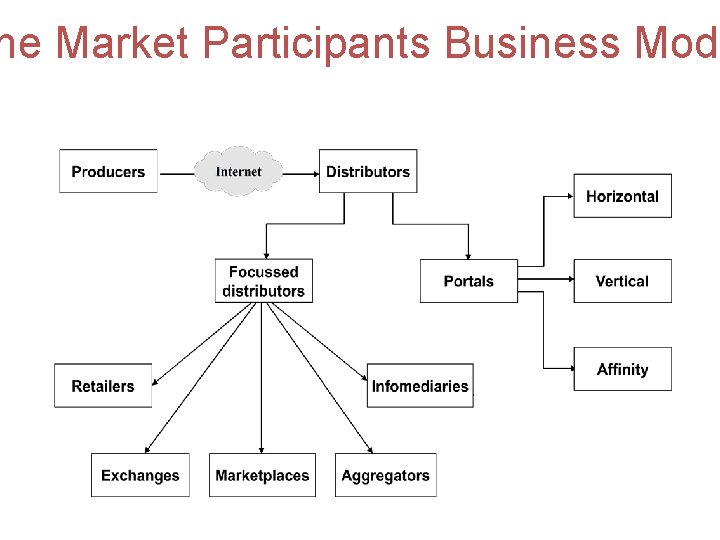
he Market Participants Business Mode
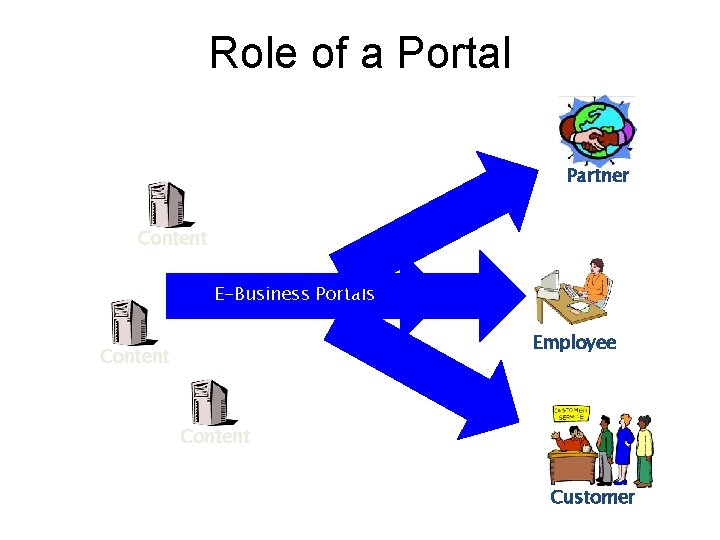
Role of a Portal Partner Content E-Business Portals Employee Content Customer
Three Types of Portals Horizontal Portals. Vertical Portals. Affinity Portals
Cybermediaries Business Model Cybermediaries Intermediation in electronic markets. Facilate exchanges betw
- Slides: 29