
CHAPTER 3 BIODIVERSITY BIODIVERSITY Living things organisms About
CHAPTER 3 BIODIVERSITY
BIODIVERSITY �Living things = organisms �About 10 -10000 million kinds of organisms living on earth �Less than 2 million kinds have been identified �Biodiversity = The wide variety of organisms on earth �Different organisms have different characteristics to enable them to adapt and survive in their habitats
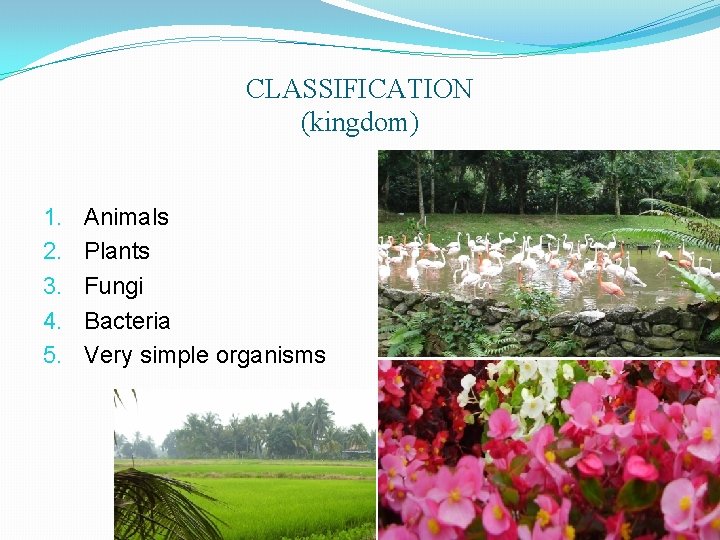
CLASSIFICATION (kingdom) 1. 2. 3. 4. 5. Animals Plants Fungi Bacteria Very simple organisms
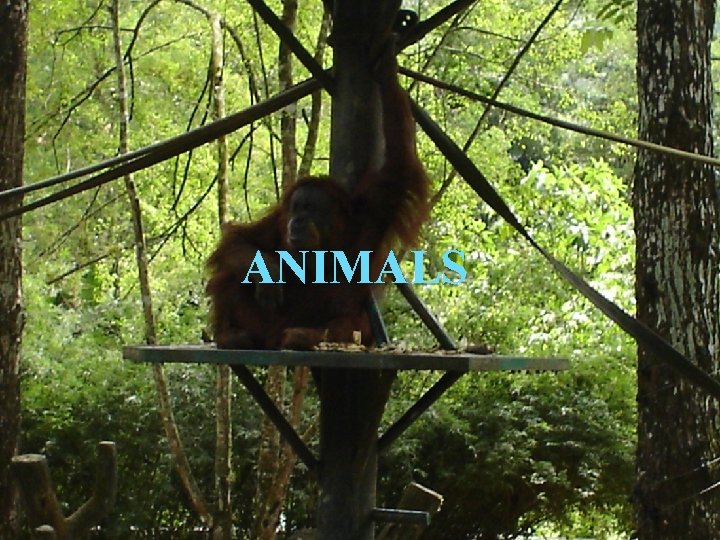
ANIMALS

CLASSIFICATION OF ANIMALS Vertebrates (With backbone) Amphibian Fish Birds Mammals Invertebrates (Without backbone) Reptiles
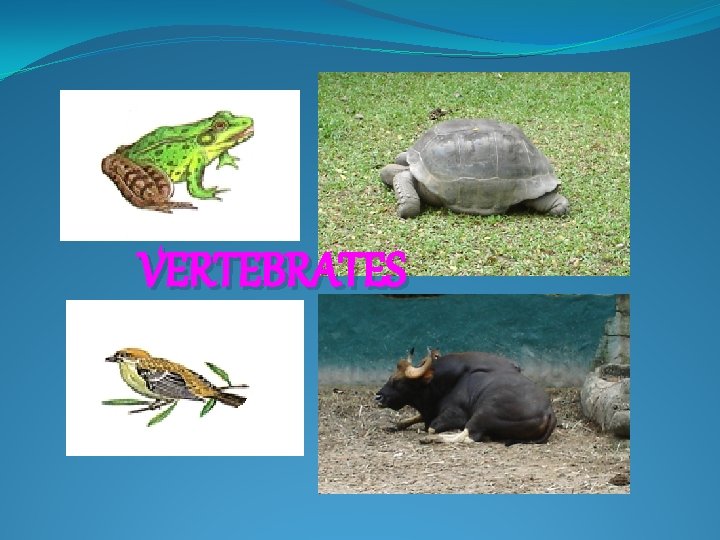
VERTEBRATES
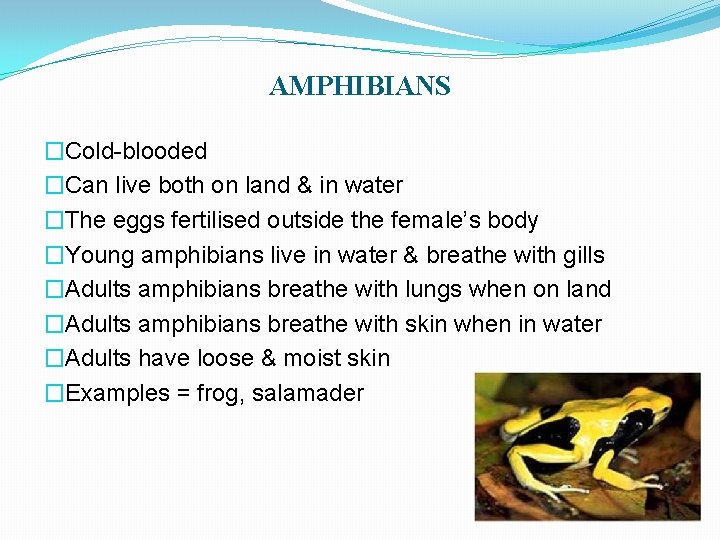
AMPHIBIANS �Cold-blooded �Can live both on land & in water �The eggs fertilised outside the female’s body �Young amphibians live in water & breathe with gills �Adults amphibians breathe with lungs when on land �Adults amphibians breathe with skin when in water �Adults have loose & moist skin �Examples = frog, salamader
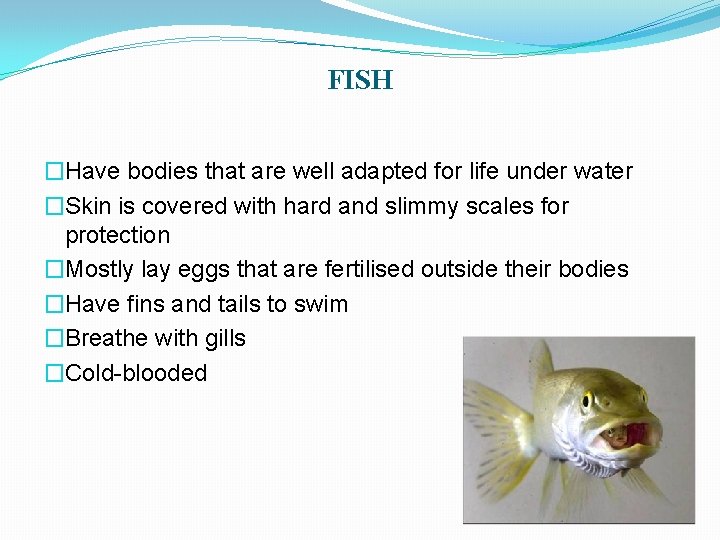
FISH �Have bodies that are well adapted for life under water �Skin is covered with hard and slimmy scales for protection �Mostly lay eggs that are fertilised outside their bodies �Have fins and tails to swim �Breathe with gills �Cold-blooded
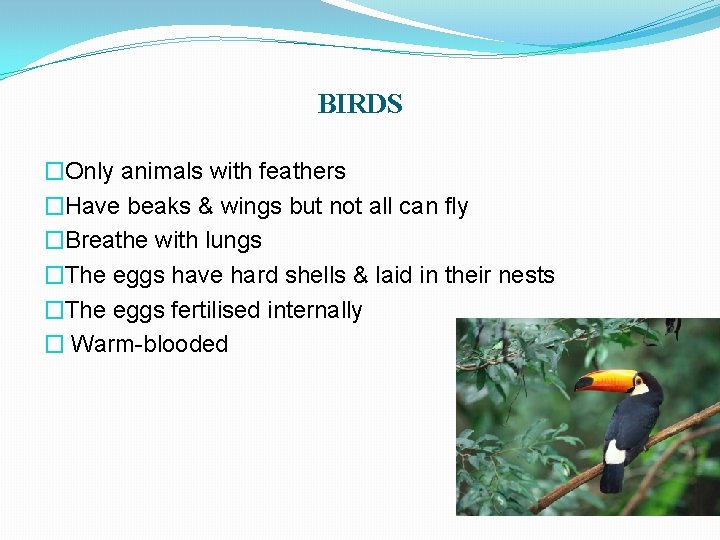
BIRDS �Only animals with feathers �Have beaks & wings but not all can fly �Breathe with lungs �The eggs have hard shells & laid in their nests �The eggs fertilised internally � Warm-blooded
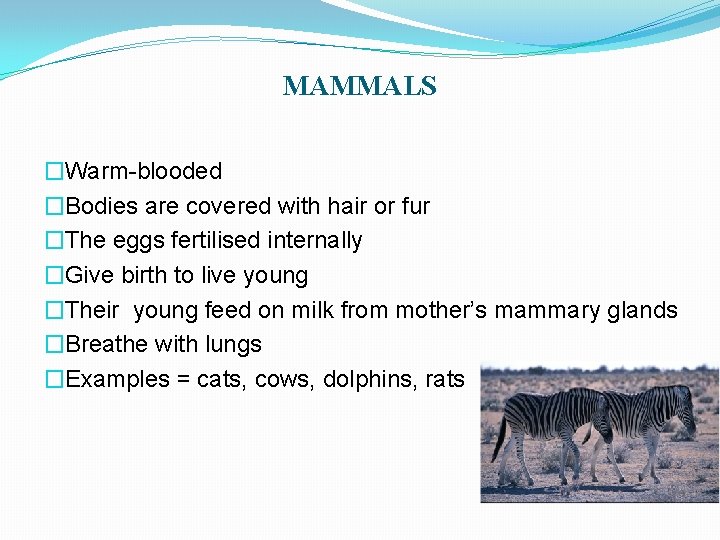
MAMMALS �Warm-blooded �Bodies are covered with hair or fur �The eggs fertilised internally �Give birth to live young �Their young feed on milk from mother’s mammary glands �Breathe with lungs �Examples = cats, cows, dolphins, rats
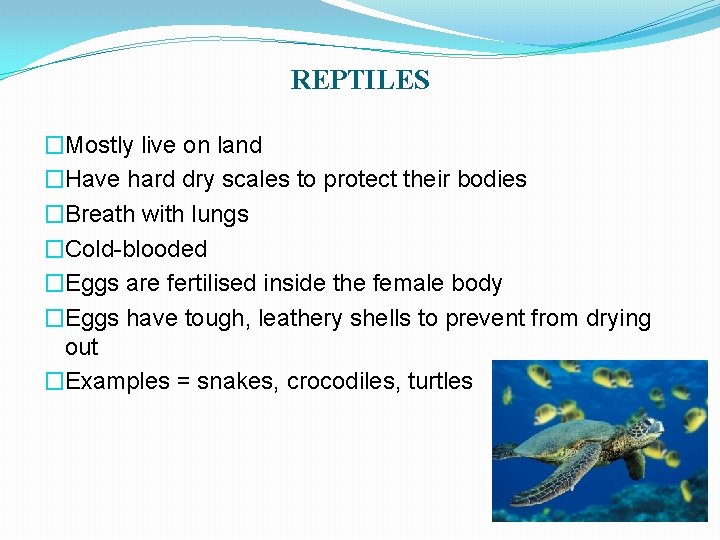
REPTILES �Mostly live on land �Have hard dry scales to protect their bodies �Breath with lungs �Cold-blooded �Eggs are fertilised inside the female body �Eggs have tough, leathery shells to prevent from drying out �Examples = snakes, crocodiles, turtles
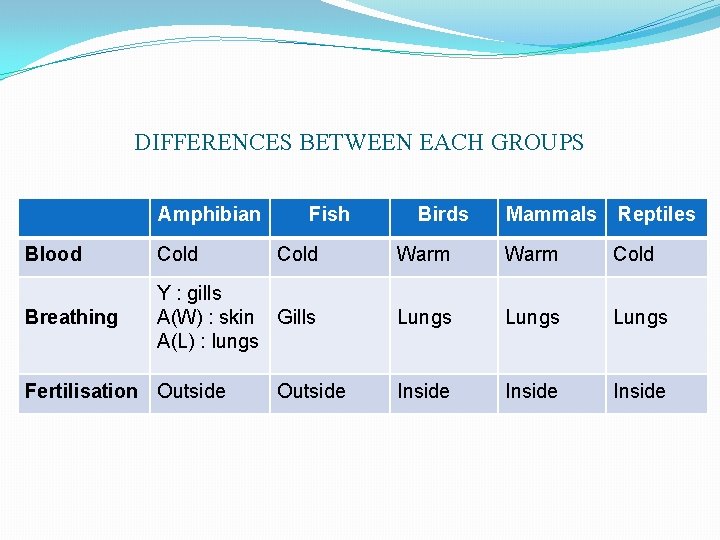
DIFFERENCES BETWEEN EACH GROUPS Amphibian Fish Birds Mammals Reptiles Blood Cold Warm Cold Breathing Y : gills A(W) : skin Gills A(L) : lungs Lungs Inside Fertilisation Outside
PLANTS
CLASSIFICATION OF PLANTS �Classify into 2 big groups : flowering plants & nonflowering plants �Flowering plants produce flowers. Flowers produce fruits and seeds. �Non-flowering plants = conifers, ferns, mosses, algae �Conifers = pine trees, casuarina trees �Ferns & mosses reproduce by spores �Algae = phytoplankton, seaweed
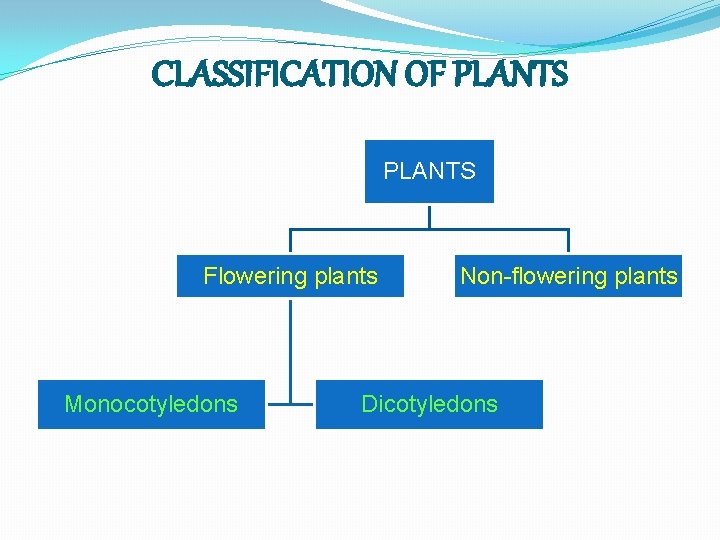
CLASSIFICATION OF PLANTS Flowering plants Monocotyledons Non-flowering plants Dicotyledons
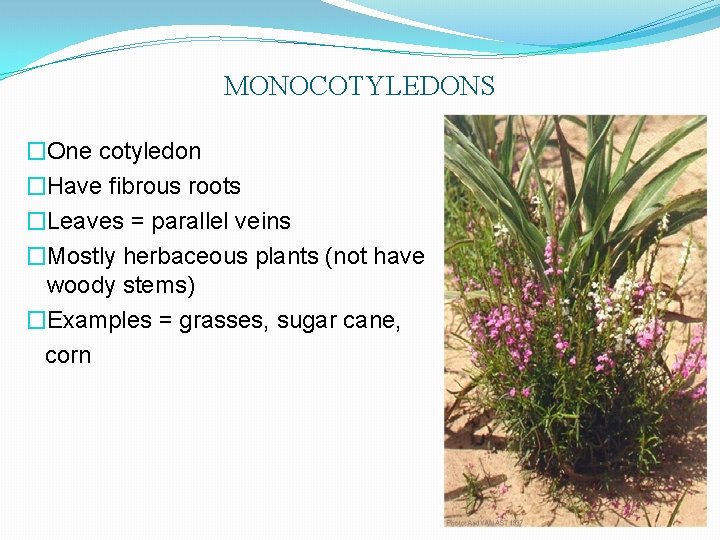
MONOCOTYLEDONS �One cotyledon �Have fibrous roots �Leaves = parallel veins �Mostly herbaceous plants (not have woody stems) �Examples = grasses, sugar cane, corn
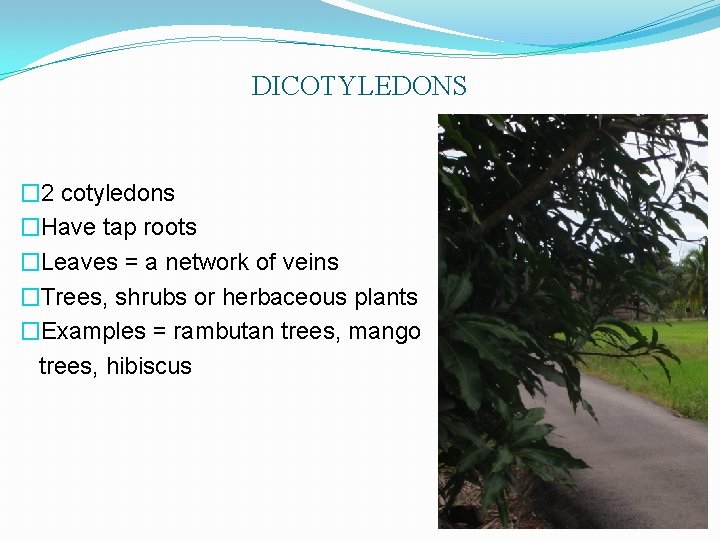
DICOTYLEDONS � 2 cotyledons �Have tap roots �Leaves = a network of veins �Trees, shrubs or herbaceous plants �Examples = rambutan trees, mango trees, hibiscus
THE IMPORTANCE OF BIODIVERSITY
BENEFITS OF BIODIVERSITY 1. Source of food : Different food, different nutrients 2. Source of materials : Houses, furniture, handicrafts, textiles 3. Source of medicine : Modern & traditional medicines 4. Clean water : Drink, bathe, grow crops 5. Air to breathe : Circulation of oxygen and carbon dioxide
Rio earth summit (june 1992) 1. 2. 3. 4. To protect and manage habitats To educate people To use animals, plants, lands and water wisely To protect threatened species
- Slides: 20