
Chapter 3 Atomic Theory Early Theories 4 elements
- Slides: 75
Chapter 3 Atomic Theory
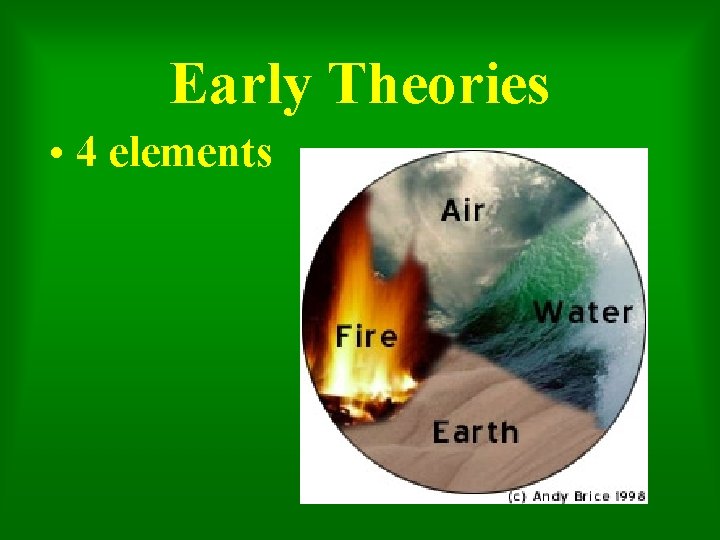
Early Theories • 4 elements
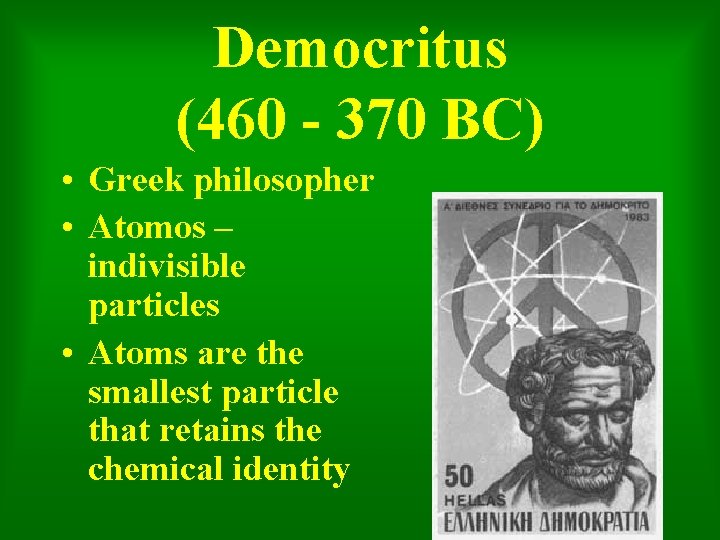
Democritus (460 - 370 BC) • Greek philosopher • Atomos – indivisible particles • Atoms are the smallest particle that retains the chemical identity
The Greeks Used Logic • The Greeks also believed in a combination of elements to make new things. • For example: Water and Earth = Mud • Mud might just seem like a nuisance to us, but back then it was a building material. • Fire and Earth made Lava. • If you are curious check out the Little Alchemy app (game) that can be found in Google Apps. It is a fun game.
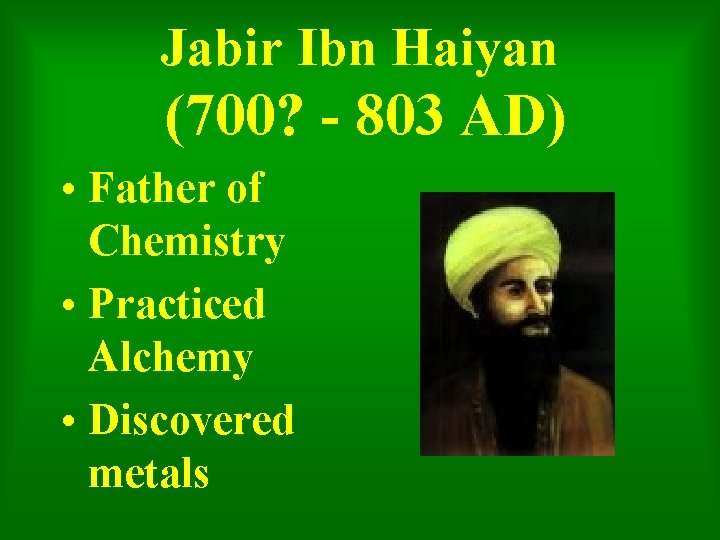
Jabir Ibn Haiyan (700? - 803 AD) • Father of Chemistry • Practiced Alchemy • Discovered metals
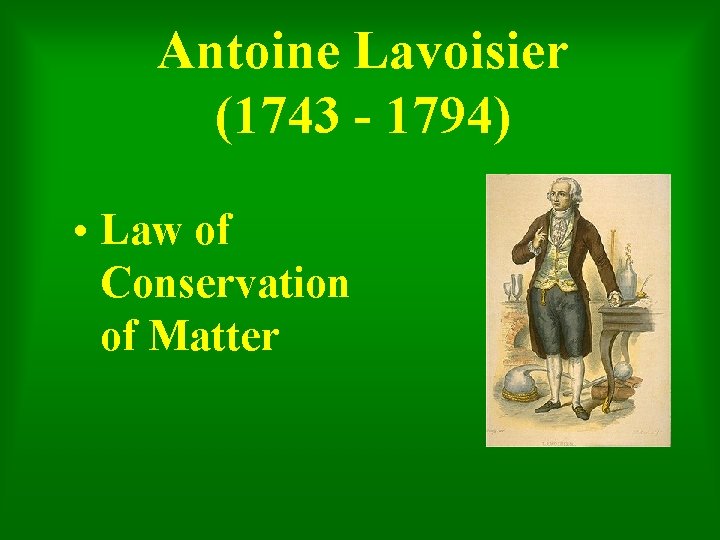
Antoine Lavoisier (1743 - 1794) • Law of Conservation of Matter
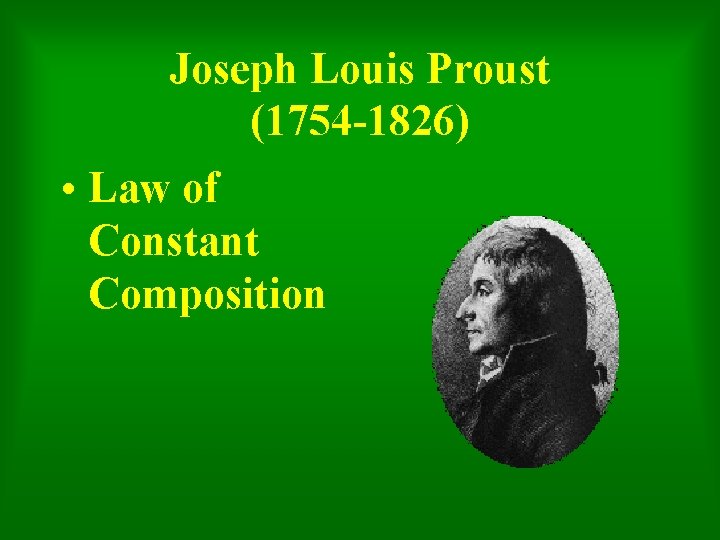
Joseph Louis Proust (1754 -1826) • Law of Constant Composition
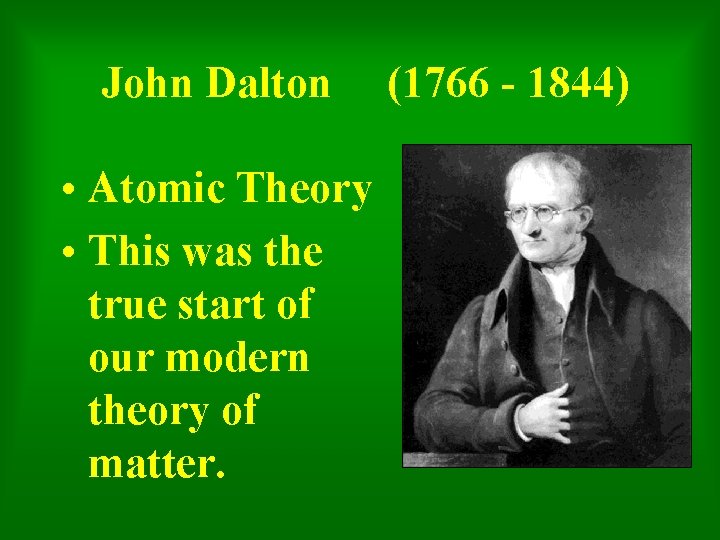
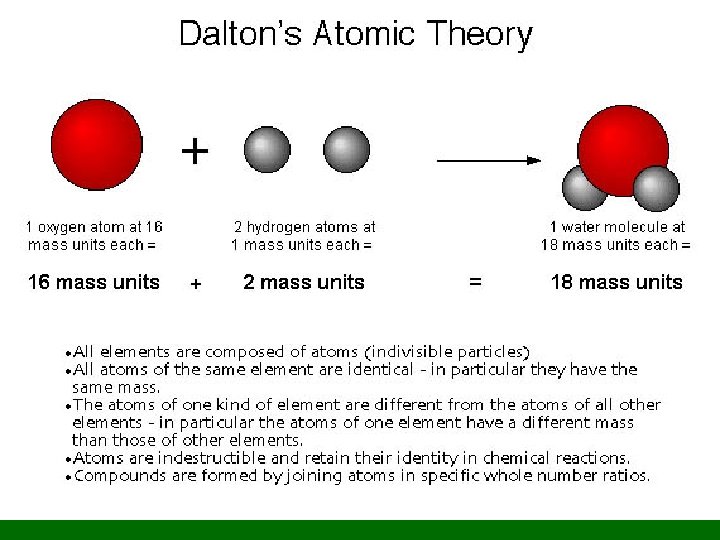
John Dalton • Atomic Theory • This was the true start of our modern theory of matter. (1766 - 1844)
Dalton’s Theory • Dalton’s ideas were a good start. • However, we need to look at one of his postulates more closely. • He stated that “All atoms of the same atom are identical…” • He didn’t know about isotopes. The neutron wasn’t discovered for another 130 years.
Atomic Theory • Elements made of atoms • Atoms are identical of a given type of element • Atoms neither created nor destroyed • Compounds have fixed ratio of atoms
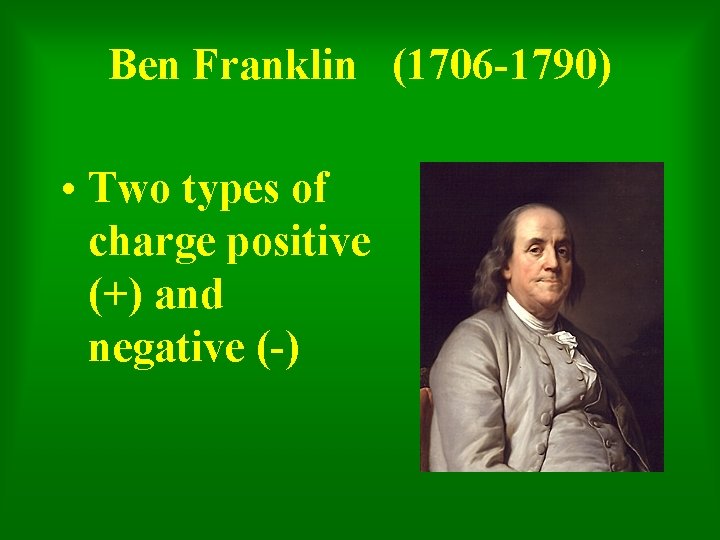
Ben Franklin (1706 -1790) • Two types of charge positive (+) and negative (-)
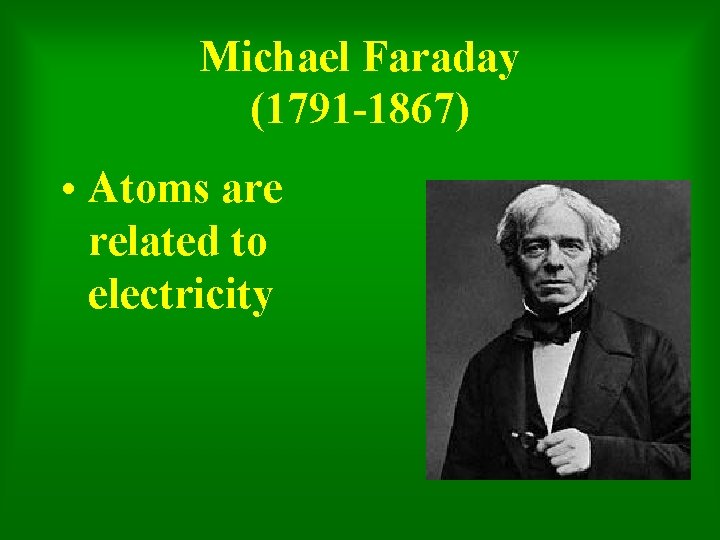
Michael Faraday (1791 -1867) • Atoms are related to electricity
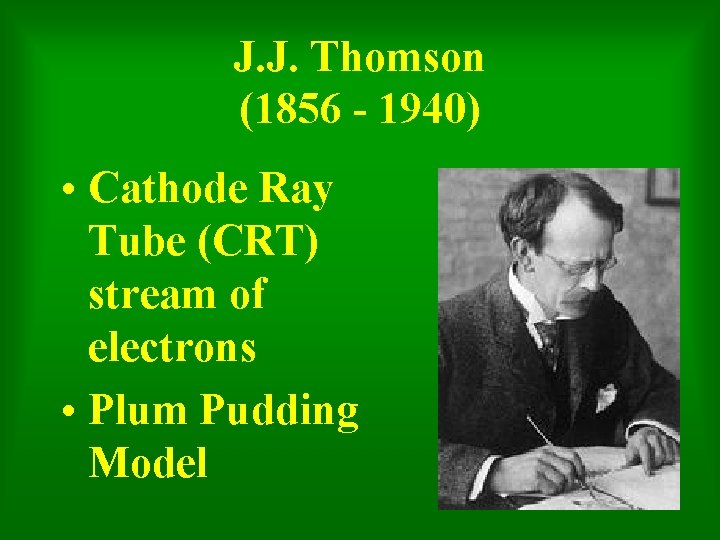
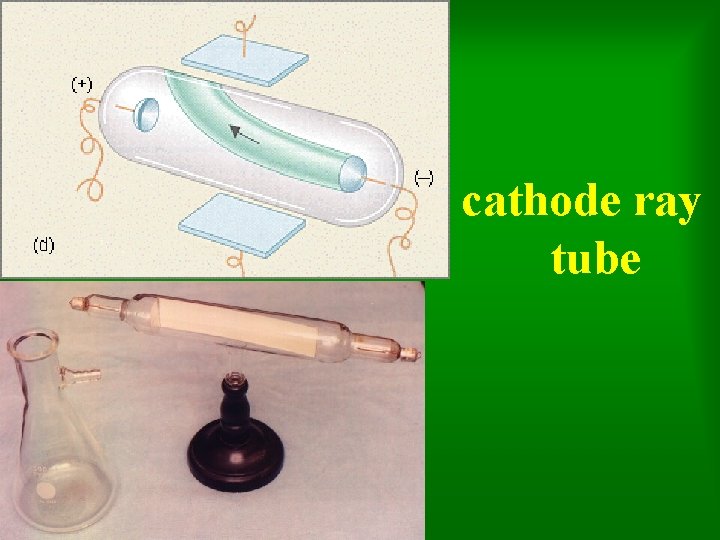
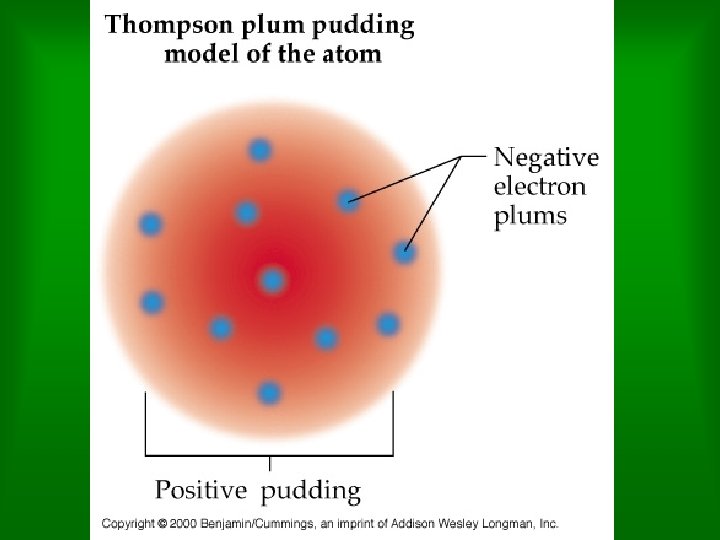
J. J. Thomson (1856 - 1940) • Cathode Ray Tube (CRT) stream of electrons • Plum Pudding Model
cathode ray tube
Thomson’s Model • This lead directly to the idea of electrons and was a major advancement in atomic theory. • Sometimes this theory is called “Raisins in a Plum Pudding. ”
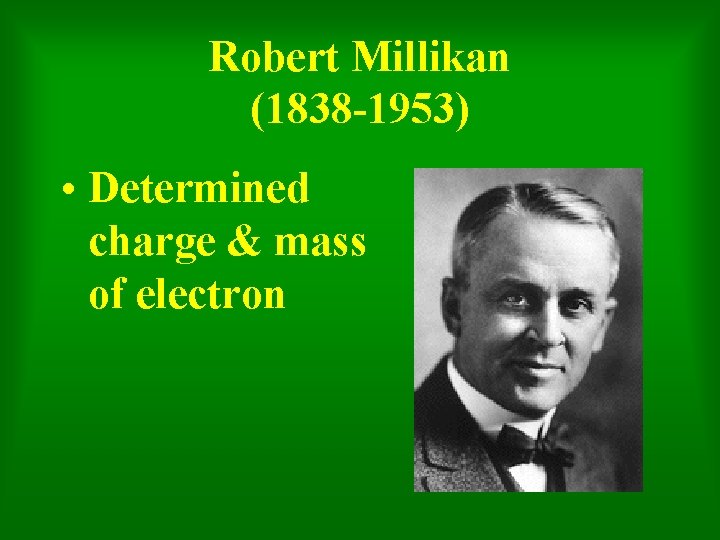
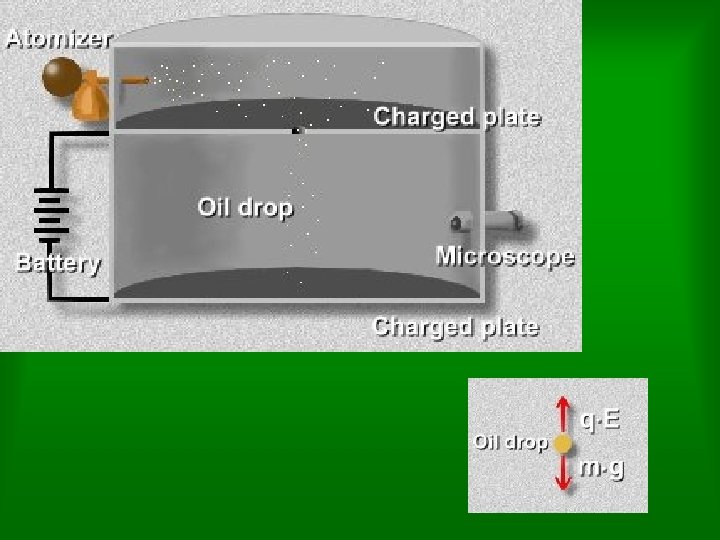
Robert Millikan (1838 -1953) • Determined charge & mass of electron
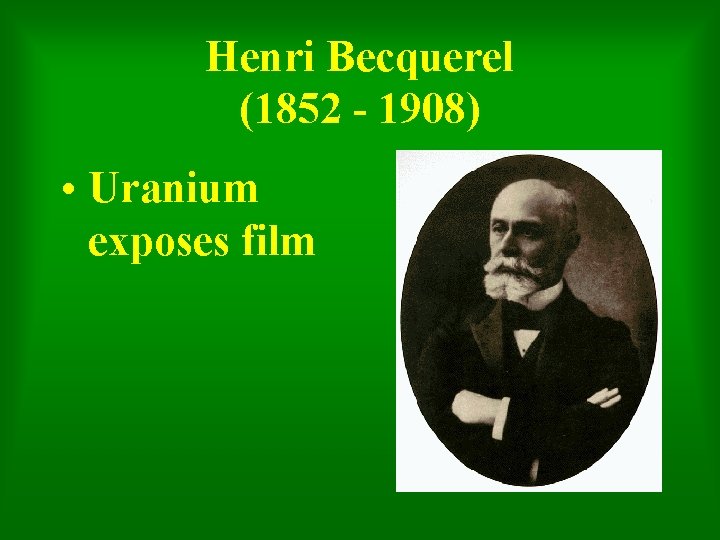
Henri Becquerel (1852 - 1908) • Uranium exposes film
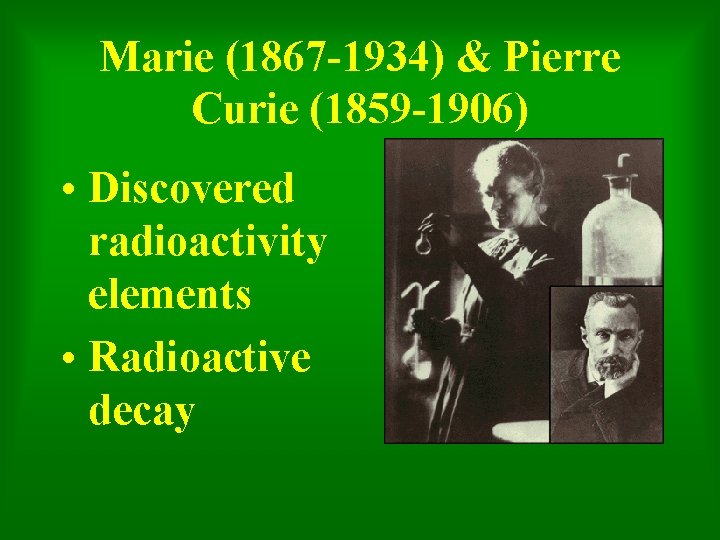
Marie (1867 -1934) & Pierre Curie (1859 -1906) • Discovered radioactivity elements • Radioactive decay
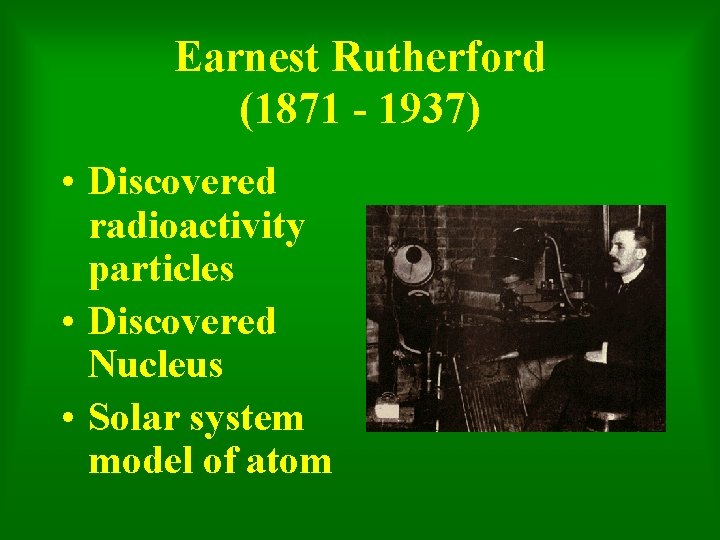
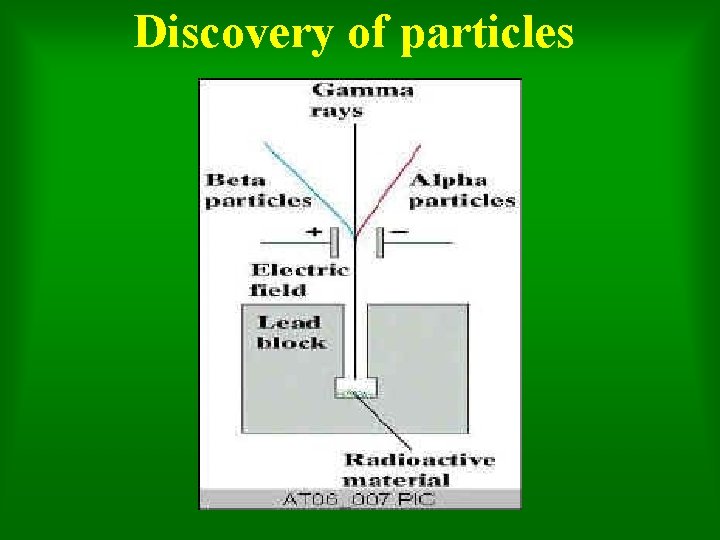
Earnest Rutherford (1871 - 1937) • Discovered radioactivity particles • Discovered Nucleus • Solar system model of atom
Discovery of particles
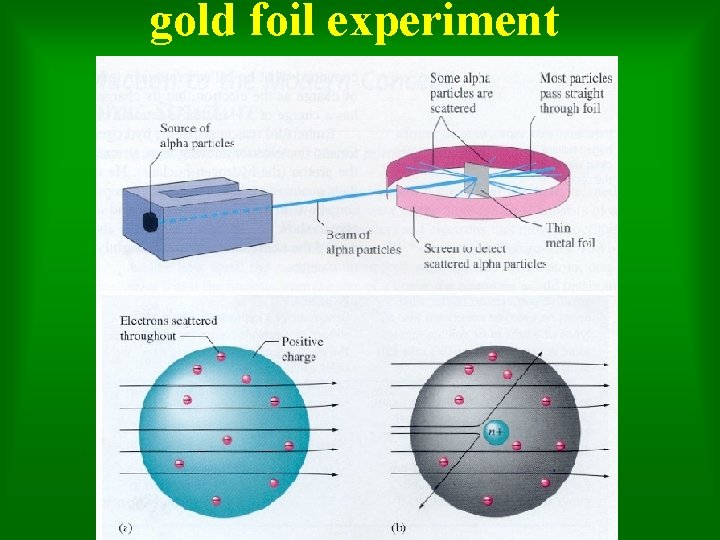
gold foil experiment
Rutherford’s Gold Foil Experiment • There animations on the website so that you can get a better visual of the experiment. • Rutherford’s experiment was truly a marvel. • It answered a lot of questions and gave a good framework for future investigations. • Remember that it was still a theory – there is a long way to go in understanding an atom.
Early Atomic Theory • At this point, this completes our look at the early contributors into Atomic Theory and Structure. • You were given a lot of names, but here are the ones I want you to focus on: • Democritus, Dalton, Thompson, Rutherford • When we get to other topics, we will explore a few more of them in detail such as Becquerel and the Curies.
Study Guide Help • To assist you in your preparation, take note that I will not be asking much if anything about the following scientists: • Ben Franklin, Joseph Proust, Michael Faraday • Robert Millikan, Jabir Ibn Haiyan, and Antoine Lavoisier might get a short question or two on a test or quiz.
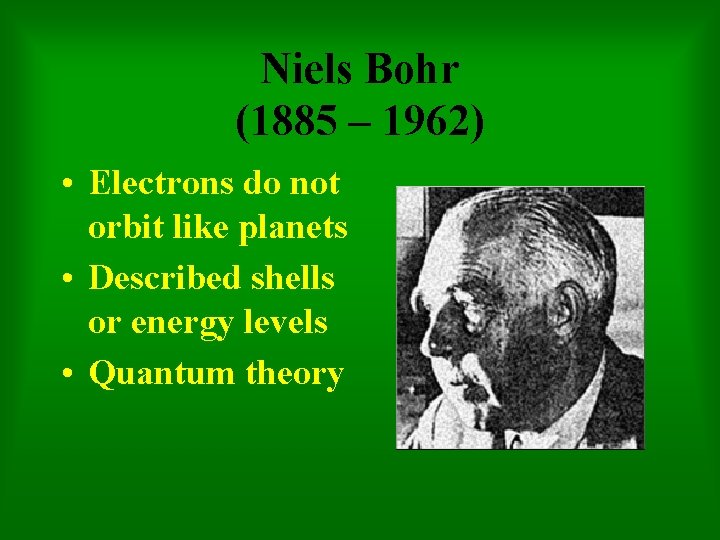
Niels Bohr (1885 – 1962) • Electrons do not orbit like planets • Described shells or energy levels • Quantum theory
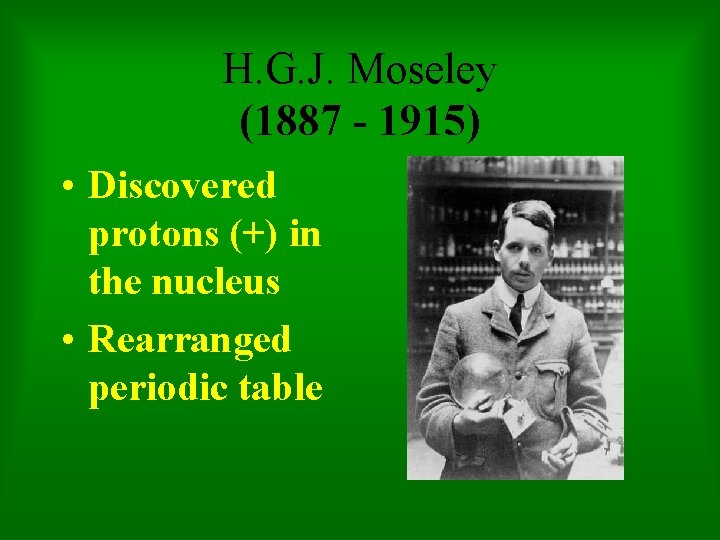
H. G. J. Moseley (1887 - 1915) • Discovered protons (+) in the nucleus • Rearranged periodic table
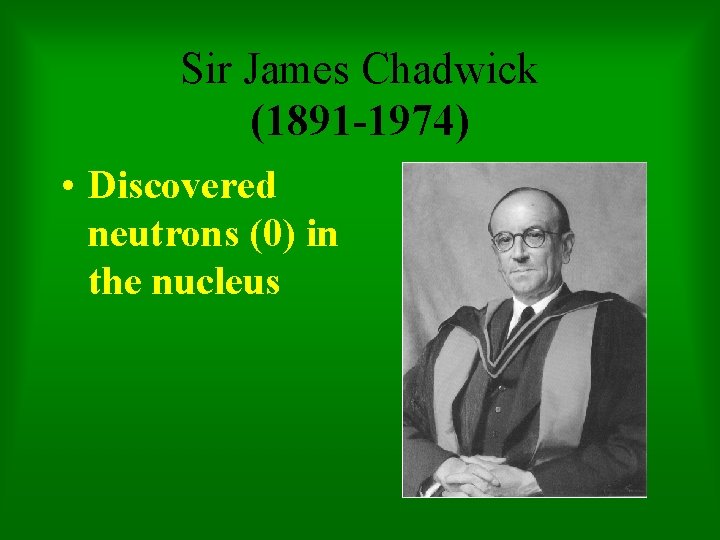
Sir James Chadwick (1891 -1974) • Discovered neutrons (0) in the nucleus
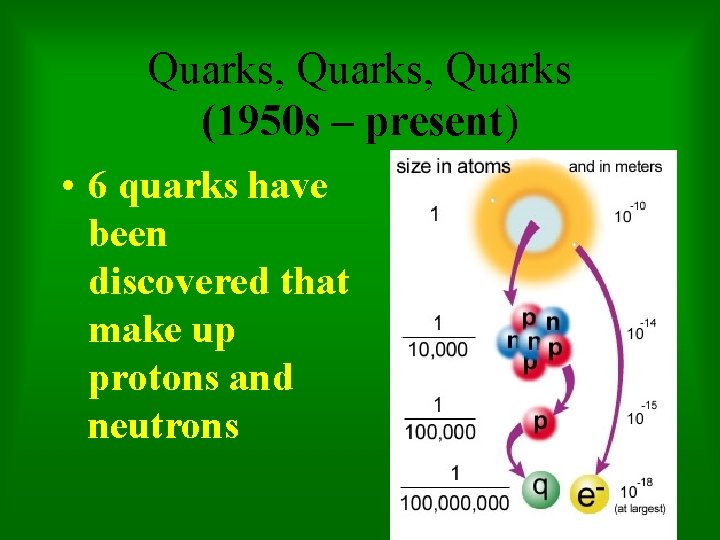
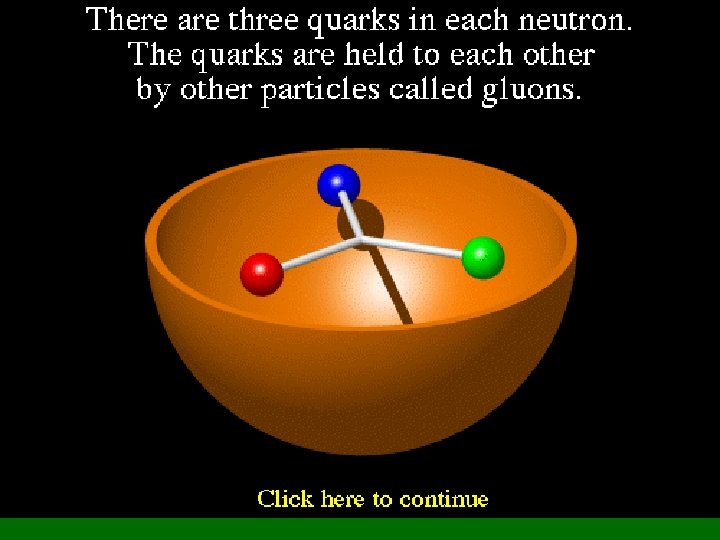
Quarks, Quarks (1950 s – present) • 6 quarks have been discovered that make up protons and neutrons
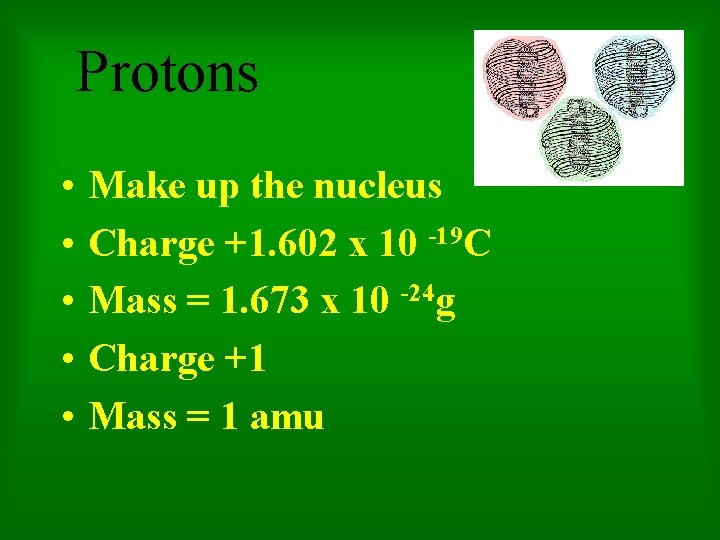
Protons • • • Make up the nucleus Charge +1. 602 x 10 -19 C Mass = 1. 673 x 10 -24 g Charge +1 Mass = 1 amu
Neutrons • • Make up the nucleus Charge 0 Mass = 1. 675 x 10 -24 g Mass = 1 amu
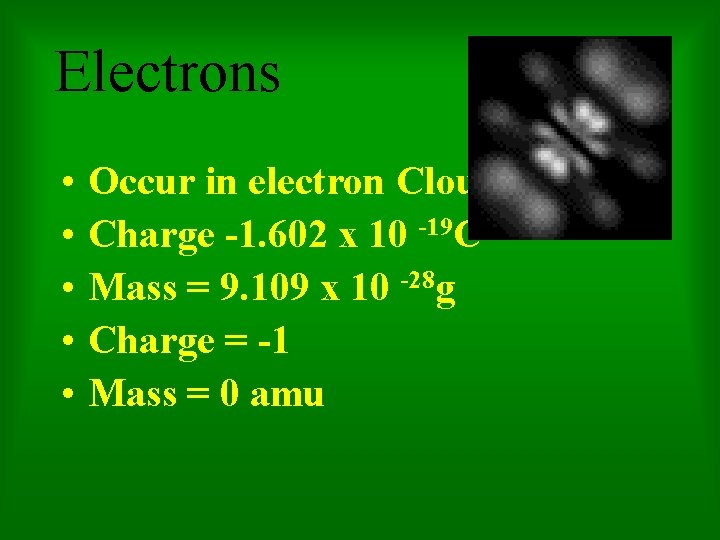
Electrons • • • Occur in electron Clouds Charge -1. 602 x 10 -19 C Mass = 9. 109 x 10 -28 g Charge = -1 Mass = 0 amu
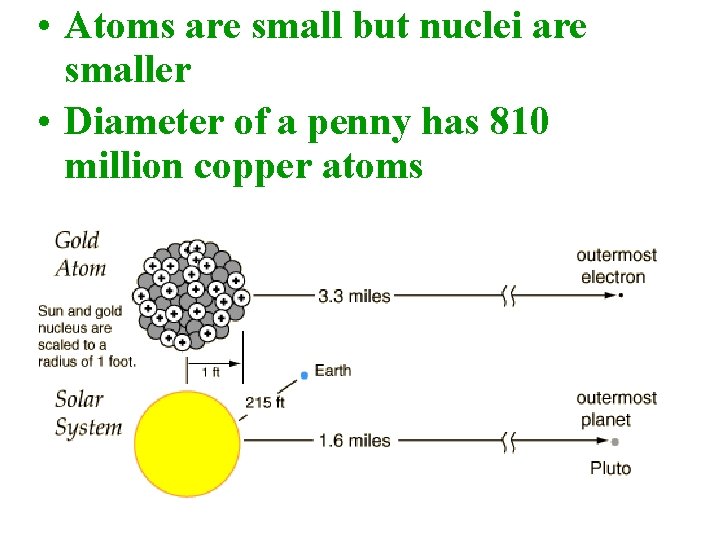
• Atoms are small but nuclei are smaller • Diameter of a penny has 810 million copper atoms
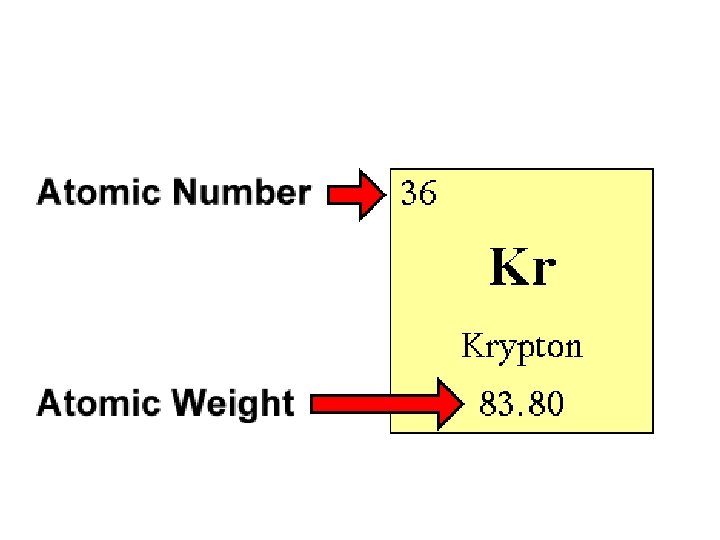
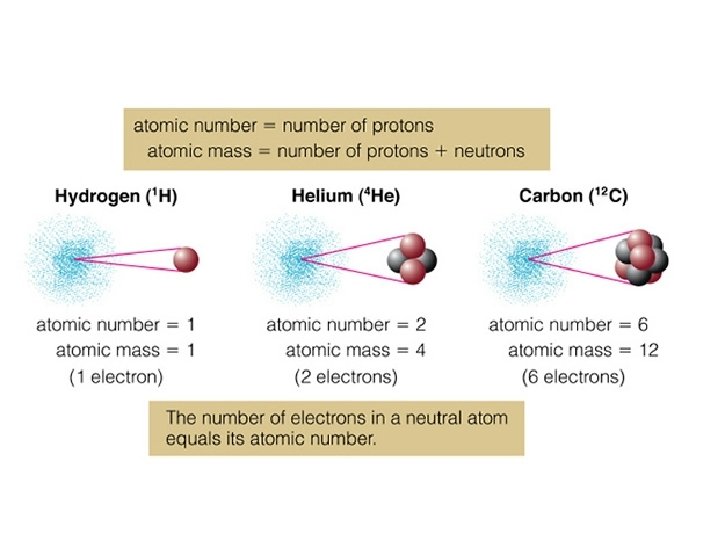
Atomic Number • Number of protons in an atom • Electrically neutral atoms have the same number of electrons as protons • Ions are formed by gaining or losing electrons
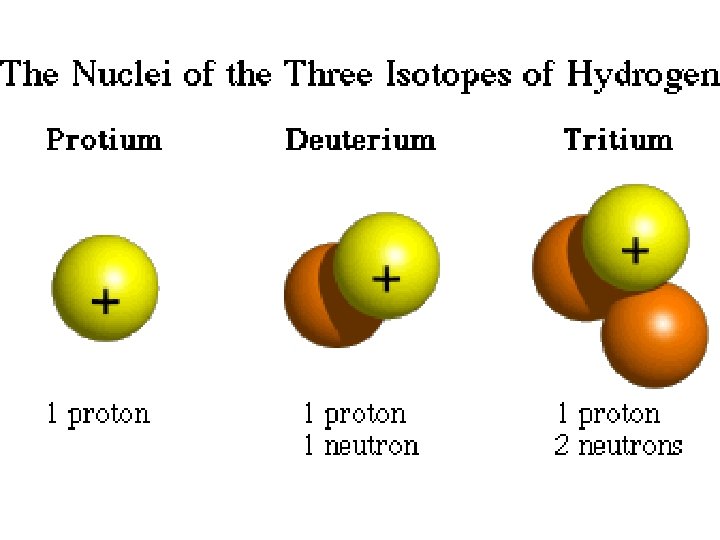
Isotopes • Same number of Protons but different numbers of neutrons • Mass number is the sum of the protons and the neutrons • Isotopes have the same chemical properties • Violates Dalton’s atomic theory
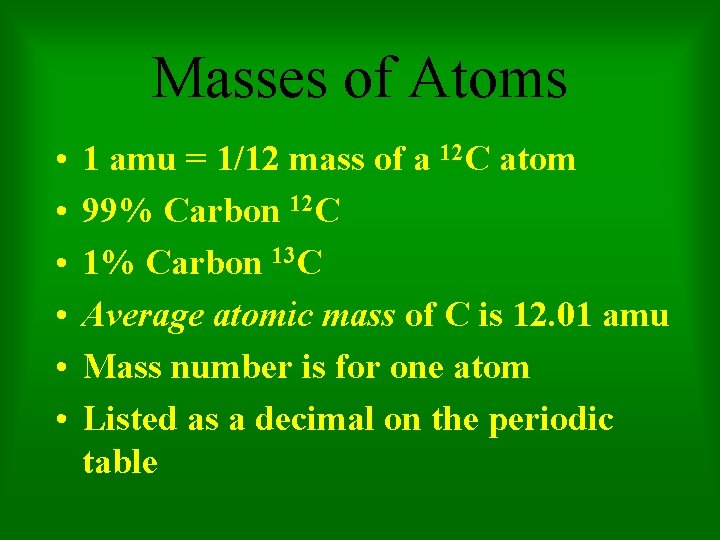
Masses of Atoms • • • 1 amu = 1/12 mass of a 12 C atom 99% Carbon 12 C 1% Carbon 13 C Average atomic mass of C is 12. 01 amu Mass number is for one atom Listed as a decimal on the periodic table
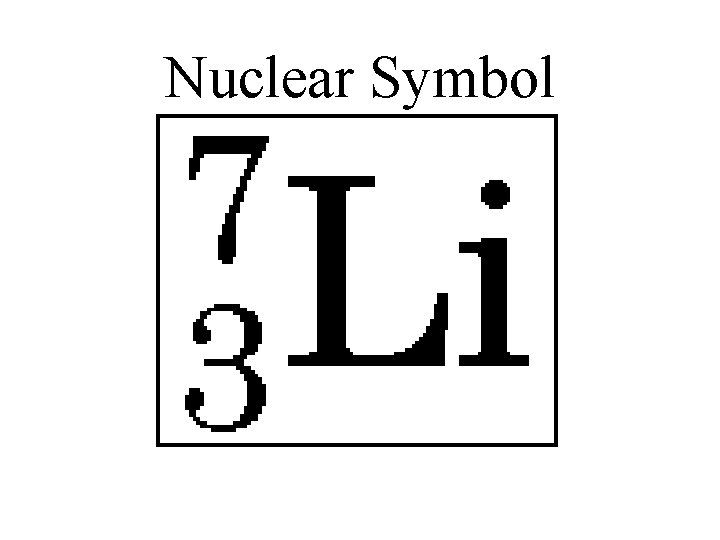
Nuclear Symbol
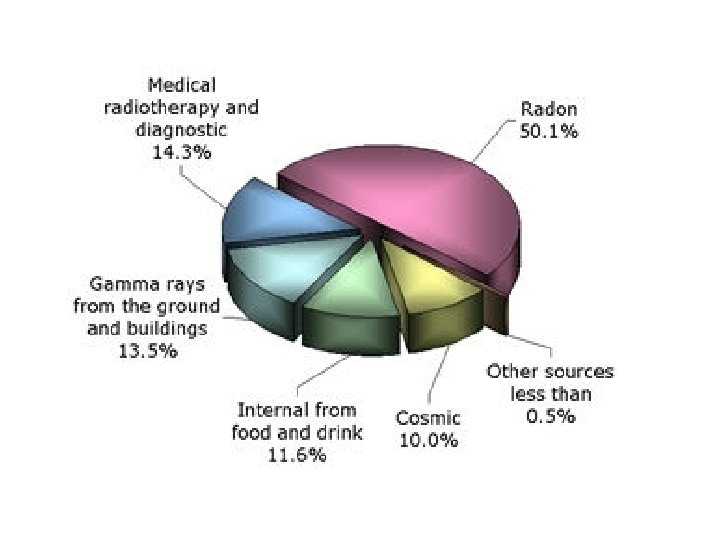
Nuclear Reactions • Nuclear reactions involve the nucleus of the atom • Radioactivity is the spontaneous emission of radiation from an atom • Nuclear reactions change elements involved
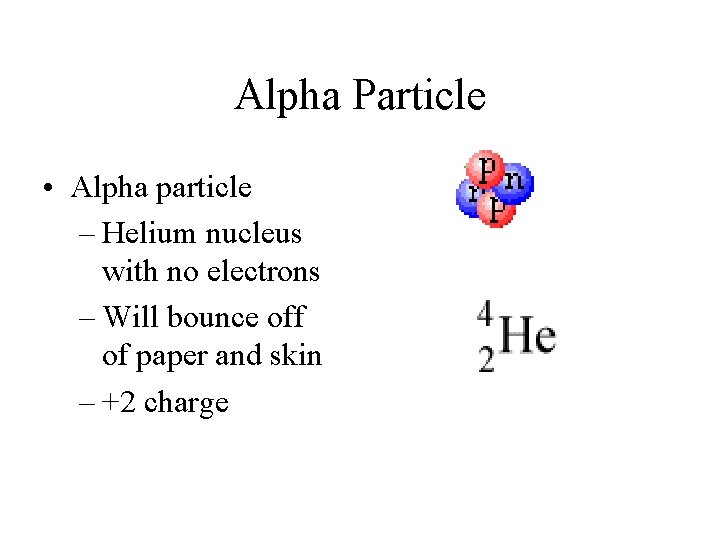
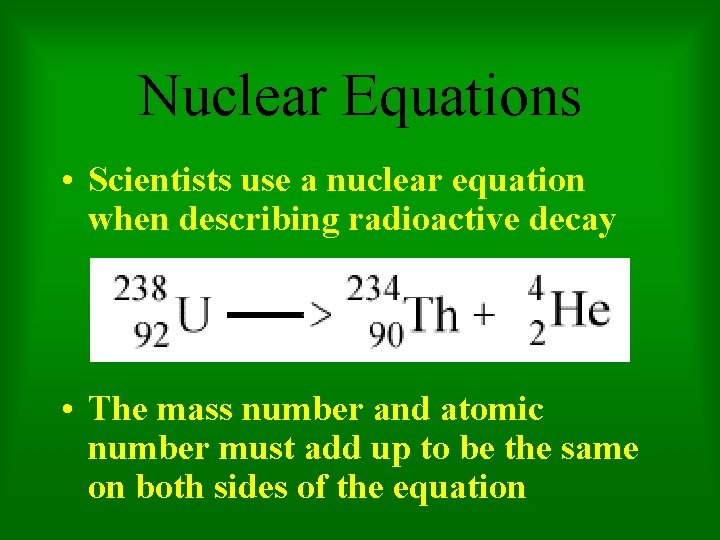
Alpha Particle • Alpha particle – Helium nucleus with no electrons – Will bounce off of paper and skin – +2 charge
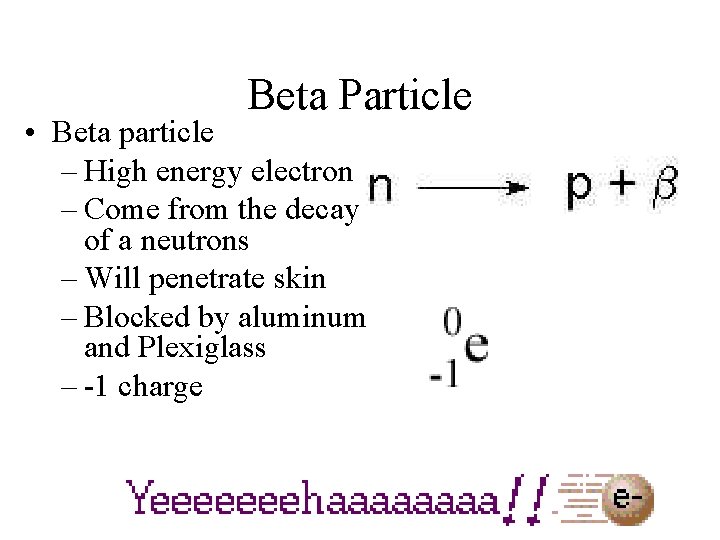
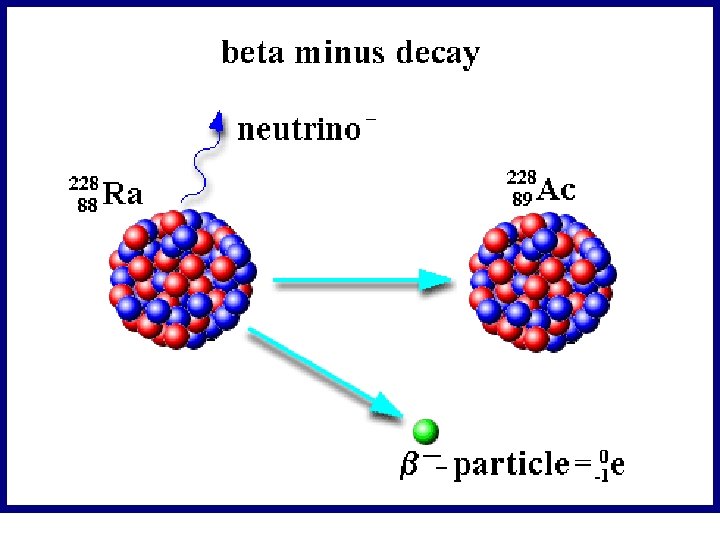
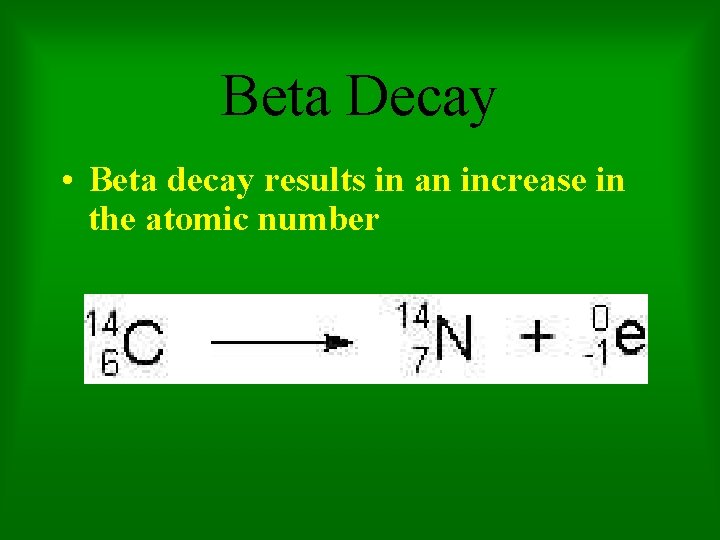
Beta Particle • Beta particle – High energy electron – Come from the decay of a neutrons – Will penetrate skin – Blocked by aluminum and Plexiglass – -1 charge
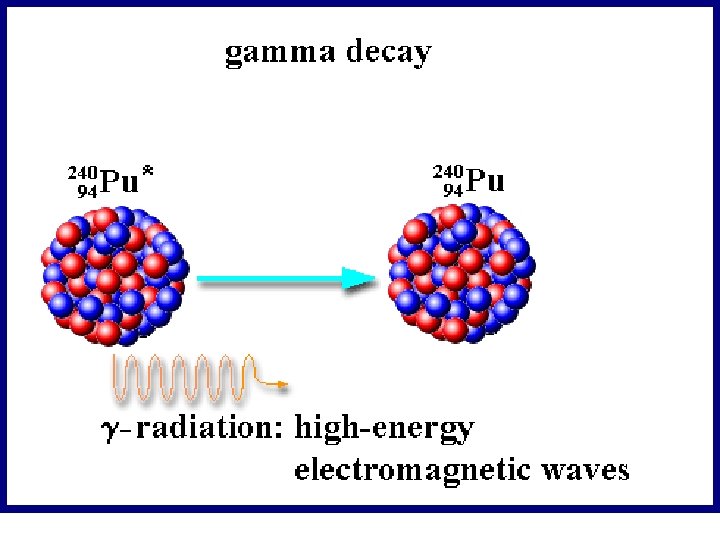
Gamma Radiation • Gamma Rays – High energy wave – No charge – No mass – Penetrates skin, damages cells and mutates DNA – Blocked by lead
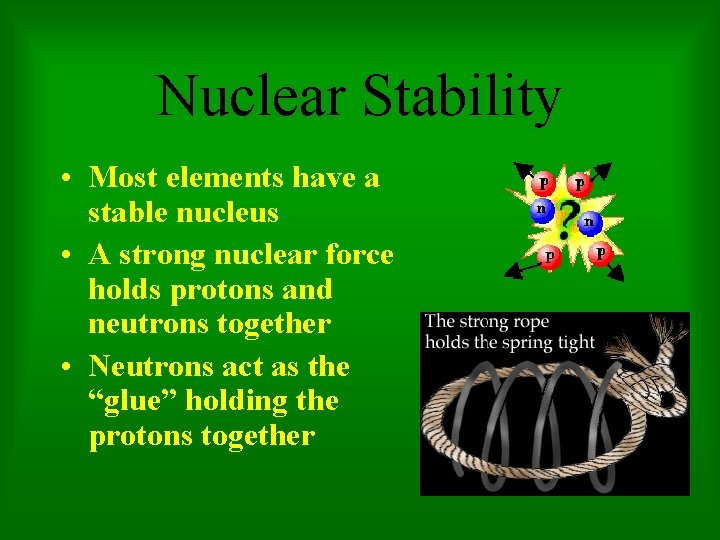
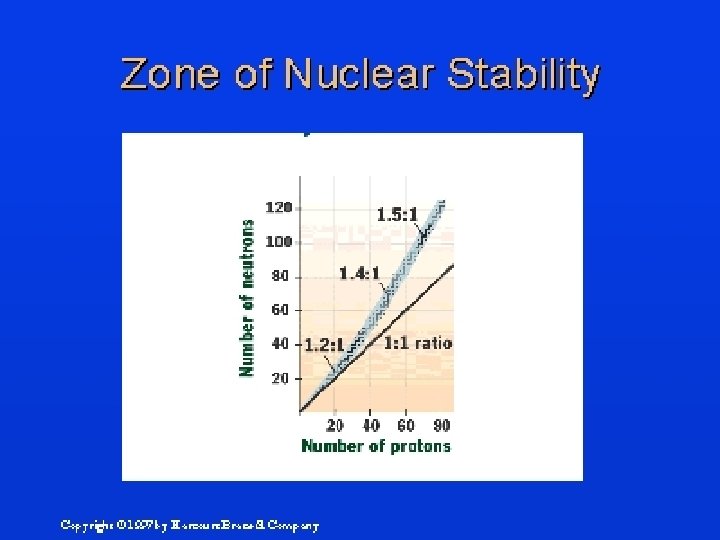
Nuclear Stability • Most elements have a stable nucleus • A strong nuclear force holds protons and neutrons together • Neutrons act as the “glue” holding the protons together
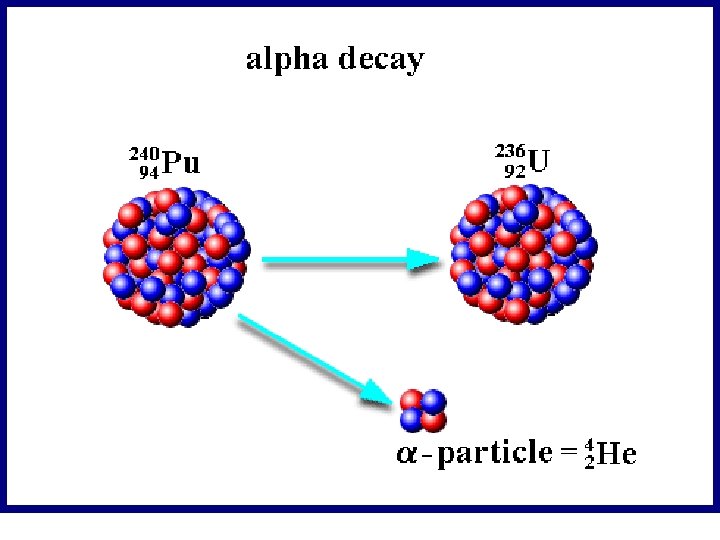
Nuclear Equations • Scientists use a nuclear equation when describing radioactive decay • The mass number and atomic number must add up to be the same on both sides of the equation
Beta Decay • Beta decay results in an increase in the atomic number
Practice • Write the nuclear equation of the alpha decay of Radon – 226 • Write the nuclear equation of the alpha decay of Gold - 185
Practice • Write the nuclear equation of the beta decay of Iodine - 131 • Write the nuclear equation of the beta decay of Sodium - 24
Chapter 24 Applications of Nuclear Chemistry
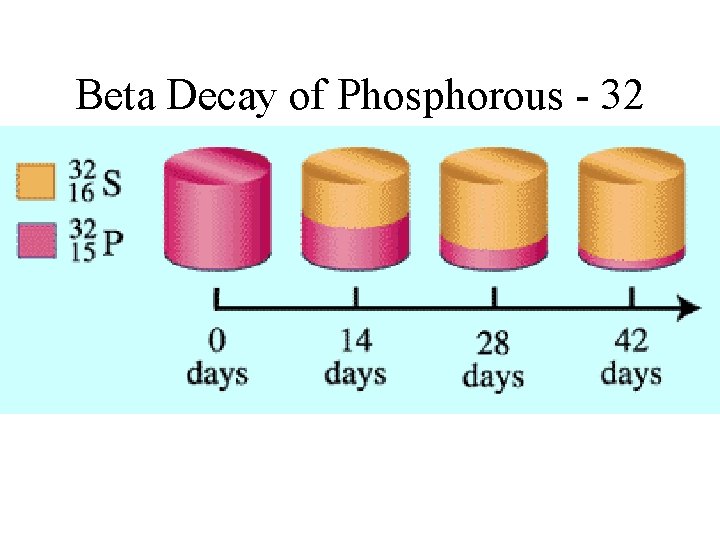
Half Life • Radioisotopes are radioactive isotopes of elements (not all isotopes are radioactive) • A half-life is the amount of time it takes for one half of a sample to decay. • http: //lectureonline. cl. msu. edu/~mmp/applist/de cay/decay. htm
Beta Decay of Phosphorous - 32
Radiocarbon Dating • Carbon - 14 undergoes beta decay • Half life of 5, 730 years • Used to approximate ages 100 – 30, 000 years • Other radioisotopes are used to measure longer periods of time
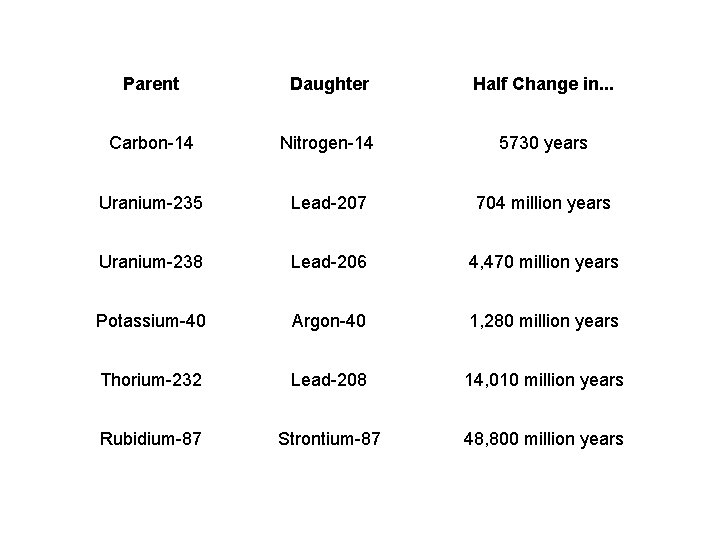
Parent Daughter Half Change in. . . Carbon-14 Nitrogen-14 5730 years Uranium-235 Lead-207 704 million years Uranium-238 Lead-206 4, 470 million years Potassium-40 Argon-40 1, 280 million years Thorium-232 Lead-208 14, 010 million years Rubidium-87 Strontium-87 48, 800 million years
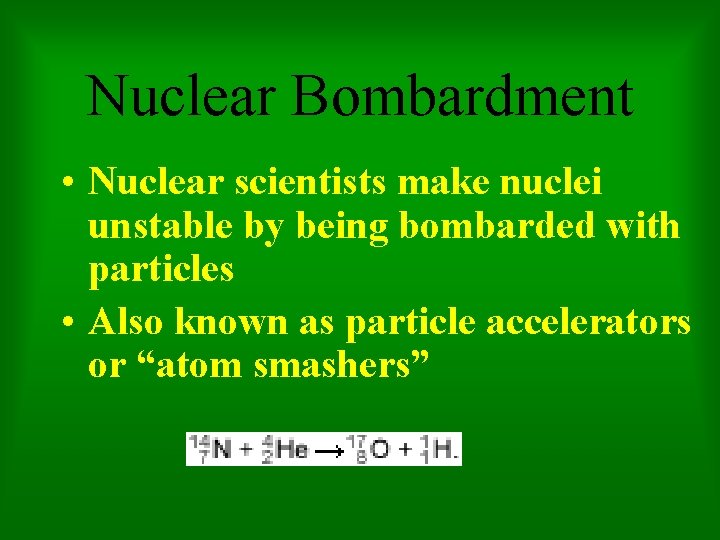
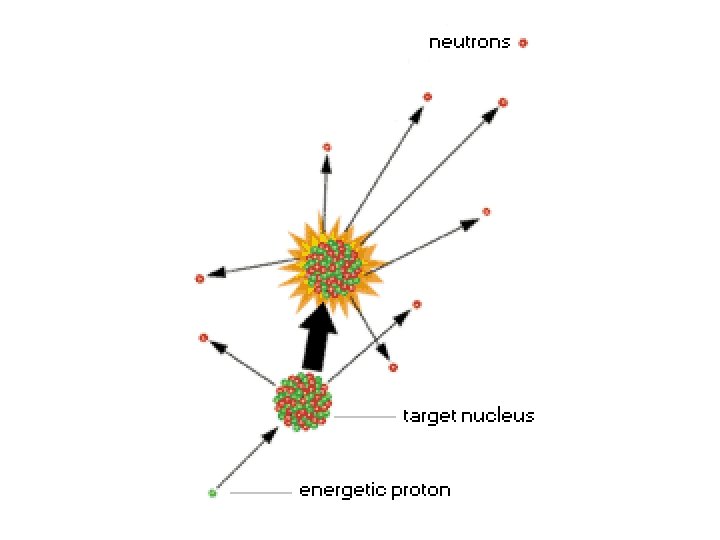
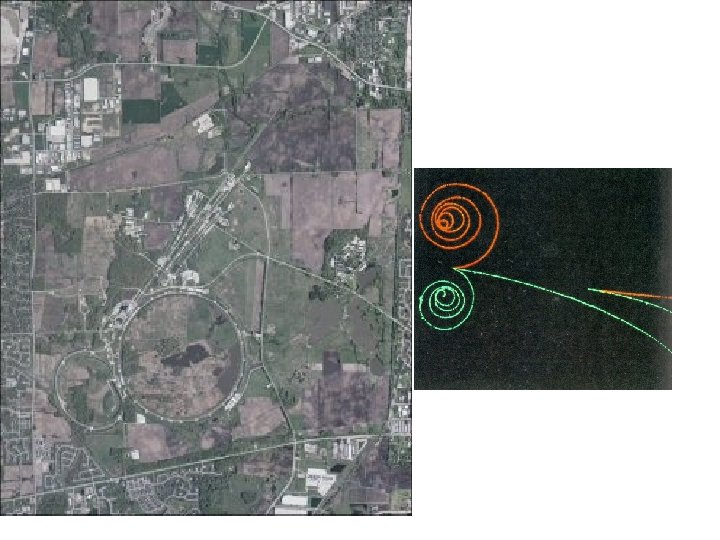
Nuclear Bombardment • Nuclear scientists make nuclei unstable by being bombarded with particles • Also known as particle accelerators or “atom smashers”
Radiation • SI units are in Curies (Ci) • One Curies is amount of nuclear disintegrations per second from one gram of radium • Also measured in rem (Roentgen equivalent for man • Over 1000 rem is fatal • Detected by a Geiger counter
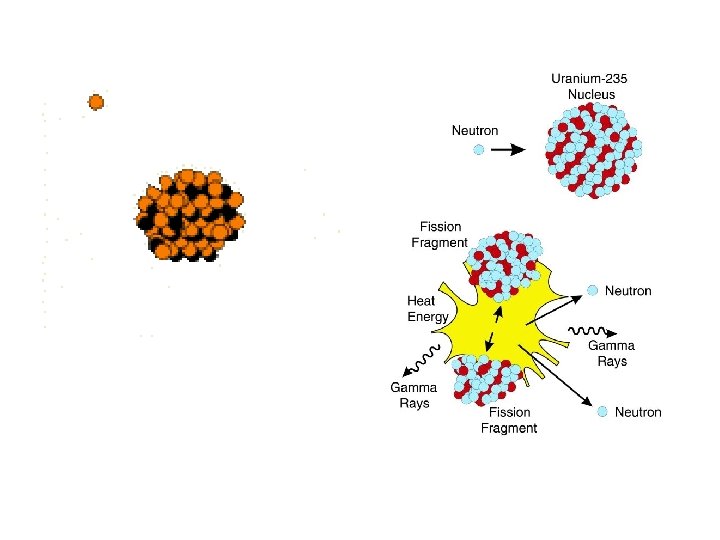
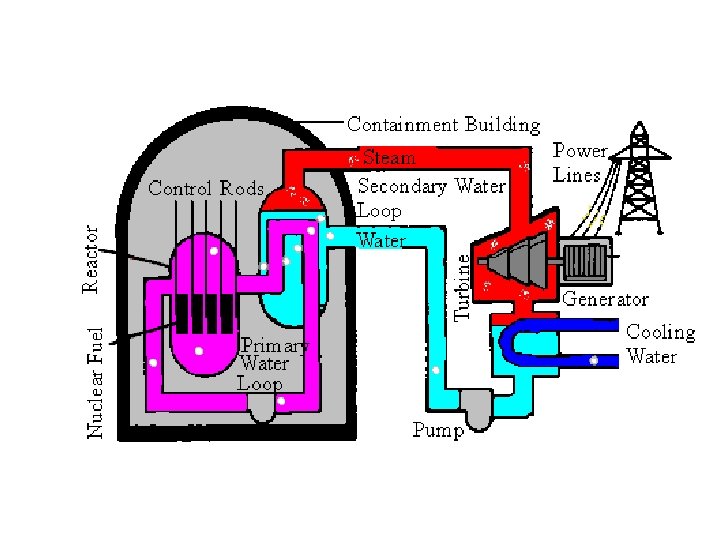
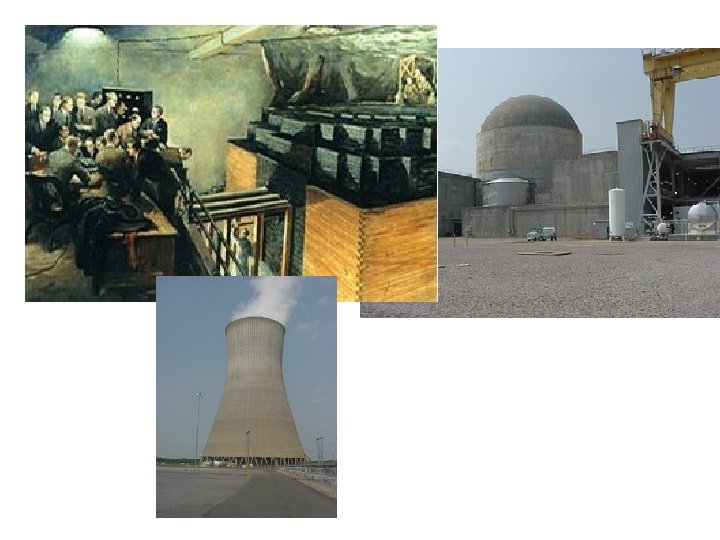
Nuclear Power • Nuclear Reactors use fission of Uranium-235 as source of energy • A large nucleus is split into two smaller nuclei • A small amount of mass is converted to a tremendous amount of energy • ~1 lb Uranium 235 = 1 million gallons of gasoline • http: //people. howstuffworks. com/nuclearpower 2. htm
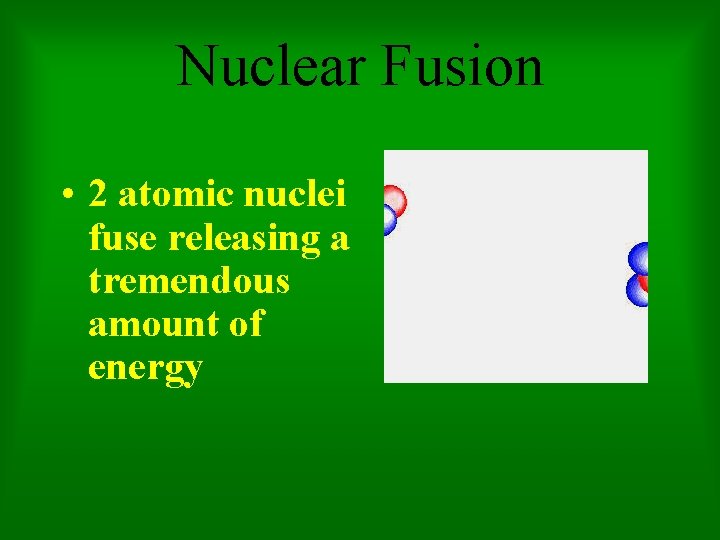
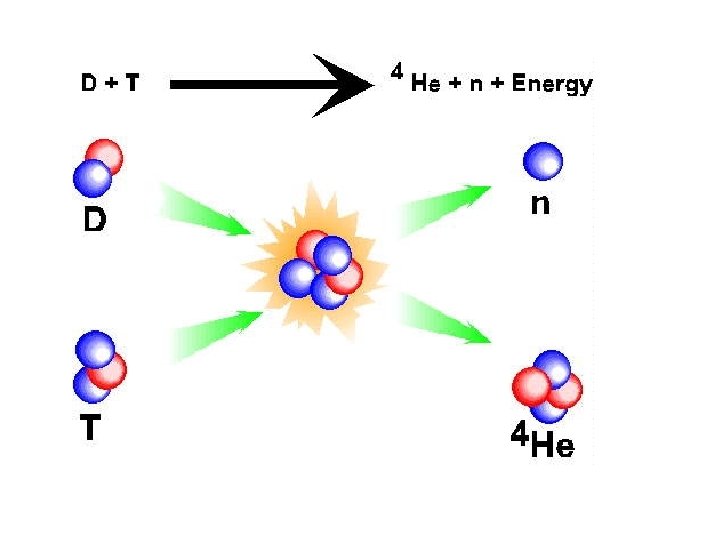
Nuclear Fusion • 2 atomic nuclei fuse releasing a tremendous amount of energy
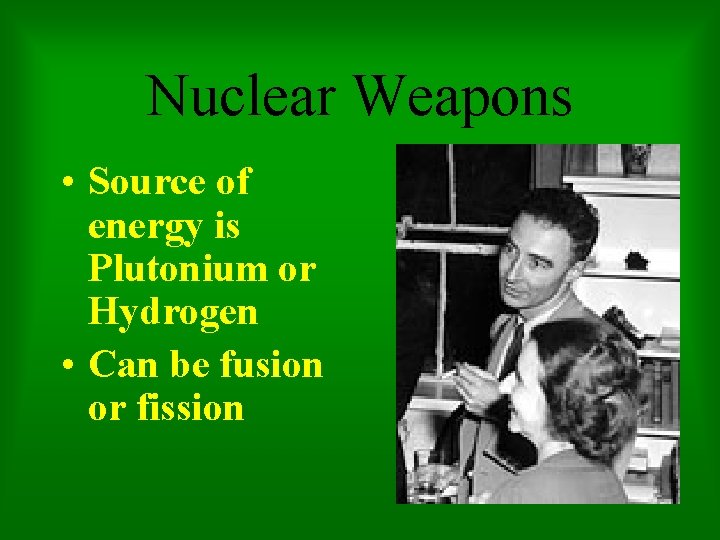
Nuclear Weapons • Source of energy is Plutonium or Hydrogen • Can be fusion or fission
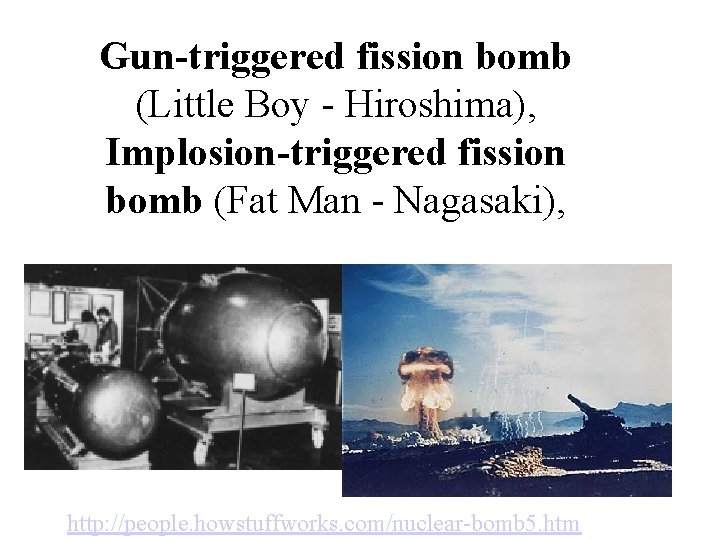
Gun-triggered fission bomb (Little Boy - Hiroshima), Implosion-triggered fission bomb (Fat Man - Nagasaki), http: //people. howstuffworks. com/nuclear-bomb 5. htm