
Chapter 3 Ancient India China 2600 BC AD
Chapter 3 Ancient India & China (2600 BC – AD 550) Focus: In what ways did the civilizations and empires of ancient India & China lay long-lasting social and political foundations?
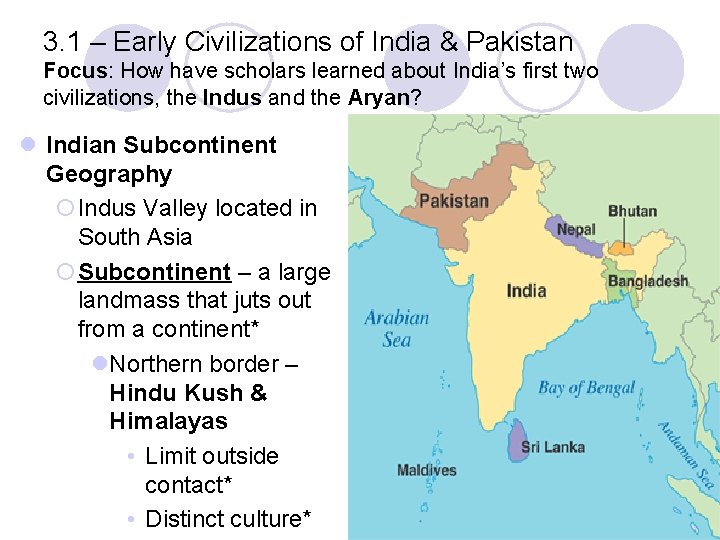
3. 1 – Early Civilizations of India & Pakistan Focus: How have scholars learned about India’s first two civilizations, the Indus and the Aryan? l Indian Subcontinent Geography ¡Indus Valley located in South Asia ¡Subcontinent – a large landmass that juts out from a continent* l. Northern border – Hindu Kush & Himalayas • Limit outside contact* • Distinct culture*
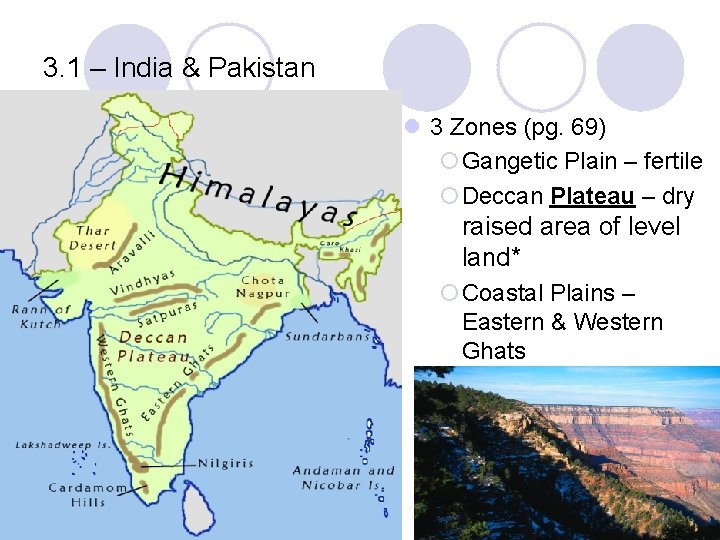
3. 1 – India & Pakistan l 3 Zones (pg. 69) ¡Gangetic Plain – fertile ¡Deccan Plateau – dry raised area of level land* ¡Coastal Plains – Eastern & Western Ghats
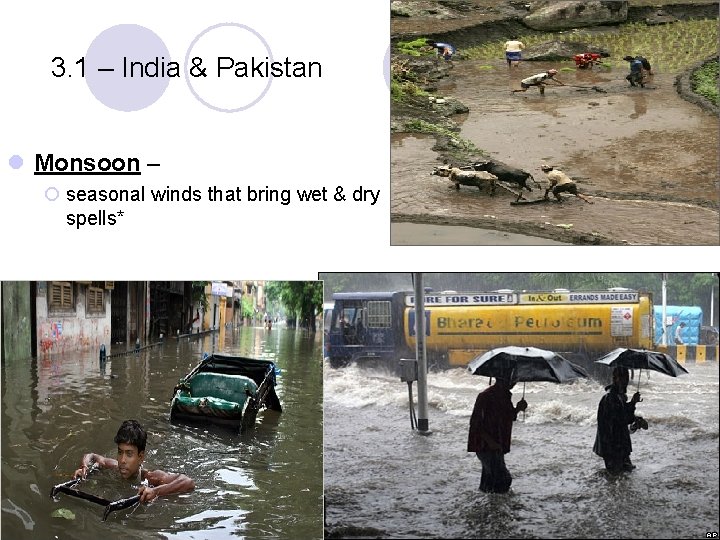
3. 1 – India & Pakistan l Monsoon – ¡ seasonal winds that bring wet & dry spells*
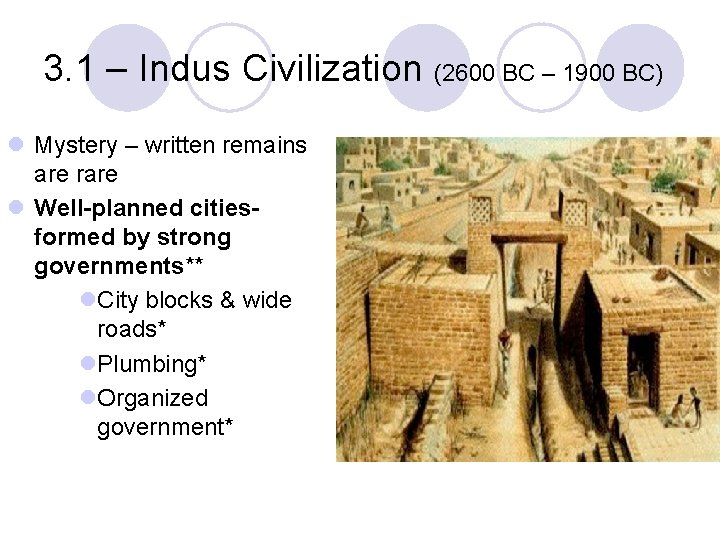
3. 1 – Indus Civilization (2600 BC – 1900 BC) l Mystery – written remains are rare l Well-planned citiesformed by strong governments** l. City blocks & wide roads* l. Plumbing* l. Organized government*
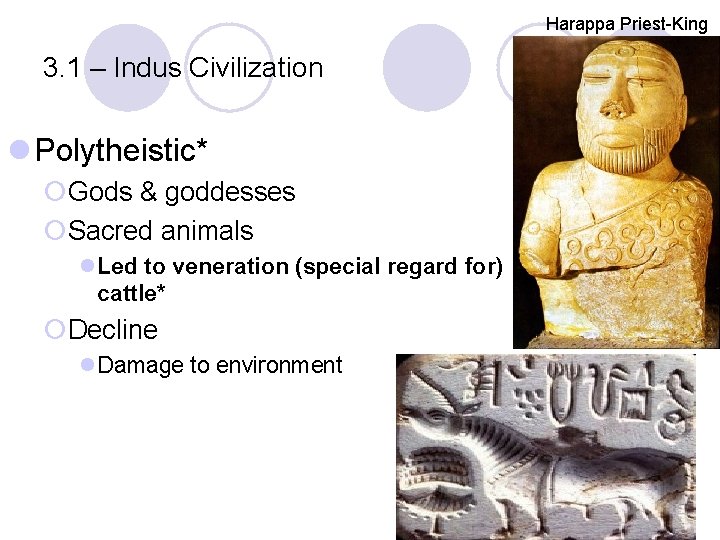
Harappa Priest-King 3. 1 – Indus Civilization l Polytheistic* ¡Gods & goddesses ¡Sacred animals l. Led to veneration (special regard for) cattle* ¡Decline l. Damage to environment
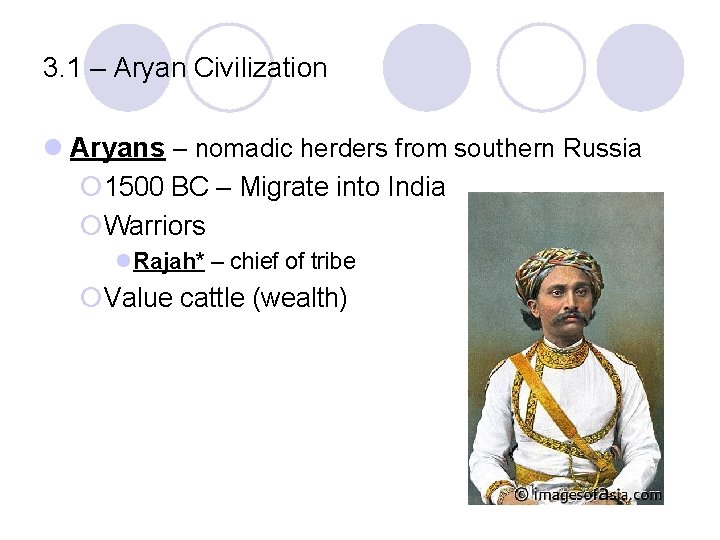
3. 1 – Aryan Civilization l Aryans – nomadic herders from southern Russia ¡ 1500 BC – Migrate into India ¡Warriors l. Rajah* – chief of tribe ¡Value cattle (wealth)
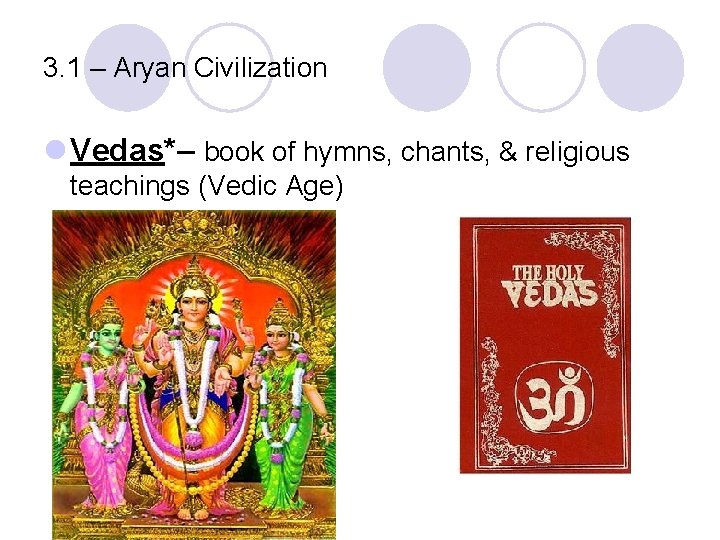
3. 1 – Aryan Civilization l Vedas*– book of hymns, chants, & religious teachings (Vedic Age)
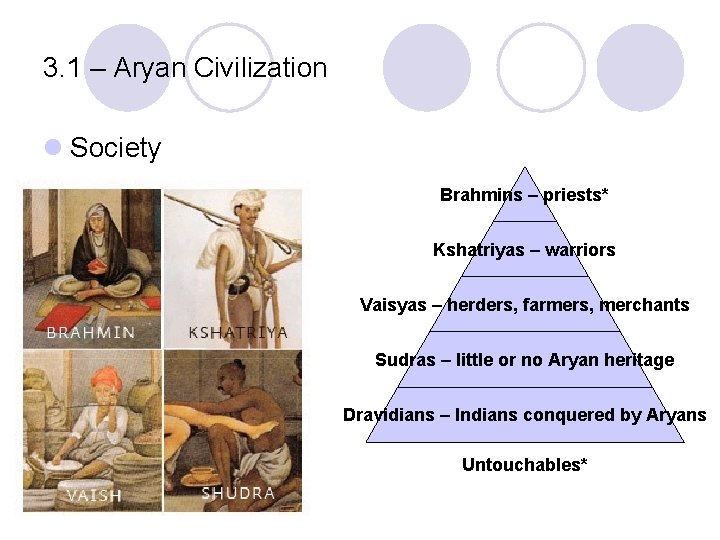
3. 1 – Aryan Civilization l Society Brahmins – priests* Kshatriyas – warriors Vaisyas – herders, farmers, merchants Sudras – little or no Aryan heritage Dravidians – Indians conquered by Aryans Untouchables*
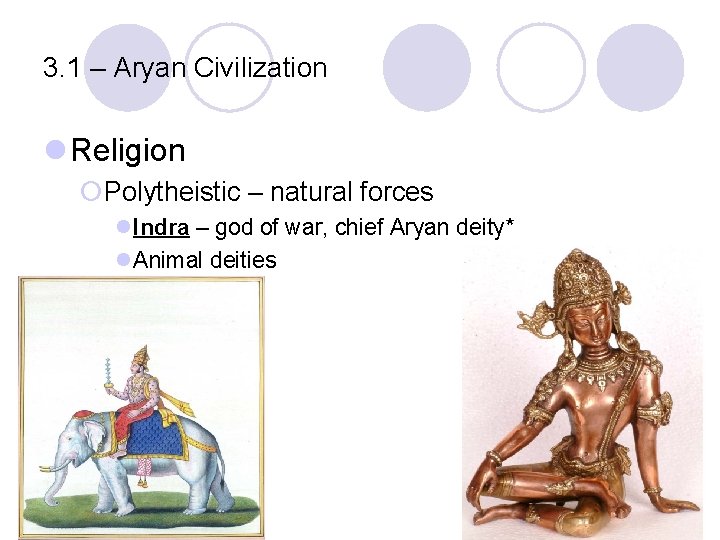
3. 1 – Aryan Civilization l Religion ¡Polytheistic – natural forces l. Indra – god of war, chief Aryan deity* l. Animal deities
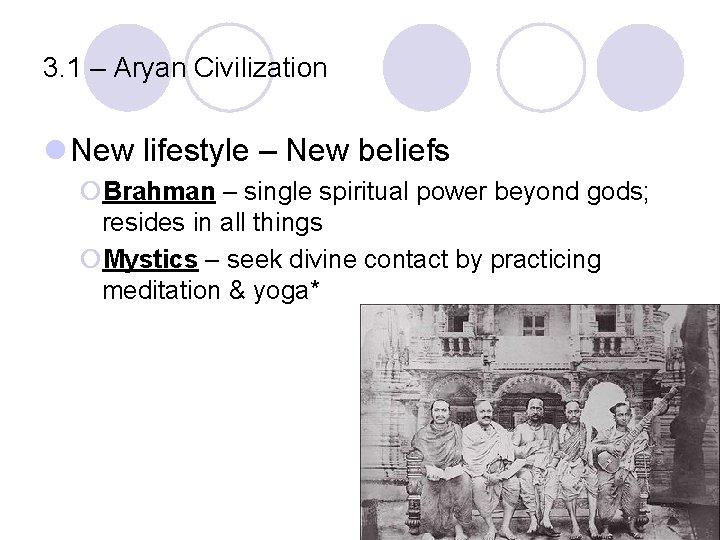
3. 1 – Aryan Civilization l New lifestyle – New beliefs ¡Brahman – single spiritual power beyond gods; resides in all things ¡Mystics – seek divine contact by practicing meditation & yoga*
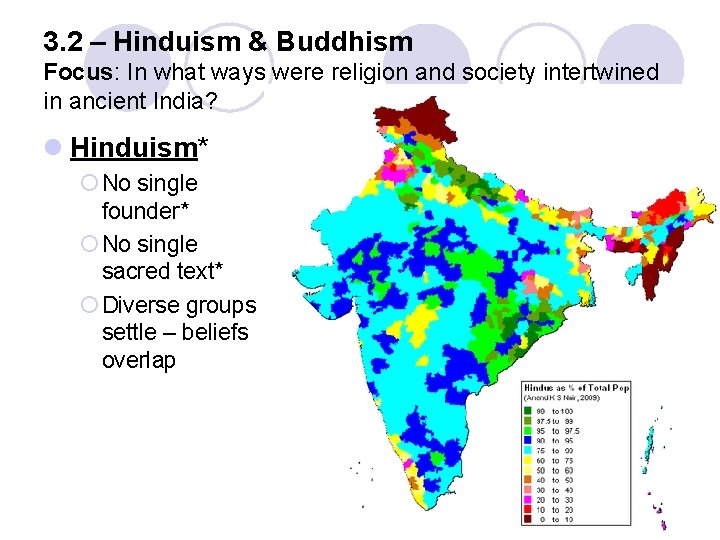
3. 2 – Hinduism & Buddhism Focus: In what ways were religion and society intertwined in ancient India? l Hinduism* ¡ No single founder* ¡ No single sacred text* ¡ Diverse groups settle – beliefs overlap
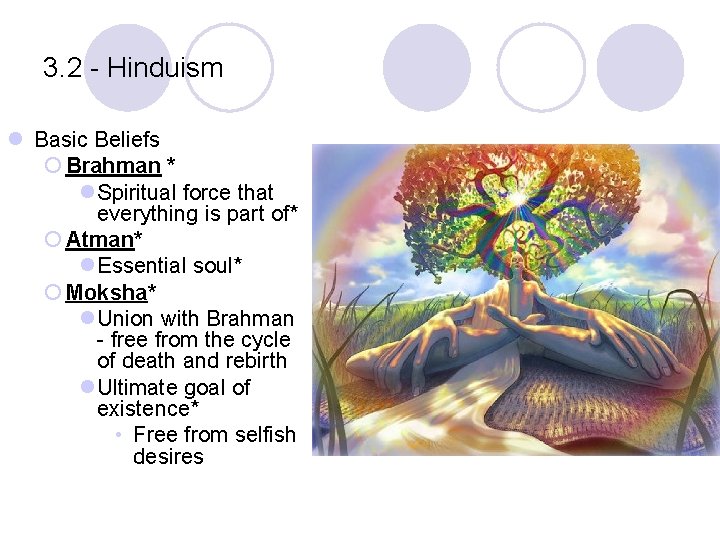
3. 2 - Hinduism l Basic Beliefs ¡ Brahman * l Spiritual force that everything is part of* ¡ Atman* l Essential soul* ¡ Moksha* l Union with Brahman - free from the cycle of death and rebirth l Ultimate goal of existence* • Free from selfish desires
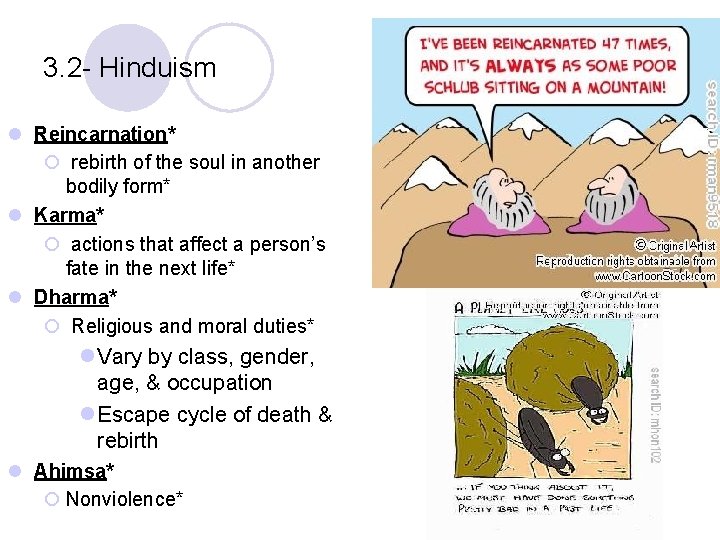
3. 2 - Hinduism l Reincarnation* ¡ rebirth of the soul in another bodily form* l Karma* ¡ actions that affect a person’s fate in the next life* l Dharma* ¡ Religious and moral duties* l Vary by class, gender, age, & occupation l Escape cycle of death & rebirth l Ahimsa* ¡ Nonviolence*
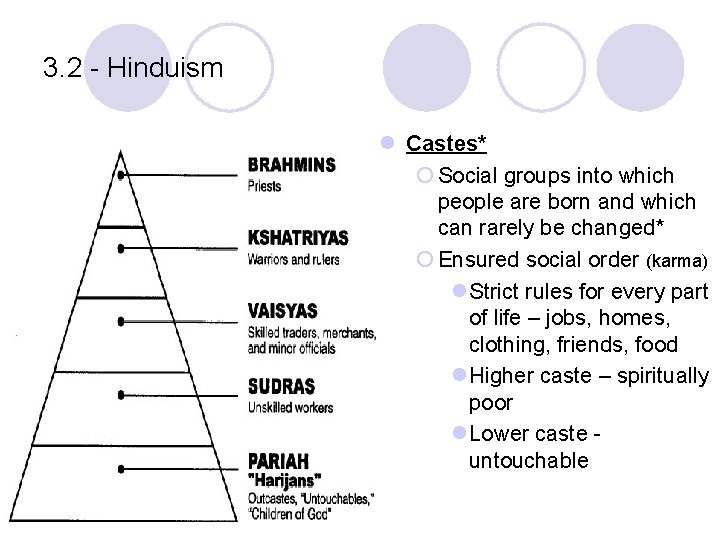
3. 2 - Hinduism l Castes* ¡ Social groups into which people are born and which can rarely be changed* ¡ Ensured social order (karma) l Strict rules for every part of life – jobs, homes, clothing, friends, food l Higher caste – spiritually poor l Lower caste untouchable
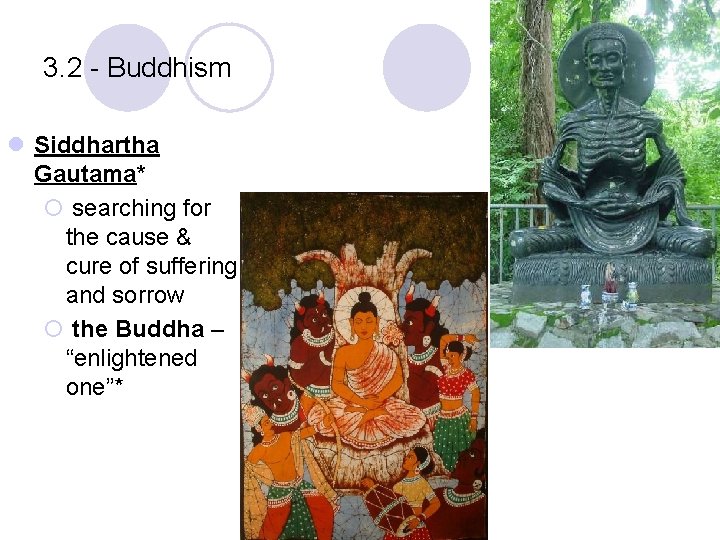
3. 2 - Buddhism l Siddhartha Gautama* ¡ searching for the cause & cure of suffering and sorrow ¡ the Buddha – “enlightened one”*
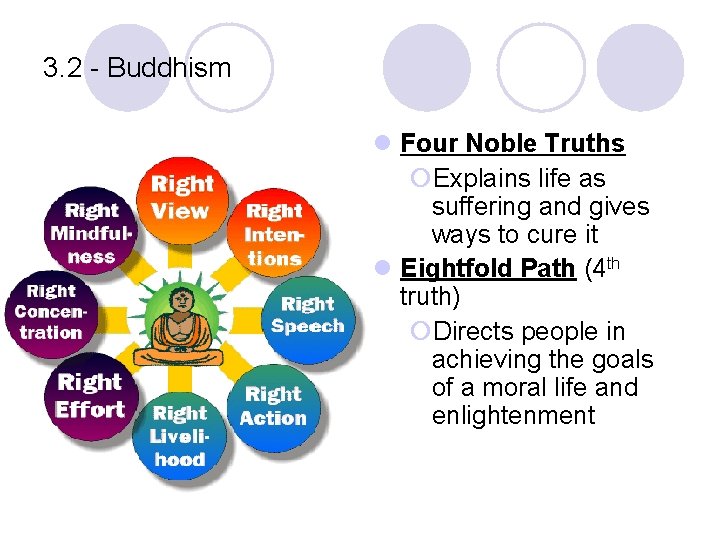
3. 2 - Buddhism l Four Noble Truths ¡Explains life as suffering and gives ways to cure it l Eightfold Path (4 th truth) ¡Directs people in achieving the goals of a moral life and enlightenment
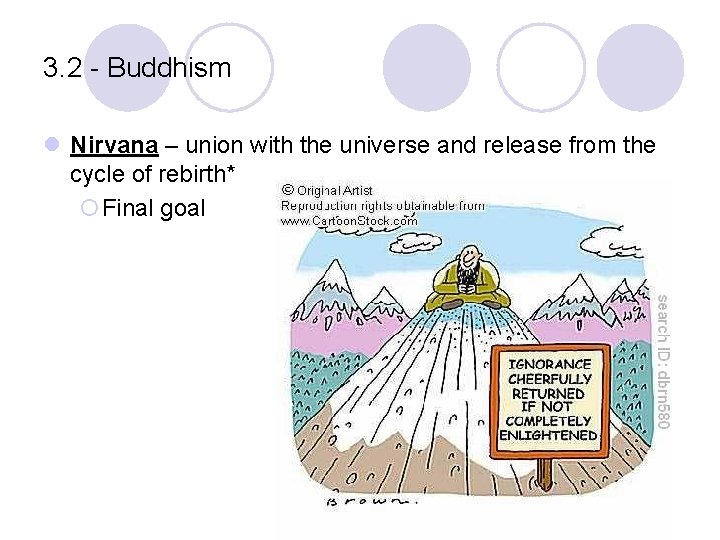
3. 2 - Buddhism l Nirvana – union with the universe and release from the cycle of rebirth* ¡Final goal
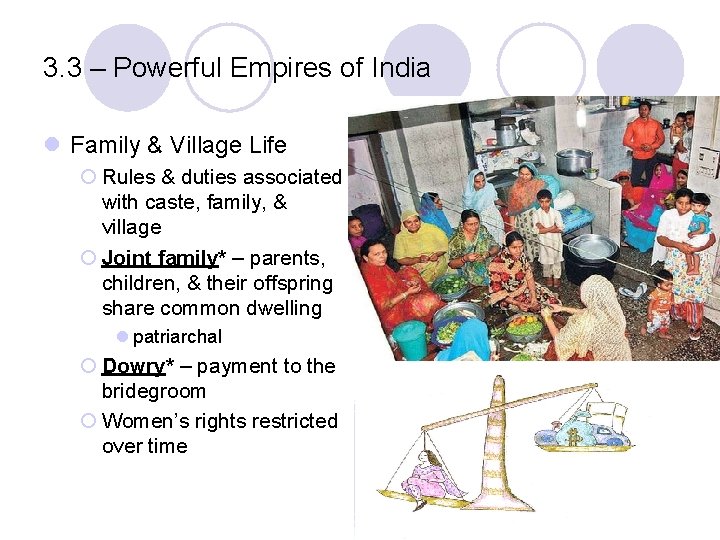
3. 3 – Powerful Empires of India l Family & Village Life ¡ Rules & duties associated with caste, family, & village ¡ Joint family* – parents, children, & their offspring share common dwelling l patriarchal ¡ Dowry* – payment to the bridegroom ¡ Women’s rights restricted over time
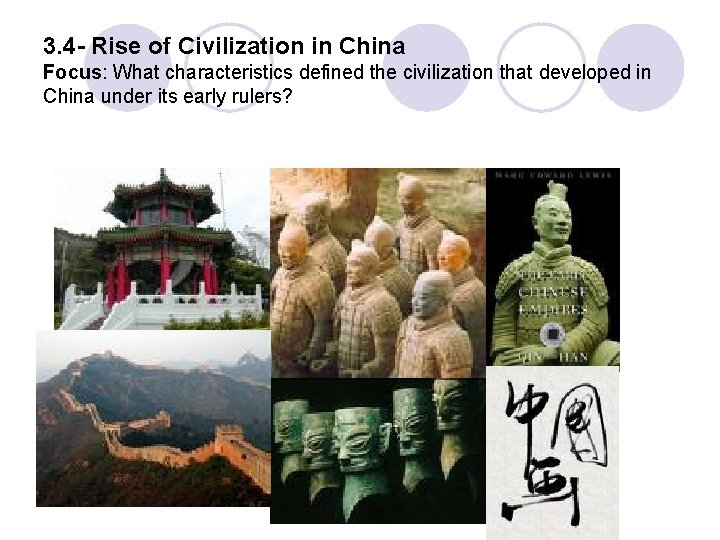
3. 4 - Rise of Civilization in China Focus: What characteristics defined the civilization that developed in China under its early rulers?
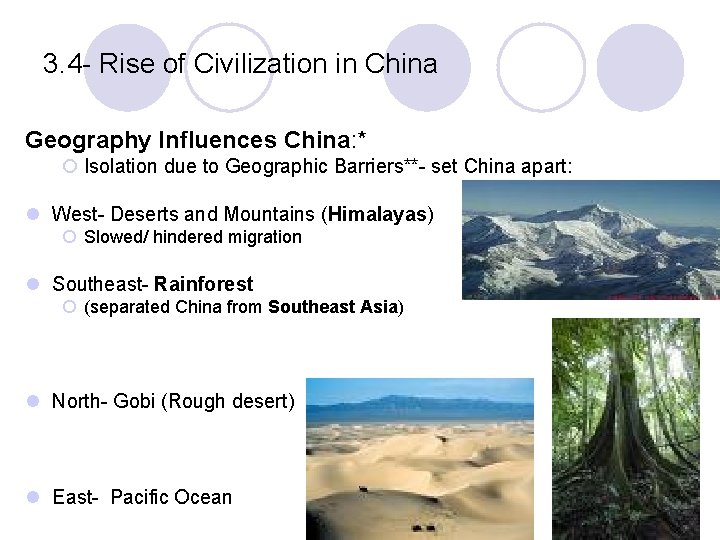
3. 4 - Rise of Civilization in China Geography Influences China: * ¡ Isolation due to Geographic Barriers**- set China apart: l West- Deserts and Mountains (Himalayas) ¡ Slowed/ hindered migration l Southeast- Rainforest ¡ (separated China from Southeast Asia) l North- Gobi (Rough desert) l East- Pacific Ocean
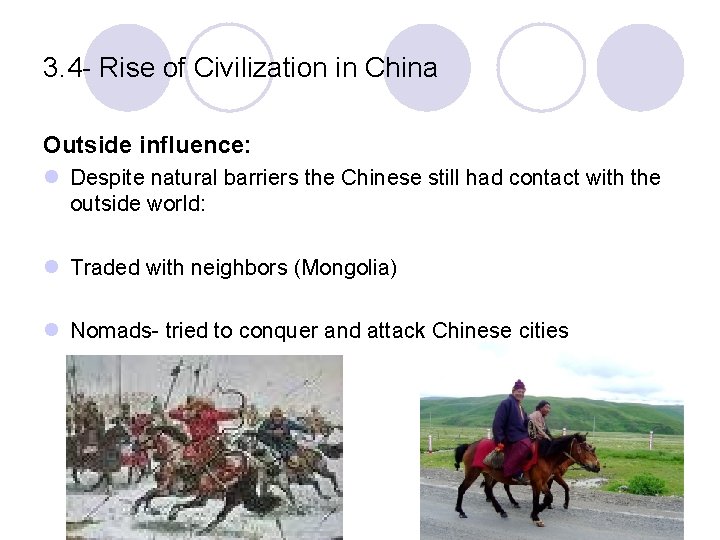
3. 4 - Rise of Civilization in China Outside influence: l Despite natural barriers the Chinese still had contact with the outside world: l Traded with neighbors (Mongolia) l Nomads- tried to conquer and attack Chinese cities
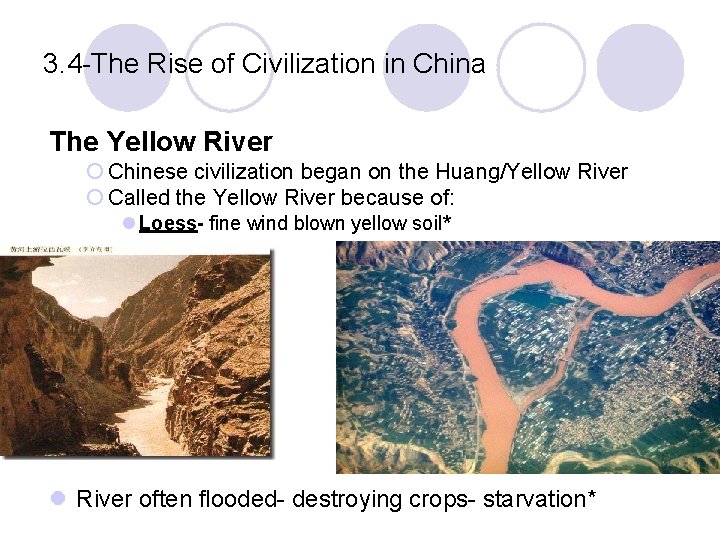
3. 4 -The Rise of Civilization in China The Yellow River ¡ Chinese civilization began on the Huang/Yellow River ¡ Called the Yellow River because of: l Loess- fine wind blown yellow soil* l River often flooded- destroying crops- starvation*
3. 4 - Rise of Civilization in China The Shang Dynasty l Shang Government ¡ Lead by a King ¡ Controlled Princes who were in charge of Clans ¡ Clans - group of families with a common ancestor*
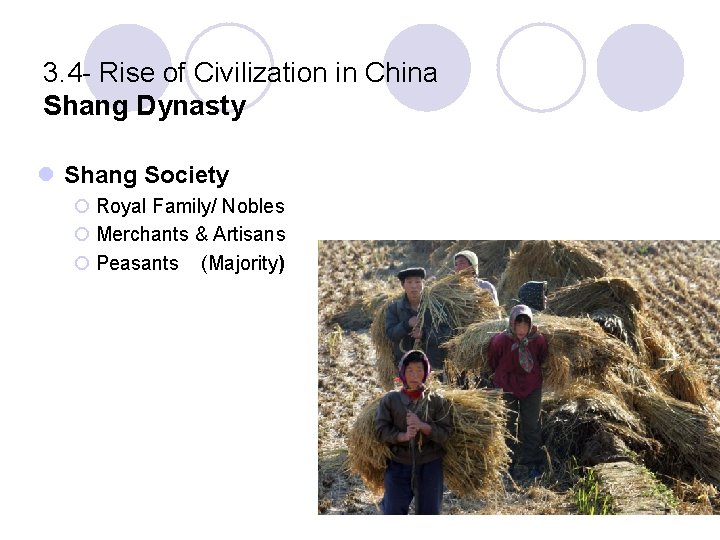
3. 4 - Rise of Civilization in China Shang Dynasty l Shang Society ¡ Royal Family/ Nobles ¡ Merchants & Artisans ¡ Peasants (Majority)
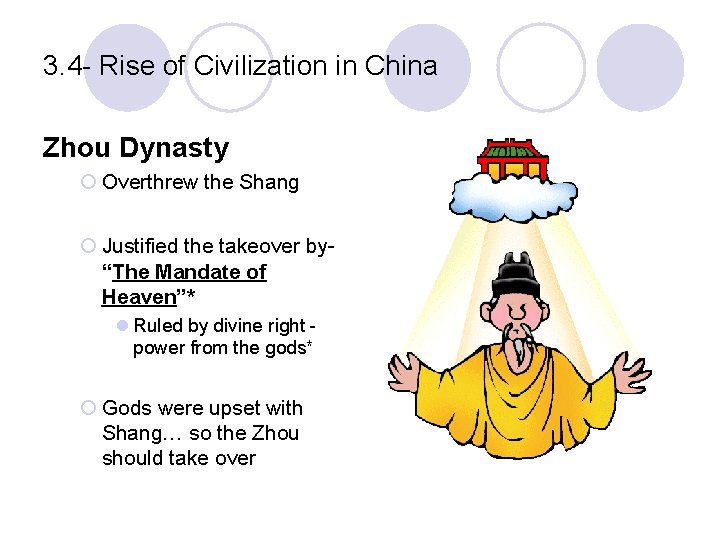
3. 4 - Rise of Civilization in China Zhou Dynasty ¡ Overthrew the Shang ¡ Justified the takeover by“The Mandate of Heaven”* l Ruled by divine right power from the gods* ¡ Gods were upset with Shang… so the Zhou should take over
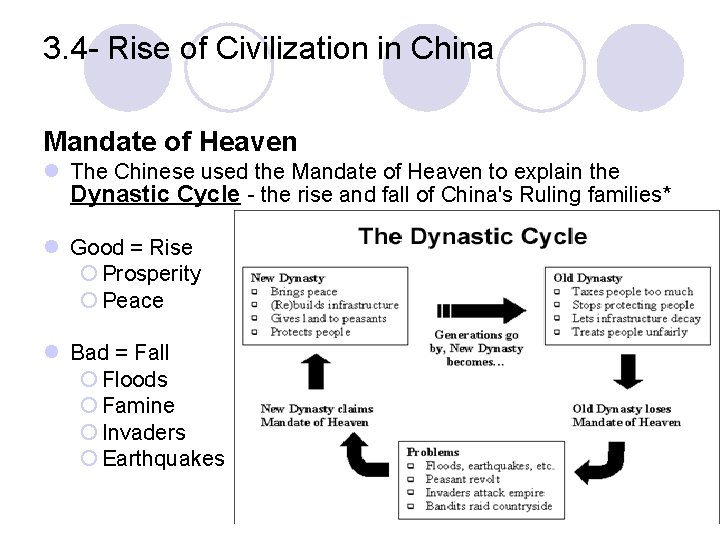
3. 4 - Rise of Civilization in China Mandate of Heaven l The Chinese used the Mandate of Heaven to explain the Dynastic Cycle - the rise and fall of China's Ruling families* l Good = Rise ¡ Prosperity ¡ Peace l Bad = Fall ¡ Floods ¡ Famine ¡ Invaders ¡ Earthquakes
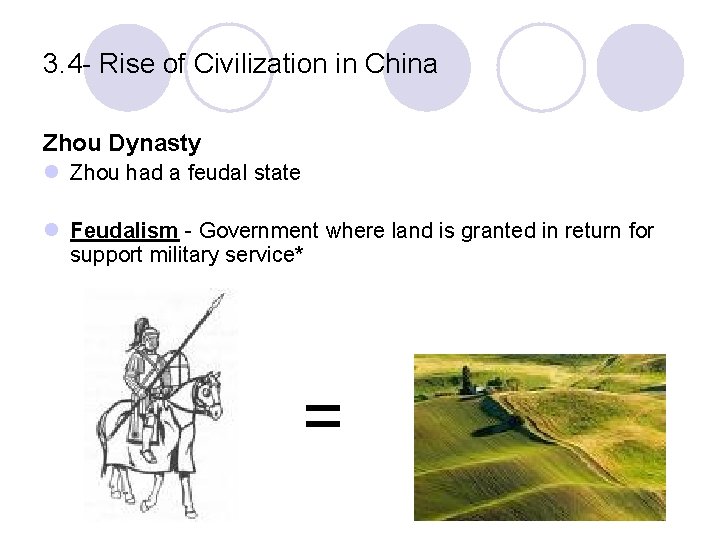
3. 4 - Rise of Civilization in China Zhou Dynasty l Zhou had a feudal state l Feudalism - Government where land is granted in return for support military service* =
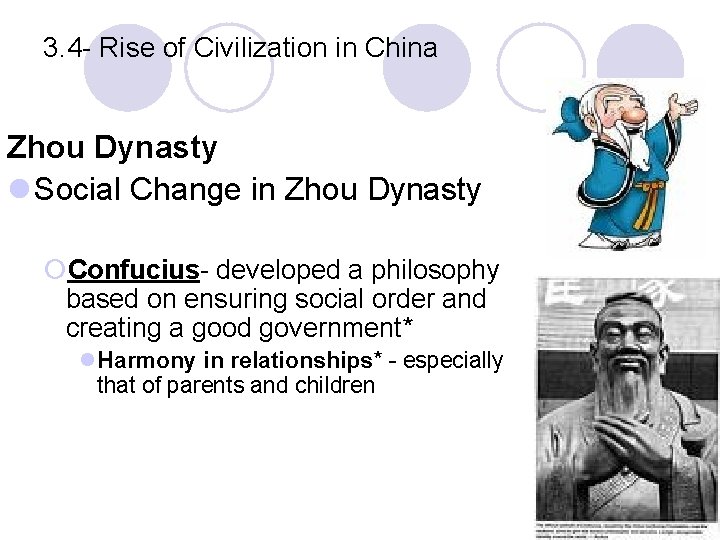
3. 4 - Rise of Civilization in China Zhou Dynasty l Social Change in Zhou Dynasty ¡Confucius- developed a philosophy based on ensuring social order and creating a good government* l. Harmony in relationships* - especially that of parents and children
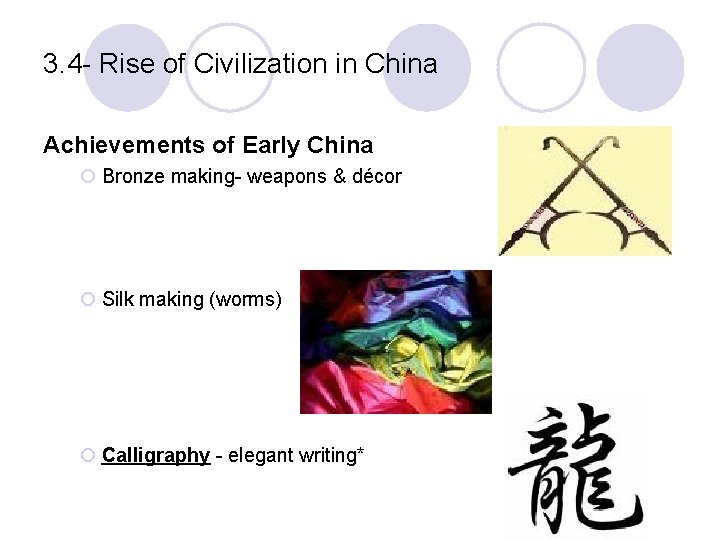
3. 4 - Rise of Civilization in China Achievements of Early China ¡ Bronze making- weapons & décor ¡ Silk making (worms) ¡ Calligraphy - elegant writing*
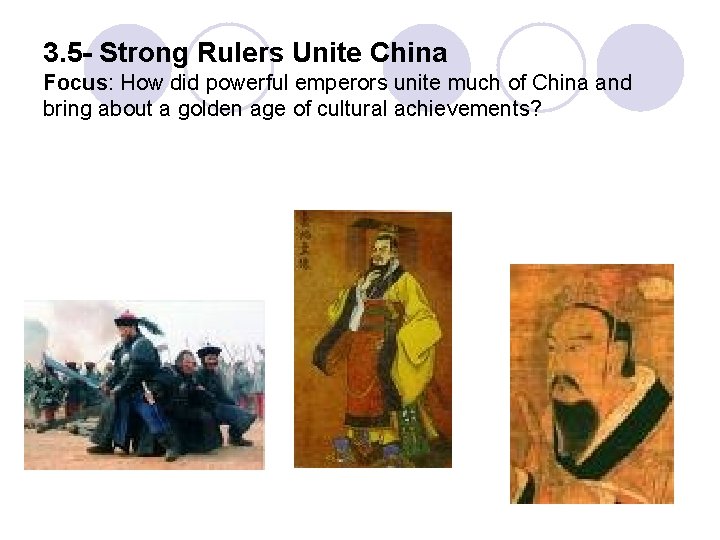
3. 5 - Strong Rulers Unite China Focus: How did powerful emperors unite much of China and bring about a golden age of cultural achievements?
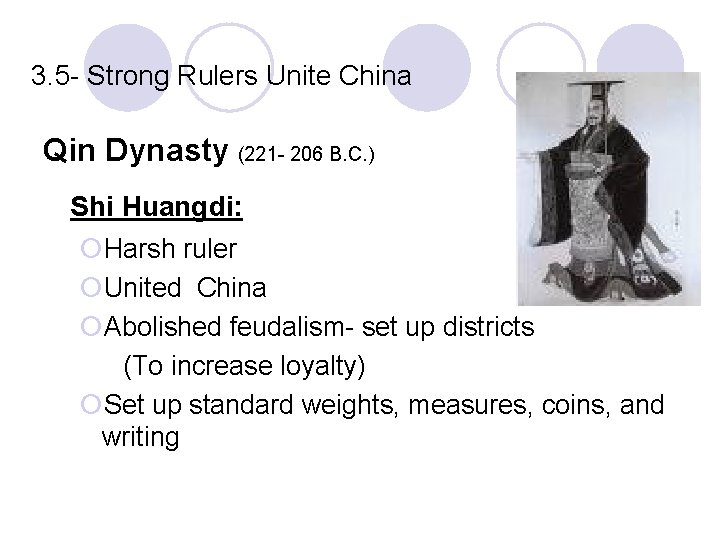
3. 5 - Strong Rulers Unite China Qin Dynasty (221 - 206 B. C. ) Shi Huangdi: ¡Harsh ruler ¡United China ¡Abolished feudalism- set up districts (To increase loyalty) ¡Set up standard weights, measures, coins, and writing
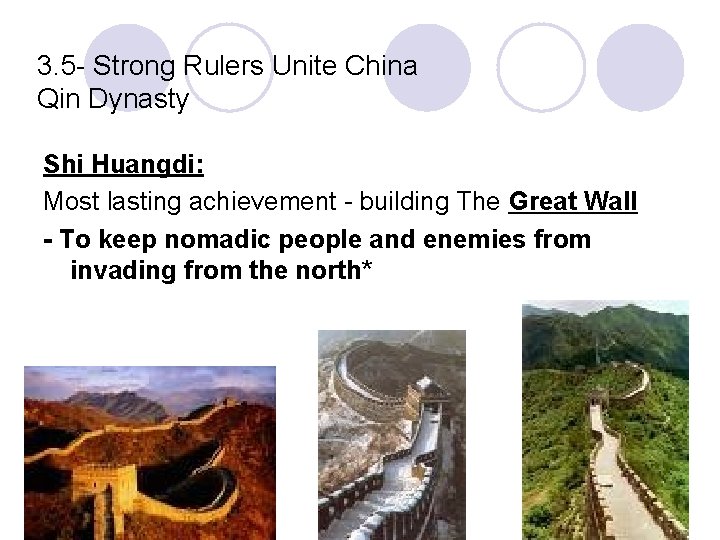
3. 5 - Strong Rulers Unite China Qin Dynasty Shi Huangdi: Most lasting achievement - building The Great Wall - To keep nomadic people and enemies from invading from the north*
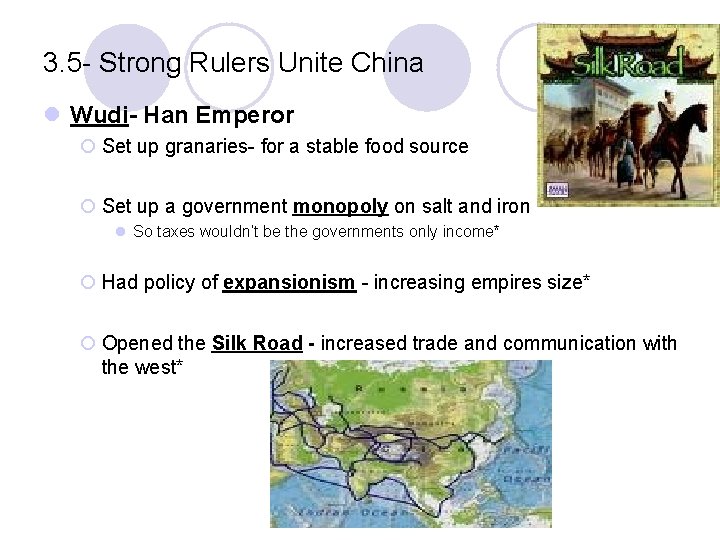
3. 5 - Strong Rulers Unite China l Wudi- Han Emperor ¡ Set up granaries- for a stable food source ¡ Set up a government monopoly on salt and iron l So taxes wouldn’t be the governments only income* ¡ Had policy of expansionism - increasing empires size* ¡ Opened the Silk Road - increased trade and communication with the west*
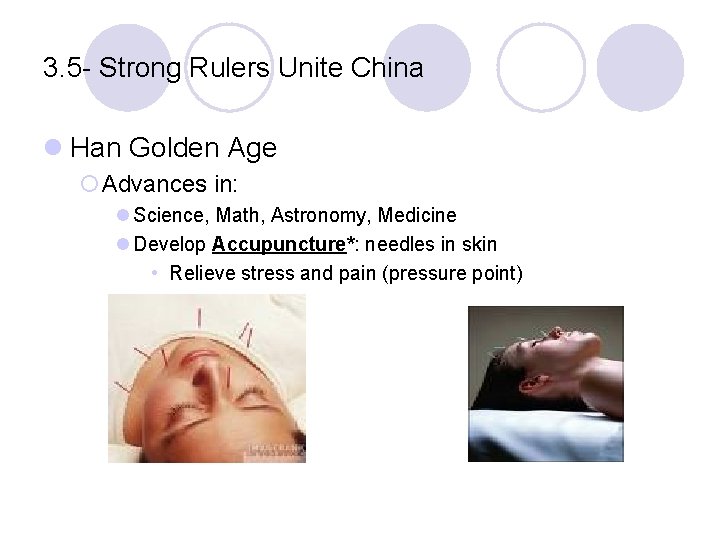
3. 5 - Strong Rulers Unite China l Han Golden Age ¡Advances in: l Science, Math, Astronomy, Medicine l Develop Accupuncture*: needles in skin • Relieve stress and pain (pressure point)
- Slides: 35