
Chapter 3 An Overview of Organic Reactions Based
Chapter 3. An Overview of Organic Reactions Based on: Mc. Murry’s Organic Chemistry, 6 th edition, Chapter 3 1
3. 1 Kinds of Organic Reactions n In general, we look at: q what occurs, q and try to learn how it happens n What includes reactivity patterns and types of reaction How refers to reaction mechanisms n 2
3. 1 Kinds of Organic Reactions n n Addition reactions – two molecules combine Elimination reactions – one molecule splits into two Substitution – parts from two molecules exchange Rearrangement reactions – a molecule undergoes changes in the way its atoms are connected 3
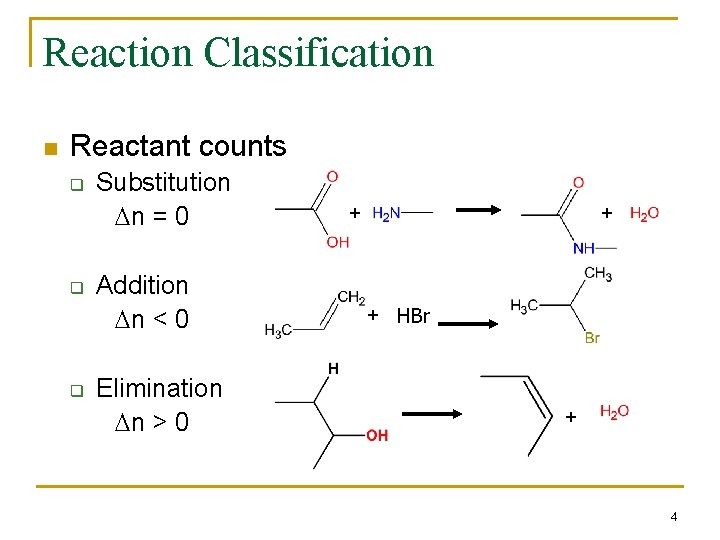
Reaction Classification n Reactant counts q q q Substitution Dn = 0 Addition Dn < 0 Elimination Dn > 0 + + + HBr + 4
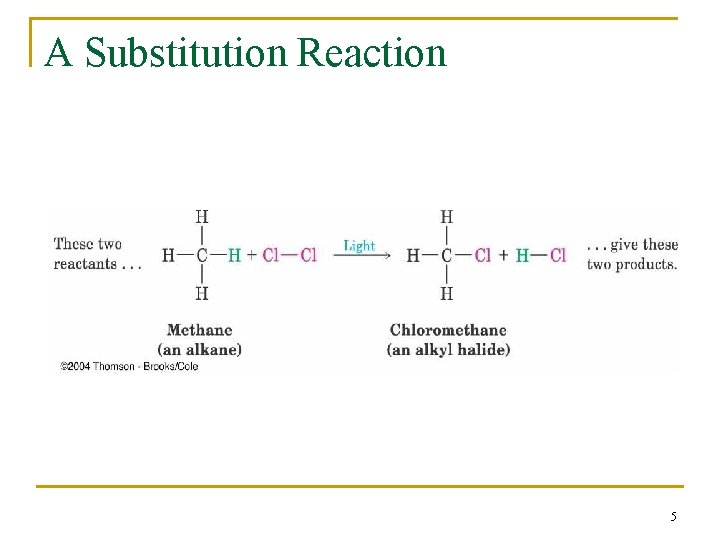
A Substitution Reaction 5

A Rearrangement Reaction 6
3. 2 How Organic Reactions Occur: Mechanisms n n In a clock the hands move but the mechanism behind the face is what causes the movement In an organic reaction, by isolating and identifying the products, we see the transformation that has occurred. The mechanism describes the steps behind the changes that we can observe Reactions occur in defined steps that lead from reactant to product 7
Steps in Mechanisms n n n A step usually involves either the formation or breaking of a covalent bond Steps can occur individually or in combination with other steps When several steps occur at the same time they are said to be concerted 8
Types of Steps in Reaction Mechanisms n Formation of a covalent bond q n Breaking of a covalent bond q n n Homogenic or heterogenic Homolytic or heterolytic Oxidation of a functional group Reduction of a functional group 9
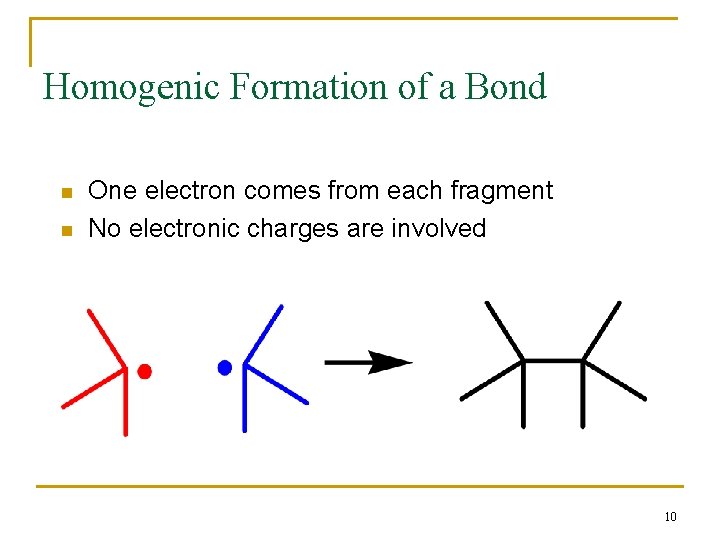
Homogenic Formation of a Bond n n One electron comes from each fragment No electronic charges are involved 10
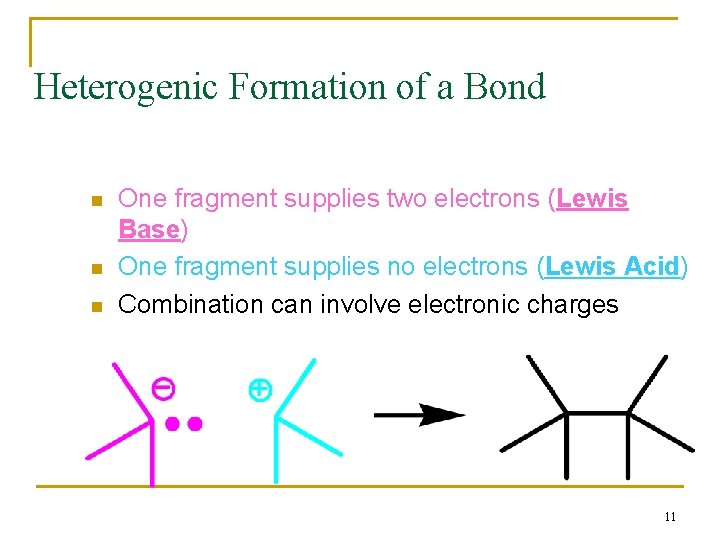
Heterogenic Formation of a Bond n n n One fragment supplies two electrons (Lewis Base) One fragment supplies no electrons (Lewis Acid) Combination can involve electronic charges 11
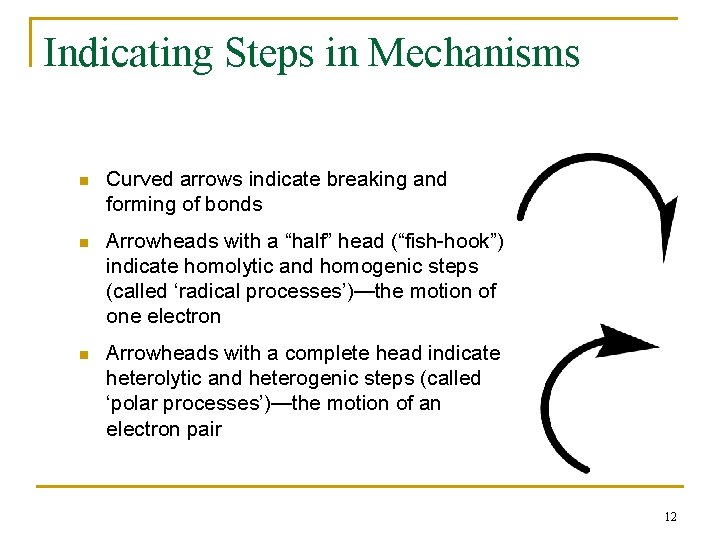
Indicating Steps in Mechanisms n Curved arrows indicate breaking and forming of bonds n Arrowheads with a “half” head (“fish-hook”) indicate homolytic and homogenic steps (called ‘radical processes’)—the motion of one electron n Arrowheads with a complete head indicate heterolytic and heterogenic steps (called ‘polar processes’)—the motion of an electron pair 12

Bond Making 13
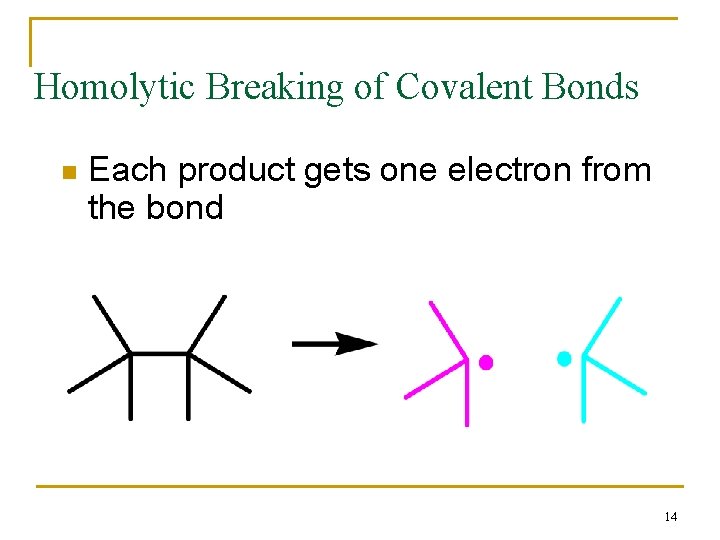
Homolytic Breaking of Covalent Bonds n Each product gets one electron from the bond 14
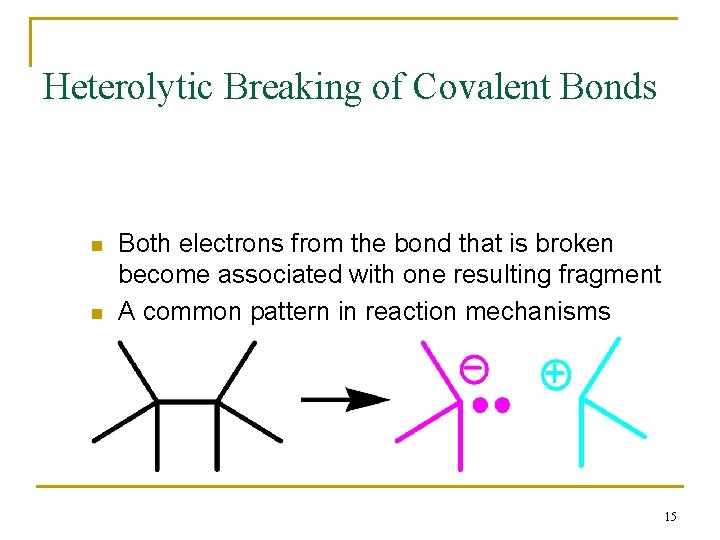
Heterolytic Breaking of Covalent Bonds n n Both electrons from the bond that is broken become associated with one resulting fragment A common pattern in reaction mechanisms 15
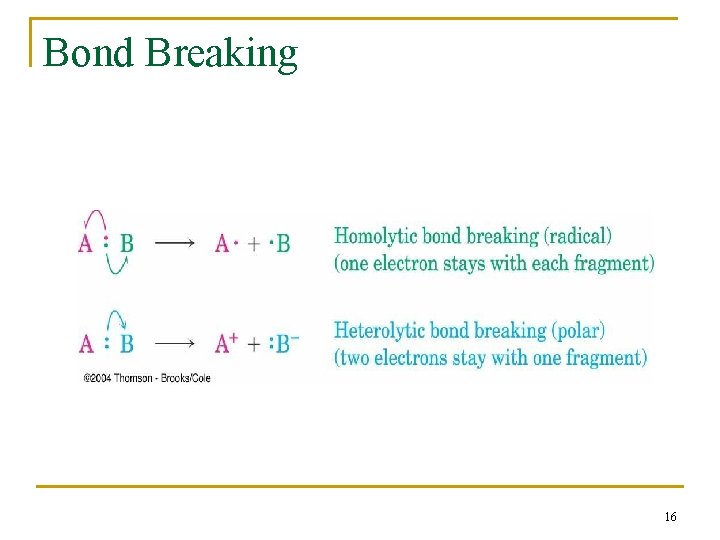
Bond Breaking 16
Radicals n Alkyl groups are abbreviate “R” for radical q Example: Methyl iodide = CH 3 I, Ethyl iodide = CH 3 CH 2 I, Alkyl iodides (in general) = RI n A “free radical” is an “R” group on its own: q CH 3 is a “free radical” or simply “radical” q Has a single unpaired electron, shown as: CH 3. q Its valence shell is one electron short of being complete 17
3. 3 Radical Reactions and How They Occur n Radicals react to complete electron octet of valence shell q q A radical can break a bond in another molecule and abstract a partner with an electron, giving substitution in the original molecule A radical can add to an alkene to give a new radical, causing an addition reaction 18
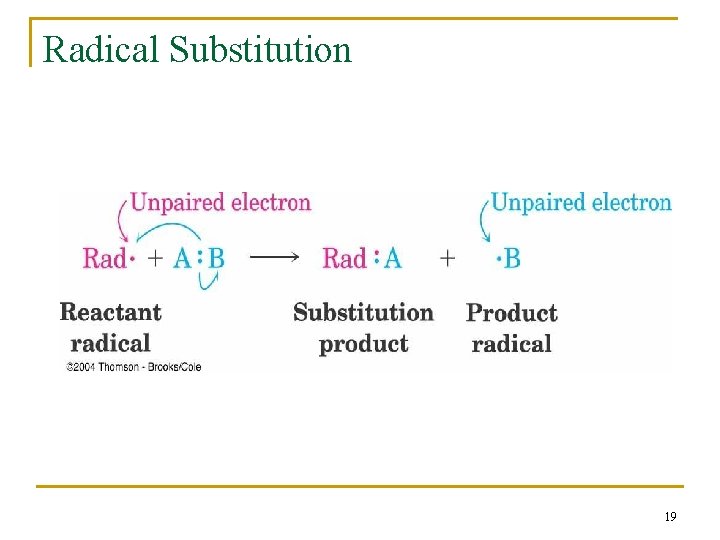
Radical Substitution 19
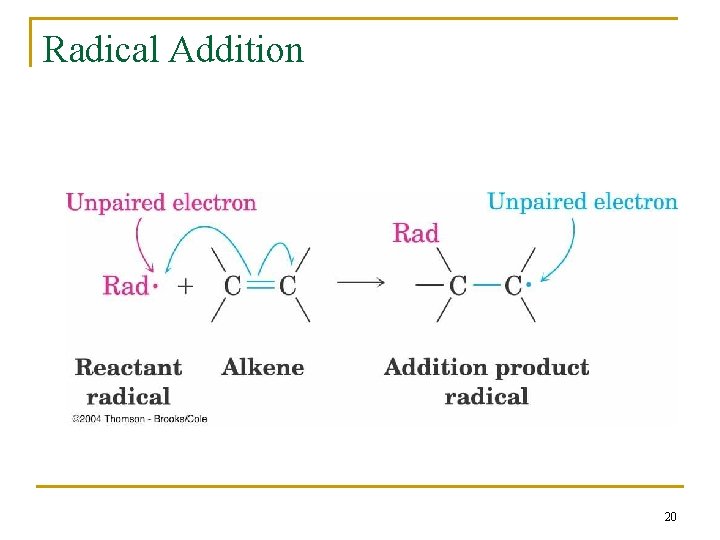
Radical Addition 20
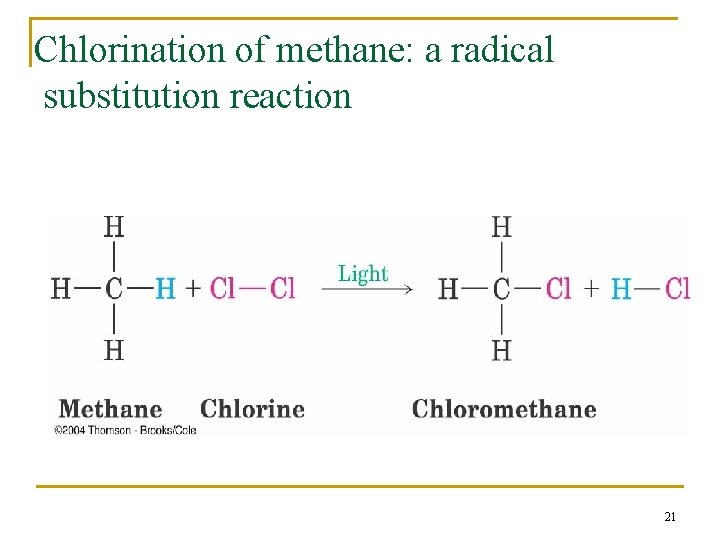
Chlorination of methane: a radical substitution reaction 21
3. 4 Polar Reactions and How They Occur n Molecules can contain local unsymmetrical electron distributions due to differences in electronegativities n This causes a partial negative charge on an atom and a compensating partial positive charge on an adjacent atom The more electronegative atom has the greater electron density n 22
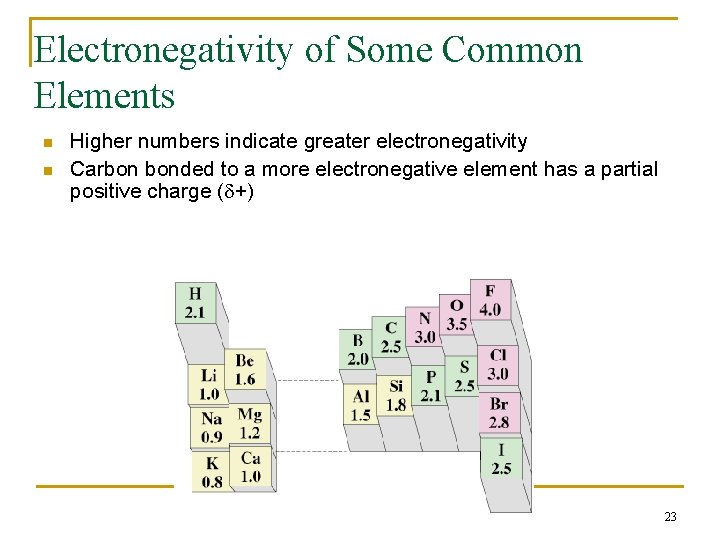
Electronegativity of Some Common Elements n n Higher numbers indicate greater electronegativity Carbon bonded to a more electronegative element has a partial positive charge ( +) 23
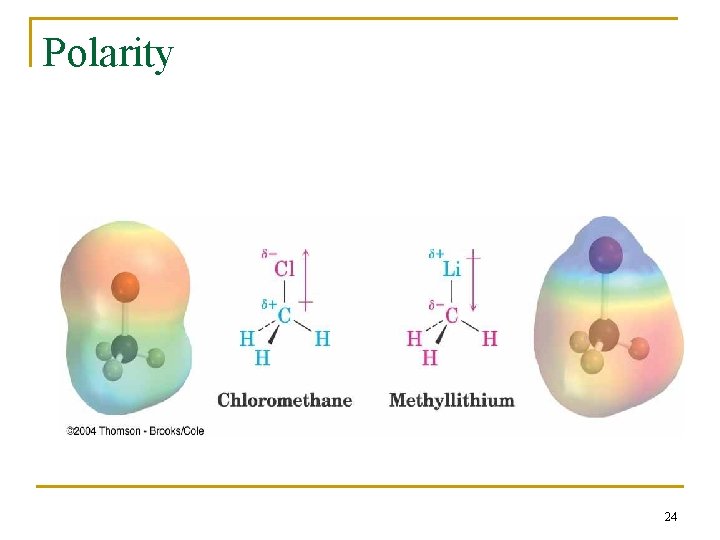
Polarity 24
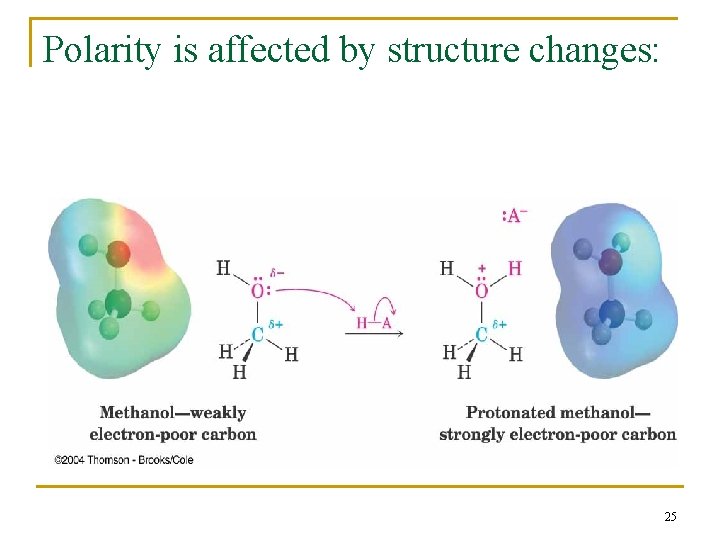
Polarity is affected by structure changes: 25
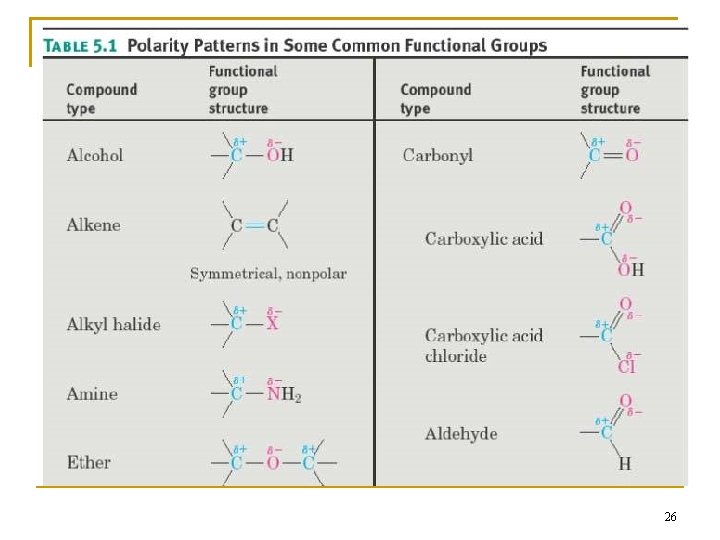
26
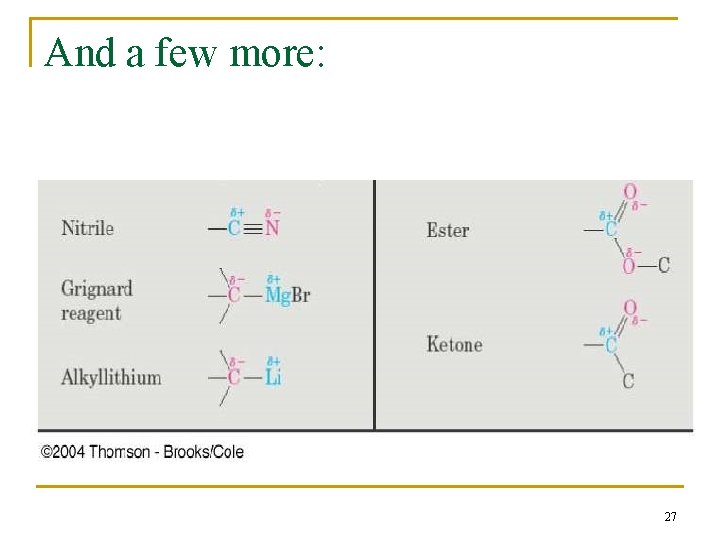
And a few more: 27
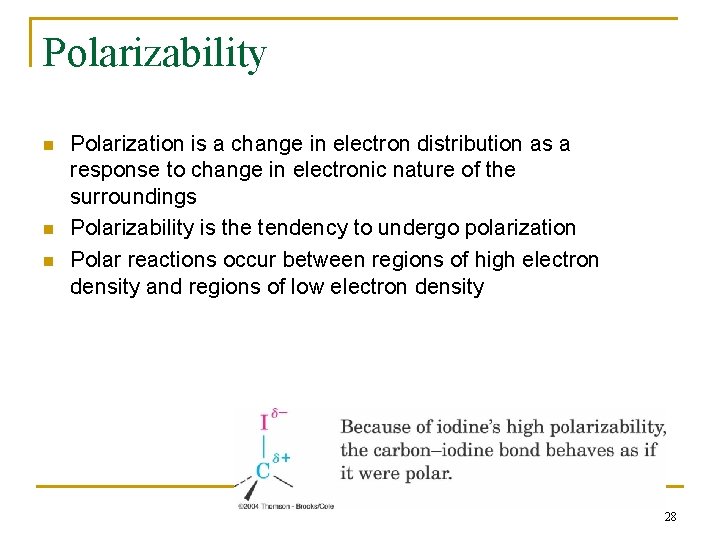
Polarizability n n n Polarization is a change in electron distribution as a response to change in electronic nature of the surroundings Polarizability is the tendency to undergo polarization Polar reactions occur between regions of high electron density and regions of low electron density 28
Generalized Polar Reactions n An electrophile, an electron-poor species (Lewis acid), combines with a nucleophile, an electron-rich species (Lewis base) n The combination is indicated with a curved arrow from nucleophile to electrophile 29
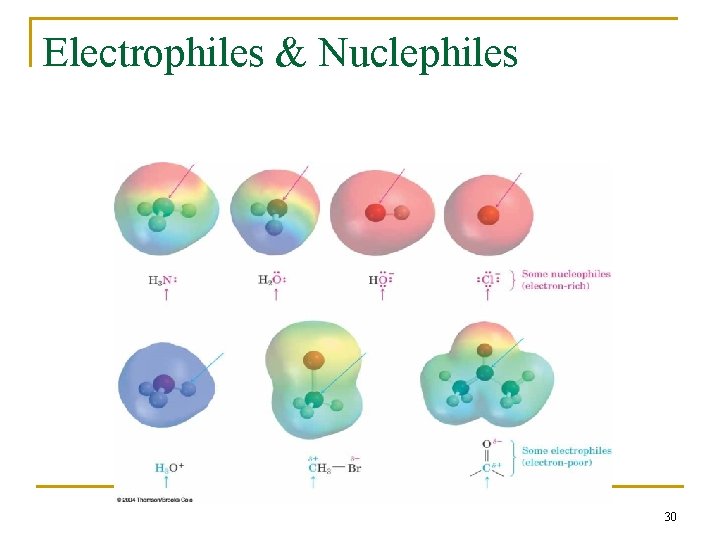
Electrophiles & Nuclephiles 30
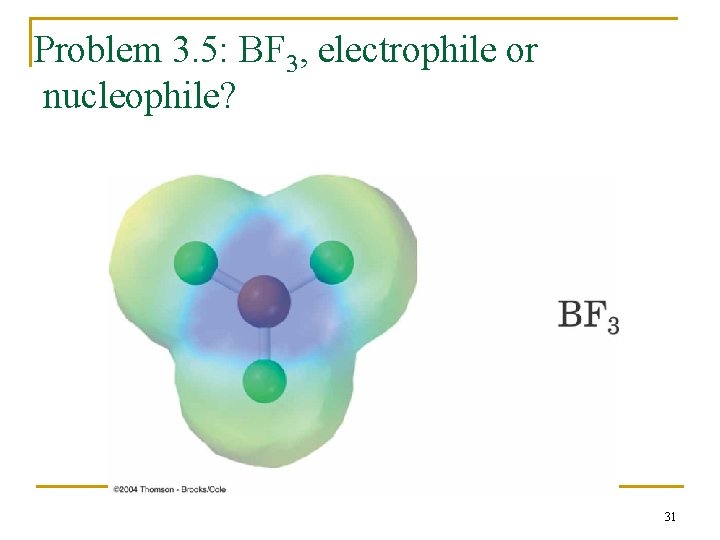
Problem 3. 5: BF 3, electrophile or nucleophile? 31
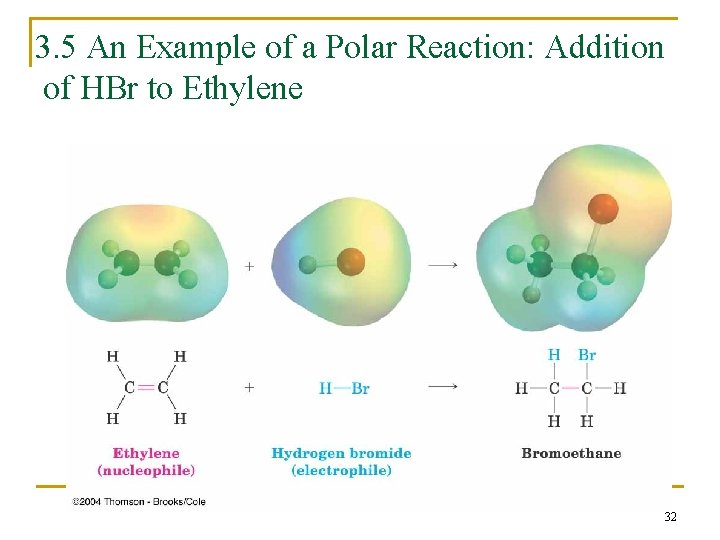
3. 5 An Example of a Polar Reaction: Addition of HBr to Ethylene 32
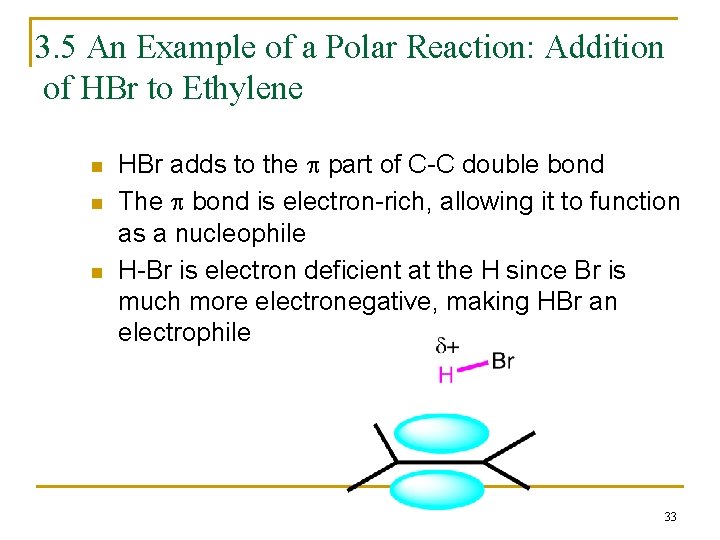
3. 5 An Example of a Polar Reaction: Addition of HBr to Ethylene n n n HBr adds to the part of C-C double bond The bond is electron-rich, allowing it to function as a nucleophile H-Br is electron deficient at the H since Br is much more electronegative, making HBr an electrophile 33
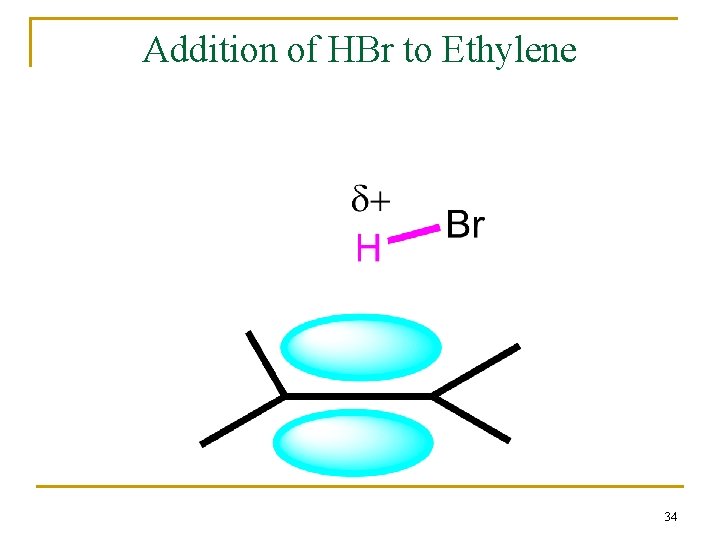
Addition of HBr to Ethylene 34
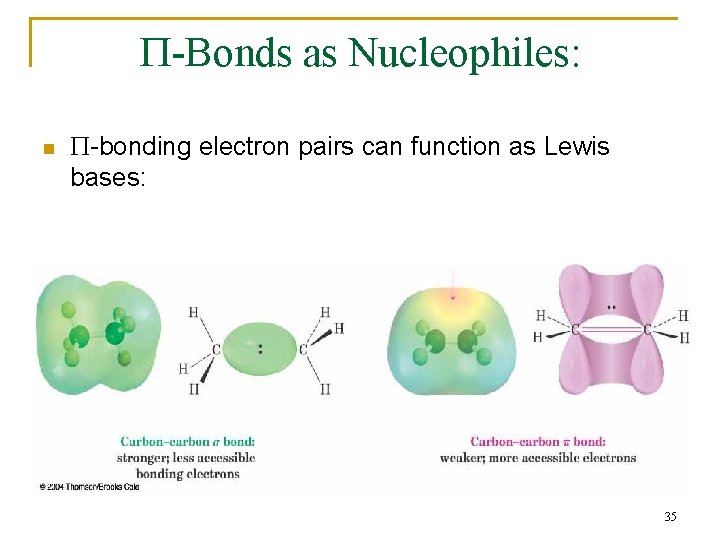
P-Bonds as Nucleophiles: n P-bonding electron pairs can function as Lewis bases: 35
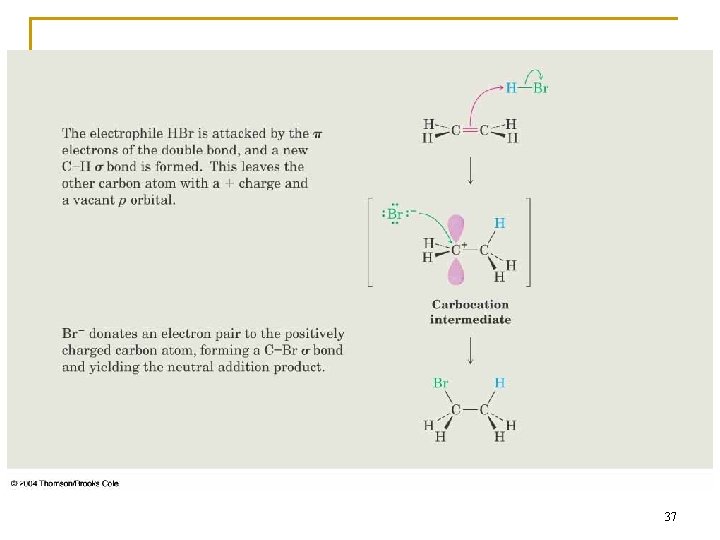
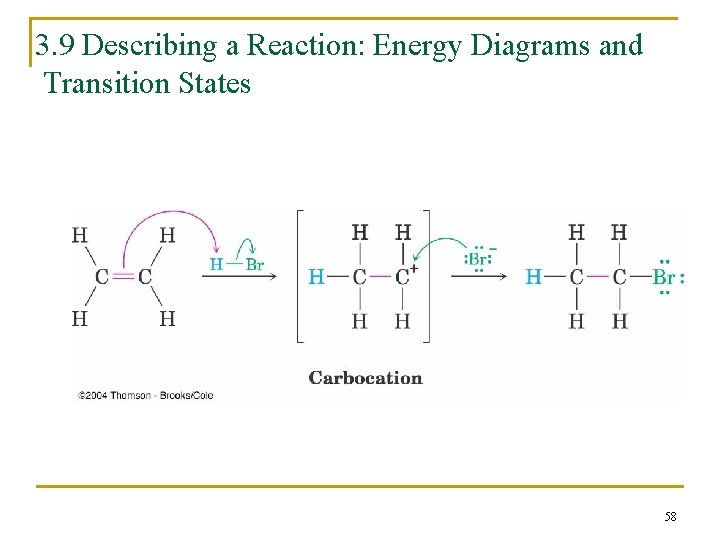
Mechanism of Addition of HBr to Ethylene n n HBr electrophile is attacked by electrons of ethylene (nucleophile) to form a carbocation intermediate and bromide ion Bromide adds to the positive center of the carbocation, which is an electrophile, forming a C-Br bond The result is that ethylene and HBr combine to form bromoethane All polar reactions occur by combination of an electron-rich site of a nucleophile and an electron -deficient site of an electrophile 36
37
3. 6 Using Curved Arrows in Polar Reaction Mechanisms n n n Curved arrows are a way to keep track of changes in bonding in polar reaction The arrows track “electron movement” Electrons always move in pairs in polar reactions Charges change during the reaction One curved arrow corresponds to one step in a reaction mechanism 38
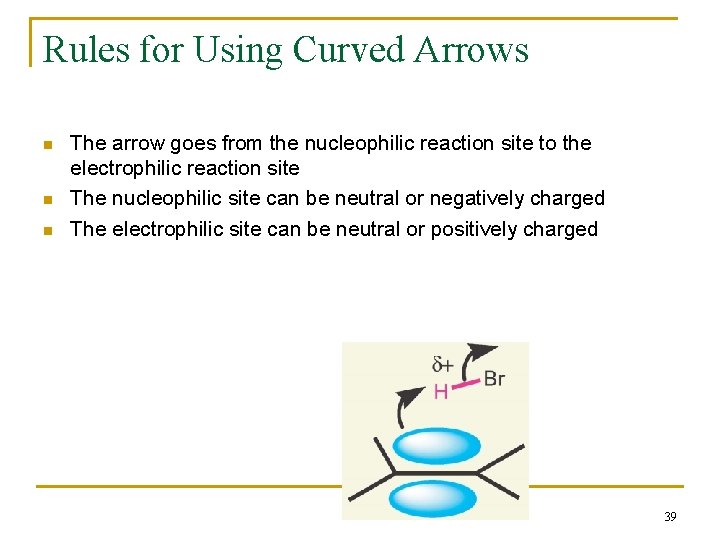
Rules for Using Curved Arrows n n n The arrow goes from the nucleophilic reaction site to the electrophilic reaction site The nucleophilic site can be neutral or negatively charged The electrophilic site can be neutral or positively charged 39
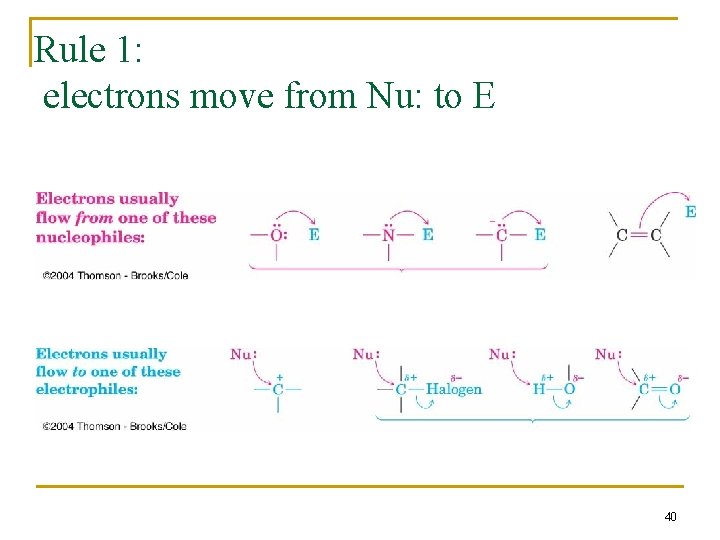
Rule 1: electrons move from Nu: to E 40
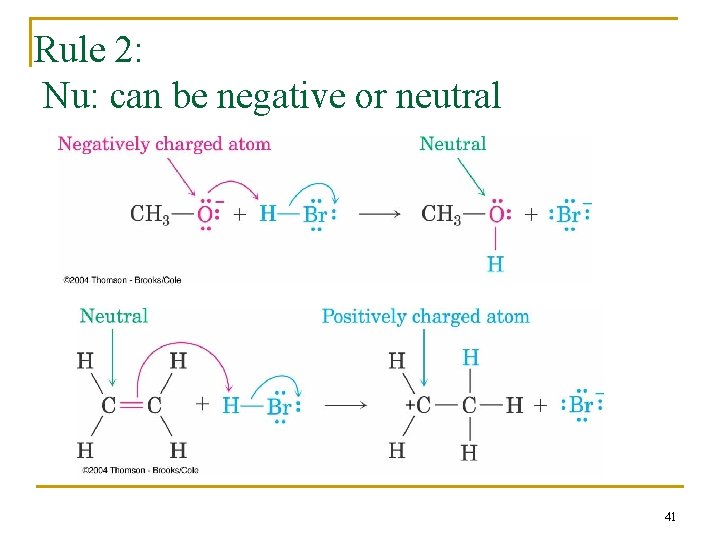
Rule 2: Nu: can be negative or neutral 41
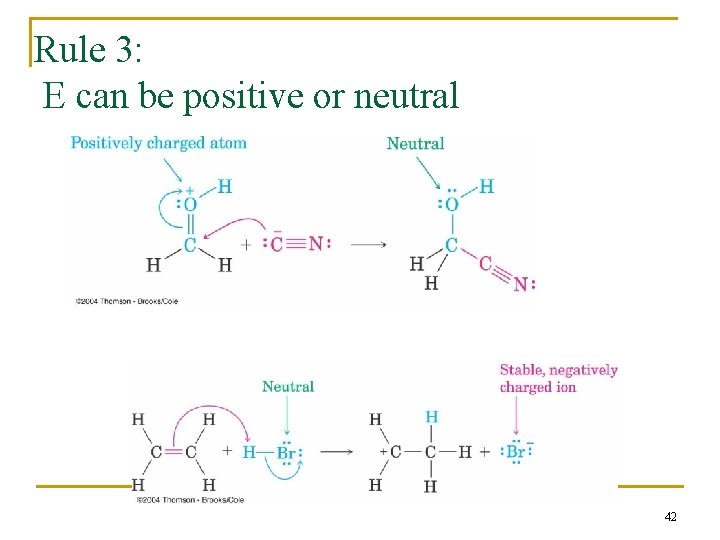
Rule 3: E can be positive or neutral 42
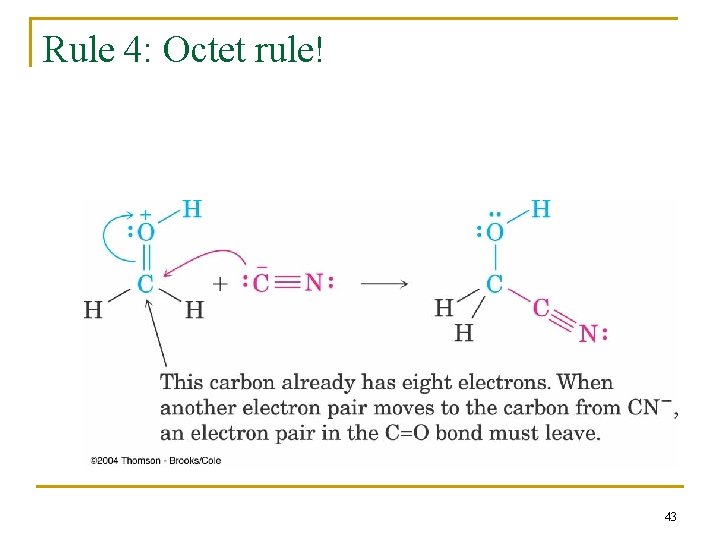
Rule 4: Octet rule! 43
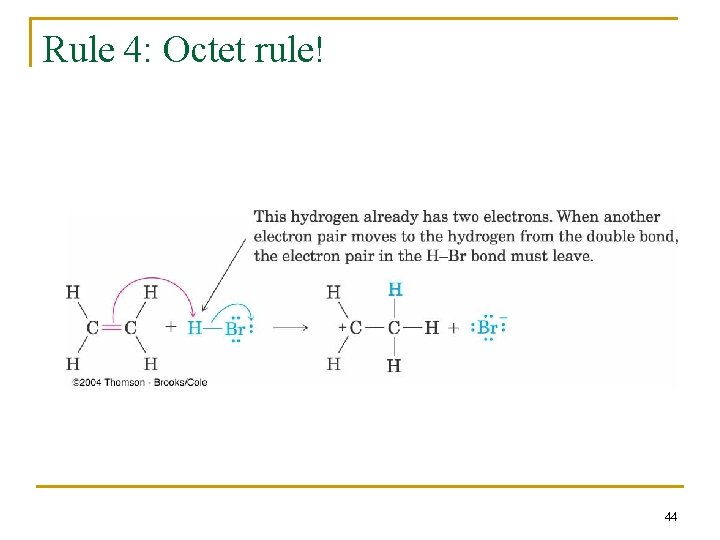
Rule 4: Octet rule! 44
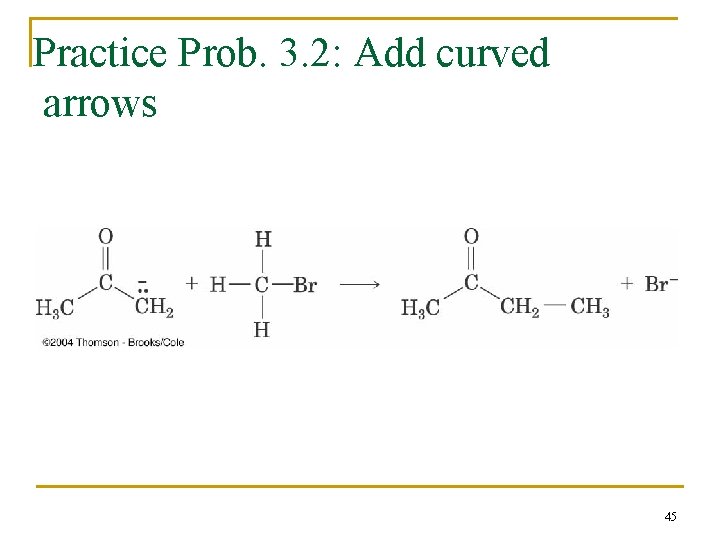
Practice Prob. 3. 2: Add curved arrows 45
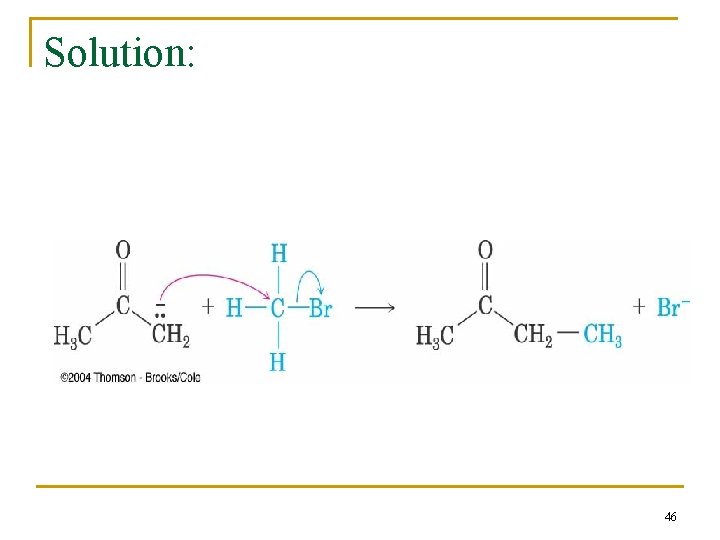
Solution: 46
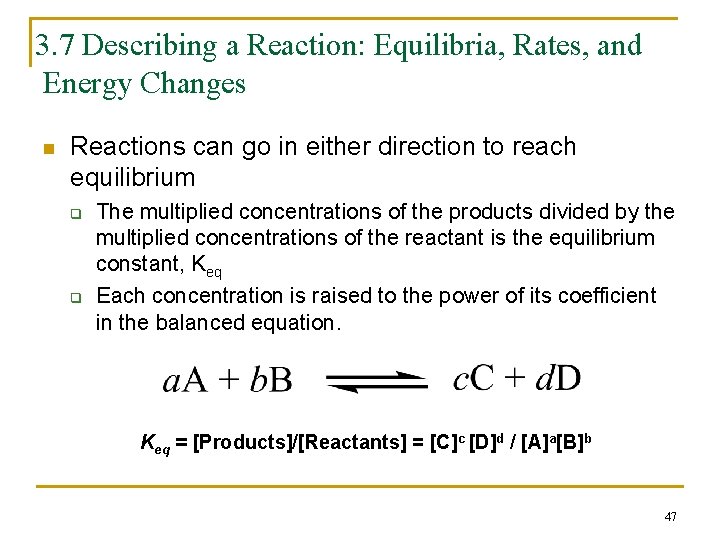
3. 7 Describing a Reaction: Equilibria, Rates, and Energy Changes n Reactions can go in either direction to reach equilibrium q q The multiplied concentrations of the products divided by the multiplied concentrations of the reactant is the equilibrium constant, Keq Each concentration is raised to the power of its coefficient in the balanced equation. Keq = [Products]/[Reactants] = [C]c [D]d / [A]a[B]b 47
Magnitudes of Equilibrium Constants n If the value of Keq is greater than 1, this indicates that at equilibrium most of the material is present as product(s) n A value of Keq less than one indicates that at equilibrium most of the material is present as the reactant(s) 48
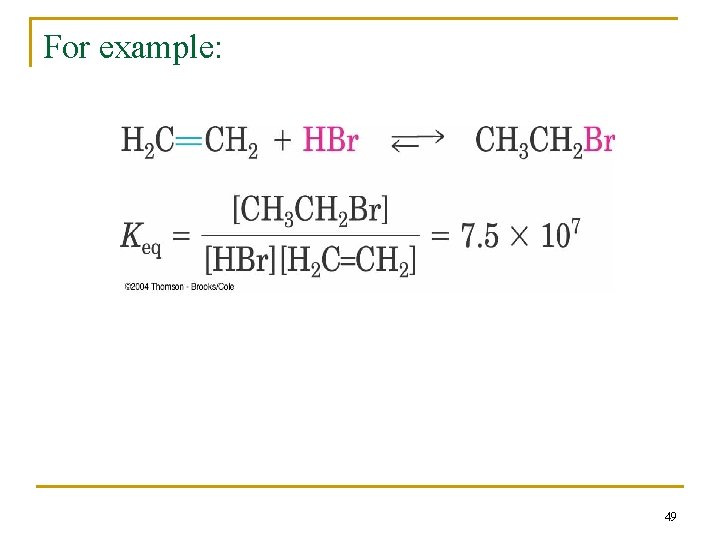
For example: 49
Numeric Relationship of Keq and Free Energy Change n n The standard free energy change at 1 atm pressure and 298 K is DGº The relationship between free energy change and an equilibrium constant is: q DGº = - RT ln. Keq q R = 1. 987 cal/(K x mol) (gas constant) q q where T = temperature in Kelvins ln = natural logarithm 50
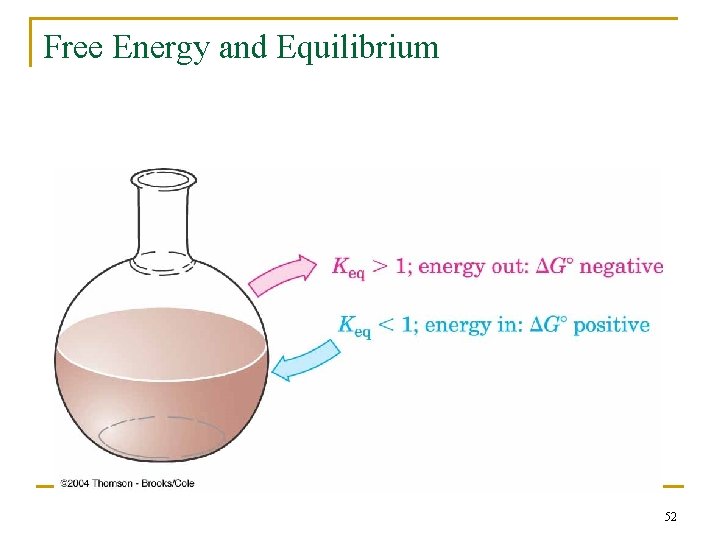
Free Energy and Equilibrium n The ratio of products to reactants is controlled by their relative Gibbs free energy n This energy is released on the favored side of an equilibrium reaction n The change in Gibbs free energy between products and reacts is written as “DG” n If Keq > 1, energy is released to the surrounding (exergonic reaction) n If Keq < 1, energy is absorbed from the surroundings (endergonic reaction) 51
Free Energy and Equilibrium 52
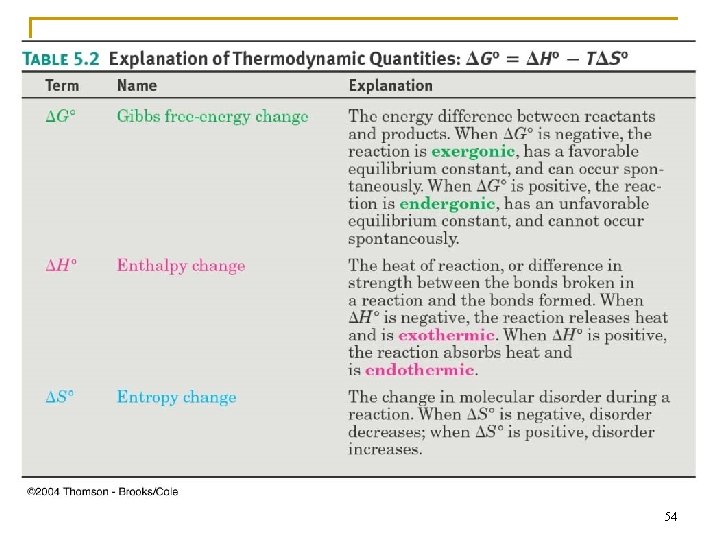
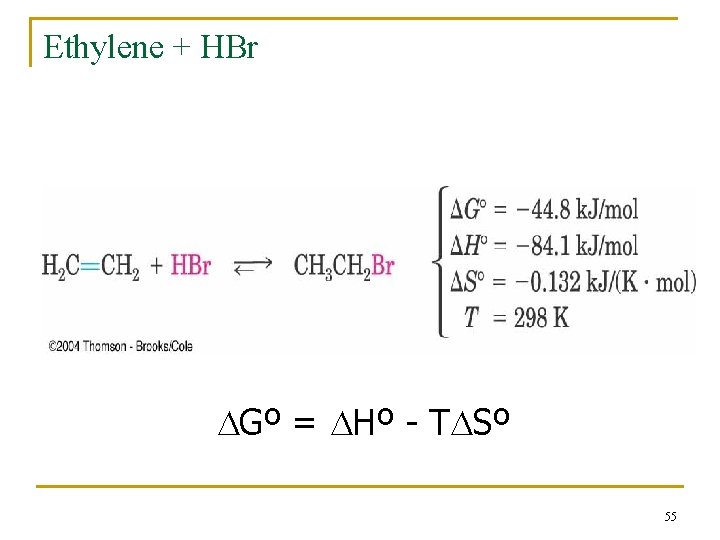
Changes in Energy at Equilibrium n Free energy changes (DGº) can be divided into q q n a temperature-independent part called entropy (DSº) that measures the change in the amount of disorder in the system a temperature-dependent part called enthalpy (DHº) that is associated with heat given off (exothermic) or absorbed (endothermic) Overall relationship: DGº = DHº - TDSº 53
54
Ethylene + HBr DGº = DHº - TDSº 55
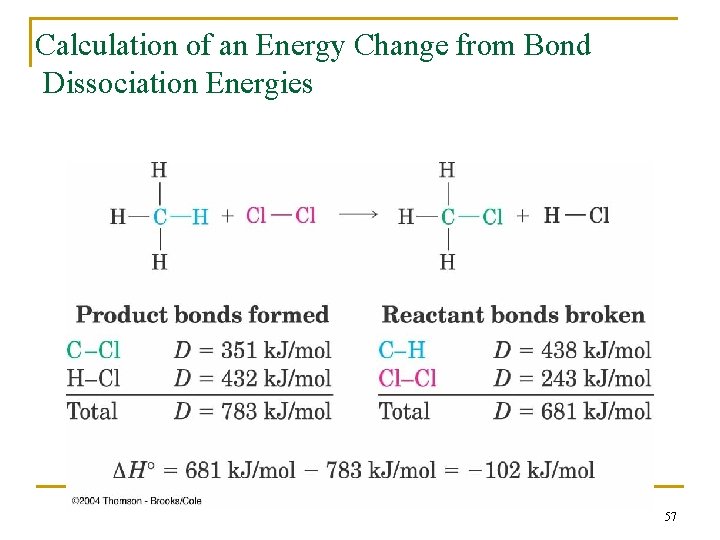
3. 8 Describing a Reaction: Bond Dissociation Energies n Bond dissociation energy (D): Heat change that occurs when a bond is broken by homolysis n The energy is mostly determined by the type of bond, independent of the molecule q n The C-H bond in methane requires a net heat input of 105 kcal/mol to be broken at 25 ºC. Changes in bonds can be used to calculate net changes in heat 56
Calculation of an Energy Change from Bond Dissociation Energies 57
3. 9 Describing a Reaction: Energy Diagrams and Transition States 58
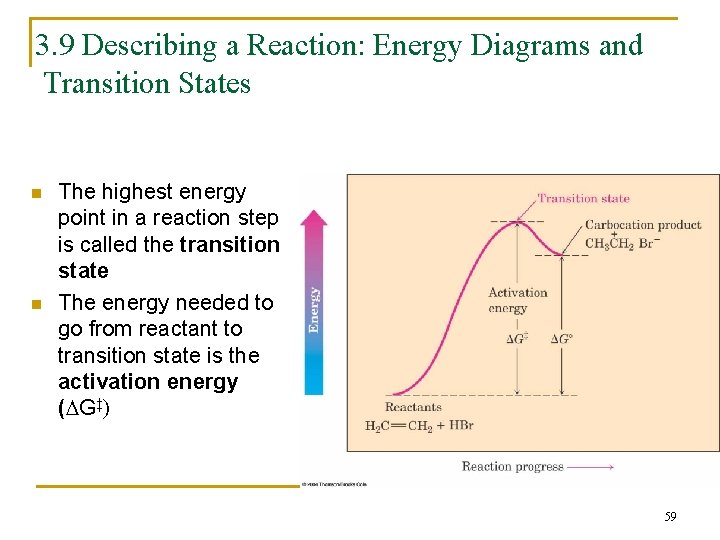
3. 9 Describing a Reaction: Energy Diagrams and Transition States n n The highest energy point in a reaction step is called the transition state The energy needed to go from reactant to transition state is the activation energy (DG‡) 59
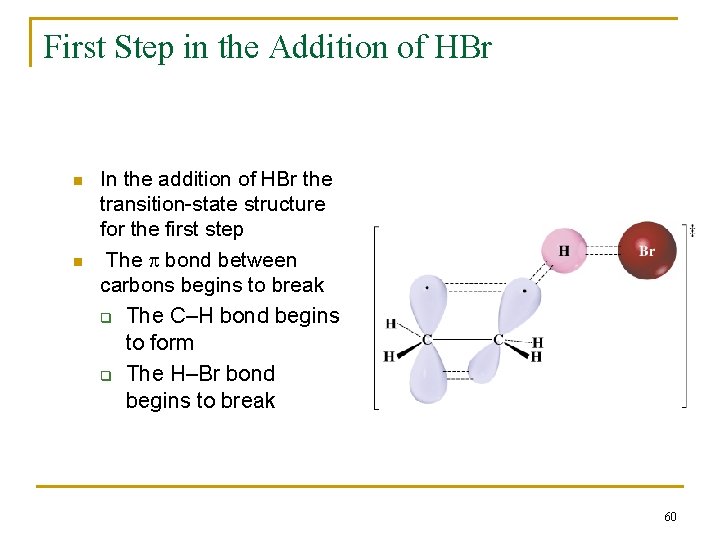
First Step in the Addition of HBr n n In the addition of HBr the transition-state structure for the first step The bond between carbons begins to break q The C–H bond begins to form q The H–Br bond begins to break 60
3. 10 Describing a Reaction: Intermediates n n If a reaction occurs in more than one step, it must involve species that are neither the reactant nor the final product These are called reaction intermediates or simply “intermediates” Each step has its own free energy of activation The complete diagram for the reaction shows the free energy changes associated with an intermediate 61
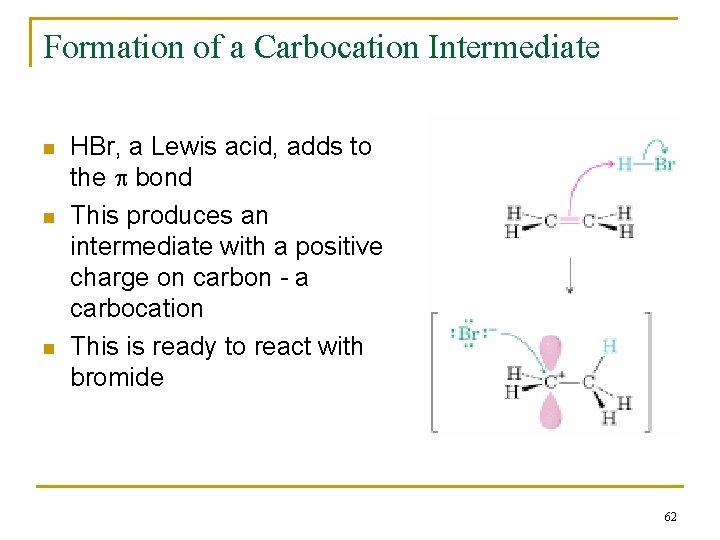
Formation of a Carbocation Intermediate n n n HBr, a Lewis acid, adds to the bond This produces an intermediate with a positive charge on carbon - a carbocation This is ready to react with bromide 62
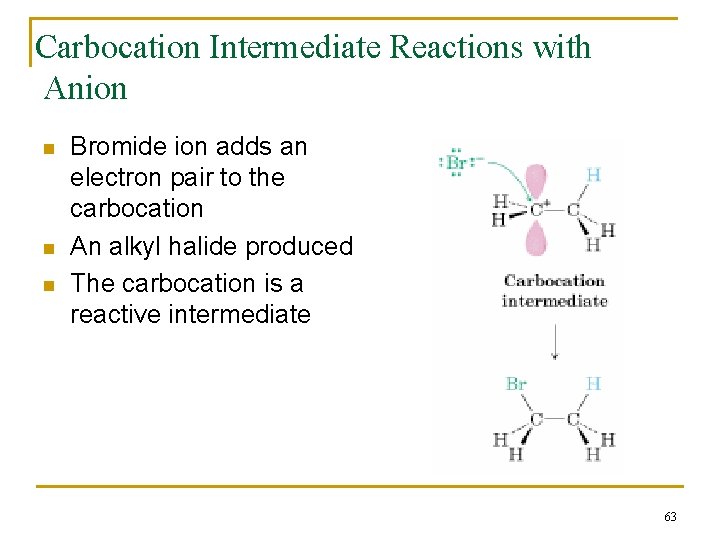
Carbocation Intermediate Reactions with Anion n Bromide ion adds an electron pair to the carbocation An alkyl halide produced The carbocation is a reactive intermediate 63
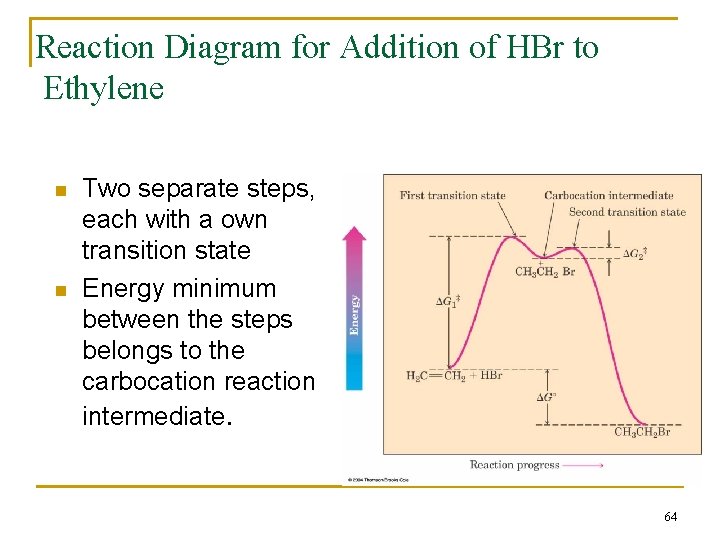
Reaction Diagram for Addition of HBr to Ethylene n n Two separate steps, each with a own transition state Energy minimum between the steps belongs to the carbocation reaction intermediate. 64
Biological Reactions n n Reactions in living organisms follow mechanisms (with reaction diagrams) too They take place under very specific conditions: q q Aqueous environment with a p. H close to 7 Temperature of 37 o. C 65
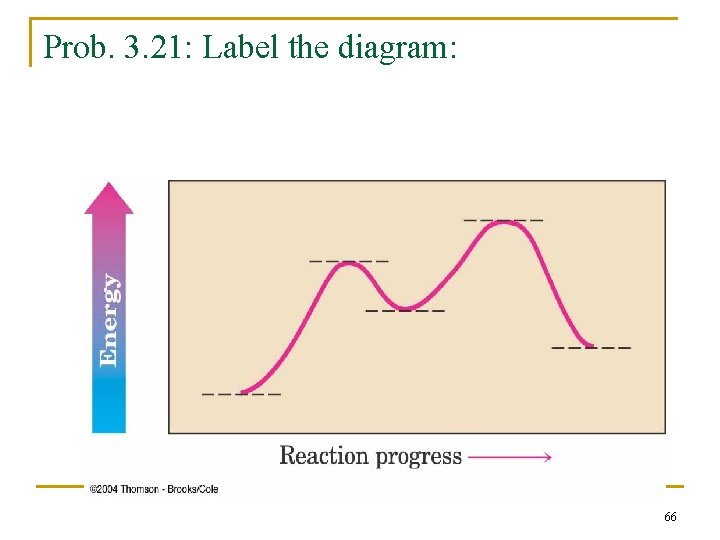
Prob. 3. 21: Label the diagram: 66
- Slides: 66