
Chapter 3 Alkenes Structures Nomenclature and an Introduction

![Rates and Rate Constants First-order reaction Second-order reaction A A+B rate = k [A]](https://slidetodoc.com/presentation_image_h/a2c8f42c7fb2693c782f3662dea5bc70/image-31.jpg "Rates and Rate Constants First-order reaction Second-order reaction A A+B rate = k [A]")

- Slides: 36
Chapter 3 Alkenes: Structures, Nomenclature and an Introduction to Reactivity Thermodynamics and Kinetics Adapted from Profs. Turro & Breslow, Columbia University and Prof. Irene Lee, Case Western Reserve University 1
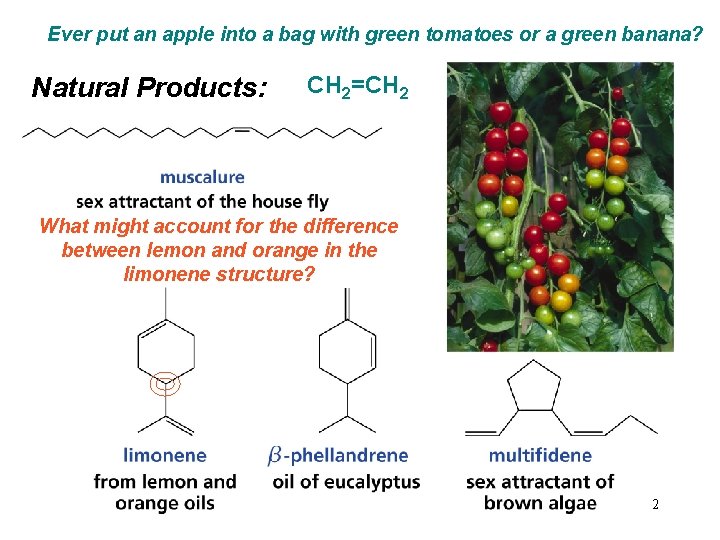
Ever put an apple into a bag with green tomatoes or a green banana? Natural Products: CH 2=CH 2 What might account for the difference between lemon and orange in the limonene structure? 2
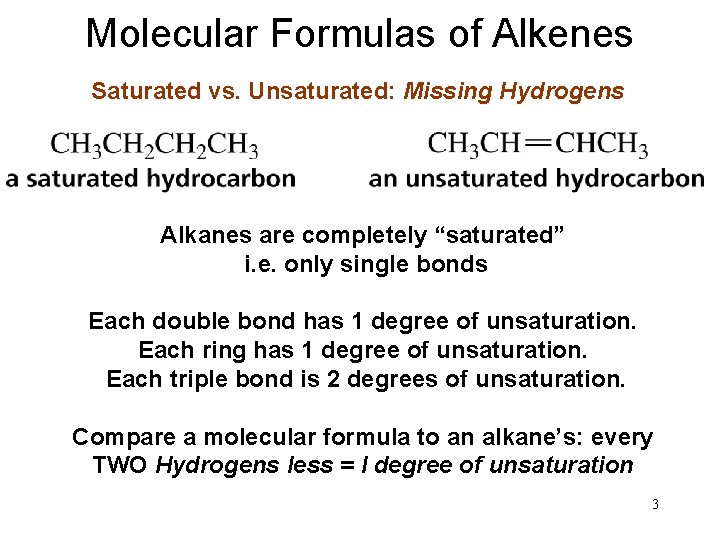
Molecular Formulas of Alkenes Saturated vs. Unsaturated: Missing Hydrogens Alkanes are completely “saturated” i. e. only single bonds Each double bond has 1 degree of unsaturation. Each ring has 1 degree of unsaturation. Each triple bond is 2 degrees of unsaturation. Compare a molecular formula to an alkane’s: every TWO Hydrogens less = I degree of unsaturation 3
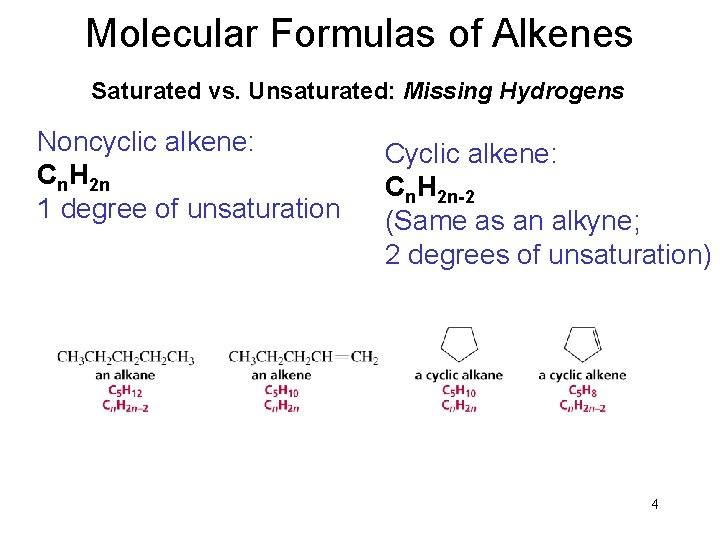
Molecular Formulas of Alkenes Saturated vs. Unsaturated: Missing Hydrogens Noncyclic alkene: Cn. H 2 n 1 degree of unsaturation Cyclic alkene: Cn. H 2 n-2 (Same as an alkyne; 2 degrees of unsaturation) 4
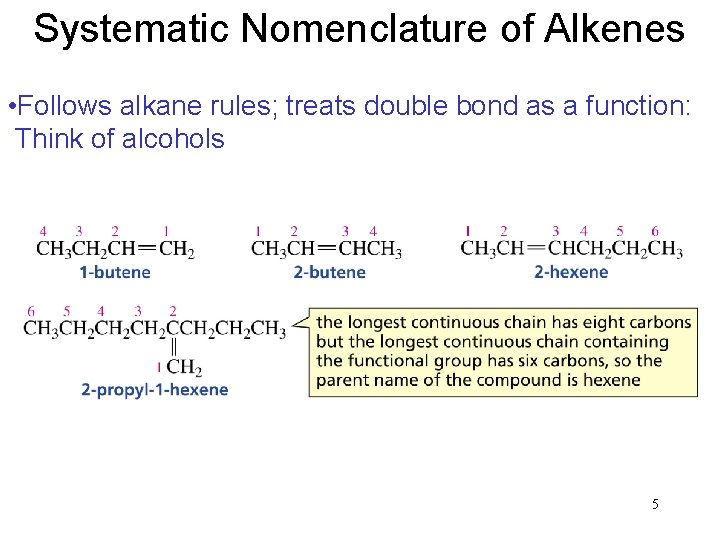
Systematic Nomenclature of Alkenes • Follows alkane rules; treats double bond as a function: Think of alcohols 5
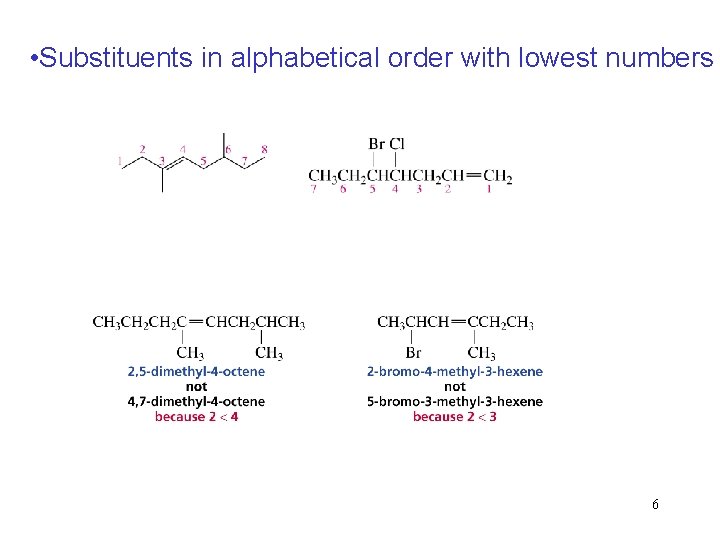
• Substituents in alphabetical order with lowest numbers 6
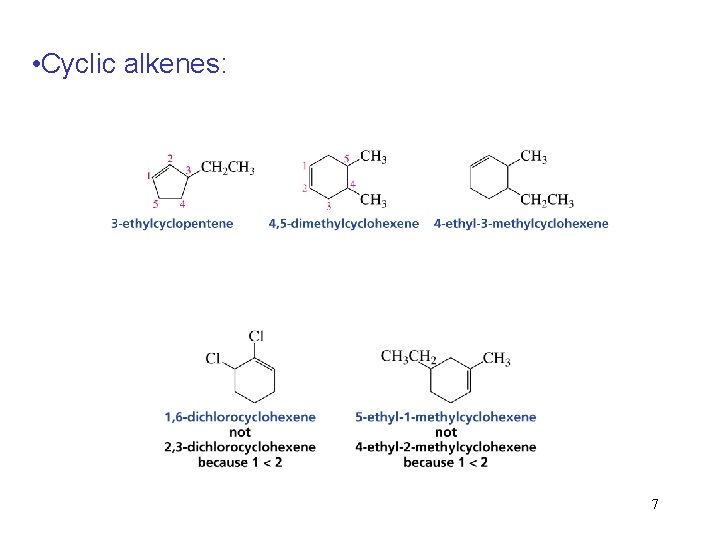
• Cyclic alkenes: 7
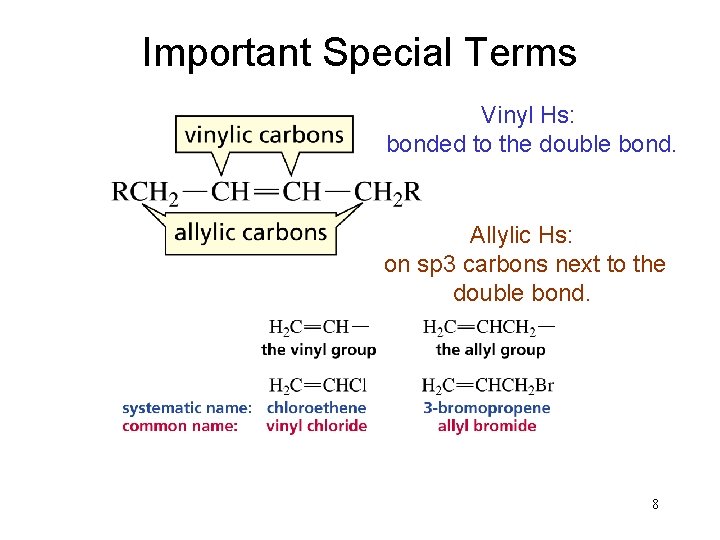
Important Special Terms Vinyl Hs: bonded to the double bond. Allylic Hs: on sp 3 carbons next to the double bond. 8
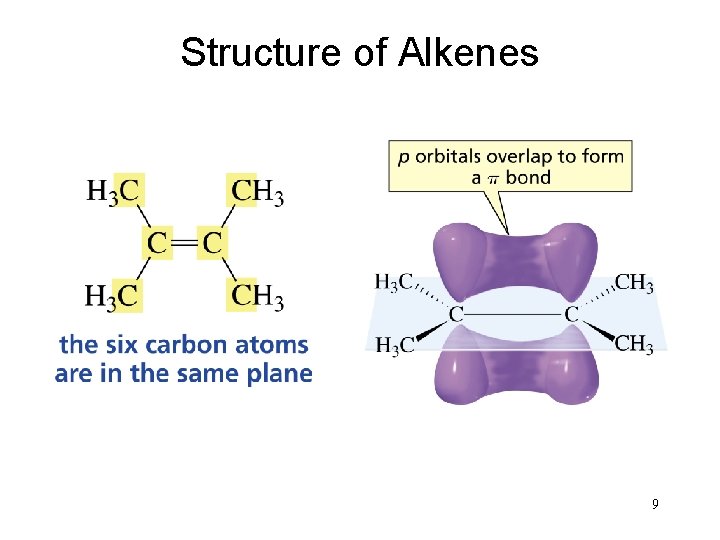
Structure of Alkenes 9
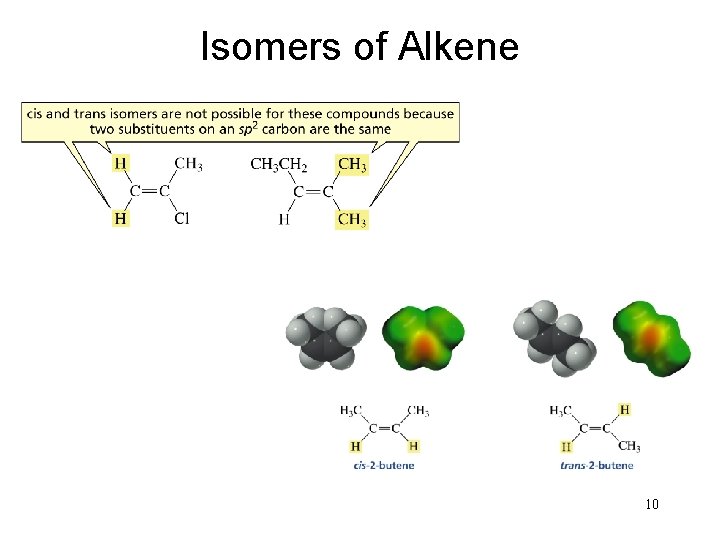
Isomers of Alkene 10
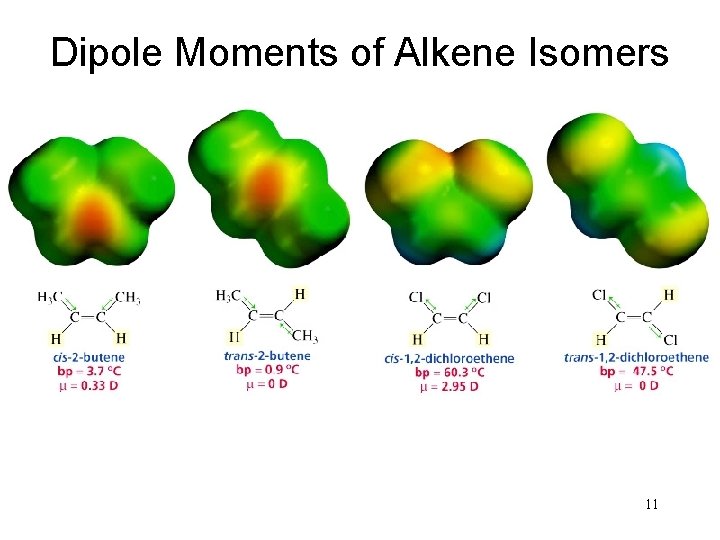
Dipole Moments of Alkene Isomers 11
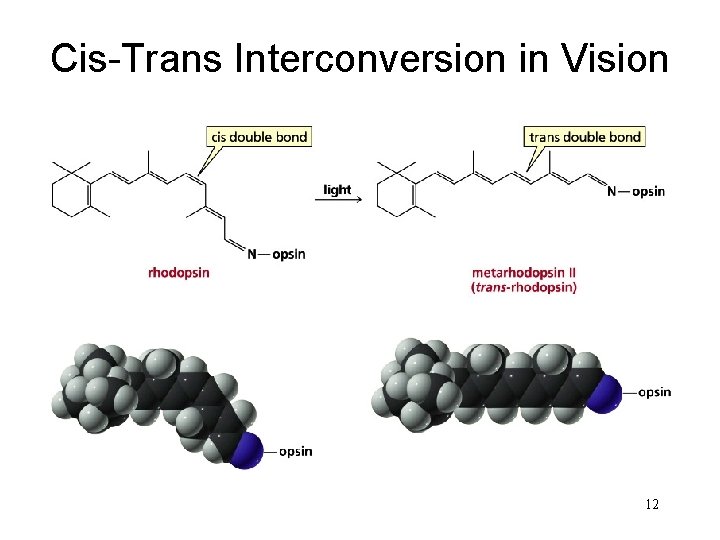
Cis-Trans Interconversion in Vision 12
13
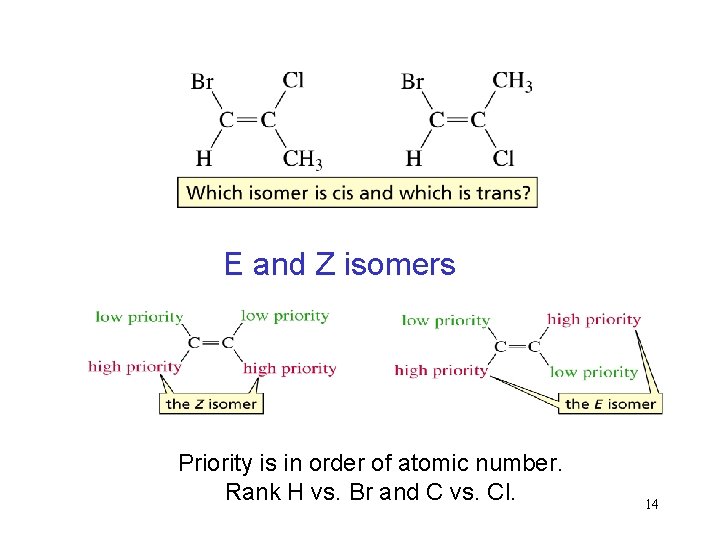
E and Z isomers Priority is in order of atomic number. Rank H vs. Br and C vs. Cl. 14
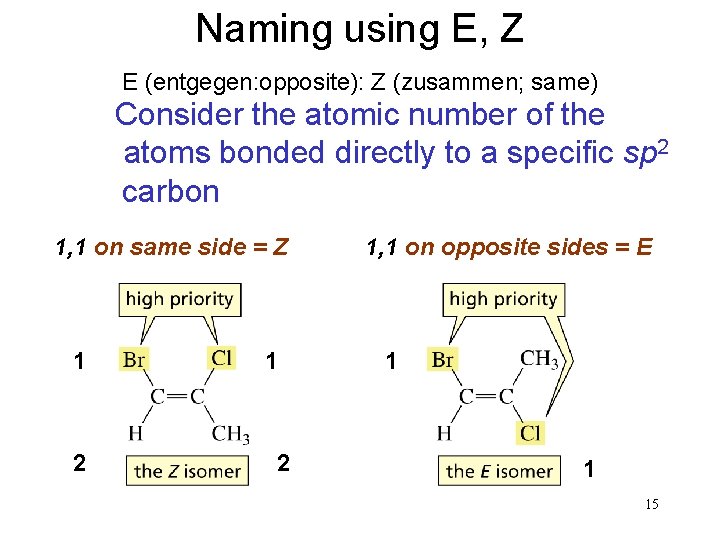
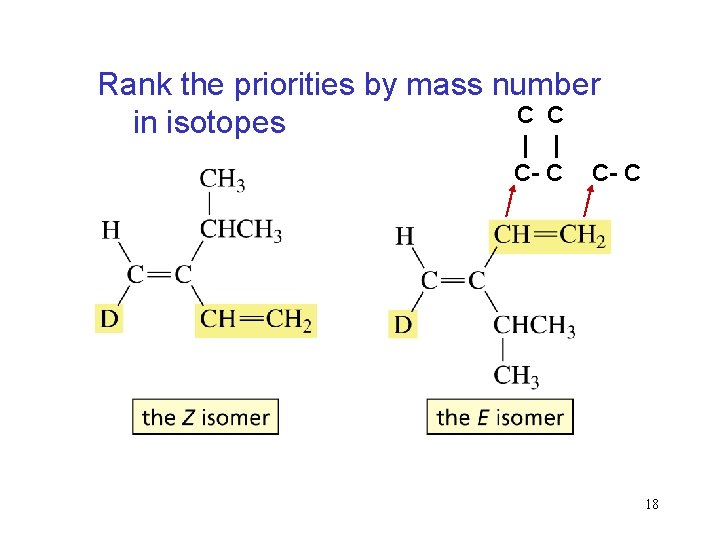
Naming using E, Z E (entgegen: opposite): Z (zusammen; same) Consider the atomic number of the atoms bonded directly to a specific sp 2 carbon 1, 1 on same side = Z 1 2 1, 1 on opposite sides = E 1 1 15
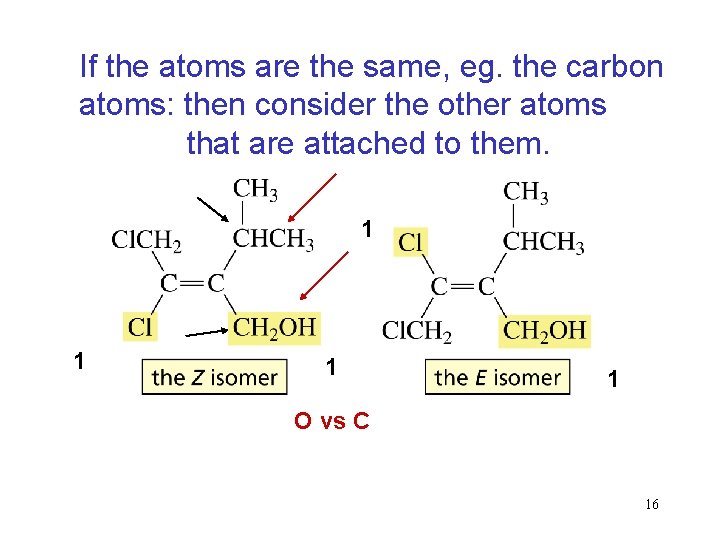
If the atoms are the same, eg. the carbon atoms: then consider the other atoms that are attached to them. 1 1 O vs C 16
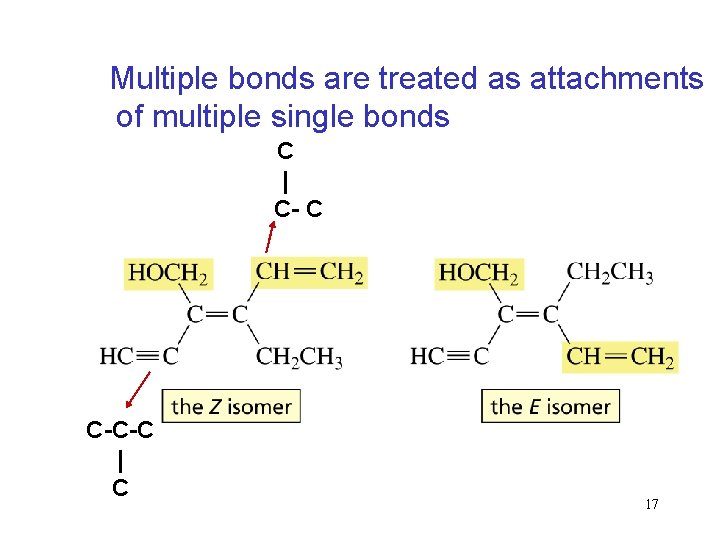
Multiple bonds are treated as attachments of multiple single bonds C | C- C C-C-C | C 17
Rank the priorities by mass number C C in isotopes | | C- C 18
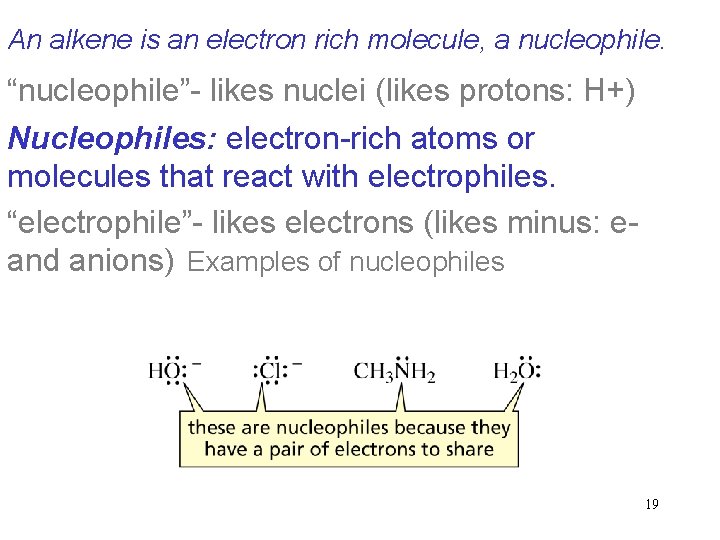
An alkene is an electron rich molecule, a nucleophile. “nucleophile”- likes nuclei (likes protons: H+) Nucleophiles: electron-rich atoms or molecules that react with electrophiles. “electrophile”- likes electrons (likes minus: eand anions) Examples of nucleophiles 19
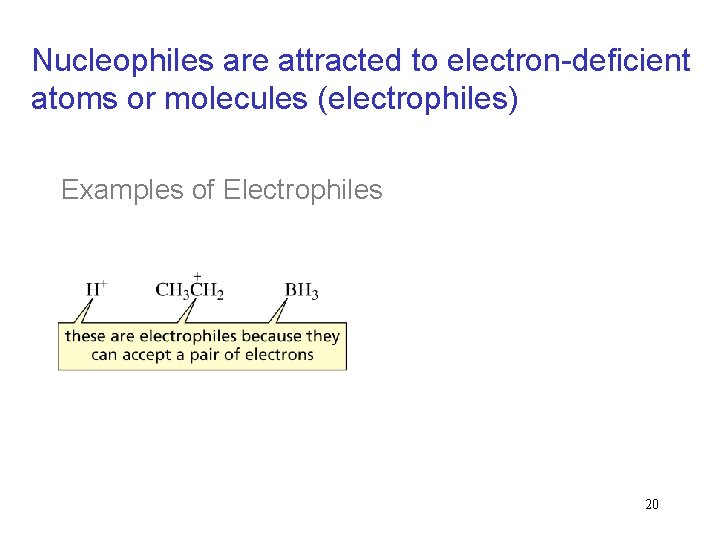
Nucleophiles are attracted to electron-deficient atoms or molecules (electrophiles) Examples of Electrophiles 20
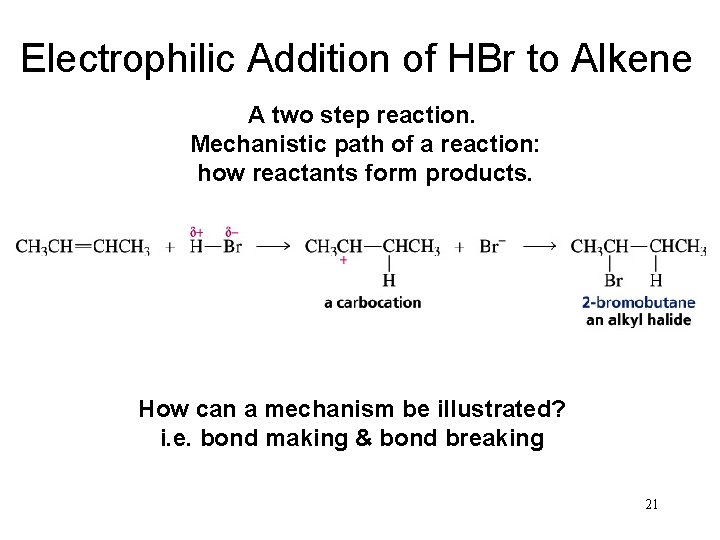
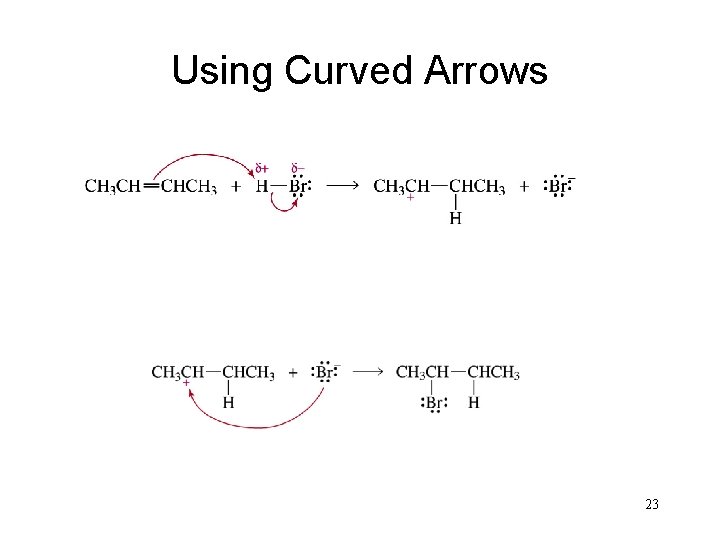
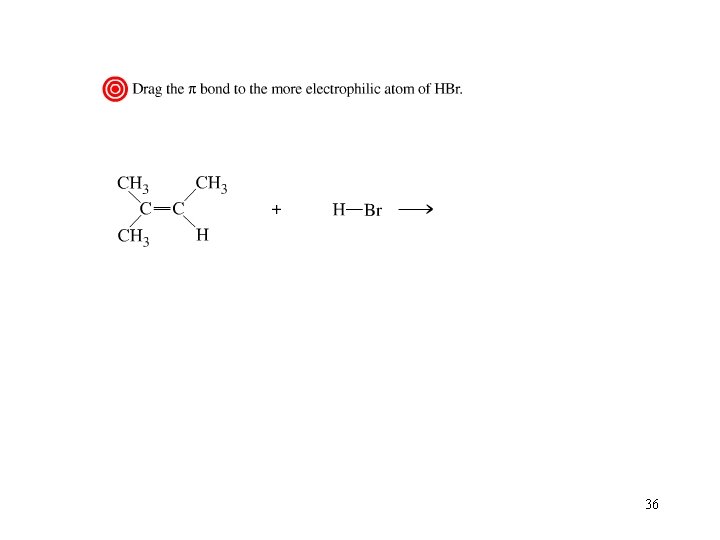
Electrophilic Addition of HBr to Alkene A two step reaction. Mechanistic path of a reaction: how reactants form products. How can a mechanism be illustrated? i. e. bond making & bond breaking 21
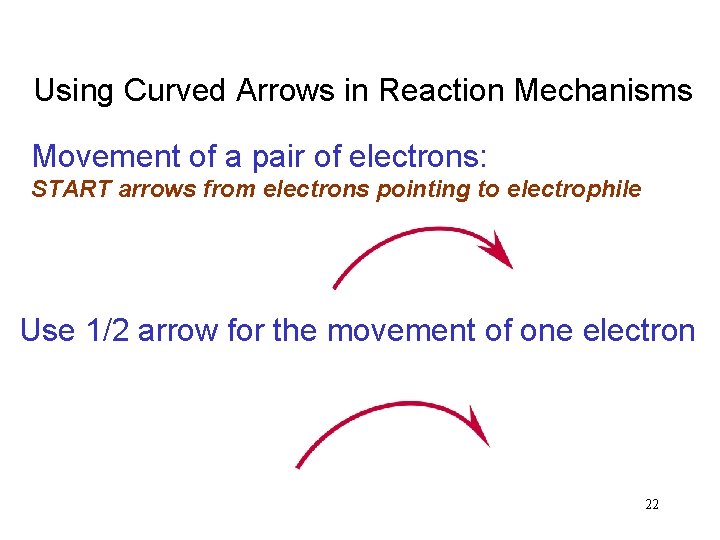
Using Curved Arrows in Reaction Mechanisms Movement of a pair of electrons: START arrows from electrons pointing to electrophile Use 1/2 arrow for the movement of one electron 22
Using Curved Arrows 23
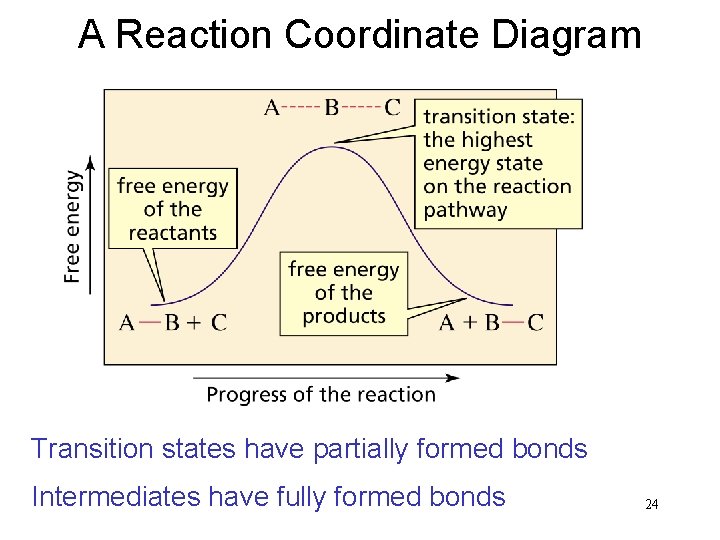
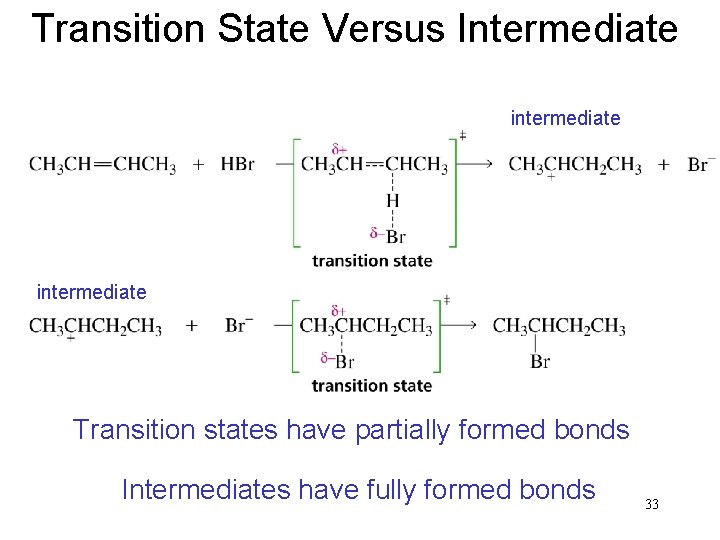
A Reaction Coordinate Diagram Transition states have partially formed bonds Intermediates have fully formed bonds 24
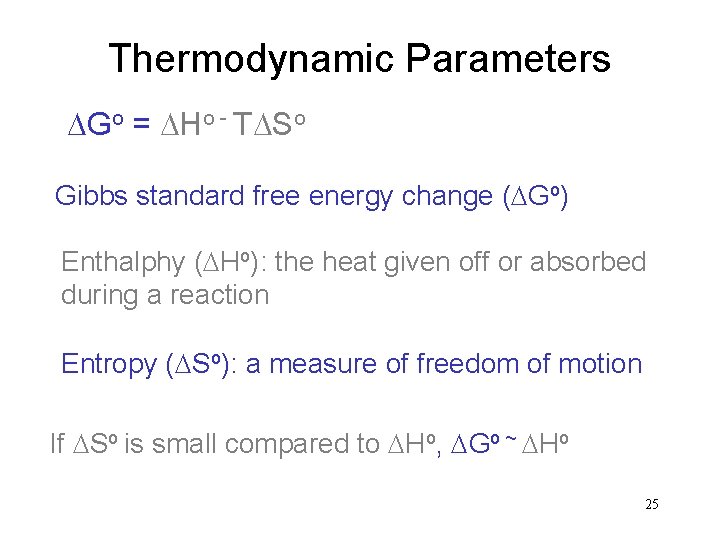
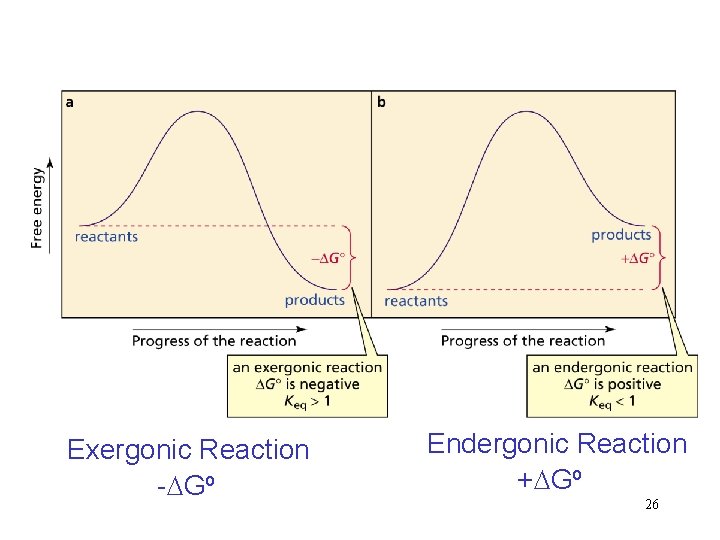
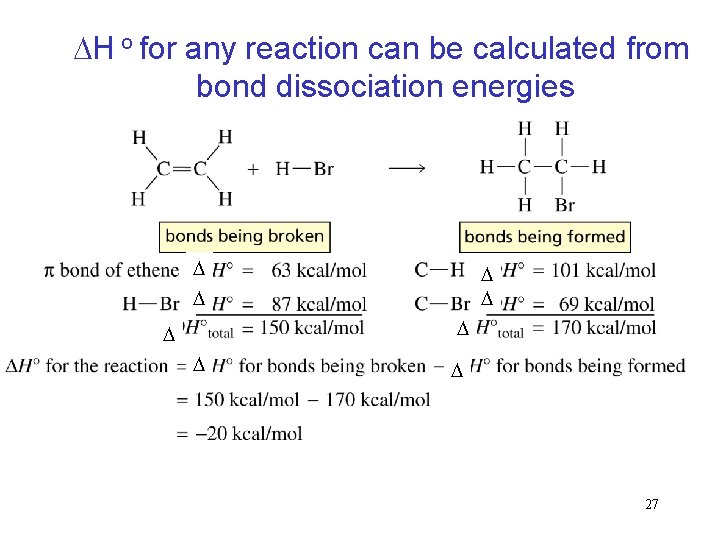
Thermodynamic Parameters Go = Ho - T So Gibbs standard free energy change ( Go) Enthalphy ( Ho): the heat given off or absorbed during a reaction Entropy ( So): a measure of freedom of motion If So is small compared to Ho, Go ~ Ho 25
Exergonic Reaction - Go Endergonic Reaction + Go 26
H o for any reaction can be calculated from bond dissociation energies 27
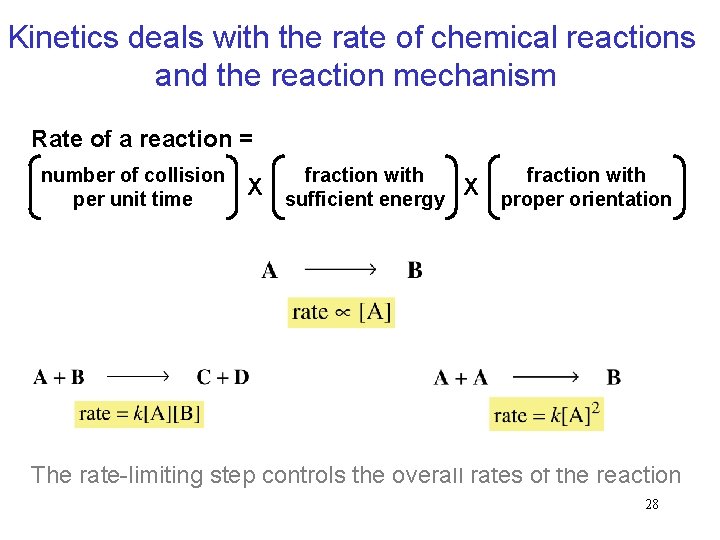
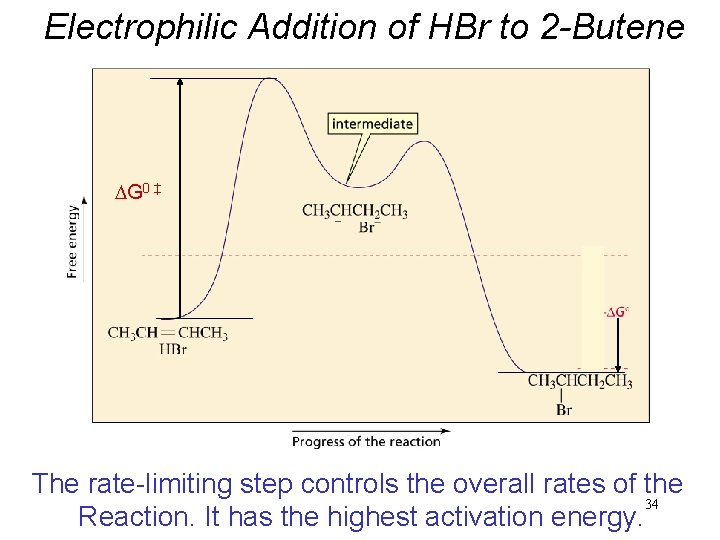
Kinetics deals with the rate of chemical reactions and the reaction mechanism Rate of a reaction = number of collision per unit time fraction with X sufficient energy X proper orientation The rate-limiting step controls the overall rates of the reaction 28
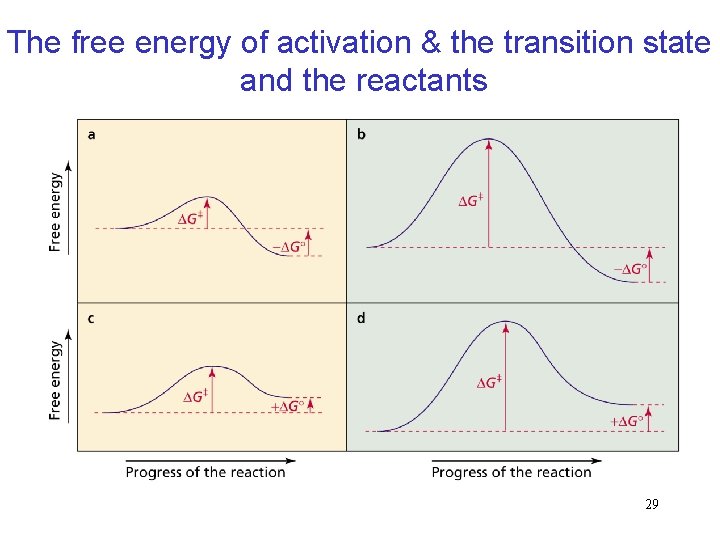
The free energy of activation & the transition state and the reactants 29
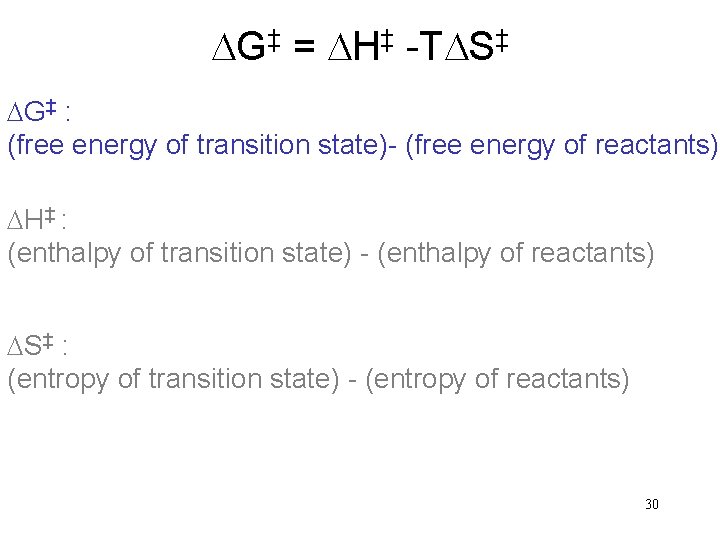
G‡ = H‡ -T S‡ G‡ : (free energy of transition state)- (free energy of reactants) H‡ : (enthalpy of transition state) - (enthalpy of reactants) S‡ : (entropy of transition state) - (entropy of reactants) 30
Rates and Rate Constants First-order reaction Second-order reaction A A+B rate = k [A] B C+D rate = k [A][B] 31
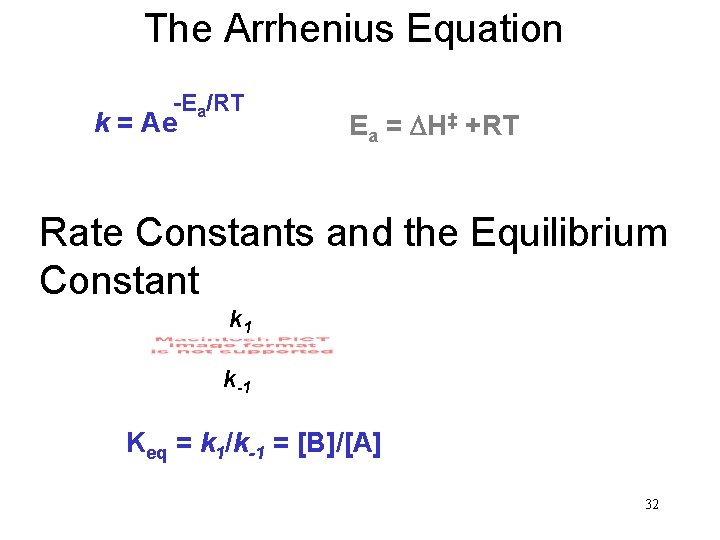
The Arrhenius Equation -Ea/RT k = Ae Ea = DH‡ +RT Rate Constants and the Equilibrium Constant k 1 k-1 Keq = k 1/k-1 = [B]/[A] 32
Transition State Versus Intermediate intermediate Transition states have partially formed bonds Intermediates have fully formed bonds 33
Electrophilic Addition of HBr to 2 -Butene G 0 ‡ The rate-limiting step controls the overall rates of the 34 Reaction. It has the highest activation energy.
35
36