
CHAPTER 3 ACHIEVING MENTAL AND EMOTIONAL HEALTH Unit



- Slides: 12
CHAPTER 3: ACHIEVING MENTAL AND EMOTIONAL HEALTH Unit 2: Mental and Emotional Health
§ Develop a healthy self-esteem by having good mental and emotional health § Learn how a healthy identity is based on being a person of good character § Express emotions in healthful ways
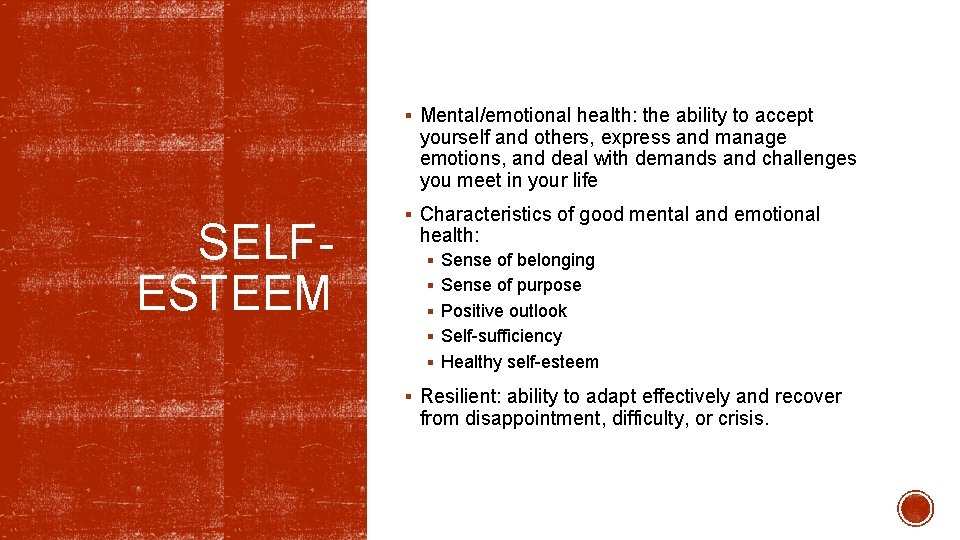
§ Mental/emotional health: the ability to accept yourself and others, express and manage emotions, and deal with demands and challenges you meet in your life SELFESTEEM § Characteristics of good mental and emotional health: § Sense of belonging § Sense of purpose § Positive outlook § Self-sufficiency § Healthy self-esteem § Resilient: ability to adapt effectively and recover from disappointment, difficulty, or crisis.
SELF-ESTEEM § Self-esteem: how much you value, respect and feel confident about yourself § Competence: having enough skills to do something § Developing self-esteem: § Praise § Believe in succeeding § Master new challenges § Benefits: § Feel proud of yourself § Believe setbacks are temporary § Confront challenges and overcome them § Try new things
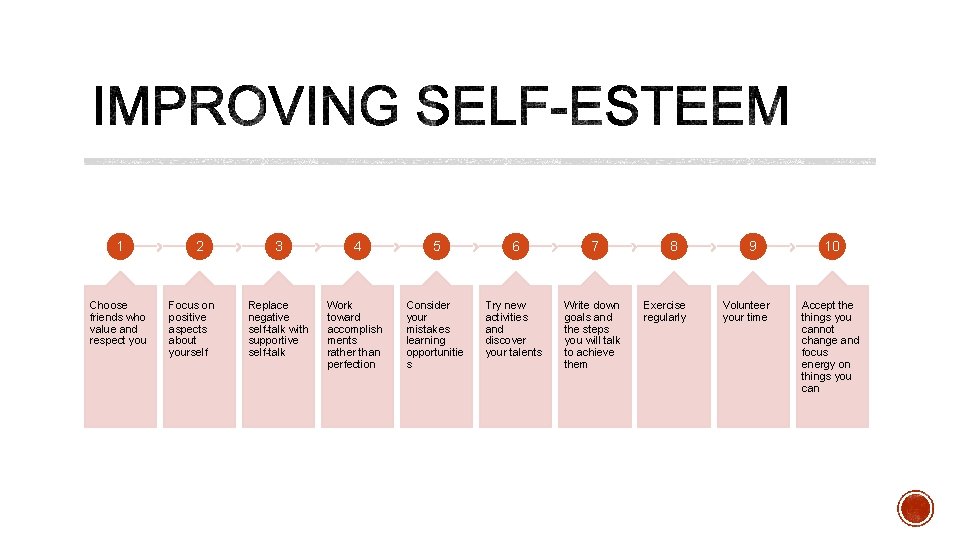
1 Choose friends who value and respect you 2 Focus on positive aspects about yourself 3 4 5 6 7 Replace negative self-talk with supportive self-talk Work toward accomplish ments rather than perfection Consider your mistakes learning opportunitie s Try new activities and discover your talents Write down goals and the steps you will talk to achieve them 8 Exercise regularly 9 Volunteer your time 10 Accept the things you cannot change and focus energy on things you can
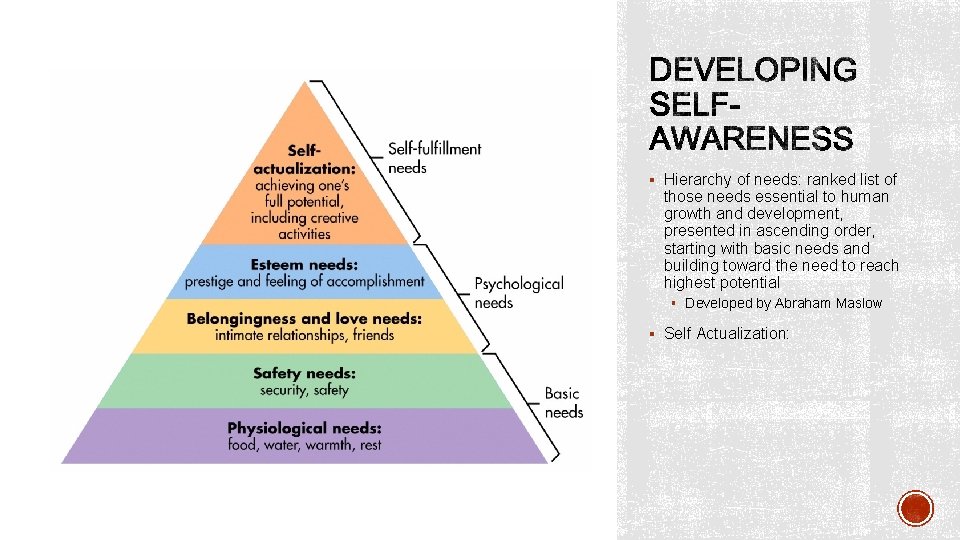
§ Hierarchy of needs: ranked list of those needs essential to human growth and development, presented in ascending order, starting with basic needs and building toward the need to reach highest potential § Developed by Abraham Maslow § Self Actualization:
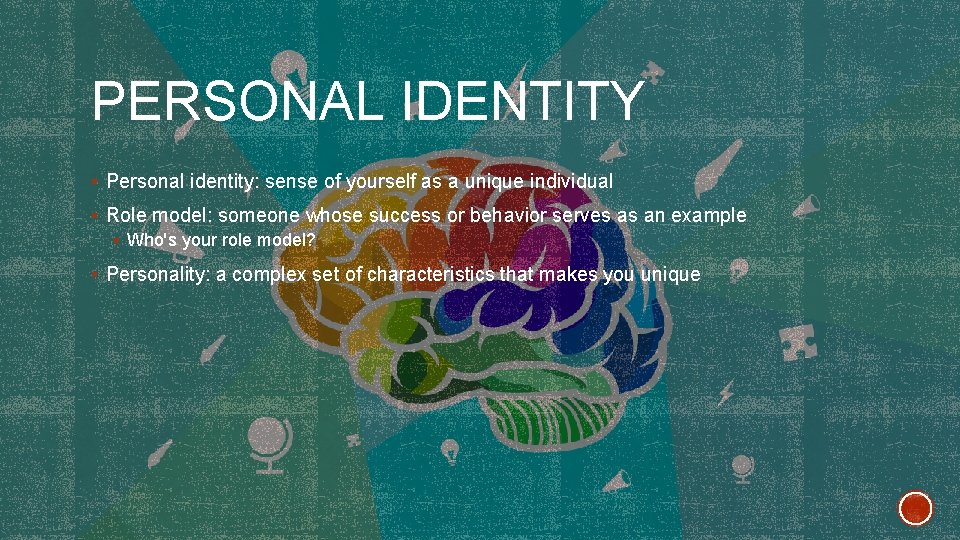
PERSONAL IDENTITY § Personal identity: sense of yourself as a unique individual § Role model: someone whose success or behavior serves as an example § Who's your role model? § Personality: a complex set of characteristics that makes you unique
THE IMPORTANCE OF GOOD CHARACTER § Character: the distinctive qualities that describe how a person thinks, feels, and behaves. § It is an outward expression of your inner values § Core ethical values: § Responsibility § Honesty § Respect § Integrity: a firm observance of core ethical values
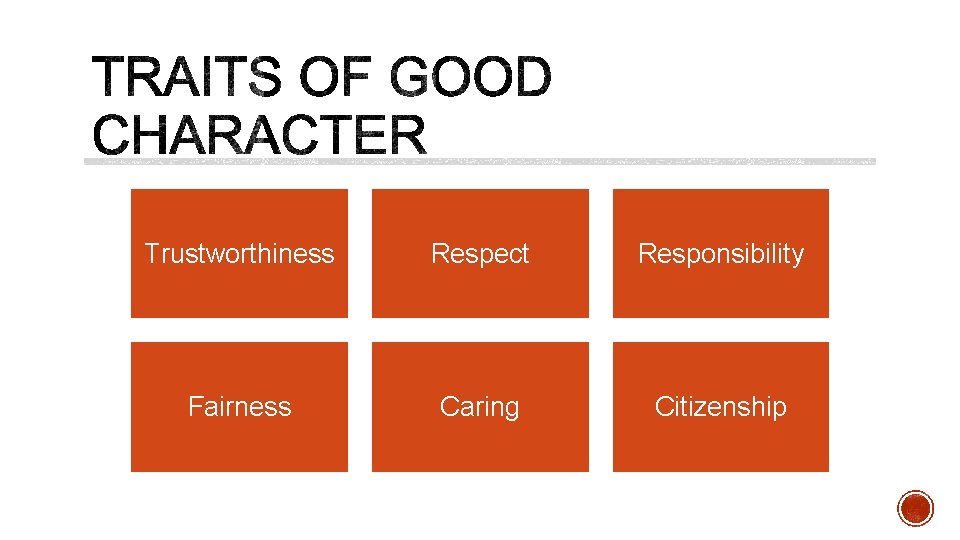
Trustworthiness Respect Responsibility Fairness Caring Citizenship
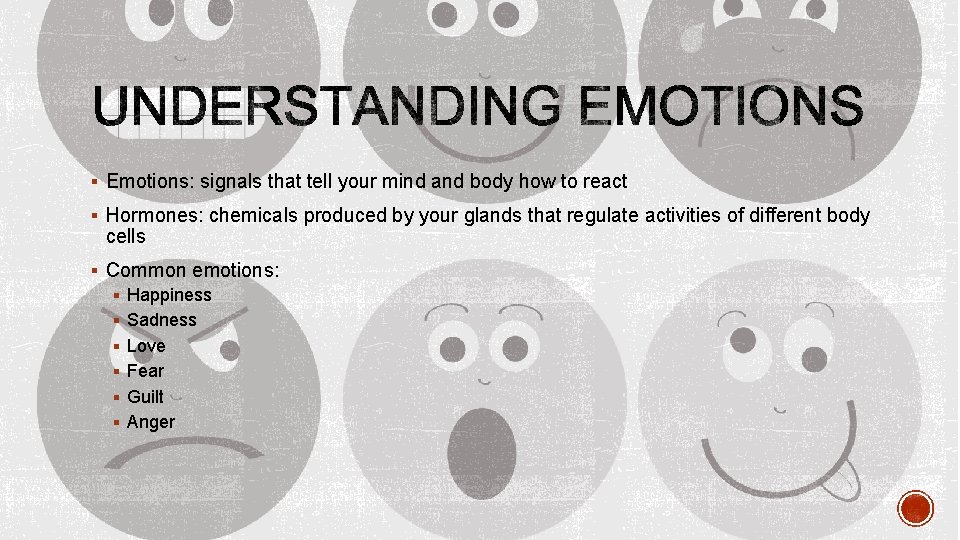
§ Emotions: signals that tell your mind and body how to react § Hormones: chemicals produced by your glands that regulate activities of different body cells § Common emotions: § Happiness § Sadness § Love § Fear § Guilt § Anger
MANAGING EMOTIONS § Emotions are neither good nor bad—it all depends on how you express your emotions! § Empathy: ability to imagine and understand how someone else feels § Supporting a friends through a tough time § Managing difficult emotions: § Take a deep breath and relax your muscles § Escape from the situation until you are calm again § Analyze your emotions by writing them down or talking with someone you trust § Defense mechanism: mental processes that protect individuals from strong or stressful emotions and situations
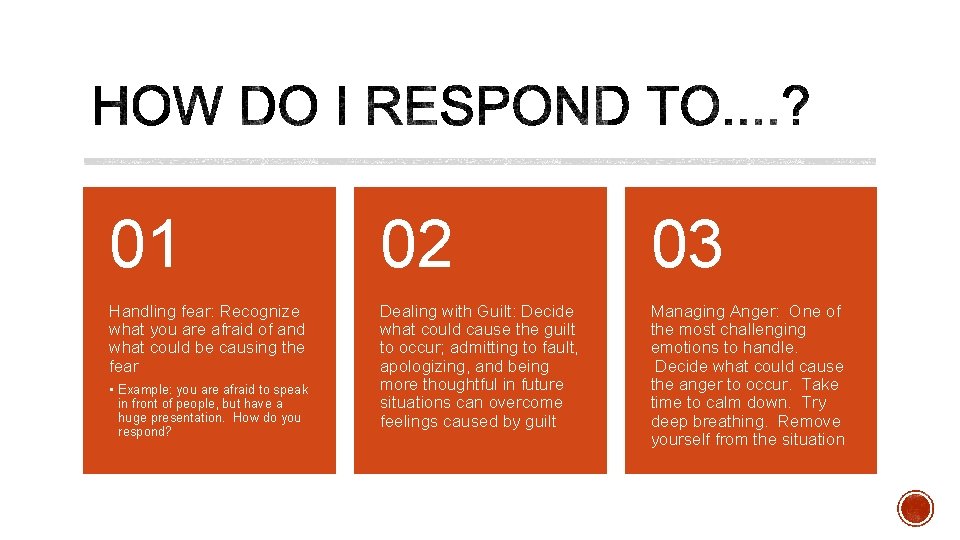
01 02 03 Handling fear: Recognize what you are afraid of and what could be causing the fear Dealing with Guilt: Decide what could cause the guilt to occur; admitting to fault, apologizing, and being more thoughtful in future situations can overcome feelings caused by guilt Managing Anger: One of the most challenging emotions to handle. Decide what could cause the anger to occur. Take time to calm down. Try deep breathing. Remove yourself from the situation • Example: you are afraid to speak in front of people, but have a huge presentation. How do you respond?