
Chapter 3 2 Cell Organelles Part 1 Why
- Slides: 22
Chapter 3. 2 Cell Organelles - Part 1 -
Why couldn’t the plants escape prison? Their cells were surrounded by walls.
What do you call a cell taking a picture of itself?
3. 2 Cell Organelles Objectives: 1. Describe the general structure of eukaryotic cells. 2. Summarize the structures and functions of organelles in plant and animal cells.
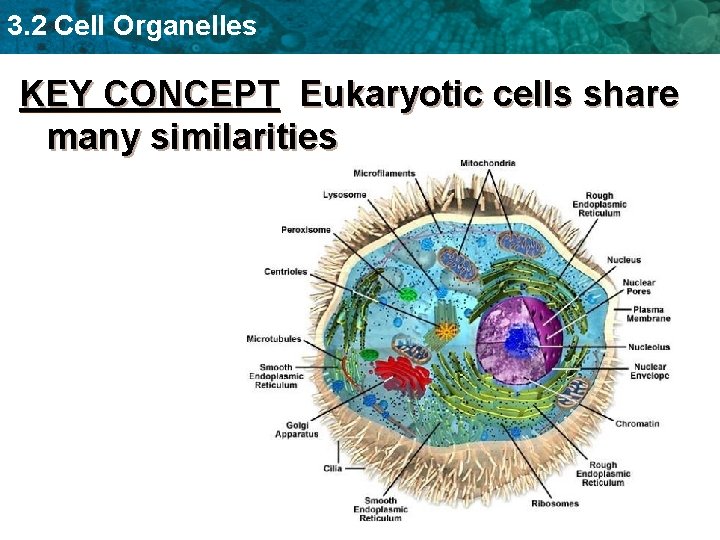
3. 2 Cell Organelles KEY CONCEPT Eukaryotic cells share many similarities
3. 2 Cell Organelles Main Ideas 1. Cells have an internal structure 2. Several organelles are involved in making and processing proteins 3. Other organelles have various functions 4. Plant cells have cell walls and chloroplasts
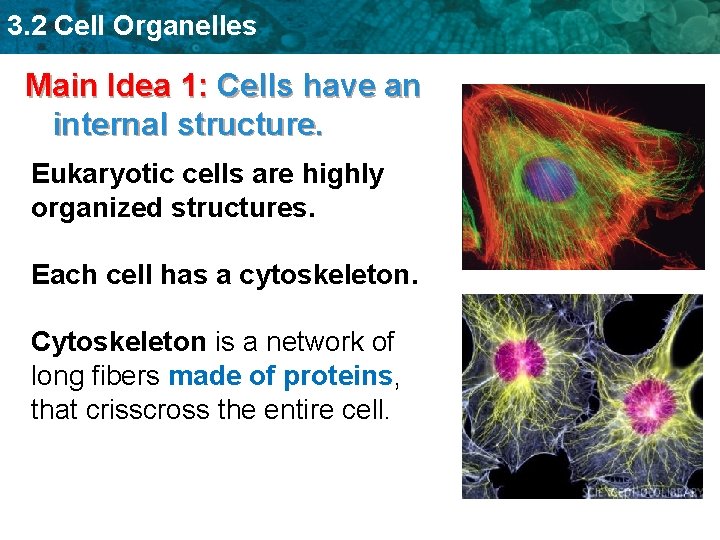
3. 2 Cell Organelles Main Idea 1: Cells have an internal structure. Eukaryotic cells are highly organized structures. Each cell has a cytoskeleton. Cytoskeleton is a network of long fibers made of proteins, that crisscross the entire cell.
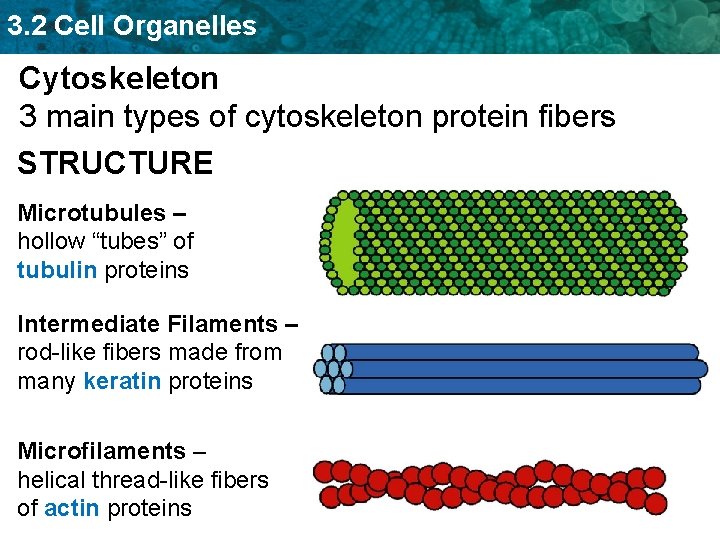
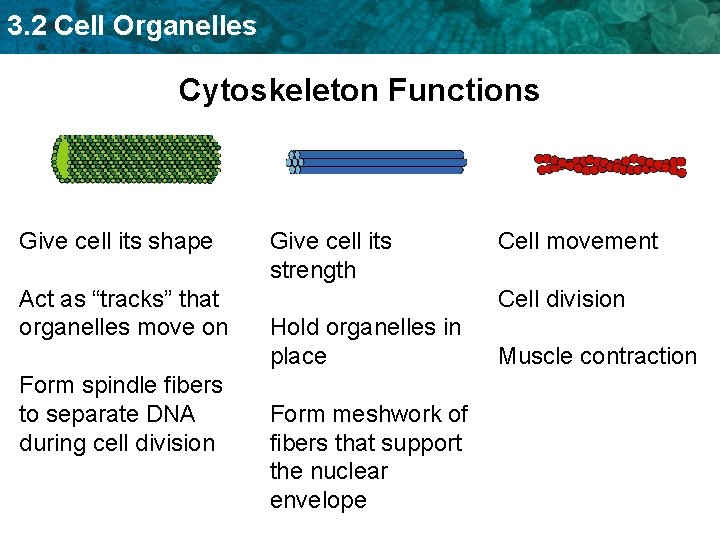
3. 2 Cell Organelles Cytoskeleton 3 main types of cytoskeleton protein fibers STRUCTURE Microtubules – hollow “tubes” of tubulin proteins Intermediate Filaments – rod-like fibers made from many keratin proteins Microfilaments – helical thread-like fibers of actin proteins
3. 2 Cell Organelles Cytoskeleton Functions Give cell its shape Act as “tracks” that organelles move on Form spindle fibers to separate DNA during cell division Give cell its strength Cell movement Cell division Hold organelles in place Form meshwork of fibers that support the nuclear envelope Muscle contraction
3. 2 Cell Organelles Cytoskeleton: A network of protein structures that crisscross the entire cell. Main functions: • Maintain the shape of the cell • Structure support and strength to the cell • Movement of cell • Organization and transport of organelles • Cell division
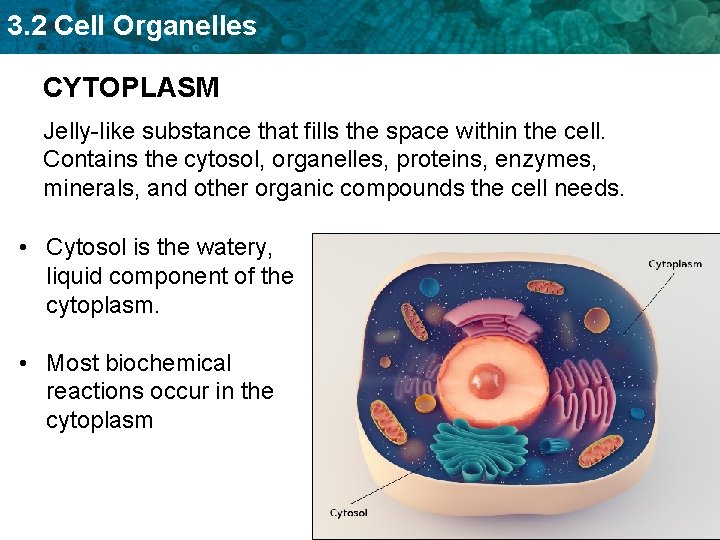
3. 2 Cell Organelles CYTOPLASM Jelly-like substance that fills the space within the cell. Contains the cytosol, organelles, proteins, enzymes, minerals, and other organic compounds the cell needs. • Cytosol is the watery, liquid component of the cytoplasm. • Most biochemical reactions occur in the cytoplasm
3. 2 Cell Organelles Main Idea 2: Several organelles are involved in making proteins • Nucleus • Nucleolus • Endoplasmic Reticulum - rough ER - smooth ER • Ribosomes • Golgi Apparatus • Vesicles
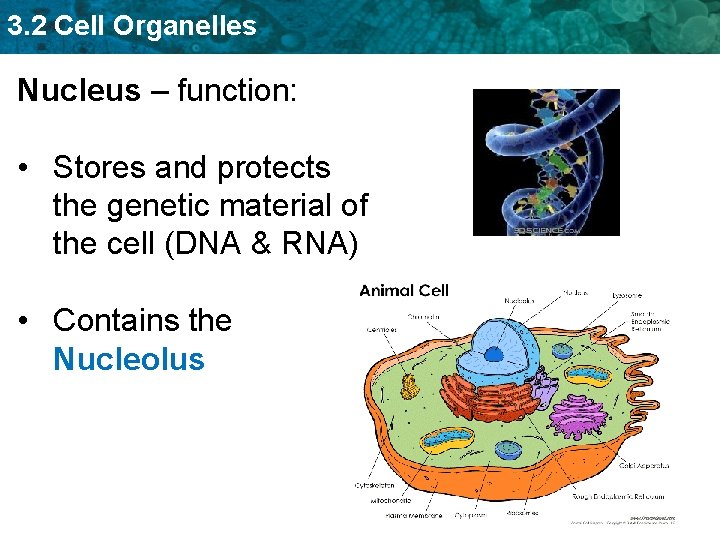
3. 2 Cell Organelles Nucleus – function: • Stores and protects the genetic material of the cell (DNA & RNA) • Contains the Nucleolus
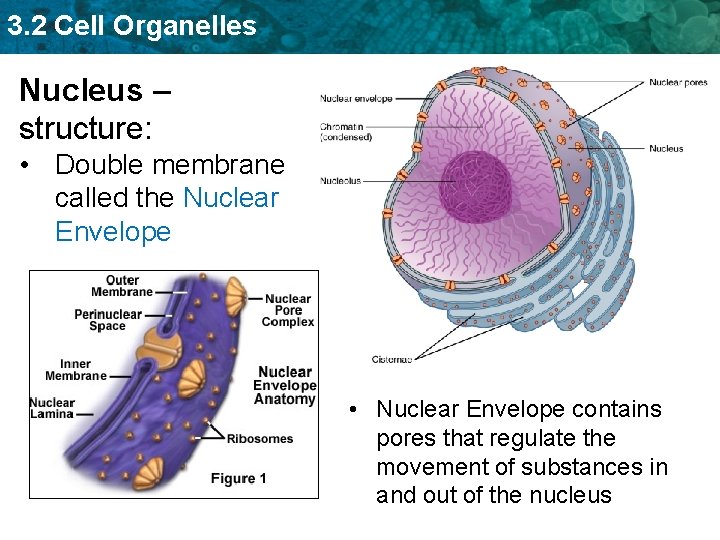
3. 2 Cell Organelles Nucleus – structure: • Double membrane called the Nuclear Envelope • Nuclear Envelope contains pores that regulate the movement of substances in and out of the nucleus
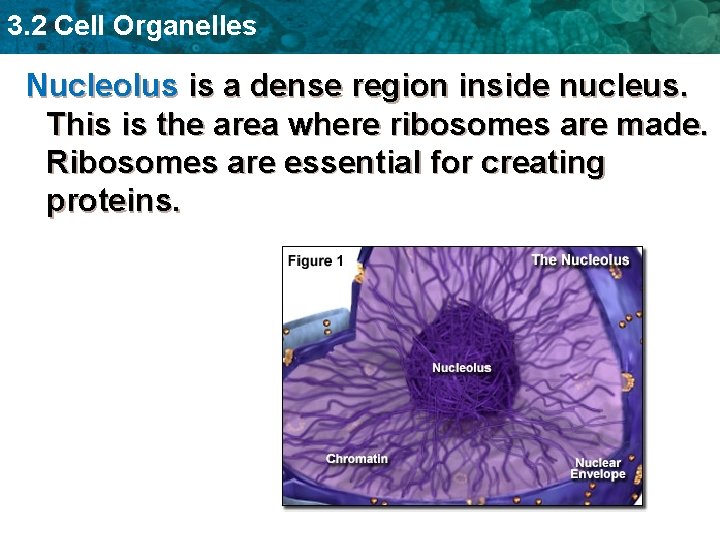
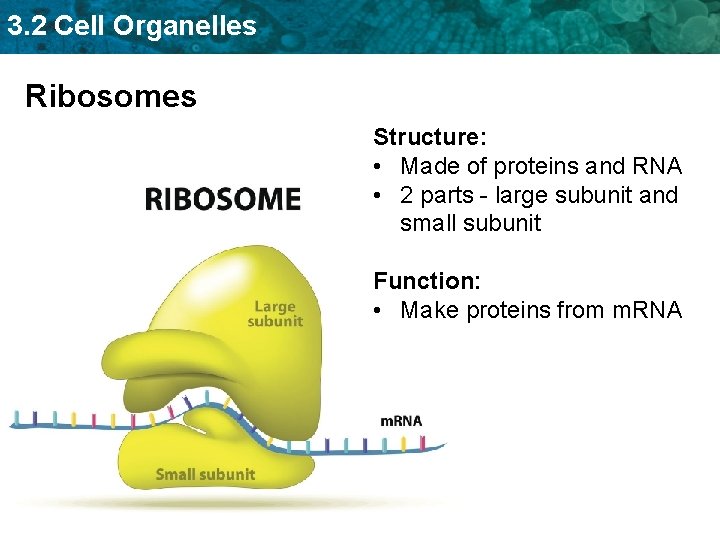
3. 2 Cell Organelles Nucleolus is a dense region inside nucleus. This is the area where ribosomes are made. Ribosomes are essential for creating proteins.
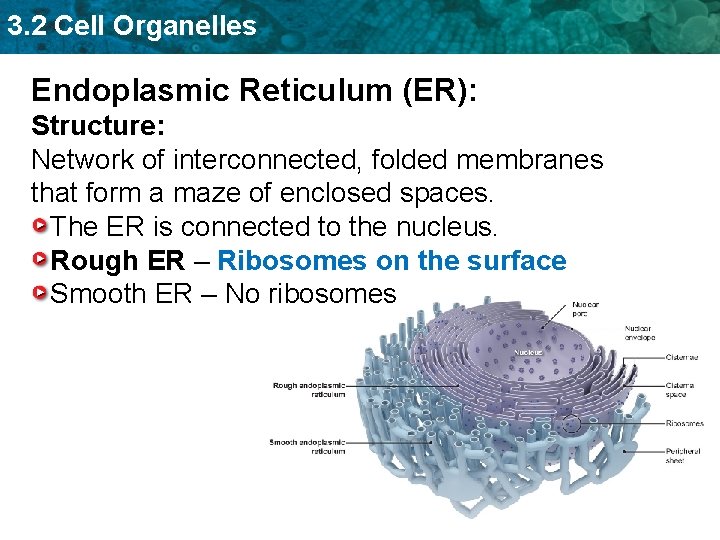
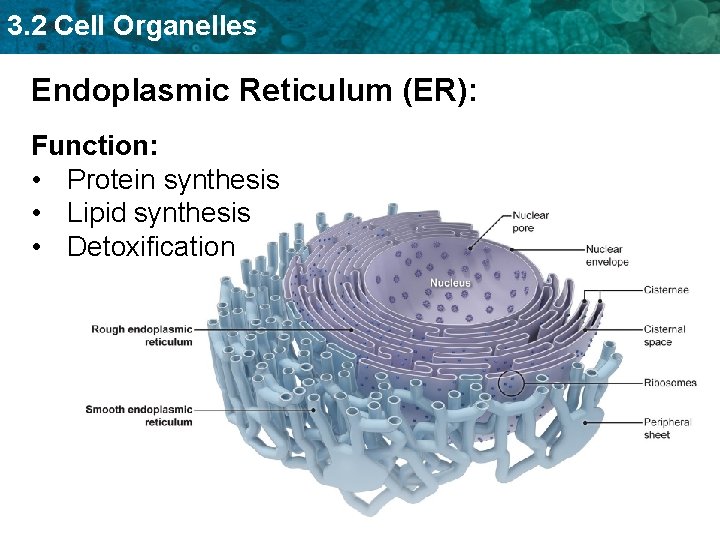
3. 2 Cell Organelles Endoplasmic Reticulum (ER): Structure: Network of interconnected, folded membranes that form a maze of enclosed spaces. The ER is connected to the nucleus. Rough ER – Ribosomes on the surface Smooth ER – No ribosomes
3. 2 Cell Organelles Endoplasmic Reticulum (ER): Function: • Protein synthesis • Lipid synthesis • Detoxification
3. 2 Cell Organelles Ribosomes Structure: • Made of proteins and RNA • 2 parts - large subunit and small subunit Function: • Make proteins from m. RNA
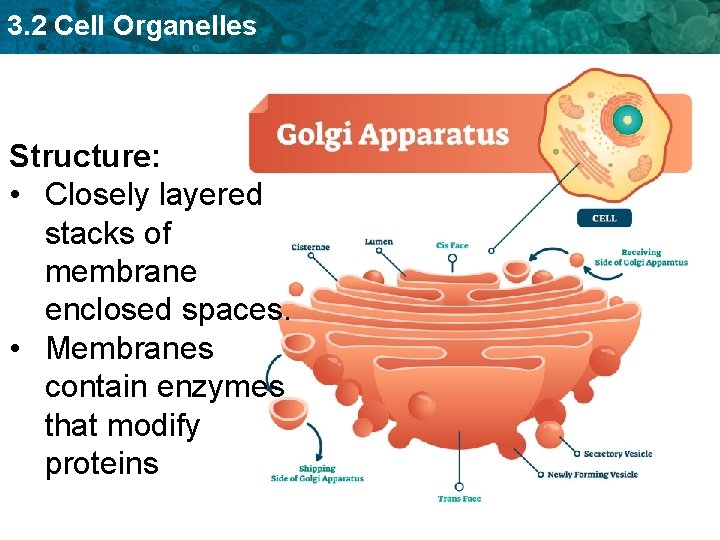
3. 2 Cell Organelles Structure: • Closely layered stacks of membrane enclosed spaces. • Membranes contain enzymes that modify proteins
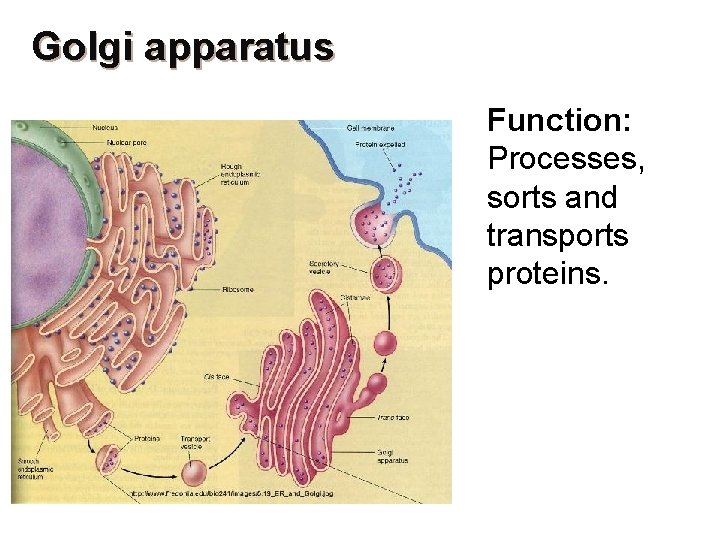
Golgi apparatus Function: Processes, sorts and transports proteins.
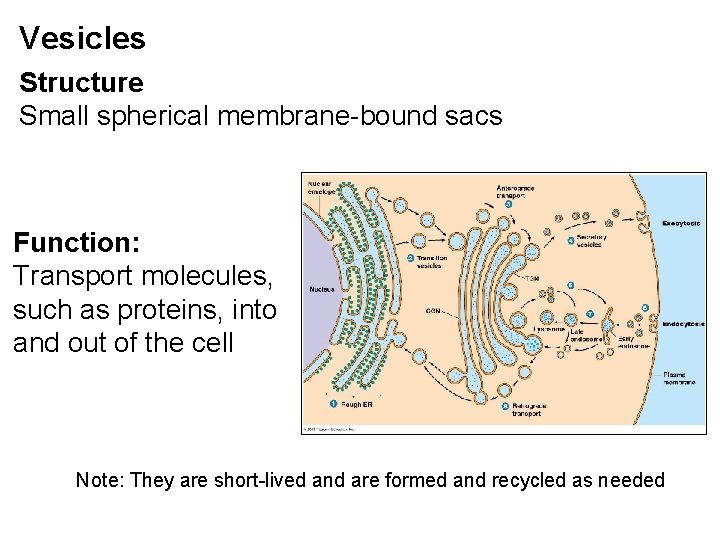
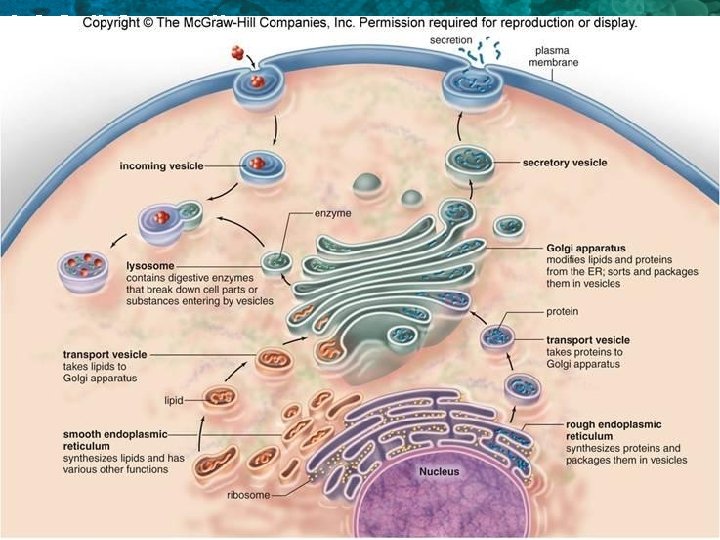
Vesicles Structure Small spherical membrane-bound sacs Function: Transport molecules, such as proteins, into and out of the cell Note: They are short-lived and are formed and recycled as needed
3. 2 Cell Organelles