
Chapter 3 1 Matter and Energy Kinetic Theory




- Slides: 33
Chapter 3 -1 Matter and Energy
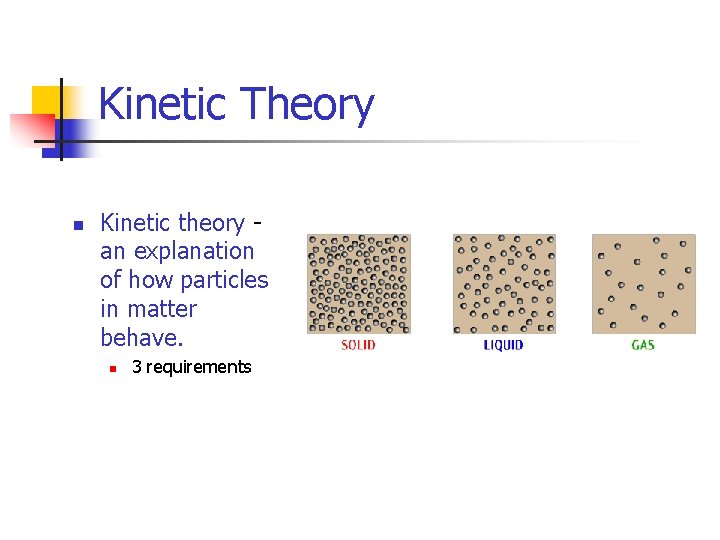
Kinetic Theory n Kinetic theory an explanation of how particles in matter behave. n 3 requirements
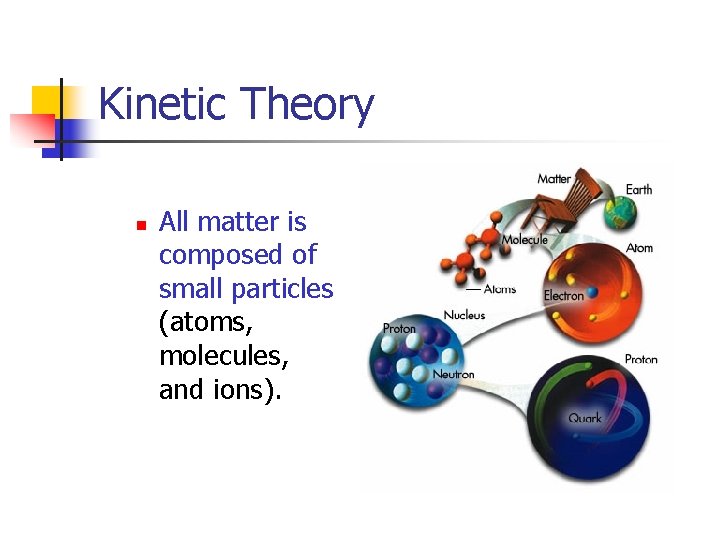
Kinetic Theory n All matter is composed of small particles (atoms, molecules, and ions).
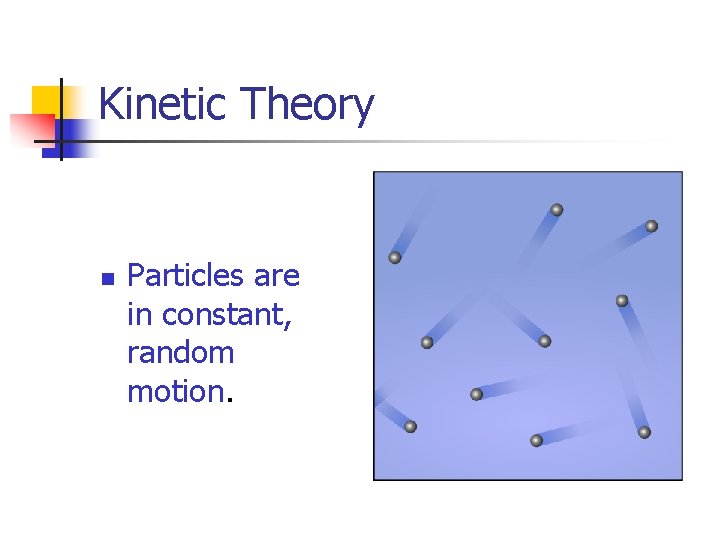
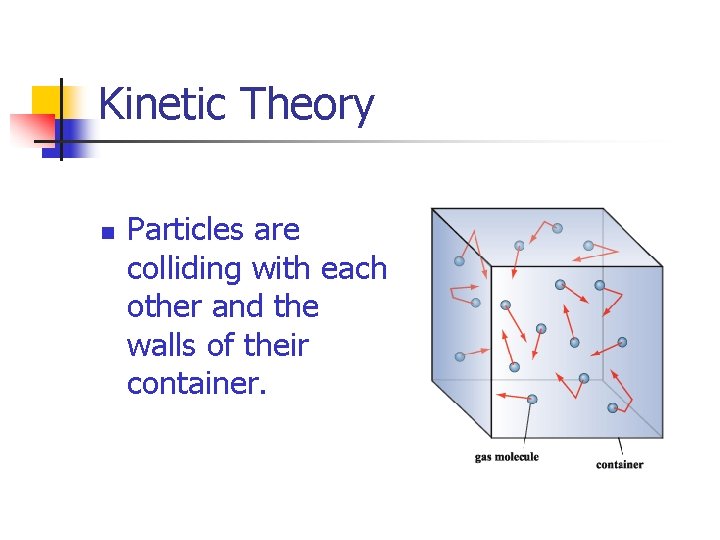
Kinetic Theory n Particles are in constant, random motion.
Kinetic Theory n Particles are colliding with each other and the walls of their container.
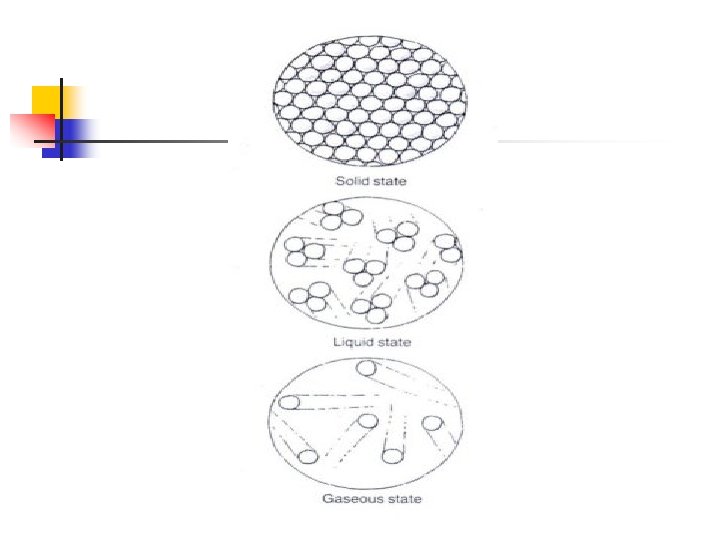
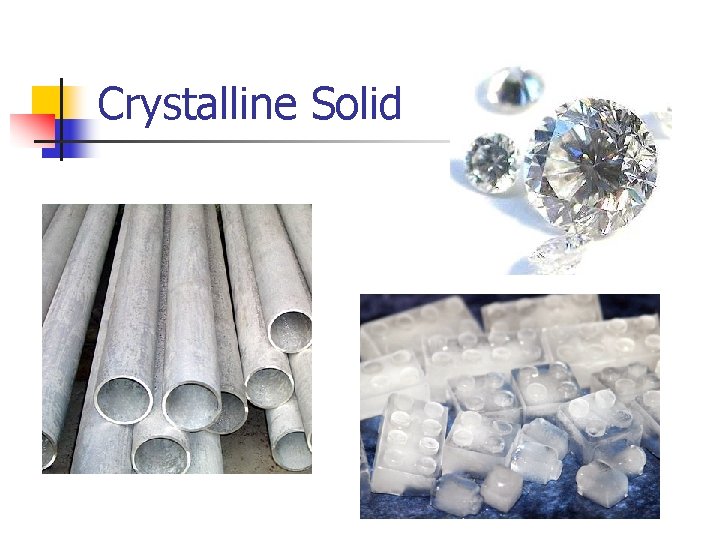
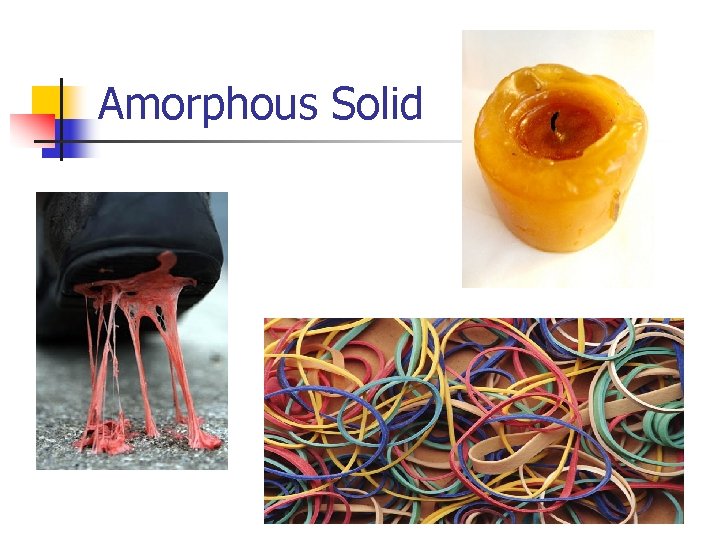
Solids n n n Definite shape and volume Crystalline – orderly arrangement of atoms Amorphous – atoms in no particular pattern
Crystalline Solid
Amorphous Solid
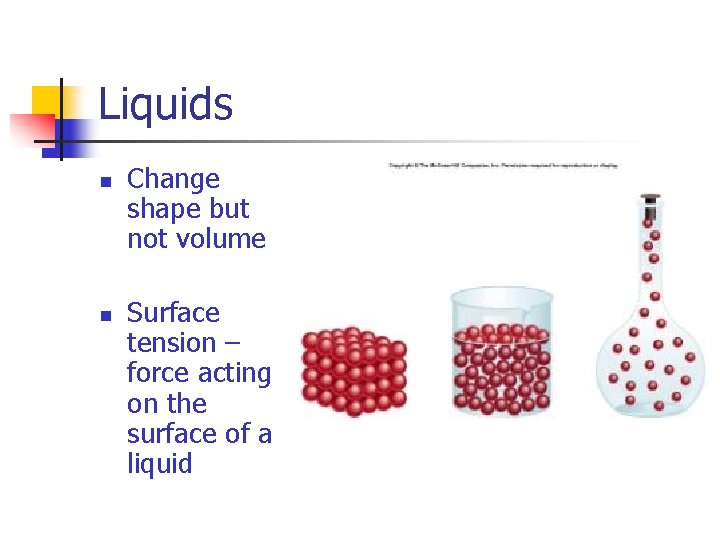
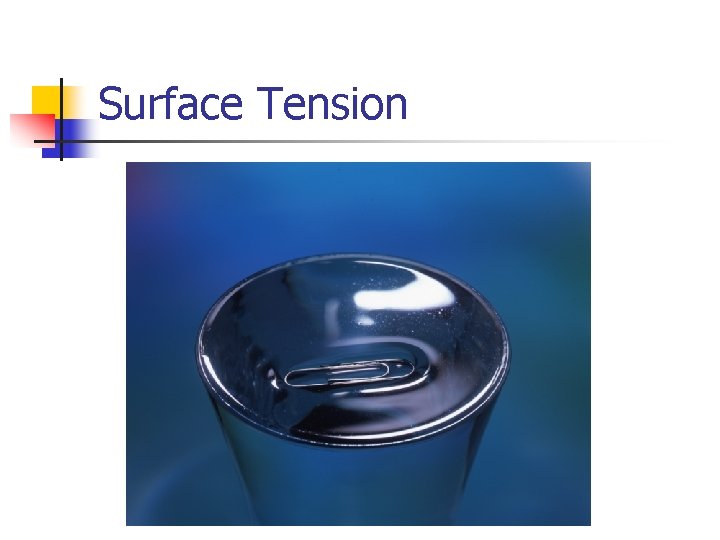
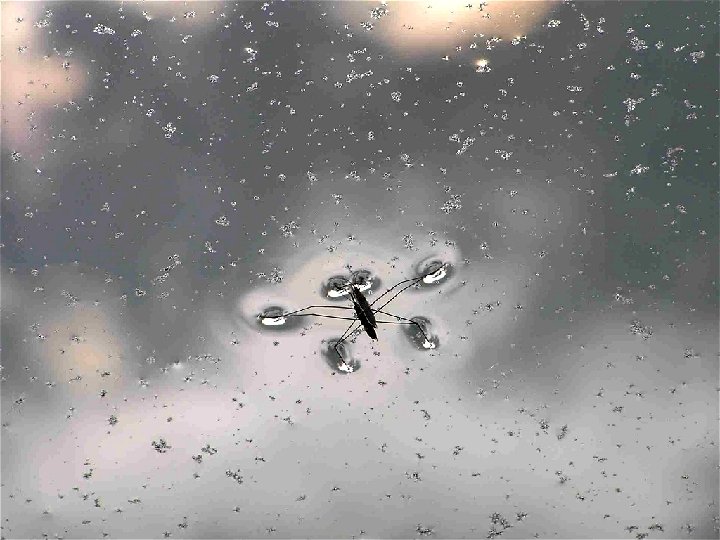
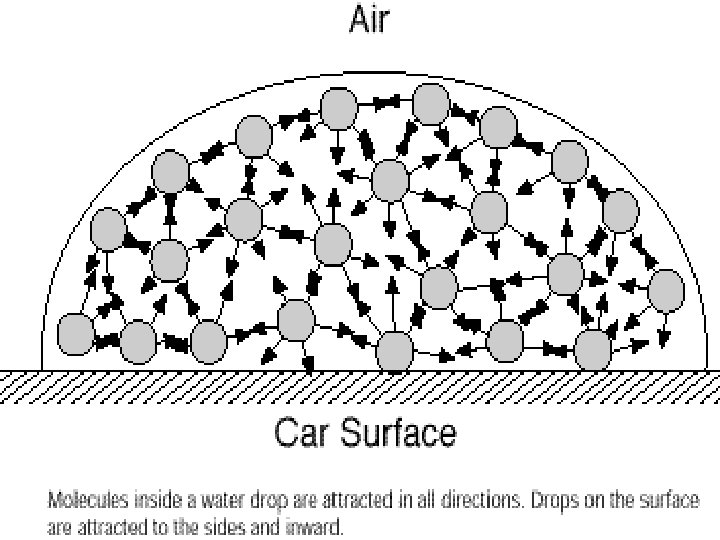
Liquids n n Change shape but not volume Surface tension – force acting on the surface of a liquid
Surface Tension
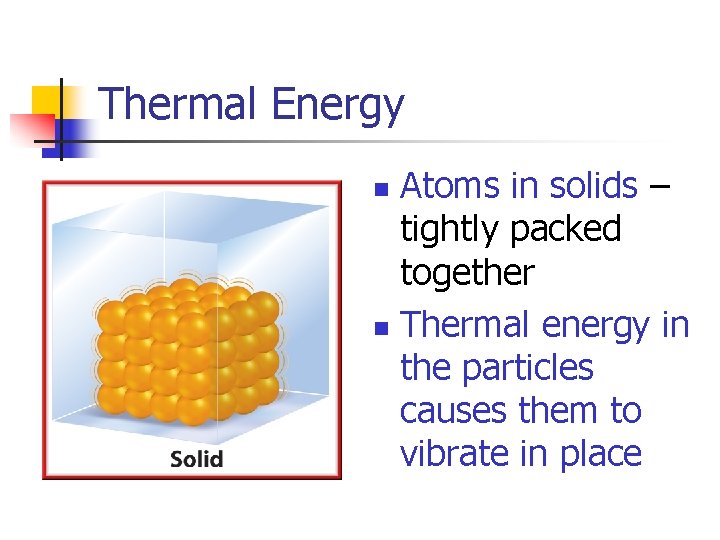
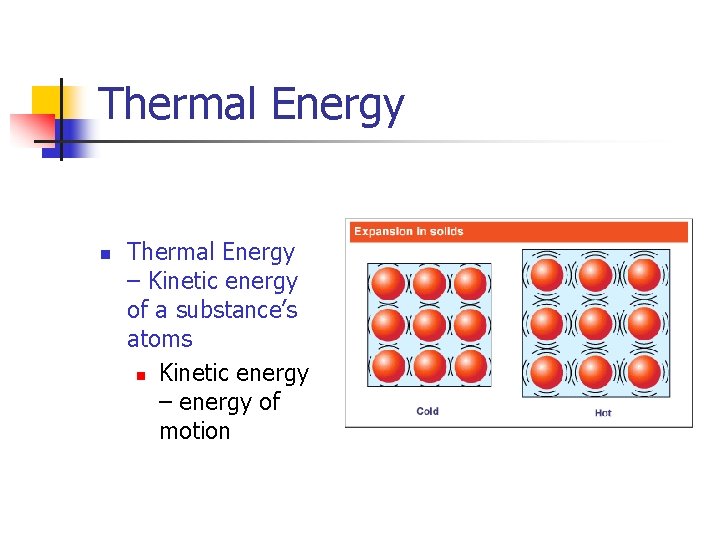
Thermal Energy Atoms in solids – tightly packed together n Thermal energy in the particles causes them to vibrate in place n
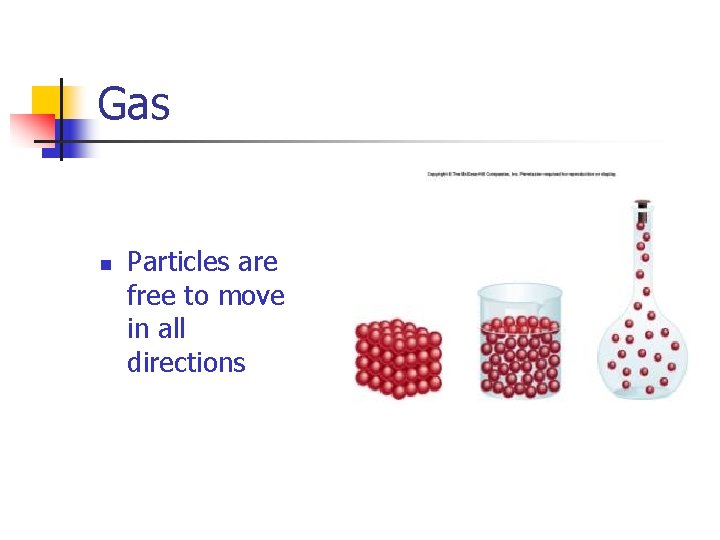
Gas n Particles are free to move in all directions
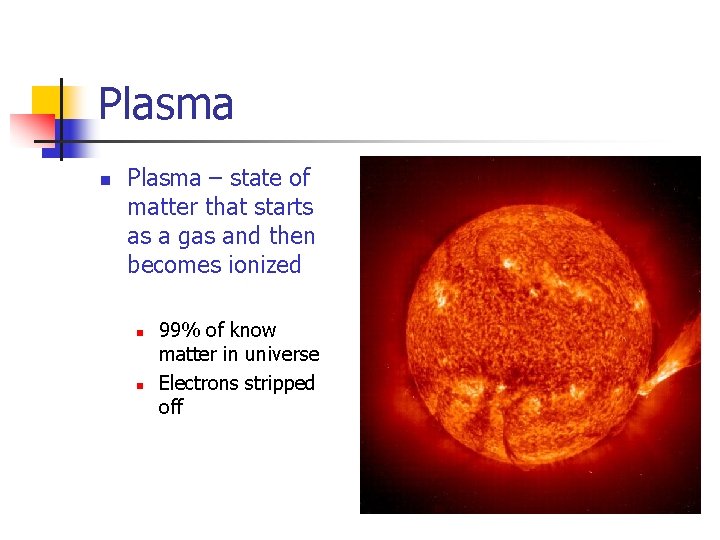
Plasma n Plasma – state of matter that starts as a gas and then becomes ionized n n 99% of know matter in universe Electrons stripped off
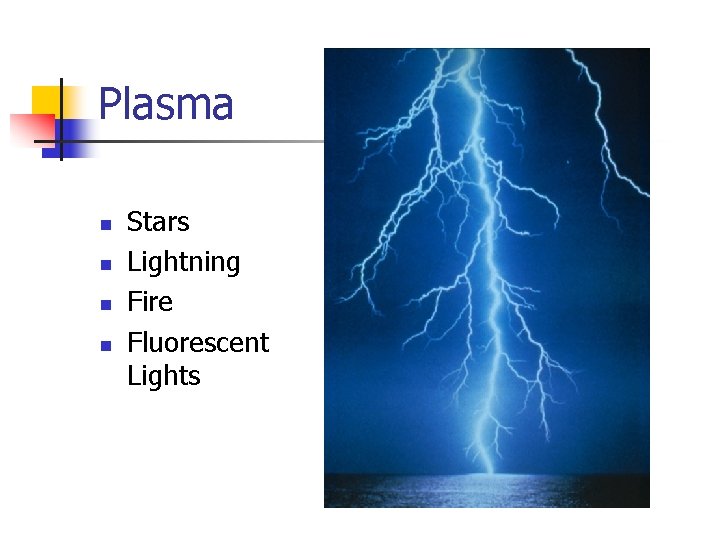
Plasma n n Stars Lightning Fire Fluorescent Lights
Energy n Energy – the capacity to do work
Thermal Energy n Thermal Energy – Kinetic energy of a substance’s atoms n Kinetic energy – energy of motion
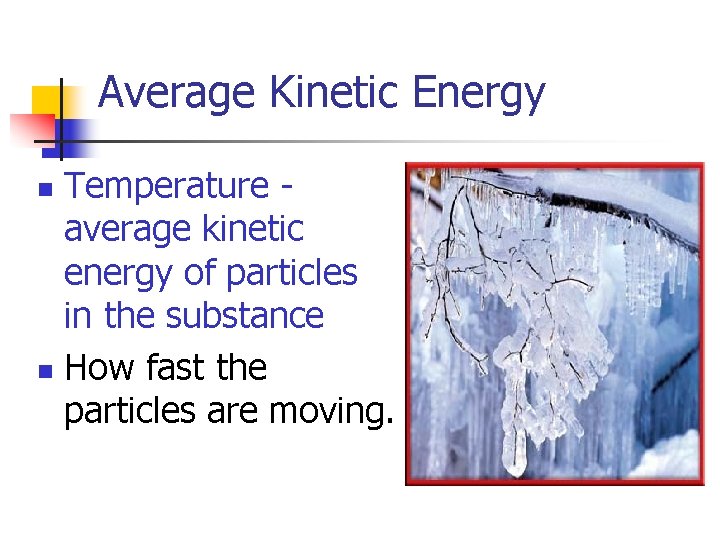
Average Kinetic Energy Temperature average kinetic energy of particles in the substance n How fast the particles are moving. n
Average Kinetic Energy n On average, molecules of frozen water at 0°C will move slower.
Average Kinetic Energy n On average, molecules of water at 90°C will move faster.
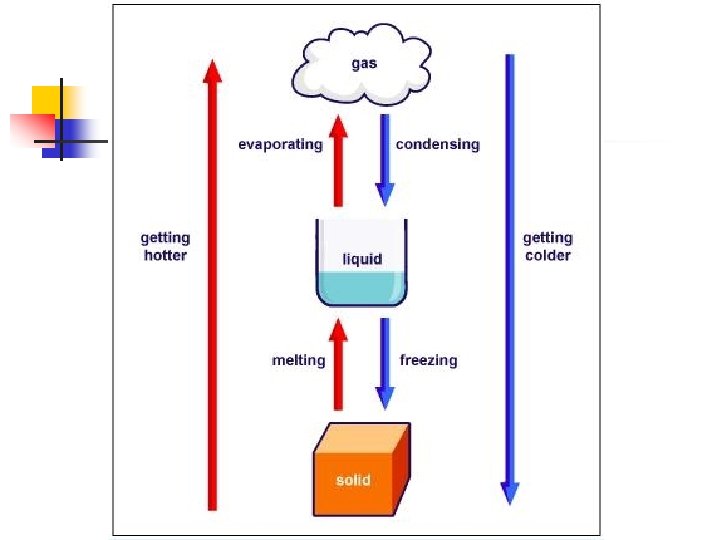
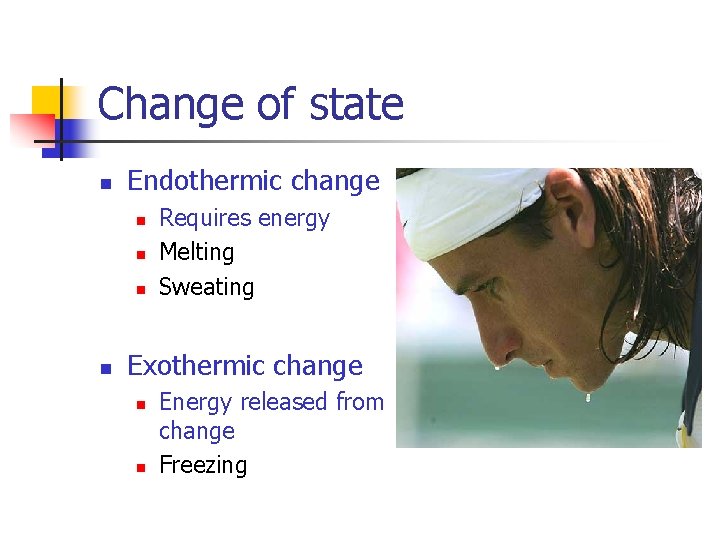
Change of state n Endothermic change n n Requires energy Melting Sweating Exothermic change n n Energy released from change Freezing
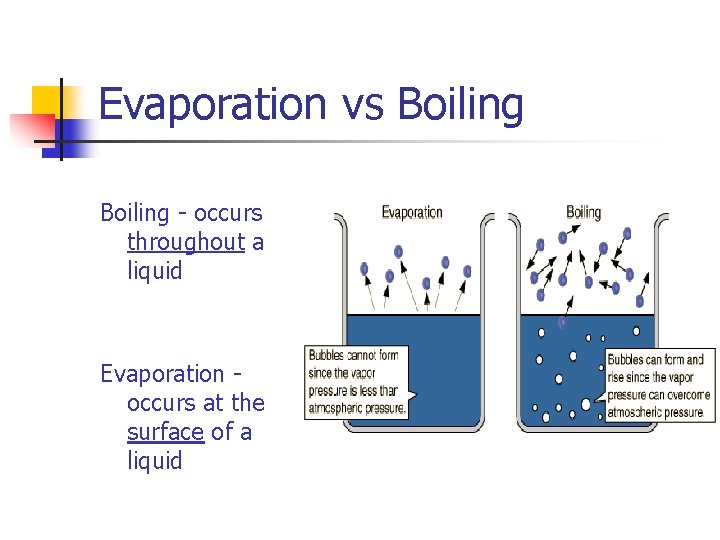
Evaporation vs Boiling - occurs throughout a liquid Evaporation occurs at the surface of a liquid
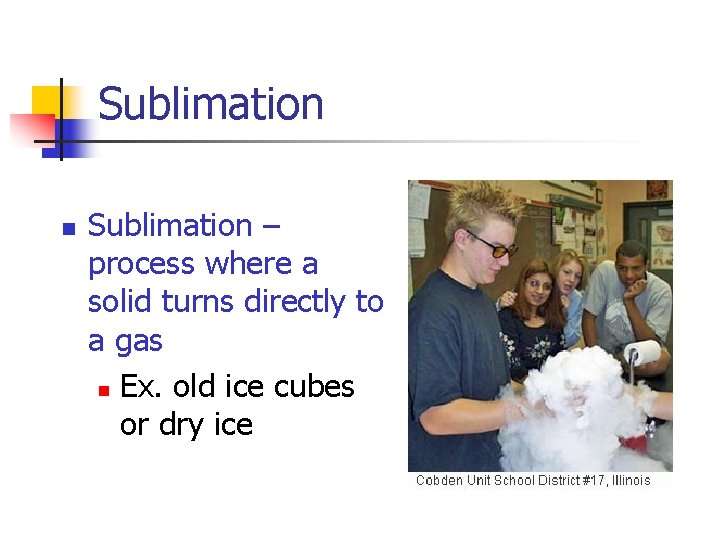
Sublimation n Sublimation – process where a solid turns directly to a gas n Ex. old ice cubes or dry ice
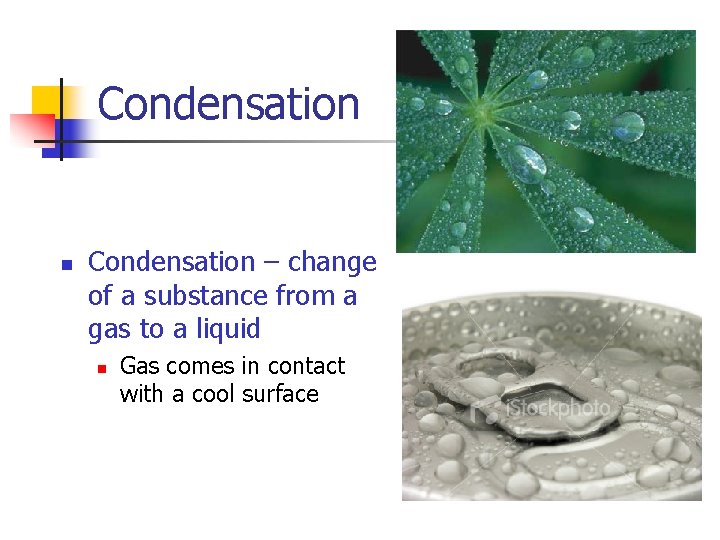
Condensation n Condensation – change of a substance from a gas to a liquid n Gas comes in contact with a cool surface
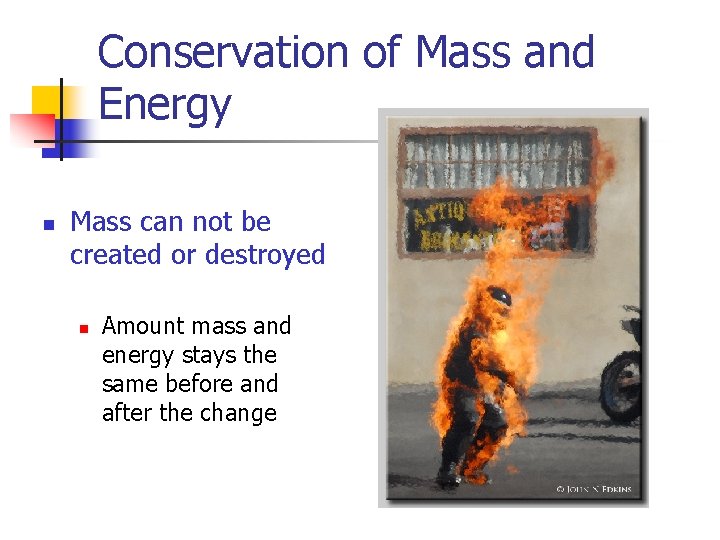
Conservation of Mass and Energy n Mass can not be created or destroyed n Amount mass and energy stays the same before and after the change
States of Matter Clip