
Chapter 3 1 Accuracy and Precision Significant Figures

- Slides: 18
Chapter 3. 1 Accuracy and Precision Significant Figures
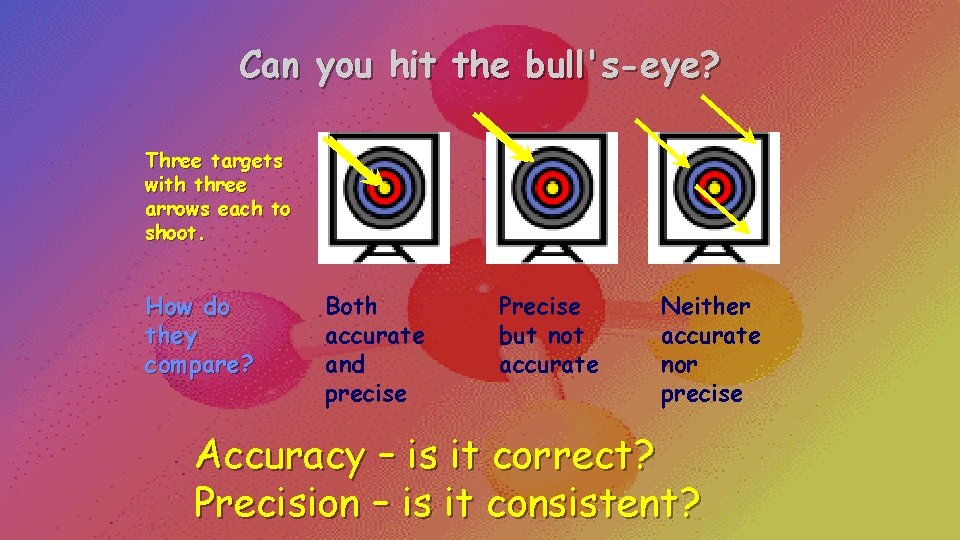
Can you hit the bull's-eye? Three targets with three arrows each to shoot. How do they compare? Both accurate and precise Precise but not accurate Neither accurate nor precise Accuracy – is it correct? Precision – is it consistent?
Significant Figures n. The numbers reported in a measurement are limited by the measuring tool n. Significant figures in a measurement include the known digits plus one estimated digit
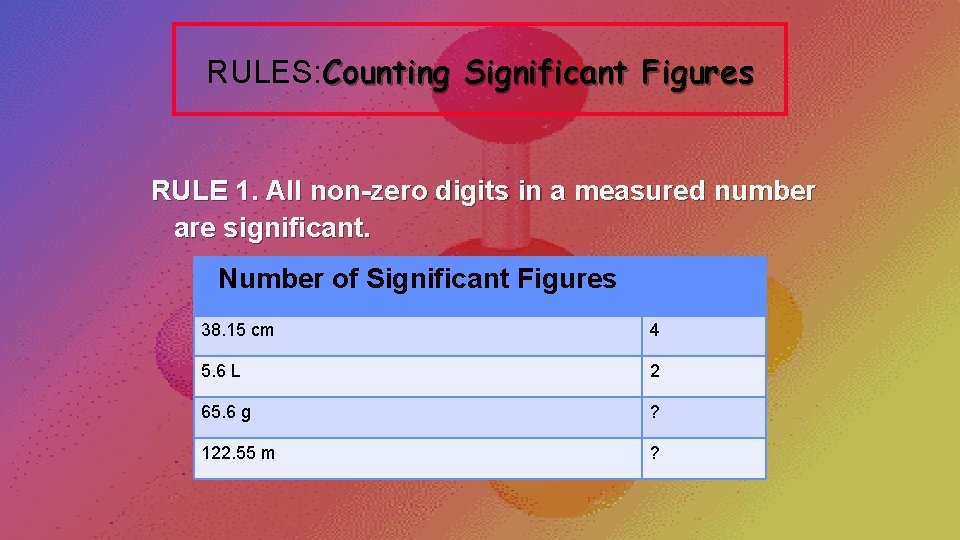
RULES: Counting Significant Figures RULE 1. All non-zero digits in a measured number are significant. Number of Significant Figures 38. 15 cm 4 5. 6 L 2 65. 6 g ? 122. 55 m ?
Leading Zeros RULE 2. Leading zeros in decimal numbers are NOT significant. EVER. Number of Significant Figures 0. 008 mm 1 0. 0156 mg 3 0. 0042 kg ? 0. 000262 m. L ?
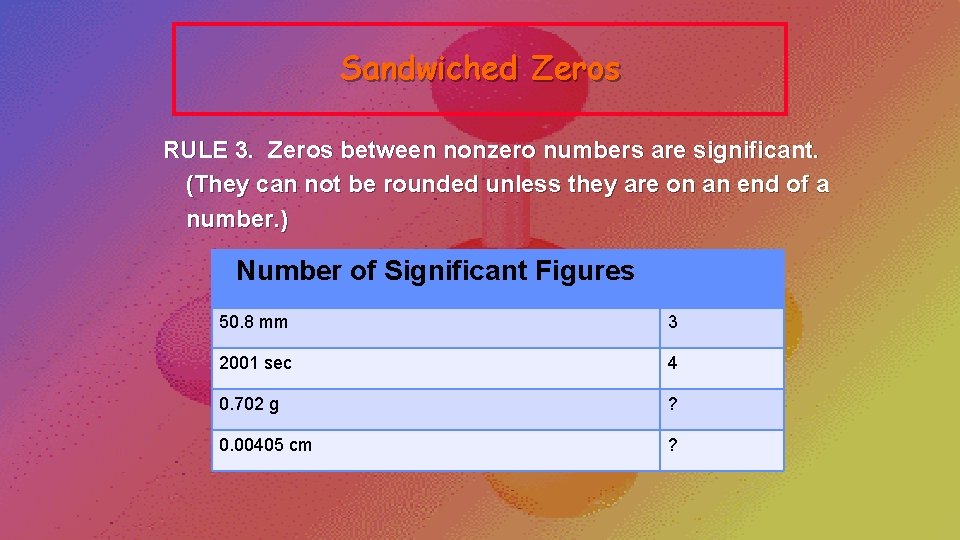
Sandwiched Zeros RULE 3. Zeros between nonzero numbers are significant. (They can not be rounded unless they are on an end of a number. ) Number of Significant Figures 50. 8 mm 3 2001 sec 4 0. 702 g ? 0. 00405 cm ?
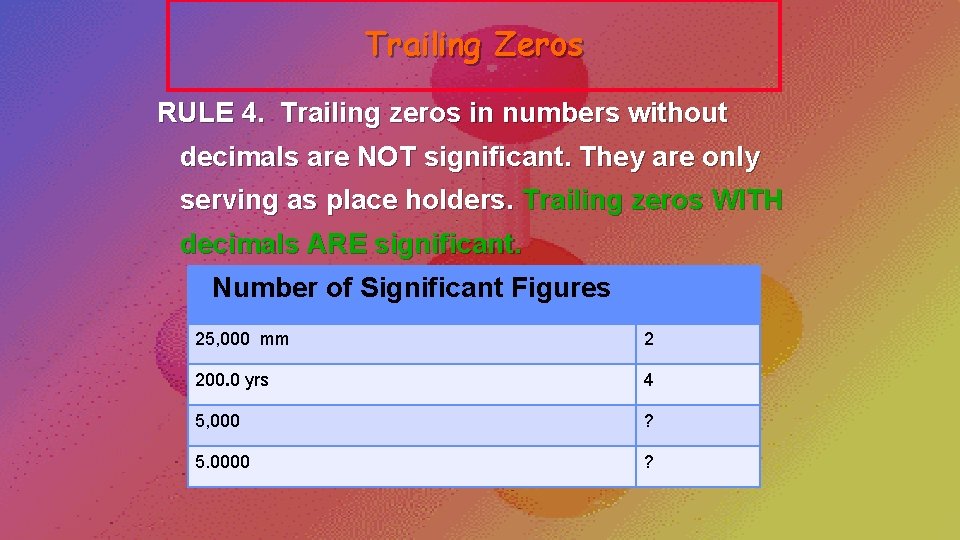
Trailing Zeros RULE 4. Trailing zeros in numbers without decimals are NOT significant. They are only serving as place holders. Trailing zeros WITH decimals ARE significant. Number of Significant Figures 25, 000 mm 2 200. 0 yrs 4 5, 000 ? 5. 0000 ?
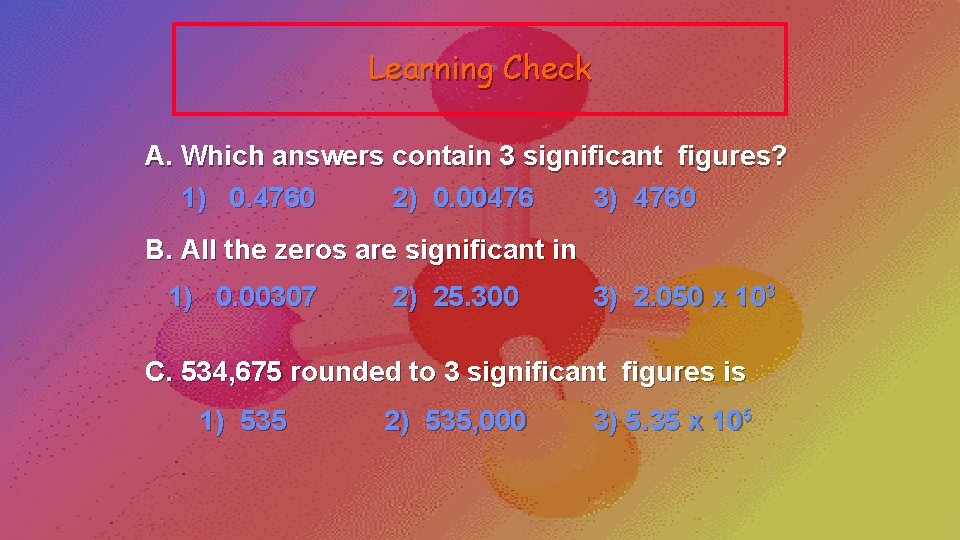
Learning Check A. Which answers contain 3 significant figures? 1) 0. 4760 2) 0. 00476 3) 4760 B. All the zeros are significant in 1) 0. 00307 2) 25. 300 3) 2. 050 x 103 C. 534, 675 rounded to 3 significant figures is 1) 535 2) 535, 000 3) 5. 35 x 105
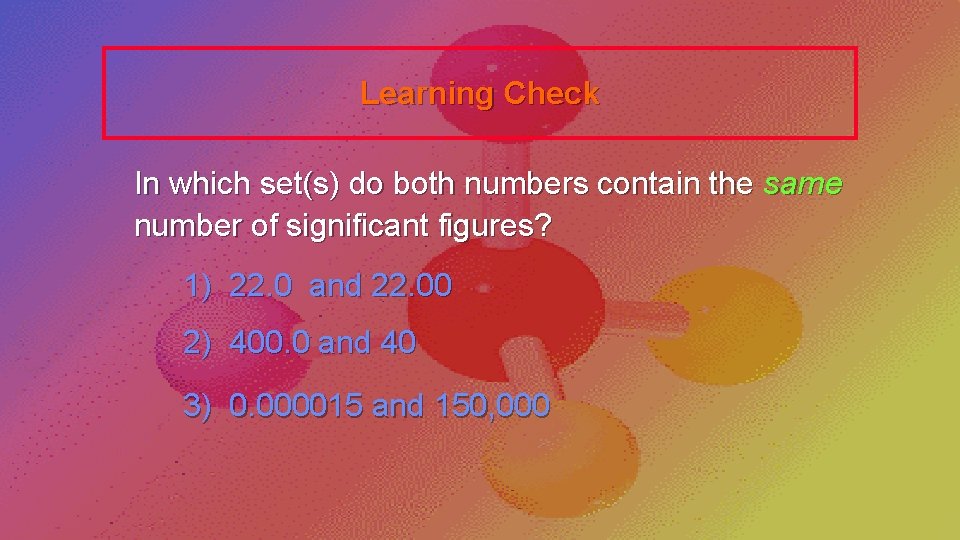
Learning Check In which set(s) do both numbers contain the same number of significant figures? 1) 22. 0 and 22. 00 2) 400. 0 and 40 3) 0. 000015 and 150, 000
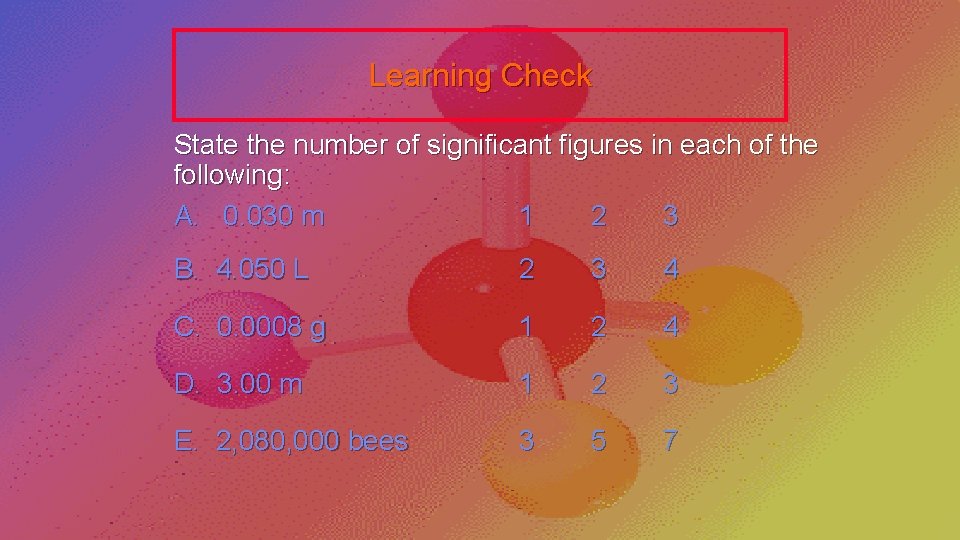
Learning Check State the number of significant figures in each of the following: A. 0. 030 m 1 2 3 B. 4. 050 L 2 3 4 C. 0. 0008 g 1 2 4 D. 3. 00 m 1 2 3 E. 2, 080, 000 bees 3 5 7
Significant Numbers in Calculations n. A calculated answer cannot be more precise than the measuring tool. n. A calculated answer must match the least precise measurement.
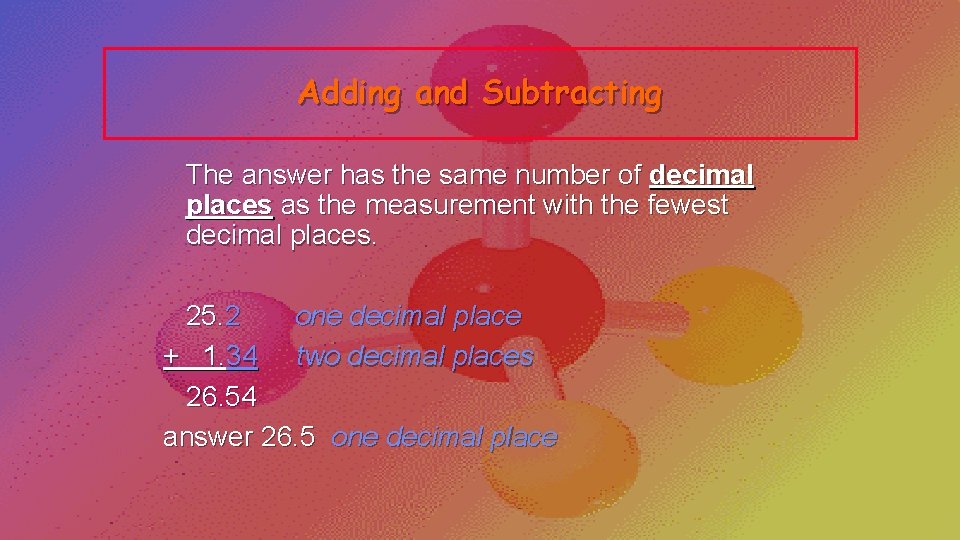
Adding and Subtracting The answer has the same number of decimal places as the measurement with the fewest decimal places. 25. 2 one decimal place + 1. 34 two decimal places 26. 54 answer 26. 5 one decimal place
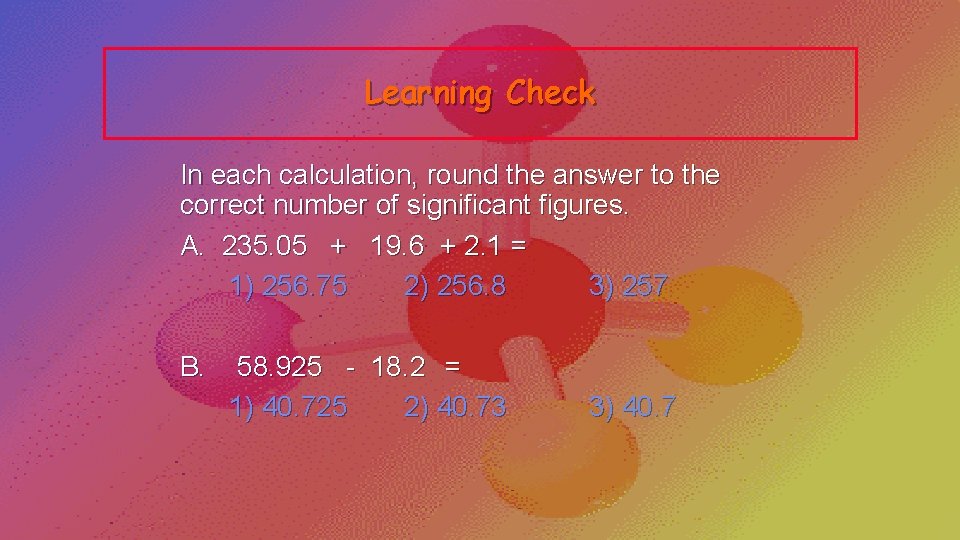
Learning Check In each calculation, round the answer to the correct number of significant figures. A. 235. 05 + 19. 6 + 2. 1 = 1) 256. 75 2) 256. 8 3) 257 B. 58. 925 - 18. 2 = 1) 40. 725 2) 40. 73 3) 40. 7
Multiplying and Dividing Answer should have the same number of total significant figures as the measurement with the fewest significant figures.
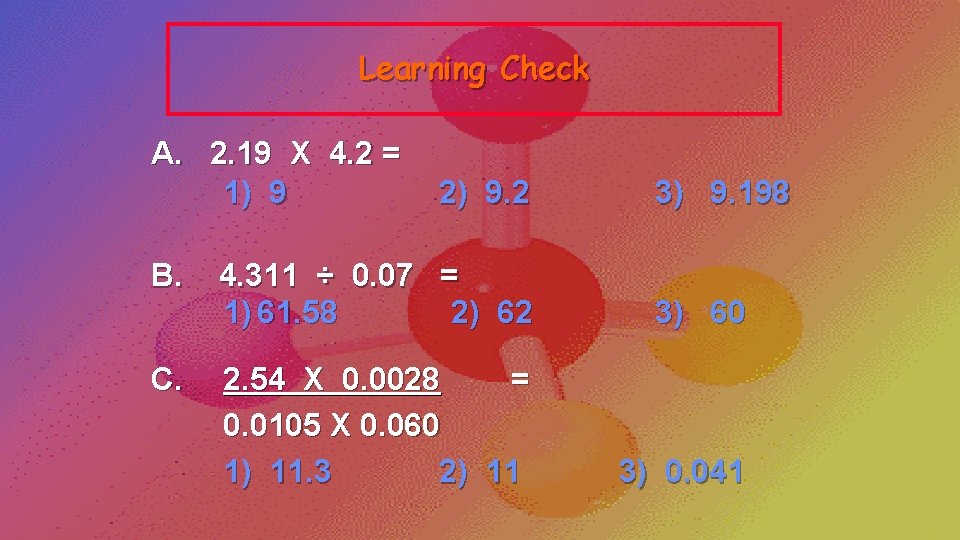
Learning Check A. 2. 19 X 4. 2 = 1) 9 2) 9. 2 3) 9. 198 B. 4. 311 ÷ 0. 07 = 1) 61. 58 2) 62 3) 60 C. 2. 54 X 0. 0028 = 0. 0105 X 0. 060 1) 11. 3 2) 11 3) 0. 041
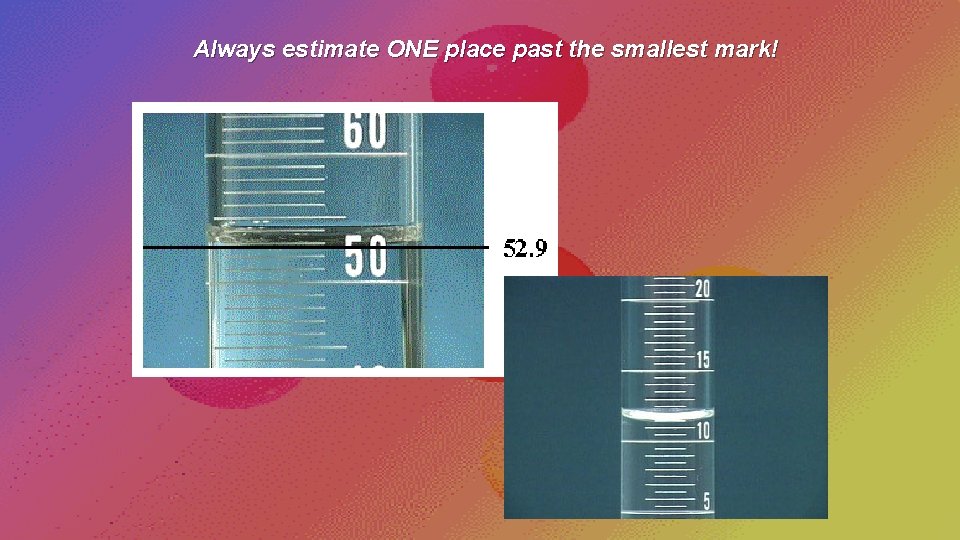
Always estimate ONE place past the smallest mark!
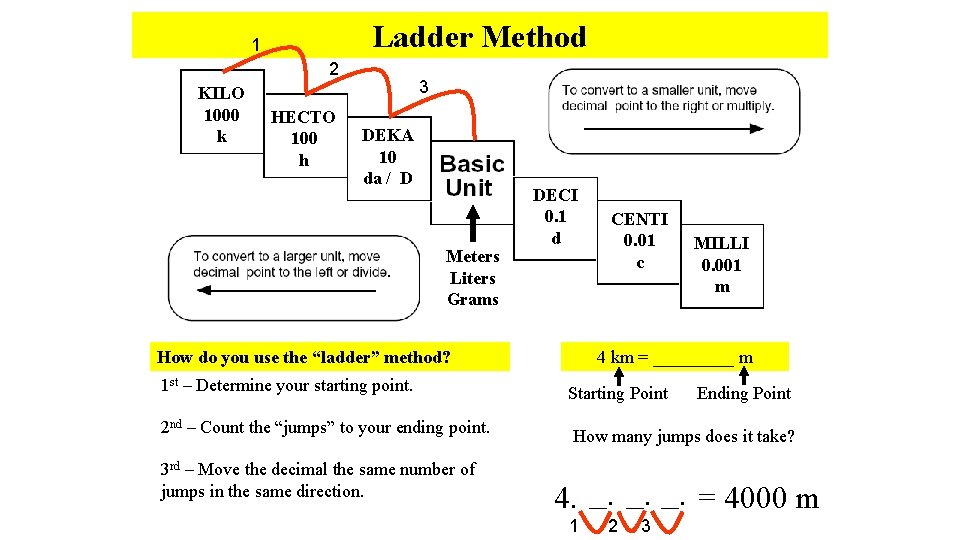
Ladder Method 1 2 KILO 1000 k HECTO 100 h 3 DEKA 10 da / D Meters Liters Grams DECI 0. 1 d How do you use the “ladder” method? CENTI 0. 01 c MILLI 0. 001 m 4 km = _____ m 1 st – Determine your starting point. Starting Point 2 nd – Count the “jumps” to your ending point. How many jumps does it take? 3 rd – Move the decimal the same number of jumps in the same direction. Ending Point 4. __. __. = 4000 m 1 2 3
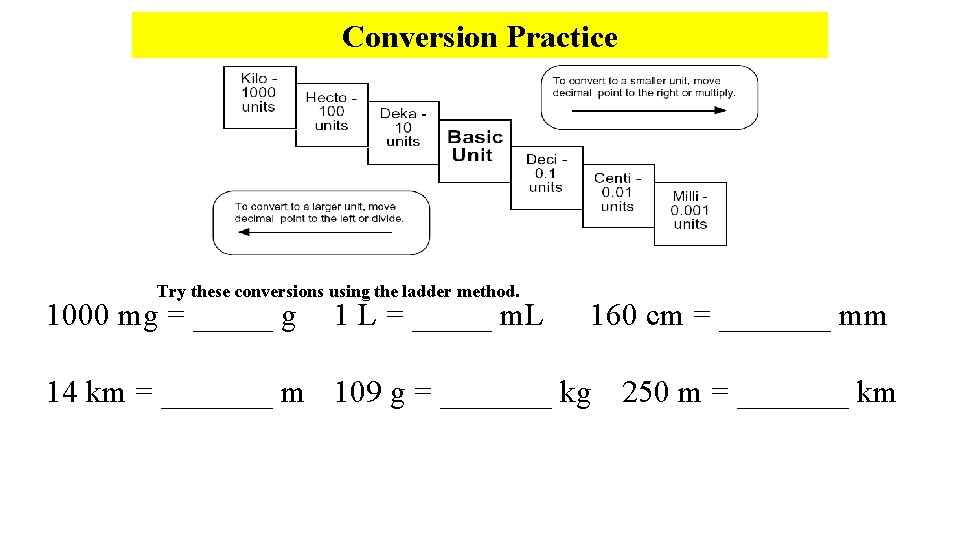
Conversion Practice Try these conversions using the ladder method. 1000 mg = _____ g 1 L = _____ m. L 160 cm = _______ mm 14 km = _______ m 109 g = _______ kg 250 m = _______ km