
Chapter 29 Wilsonian Progressivism at Home and Abroad
Chapter 29: Wilsonian Progressivism at Home and Abroad, 1912 -1916 p. 679 – 694 Introductory Presentation Woodrow Wilson = our last Progressive Era President
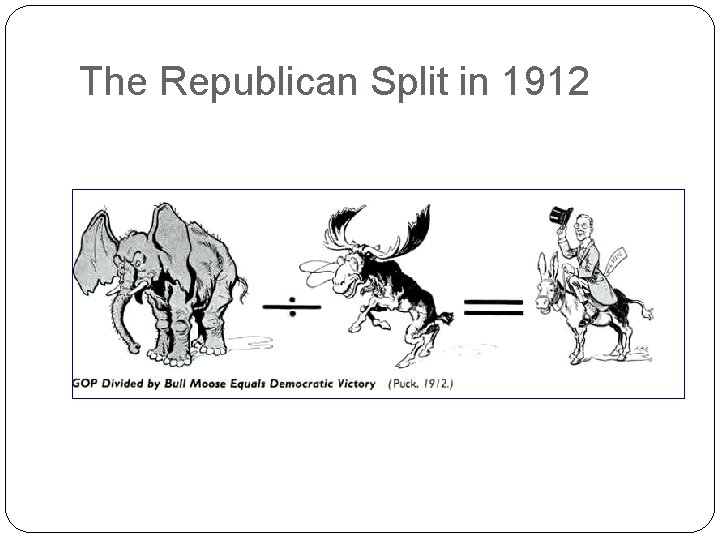
The Republican Split in 1912
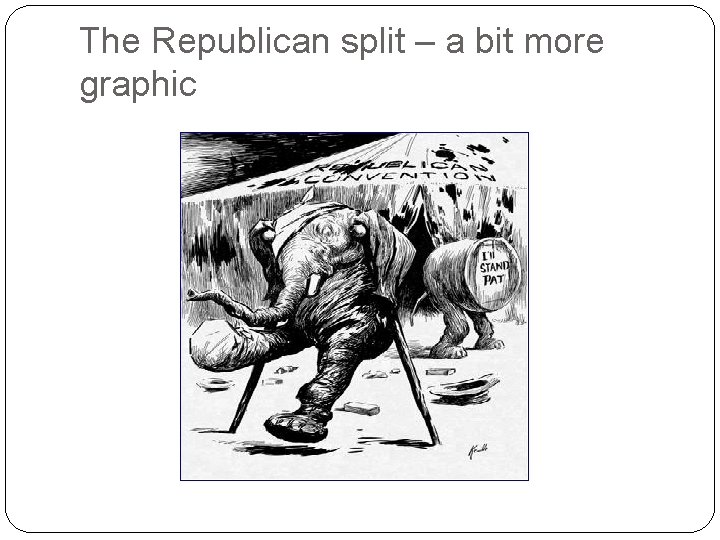
The Republican split – a bit more graphic
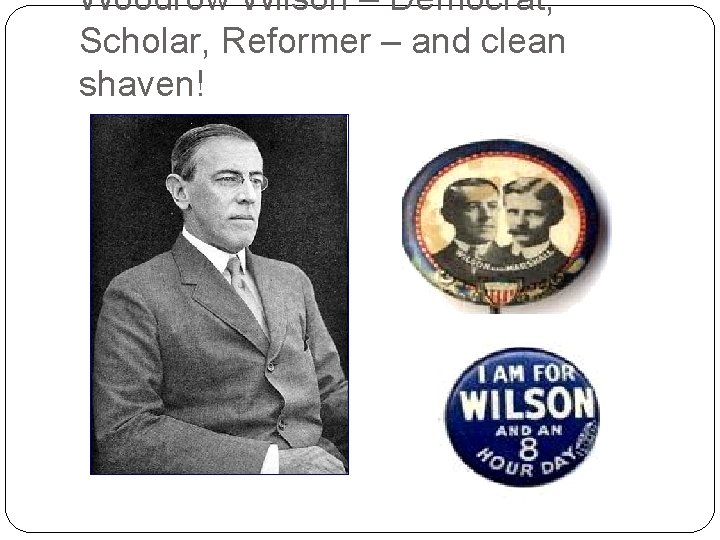
Woodrow Wilson – Democrat, Scholar, Reformer – and clean shaven!
Election of 1912 �Split in R’s gives D’s hopes for victory for first time since Cleveland – why only 1 Democrat as president since Civil War? �D’s look for reformist leader – find one in Woodrow Wilson �Princeton Univ president � 1910 – elected gov of NJ – promises to break monopolies, return gov’t to the people �D’s nominate for president in 1912, give strong progressive platform to run on �New Freedom: stronger antitrust legislation, banking reform, tariff reductions
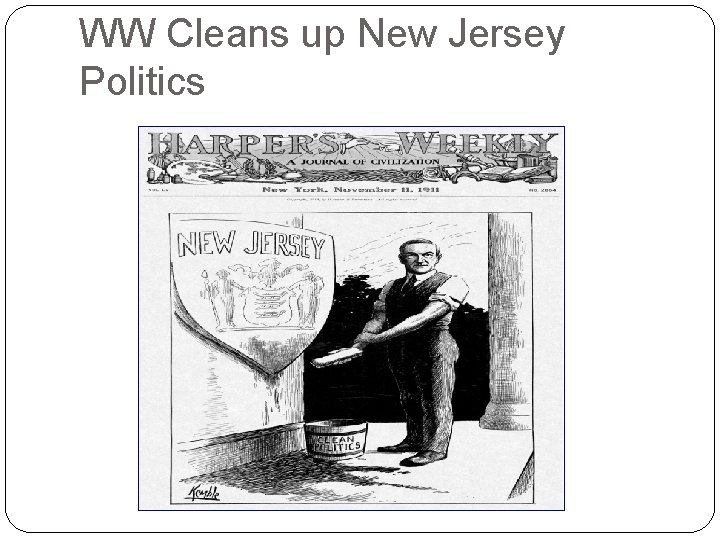
WW Cleans up New Jersey Politics
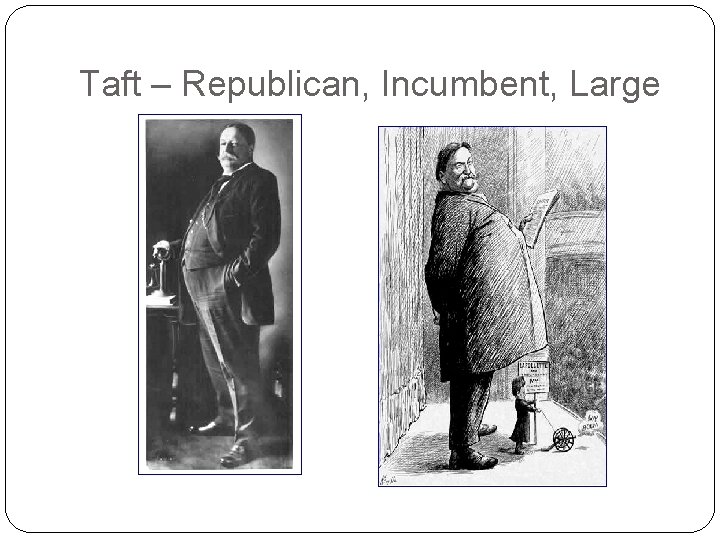
Taft – Republican, Incumbent, Large
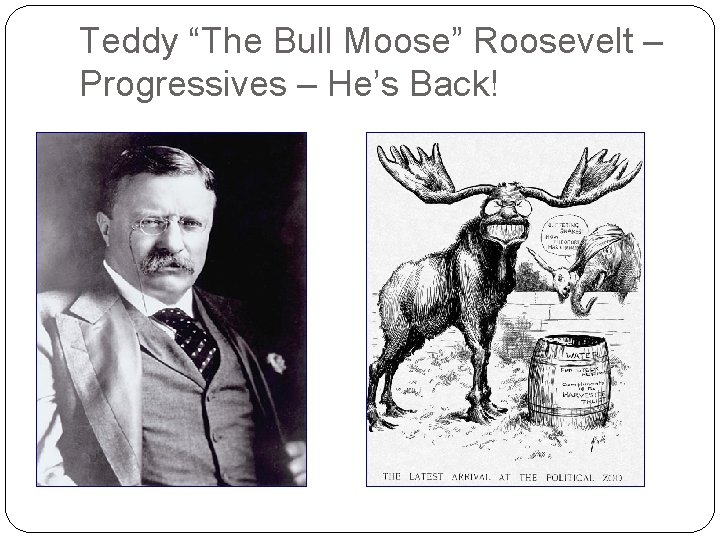
Teddy “The Bull Moose” Roosevelt – Progressives – He’s Back!
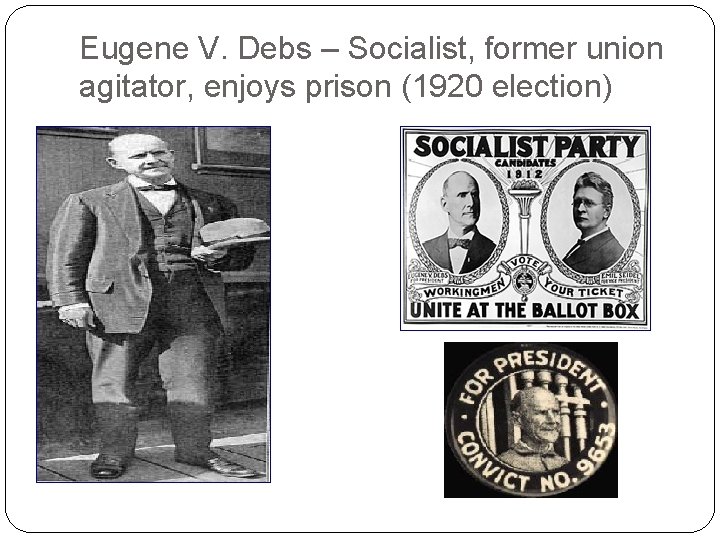
Eugene V. Debs – Socialist, former union agitator, enjoys prison (1920 election)
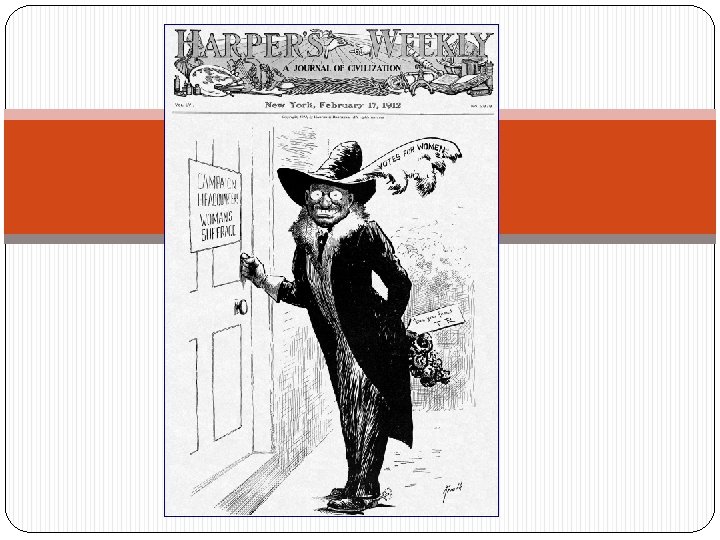
Progressive Platform – New Nationalism (Roosevelt) Women’s suffrage. Graduated income tax. Inheritance tax for the rich. Lower tariffs. Limits on campaign spending. Currency reform. Minimum wage laws. Social insurance. Abolition of child labor. Workmen’s compensation.
Democratic Platform (Wilson) – New Freedom Government control of trusts in general eliminate them!! the monopolies were bad Tariff reduction. One-term President. Direct election of Senators. Create a Department of Labor. Strengthen the Sherman Anti-Trust Act. Did NOT support women’s suffrage. Opposed to a central bank.
Election of 1912 �Wilson wins – though minority president (41%); TR 2 nd; Taft 3 rd; then Debs and Chafin (Prohibition) �Progressive Party dies out – both D’s and R’s took up progressive causes, WWI ends reform era �R’s – lose presidency and majority in congress, makes things easy for Wilson
President Wilson �Only 2 nd D president since 1861 �First from one of seceded S states since Taylor 64 yrs earlier �WW sympathized w/ CSA’s attempt at independence (inspires ideal of self-determination for others) �Son of Presbyterian minister; moving orator, persuasive, relied on sincerity and moral appeal
President Wilson �Attacks “triple wall of privilege” – tariff, banks, trusts �Underwood Tariff / 16 th Amendment �Federal Reserve Act of 1913 �Federal Trade Commission Act / Clayton Anti-Trust Act �Pushes through great deal of progressive reform legislation �Rejects “big stick” diplomacy; hates “dollar diplomacy” – chooses “moral diplomacy”, but finds that he can’t have this without the “big stick” too
President Wilson �Uses neutrality to the economic advantage of the US during first few years of WWI �Keeps US out of WWI as long as possible – seems wuss-like to many �Re-elected in 1916 on slogan – “He kept us out of war” – barely wins election
President Wilson � When convinces Congress to enter WWI, takes unprecedented step of being first US president to take country into a foreign (European) war � Ideas have largely defined character of US foreign policy ever since � Wilsonian principles: �Era of US isolation from world affairs irretrievably over �US must infuse own founding principles – democracy, rule of law, free trade, self-determination – into world order (convince other nations to do good things = MORAL DIPLOMACY) �American influence can steer world away from warfare and toward cooperation maintained by League of Nations (later UN)
- Slides: 17