
Chapter 29 Reptiles and Birds Section 1 Reptiles
Chapter 29 Reptiles and Birds Section 1: Reptiles Section 2: Birds Click on a lesson name to select.
Class Reptilia • First terrestrial vertebrates • Internal fertilization/scaly skin Click on a lesson name to select.
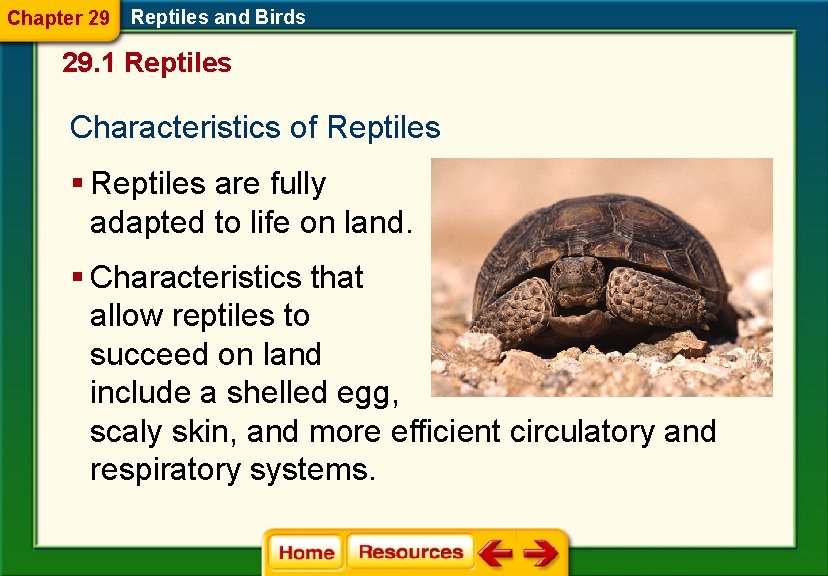
Chapter 29 Reptiles and Birds 29. 1 Reptiles Characteristics of Reptiles § Reptiles are fully adapted to life on land. § Characteristics that allow reptiles to succeed on land include a shelled egg, scaly skin, and more efficient circulatory and respiratory systems.

• Swedish Chef makes turtle soup • Owen and mzee • Part 2
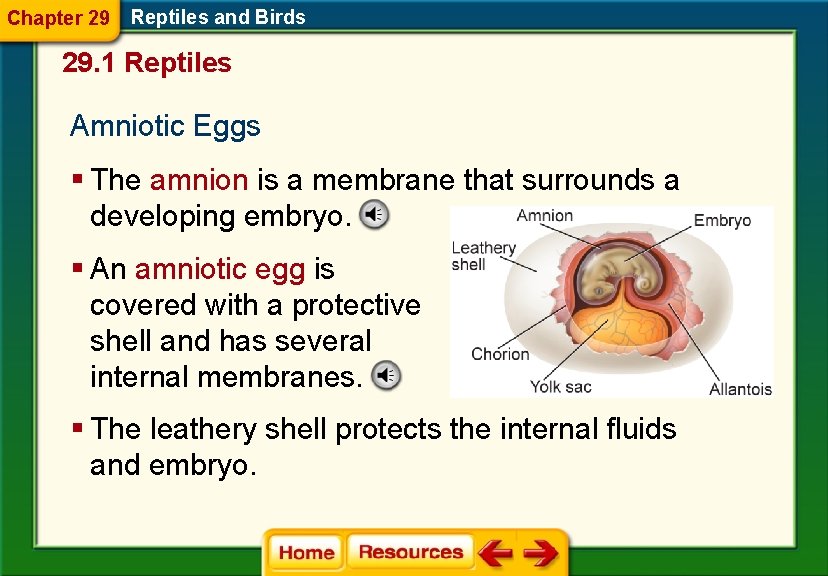
Chapter 29 Reptiles and Birds 29. 1 Reptiles Amniotic Eggs § The amnion is a membrane that surrounds a developing embryo. § An amniotic egg is covered with a protective shell and has several internal membranes. § The leathery shell protects the internal fluids and embryo.
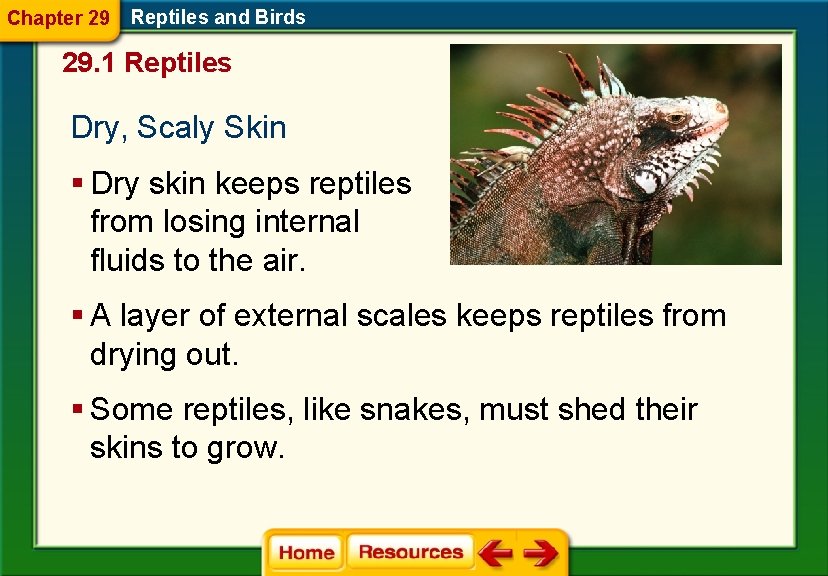
Chapter 29 Reptiles and Birds 29. 1 Reptiles Dry, Scaly Skin § Dry skin keeps reptiles from losing internal fluids to the air. § A layer of external scales keeps reptiles from drying out. § Some reptiles, like snakes, must shed their skins to grow.
Chapter 29 Reptiles and Birds 29. 1 Reptiles Respiration § Reptiles depend on lungs for gas exchange. § A reptile’s lungs have a large surface area. § With more oxygen, more energy can be released through metabolic reactions and made available for more complex movements.
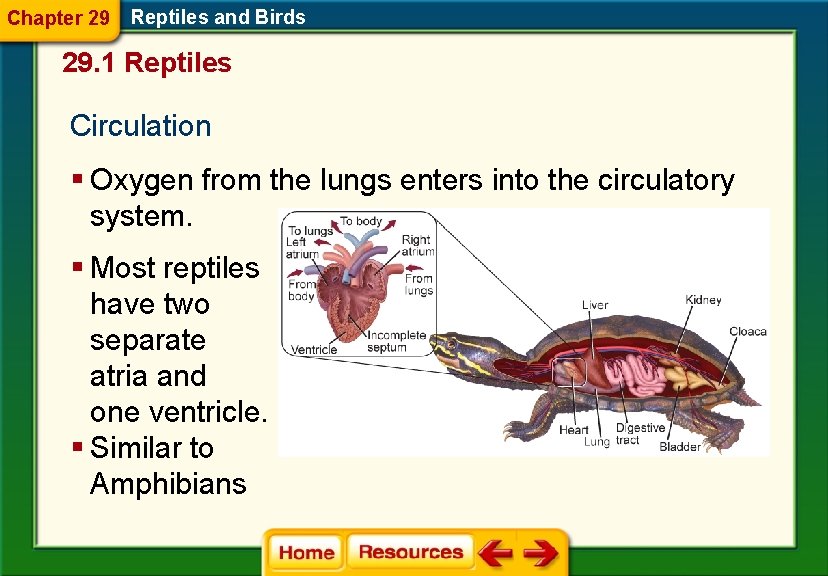
Chapter 29 Reptiles and Birds 29. 1 Reptiles Circulation § Oxygen from the lungs enters into the circulatory system. § Most reptiles have two separate atria and one ventricle. § Similar to Amphibians
Chapter 29 Reptiles and Birds 29. 1 Reptiles Feeding and Digestion § Most reptiles are carnivores, but some are herbivores. § To make it easier to swallow prey whole, snakes have loosely jointed jaws that can spread apart to take in their food.
Chapter 29 Reptiles and Birds 29. 1 Reptiles Excretion § Kidneys filter the blood to remove waste products. § Water reabsorption enables reptiles to conserve water and maintain homeostasis in their bodies.
Chapter 29 Reptiles and Birds 29. 1 Reptiles The Brain and Senses § Vision is the main sense in most reptiles. § Some reptiles have tympanic membranes and others detect vibrations through their jaw bones. § In snakes, Jacobson’s organs in the mouth are used to sense odors.
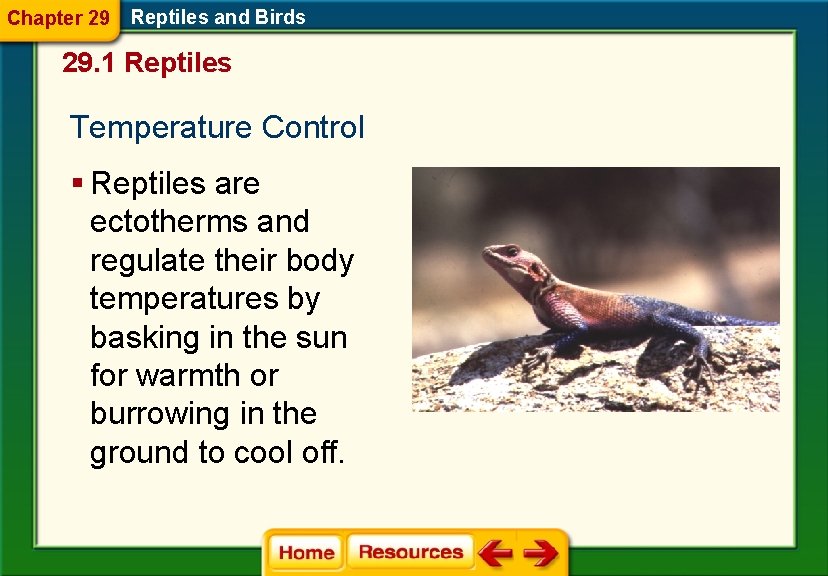
Chapter 29 Reptiles and Birds 29. 1 Reptiles Temperature Control § Reptiles are ectotherms and regulate their body temperatures by basking in the sun for warmth or burrowing in the ground to cool off.
Chapter 29 Reptiles and Birds 29. 1 Reptiles Movement § Some reptiles move with limbs sprawled to their sides and push against the ground. § Crocodiles have limbs rotated further under the body and can bear more weight and move faster.
Chapter 29 Reptiles and Birds 29. 1 Reptiles Reproduction § Reptiles have internal fertilization. § After fertilization, the egg develops to form the new embryo and an amniotic egg. § Most reptile eggs are buried and the sun incubates them. § After laying their eggs, most females leave them alone to hatch.
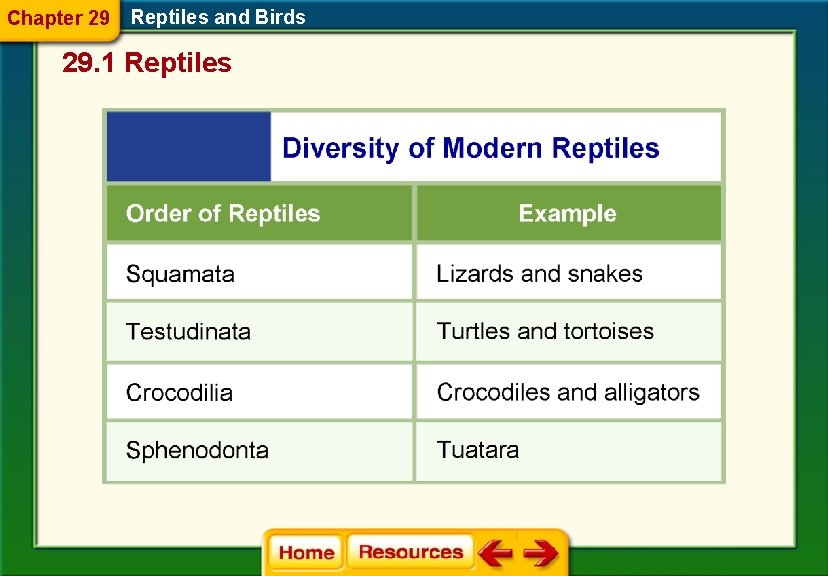
Chapter 29 Reptiles and Birds 29. 1 Reptiles
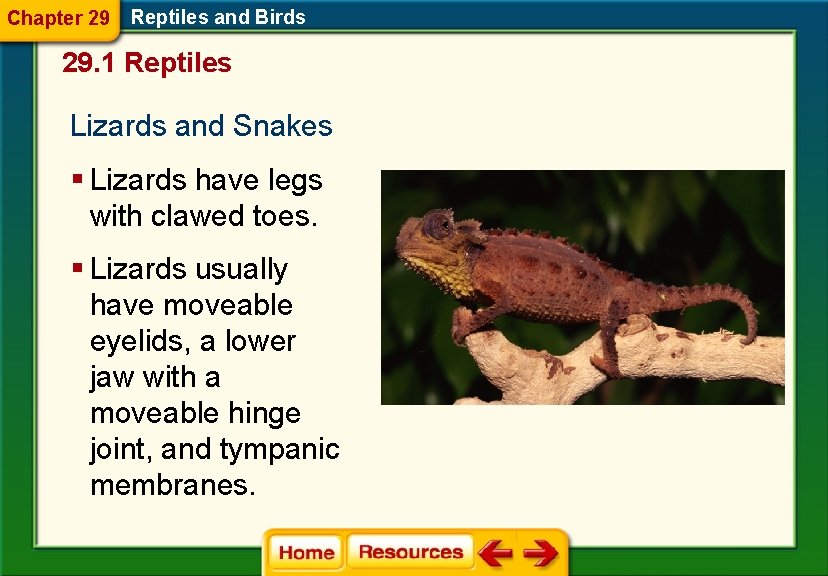
Chapter 29 Reptiles and Birds 29. 1 Reptiles Lizards and Snakes § Lizards have legs with clawed toes. § Lizards usually have moveable eyelids, a lower jaw with a moveable hinge joint, and tympanic membranes.
Chapter 29 Reptiles and Birds 29. 1 Reptiles § Snakes are legless and have shorter tails than lizards. § Snakes lack moveable eyelids and tympanic membranes. § Like lizards, snakes have loosely-jointed jaws, and some snakes have venomous fangs.
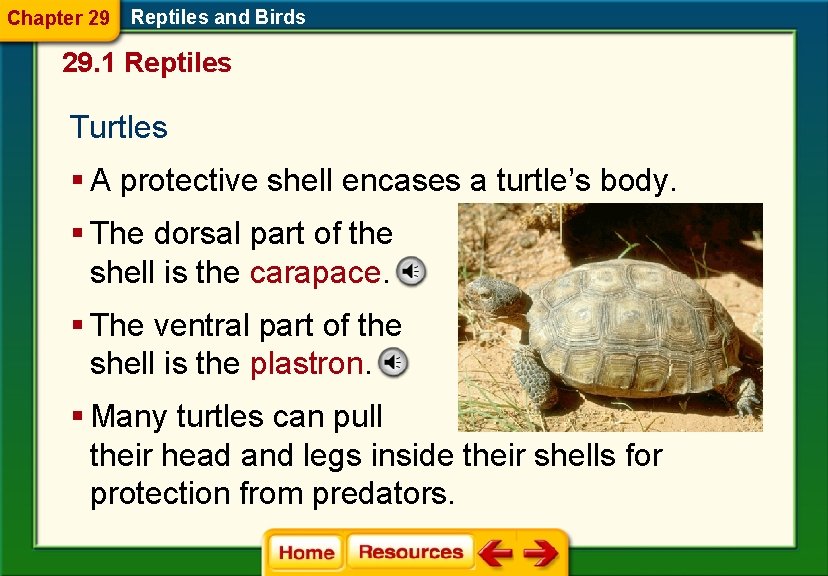
Chapter 29 Reptiles and Birds 29. 1 Reptiles Turtles § A protective shell encases a turtle’s body. § The dorsal part of the shell is the carapace. § The ventral part of the shell is the plastron. § Many turtles can pull their head and legs inside their shells for protection from predators.
Chapter 29 Reptiles and Birds 29. 1 Reptiles Crocodiles and Alligators § Crocodilians have a four-chambered heart which delivers oxygen more efficiently. § Crocodiles have a long snout, sharp teeth, and powerful jaws. § Alligators generally have a broader snout than crocodiles.
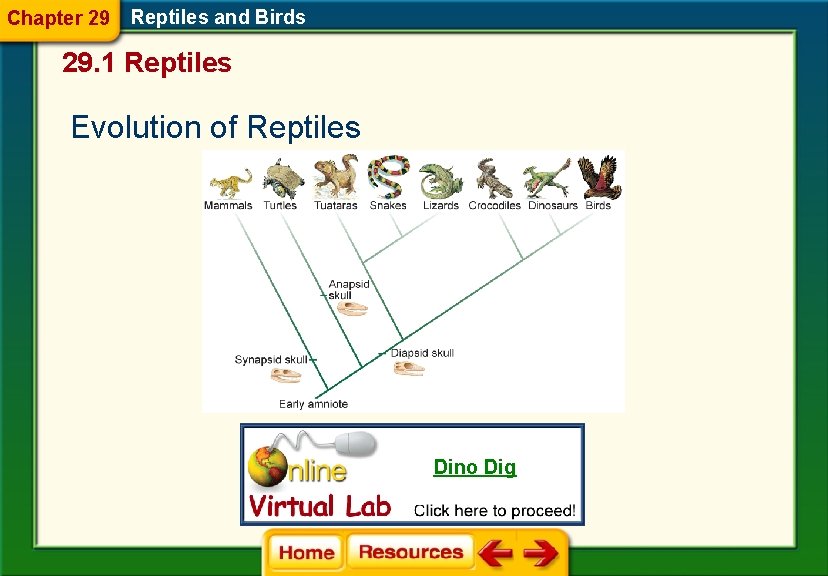
Chapter 29 Reptiles and Birds 29. 1 Reptiles Evolution of Reptiles Dino Dig
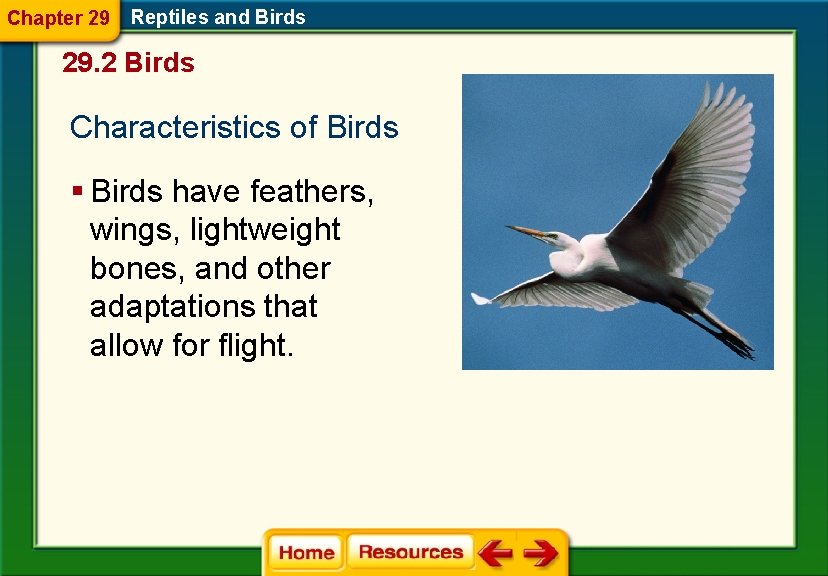
Chapter 29 Reptiles and Birds 29. 2 Birds Characteristics of Birds § Birds have feathers, wings, lightweight bones, and other adaptations that allow for flight.

Class Aves • This class is large and diverse – 8600 species/27 orders
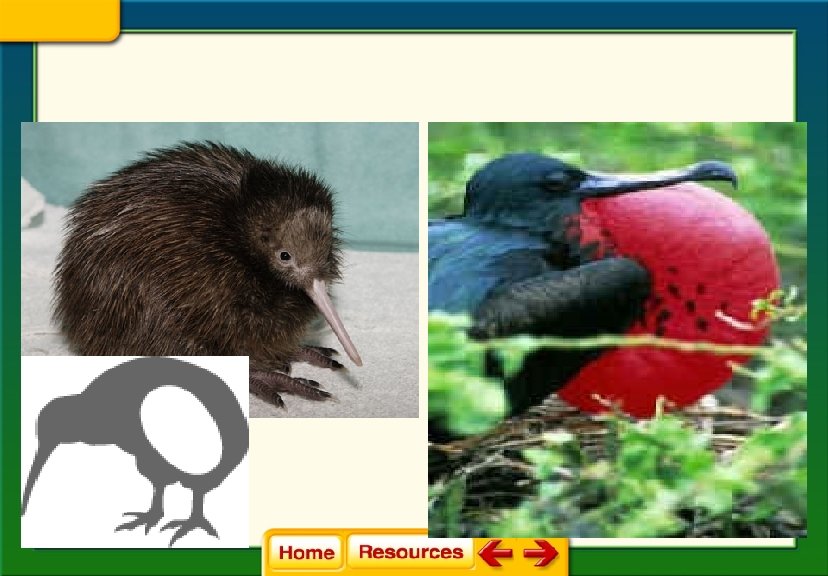

• Frigate Bird display • Kiwi Bird Lays egg
Chapter 29 Reptiles and Birds 29. 2 Birds Endotherms § Birds are endotherms, which means they generate body heat internally by their own metabolism. § A high body temperature enables the cells in a bird’s flight muscles to use large amounts of ATP needed for rapid muscle contraction during flight.
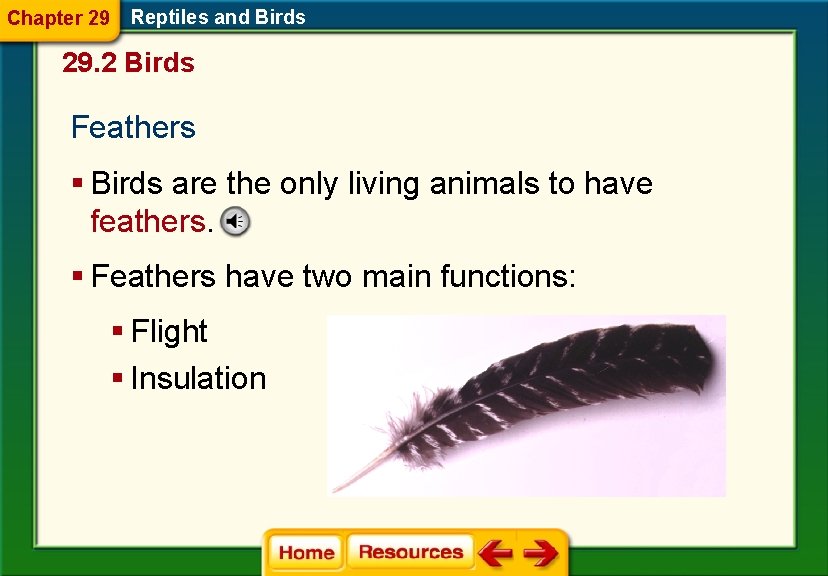
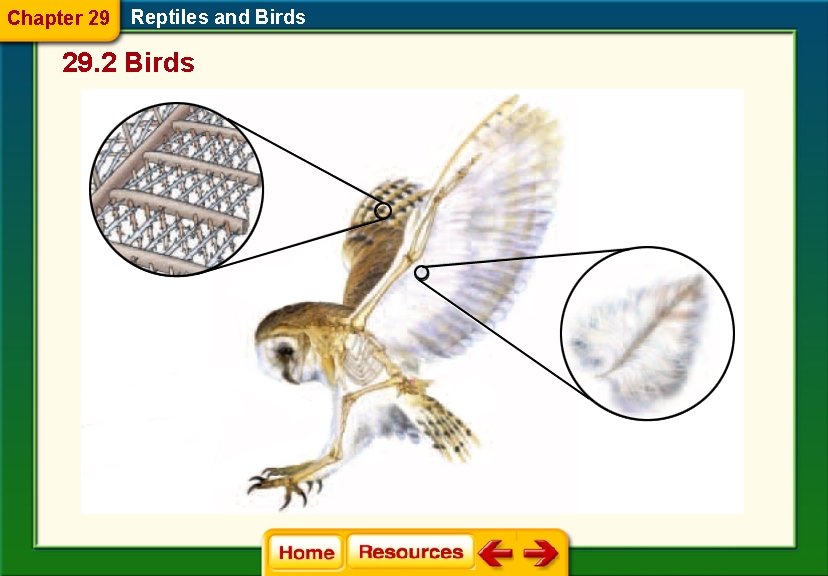
Chapter 29 Reptiles and Birds 29. 2 Birds Feathers § Birds are the only living animals to have feathers. § Feathers have two main functions: § Flight § Insulation
Chapter 29 Reptiles and Birds 29. 2 Birds
Chapter 29 Reptiles and Birds 29. 2 Birds Lightweight Bones § A strong, lightweight skeleton allows birds to fly. § The bones of birds are unique because they contain cavities of air. § Large, powerful muscles attach to the sternum and keel.
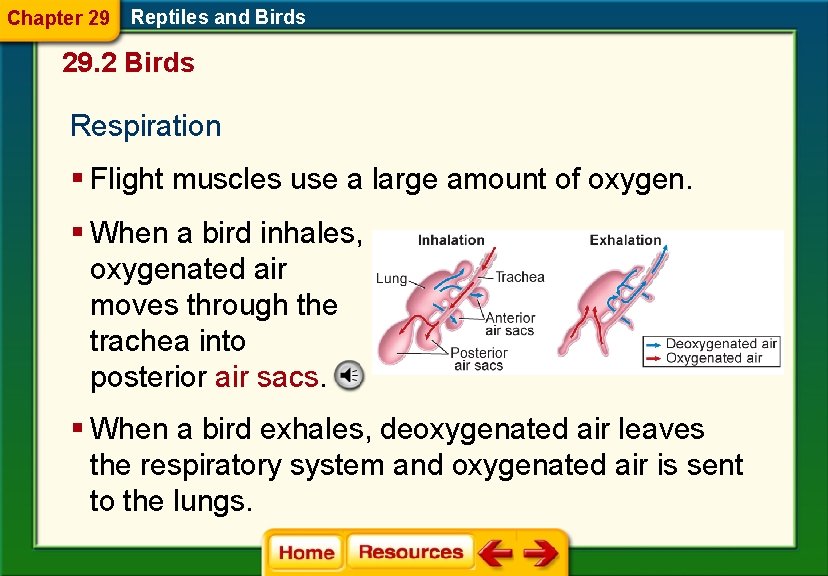
Chapter 29 Reptiles and Birds 29. 2 Birds Respiration § Flight muscles use a large amount of oxygen. § When a bird inhales, oxygenated air moves through the trachea into posterior air sacs. § When a bird exhales, deoxygenated air leaves the respiratory system and oxygenated air is sent to the lungs.
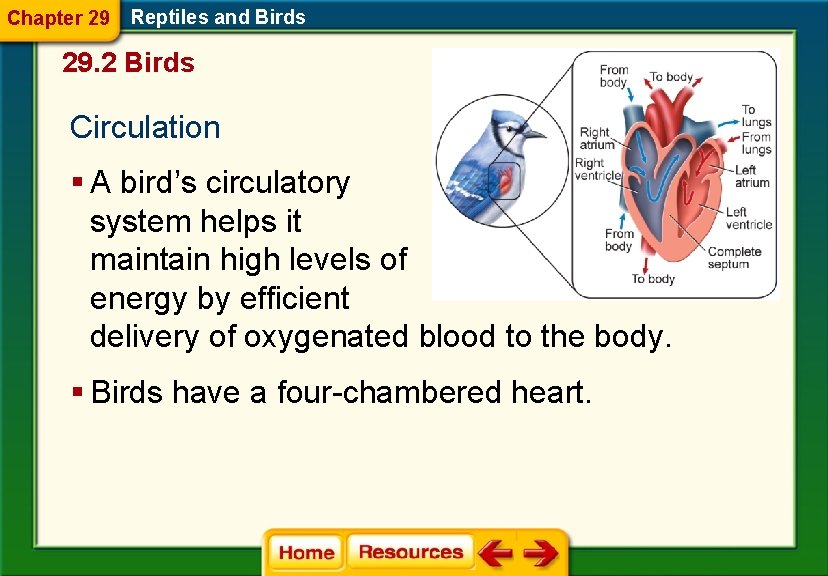
Chapter 29 Reptiles and Birds 29. 2 Birds Circulation § A bird’s circulatory system helps it maintain high levels of energy by efficient delivery of oxygenated blood to the body. § Birds have a four-chambered heart.
Chapter 29 Reptiles and Birds 29. 2 Birds Feeding and Digestion § Birds require large amounts of food to maintain their high metabolic rate. § Many birds have a crop at the base of the esophagus that stores food. § The gizzard contains small stones that crush food the birds have swallowed.
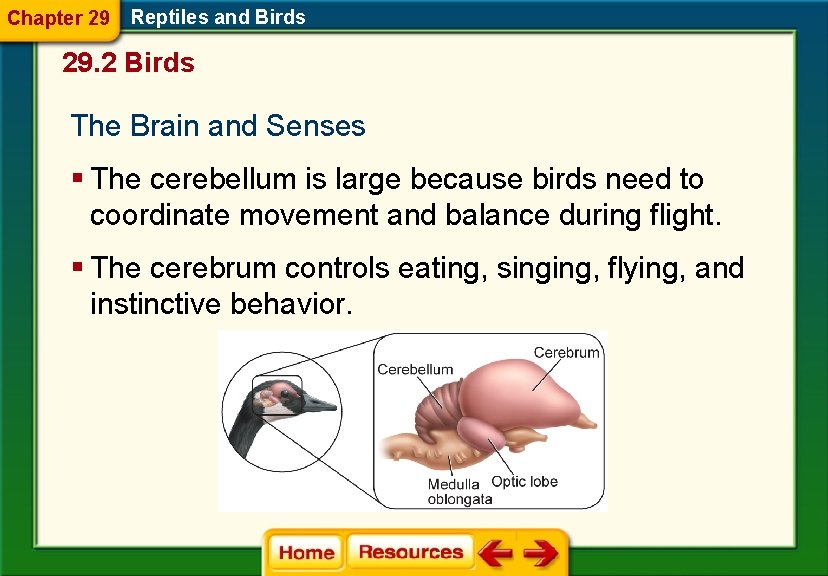
Chapter 29 Reptiles and Birds 29. 2 Birds The Brain and Senses § The cerebellum is large because birds need to coordinate movement and balance during flight. § The cerebrum controls eating, singing, flying, and instinctive behavior.
Chapter 29 Reptiles and Birds 29. 2 Birds § Birds have excellent vision. § Birds of prey have eyes in the front of the head, which allows them to focus easily. § Some birds have eyes on the sides, enabling them to see nearly 360 degrees. § Birds also have a good sense of hearing.
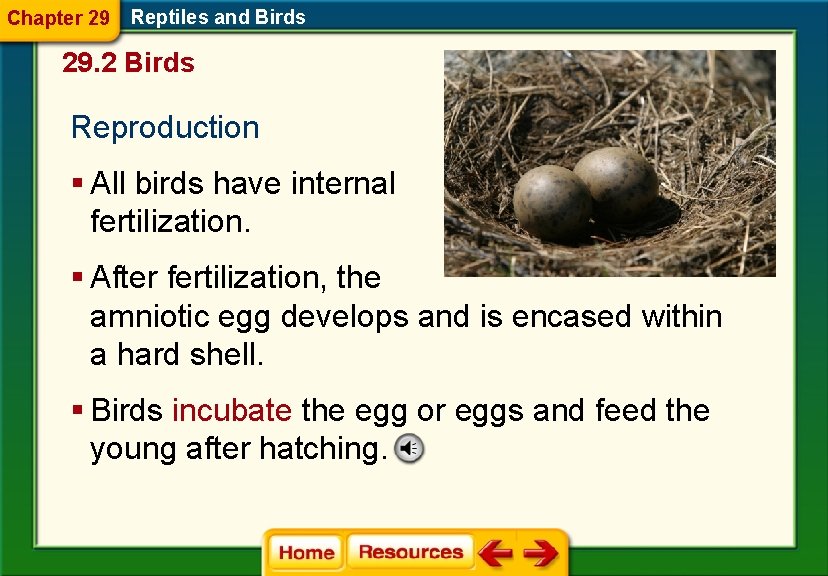
Chapter 29 Reptiles and Birds 29. 2 Birds Reproduction § All birds have internal fertilization. § After fertilization, the amniotic egg develops and is encased within a hard shell. § Birds incubate the egg or eggs and feed the young after hatching.
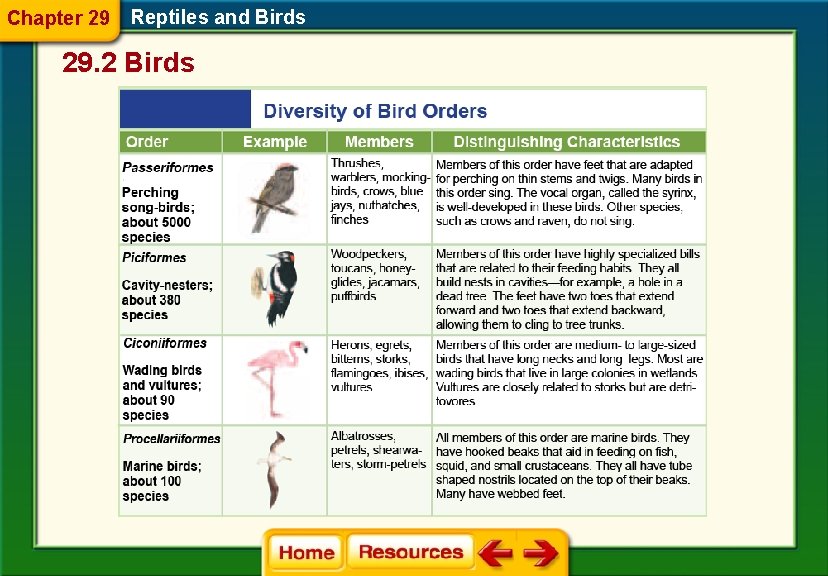
Chapter 29 Reptiles and Birds 29. 2 Birds
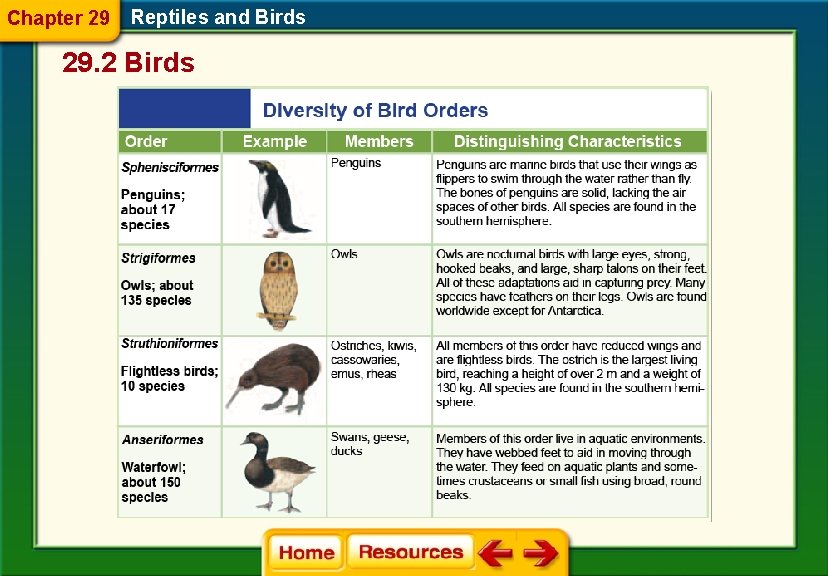
Chapter 29 Reptiles and Birds 29. 2 Birds
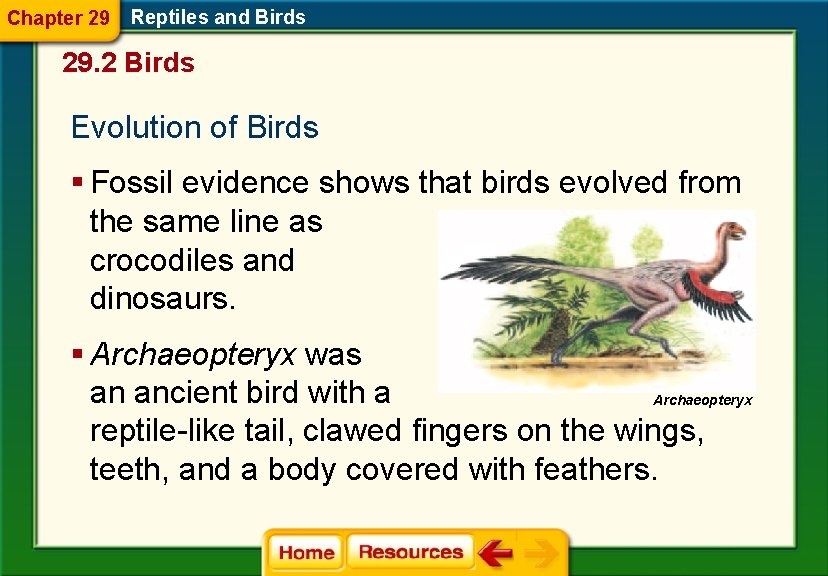
Chapter 29 Reptiles and Birds 29. 2 Birds Evolution of Birds § Fossil evidence shows that birds evolved from the same line as crocodiles and dinosaurs. § Archaeopteryx was an ancient bird with a Archaeopteryx reptile-like tail, clawed fingers on the wings, teeth, and a body covered with feathers.
- Slides: 39