
Chapter 29 Introduction to Invertebrates Introduction to Invertebrates
Chapter 29 Introduction to Invertebrates

Introduction to Invertebrates Outline Evolution of Animals Multicellularity Sponges True Tissues Cnidarians and Comb Jellies Hydra Obelia Bilateral Symmetry Flatworms Roundworms Body Cavities Acoelomates Psuedocoelomates Eucoelomates 2
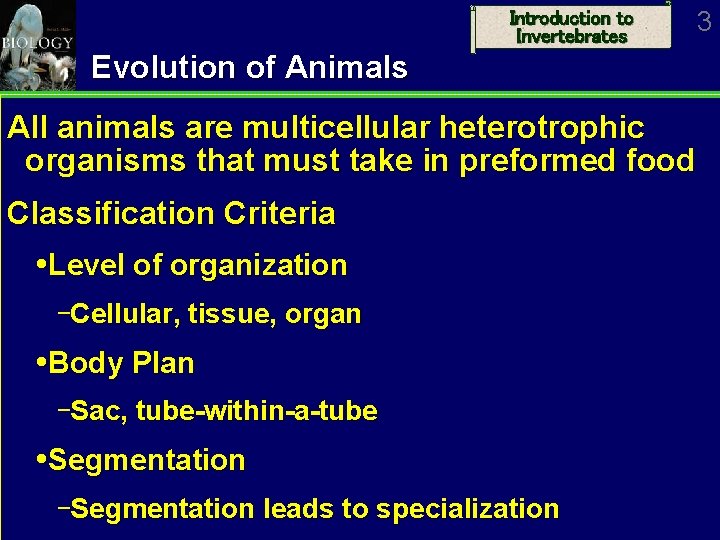
Introduction to Invertebrates Evolution of Animals All animals are multicellular heterotrophic organisms that must take in preformed food Classification Criteria Level of organization Cellular, tissue, organ Body Plan Sac, tube-within-a-tube Segmentation leads to specialization 3
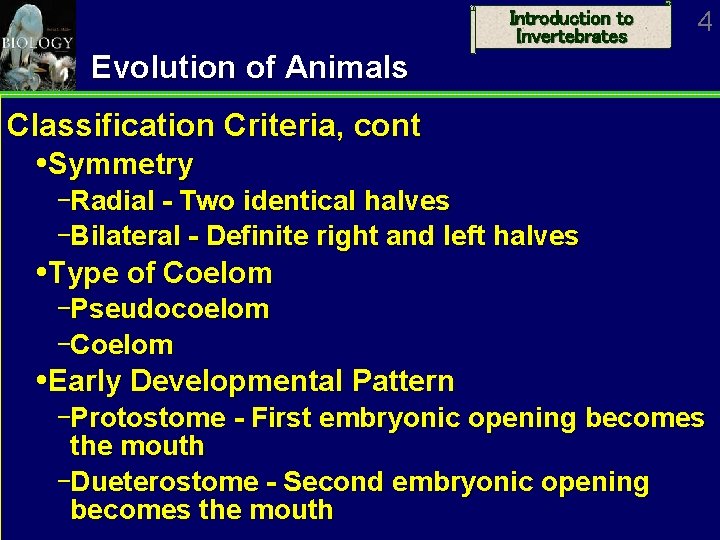
Introduction to Invertebrates 4 Evolution of Animals Classification Criteria, cont Symmetry Radial - Two identical halves Bilateral - Definite right and left halves Type of Coelom Pseudocoelom Coelom Early Developmental Pattern Protostome - First embryonic opening becomes the mouth Dueterostome - Second embryonic opening becomes the mouth
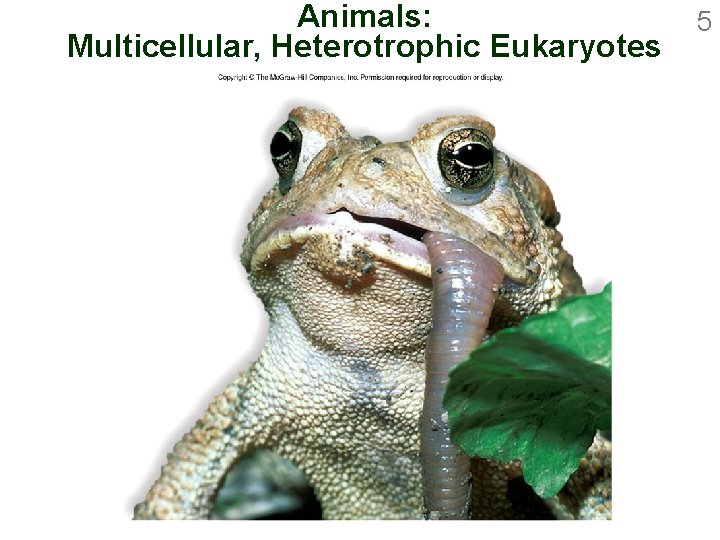
Animals: Multicellular, Heterotrophic Eukaryotes 5
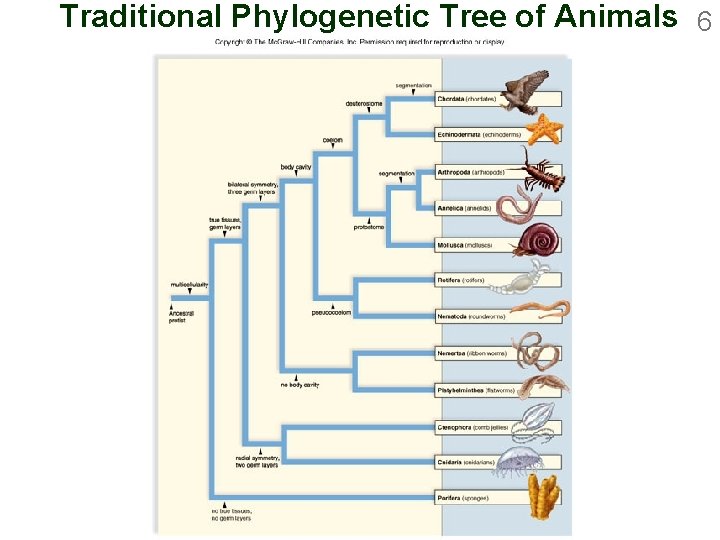
Traditional Phylogenetic Tree of Animals 6
Introduction to Invertebrates 7 Multicellularity Sponges Only level of animal to have cellular organization Saclike bodies perforated by many pores Beating of flagella produces water currents that flow through pores into central cavity and out osculum Sessile filter feeders Asexual reproduction by fragmentation or
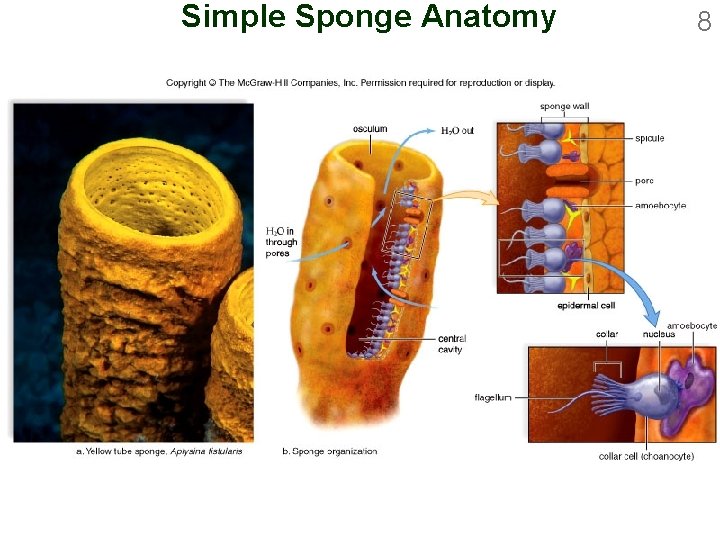
Simple Sponge Anatomy 8
Introduction to Invertebrates True Tissue Layers Total of three possible germ layers Ectoderm Endoderm, and Mesoderm phlya Ctenophora and Cnidaria develop only ectoderm and endoderm Diploblasts Radially symmetrical 9
Introduction to Invertebrates 10 Comb Jellies Small, transparent, and often luminescent Most of body composed of mesoglea Largest animals propelled by beating of cilia Capture prey with tentacles
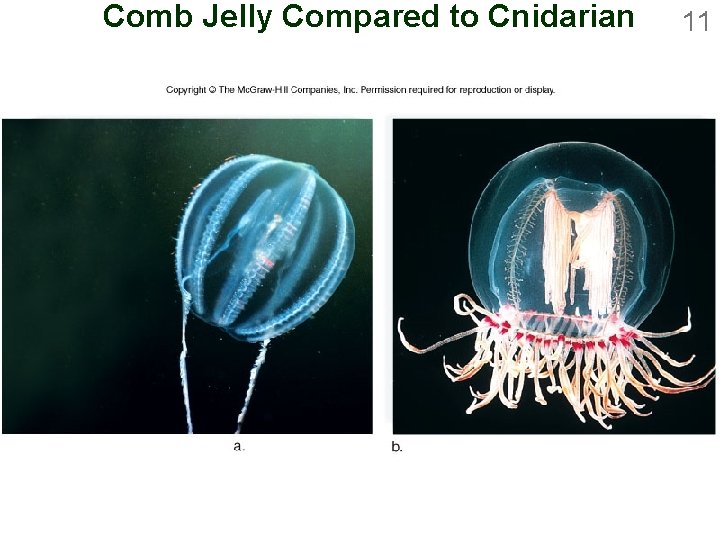
Comb Jelly Compared to Cnidarian 11
Introduction to Invertebrates Cnidarians Tubular animals that most often reside in shallow marine waters Polyp and medusa body forms Specialized stinging cells (cnidocytes) Fluid-filled capsule, nematocyst Two-layered body sac Outer layer - Protective epidermis Inner layer - Gastrovascular cavity Nerve net found throughout body 12
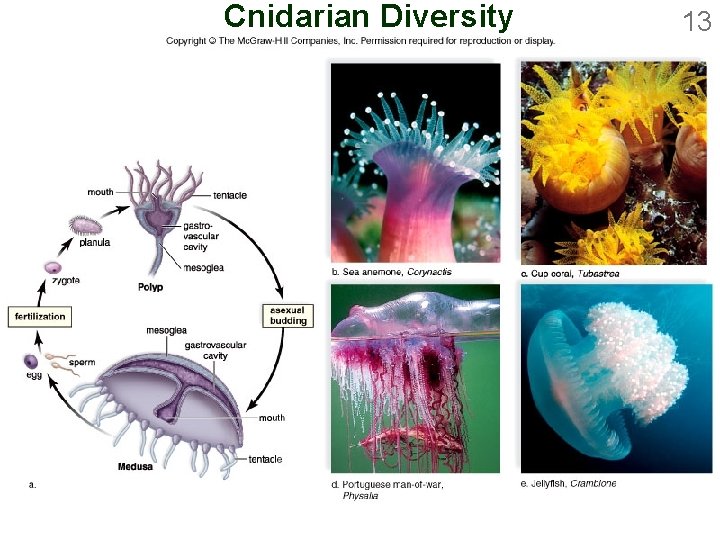
Cnidarian Diversity 13
Introduction to Invertebrates Hydra Freshwater cnidarian Small tubular poly body about one-quarter inch in length Gastrovascular cavity is central cavity Tentacles can respond to stimuli Can reproduce sexually and asexually 14
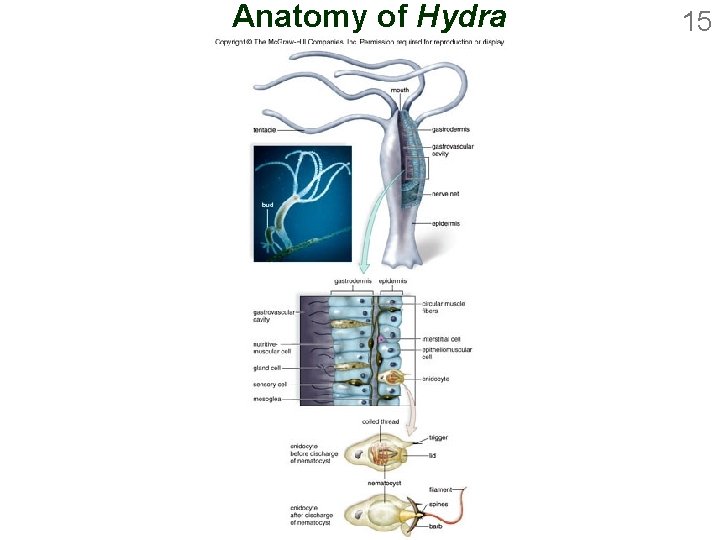
Anatomy of Hydra 15
Introduction to Invertebrates Obelia A colony of polyps enclosed by a hard, chitinous covering Feeding polyps Extend beyond covering Have nematocyst-bearing tentacles Reproductive polyps Budding of new polyps Also has sexual reproduction (medusae) stage 16
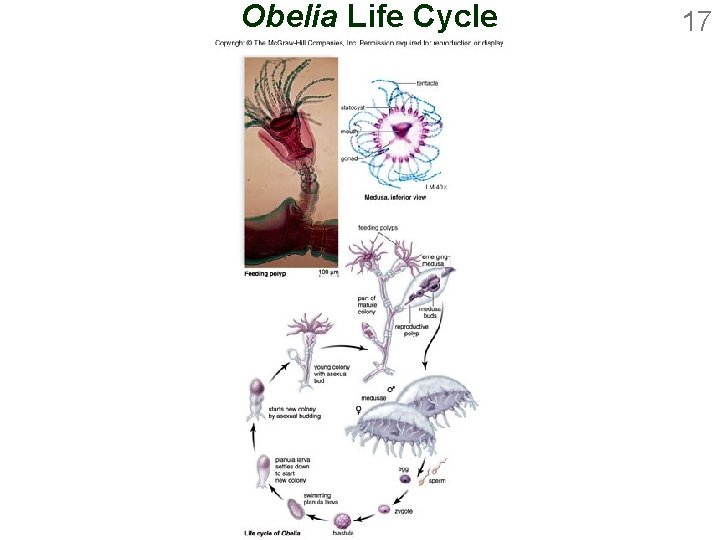
Obelia Life Cycle 17
Introduction to Invertebrates Bilateral Symmetry Ribbon worms (phylum Nemertea) Have distinctive proboscis Flatworms (phylum Platyhelminthes) Majority are parasitic Organ-level organization No specialized circulatory or respiratory structures Have undergone cephalization Ladder-type nervous system 18
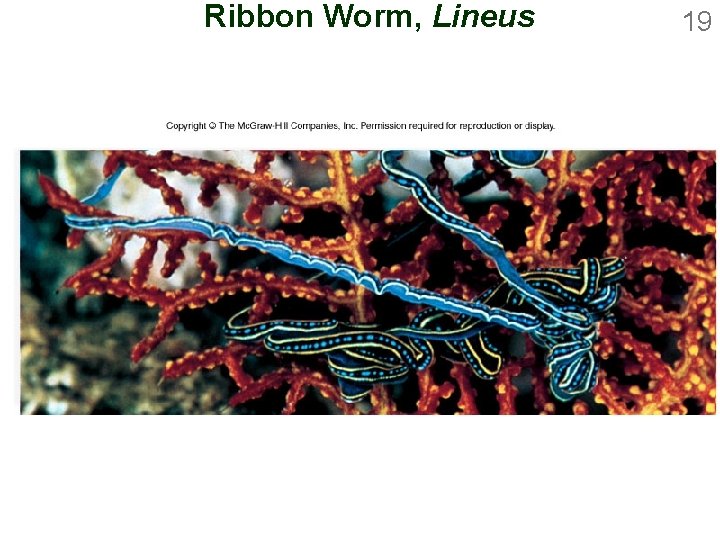
Ribbon Worm, Lineus 19
Introduction to Invertebrates Free-living Flatworms Planarians (genus Dugesia) Live in freshwater habitats Head is bluntly arrow shaped Auricles function as sense organs Two light-sensitive eye spots Three kinds of muscle layers: Outer circular layer Inner longitudinal layer Diagonal layer 20
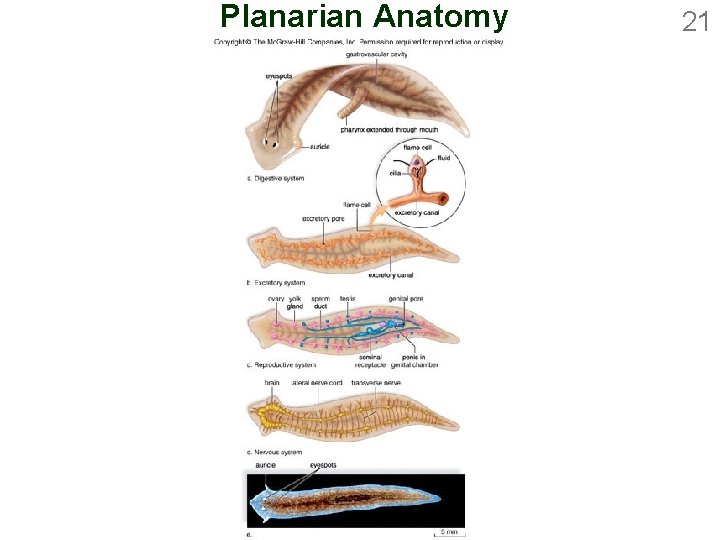
Planarian Anatomy 21
Introduction to Invertebrates Planarians, cont. Excretory organ functions in osmotic regulation and water excretion Can reproduce asexually Hermaphroditic Practice cross-fertilization 22
Introduction to Invertebrates Parasitic Flatworms Parasitic flatworms are flukes (trematodes) and tapeworms (cestodes) Well-developed nerves and gastrovascular cavity are unnecessary Flukes Reproductive system well developed Usually hermaphroditic 23
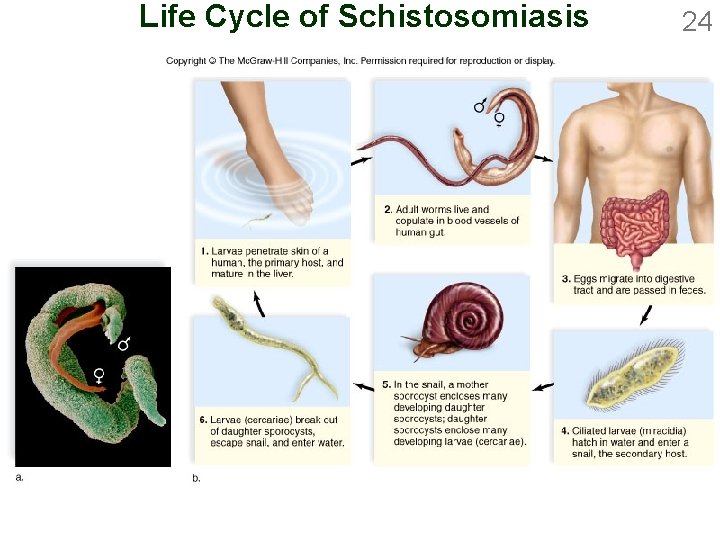
Life Cycle of Schistosomiasis 24
Introduction to Invertebrates Parasitic Flatworms Tapeworms Have anterior region with modifications for attachment to intestinal wall of host Behind head region, scolex, a long series of proglottids are found Segments each containing a full set of both male and female sex organs Complicated life cycles 25
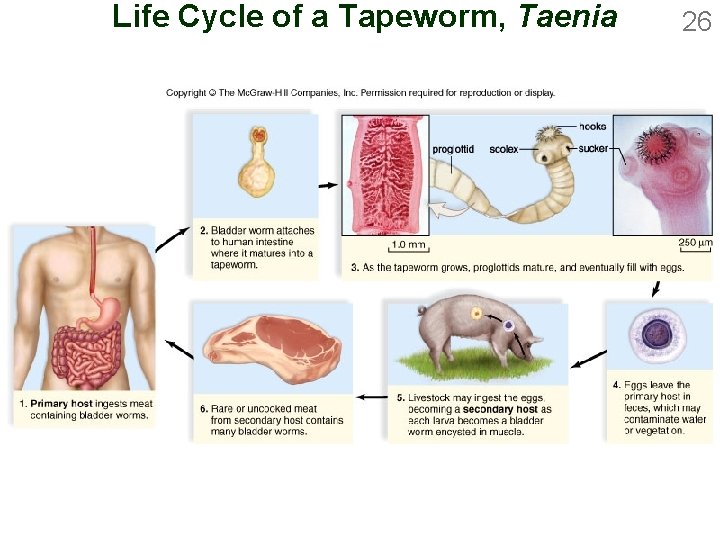
Life Cycle of a Tapeworm, Taenia 26
Introduction to Invertebrates 27 Pseudocoelom: A “false” body cavity that is incompletely lined by mesoderm Provides a space for internal organs and can serve as hydrostatic skeleton Roundworms (phylum Nematoda) Non-segmented, generally colorless worms Several parasitic roundworms infect humans
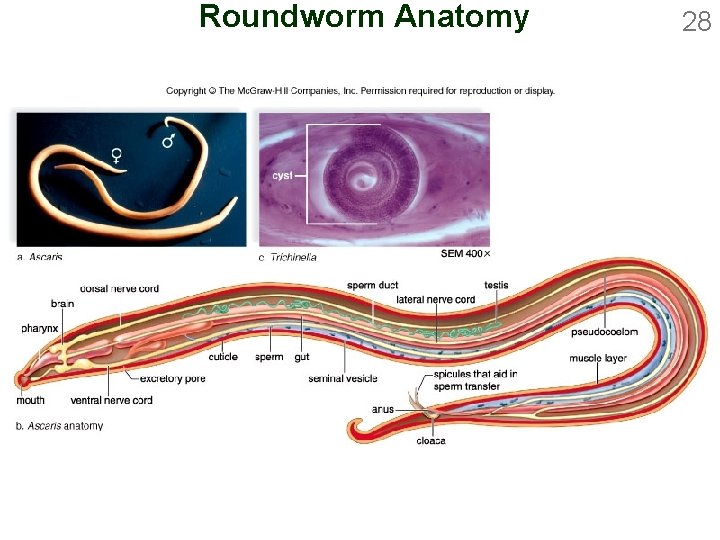
Roundworm Anatomy 28
Introduction to Invertebrates Parasitic Roundworms Ascaris – Intestinal roundworm Trachinella - Trichinosis Dirofilaria - Heartworms Wuchereria - Elephantiasis 29

Filarial Worm 30
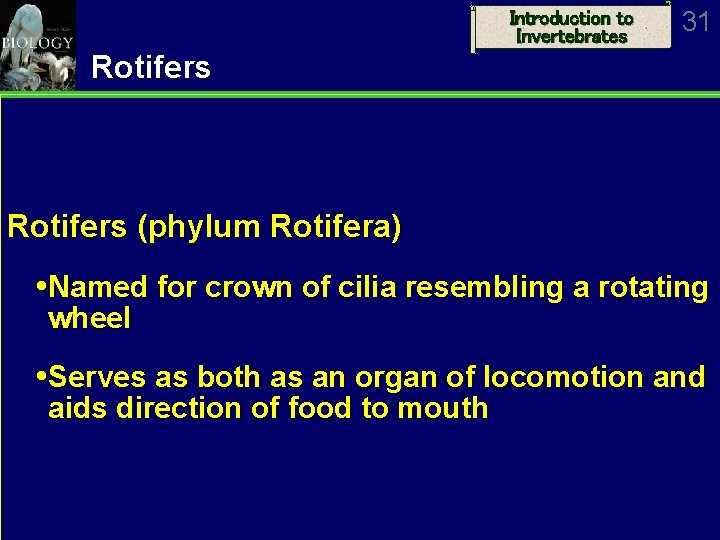
Introduction to Invertebrates 31 Rotifers (phylum Rotifera) Named for crown of cilia resembling a rotating wheel Serves as both as an organ of locomotion and aids direction of food to mouth
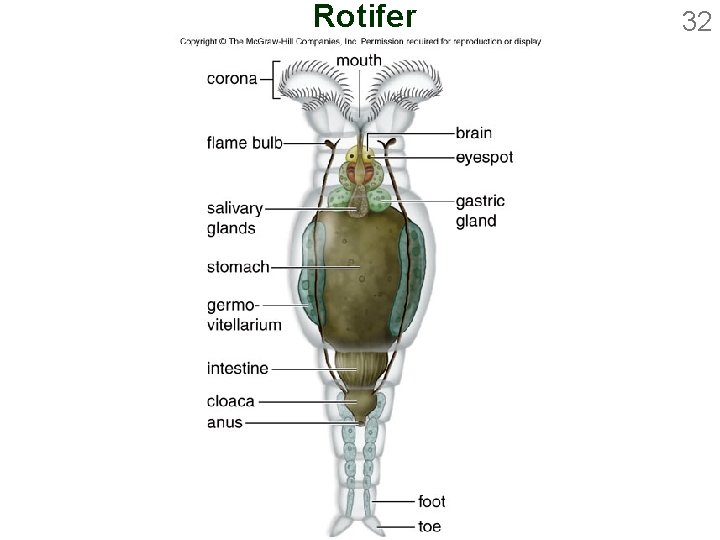
Rotifer 32
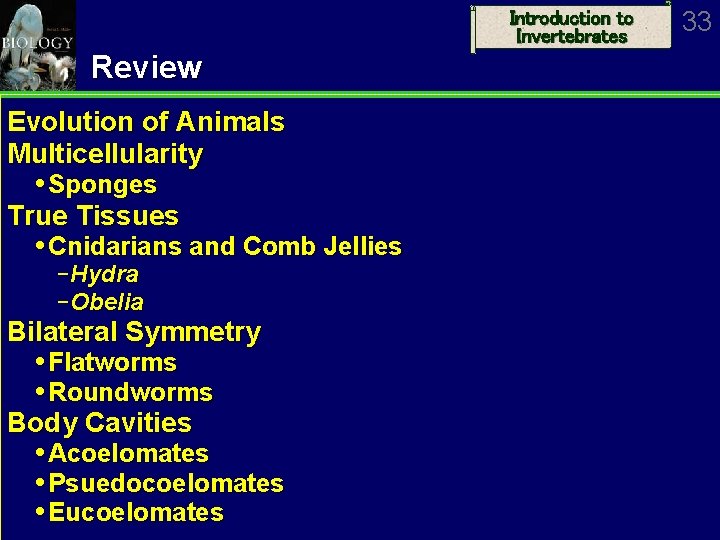
Introduction to Invertebrates Review Evolution of Animals Multicellularity Sponges True Tissues Cnidarians and Comb Jellies Hydra Obelia Bilateral Symmetry Flatworms Roundworms Body Cavities Acoelomates Psuedocoelomates Eucoelomates 33
Ending Slide Chapter 29 Introduction to Invertebrates
- Slides: 34