
Chapter 29 2 Solar Activity Solar Activity u

- Slides: 23
Chapter 29 -2 Solar Activity
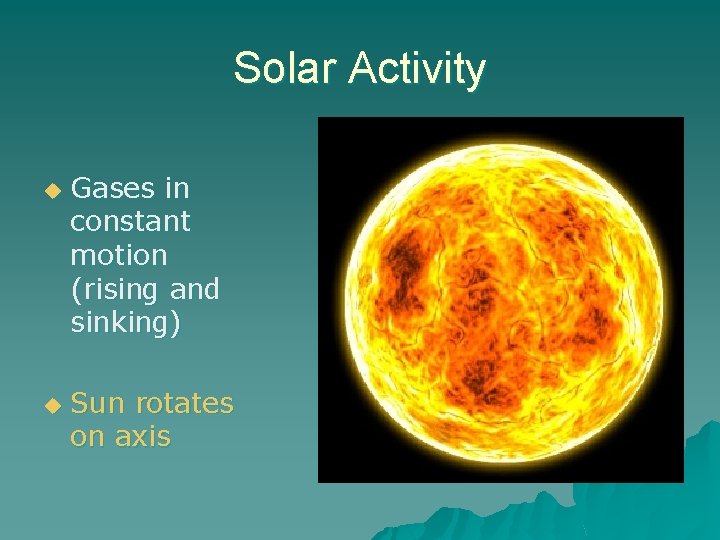
Solar Activity u u Gases in constant motion (rising and sinking) Sun rotates on axis
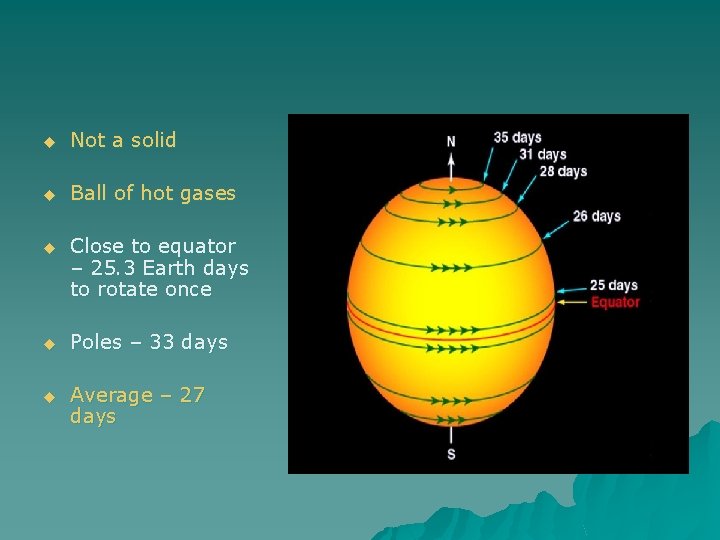
u Not a solid u Ball of hot gases u Close to equator – 25. 3 Earth days to rotate once u Poles – 33 days u Average – 27 days
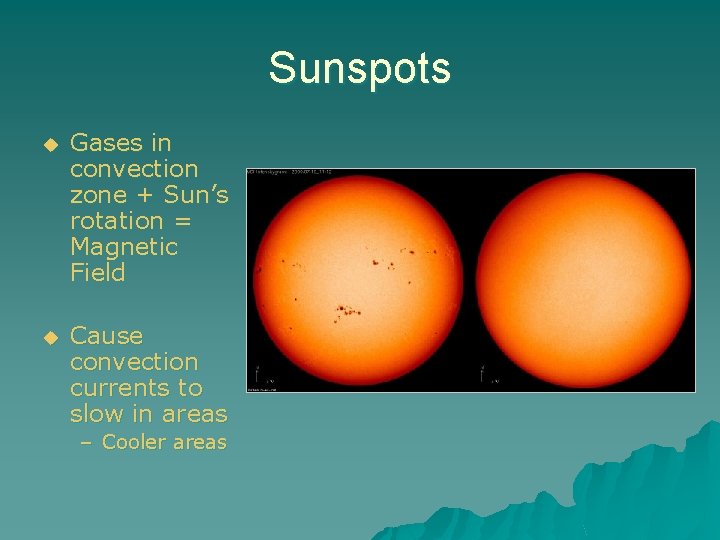
Sunspots u Gases in convection zone + Sun’s rotation = Magnetic Field u Cause convection currents to slow in areas – Cooler areas
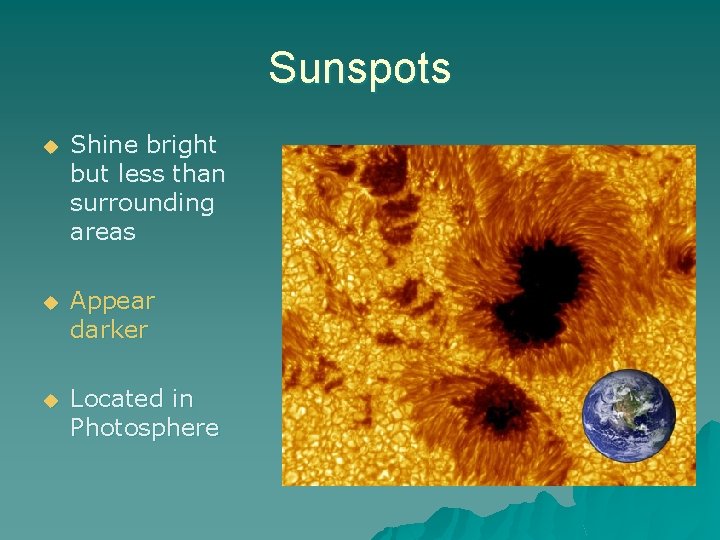
Sunspots u Shine bright but less than surrounding areas u Appear darker u Located in Photosphere
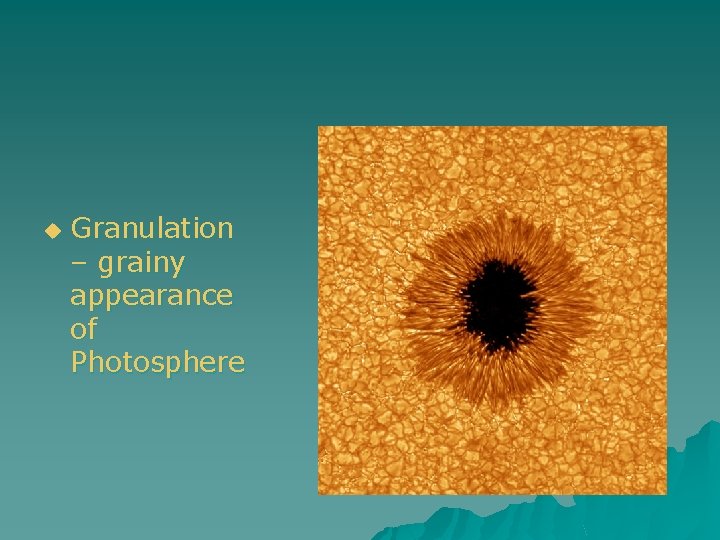
u Granulation – grainy appearance of Photosphere
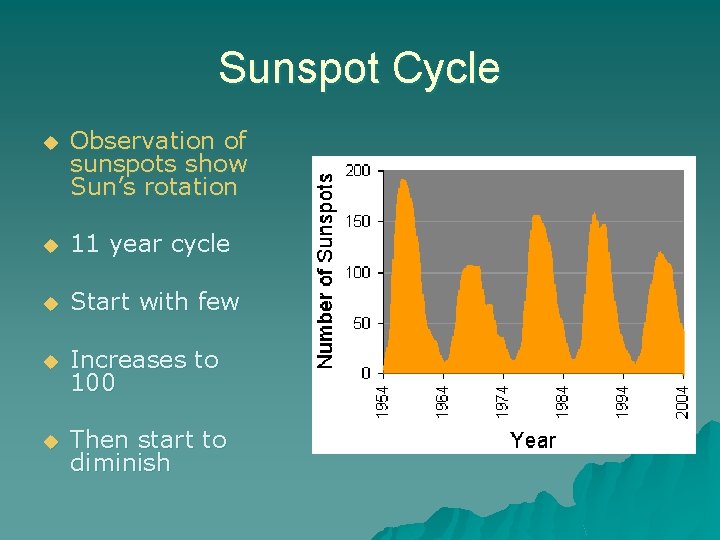
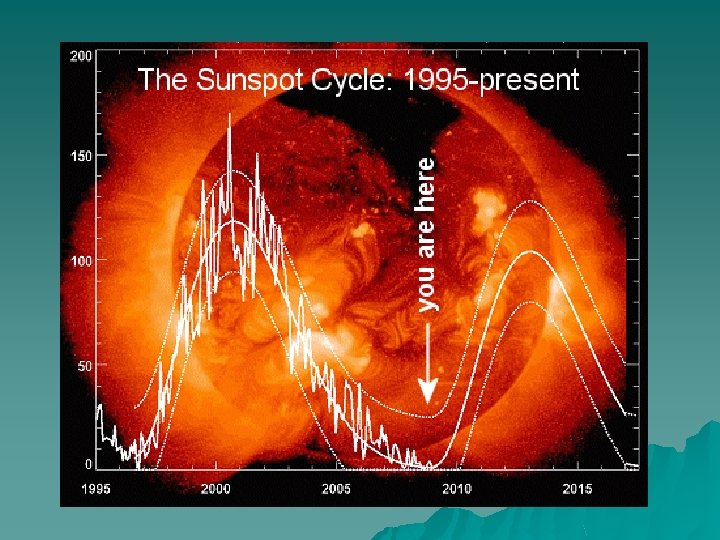
Sunspot Cycle u Observation of sunspots show Sun’s rotation u 11 year cycle u Start with few u Increases to 100 u Then start to diminish
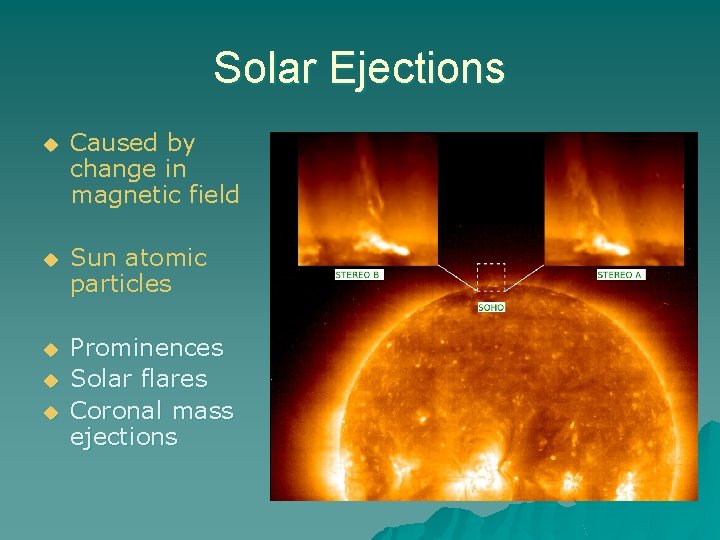
Solar Ejections u Caused by change in magnetic field u Sun atomic particles u Prominences Solar flares Coronal mass ejections u u
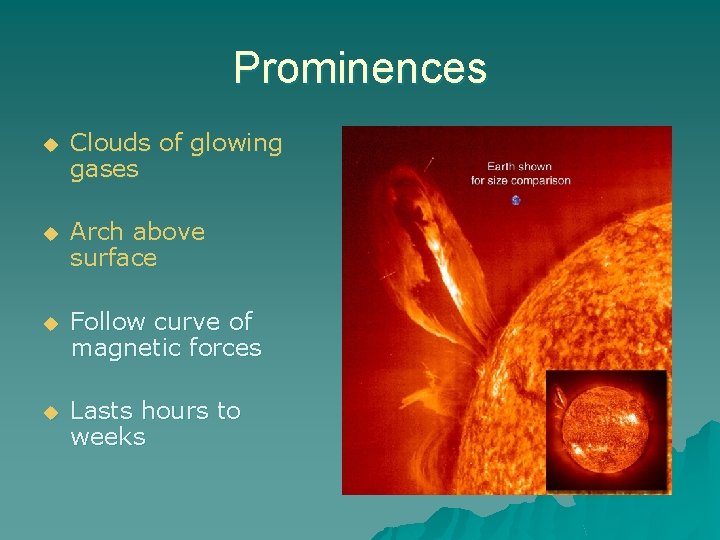
Prominences u Clouds of glowing gases u Arch above surface u Follow curve of magnetic forces u Lasts hours to weeks
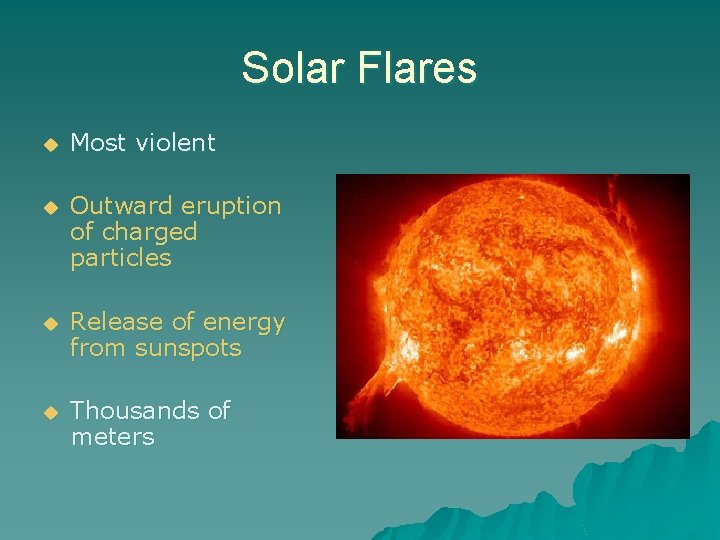
Solar Flares u Most violent u Outward eruption of charged particles u Release of energy from sunspots u Thousands of meters
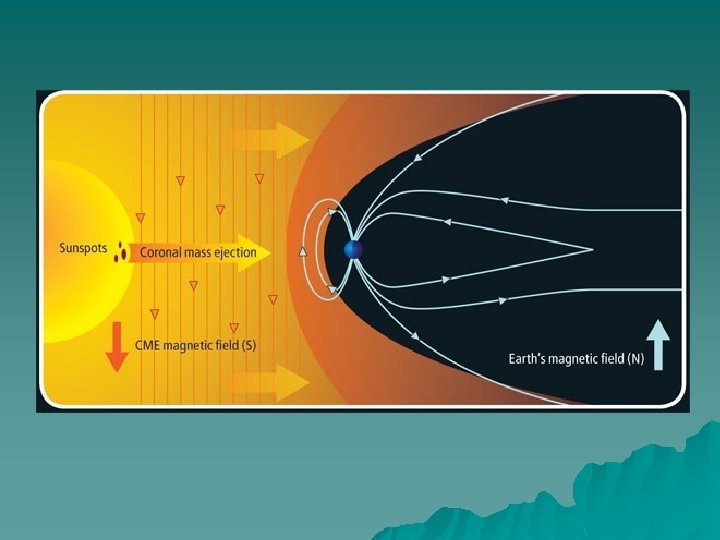
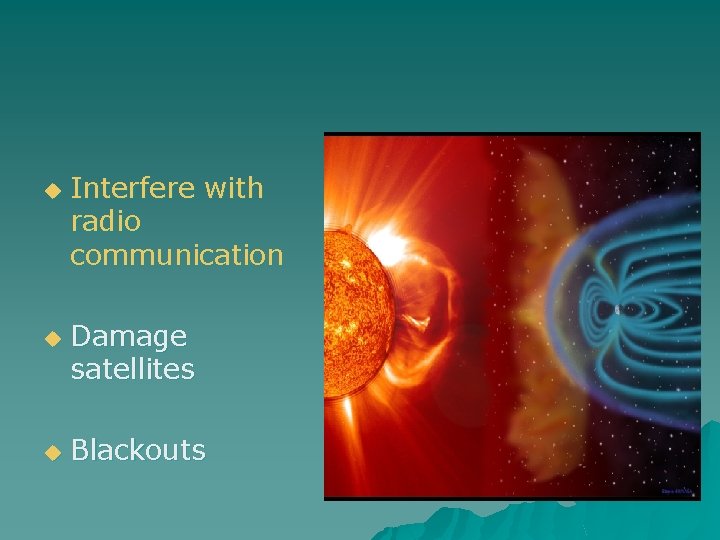
Coronal Mass Ejection u u Parts of the corona that are thrown off the sun Particles can strike Earth’s magnetosphere – Cause geomagnetic storms
u u u Interfere with radio communication Damage satellites Blackouts
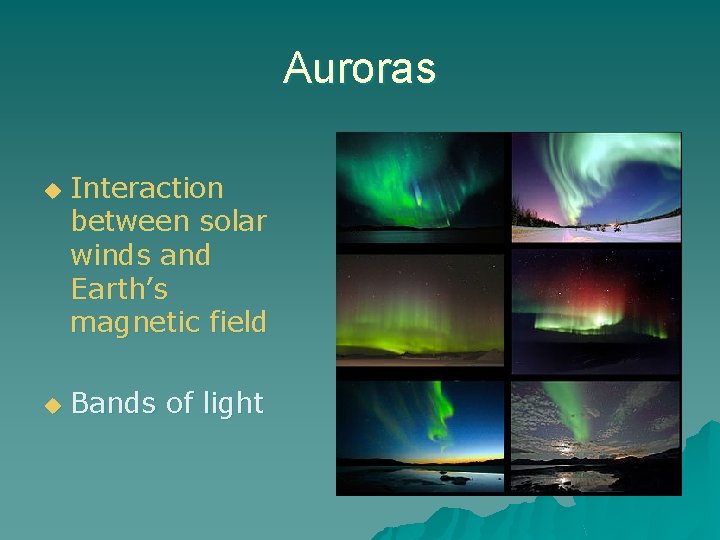
Auroras u u Interaction between solar winds and Earth’s magnetic field Bands of light
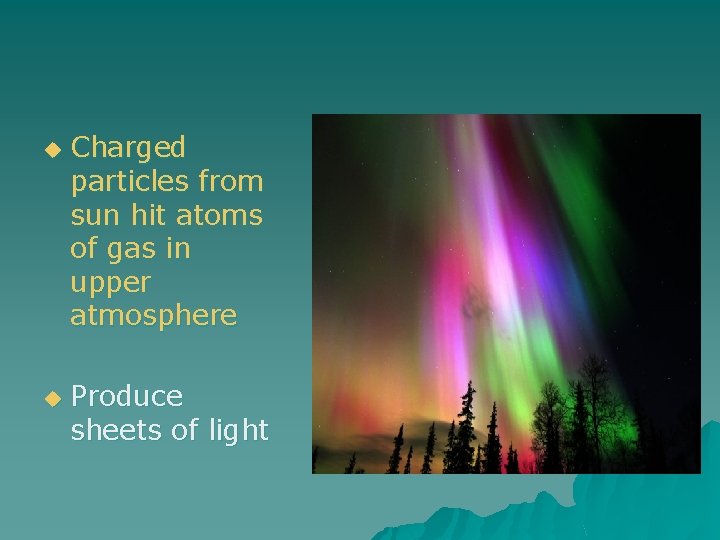
u u Charged particles from sun hit atoms of gas in upper atmosphere Produce sheets of light
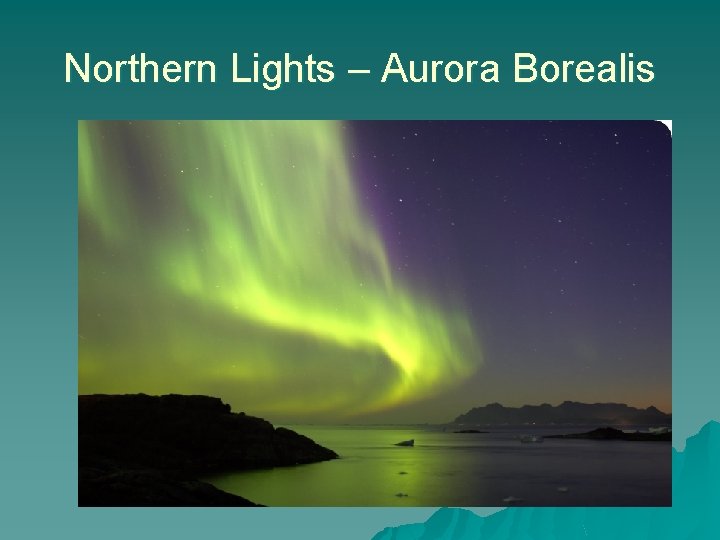
Northern Lights – Aurora Borealis
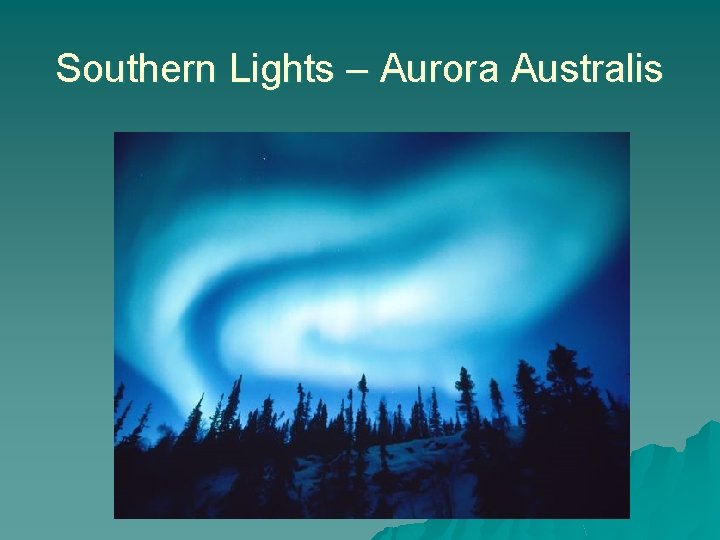
Southern Lights – Aurora Australis
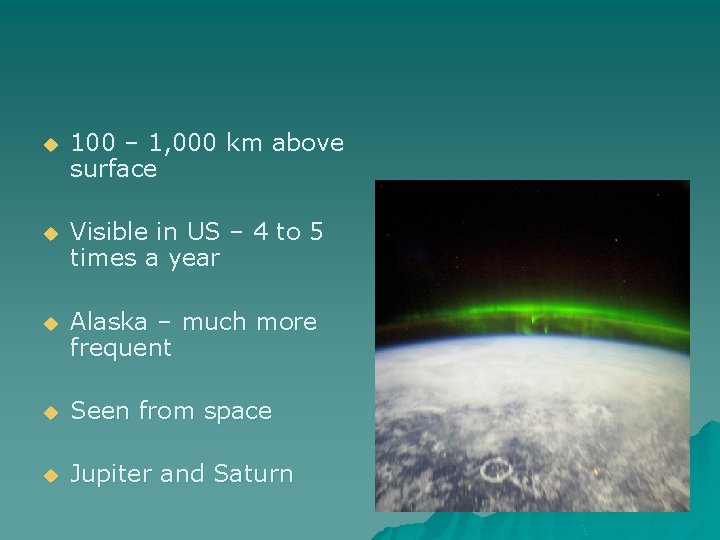
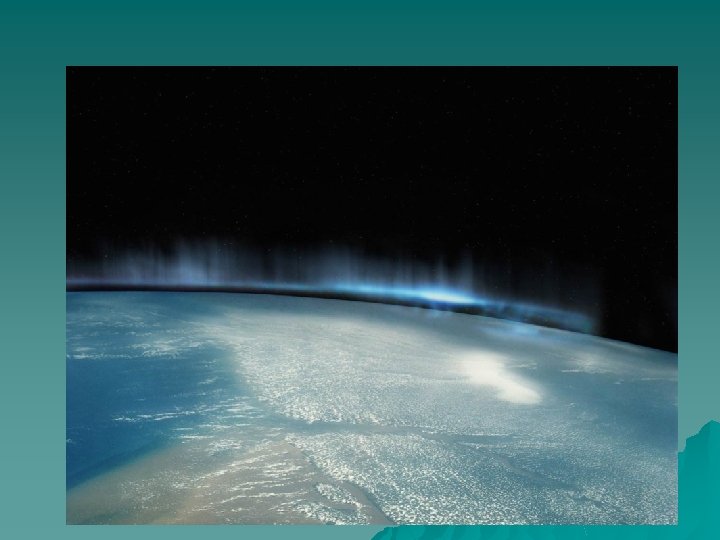
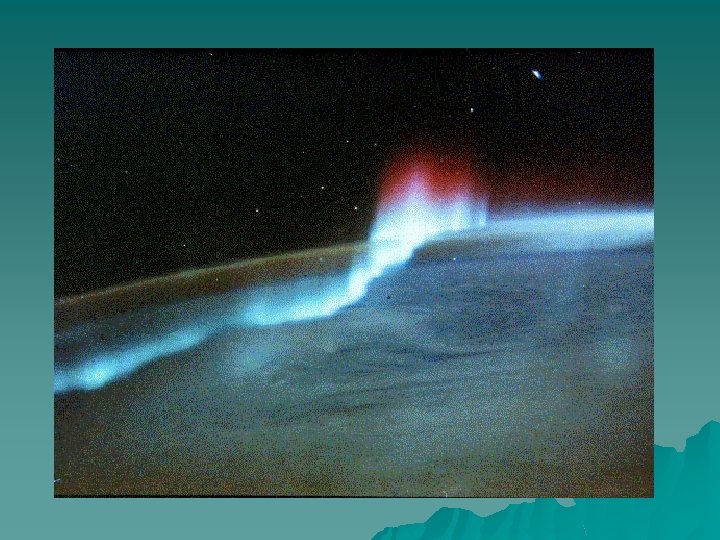
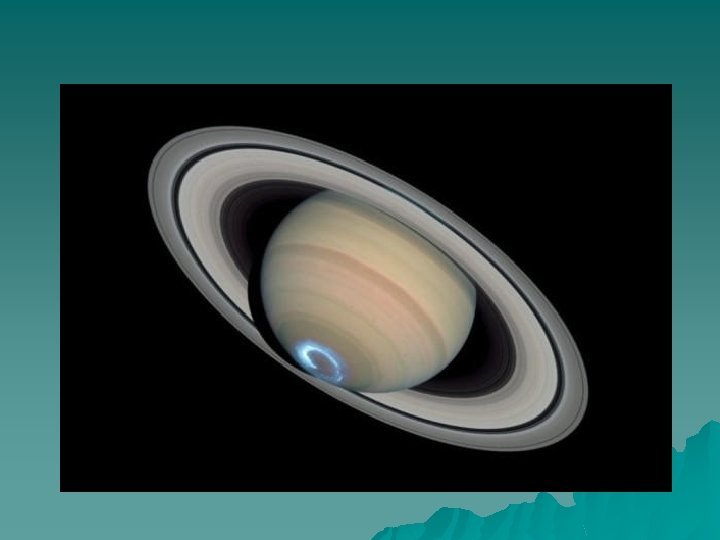
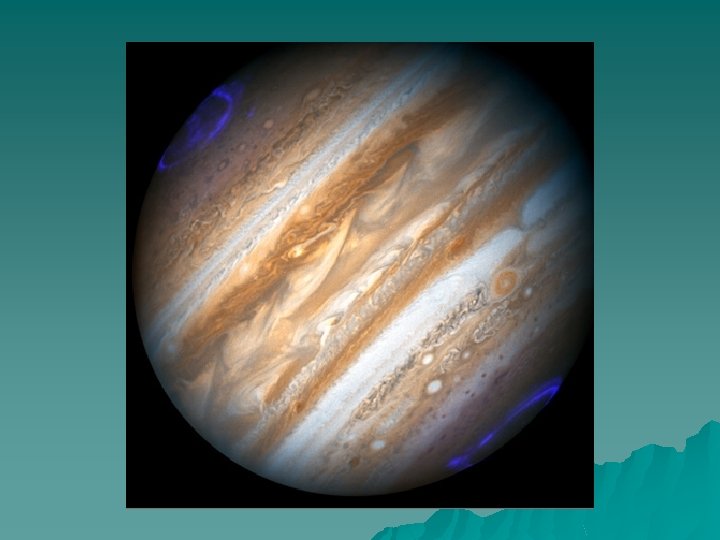
u 100 – 1, 000 km above surface u Visible in US – 4 to 5 times a year u Alaska – much more frequent u Seen from space u Jupiter and Saturn