
Chapter 28 The Reproductive System Bio 211 lecture
Chapter 28: The Reproductive System Bio 211 lecture notes
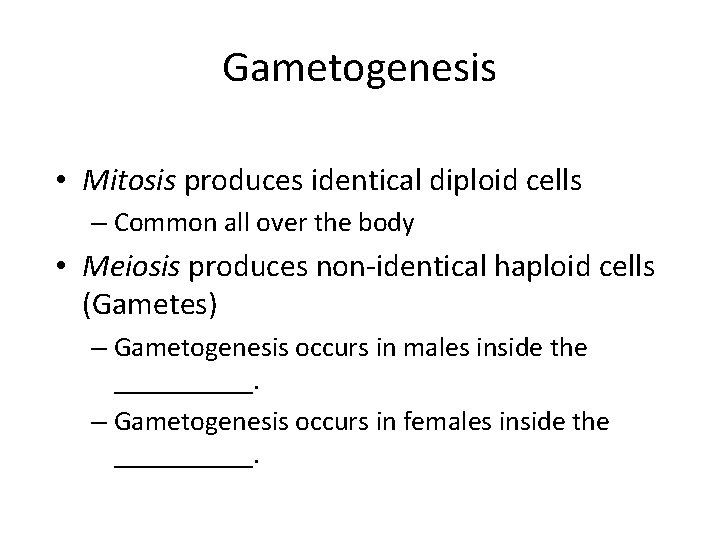
Gametogenesis • Mitosis produces identical diploid cells – Common all over the body • Meiosis produces non-identical haploid cells (Gametes) – Gametogenesis occurs in males inside the _____. – Gametogenesis occurs in females inside the _____.
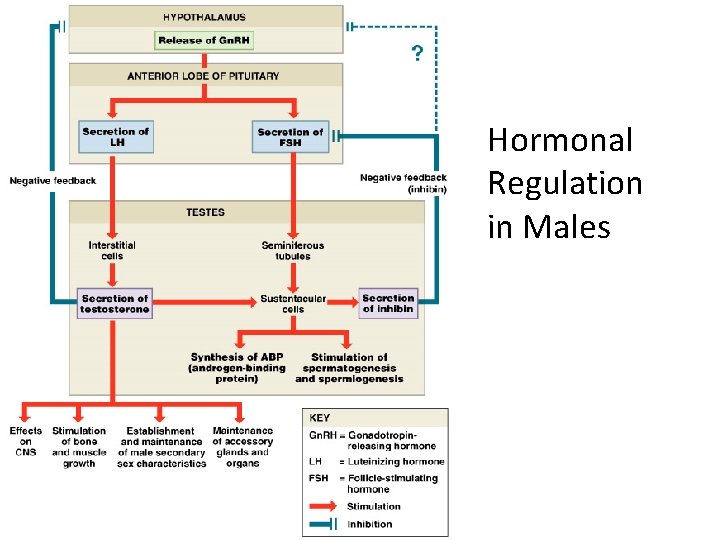
Hormonal Regulation in Males Figure 28– 12
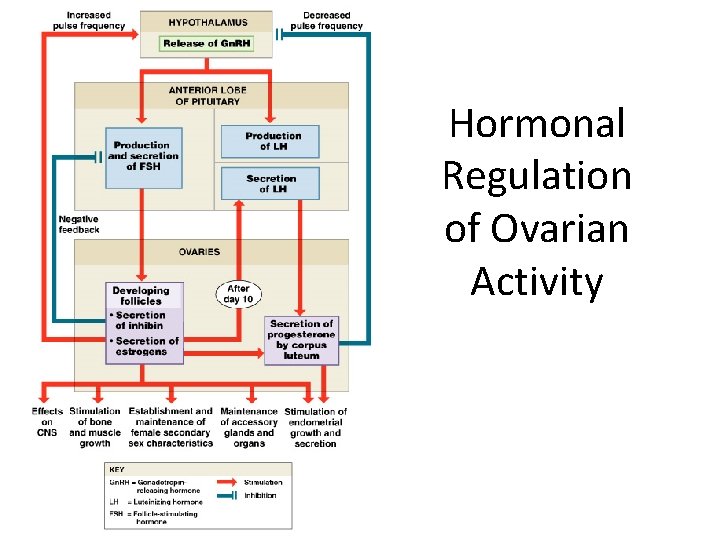
Hormonal Regulation of Ovarian Activity Figure 28– 25
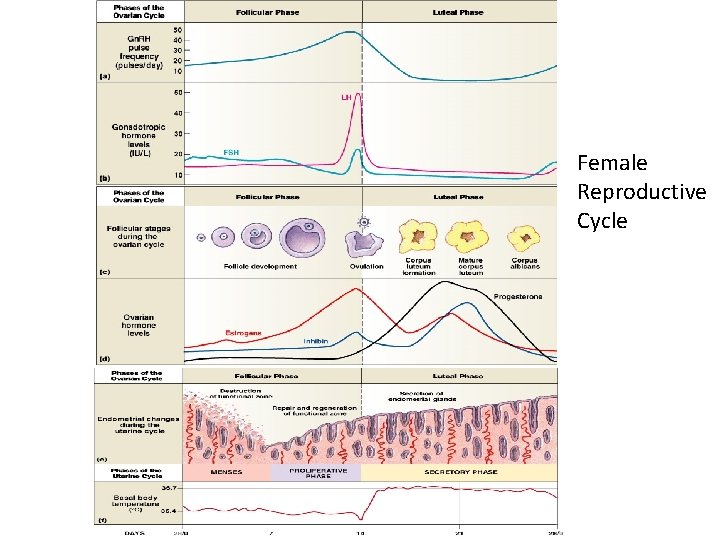
Female Reproductive Cycle

Aging and the Reproductive System • Female reproductive system: – changes associated with menopause • Male reproductive system: – changes associated with andropause – occurs gradually, over longer time period
Perimenopause • Is the interval immediately preceding menopause • Ovarian and uterine cycles become irregular: – due to shortage of primordial follicles – estrogen levels decline – ovulation is not triggered
Menopause • Circulating concentrations of estrogens and progesterone decline • Production of Gn. RH, FSH, and LH rises sharply b/c Estrogen levels decline
Decline in Estrogen Levels • Leads to: – reduction in uterus and breast size – thinning of urethral and vaginal epithelia – reduction in bone deposition (osteoporosis)
Andropause • Also called male climacteric • Is the period of declining reproductive function • Circulating testosterone begins to decline between ages 50 -60 • Circulating FSH and LH increase • Sperm production continues • Sexual activity gradually decreases with declining testosterone levels
Successful Function of Male Reproductive System • Sperm count must be adequate • Semen must have correct p. H and nutrients • Erection and ejaculation must function properly
Successful Function of Female Reproductive System • Ovarian and uterine cycles must coordinate properly • Ovulation and oocyte transport must occur normally • Environment of reproductive tract must support: – survival and movement of sperm – fertilization of oocyte
- Slides: 12