
CHAPTER 28 PROTISTS Prepared by Brenda Leady University
CHAPTER 28 PROTISTS Prepared by Brenda Leady, University of Toledo Copyright (c) The Mc. Graw-Hill Companies, Inc. Permission required for reproduction or display. 1
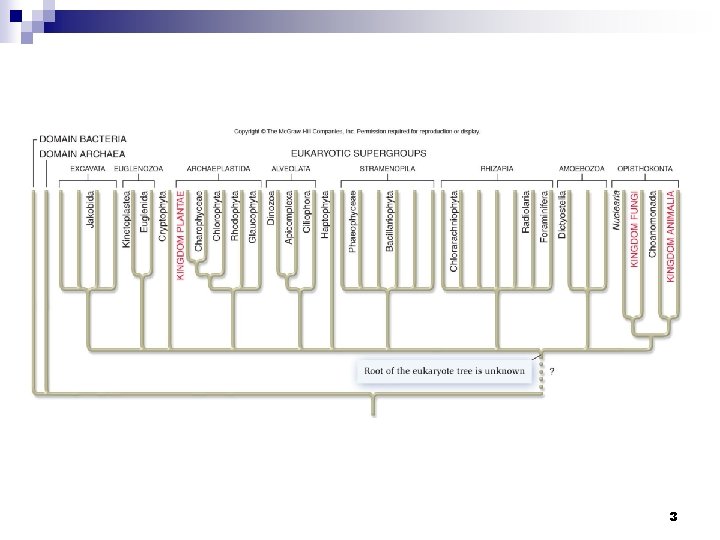
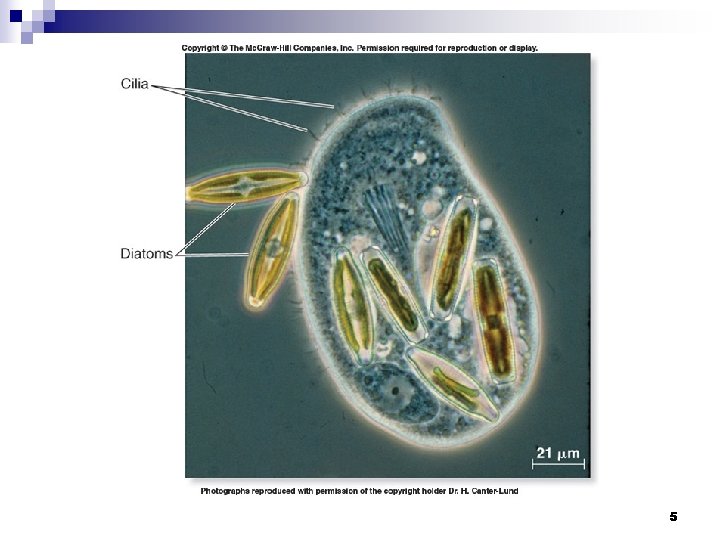
Eukaryotes that are not classified in the plant, animal, or fungal kingdoms, though some protists are closely related to plants or animals or fungi n Two common characteristics n ¨ Most abundant in moist habitats ¨ Most of them are microscopic in size Do not form monophyletic group n Supergroups used n 2
3
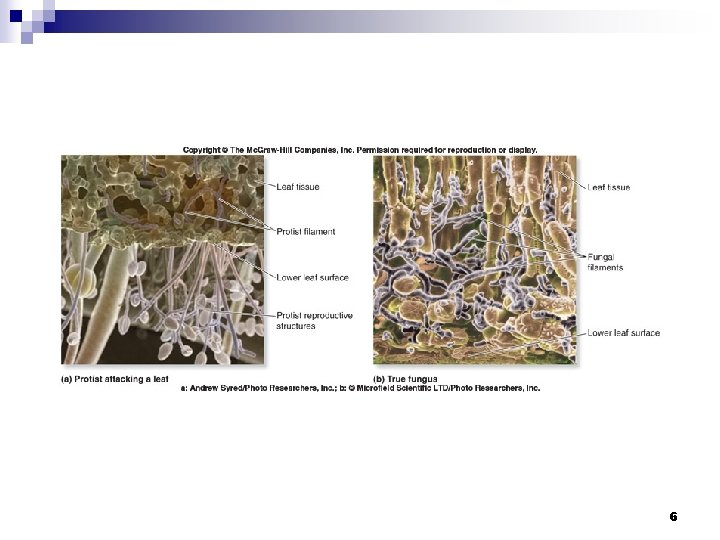
Classified by ecological role n 3 major groups ¨ Algae n – photosynthetic and nonphotosynthetic Not monophyletic ¨ Protozoa n – heterotrophic Not monophyletic ¨ Fungus-like – resemble fungi in body form and absorptive nutrition n More closely related to diatoms 4
5
6
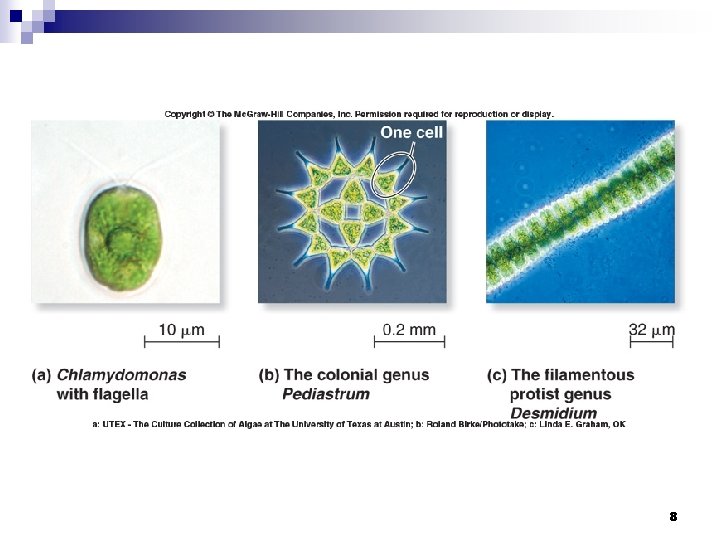
Classified by habitat Particularly common and diverse in oceans, lakes, wetlands and rivers n Plankton- swimming or floating n ¨ Phytoplankton – photosynthetic ¨ Protozoan plankton – heterotrophic ¨ Occur primarily as single cells, colonies or short filaments 7
8
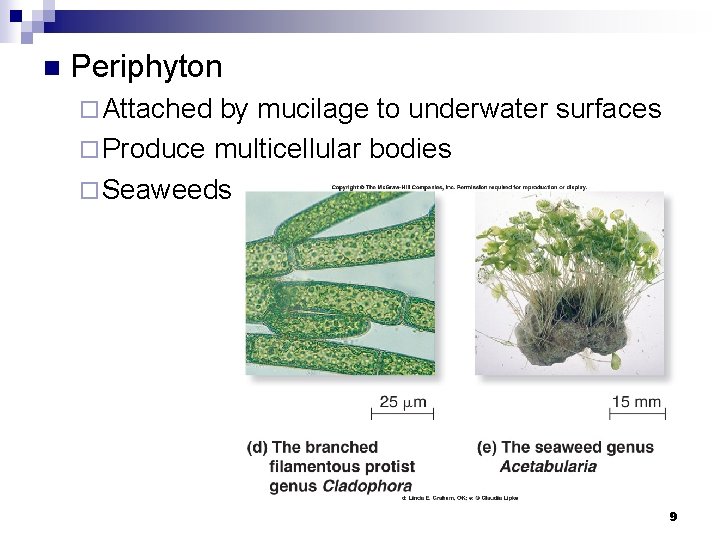
n Periphyton ¨ Attached by mucilage to underwater surfaces ¨ Produce multicellular bodies ¨ Seaweeds 9
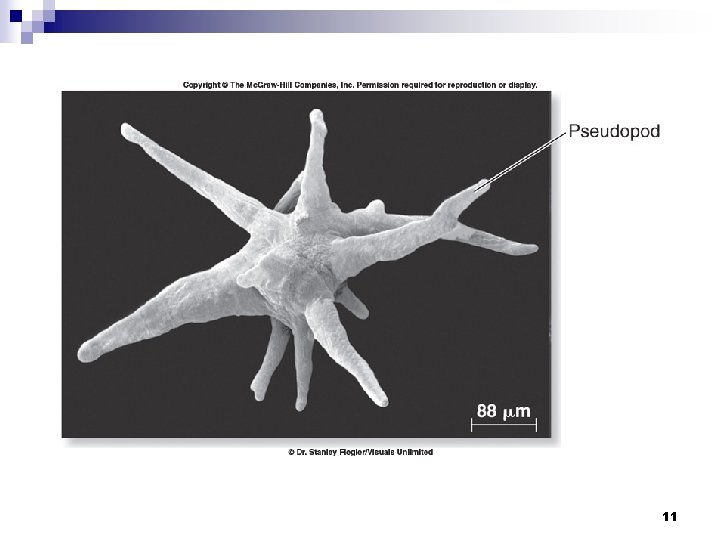
Classified by motility n Swim using eukaryotic flagella ¨ Flagellates ¨ Some n flagellated reproductive cells Cilia – shorter and more abundant than flagella ¨ Ciliates n Amoeboid movement – using pseudopodia ¨ Amoebae n Gliding on protein or carbohydrate slime 10
11
Supergroups n Excavata ¨ Related to some of Earth’s earliest eukaryotes ¨ Named for a feeding groove “excavated” into the cells of many representatives ¨ Food particles are taken into cells by phagotrophy n Endocytosis and evolutionary basis for endosymbiosis 12

13
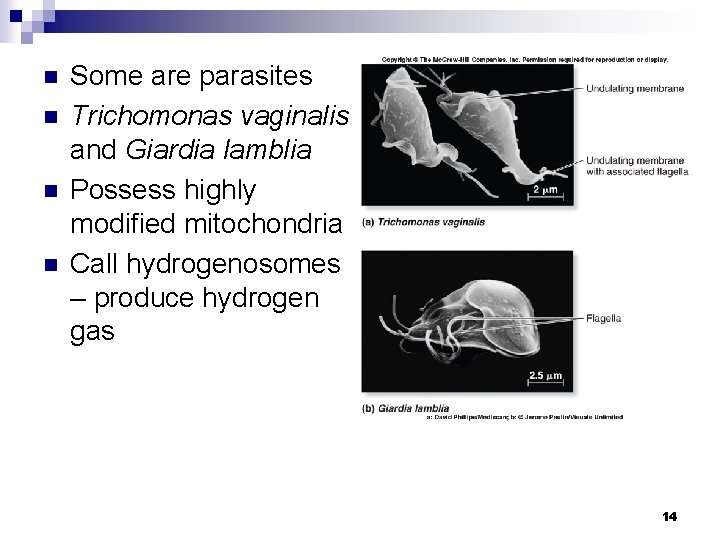
n n Some are parasites Trichomonas vaginalis and Giardia lamblia Possess highly modified mitochondria Call hydrogenosomes – produce hydrogen gas 14
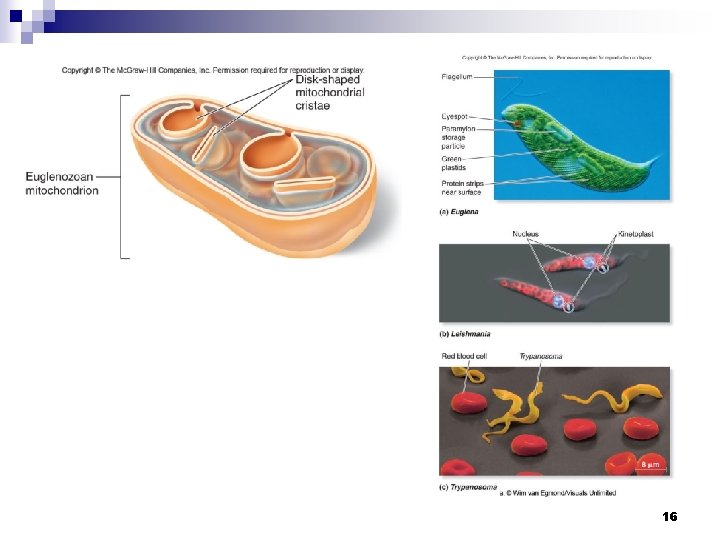
Euglenozoa Supergroup of flagellates named for Euglena n Disk-shaped mitochondrial cristae n Kinetoplastids have an unusually large mass of DNA (kinetoplast) n ¨ Trypansosoma n brucei Euglenoids have unique interlocking protein strips beneath plasma membrane ¨ Can crawl through mud – euglenoid movement or metaboly 15
16
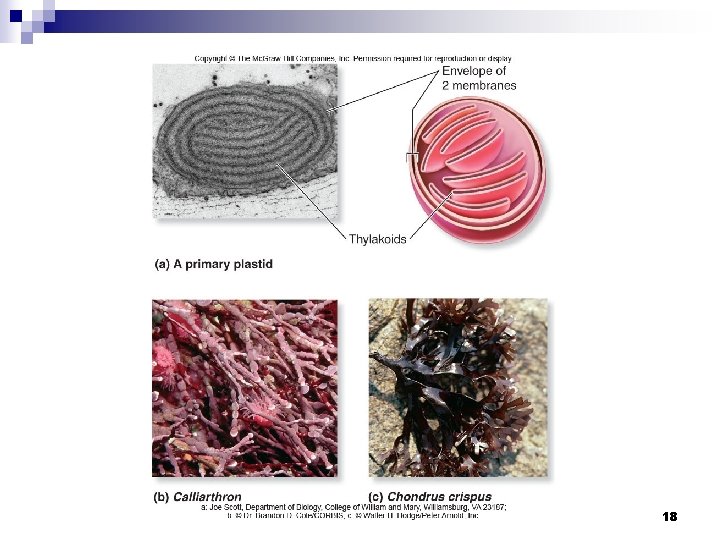
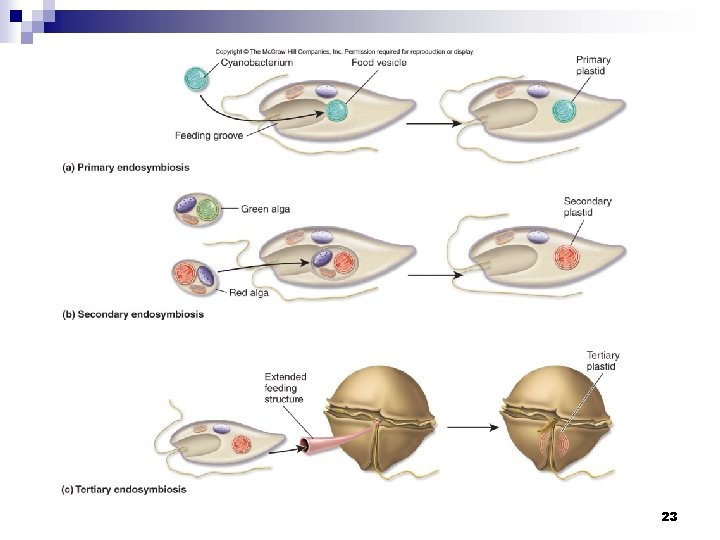
Archaeplastida n Obtained plastids by primary endosymbiosis ¨ Primary plastids have an envelope with 2 membranes Red algae, green algae, Kingdom Plantae, glaucophyta n Based on assumption that all primary plastids originated with a single endosymbiotic event n 17
18
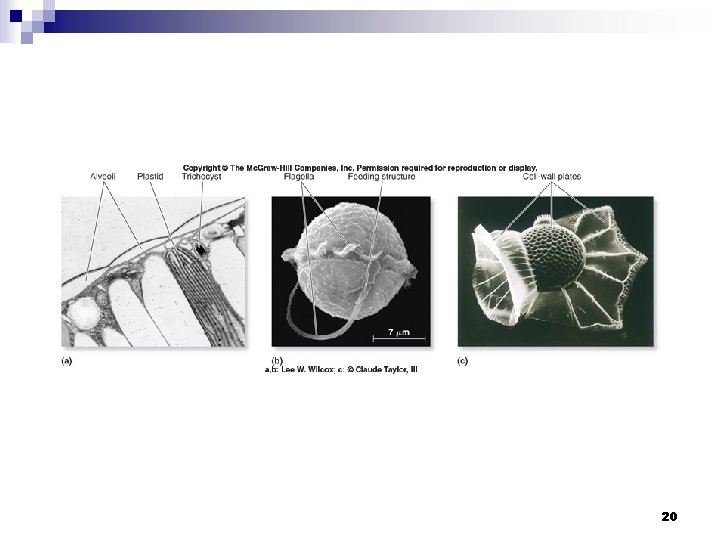
Alveolata n Ciliophora ¨ Ciliates n – conjugation Dinozoa ¨ Dinoflagellates – some photosynthetic, others not ¨ Important in nearshore oceans n Apicomplexa ¨ Medically important ¨ Plasmodium n parasites Named for saclike membranous vesicle (alveoli) present in cell periphery 19
20
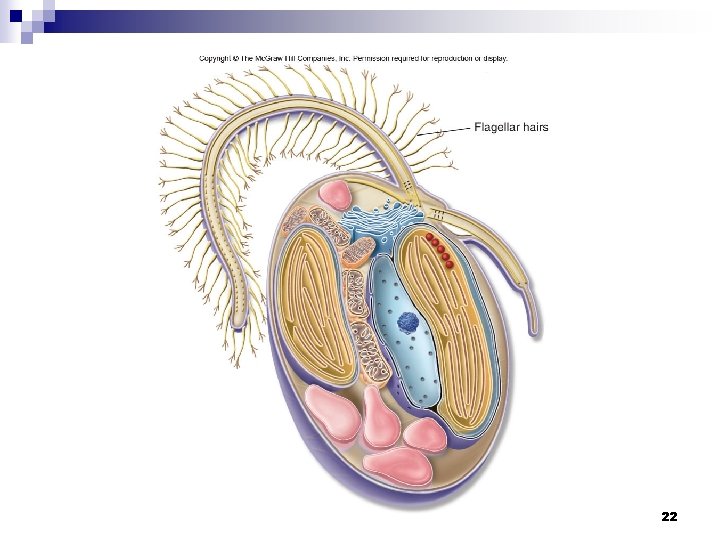
Stramenopila Wide range of algae, protozoa, and fungus -like protists n Usually produce flagellated cells at some point n Named for distinctive strawlike hairs on the surface of flagella n Plastids from secondary endosymbiosis n ¨ More than 2 envelopes ¨ Originate with incorporation of a cell with a primary plastid 21
22
23
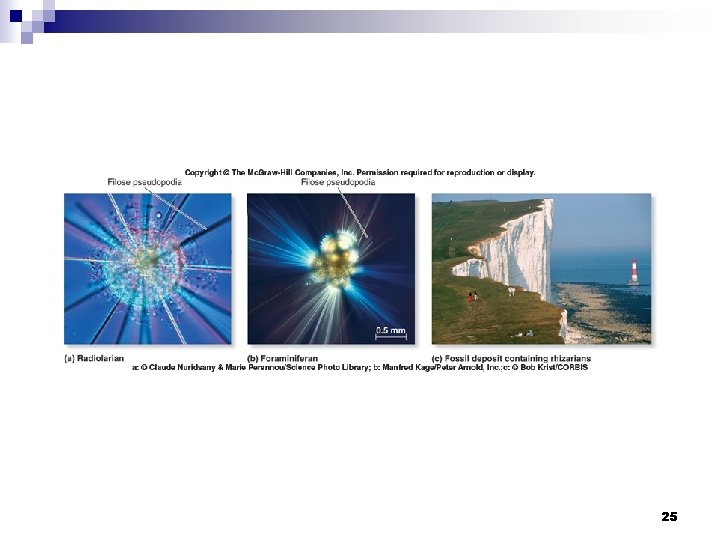
Rhizaria Have thin, hairlike extensions of the cytoplasm called filose pseudopodia n Chlorarachniophyta n Radiolaria and Foraminifera n ¨ Ocean plankton that make mineral shells ¨ White cliffs of Dover, England ¨ Foraminifera used to infer past climates 24
25
Amoebozoa Many types of amoebae n Move using pseudopodia n Entamoeba histolytica n Slime molds n 26
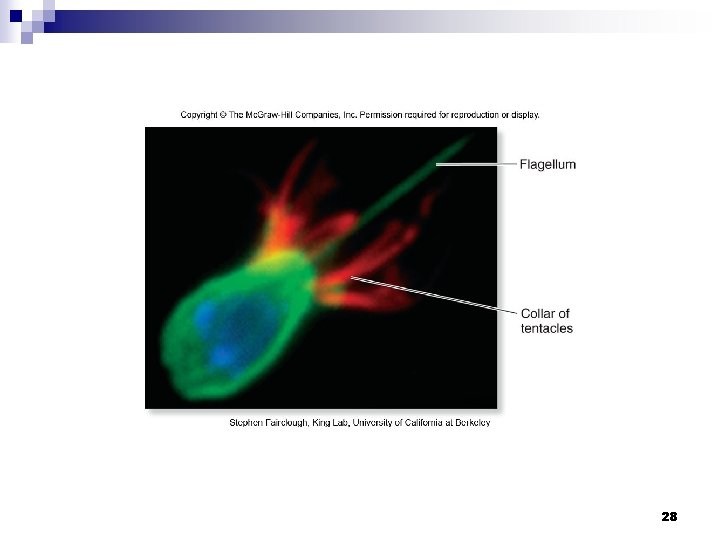
Opisthokonta Named for single posterior flagellum on swimming cells n Animal and fungal kingdoms n Choanoflagellate protists n ¨ Feature distinctive collar surrounding flagella ¨ Modern protists most related to the common ancestor of animals 27
28
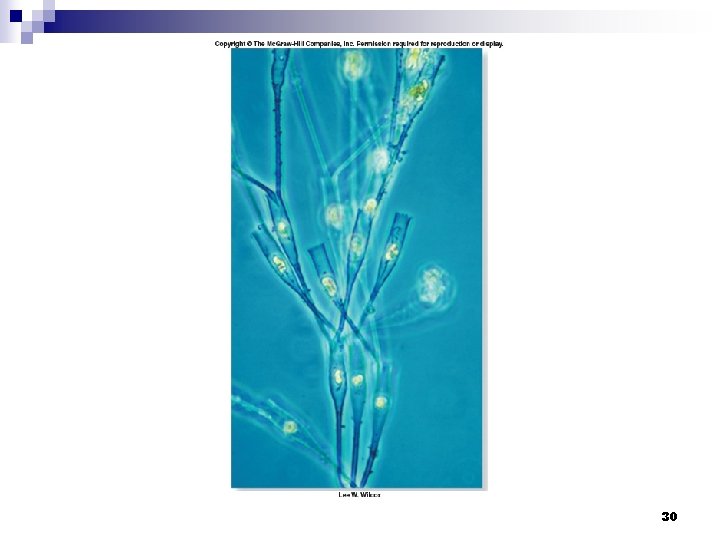
4 basic types of nutrition Phagotrophy – heterotrophs that ingest particles n Osmotrophs – heterotrophs that rely on uptake of small organic molecules n Autotrophs – photosynthetic n Mixotrophs – able to use autotrophy and phagotrophy or osmotrophy depending on conditions n 29
30
Algal photosynthetic pigments Variety of pigments n Adapt photosystems to capture more light n Water absorbs the longer red and yellow wavelengths more than the shorter blue and green wavelengths n Accessory pigments absorb light and transfer it to chlorophyll a n 31
Defense n Slimy mucilage or cell walls defend against herbivores and pathogens ¨ Calcium carbonate, silica, iron, manganese armor Trichocysts are spear-shaped projectiles to discourage herbivores n Bioluminescence – startle herbivores n Toxins – inhibit animal physiology n ¨ Pfiesteria 32
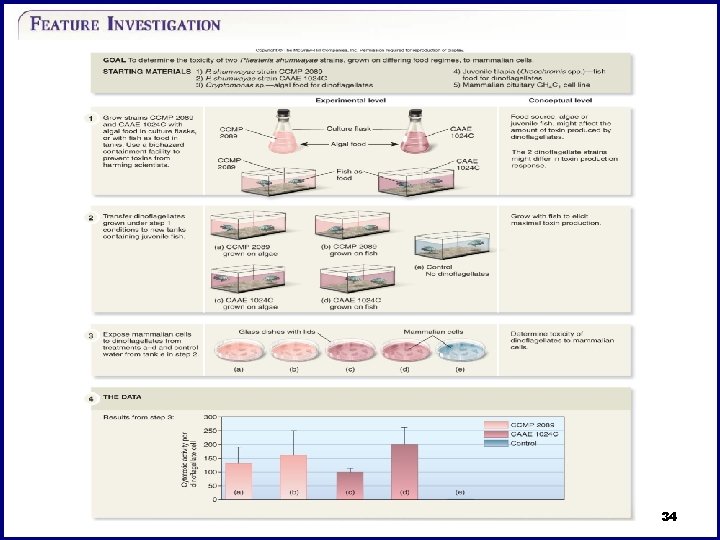
Burkholder and Colleagues Demonstrated That Strains of the Dinoflagellate Genus Pfiesteria Are Toxic to Mammalian Cells First step was to grow 2 strains of Pfiesteria on 2 different food regimes n Then exposed to fish to elicit toxin production n Last step to test against mammalian cell cultures n Both strains with both food regimes are toxic n 33
34

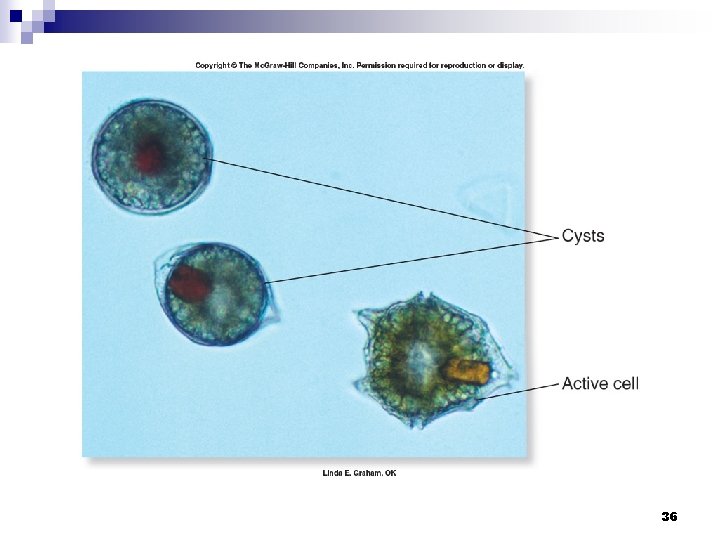
Asexual reproduction All protists can reproduce asexually n Many produce cysts with thick, protective walls that remain dormant in bad conditions n Many protozoan pathogens spread from one host to another via cysts n 35
36
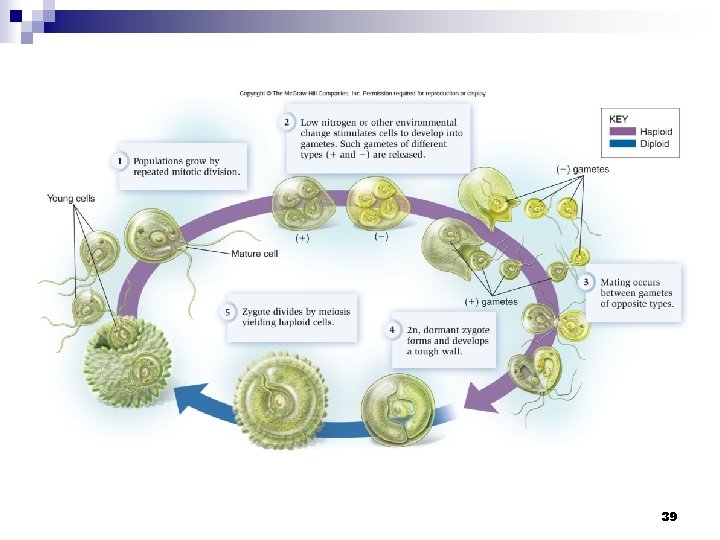
Sexual reproduction Eukaryotic sexual reproduction with gametes and zygotes arose among the protists n Generally adaptive because it produces diverse genotypes n Zygotic and sporic life cycles n 37
n Zygotic life cycles ¨ Most unicellular sexually reproducing protists ¨ Haploid cells transform into gametes ¨ + and – mating strains ¨ Thick-walled diploid zygotes n Survive like cysts 38
39
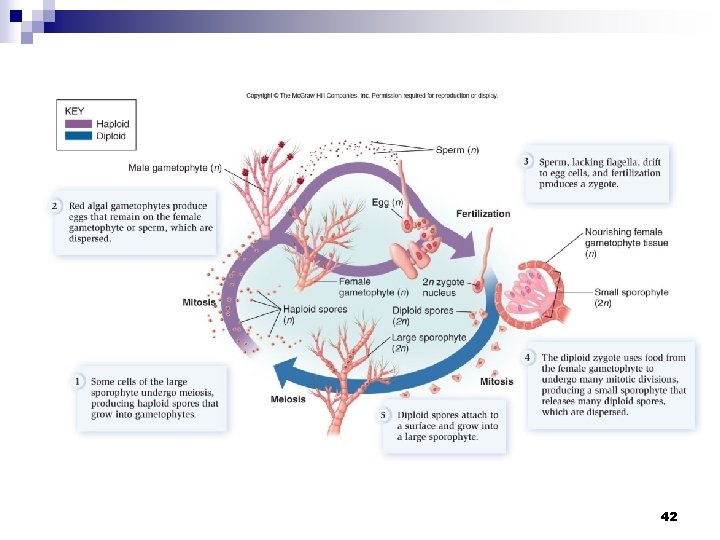
n Sporic life cycle ¨ Many multicellular green and brown seaweeds ¨ Also known as alternation of generations ¨ 2 types of multicellular organisms Haploid gametophyte produces gametes n Diploid sporophyte produces spores by meiosis n ¨ Red seaweed variation involves 3 distinct multicellular generations 40
41
42
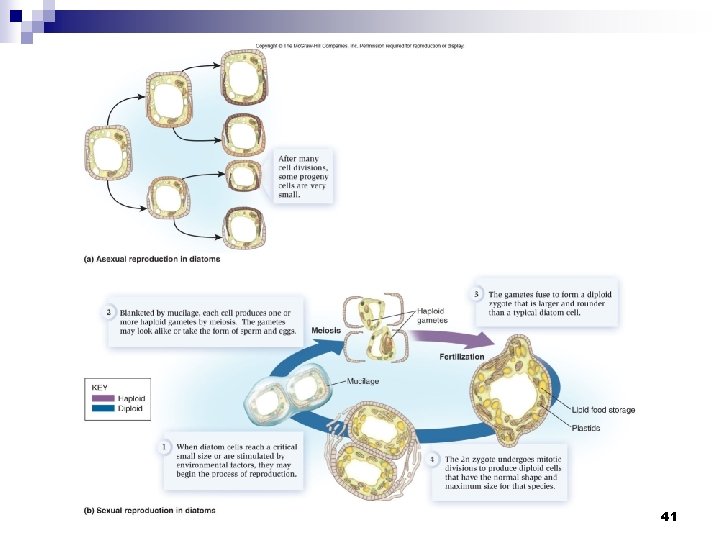
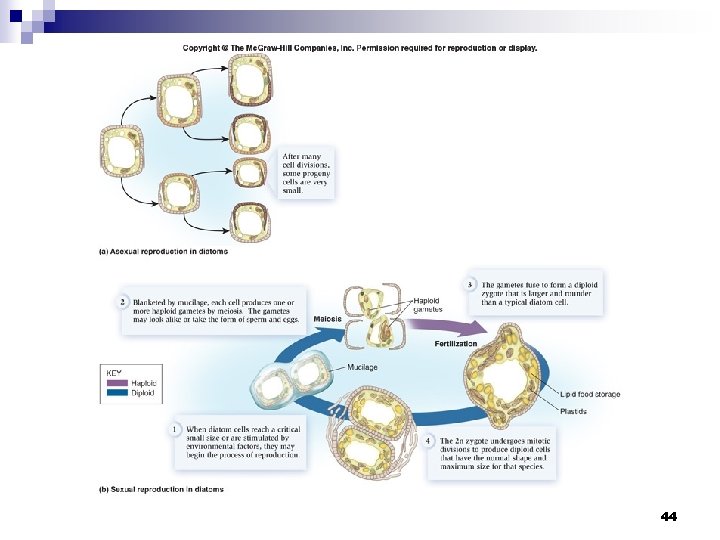
n Gametic life cycle ¨ All cells except the gametes are diploid ¨ Gametes produced by meiosis ¨ Diatoms Asexual reproduction reduces the size of the daughter cells n Sexual reproduction restores maximal size n 43
44
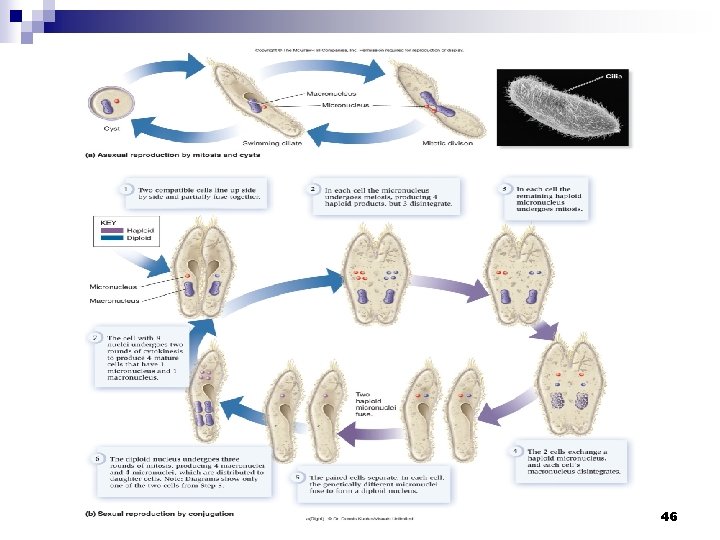
n Ciliate sexual reproduction – Conjugation ¨ Most complex sexual process in protists ¨ Have 2 types of nuclei (single macronucleus and one or more micronuclei) ¨ Macronuclei are the source of the information for cell function ¨ 2 cells pair and fuse – conjugation ¨ Micronuclei undergo meiosis, exchange, fusion and mitosis 45
46
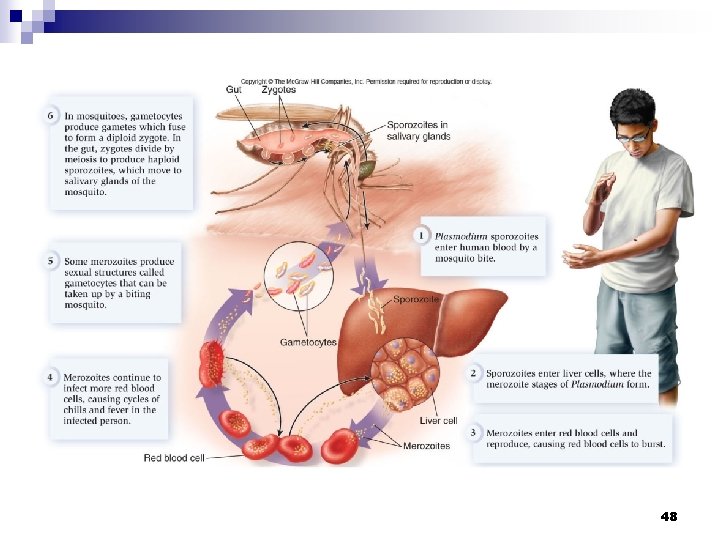
Parasitic protist hosts Parasitic protists often using more than one host organism, in which different life stages occur n Malarial parasite Plasmodium alternate between the humans and Anopheles mosquitoes n Different stages in different hosts and host tissues n 47
48
Genomic sequences for several parasitic protists determined n Way to find new cellular targets to kill parasite without harming human host n Identify metabolic processes present in parasite but not the host n Plasmodium falciparum genomic data has highlighted potential new pharmaceutical approaches n ¨ Enzymes targets in apicoplast pathways may make good 49
- Slides: 49