
Chapter 28 Protists 1 What are protists mostly
- Slides: 28
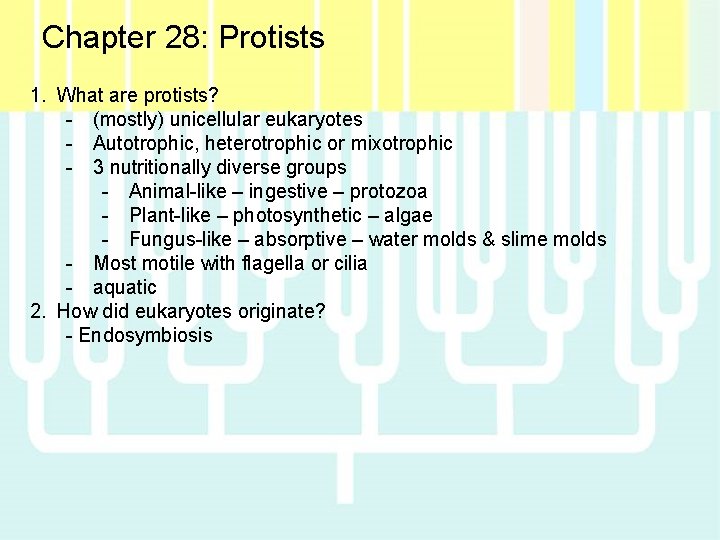
Chapter 28: Protists 1. What are protists? - (mostly) unicellular eukaryotes - Autotrophic, heterotrophic or mixotrophic - 3 nutritionally diverse groups - Animal-like – ingestive – protozoa - Plant-like – photosynthetic – algae - Fungus-like – absorptive – water molds & slime molds - Most motile with flagella or cilia - aquatic 2. How did eukaryotes originate? - Endosymbiosis
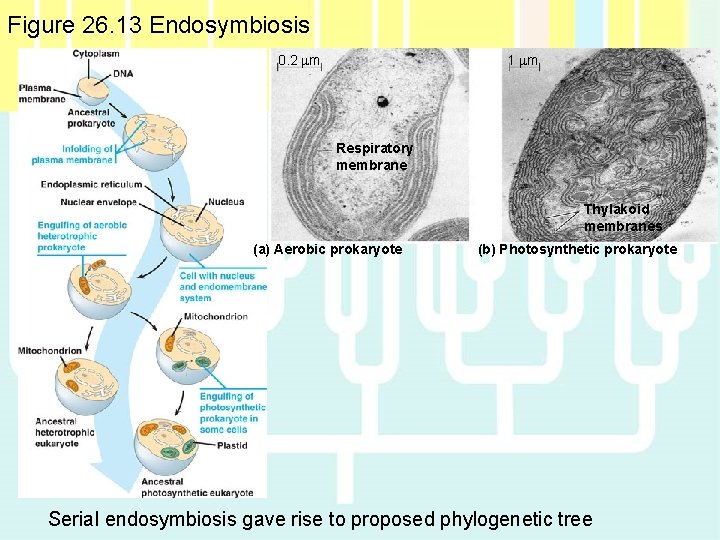
Figure 26. 13 Endosymbiosis 1 m 0. 2 m Respiratory membrane Thylakoid membranes (a) Aerobic prokaryote (b) Photosynthetic prokaryote Serial endosymbiosis gave rise to proposed phylogenetic tree
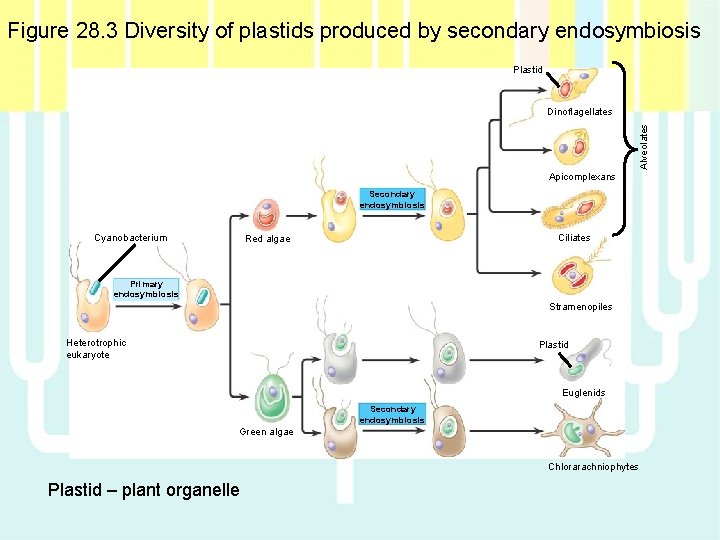
Figure 28. 3 Diversity of plastids produced by secondary endosymbiosis Plastid Alveolates Dinoflagellates Apicomplexans Secondary endosymbiosis Cyanobacterium Ciliates Red algae Primary endosymbiosis Stramenopiles Heterotrophic eukaryote Plastid Euglenids Secondary endosymbiosis Green algae Chlorarachniophytes Plastid – plant organelle
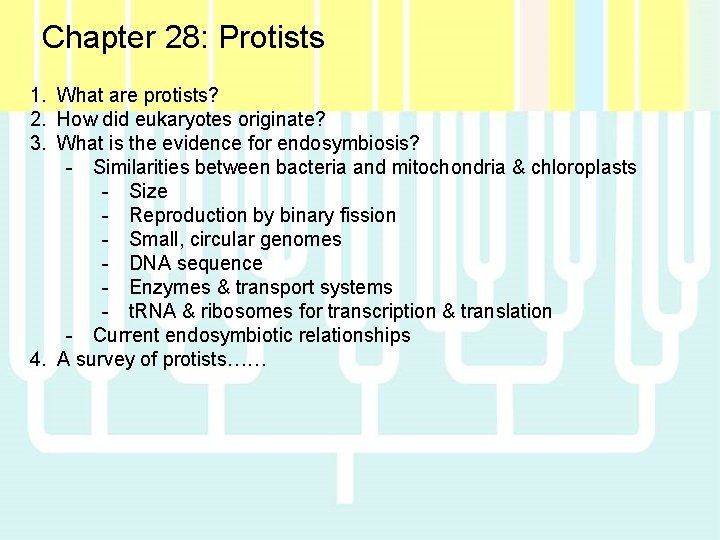
Chapter 28: Protists 1. What are protists? 2. How did eukaryotes originate? 3. What is the evidence for endosymbiosis? - Similarities between bacteria and mitochondria & chloroplasts - Size - Reproduction by binary fission - Small, circular genomes - DNA sequence - Enzymes & transport systems - t. RNA & ribosomes for transcription & translation - Current endosymbiotic relationships 4. A survey of protists……
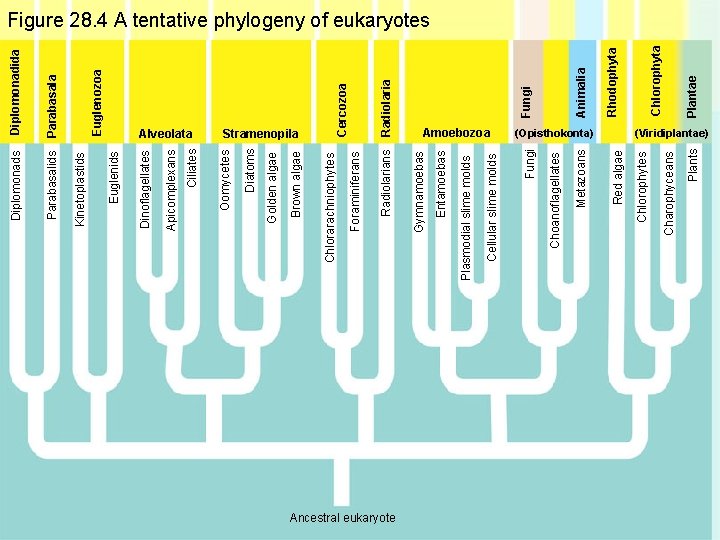
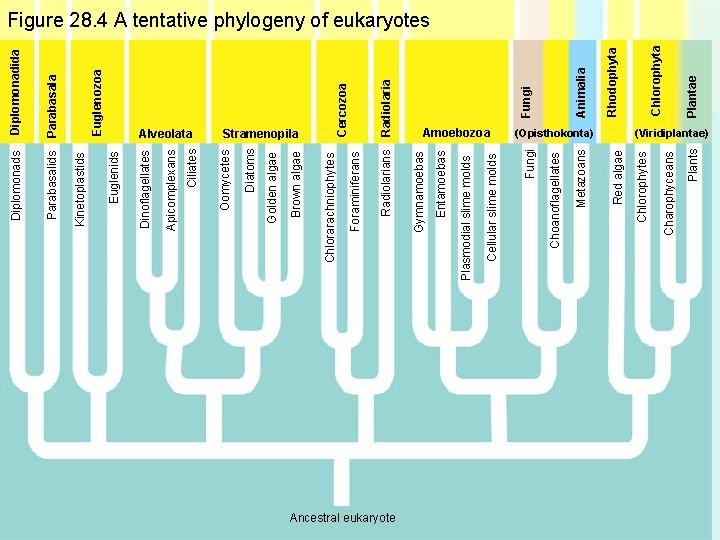
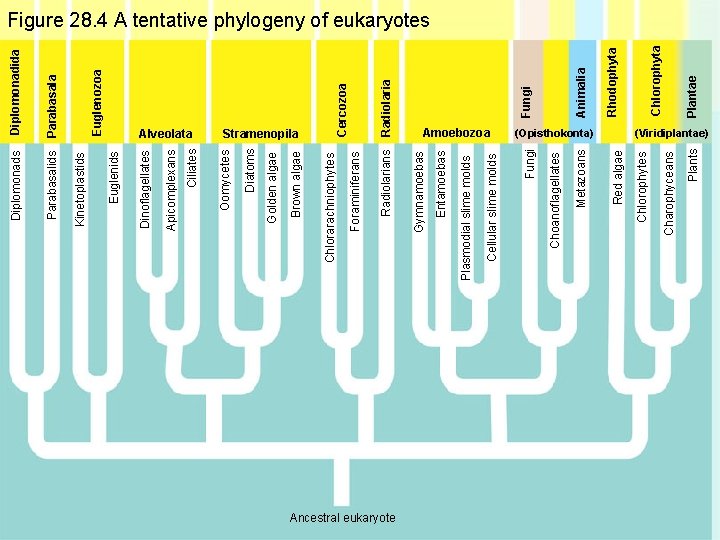
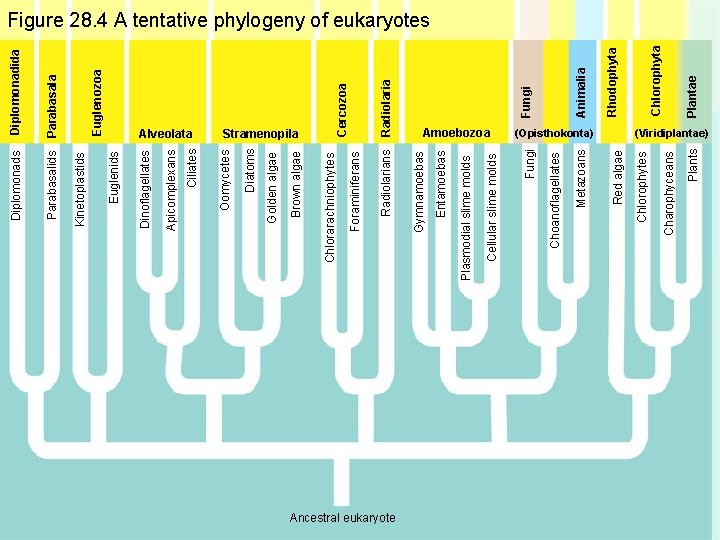
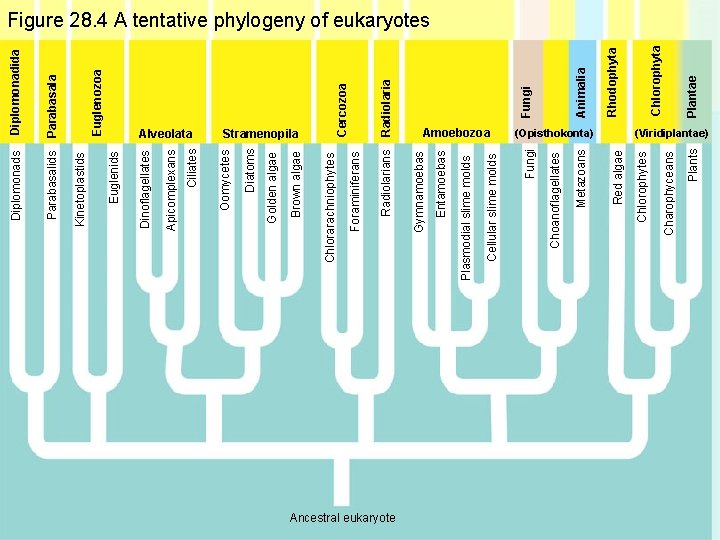
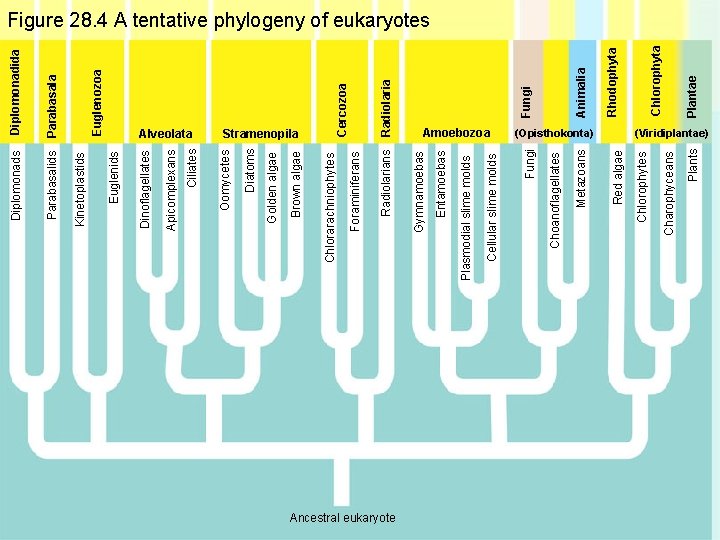
Ancestral eukaryote Plants Charophyceans (Opisthokonta) Chlorophytes Red algae Metazoans Choanoflagellates Plantae Chlorophyta Rhodophyta Animalia Fungi Radiolaria Cercozoa Amoebozoa Fungi Cellular slime molds Plasmodial slime molds Entamoebas Gymnamoebas Radiolarians Foraminiferans Stramenopila Chlorarachniophytes Brown algae Golden algae Diatoms Alveolata Oomycetes Ciliates Apicomplexans Dinoflagellates Euglenids Euglenozoa Parabasalids Kinetoplastids Diplomonadida Diplomonads Figure 28. 4 A tentative phylogeny of eukaryotes (Viridiplantae)
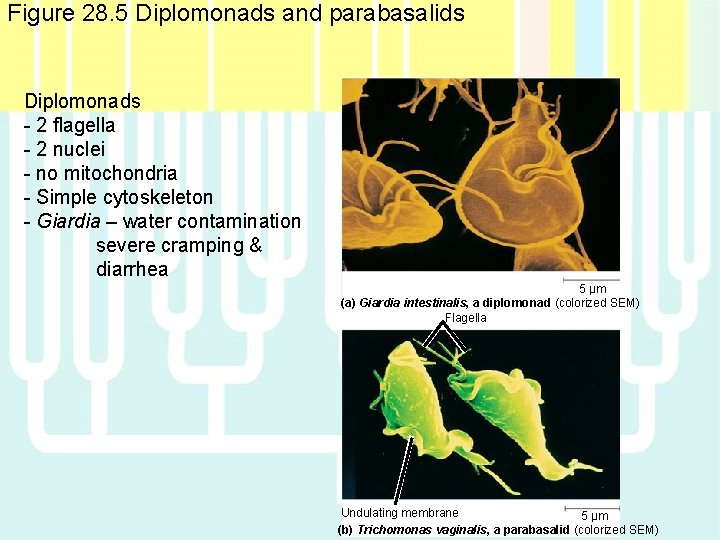
Figure 28. 5 Diplomonads and parabasalids Diplomonads - 2 flagella - 2 nuclei - no mitochondria - Simple cytoskeleton - Giardia – water contamination severe cramping & diarrhea 5 µm (a) Giardia intestinalis, a diplomonad (colorized SEM) Flagella Undulating membrane 5 µm (b) Trichomonas vaginalis, a parabasalid (colorized SEM)
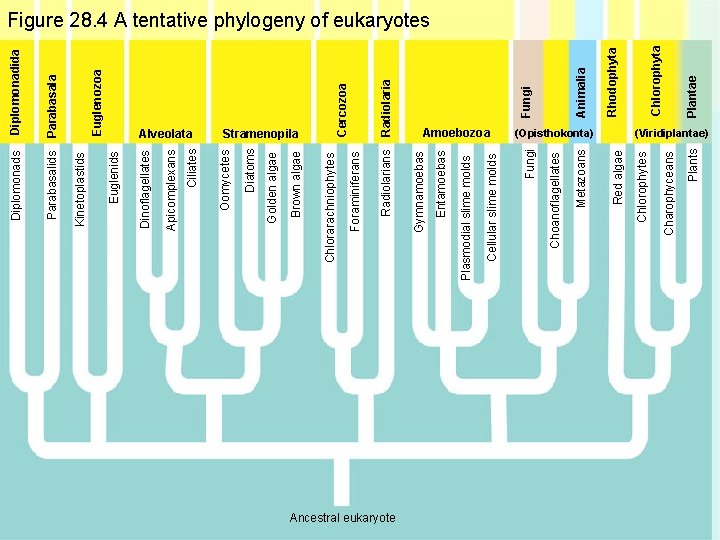
Ancestral eukaryote Plants Charophyceans (Opisthokonta) Chlorophytes Red algae Metazoans Choanoflagellates Plantae Chlorophyta Rhodophyta Animalia Fungi Radiolaria Cercozoa Amoebozoa Fungi Cellular slime molds Plasmodial slime molds Entamoebas Gymnamoebas Radiolarians Foraminiferans Stramenopila Chlorarachniophytes Brown algae Golden algae Diatoms Alveolata Oomycetes Ciliates Apicomplexans Dinoflagellates Euglenids Euglenozoa Parabasalids Kinetoplastids Diplomonadida Diplomonads Figure 28. 4 A tentative phylogeny of eukaryotes (Viridiplantae)
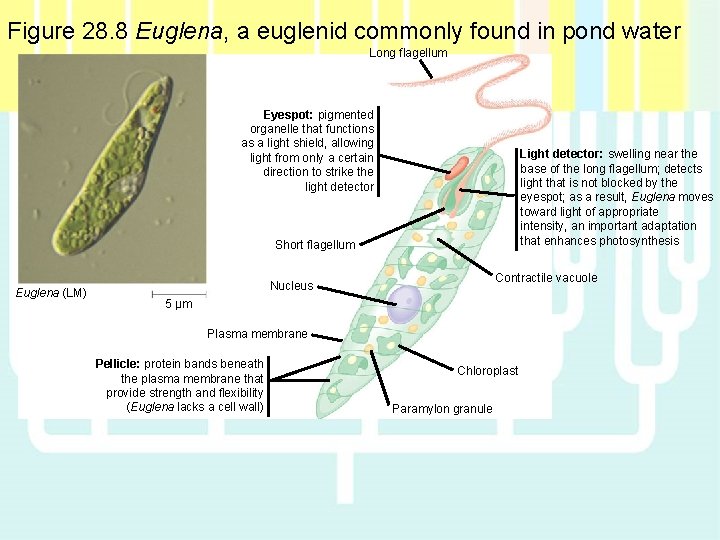
Figure 28. 8 Euglena, a euglenid commonly found in pond water Long flagellum Eyespot: pigmented organelle that functions as a light shield, allowing light from only a certain direction to strike the light detector Light detector: swelling near the base of the long flagellum; detects light that is not blocked by the eyespot; as a result, Euglena moves toward light of appropriate intensity, an important adaptation that enhances photosynthesis Short flagellum Euglena (LM) Contractile vacuole Nucleus 5 µm Plasma membrane Pellicle: protein bands beneath the plasma membrane that provide strength and flexibility (Euglena lacks a cell wall) Chloroplast Paramylon granule
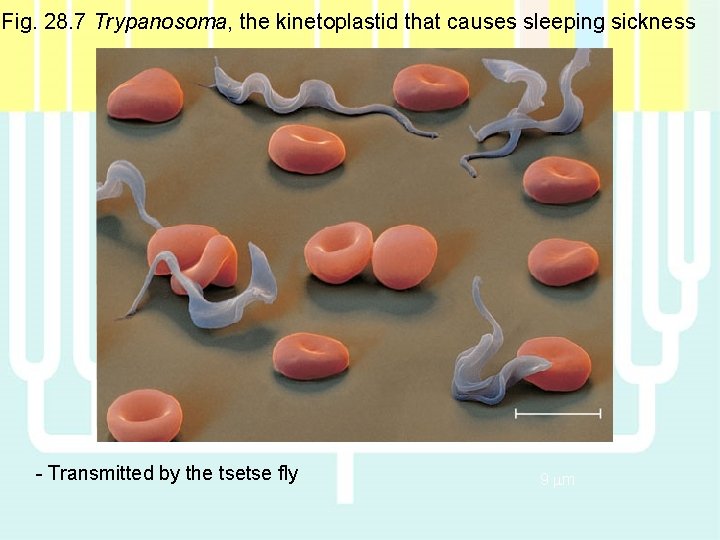
Fig. 28. 7 Trypanosoma, the kinetoplastid that causes sleeping sickness - Transmitted by the tsetse fly 9 m
Ancestral eukaryote Plants Charophyceans (Opisthokonta) Chlorophytes Red algae Metazoans Choanoflagellates Plantae Chlorophyta Rhodophyta Animalia Fungi Radiolaria Cercozoa Amoebozoa Fungi Cellular slime molds Plasmodial slime molds Entamoebas Gymnamoebas Radiolarians Foraminiferans Stramenopila Chlorarachniophytes Brown algae Golden algae Diatoms Alveolata Oomycetes Ciliates Apicomplexans Dinoflagellates Euglenids Euglenozoa Parabasalids Kinetoplastids Diplomonadida Diplomonads Figure 28. 4 A tentative phylogeny of eukaryotes (Viridiplantae)
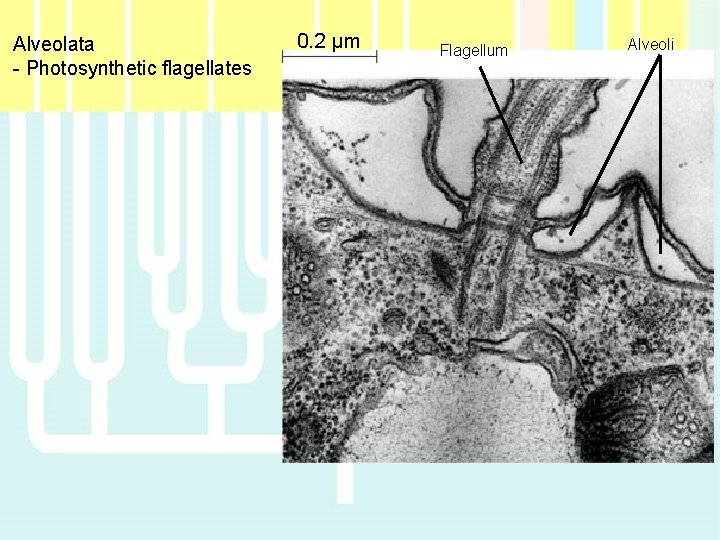
Alveolata - Photosynthetic flagellates 0. 2 µm Flagellum Alveoli
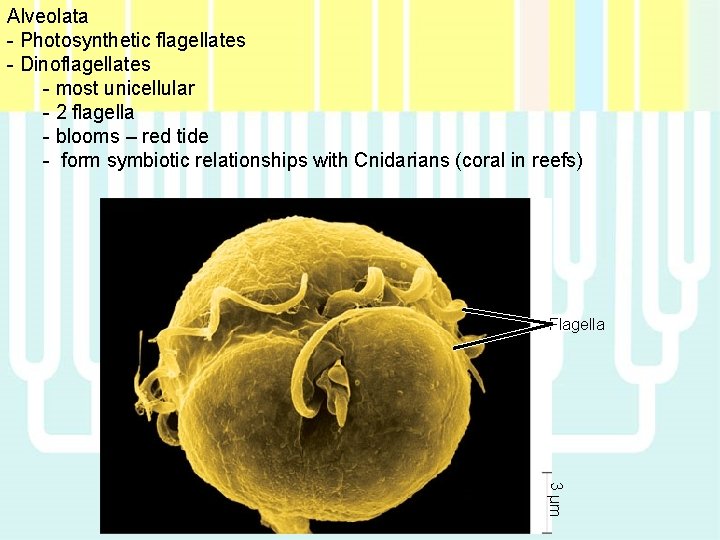
Alveolata - Photosynthetic flagellates - Dinoflagellates - most unicellular - 2 flagella - blooms – red tide - form symbiotic relationships with Cnidarians (coral in reefs) Flagella 3 µm
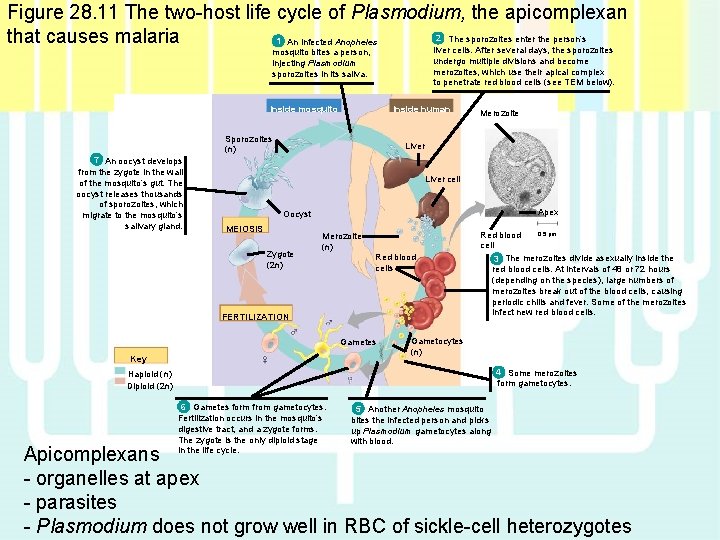
Figure 28. 11 The two-host life cycle of Plasmodium, the apicomplexan 2 The sporozoites enter the person’s that causes malaria 1 An infected Anopheles liver cells. After several days, the sporozoites mosquito bites a person, injecting Plasmodium sporozoites in its saliva. undergo multiple divisions and become merozoites, which use their apical complex to penetrate red blood cells (see TEM below). Inside mosquito Inside human Sporozoites (n) 7 An oocyst develops from the zygote in the wall of the mosquito’s gut. The oocyst releases thousands of sporozoites, which migrate to the mosquito’s salivary gland. Merozoite Liver cell Apex Oocyst MEIOSIS Zygote (2 n) Merozoite (n) Red blood cells FERTILIZATION Gametes Key 0. 5 µm Red blood cell 3 The merozoites divide asexually inside the red blood cells. At intervals of 48 or 72 hours (depending on the species), large numbers of merozoites break out of the blood cells, causing periodic chills and fever. Some of the merozoites infect new red blood cells. Gametocytes (n) 4 Some merozoites form gametocytes. Haploid (n) Diploid (2 n) 6 Gametes form from gametocytes. Fertilization occurs in the mosquito’s digestive tract, and a zygote forms. The zygote is the only diploid stage in the life cycle. 5 Another Anopheles mosquito bites the infected person and picks up Plasmodium gametocytes along with blood. Apicomplexans - organelles at apex - parasites - Plasmodium does not grow well in RBC of sickle-cell heterozygotes
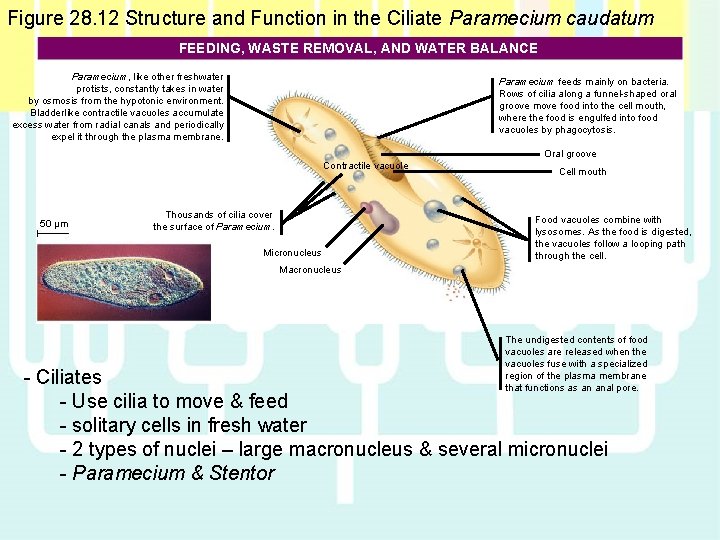
Figure 28. 12 Structure and Function in the Ciliate Paramecium caudatum FEEDING, WASTE REMOVAL, AND WATER BALANCE Paramecium, like other freshwater protists, constantly takes in water by osmosis from the hypotonic environment. Bladderlike contractile vacuoles accumulate excess water from radial canals and periodically expel it through the plasma membrane. Paramecium feeds mainly on bacteria. Rows of cilia along a funnel-shaped oral groove move food into the cell mouth, where the food is engulfed into food vacuoles by phagocytosis. Oral groove Contractile vacuole 50 µm Thousands of cilia cover the surface of Paramecium. Micronucleus Cell mouth Food vacuoles combine with lysosomes. As the food is digested, the vacuoles follow a looping path through the cell. Macronucleus The undigested contents of food vacuoles are released when the vacuoles fuse with a specialized region of the plasma membrane that functions as an anal pore. - Ciliates - Use cilia to move & feed - solitary cells in fresh water - 2 types of nuclei – large macronucleus & several micronuclei - Paramecium & Stentor
Ancestral eukaryote Plants Charophyceans (Opisthokonta) Chlorophytes Red algae Metazoans Choanoflagellates Plantae Chlorophyta Rhodophyta Animalia Fungi Radiolaria Cercozoa Amoebozoa Fungi Cellular slime molds Plasmodial slime molds Entamoebas Gymnamoebas Radiolarians Foraminiferans Stramenopila Chlorarachniophytes Brown algae Golden algae Diatoms Alveolata Oomycetes Ciliates Apicomplexans Dinoflagellates Euglenids Euglenozoa Parabasalids Kinetoplastids Diplomonadida Diplomonads Figure 28. 4 A tentative phylogeny of eukaryotes (Viridiplantae)
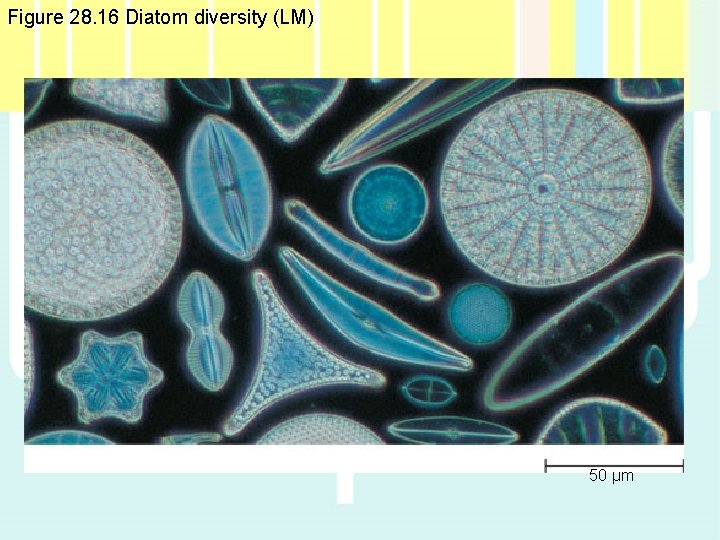
Stramenopila (straw hair) - Water molds & relatives - heterotrophic - decompose dead fish - Diatoms - yellow or brown - glass-like cell walls of hydrated silica - fresh water & marine - toothpaste, car paint, diatomaceous earth (swimming pools) - Synedra
Figure 28. 16 Diatom diversity (LM) 50 µm
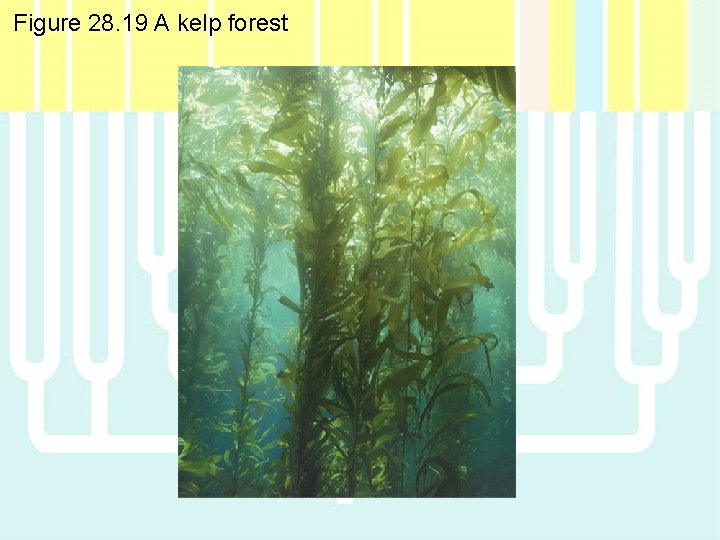
Stramenopila (straw hair) - Water molds & relatives - heterotrophic - decompose dead fish - Diatoms - yellow or brown - glass-like cell walls of hydrated silica - toothpaste, car paint, diatomaceous earth (swimming pools) - Synedra - Golden algae (Chrysophyta) - golden & brown carotene & xanthophyll accessory pigments - 2 flagella at same end - Brown algae (Phaeophyta) - largest, most complex algae - multicellular & most are marine - along temperate coasts where water is cool - sea weeds, kelp
Figure 28. 19 A kelp forest
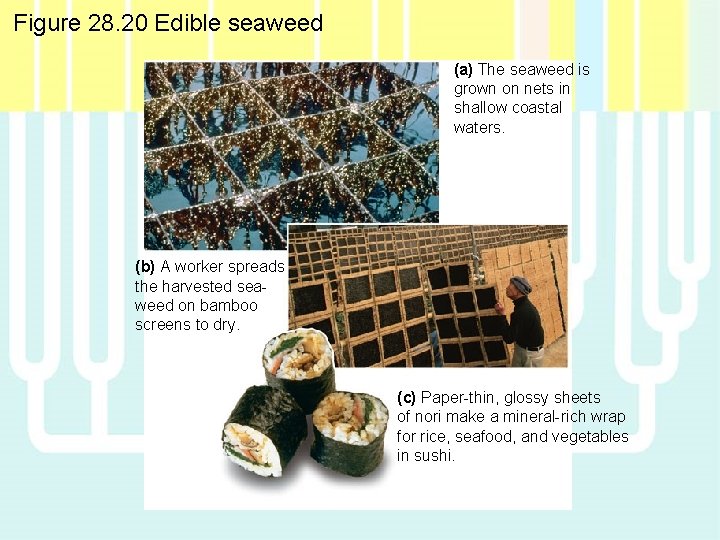
Figure 28. 20 Edible seaweed (a) The seaweed is grown on nets in shallow coastal waters. (b) A worker spreads the harvested seaweed on bamboo screens to dry. (c) Paper-thin, glossy sheets of nori make a mineral-rich wrap for rice, seafood, and vegetables in sushi.
Ancestral eukaryote Plants Charophyceans (Opisthokonta) Chlorophytes Red algae Metazoans Choanoflagellates Plantae Chlorophyta Rhodophyta Animalia Fungi Radiolaria Cercozoa Amoebozoa Fungi Cellular slime molds Plasmodial slime molds Entamoebas Gymnamoebas Radiolarians Foraminiferans Stramenopila Chlorarachniophytes Brown algae Golden algae Diatoms Alveolata Oomycetes Ciliates Apicomplexans Dinoflagellates Euglenids Euglenozoa Parabasalids Kinetoplastids Diplomonadida Diplomonads Figure 28. 4 A tentative phylogeny of eukaryotes (Viridiplantae)
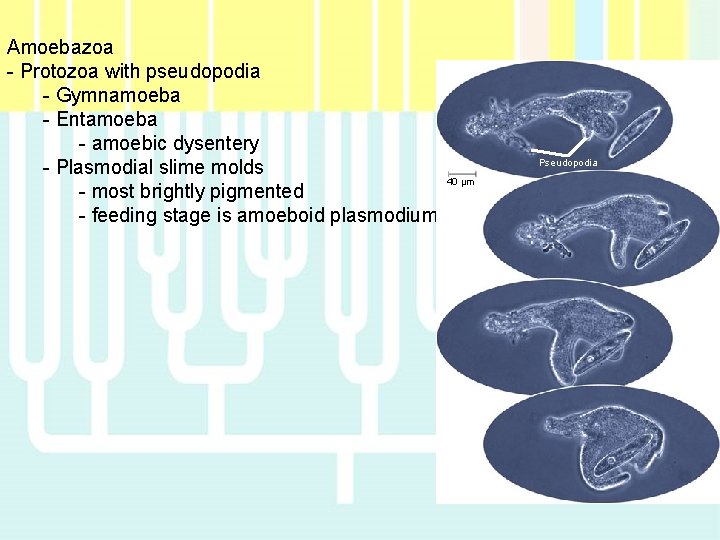
Amoebazoa - Protozoa with pseudopodia - Gymnamoeba - Entamoeba - amoebic dysentery - Plasmodial slime molds - most brightly pigmented - feeding stage is amoeboid plasmodium Pseudopodia 40 µm
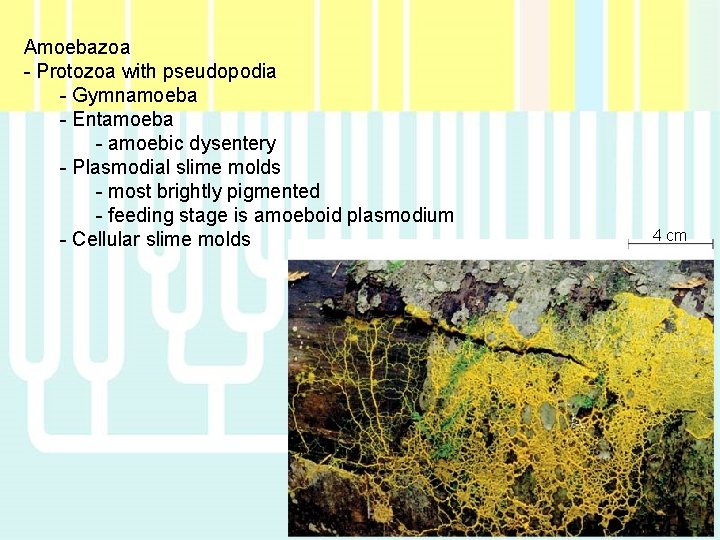
Amoebazoa - Protozoa with pseudopodia - Gymnamoeba - Entamoeba - amoebic dysentery - Plasmodial slime molds - most brightly pigmented - feeding stage is amoeboid plasmodium - Cellular slime molds 4 cm
Ancestral eukaryote Plants Charophyceans (Opisthokonta) Chlorophytes Red algae Metazoans Choanoflagellates Plantae Chlorophyta Rhodophyta Animalia Fungi Radiolaria Cercozoa Amoebozoa Fungi Cellular slime molds Plasmodial slime molds Entamoebas Gymnamoebas Radiolarians Foraminiferans Stramenopila Chlorarachniophytes Brown algae Golden algae Diatoms Alveolata Oomycetes Ciliates Apicomplexans Dinoflagellates Euglenids Euglenozoa Parabasalids Kinetoplastids Diplomonadida Diplomonads Figure 28. 4 A tentative phylogeny of eukaryotes (Viridiplantae)
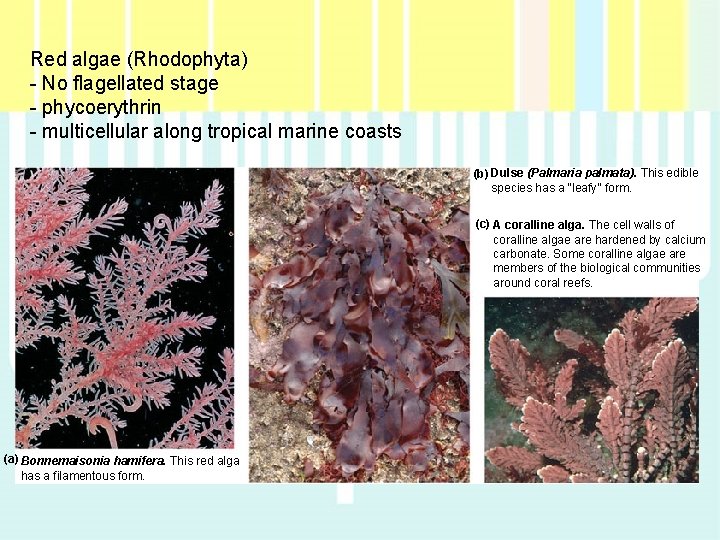
Red algae (Rhodophyta) - No flagellated stage - phycoerythrin - multicellular along tropical marine coasts (b) Dulse (Palmaria palmata). This edible species has a “leafy” form. (c) A coralline alga. The cell walls of coralline algae are hardened by calcium carbonate. Some coralline algae are members of the biological communities around coral reefs. (a) Bonnemaisonia hamifera. This red alga has a filamentous form.
Ancestral eukaryote Plants Charophyceans (Opisthokonta) Chlorophytes Red algae Metazoans Choanoflagellates Plantae Chlorophyta Rhodophyta Animalia Fungi Radiolaria Cercozoa Amoebozoa Fungi Cellular slime molds Plasmodial slime molds Entamoebas Gymnamoebas Radiolarians Foraminiferans Stramenopila Chlorarachniophytes Brown algae Golden algae Diatoms Alveolata Oomycetes Ciliates Apicomplexans Dinoflagellates Euglenids Euglenozoa Parabasalids Kinetoplastids Diplomonadida Diplomonads Figure 28. 4 A tentative phylogeny of eukaryotes (Viridiplantae)
Green algae (Chlorophyta) - Closely related to plants - most fresh water (some marine) - lichens – mutualistic relationship between green algae & fungi
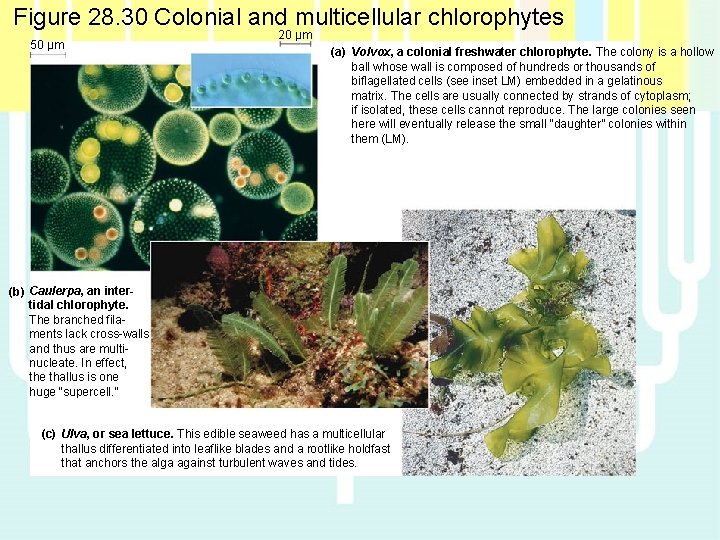
Figure 28. 30 Colonial and multicellular chlorophytes 50 µm 20 µm (a) Volvox, a colonial freshwater chlorophyte. The colony is a hollow ball whose wall is composed of hundreds or thousands of biflagellated cells (see inset LM) embedded in a gelatinous matrix. The cells are usually connected by strands of cytoplasm; if isolated, these cells cannot reproduce. The large colonies seen here will eventually release the small “daughter” colonies within them (LM). (b) Caulerpa, an intertidal chlorophyte. The branched filaments lack cross-walls and thus are multinucleate. In effect, the thallus is one huge “supercell. ” (c) Ulva, or sea lettuce. This edible seaweed has a multicellular thallus differentiated into leaflike blades and a rootlike holdfast that anchors the alga against turbulent waves and tides.