
Chapter 28 Principles of Growth and Development Principles

- Slides: 27
Chapter 28 Principles of Growth and Development
Principles of Growth and Development • Terms – Growth – Development – Maturation – Cognitive development Copyright © 2018 Wolters Kluwer · All Rights Reserved
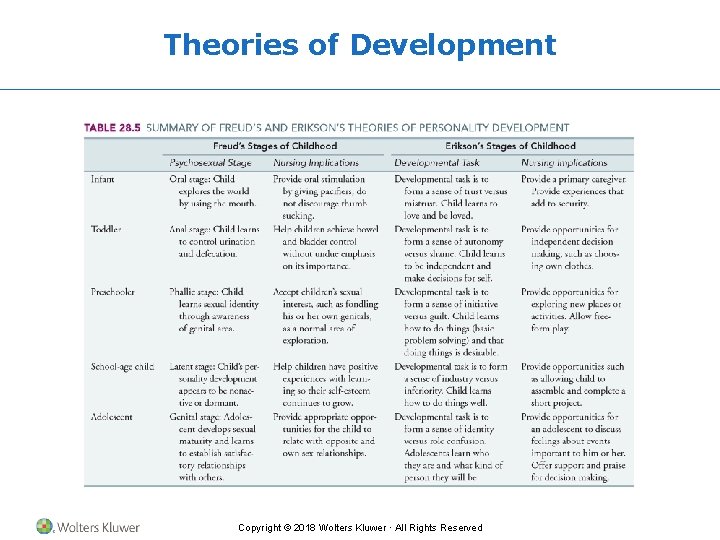
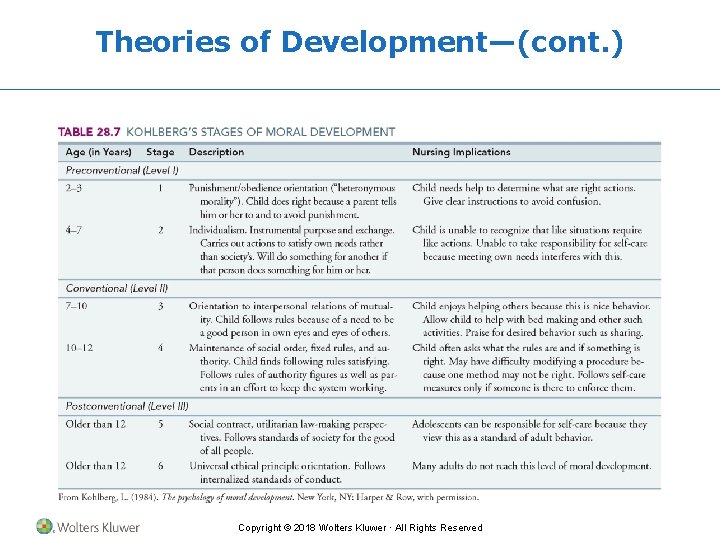
Theories of Development Copyright © 2018 Wolters Kluwer · All Rights Reserved
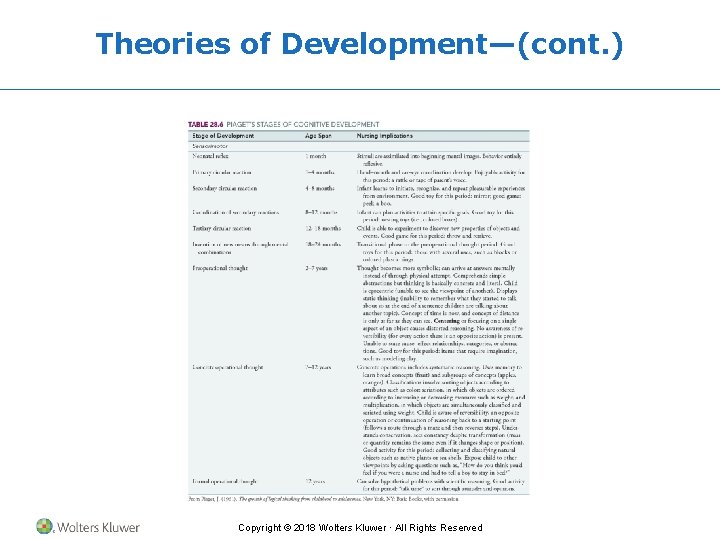
Theories of Development—(cont. ) Copyright © 2018 Wolters Kluwer · All Rights Reserved
Theories of Development—(cont. ) Copyright © 2018 Wolters Kluwer · All Rights Reserved
2020 National Health Goals Related to Growth and Development • Increase the proportion of children with special healthcare needs who receive their care in familycentered, comprehensive, coordinated systems from 20. 4% to a target level of 22. 4%. • Reduce the proportion of children diagnosed with a disorder through newborn blood spot screening who experience a developmental delay requiring special education services from 15. 1% to a target level of 13. 6%. Copyright © 2018 Wolters Kluwer · All Rights Reserved
2020 National Health Goals Related to Growth and Development—(cont. ) • Increase the proportion of young children who are screened for an autism spectrum disorder (ASD) and other developmental delays by 24 months of age from 19. 5% to a target level of 21. 5%. Copyright © 2018 Wolters Kluwer · All Rights Reserved
2020 National Health Goals Related to Growth and Development—(cont. ) • Increase the proportion of children with a developmental delay who have a first evaluation by 36 months of age. • Reduce the proportion of children 2 to 5 years of age who are considered obese from 10. 7% to a target level of 9. 6%; for children 6 to 11 years, from 17. 4% to 15. 7%; and for adolescents, from 17. 9% to 16. 1%. Copyright © 2018 Wolters Kluwer · All Rights Reserved
Nursing Process: Growth and Development • Assessment • Nursing diagnosis • Outcome identification and planning • Implementation • Outcome evaluation Copyright © 2018 Wolters Kluwer · All Rights Reserved
Factors Influencing Growth and Development • Genetics • Gender • Health • Intelligence Copyright © 2018 Wolters Kluwer · All Rights Reserved
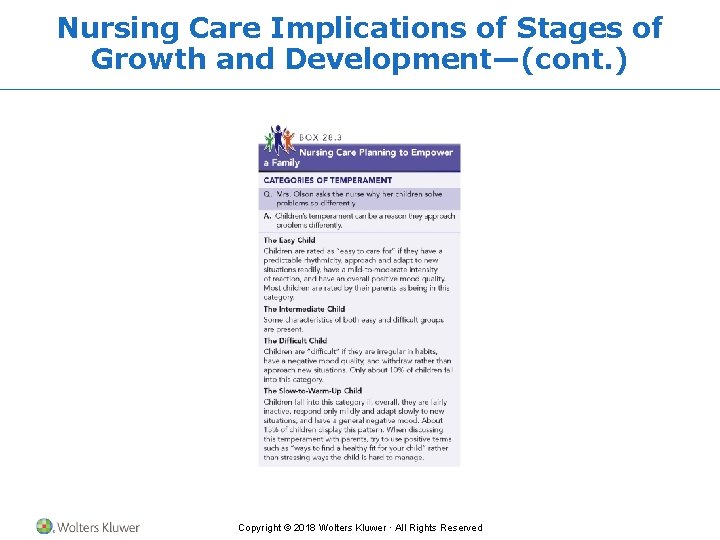
Factors Influencing Growth and Development—(cont. ) • Temperament – Reaction patterns • Activity level • Rhythmicity • Approach • Adaptability Copyright © 2018 Wolters Kluwer · All Rights Reserved
Factors Influencing Growth and Development—(cont. ) • Temperament—(cont. ) – Reaction patterns—(cont. ) • Intensity of reaction • Distractibility • Attention span and persistence • Threshold of response • Mood quality Copyright © 2018 Wolters Kluwer · All Rights Reserved
Factors Influencing Growth and Development—(cont. ) • Environment – Socioeconomic level – Parent–child relationship – Ordinal position – Health Copyright © 2018 Wolters Kluwer · All Rights Reserved
Factors Influencing Growth and Development—(cont. ) • Environment—(cont. ) – Nutrition • Impacts • Physical growth • Health maintenance • Cognitive development Copyright © 2018 Wolters Kluwer · All Rights Reserved
Nursing Diagnoses: Growth and Development • Risk for delayed growth and development related to lack of age-appropriate toys and activities • Readiness for enhanced family coping related to parent’s seeking information about child’s growth and development • Imbalanced nutrition, less than body requirements, related to parental knowledge deficit regarding child’s protein need Copyright © 2018 Wolters Kluwer · All Rights Reserved
Quality & Safety Education for Nurses (QSEN) • Patient-Centered Care • Teamwork & Collaboration • Evidence-Based Practice • Quality Improvement • Safety • Informatics Copyright © 2018 Wolters Kluwer · All Rights Reserved
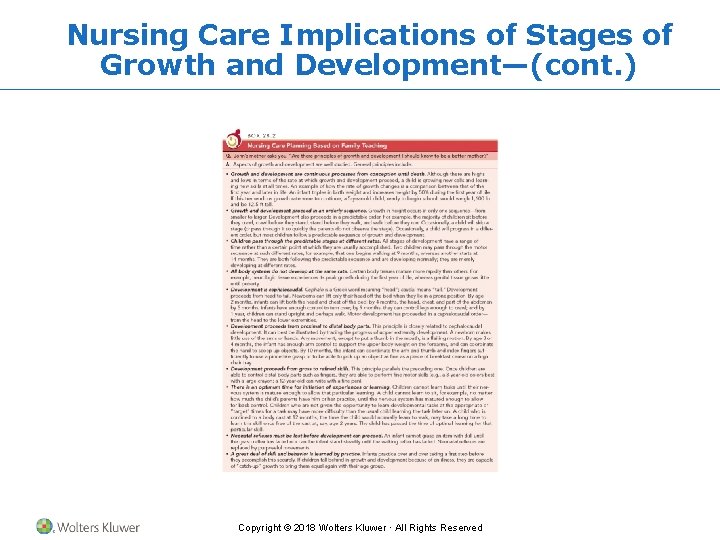
Nursing Care Implications of Stages of Growth and Development • Predictable • Measureable (objective) • Physical; emotional; cognitive • Impact patient teaching • Impact nursing care strategies Copyright © 2018 Wolters Kluwer · All Rights Reserved
Nursing Care Implications of Stages of Growth and Development—(cont. ) Copyright © 2018 Wolters Kluwer · All Rights Reserved
Nursing Care Implications of Stages of Growth and Development—(cont. ) Copyright © 2018 Wolters Kluwer · All Rights Reserved
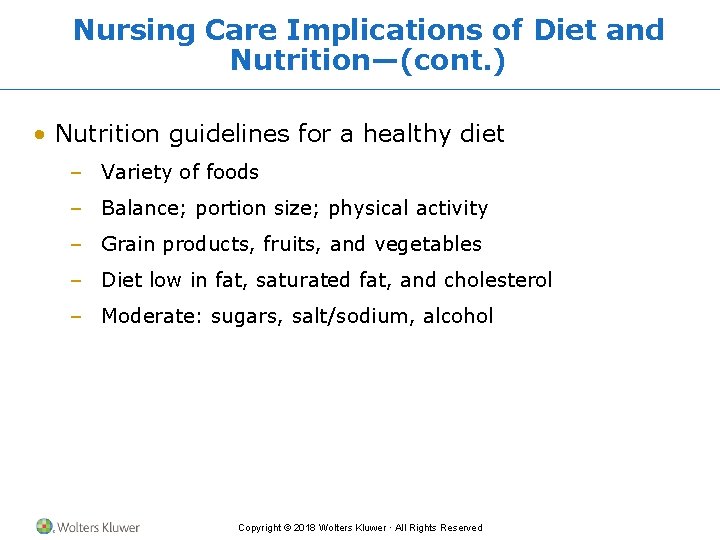
Nursing Care Implications of Diet and Nutrition • Components of healthy diet – Protein – Carbohydrates – Fat – Vitamins – Minerals Copyright © 2018 Wolters Kluwer · All Rights Reserved
Nursing Care Implications of Diet and Nutrition—(cont. ) • Adequate nutrition in vegetarian diets – Types – Protein – Calcium – Iron – Vitamins and minerals – Total calories Copyright © 2018 Wolters Kluwer · All Rights Reserved
Nursing Care Implications of Diet and Nutrition—(cont. ) • Nutrition guidelines for a healthy diet – Variety of foods – Balance; portion size; physical activity – Grain products, fruits, and vegetables – Diet low in fat, saturated fat, and cholesterol – Moderate: sugars, salt/sodium, alcohol Copyright © 2018 Wolters Kluwer · All Rights Reserved
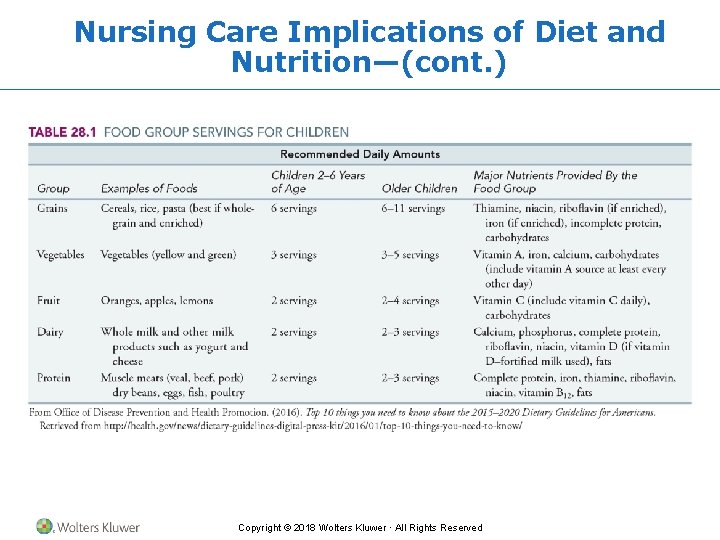
Nursing Care Implications of Diet and Nutrition—(cont. ) Copyright © 2018 Wolters Kluwer · All Rights Reserved
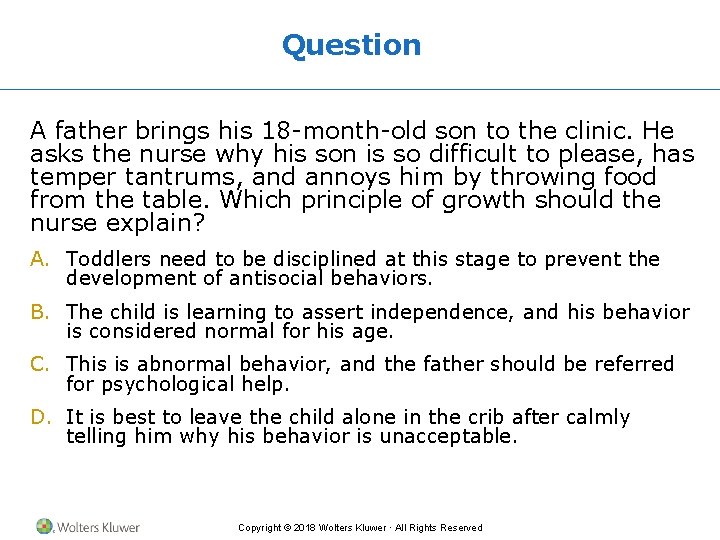
Question A father brings his 18 -month-old son to the clinic. He asks the nurse why his son is so difficult to please, has temper tantrums, and annoys him by throwing food from the table. Which principle of growth should the nurse explain? A. Toddlers need to be disciplined at this stage to prevent the development of antisocial behaviors. B. The child is learning to assert independence, and his behavior is considered normal for his age. C. This is abnormal behavior, and the father should be referred for psychological help. D. It is best to leave the child alone in the crib after calmly telling him why his behavior is unacceptable. Copyright © 2018 Wolters Kluwer · All Rights Reserved
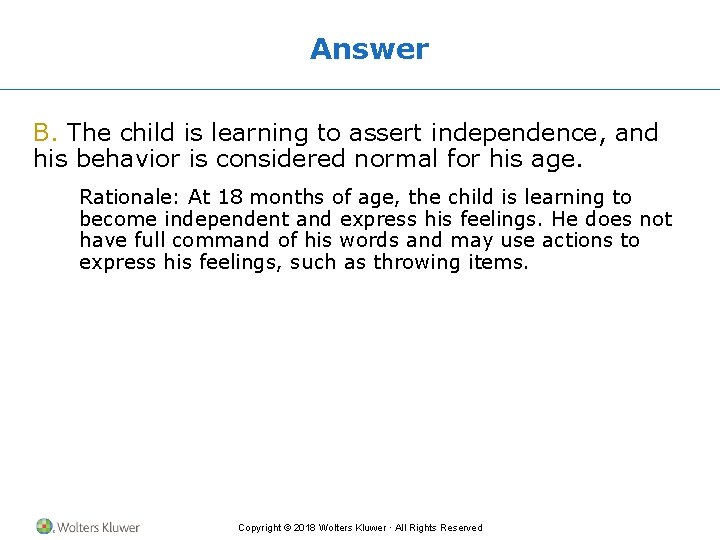
Answer B. The child is learning to assert independence, and his behavior is considered normal for his age. Rationale: At 18 months of age, the child is learning to become independent and express his feelings. He does not have full command of his words and may use actions to express his feelings, such as throwing items. Copyright © 2018 Wolters Kluwer · All Rights Reserved
Question Which is the best way for an infant’s father to help his child complete the developmental task of the first year? A. Expose her to many caregivers to help her learn variability. B. Talk to her at a special time each day. C. Respond to her consistently. D. Keep her stimulated with many toys. Copyright © 2018 Wolters Kluwer · All Rights Reserved
Answer C. Respond to her consistently. Rationale: The infant is in need of development of trust. Responding to the infant on a consistent basis develops the trust needed to meet the developmental task of infancy. Copyright © 2018 Wolters Kluwer · All Rights Reserved