
Chapter 28 Overview of Tissues A The Hierarchy
- Slides: 34
Chapter 28 Overview of Tissues
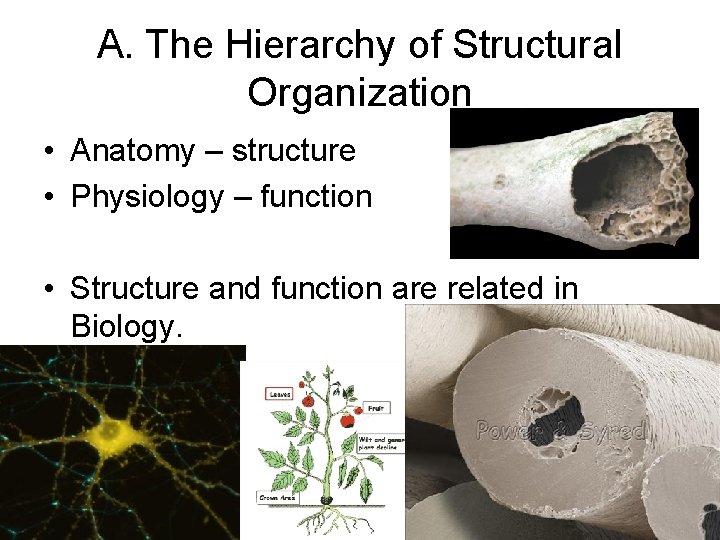
A. The Hierarchy of Structural Organization • Anatomy – structure • Physiology – function • Structure and function are related in Biology.
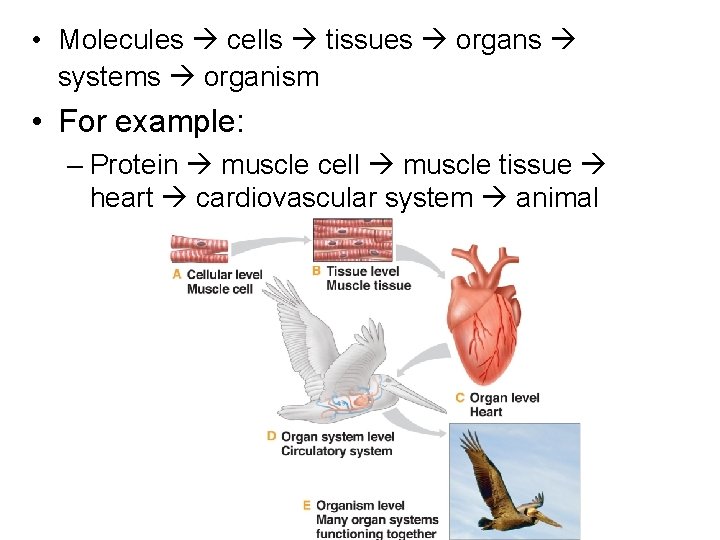
• Molecules cells tissues organs systems organism • For example: – Protein muscle cell muscle tissue heart cardiovascular system animal
• Tissue: similar cells that perform a common function • Organ: structure made of two or more types of tissue that together perform a specific task • Organ system: multiple organs that together perform a vital body function
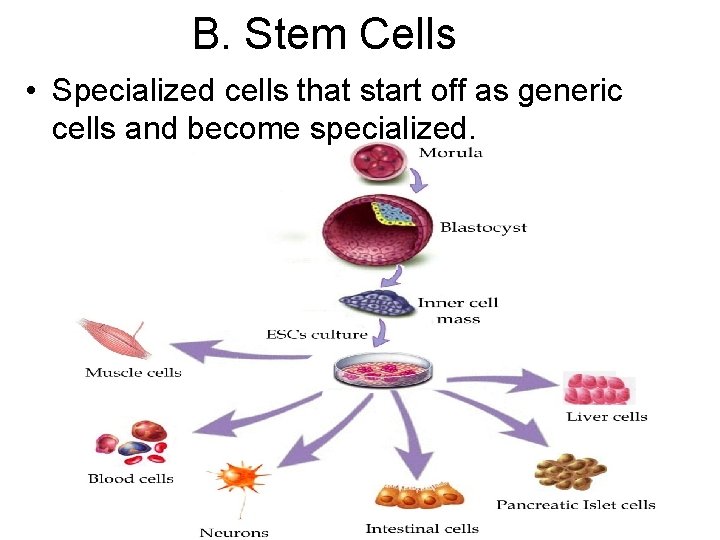
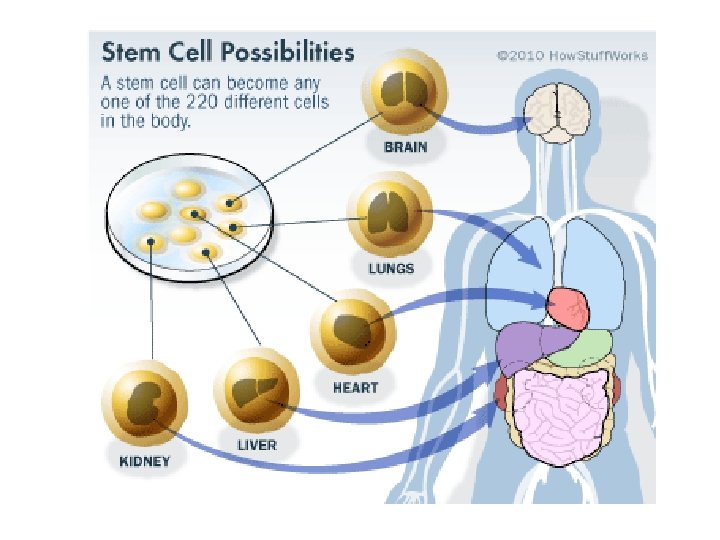
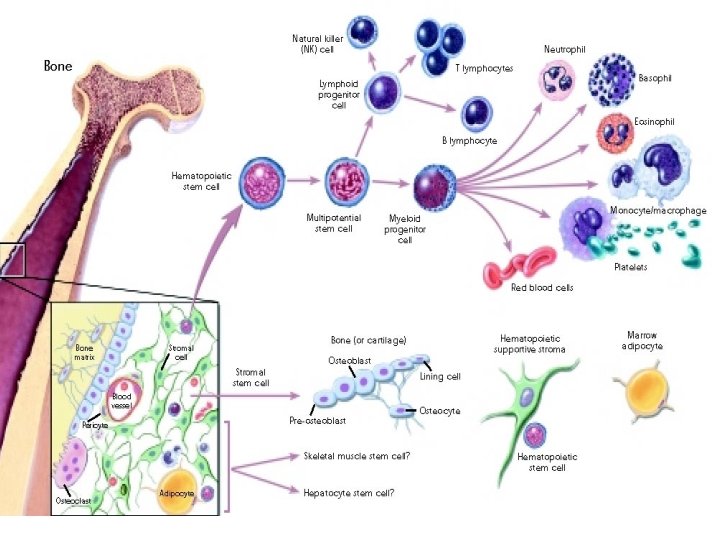
B. Stem Cells • Specialized cells that start off as generic cells and become specialized.
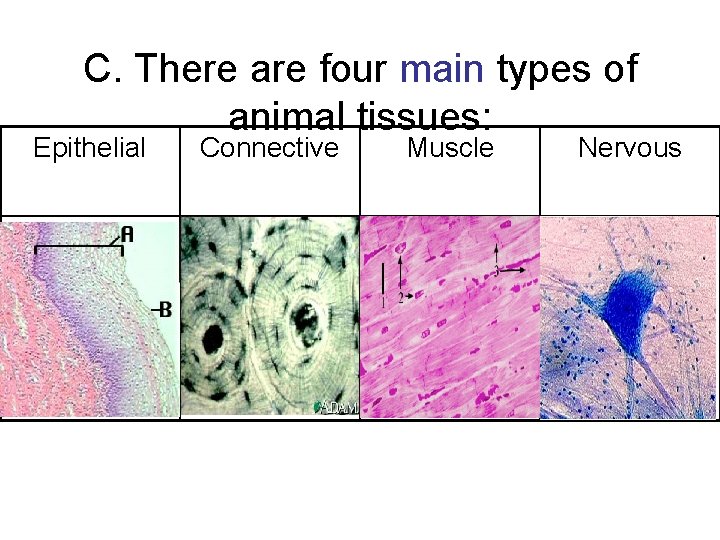
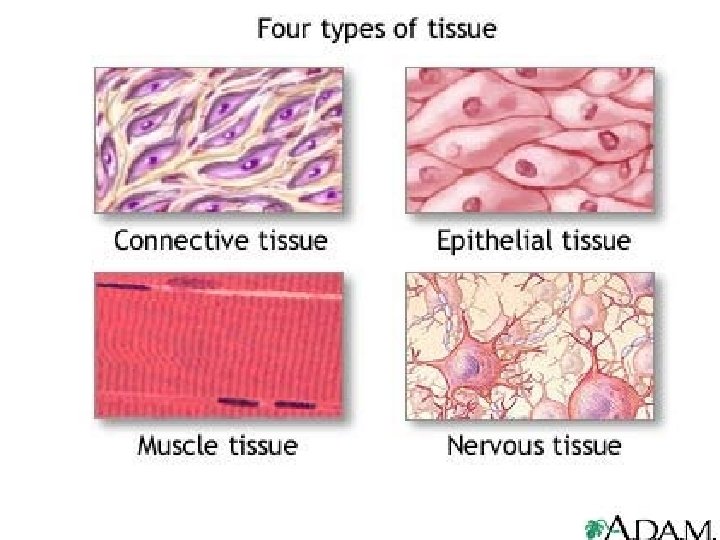
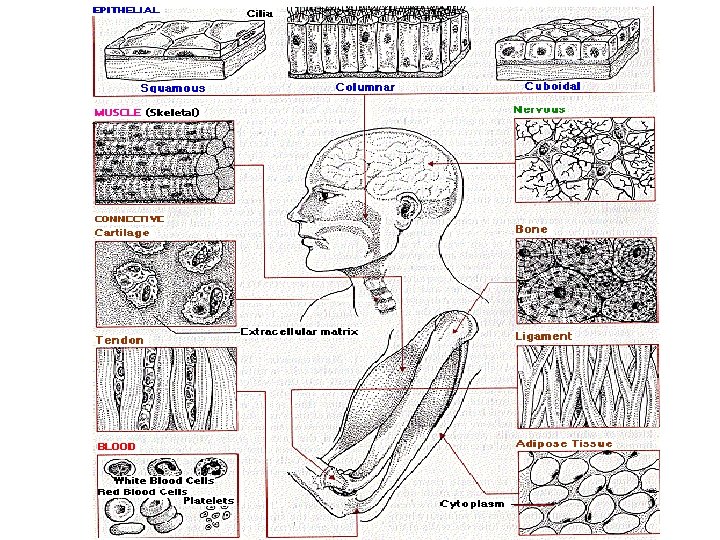
C. There are four main types of animal tissues: Epithelial Connective Muscle Nervous
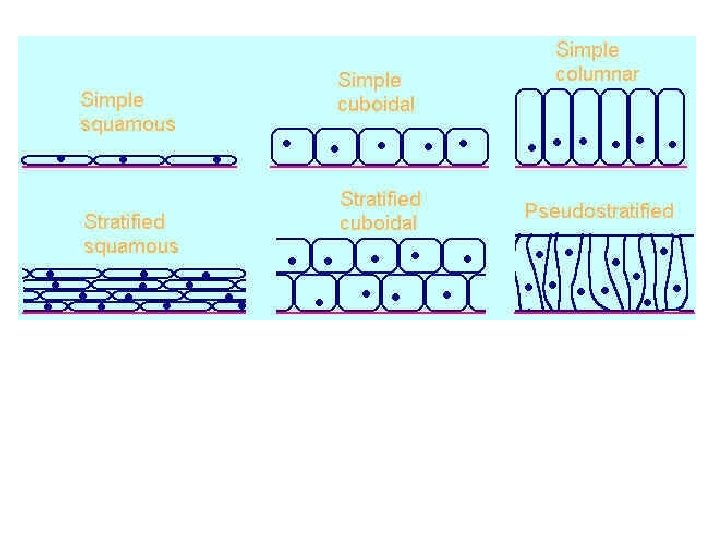
1. Epithelial tissue: sheets of tightly packed cells that cover body surfaces and line internal organs & cavities - Cover both inner and outer surfaces of internal organs
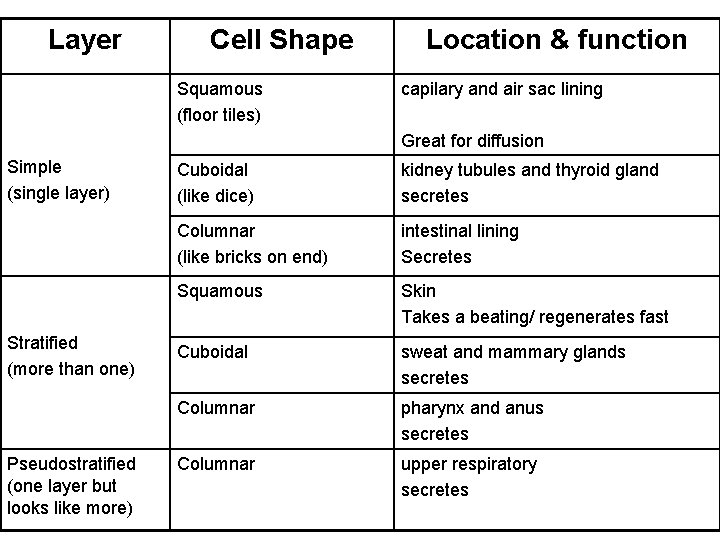
Layer Cell Shape Squamous (floor tiles) Location & function capilary and air sac lining Great for diffusion Simple (single layer) Stratified (more than one) Pseudostratified (one layer but looks like more) Cuboidal (like dice) kidney tubules and thyroid gland secretes Columnar (like bricks on end) intestinal lining Secretes Squamous Skin Takes a beating/ regenerates fast Cuboidal sweat and mammary glands secretes Columnar pharynx and anus secretes Columnar upper respiratory secretes
2. Connective tissue binds and supports other tissues • Contains fewer cells, scattered throughout an matrix – Matrix: • Secreted by the cells • Contains a web of fibers embedded in a liquid, jelly, or solid • Non- living • Made from collagen, and elastin – CFLABB
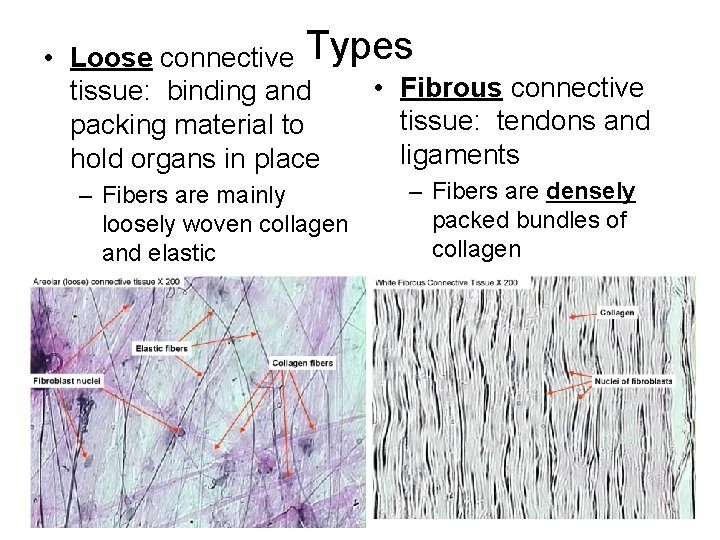
• Loose connective Types • Fibrous connective tissue: binding and tissue: tendons and packing material to ligaments hold organs in place – Fibers are mainly loosely woven collagen and elastic – Fibers are densely packed bundles of collagen
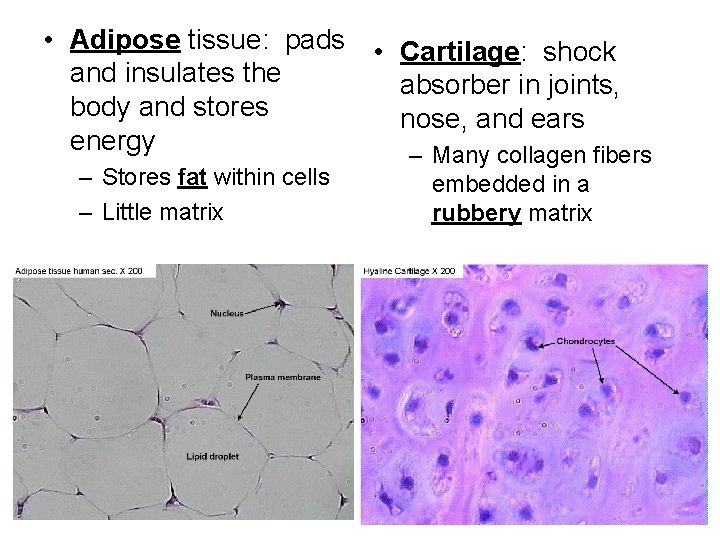
• Adipose tissue: pads • Cartilage: shock and insulates the absorber in joints, body and stores nose, and ears energy – Many collagen fibers – Stores fat within cells – Little matrix embedded in a rubbery matrix
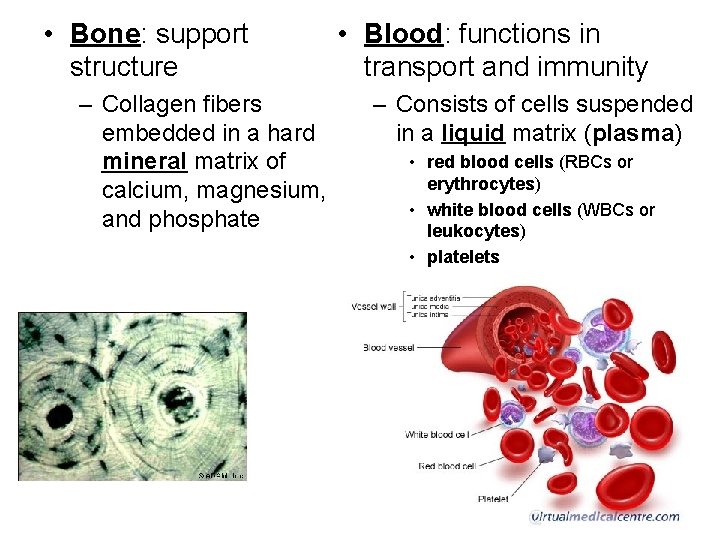
• Bone: support structure – Collagen fibers embedded in a hard mineral matrix of calcium, magnesium, and phosphate • Blood: functions in transport and immunity – Consists of cells suspended in a liquid matrix (plasma) • red blood cells (RBCs or erythrocytes) • white blood cells (WBCs or leukocytes) • platelets
3. Muscle tissue functions in movement • Muscle tissue bundles of muscle cells – Most abundant tissue in most animals – In cytoplasm of muscle, large amounts of contractile proteins. (uses ATP from Mito to fuel proteins. )
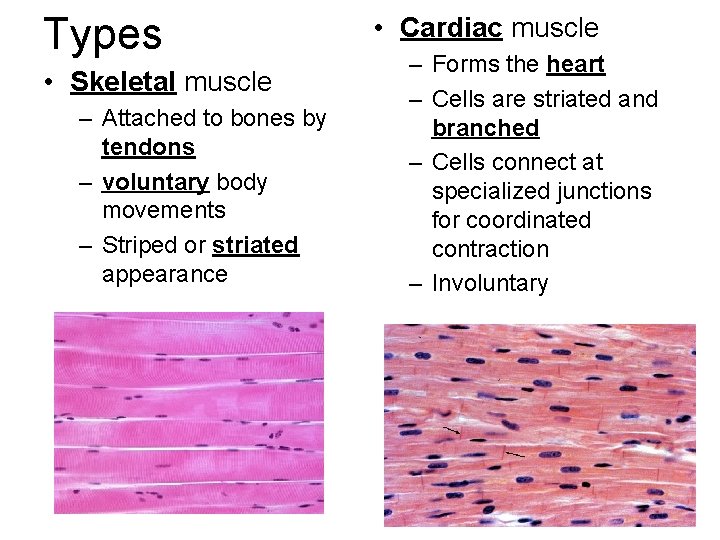
Types • Skeletal muscle – Attached to bones by tendons – voluntary body movements – Striped or striated appearance • Cardiac muscle – Forms the heart – Cells are striated and branched – Cells connect at specialized junctions for coordinated contraction – Involuntary
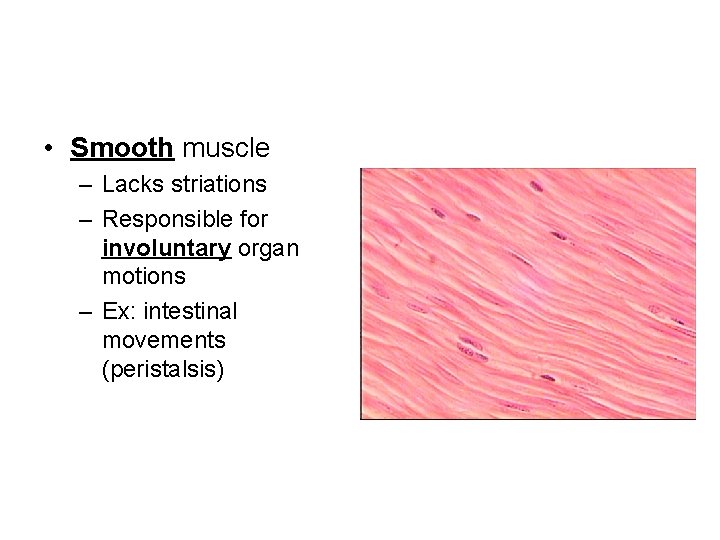
• Smooth muscle – Lacks striations – Responsible for involuntary organ motions – Ex: intestinal movements (peristalsis)
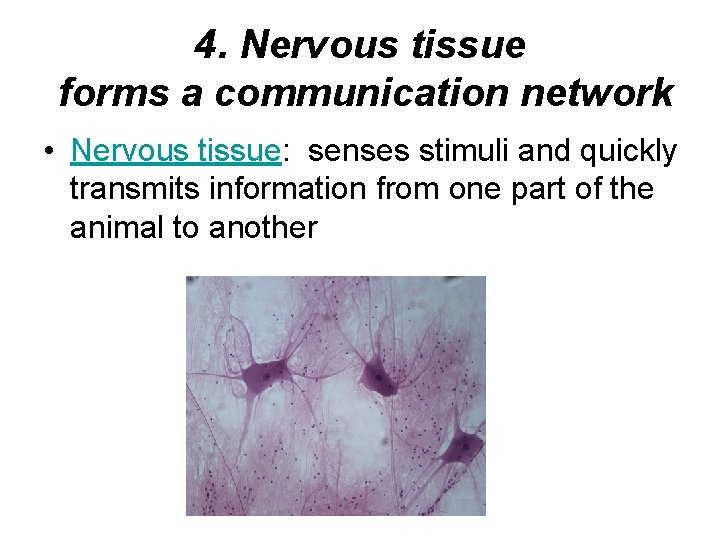
4. Nervous tissue forms a communication network • Nervous tissue: senses stimuli and quickly transmits information from one part of the animal to another
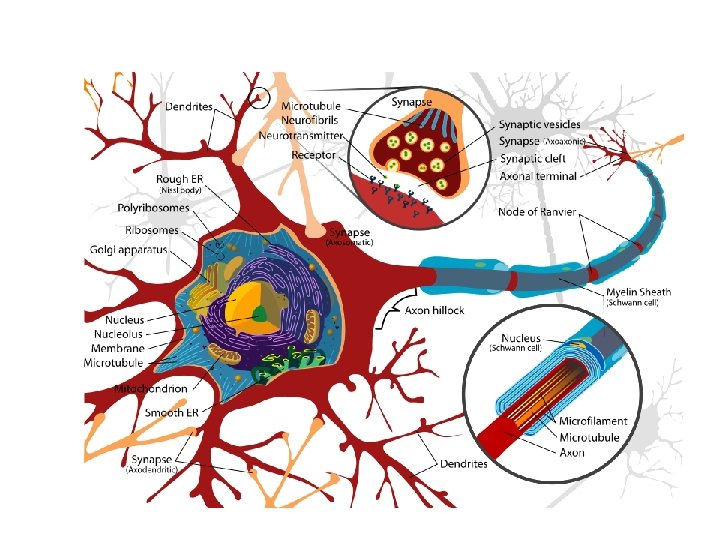
Structure • Neuron: • Specialized to conduct electrical impulses • Dendrites convey information toward the neuron cell body • Axons convey information away from the neuron cell body • Nervous tissue also includes supporting cells
D. Organs made up of tissues • DERNCRIMUILS
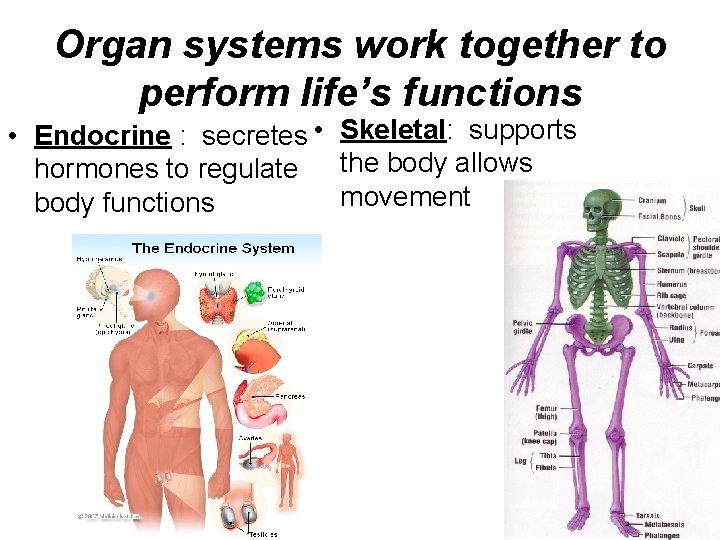
Organ systems work together to perform life’s functions • Endocrine : secretes • Skeletal: supports hormones to regulate the body allows movement body functions
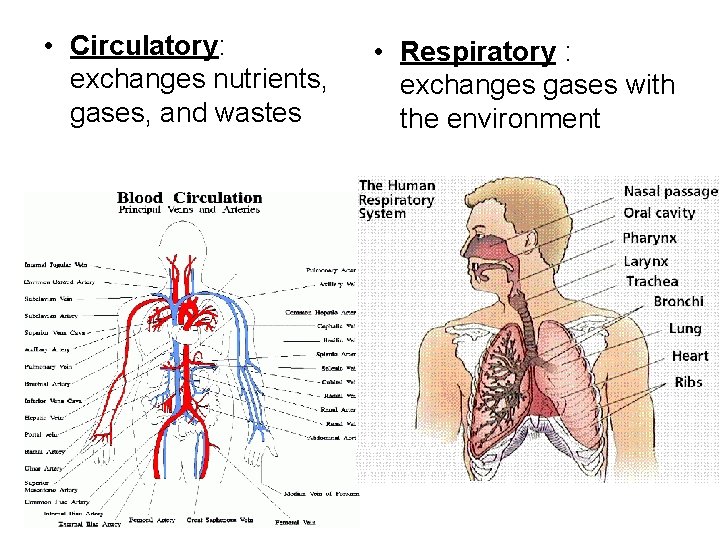
• Circulatory: exchanges nutrients, gases, and wastes • Respiratory : exchanges gases with the environment
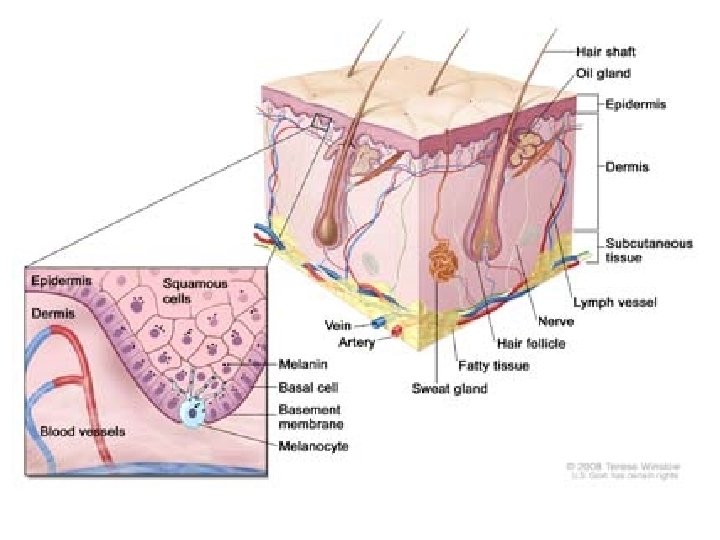
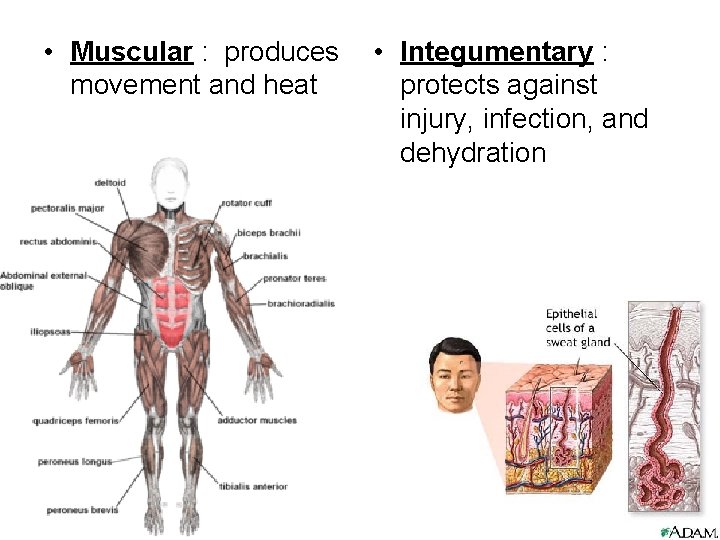
• Muscular : produces movement and heat • Integumentary : protects against injury, infection, and dehydration
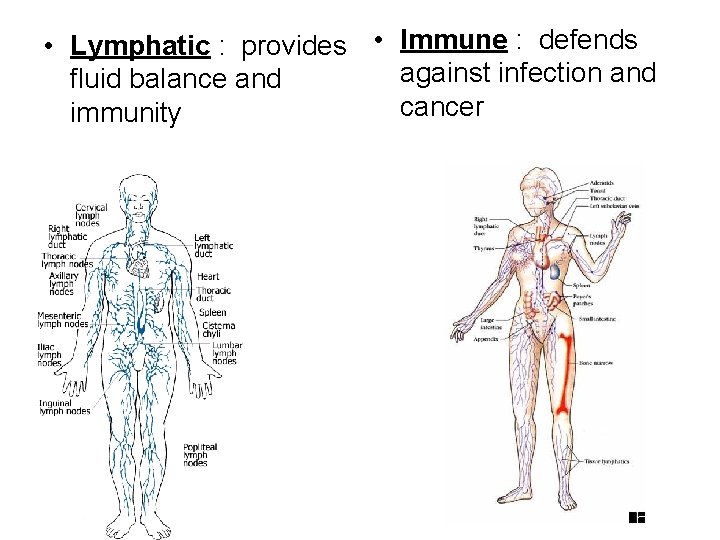
• Lymphatic : provides • Immune : defends against infection and fluid balance and cancer immunity
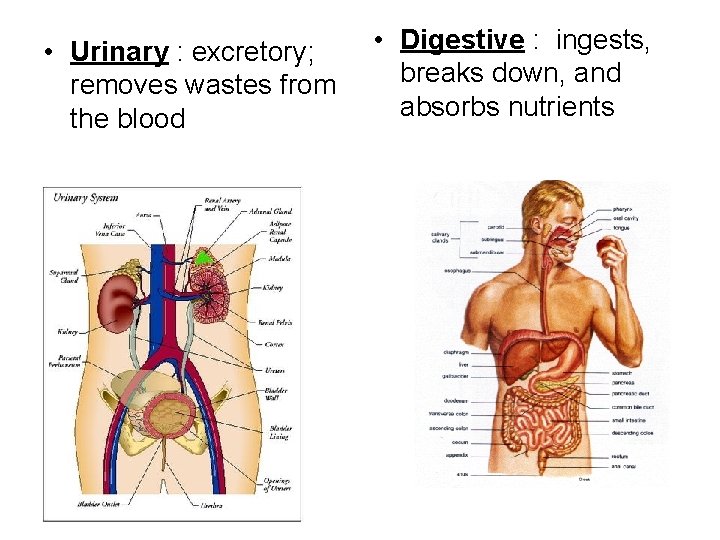
• Urinary : excretory; removes wastes from the blood • Digestive : ingests, breaks down, and absorbs nutrients
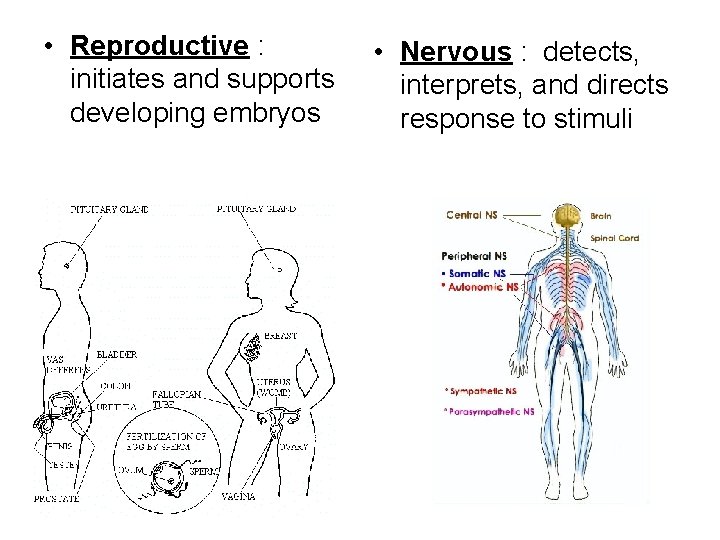
• Reproductive : initiates and supports developing embryos • Nervous : detects, interprets, and directs response to stimuli
E. Animals regulate their internal environment • Regulating both internal & external • An animals internal environment is the interstitial fluid that surrounds the cells. – Internal salt and water balance and blood temperature must be kept stable • Homeostasis: maintaining a “steady state” internal environment – There always slight fluctuations
• Homeostasis depends on negative feedback • Negative feedback: a change in a variable triggers mechanisms that reverse that change – Analogous to a thermostat that controls a furnace – Many animal control centers are located in the hypothalamus of the brain – Shivering and sweating are ways of controlling human body temperature