
Chapter 28 Fishes and Amphibians Section 1 Fishes
Chapter 28 Fishes and Amphibians Section 1: Fishes Section 2: Diversity of Today’s Fishes Section 3: Amphibians Click on a lesson name to select.
Chapter 28 Fishes and Amphibians 28. 1 Fishes Characteristics of Vertebrates § Vertebrates have a vertebral column and specialized cells that develop from the nerve cord. § Classes of vertebrates include fishes, amphibians, reptiles, birds, and mammals.
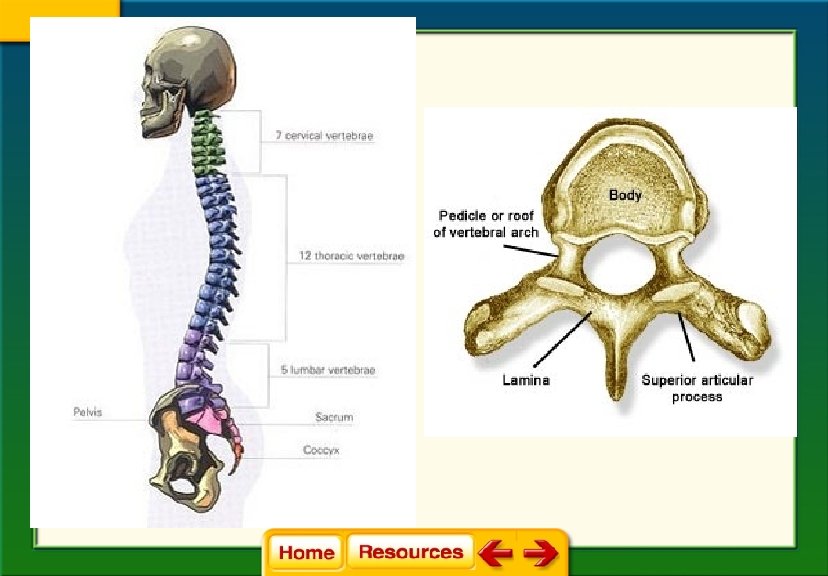

Vertebrates • More than 99% of Chordates are Vertebrates • Skeletons are composed of hard bone that left behind a great fossil record • A vertebrate animal is…. – In the phylum Chordata – Subphylum Vertebrata – posses a notochord only during early stages of development • Notochord is replaced by a vertebral column (spine)
Vertebrate Groups • • Jawless fishes (lamphreys) Cartilaginous Fishes (Sharks/Rays) Bony Fishes (sea horse) Amphibians (frogs/salamanders) Reptiles (snakes/crocs/turtles) Birds (finches/hawks/flamingos) Mammals ( all mammals that have hair/fur, nourish young with milk)
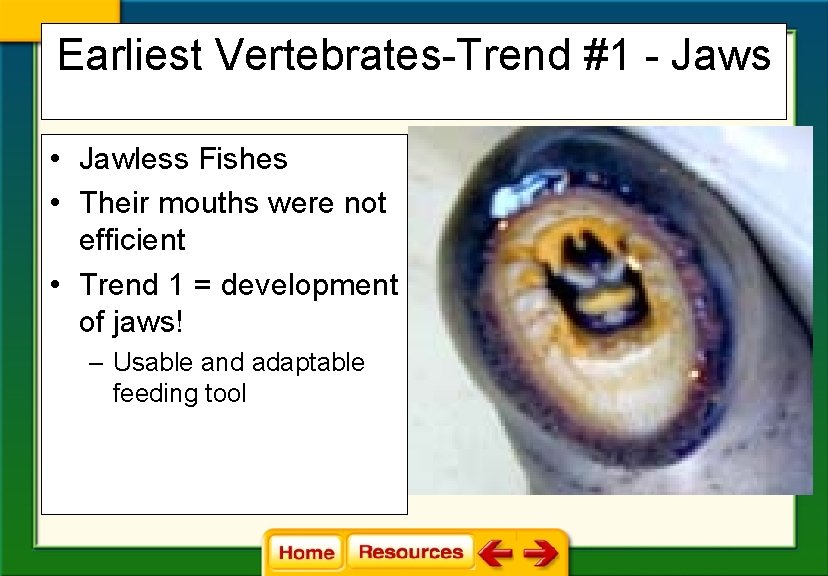
Earliest Vertebrates-Trend #1 - Jaws • Jawless Fishes • Their mouths were not efficient • Trend 1 = development of jaws! – Usable and adaptable feeding tool
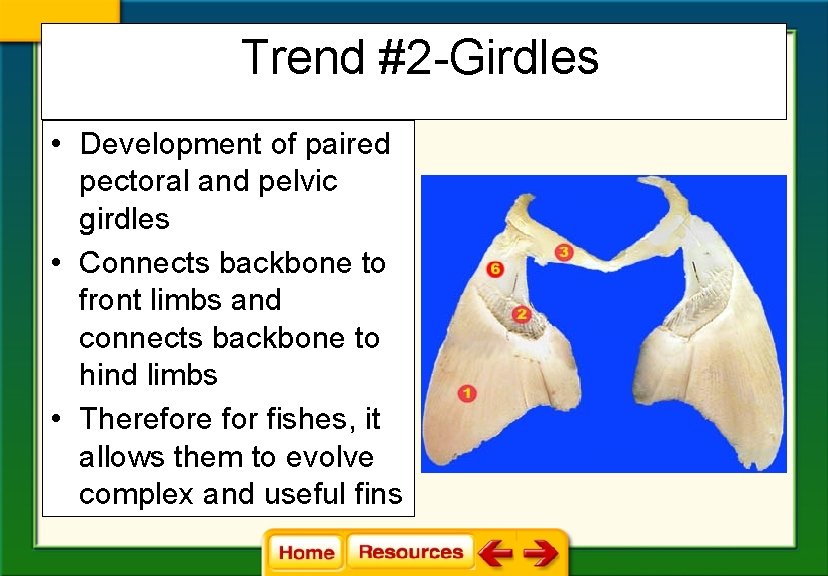
Trend #2 -Girdles • Development of paired pectoral and pelvic girdles • Connects backbone to front limbs and connects backbone to hind limbs • Therefore for fishes, it allows them to evolve complex and useful fins
Trend #3 - Bones • The Development of Bones!! • Bones of fish eventually developed the ability to support structures such as arms, legs that support weight, bones in wings etc. • Having 4 limbs = tetrapods • VIDEO – Lobe-Finned Fish

Chapter 28 Fishes and Amphibians 28. 1 Fishes Vertebral Column § A vertebral column made of cartilage or bone surrounds and protects the dorsal nerve cord. § The vertebral column functions as a strong, flexible rod that muscles can pull against during swimming or running.
Chapter 28 Fishes and Amphibians 28. 1 Fishes Neural Crest § A neural crest is a group of cells that develop from the nerve cord in vertebrates. § Portions of the brain and skull, certain sense organs, and some nerve fibers are some of the structures that develop from the neural crest.

Chapter 28 Fishes and Amphibians 28. 1 Fishes Characteristics of Fishes § Fishes are found in a variety of habitats including seas, lakes, ponds, streams, and marshes. § Most fishes have vertebral columns, jaws, paired fins, scales, gills, and single-loop blood circulation. Self- inflating fish Bizarre fish
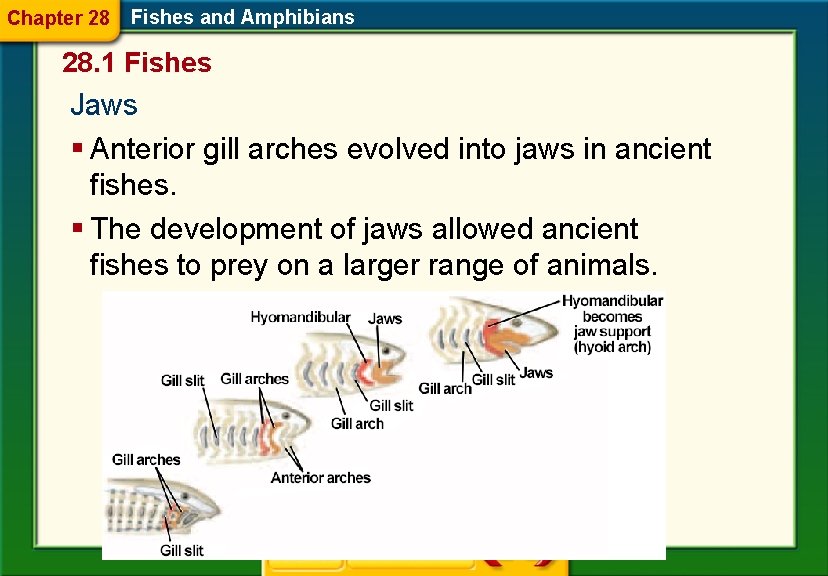
Chapter 28 Fishes and Amphibians 28. 1 Fishes Jaws § Anterior gill arches evolved into jaws in ancient fishes. § The development of jaws allowed ancient fishes to prey on a larger range of animals.

Chapter 28 Fishes and Amphibians 28. 1 Fishes Paired Fins § A fin is a paddle-shaped structure on a fish or other aquatic animal that is used for balance, steering, and propulsion. § Paired fins reduce the chance of rolling to the side and allow for better steering during swimming.
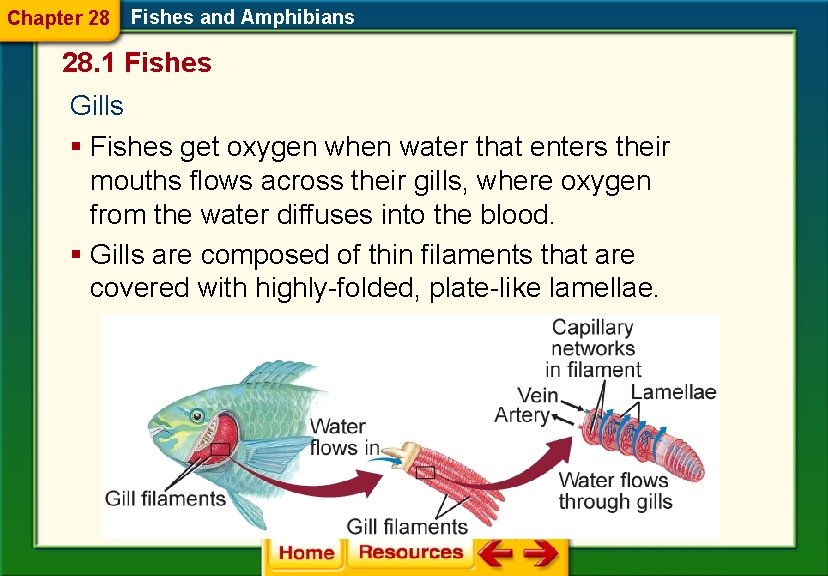
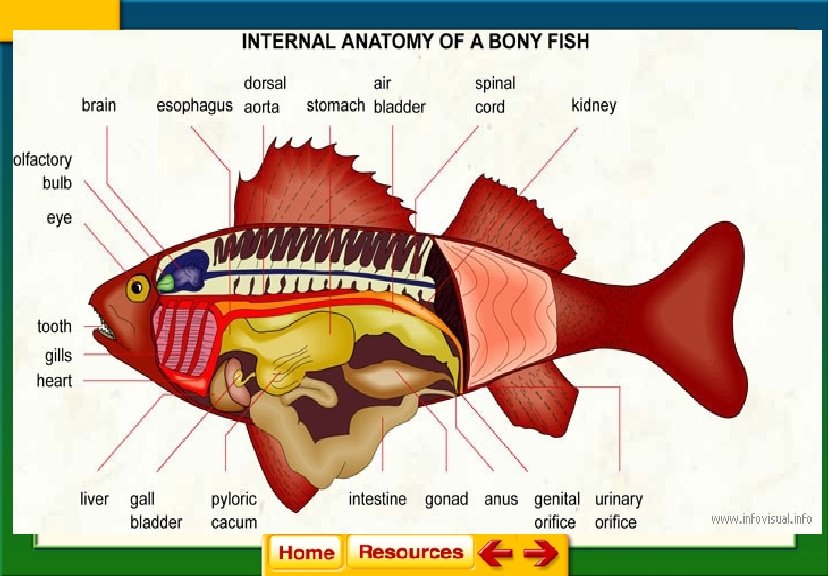
Chapter 28 Fishes and Amphibians 28. 1 Fishes Gills § Fishes get oxygen when water that enters their mouths flows across their gills, where oxygen from the water diffuses into the blood. § Gills are composed of thin filaments that are covered with highly-folded, plate-like lamellae.
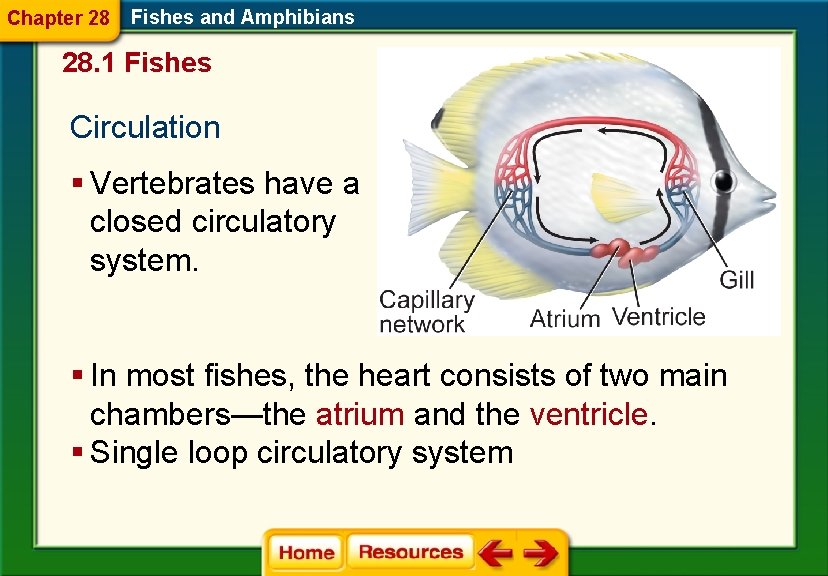
Chapter 28 Fishes and Amphibians 28. 1 Fishes Circulation § Vertebrates have a closed circulatory system. § In most fishes, the heart consists of two main chambers—the atrium and the ventricle. § Single loop circulatory system

Chapter 28 Fishes and Amphibians 28. 1 Fishes Feeding and Digestion § Most fishes swallow their food whole, passing it through a tube called the esophagus to the stomach, where digestion begins.
Chapter 28 Fishes and Amphibians 28. 1 Fishes Excretion § Cellular wastes are filtered from fishes’ blood by the kidneys. § A nephron § filtering unit within the kidney that helps maintain the salt and water balance of the body § removes cellular waste products from the blood.
• Excretion – kidneys (gills) • filter nitrogenous wastes • helps to control water balance • fresh water fish – pumps out large amounts of dilute urine • salt water fish – minimal urine output
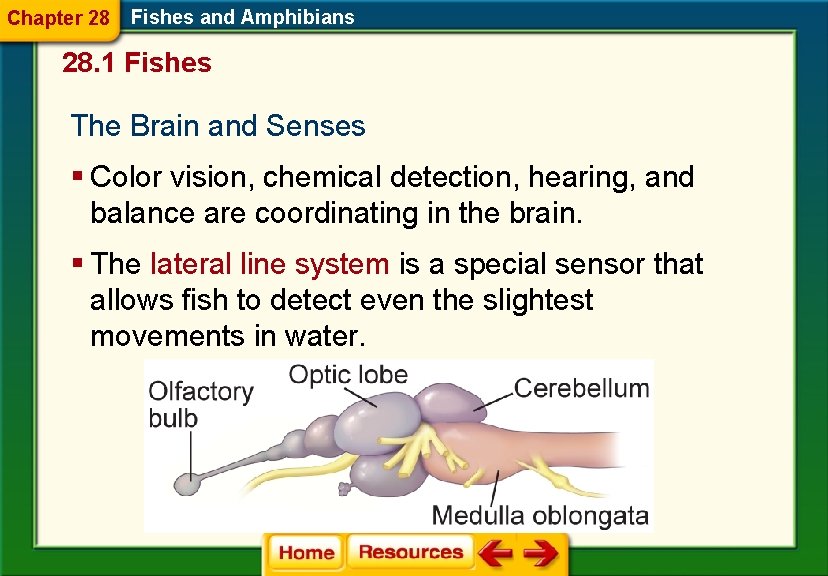
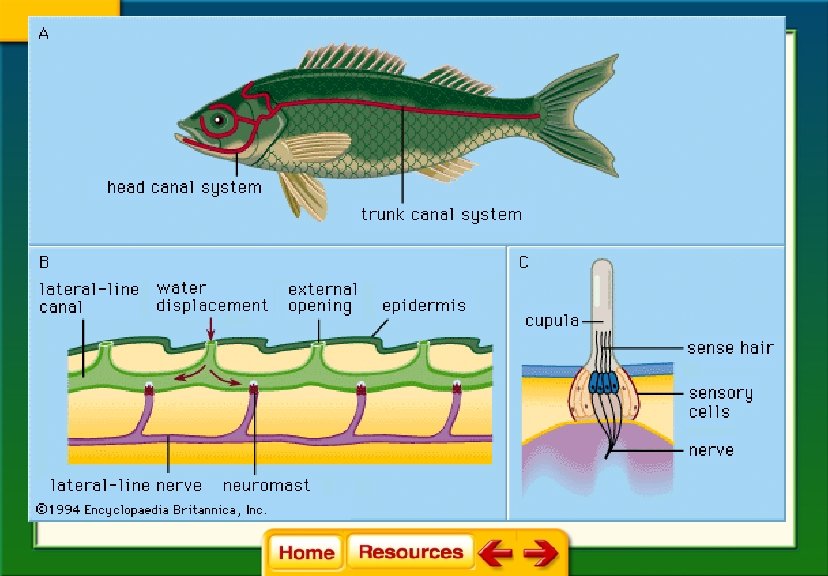
Chapter 28 Fishes and Amphibians 28. 1 Fishes The Brain and Senses § Color vision, chemical detection, hearing, and balance are coordinating in the brain. § The lateral line system is a special sensor that allows fish to detect even the slightest movements in water.

Chapter 28 Fishes and Amphibians 28. 1 Fishes Reproduction § The majority of fishes reproduce through external fertilization. § Male and female fishes release their gametes near each other in the water in a process called spawning.
Chapter 28 Fishes and Amphibians 28. 1 Fishes Movement § Fishes are well adapted to swimming in the water. § Streamlined shape § Paired fins § Swim bladder § Fishes move through the water by contracting muscle groups on either side of their bodies.

Chapter 28 Fishes and Amphibians 28. 2 Diversity of Today’s Fishes Classes of Fishes § Scientists have grouped fishes into three classes based on their body structure. § Jawless fishes § Cartilaginous fishes § Bony fishes

Chapter 28 Fishes and Amphibians 28. 2 Diversity of Today’s Fishes Jawless Fishes § Hagfish feed on soft-bodied invertebrates and dead or dying fish on the sea floor. § Lampreys are parasites that feed by attaching themselves to other fishes. Lamprey
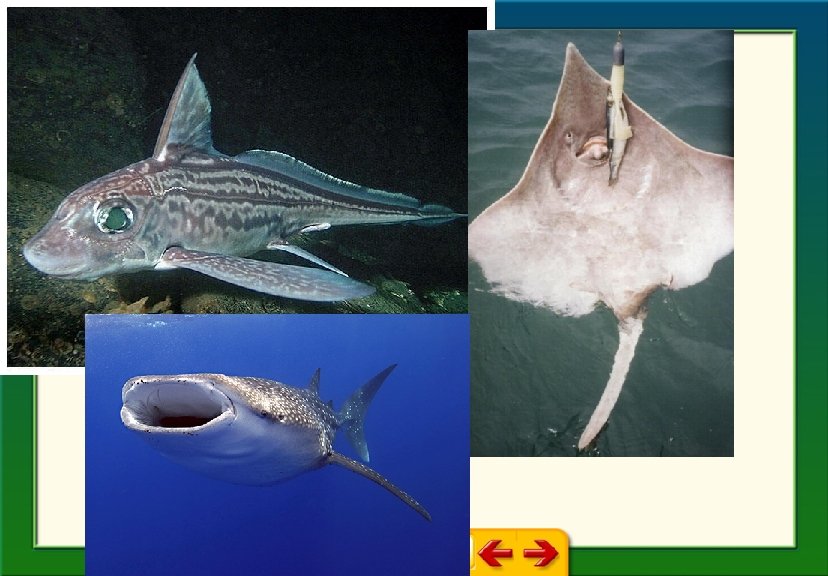
Chapter 28 Fishes and Amphibians 28. 2 Diversity of Today’s Fishes Cartilaginous Fishes § All cartilaginous fishes have skeletons made of cartilage. § The flexible skeleton, rows of sharp teeth, a streamlined body, and placoid scales make sharks one of the top predators in the sea. § Skates and rays have flattened bodies that are adapted for living on the ocean floor.
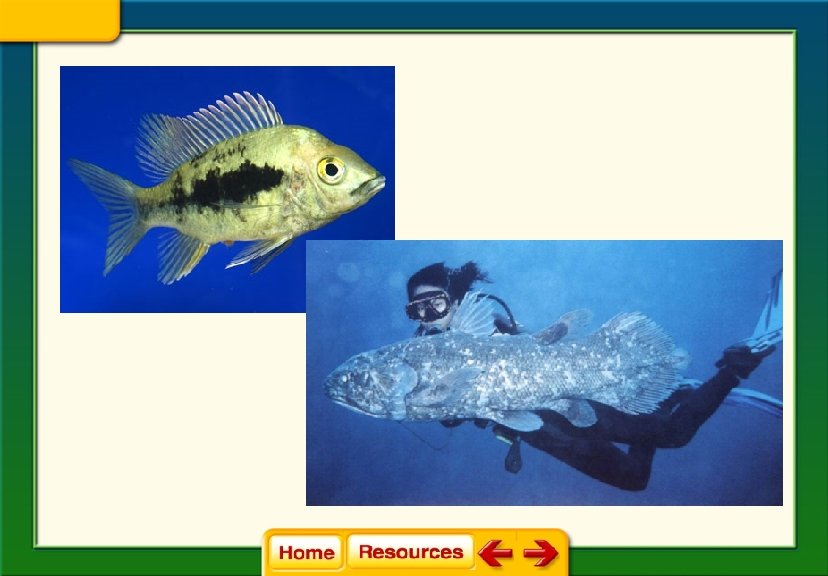
Chapter 28 Fishes and Amphibians 28. 2 Diversity of Today’s Fishes Bony Fishes § There are two groups of bony fishes: the rayfinned fishes and the lobe-finned fishes. § Thin, spinelike rays support the fins of ray-finned fishes. § Lobe-finned fishes have muscular lobes and joints similar to those of land vertebrates.
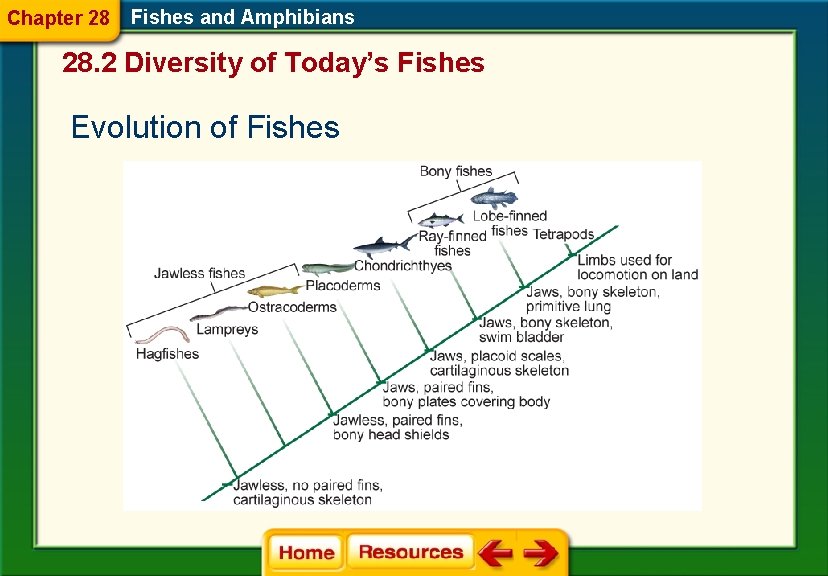
Chapter 28 Fishes and Amphibians 28. 2 Diversity of Today’s Fishes Evolution of Fishes

Chapter 28 Fishes and Amphibians

• National Geographic – Water Frog
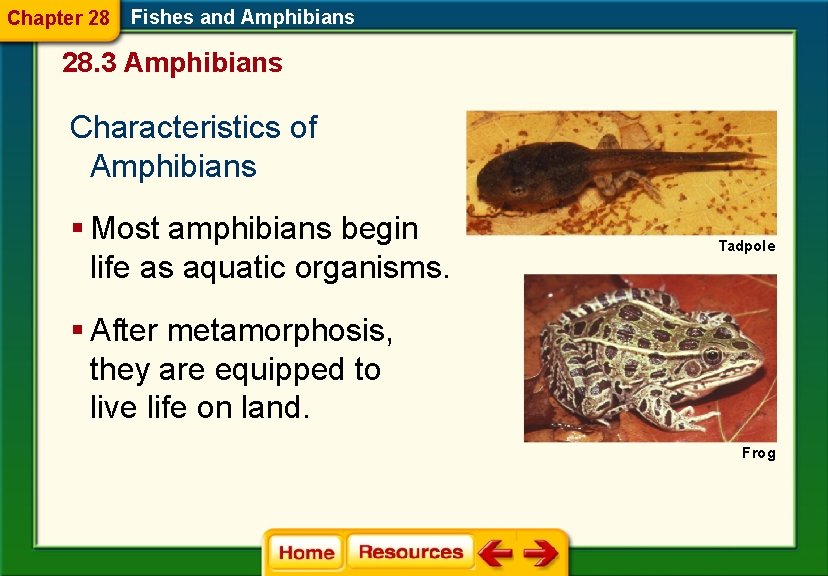
Chapter 28 Fishes and Amphibians 28. 3 Amphibians Characteristics of Amphibians § Most amphibians begin life as aquatic organisms. Tadpole § After metamorphosis, they are equipped to live life on land. Frog
Chapter 28 Fishes and Amphibians 28. 3 Amphibians Feeding and Digestion § Most frog larvae are herbivores, whereas salamander larvae are carnivores. § As adults, their diets are similar as both groups become predators. § The digestive system of an amphibian is very similar to that of a fish.
Chapter 28 Fishes and Amphibians 28. 3 Amphibians Excretion § Amphibians filter wastes from the blood through their kidneys, and excrete either ammonia or urea as the waste product. § Ammonia is excreted by amphibians that live in the water. § Urea is stored in the urinary bladder until it is eliminated from the body through the cloaca.
Chapter 28 Fishes and Amphibians 28. 3 Amphibians Respiration § As larvae, most amphibians exchange gases through their skin and gills. § As adults, most breathe through lungs, their thin, moist skin, and cavities in the mouth.
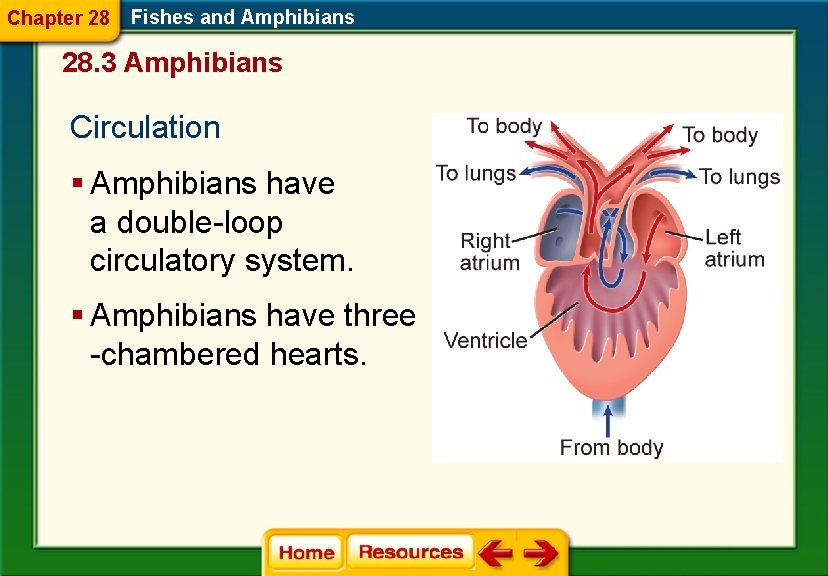
Chapter 28 Fishes and Amphibians 28. 3 Amphibians Circulation § Amphibians have a double-loop circulatory system. § Amphibians have three -chambered hearts.
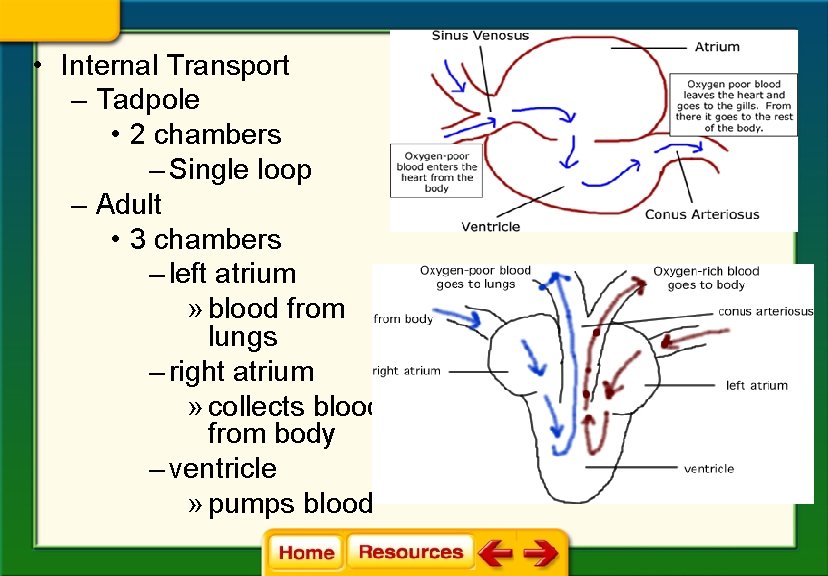
• Internal Transport – Tadpole • 2 chambers – Single loop – Adult • 3 chambers – left atrium » blood from lungs – right atrium » collects blood from body – ventricle » pumps blood

• Double loop system – 1 st loop • oxygen poor blood is carried to lungs • brings back oxygen rich blood to heart – 2 nd loop • oxygen rich blood is transported to rest of body
Chapter 28 Fishes and Amphibians 28. 3 Amphibians The Brain and Senses § Amphibians use sight to locate and capture prey that fly at high speeds and to escape predators. § Frogs have nictitating membranes that protect their eyes. § Frogs use their tympanic membrane to hear highpitched sounds and to amplify sounds from the vocal cords.
Chapter 28 Fishes and Amphibians 28. 3 Amphibians Reproduction and Development § In most amphibians, fertilization is external and the shell-less eggs must be laid and fertilized in water. § Tadpoles hatch from the egg and undergo metamorphosis from a fishlike animal to an air -breathing one. § virtual frog dissection
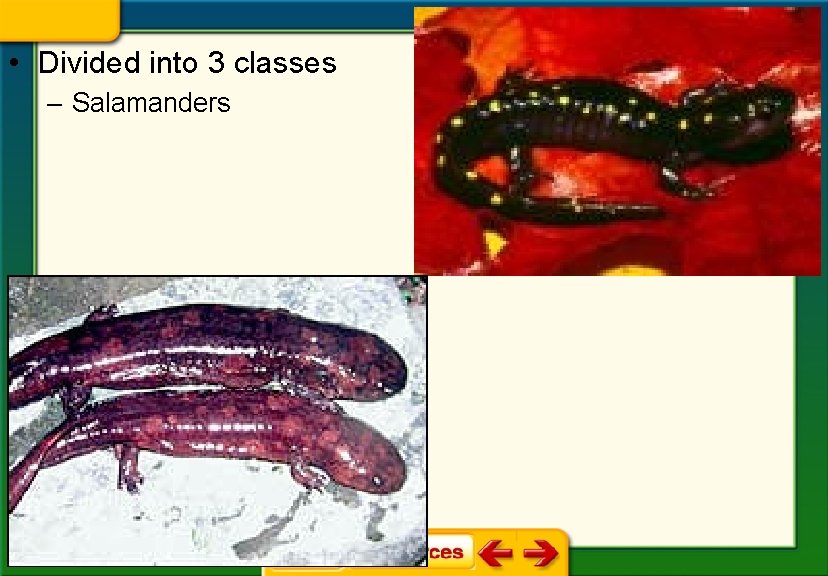
• Divided into 3 classes – Salamanders
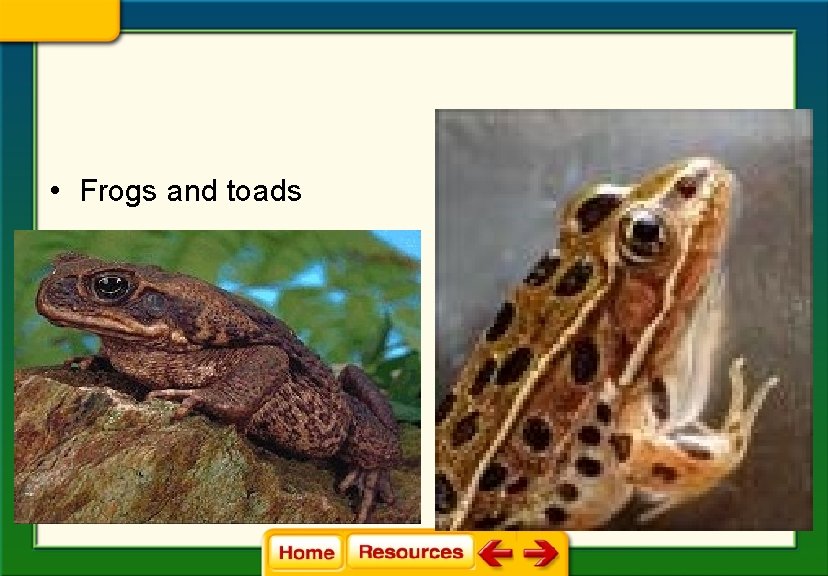
• Frogs and toads
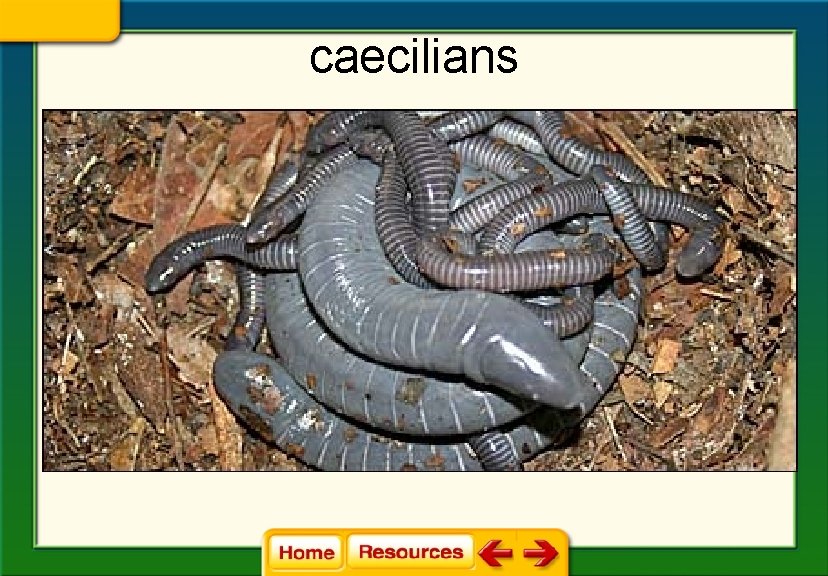
caecilians
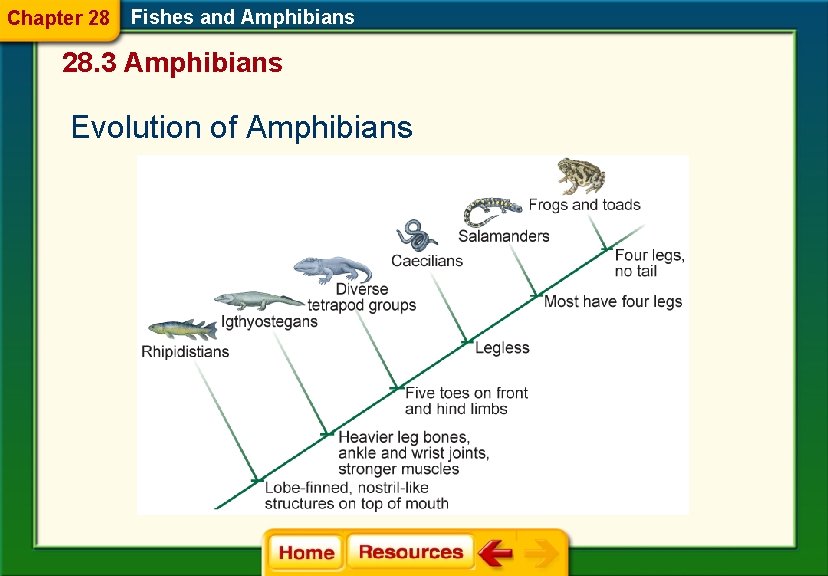
Chapter 28 Fishes and Amphibians 28. 3 Amphibians Evolution of Amphibians
- Slides: 46