
CHAPTER 27 Order Plecoptera Stoneflies Revised with extensive
- Slides: 5
CHAPTER 27 Order Plecoptera (Stoneflies) (Revised with extensive contributions from Ed De. Walt, Illinois Natural History Survey) Introduction to Insect Biology and Diversity, 3/e James B. Whitfield / Alexander H. Purcell III Copyright © 2012 by Oxford University Press, Inc.
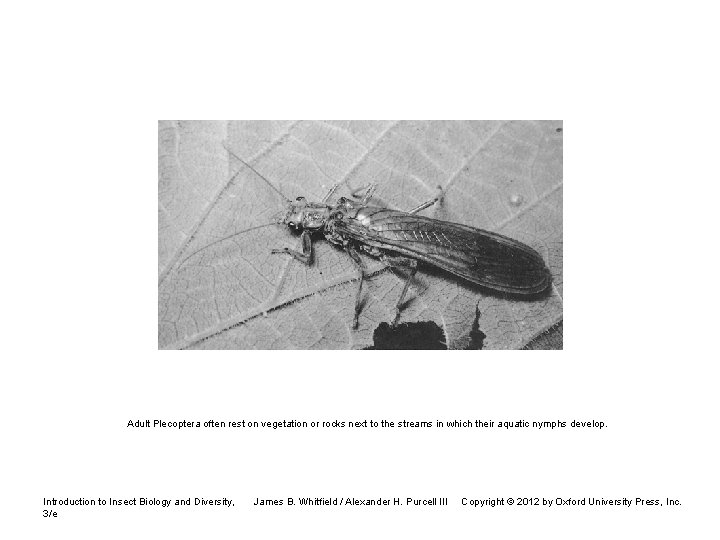
Adult Plecoptera often rest on vegetation or rocks next to the streams in which their aquatic nymphs develop. Introduction to Insect Biology and Diversity, 3/e James B. Whitfield / Alexander H. Purcell III Copyright © 2012 by Oxford University Press, Inc.
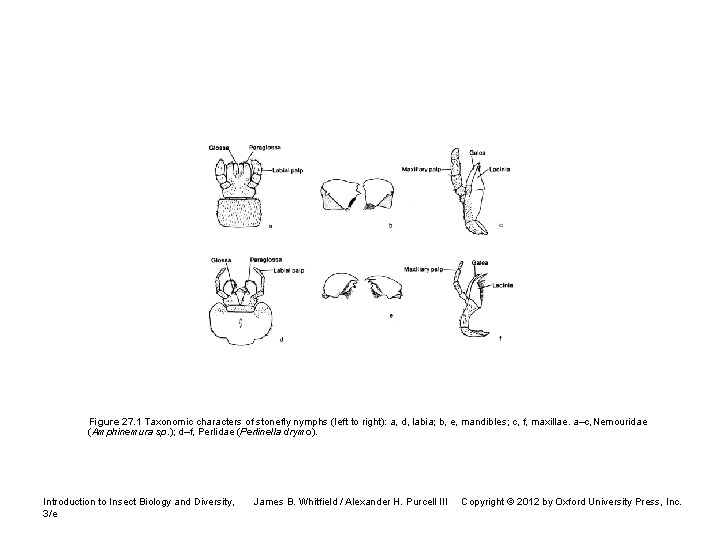
Figure 27. 1 Taxonomic characters of stonefly nymphs (left to right): a, d, labia; b, e, mandibles; c, f, maxillae. a–c, Nemouridae (Amphinemura sp. ); d–f, Perlidae (Perlinella drymo). Introduction to Insect Biology and Diversity, 3/e James B. Whitfield / Alexander H. Purcell III Copyright © 2012 by Oxford University Press, Inc.
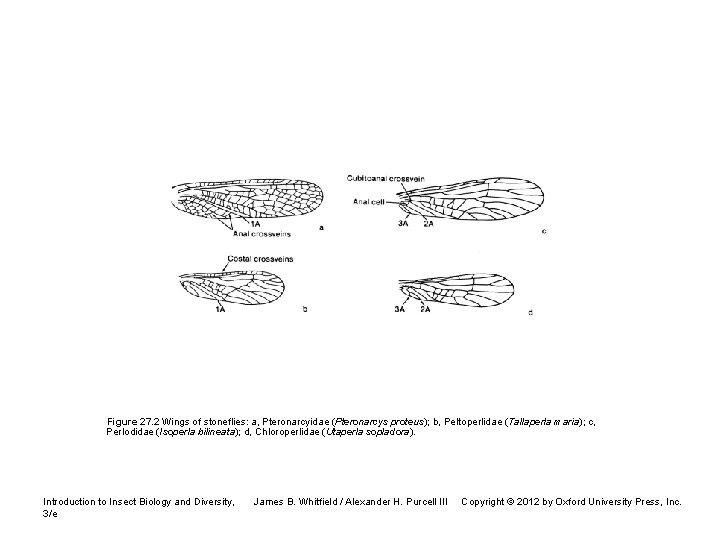
Figure 27. 2 Wings of stoneflies: a, Pteronarcyidae (Pteronarcys proteus); b, Peltoperlidae (Tallaperla maria); c, Perlodidae (Isoperla bilineata); d, Chloroperlidae (Utaperla sopladora). Introduction to Insect Biology and Diversity, 3/e James B. Whitfield / Alexander H. Purcell III Copyright © 2012 by Oxford University Press, Inc.
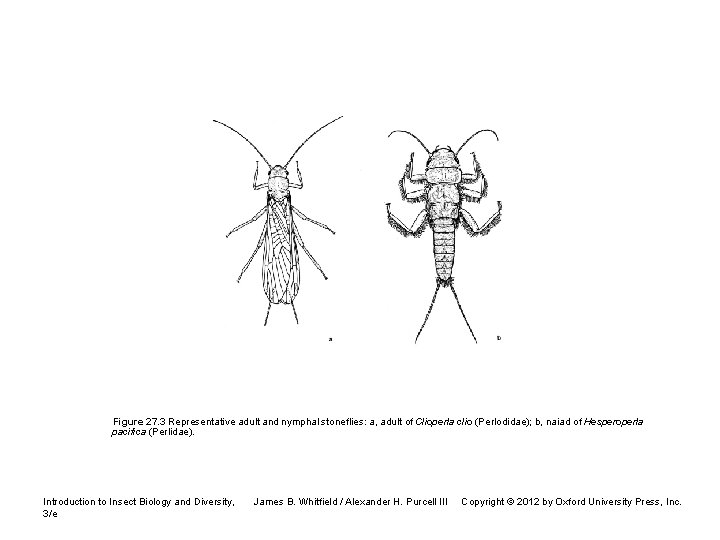
Figure 27. 3 Representative adult and nymphal stoneflies: a, adult of Clioperla clio (Perlodidae); b, naiad of Hesperoperla pacifica (Perlidae). Introduction to Insect Biology and Diversity, 3/e James B. Whitfield / Alexander H. Purcell III Copyright © 2012 by Oxford University Press, Inc.