
Chapter 27 INTRODUCTION TO ANIMAL DIVERSITY General Biology
Chapter 27 INTRODUCTION TO ANIMAL DIVERSITY General Biology II BSC 2011 Download for free at http: //cnx. org/contents/6621 b 052 -31 d 0 -4702 -b 468 -3895 bae 7 ce 36@1. 7.
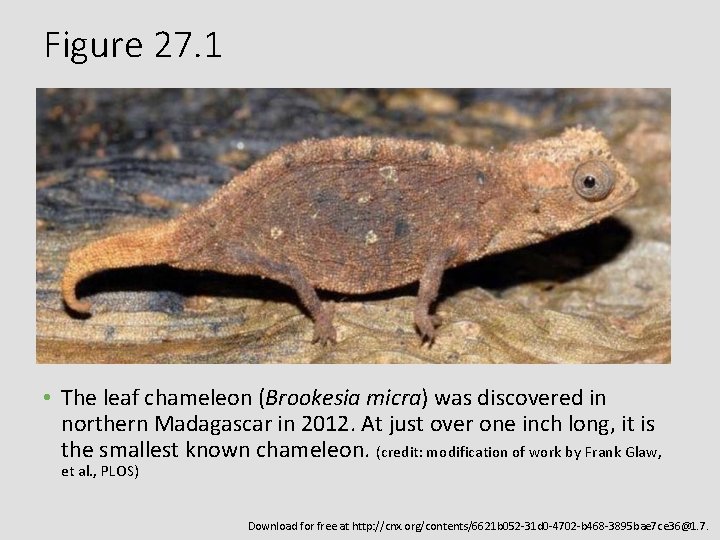
Figure 27. 1 • The leaf chameleon (Brookesia micra) was discovered in northern Madagascar in 2012. At just over one inch long, it is the smallest known chameleon. (credit: modification of work by Frank Glaw, et al. , PLOS) Download for free at http: //cnx. org/contents/6621 b 052 -31 d 0 -4702 -b 468 -3895 bae 7 ce 36@1. 7.
27. 1 | Features of the Animal Kingdom • Multicellularity – many have complex bodies • Most have complex tissue structure • Heterotrophy • obtain energy and organic molecules by ingesting other organisms • Active movement • Move more rapidly and in more complex ways • Diversity of form and size • Range in size from microscopic to enormous
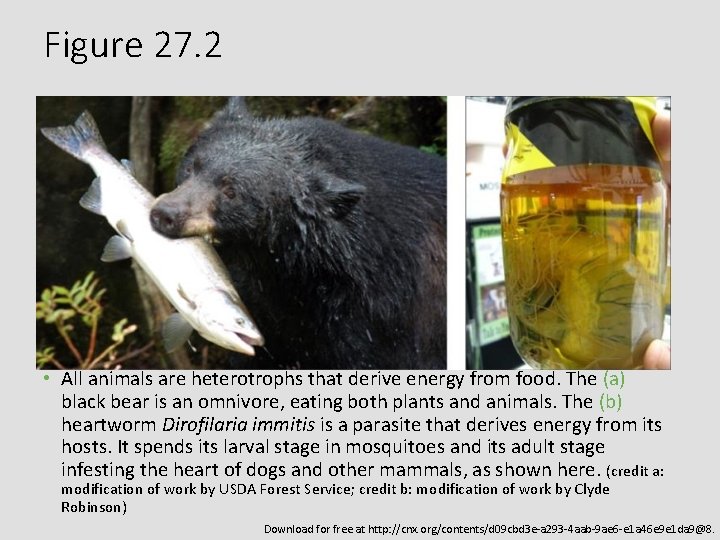
Figure 27. 2 • All animals are heterotrophs that derive energy from food. The (a) black bear is an omnivore, eating both plants and animals. The (b) heartworm Dirofilaria immitis is a parasite that derives energy from its hosts. It spends its larval stage in mosquitoes and its adult stage infesting the heart of dogs and other mammals, as shown here. (credit a: modification of work by USDA Forest Service; credit b: modification of work by Clyde Robinson) Download for free at http: //cnx. org/contents/d 09 cbd 3 e-a 293 -4 aab-9 ae 6 -e 1 a 46 e 9 e 1 da 9@8.
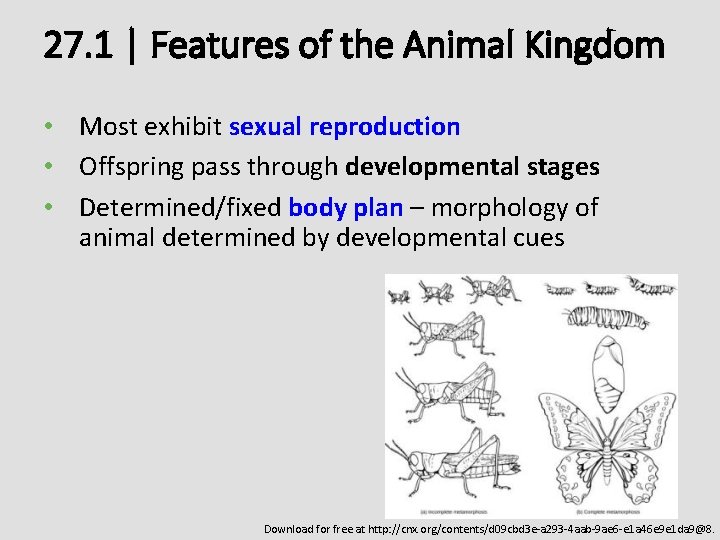
27. 1 | Features of the Animal Kingdom • Most exhibit sexual reproduction • Offspring pass through developmental stages • Determined/fixed body plan – morphology of animal determined by developmental cues Download for free at http: //cnx. org/contents/d 09 cbd 3 e-a 293 -4 aab-9 ae 6 -e 1 a 46 e 9 e 1 da 9@8.
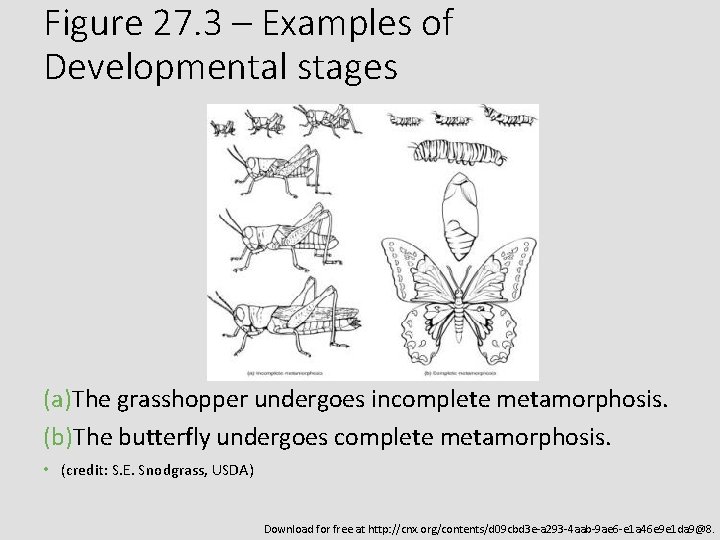
Figure 27. 3 – Examples of Developmental stages (a)The grasshopper undergoes incomplete metamorphosis. (b)The butterfly undergoes complete metamorphosis. • (credit: S. E. Snodgrass, USDA) Download for free at http: //cnx. org/contents/d 09 cbd 3 e-a 293 -4 aab-9 ae 6 -e 1 a 46 e 9 e 1 da 9@8.

Complex Tissue Structure • Lack cell walls • Unique intracellular communication (gap junctions) • Connective tissues – cells embedded in an extracellular matrix (ex: bone, cartilage) • Epithelial tissues – covers, lines, protect and secrete • Nervous tissue – coordinate movement • Muscle tissue – power locomotion
Animal Reproduction and Development Most animals are diploids (2 n) • Somatic cells are diploid, gametes are haploid Most animals reproduce sexually • • Haploid egg and sperm unite (fertilization or syngamy) diploid zygote Distinguishes them from fungi, many protists and prokaryotes
Animal Reproduction and Development Most animals reproduce sexually, but there are exceptions • • Several groups have an asexual phase of life cycle (Ex: cnidarians, flatworms) social insect males often haploid Budding and fragmentation – hydra, sea anemones Parthenogenesis – unfertilized eggs males • • Some vertebrates and insects Haplodiploidy Potential buildup of deleterious mutatons Often not required to find mates
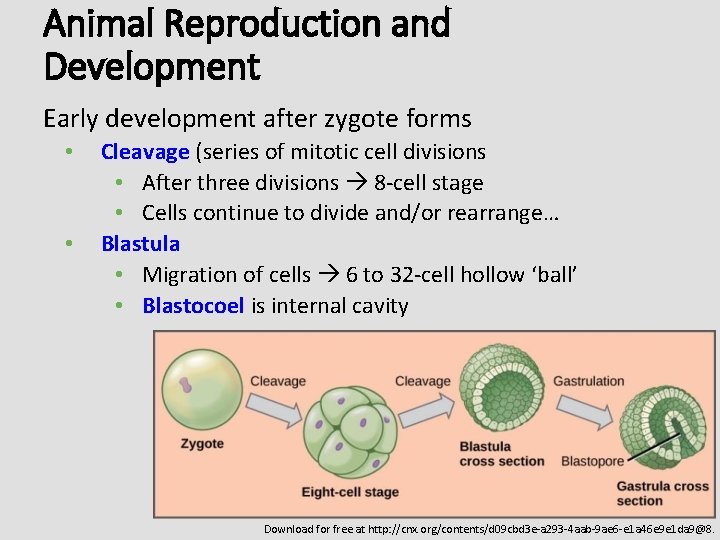
Animal Reproduction and Development Early development after zygote forms • • Cleavage (series of mitotic cell divisions • After three divisions 8 -cell stage • Cells continue to divide and/or rearrange… Blastula • Migration of cells 6 to 32 -cell hollow ‘ball’ • Blastocoel is internal cavity Download for free at http: //cnx. org/contents/d 09 cbd 3 e-a 293 -4 aab-9 ae 6 -e 1 a 46 e 9 e 1 da 9@8.
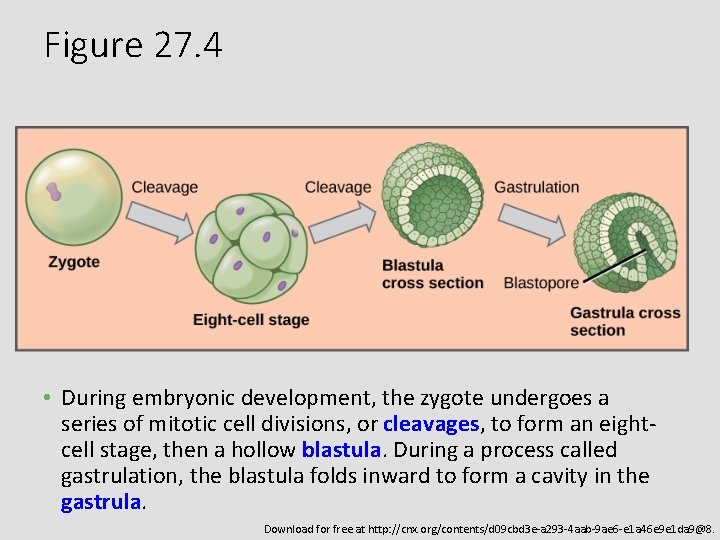
Figure 27. 4 • During embryonic development, the zygote undergoes a series of mitotic cell divisions, or cleavages, to form an eightcell stage, then a hollow blastula. During a process called gastrulation, the blastula folds inward to form a cavity in the gastrula. Download for free at http: //cnx. org/contents/d 09 cbd 3 e-a 293 -4 aab-9 ae 6 -e 1 a 46 e 9 e 1 da 9@8.
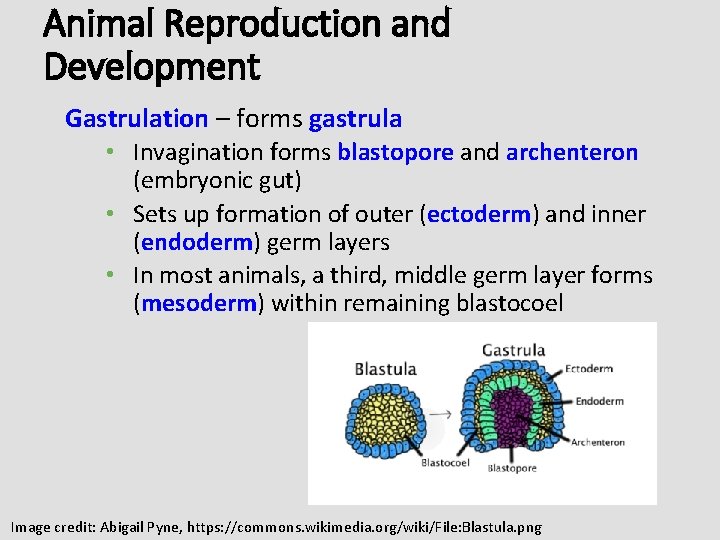
Animal Reproduction and Development Gastrulation – forms gastrula • Invagination forms blastopore and archenteron (embryonic gut) • Sets up formation of outer (ectoderm) and inner (endoderm) germ layers • In most animals, a third, middle germ layer forms (mesoderm) within remaining blastocoel Image credit: Abigail Pyne, https: //commons. wikimedia. org/wiki/File: Blastula. png
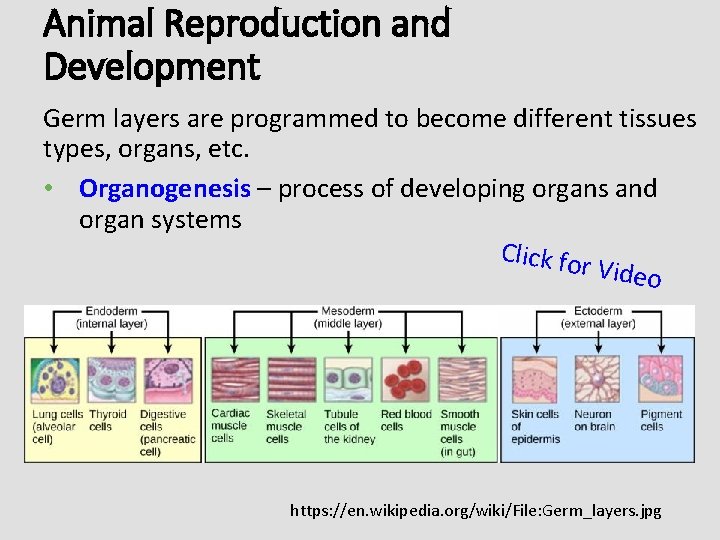
Animal Reproduction and Development Germ layers are programmed to become different tissues types, organs, etc. • Organogenesis – process of developing organs and organ systems Click fo r Video https: //en. wikipedia. org/wiki/File: Germ_layers. jpg
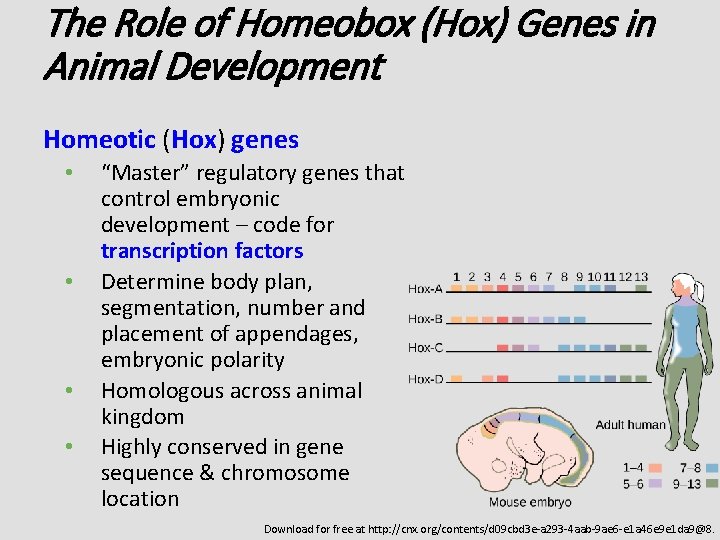
The Role of Homeobox (Hox) Genes in Animal Development Homeotic (Hox) genes • • “Master” regulatory genes that control embryonic development – code for transcription factors Determine body plan, segmentation, number and placement of appendages, embryonic polarity Homologous across animal kingdom Highly conserved in gene sequence & chromosome location Download for free at http: //cnx. org/contents/d 09 cbd 3 e-a 293 -4 aab-9 ae 6 -e 1 a 46 e 9 e 1 da 9@8.
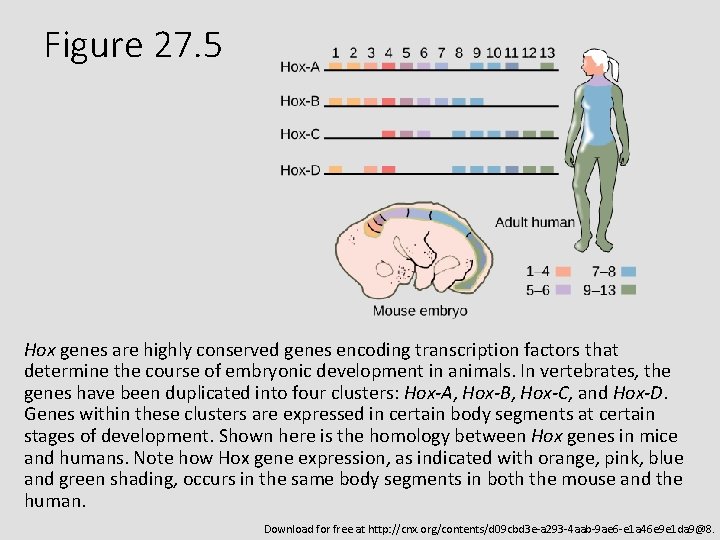
Figure 27. 5 Hox genes are highly conserved genes encoding transcription factors that determine the course of embryonic development in animals. In vertebrates, the genes have been duplicated into four clusters: Hox-A, Hox-B, Hox-C, and Hox-D. Genes within these clusters are expressed in certain body segments at certain stages of development. Shown here is the homology between Hox genes in mice and humans. Note how Hox gene expression, as indicated with orange, pink, blue and green shading, occurs in the same body segments in both the mouse and the human. Download for free at http: //cnx. org/contents/d 09 cbd 3 e-a 293 -4 aab-9 ae 6 -e 1 a 46 e 9 e 1 da 9@8.
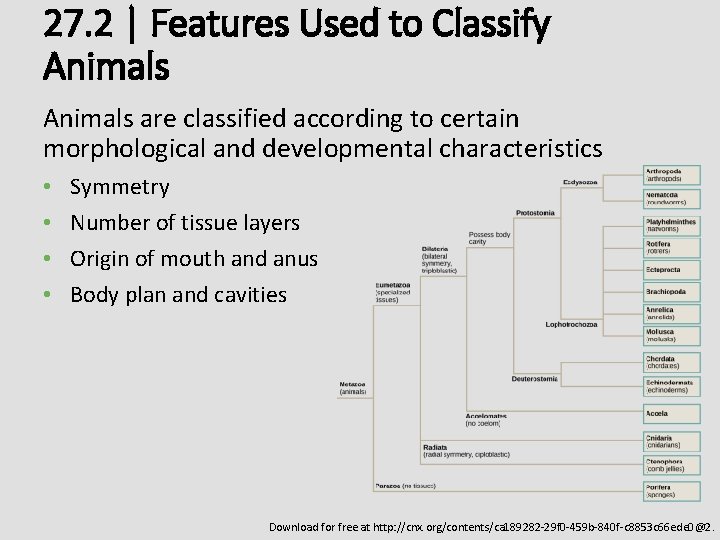
27. 2 | Features Used to Classify Animals are classified according to certain morphological and developmental characteristics • • Symmetry Number of tissue layers Origin of mouth and anus Body plan and cavities Download for free at http: //cnx. org/contents/ca 189282 -29 f 0 -459 b-840 f-c 8853 c 66 ede 0@2.
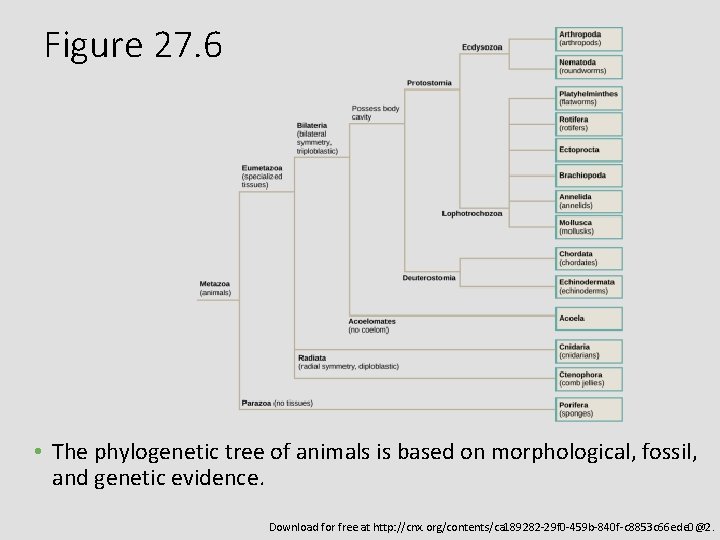
Figure 27. 6 • The phylogenetic tree of animals is based on morphological, fossil, and genetic evidence. Download for free at http: //cnx. org/contents/ca 189282 -29 f 0 -459 b-840 f-c 8853 c 66 ede 0@2.
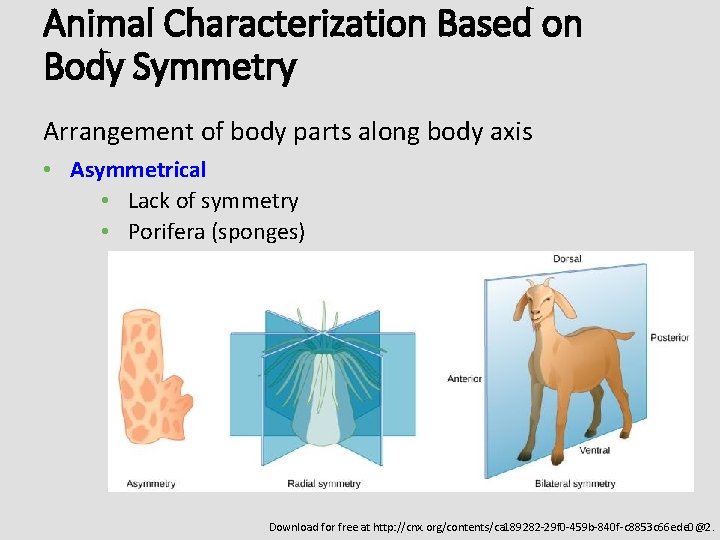
Animal Characterization Based on Body Symmetry Arrangement of body parts along body axis • Asymmetrical • Lack of symmetry • Porifera (sponges) Download for free at http: //cnx. org/contents/ca 189282 -29 f 0 -459 b-840 f-c 8853 c 66 ede 0@2.
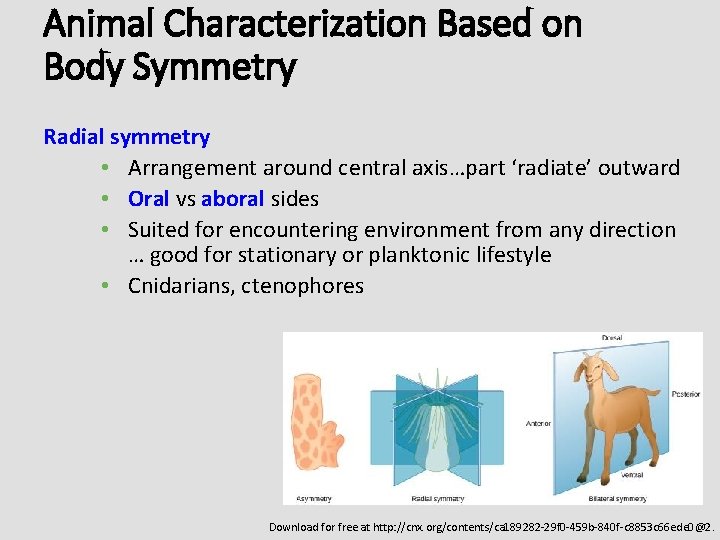
Animal Characterization Based on Body Symmetry Radial symmetry • Arrangement around central axis…part ‘radiate’ outward • Oral vs aboral sides • Suited for encountering environment from any direction … good for stationary or planktonic lifestyle • Cnidarians, ctenophores Download for free at http: //cnx. org/contents/ca 189282 -29 f 0 -459 b-840 f-c 8853 c 66 ede 0@2.
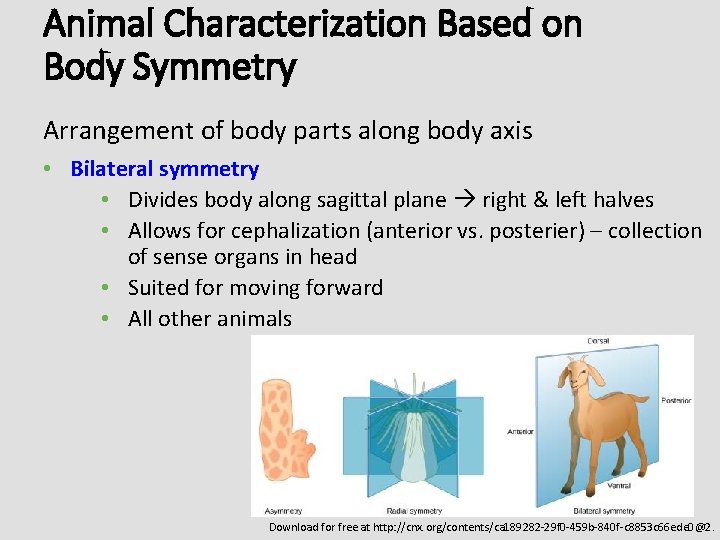
Animal Characterization Based on Body Symmetry Arrangement of body parts along body axis • Bilateral symmetry • Divides body along sagittal plane right & left halves • Allows for cephalization (anterior vs. posterier) – collection of sense organs in head • Suited for moving forward • All other animals Download for free at http: //cnx. org/contents/ca 189282 -29 f 0 -459 b-840 f-c 8853 c 66 ede 0@2.
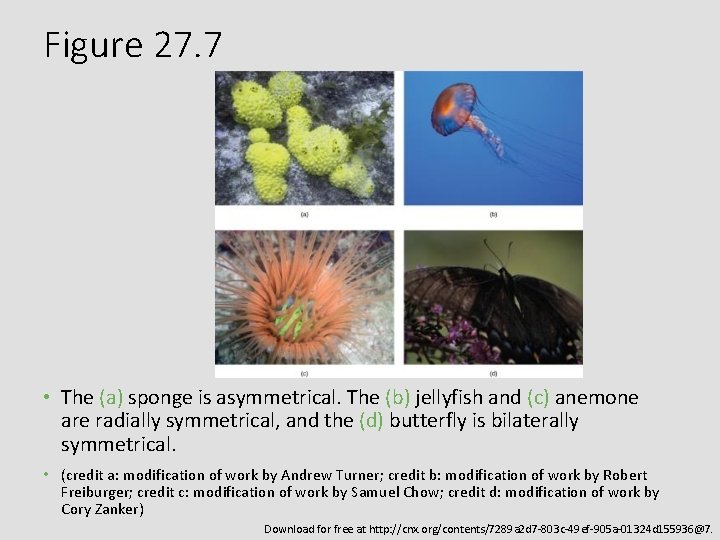
Figure 27. 7 • The (a) sponge is asymmetrical. The (b) jellyfish and (c) anemone are radially symmetrical, and the (d) butterfly is bilaterally symmetrical. • (credit a: modification of work by Andrew Turner; credit b: modification of work by Robert Freiburger; credit c: modification of work by Samuel Chow; credit d: modification of work by Cory Zanker) Download for free at http: //cnx. org/contents/7289 a 2 d 7 -803 c-49 ef-905 a-01324 d 155936@7.
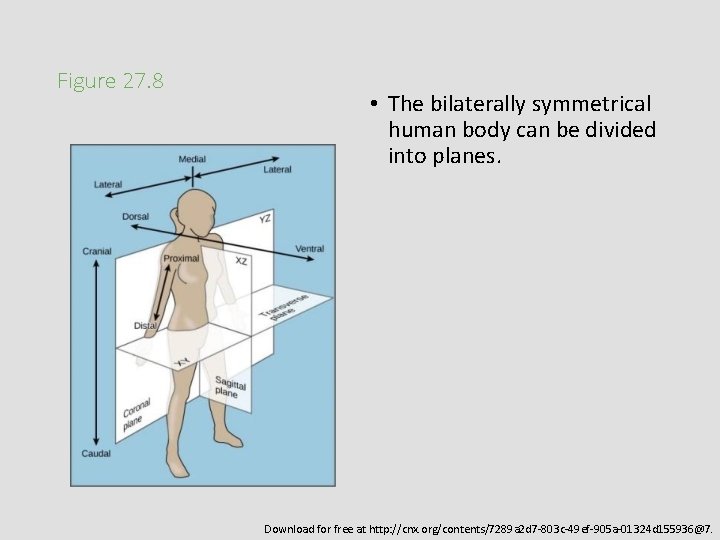
Figure 27. 8 • The bilaterally symmetrical human body can be divided into planes. Download for free at http: //cnx. org/contents/7289 a 2 d 7 -803 c-49 ef-905 a-01324 d 155936@7.
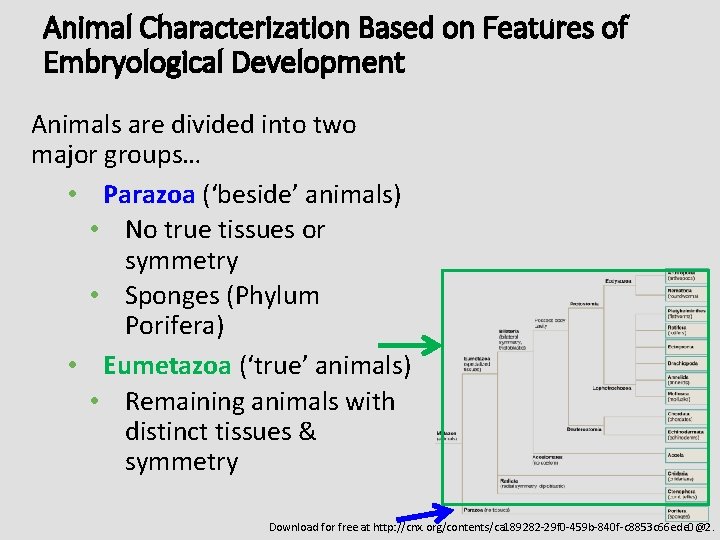
Animal Characterization Based on Features of Embryological Development Animals are divided into two major groups… • Parazoa (‘beside’ animals) • No true tissues or symmetry • Sponges (Phylum Porifera) • Eumetazoa (‘true’ animals) • Remaining animals with distinct tissues & symmetry Download for free at http: //cnx. org/contents/ca 189282 -29 f 0 -459 b-840 f-c 8853 c 66 ede 0@2.
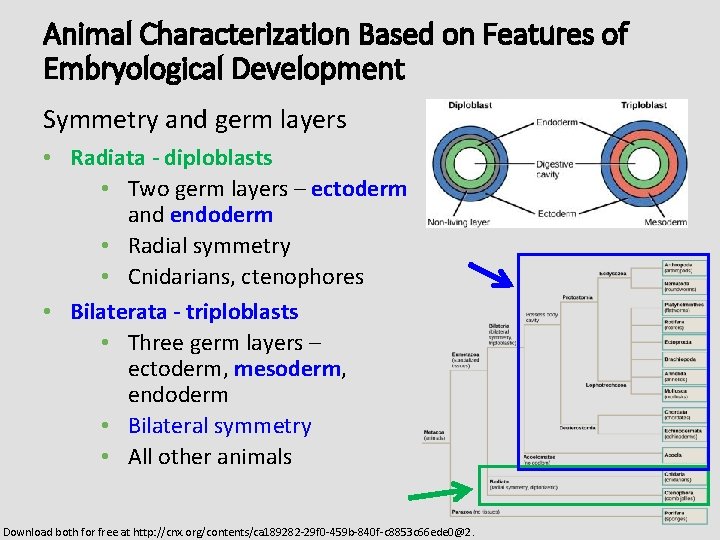
Animal Characterization Based on Features of Embryological Development Symmetry and germ layers • Radiata - diploblasts • Two germ layers – ectoderm and endoderm • Radial symmetry • Cnidarians, ctenophores • Bilaterata - triploblasts • Three germ layers – ectoderm, mesoderm, endoderm • Bilateral symmetry • All other animals Download both for free at http: //cnx. org/contents/ca 189282 -29 f 0 -459 b-840 f-c 8853 c 66 ede 0@2.
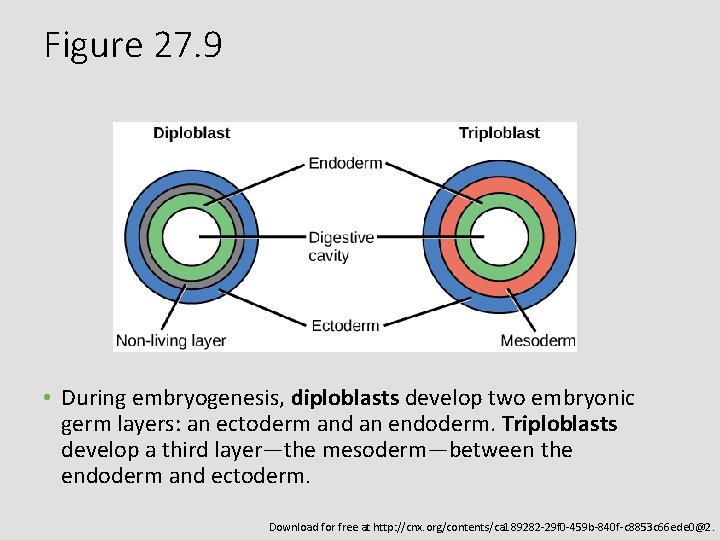
Figure 27. 9 • During embryogenesis, diploblasts develop two embryonic germ layers: an ectoderm and an endoderm. Triploblasts develop a third layer—the mesoderm—between the endoderm and ectoderm. Download for free at http: //cnx. org/contents/ca 189282 -29 f 0 -459 b-840 f-c 8853 c 66 ede 0@2.
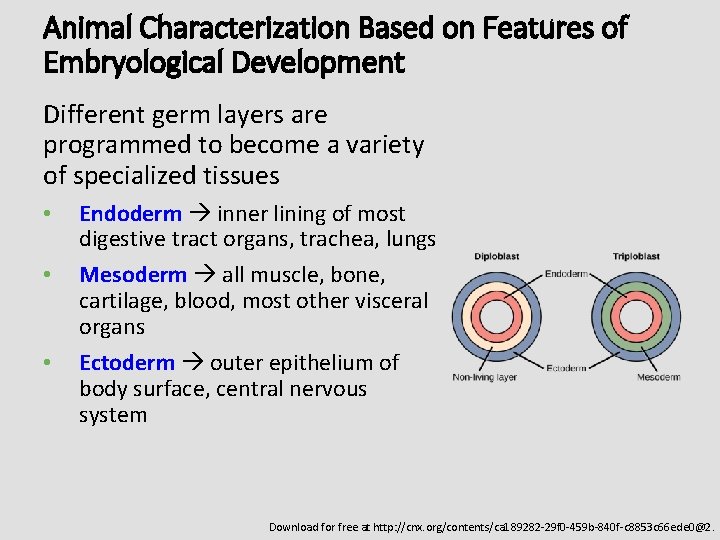
Animal Characterization Based on Features of Embryological Development Different germ layers are programmed to become a variety of specialized tissues • • • Endoderm inner lining of most digestive tract organs, trachea, lungs Mesoderm all muscle, bone, cartilage, blood, most other visceral organs Ectoderm outer epithelium of body surface, central nervous system Download for free at http: //cnx. org/contents/ca 189282 -29 f 0 -459 b-840 f-c 8853 c 66 ede 0@2.
Animal Characterization Based on Features of Embryological Development Presence/absence of a coelom (body cavity) • • Distinguishes triploblasts Coelom is derived from mesoderm early in development Lies between body wall and visceral organs Fluid-filled – shock absorption Improved mobility – hydrostatic skeleton Organs can move within coelom Acoelomates, pseudocoelomates and coelomates
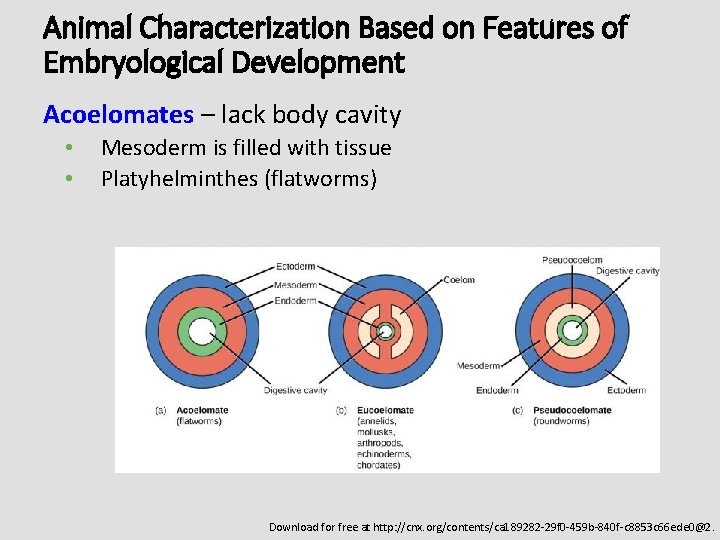
Animal Characterization Based on Features of Embryological Development Acoelomates – lack body cavity • • Mesoderm is filled with tissue Platyhelminthes (flatworms) Download for free at http: //cnx. org/contents/ca 189282 -29 f 0 -459 b-840 f-c 8853 c 66 ede 0@2.
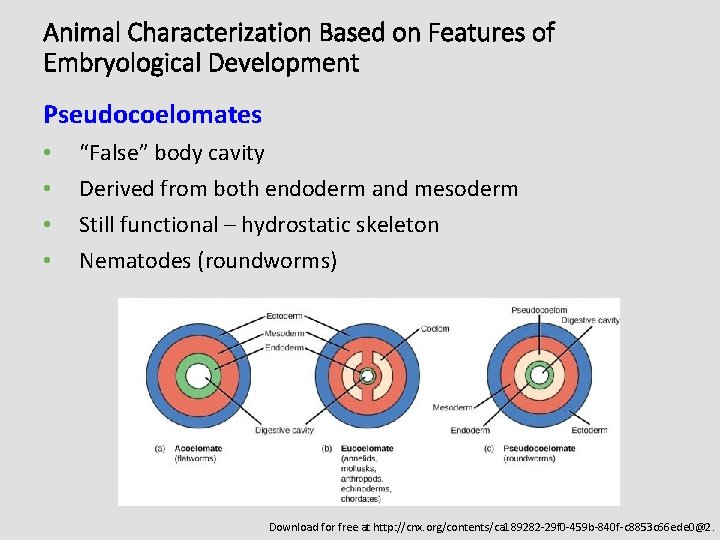
Animal Characterization Based on Features of Embryological Development Pseudocoelomates • • “False” body cavity Derived from both endoderm and mesoderm Still functional – hydrostatic skeleton Nematodes (roundworms) Download for free at http: //cnx. org/contents/ca 189282 -29 f 0 -459 b-840 f-c 8853 c 66 ede 0@2.
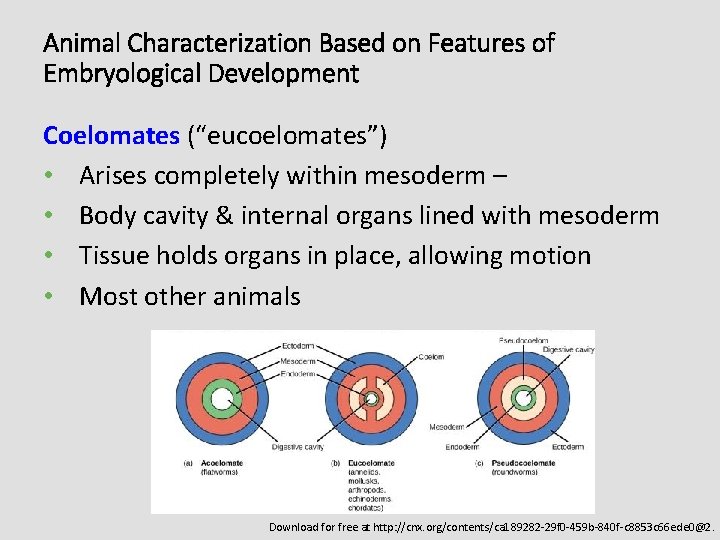
Animal Characterization Based on Features of Embryological Development Coelomates (“eucoelomates”) • Arises completely within mesoderm – • Body cavity & internal organs lined with mesoderm • Tissue holds organs in place, allowing motion • Most other animals Download for free at http: //cnx. org/contents/ca 189282 -29 f 0 -459 b-840 f-c 8853 c 66 ede 0@2.

Figure 27. 10 • Triploblasts may be (a) acoelomates, (b) eucoelomates, or (c) pseudocoelomates. Acoelomates have no body cavity. Eucoelomates have a body cavity within the mesoderm, called a coelom, which is lined with mesoderm. Pseudocoelomates also have a body cavity, but it is sandwiched between the endoderm and mesoderm. • (credit a: modification of work by Jan Derk; credit b: modification of work by NOAA; credit c: modification of work by USDA, ARS) Download for free at http: //cnx. org/contents/ca 189282 -29 f 0 -459 b-840 f-c 8853 c 66 ede 0@2.
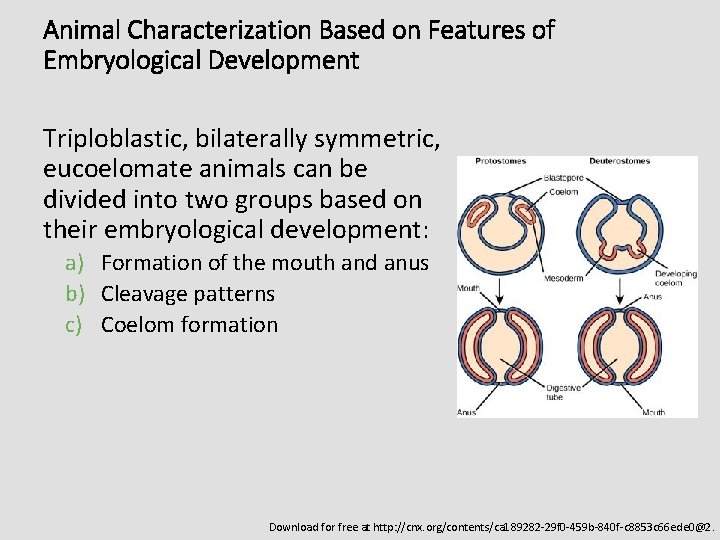
Animal Characterization Based on Features of Embryological Development Triploblastic, bilaterally symmetric, eucoelomate animals can be divided into two groups based on their embryological development: a) Formation of the mouth and anus b) Cleavage patterns c) Coelom formation Download for free at http: //cnx. org/contents/ca 189282 -29 f 0 -459 b-840 f-c 8853 c 66 ede 0@2.
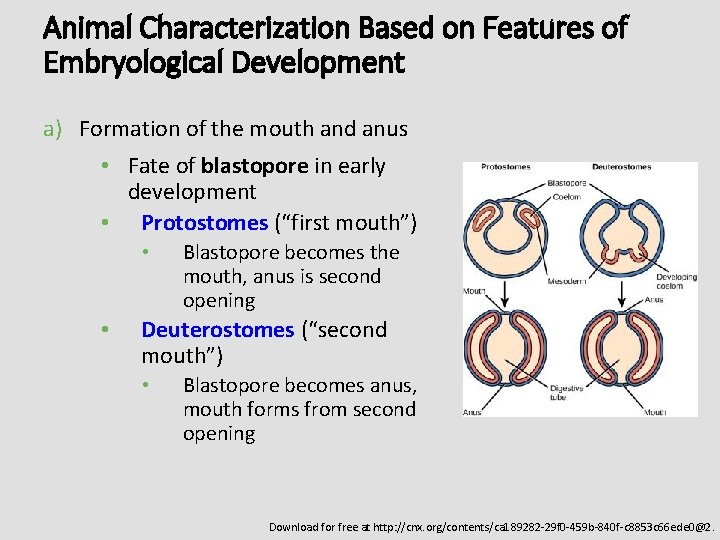
Animal Characterization Based on Features of Embryological Development a) Formation of the mouth and anus • Fate of blastopore in early development • Protostomes (“first mouth”) • • Blastopore becomes the mouth, anus is second opening Deuterostomes (“second mouth”) • Blastopore becomes anus, mouth forms from second opening Download for free at http: //cnx. org/contents/ca 189282 -29 f 0 -459 b-840 f-c 8853 c 66 ede 0@2.
Animal Characterization Based on Features of Embryological Development b) Cleavage patterns • Protostomes • • • Spiral cleavage – due to angled cleavage spiral pattern of cells along embryo axis Determinate cleavage – fate of cells is determined very early Deuterostomes • • Radial cleavage – cell division at right angles Indeterminate cleavage – fate of cells determined somewhat later in development • Formation of embyronic stem cells and possibility of identical twins if embryonic cells become separated
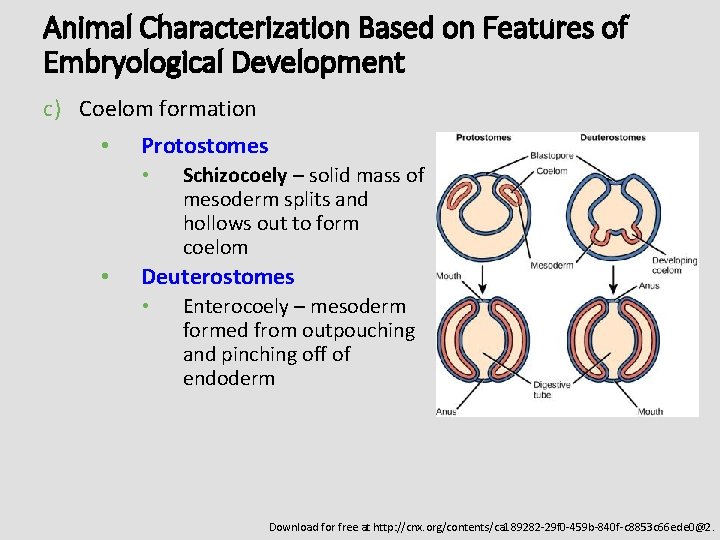
Animal Characterization Based on Features of Embryological Development c) Coelom formation • Protostomes • • Schizocoely – solid mass of mesoderm splits and hollows out to form coelom Deuterostomes • Enterocoely – mesoderm formed from outpouching and pinching off of endoderm Download for free at http: //cnx. org/contents/ca 189282 -29 f 0 -459 b-840 f-c 8853 c 66 ede 0@2.
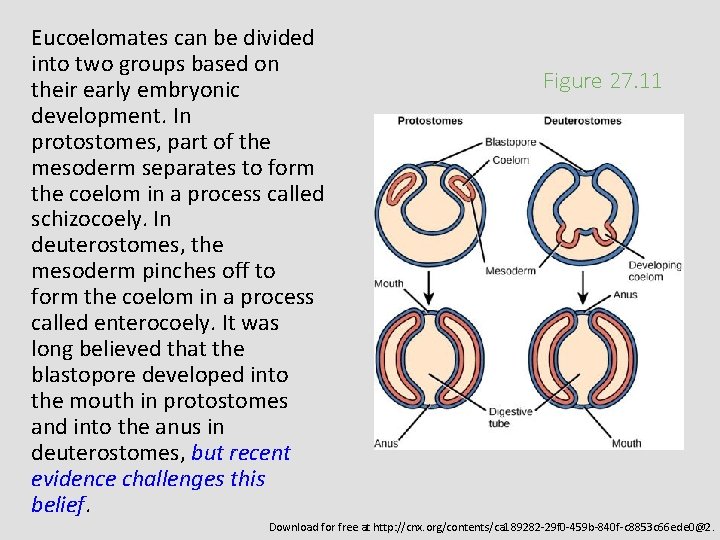
Eucoelomates can be divided into two groups based on their early embryonic development. In protostomes, part of the mesoderm separates to form the coelom in a process called schizocoely. In deuterostomes, the mesoderm pinches off to form the coelom in a process called enterocoely. It was long believed that the blastopore developed into the mouth in protostomes and into the anus in deuterostomes, but recent evidence challenges this belief. Figure 27. 11 Download for free at http: //cnx. org/contents/ca 189282 -29 f 0 -459 b-840 f-c 8853 c 66 ede 0@2.
27. 3 | Animal Phylogeny For much of the history of science, animals were classified by morphological characters • Can be misleading • Similar structures may have different evolutionary histories (analogous structures from convergence) • Characters may be lost • Modern systematists use biochemical, molecular and genetic evidence
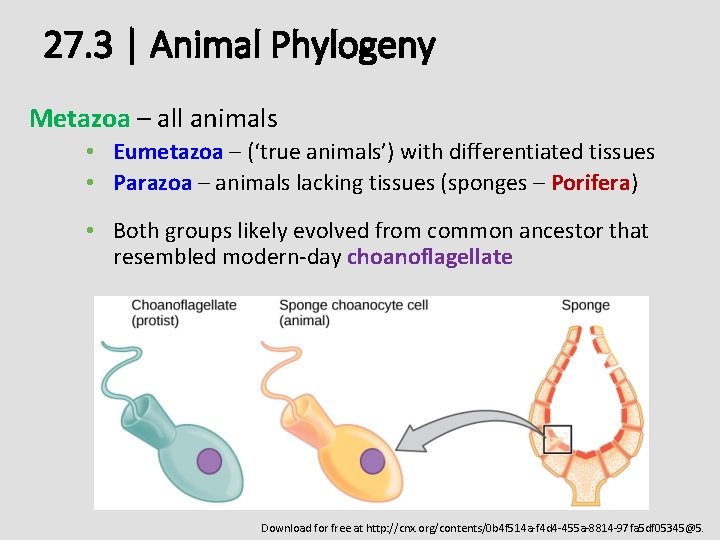
27. 3 | Animal Phylogeny Metazoa – all animals • Eumetazoa – (‘true animals’) with differentiated tissues • Parazoa – animals lacking tissues (sponges – Porifera) • Both groups likely evolved from common ancestor that resembled modern-day choanoflagellate Download for free at http: //cnx. org/contents/0 b 4 f 514 a-f 4 d 4 -455 a-8814 -97 fa 5 df 05345@5.
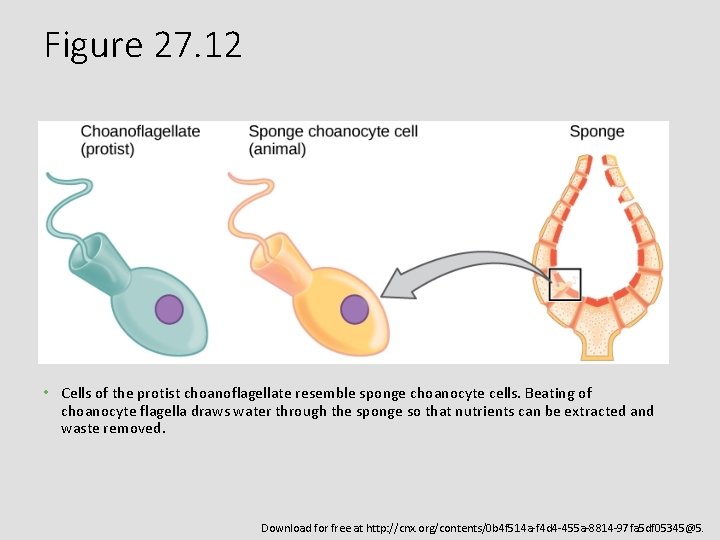
Figure 27. 12 • Cells of the protist choanoflagellate resemble sponge choanocyte cells. Beating of choanocyte flagella draws water through the sponge so that nutrients can be extracted and waste removed. Download for free at http: //cnx. org/contents/0 b 4 f 514 a-f 4 d 4 -455 a-8814 -97 fa 5 df 05345@5.
27. 3 | Animal Phylogeny Eumetazoa are divided into two major clades, based on embryology: • Radiata • ‘true’ radial symmetry • Includes Cnidaria (stinging animals) and Ctenophora (comb jellies) • Bilateria • Bilateral symmetry • Includes all other animals
27. 3 | Animal Phylogeny Bilateria are divided into two major clades, also based on embryology (see above): • • Deuterostomes – include echinoderms & chordates Protostomes – further divided into two major clades • • Lophotrochozoa – either have a trochophore larva and/or lophophore (feeding structure) Ecdysozoa – molt their exoskeleton (ecdysis) • Include Arthropoda and Nematoda
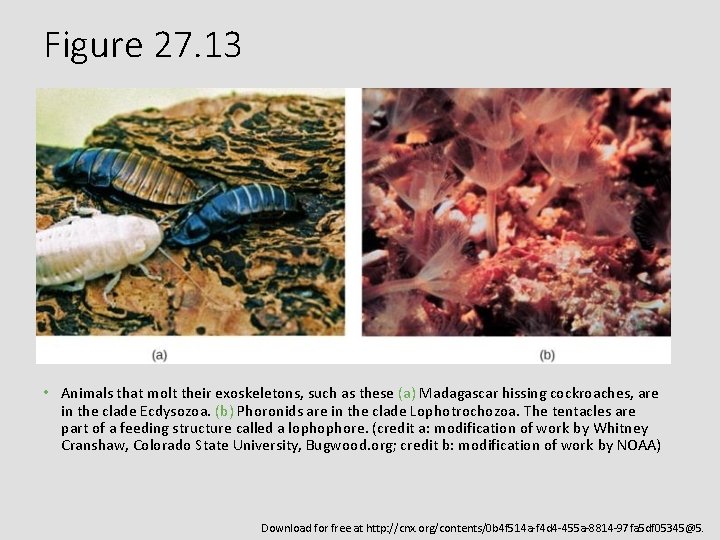
Figure 27. 13 • Animals that molt their exoskeletons, such as these (a) Madagascar hissing cockroaches, are in the clade Ecdysozoa. (b) Phoronids are in the clade Lophotrochozoa. The tentacles are part of a feeding structure called a lophophore. (credit a: modification of work by Whitney Cranshaw, Colorado State University, Bugwood. org; credit b: modification of work by NOAA) Download for free at http: //cnx. org/contents/0 b 4 f 514 a-f 4 d 4 -455 a-8814 -97 fa 5 df 05345@5.
Modern Advances in Phylogenetic Understanding Come from Molecular Analyses Classifications and evolutionary relationships (phylogenies) continue to change as more data are collected…mostly molecular/genetic data • Mitochondrial and nuclear DNA and ribosomal RNA sequences a) Modern grouping of the lophotrochozoans (protostomes) now include some animals once though to be primitive deuterostomes (brachipods, bryozoans), closely related to molluscs and annelids b) Arthropods used to be thought closely related to annelids, but now grouped with nematodes as ecdysozoans c) Ctenophores may have branched off of eumetazoan clade, before cnidarians, and may represent a completely different group of animals • Molecular technology will continue to make major contributions to the study evolutionary relationships…upending our view of evolution
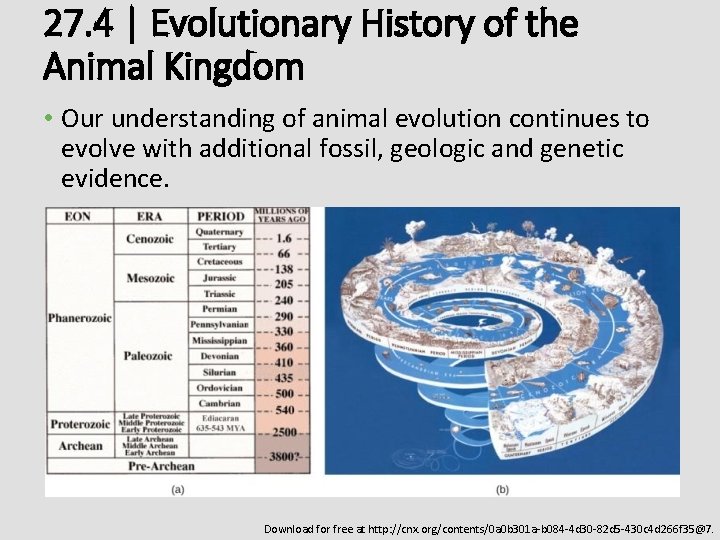
27. 4 | Evolutionary History of the Animal Kingdom • Our understanding of animal evolution continues to evolve with additional fossil, geologic and genetic evidence. Download for free at http: //cnx. org/contents/0 a 0 b 301 a-b 084 -4 d 30 -82 d 5 -430 c 4 d 266 f 35@7.
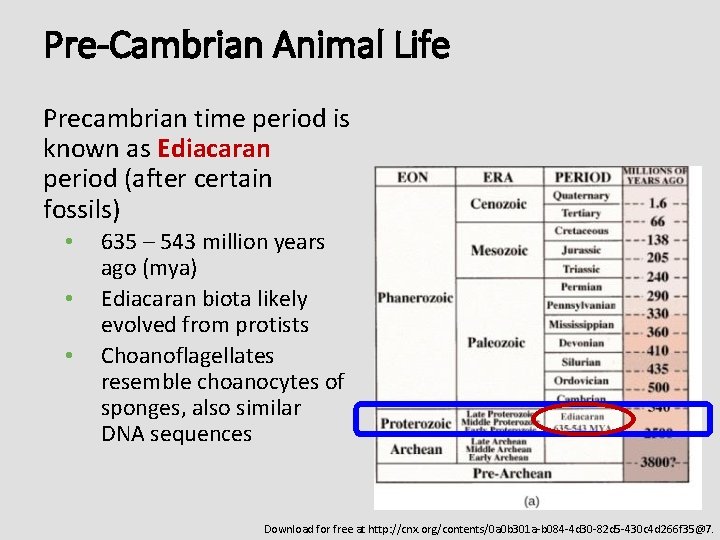
Pre-Cambrian Animal Life Precambrian time period is known as Ediacaran period (after certain fossils) • • • 635 – 543 million years ago (mya) Ediacaran biota likely evolved from protists Choanoflagellates resemble choanocytes of sponges, also similar DNA sequences Download for free at http: //cnx. org/contents/0 a 0 b 301 a-b 084 -4 d 30 -82 d 5 -430 c 4 d 266 f 35@7.
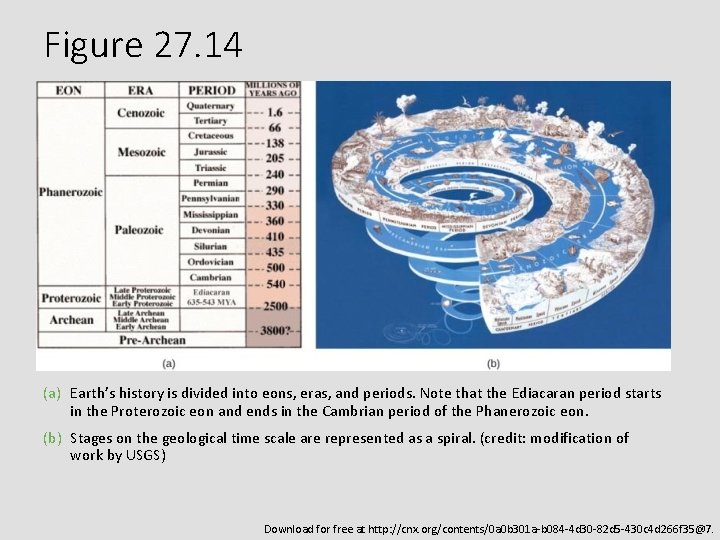
Figure 27. 14 (a) Earth’s history is divided into eons, eras, and periods. Note that the Ediacaran period starts in the Proterozoic eon and ends in the Cambrian period of the Phanerozoic eon. (b) Stages on the geological time scale are represented as a spiral. (credit: modification of work by USGS) Download for free at http: //cnx. org/contents/0 a 0 b 301 a-b 084 -4 d 30 -82 d 5 -430 c 4 d 266 f 35@7.
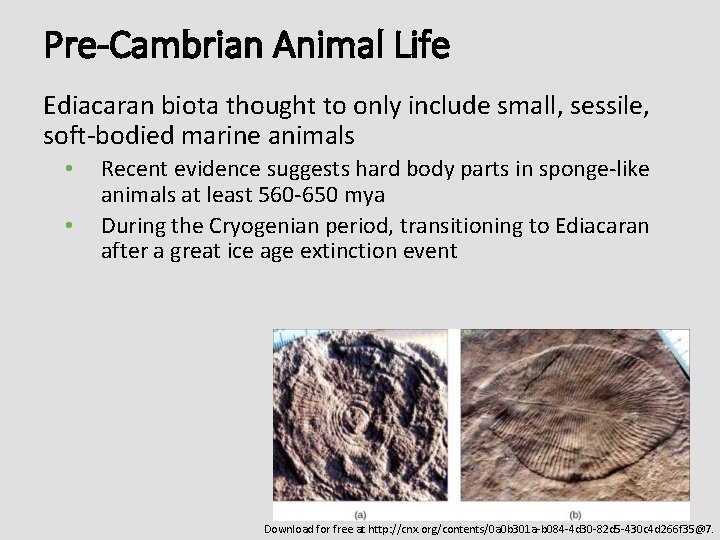
Pre-Cambrian Animal Life Ediacaran biota thought to only include small, sessile, soft-bodied marine animals • • Recent evidence suggests hard body parts in sponge-like animals at least 560 -650 mya During the Cryogenian period, transitioning to Ediacaran after a great ice age extinction event Download for free at http: //cnx. org/contents/0 a 0 b 301 a-b 084 -4 d 30 -82 d 5 -430 c 4 d 266 f 35@7.
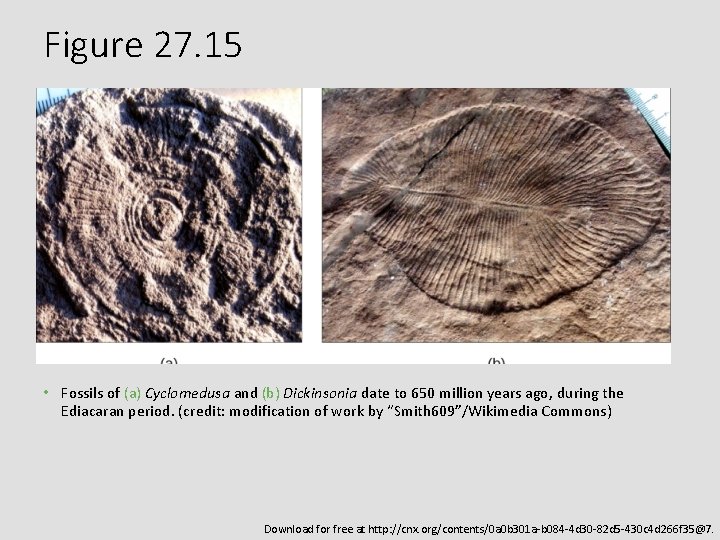
Figure 27. 15 • Fossils of (a) Cyclomedusa and (b) Dickinsonia date to 650 million years ago, during the Ediacaran period. (credit: modification of work by “Smith 609”/Wikimedia Commons) Download for free at http: //cnx. org/contents/0 a 0 b 301 a-b 084 -4 d 30 -82 d 5 -430 c 4 d 266 f 35@7.
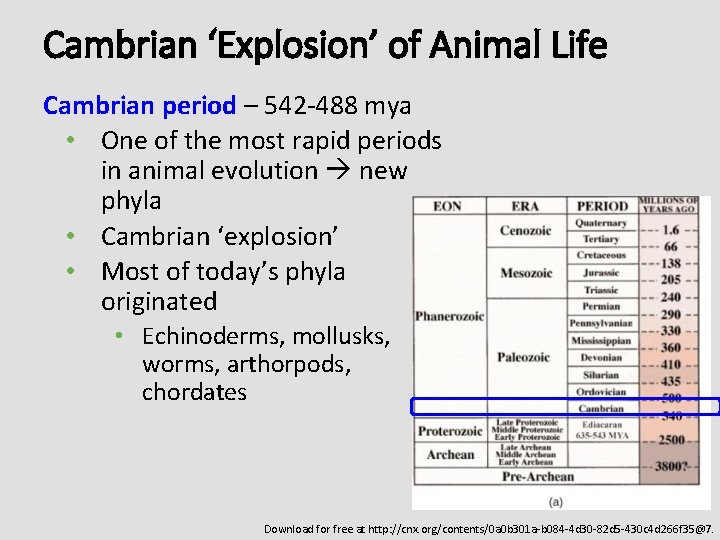
Cambrian ‘Explosion’ of Animal Life Cambrian period – 542 -488 mya • One of the most rapid periods in animal evolution new phyla • Cambrian ‘explosion’ • Most of today’s phyla originated • Echinoderms, mollusks, worms, arthorpods, chordates Download for free at http: //cnx. org/contents/0 a 0 b 301 a-b 084 -4 d 30 -82 d 5 -430 c 4 d 266 f 35@7.
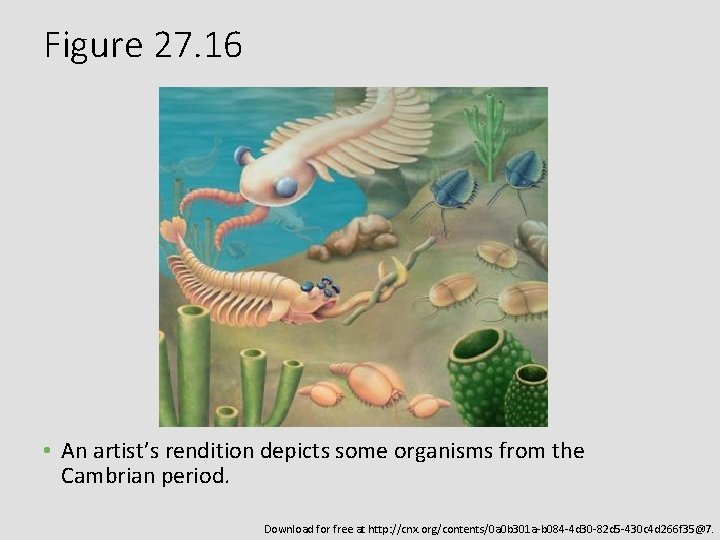
Figure 27. 16 • An artist’s rendition depicts some organisms from the Cambrian period. Download for free at http: //cnx. org/contents/0 a 0 b 301 a-b 084 -4 d 30 -82 d 5 -430 c 4 d 266 f 35@7.
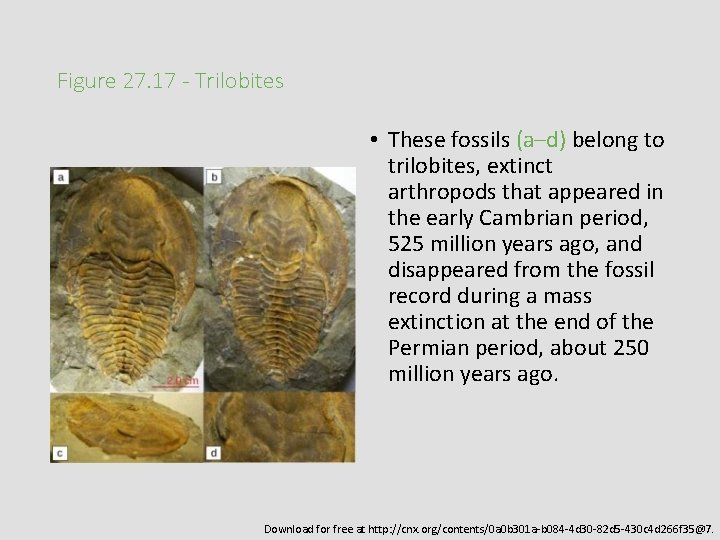
Figure 27. 17 - Trilobites • These fossils (a–d) belong to trilobites, extinct arthropods that appeared in the early Cambrian period, 525 million years ago, and disappeared from the fossil record during a mass extinction at the end of the Permian period, about 250 million years ago. Download for free at http: //cnx. org/contents/0 a 0 b 301 a-b 084 -4 d 30 -82 d 5 -430 c 4 d 266 f 35@7.
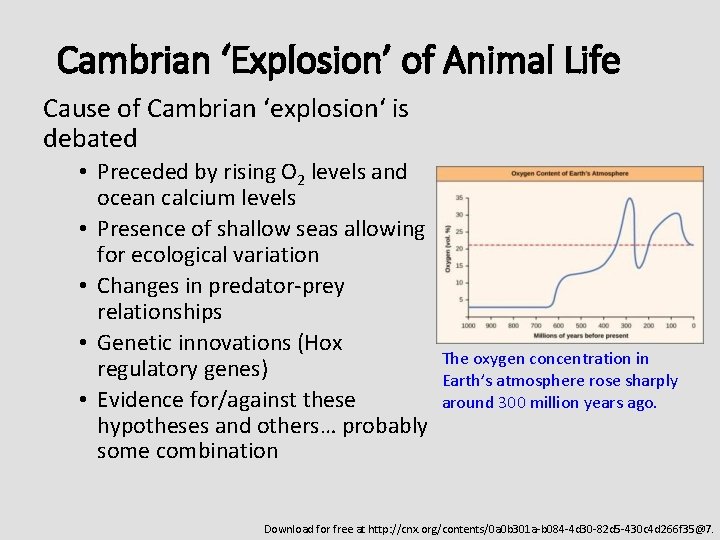
Cambrian ‘Explosion’ of Animal Life Cause of Cambrian ‘explosion‘ is debated • Preceded by rising O 2 levels and ocean calcium levels • Presence of shallow seas allowing for ecological variation • Changes in predator-prey relationships • Genetic innovations (Hox regulatory genes) • Evidence for/against these hypotheses and others… probably some combination The oxygen concentration in Earth’s atmosphere rose sharply around 300 million years ago. Download for free at http: //cnx. org/contents/0 a 0 b 301 a-b 084 -4 d 30 -82 d 5 -430 c 4 d 266 f 35@7.
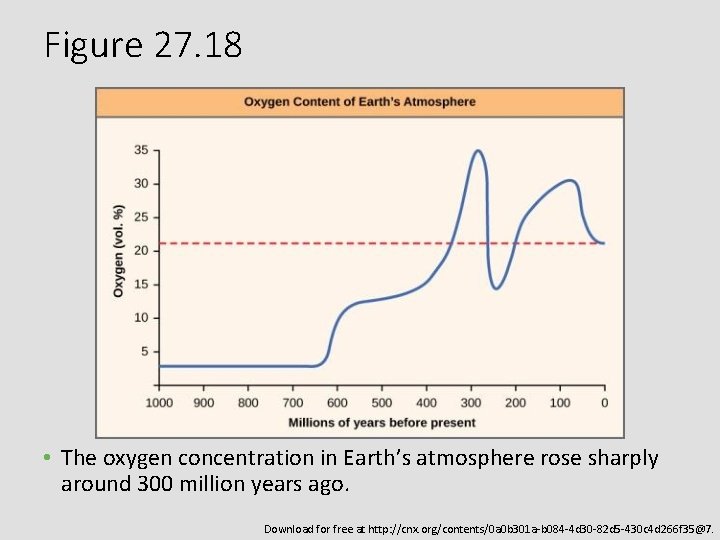
Figure 27. 18 • The oxygen concentration in Earth’s atmosphere rose sharply around 300 million years ago. Download for free at http: //cnx. org/contents/0 a 0 b 301 a-b 084 -4 d 30 -82 d 5 -430 c 4 d 266 f 35@7.
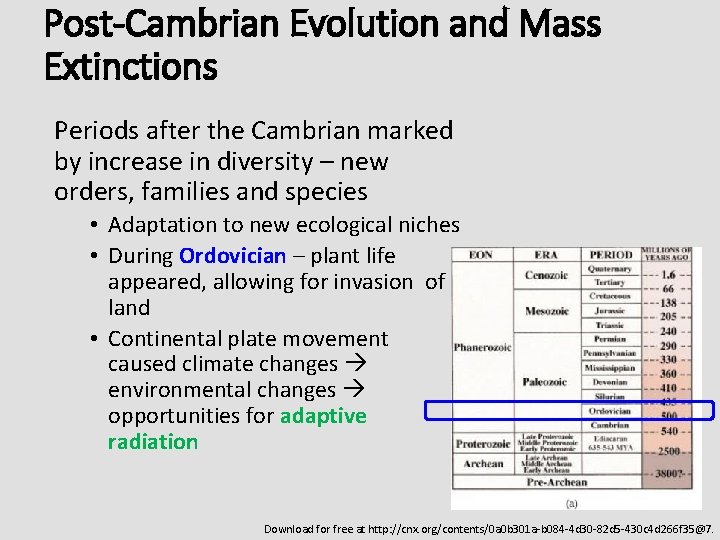
Post-Cambrian Evolution and Mass Extinctions Periods after the Cambrian marked by increase in diversity – new orders, families and species • Adaptation to new ecological niches • During Ordovician – plant life appeared, allowing for invasion of land • Continental plate movement caused climate changes environmental changes opportunities for adaptive radiation Download for free at http: //cnx. org/contents/0 a 0 b 301 a-b 084 -4 d 30 -82 d 5 -430 c 4 d 266 f 35@7.
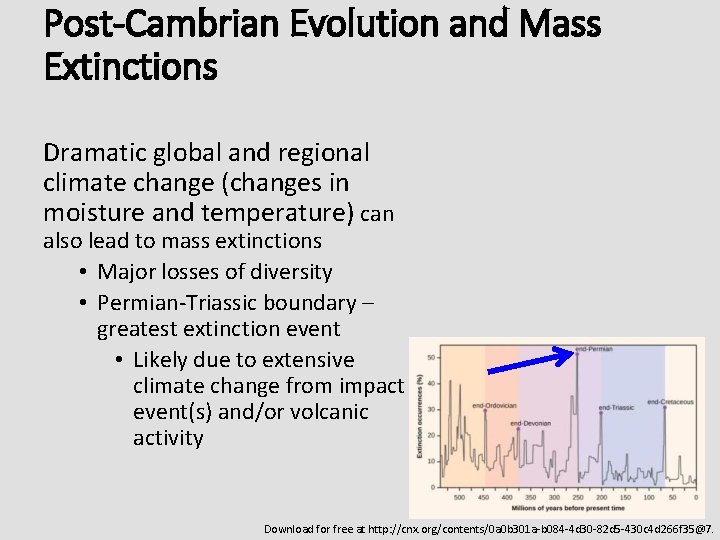
Post-Cambrian Evolution and Mass Extinctions Dramatic global and regional climate change (changes in moisture and temperature) can also lead to mass extinctions • Major losses of diversity • Permian-Triassic boundary – greatest extinction event • Likely due to extensive climate change from impact event(s) and/or volcanic activity Download for free at http: //cnx. org/contents/0 a 0 b 301 a-b 084 -4 d 30 -82 d 5 -430 c 4 d 266 f 35@7.
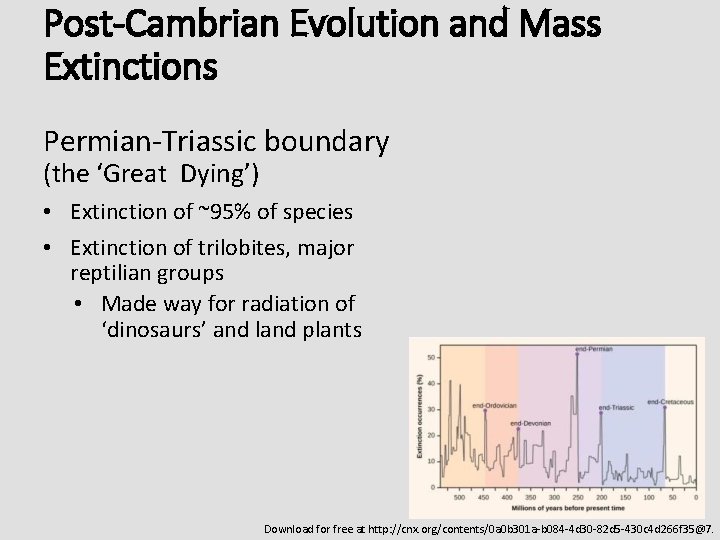
Post-Cambrian Evolution and Mass Extinctions Permian-Triassic boundary (the ‘Great Dying’) • Extinction of ~95% of species • Extinction of trilobites, major reptilian groups • Made way for radiation of ‘dinosaurs’ and land plants Download for free at http: //cnx. org/contents/0 a 0 b 301 a-b 084 -4 d 30 -82 d 5 -430 c 4 d 266 f 35@7.
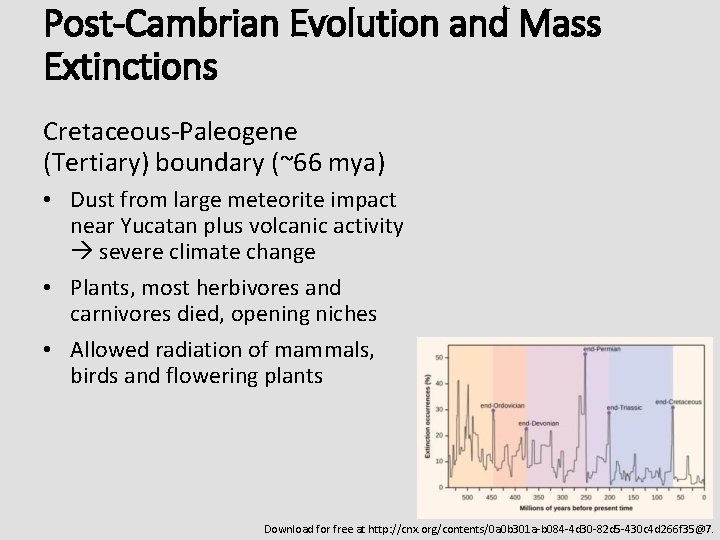
Post-Cambrian Evolution and Mass Extinctions Cretaceous-Paleogene (Tertiary) boundary (~66 mya) • Dust from large meteorite impact near Yucatan plus volcanic activity severe climate change • Plants, most herbivores and carnivores died, opening niches • Allowed radiation of mammals, birds and flowering plants Download for free at http: //cnx. org/contents/0 a 0 b 301 a-b 084 -4 d 30 -82 d 5 -430 c 4 d 266 f 35@7.
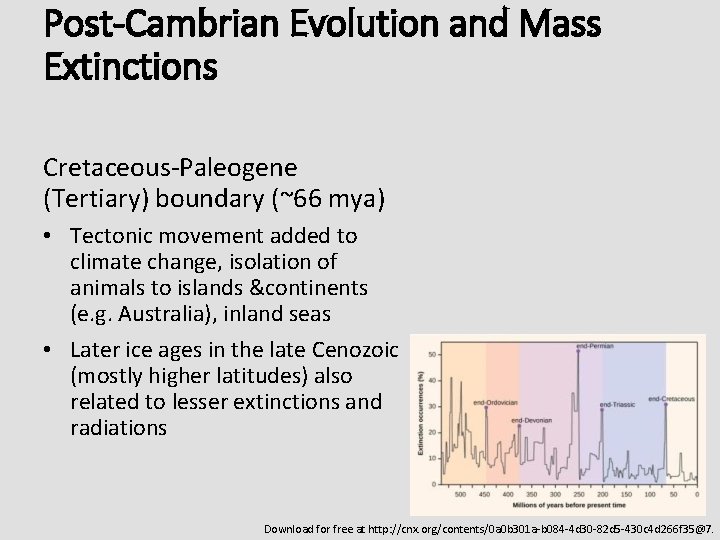
Post-Cambrian Evolution and Mass Extinctions Cretaceous-Paleogene (Tertiary) boundary (~66 mya) • Tectonic movement added to climate change, isolation of animals to islands &continents (e. g. Australia), inland seas • Later ice ages in the late Cenozoic (mostly higher latitudes) also related to lesser extinctions and radiations Download for free at http: //cnx. org/contents/0 a 0 b 301 a-b 084 -4 d 30 -82 d 5 -430 c 4 d 266 f 35@7.
Post-Cambrian Evolution and Mass Extinctions There have been five mass extinction events (MSE) after the Cambrian period • • • We may now be entering what appears to be the sixth MSE Previous MSEs are likely due to drastic climate change caused by asteroids and/or tectonic events, among other causes The potential current MSE appears to be human-related – current extinction rates have been estimated by some to be higher than previous MSEs, although over a geologically very short time span…stay tuned Food for thought: • Sixth Mass Extinction (Full Documentary) – Click for You. Tube Video (https: //www. youtube. com/watch? v=EDQV 1 hi. Lp. QQ) Download for free at http: //cnx. org/contents/0 a 0 b 301 a-b 084 -4 d 30 -82 d 5 -430 c 4 d 266 f 35@7.
- Slides: 59