
Chapter 27 continued Specific Catabolic Pathways Carbohydrate Lipid
Chapter 27 (continued) Specific Catabolic Pathways: Carbohydrate, Lipid & Protein Metabolism
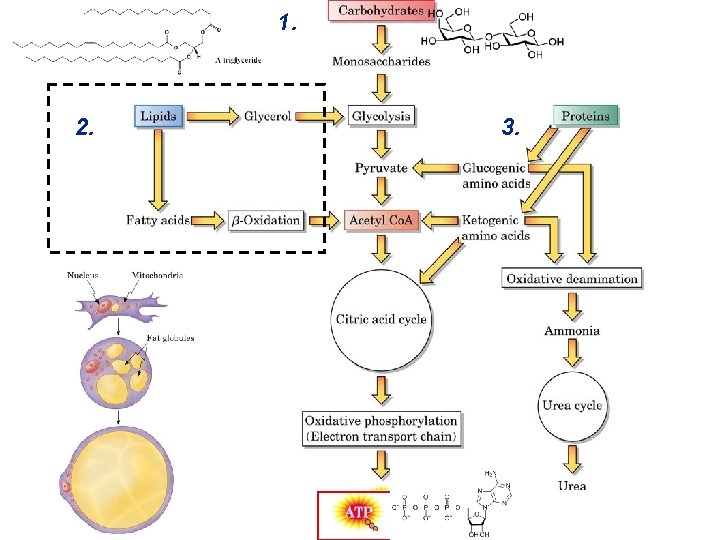
1. 2. 3.
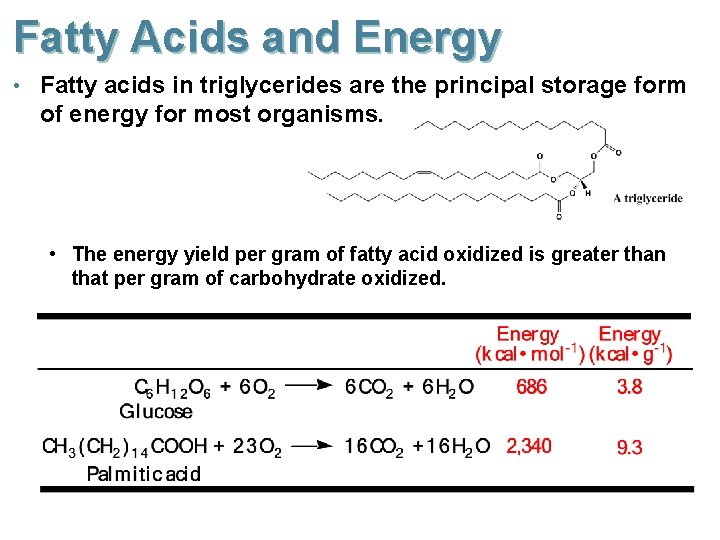
Fatty Acids and Energy • Fatty acids in triglycerides are the principal storage form of energy for most organisms. • The energy yield per gram of fatty acid oxidized is greater than that per gram of carbohydrate oxidized.

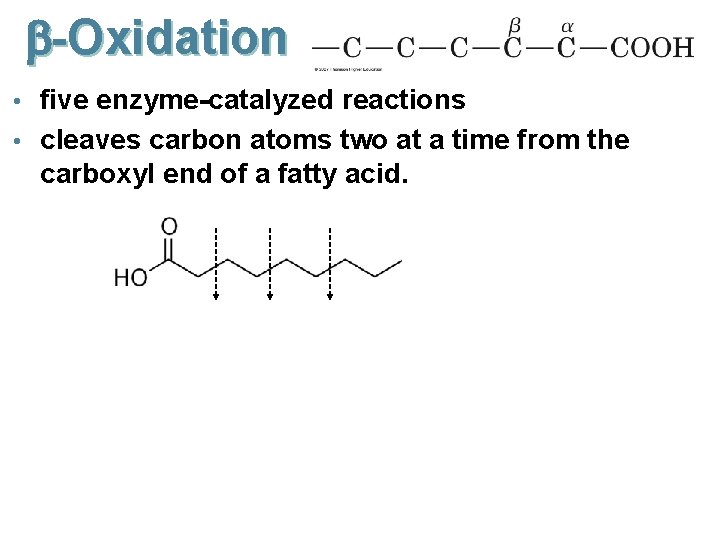
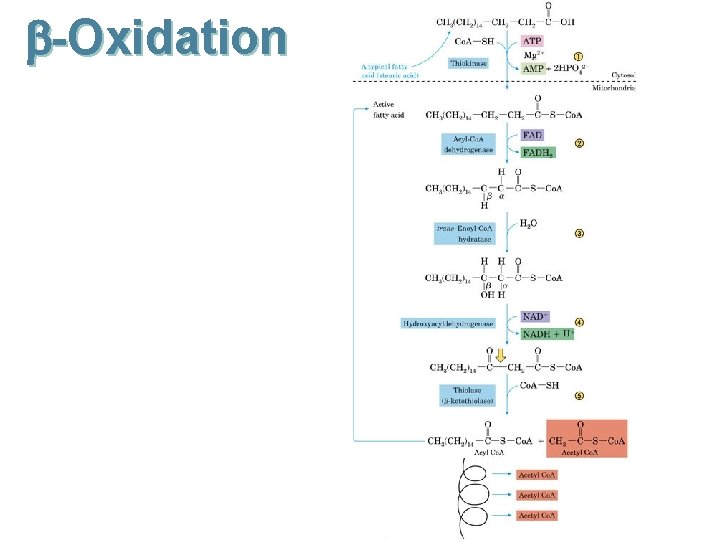
-Oxidation • five enzyme-catalyzed reactions • cleaves carbon atoms two at a time from the carboxyl end of a fatty acid.
-Oxidation
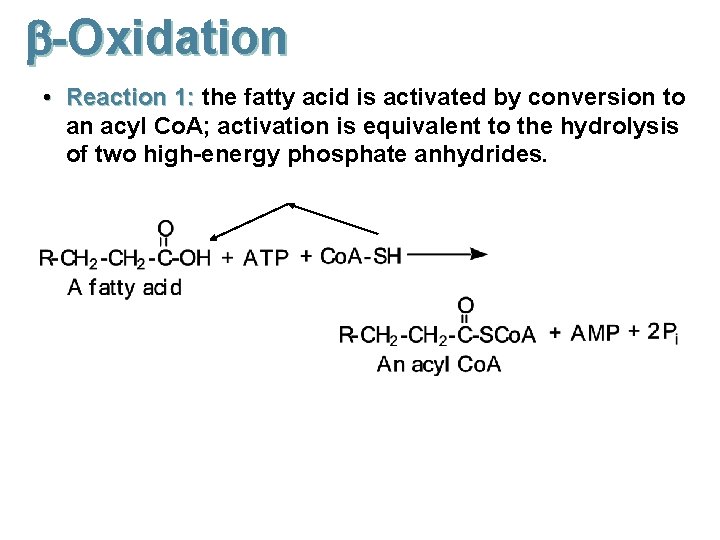
-Oxidation • Reaction 1: the fatty acid is activated by conversion to an acyl Co. A; activation is equivalent to the hydrolysis of two high-energy phosphate anhydrides.
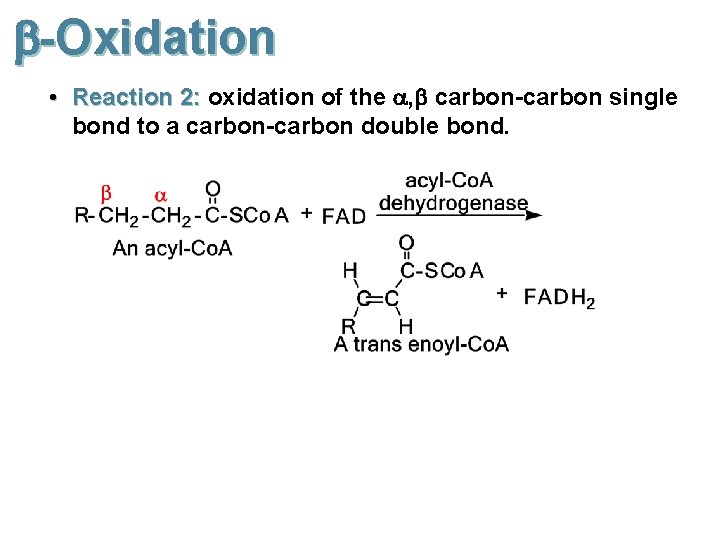
-Oxidation • Reaction 2: oxidation of the , carbon-carbon single bond to a carbon-carbon double bond.
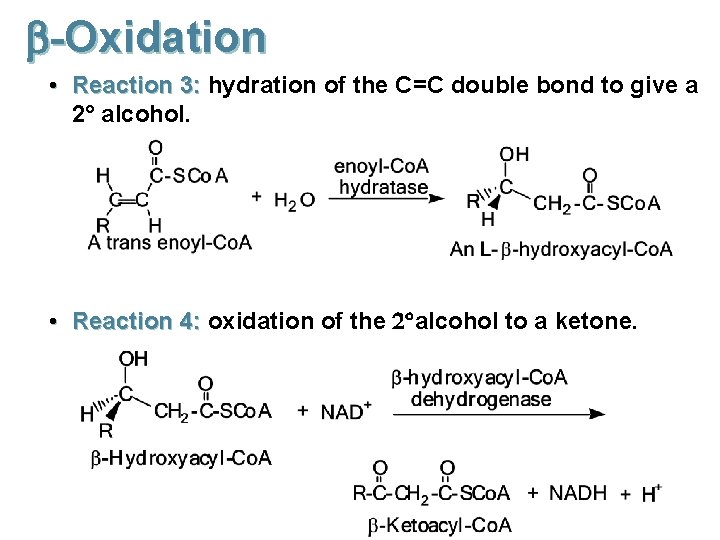
-Oxidation • Reaction 3: hydration of the C=C double bond to give a 2° alcohol. • Reaction 4: oxidation of the 2°alcohol to a ketone.
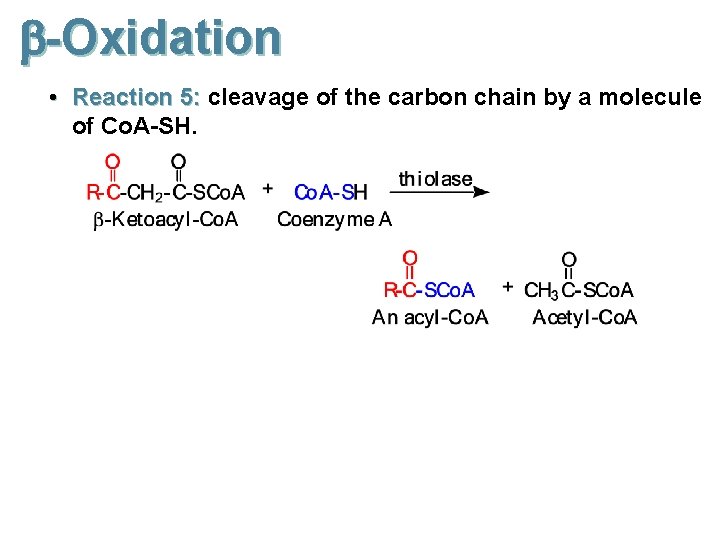
-Oxidation • Reaction 5: cleavage of the carbon chain by a molecule of Co. A-SH.
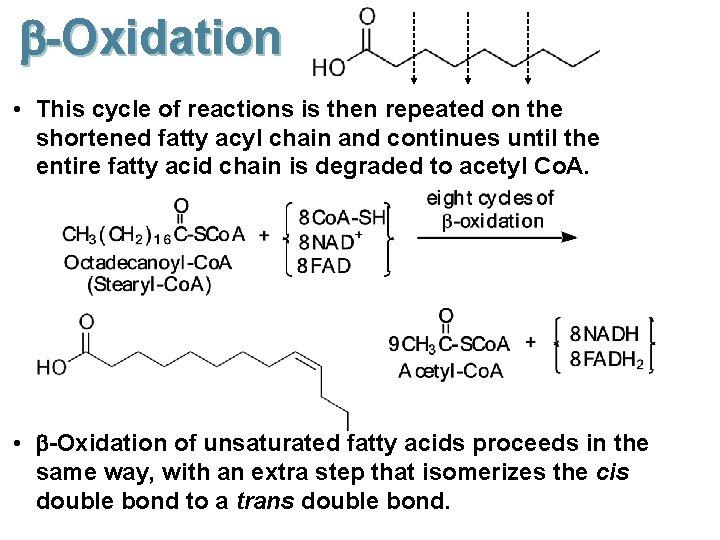
-Oxidation • This cycle of reactions is then repeated on the shortened fatty acyl chain and continues until the entire fatty acid chain is degraded to acetyl Co. A. • -Oxidation of unsaturated fatty acids proceeds in the same way, with an extra step that isomerizes the cis double bond to a trans double bond.
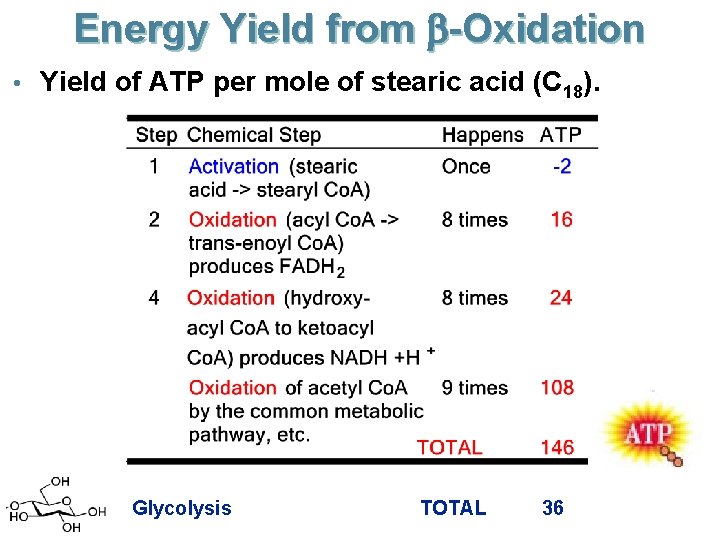
Energy Yield from -Oxidation • Yield of ATP per mole of stearic acid (C 18). Glycolysis TOTAL 36
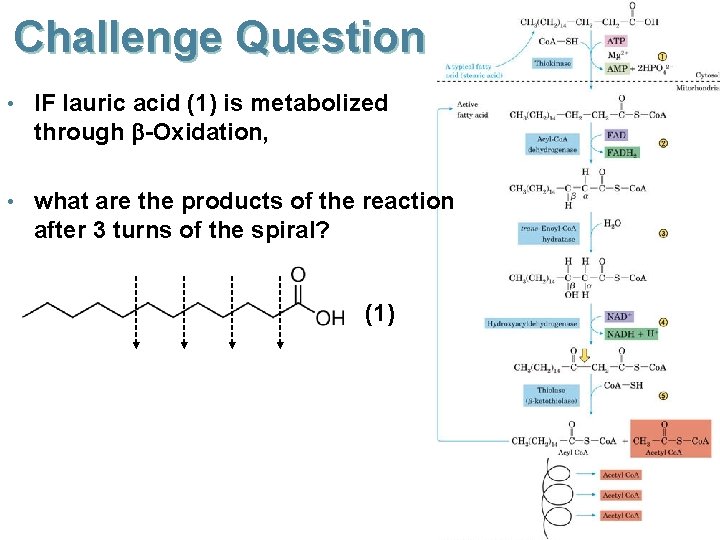
Challenge Question • IF lauric acid (1) is metabolized through -Oxidation, • what are the products of the reaction after 3 turns of the spiral? (1)
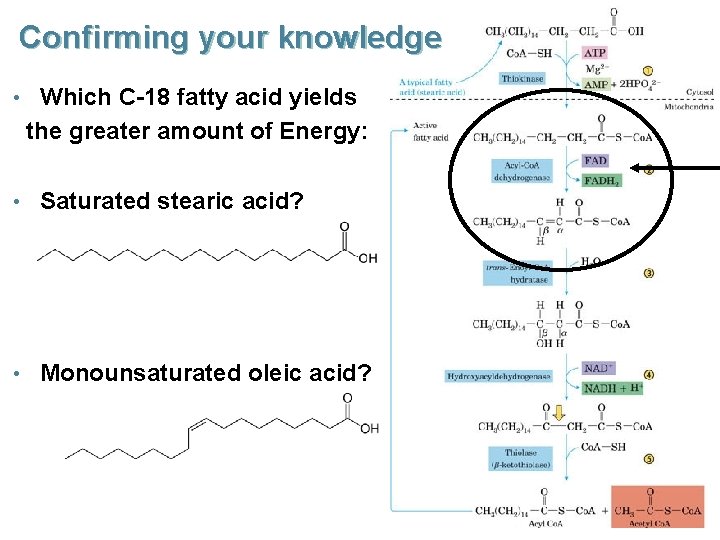
Confirming your knowledge • Which C-18 fatty acid yields the greater amount of Energy: • Saturated stearic acid? • Monounsaturated oleic acid?
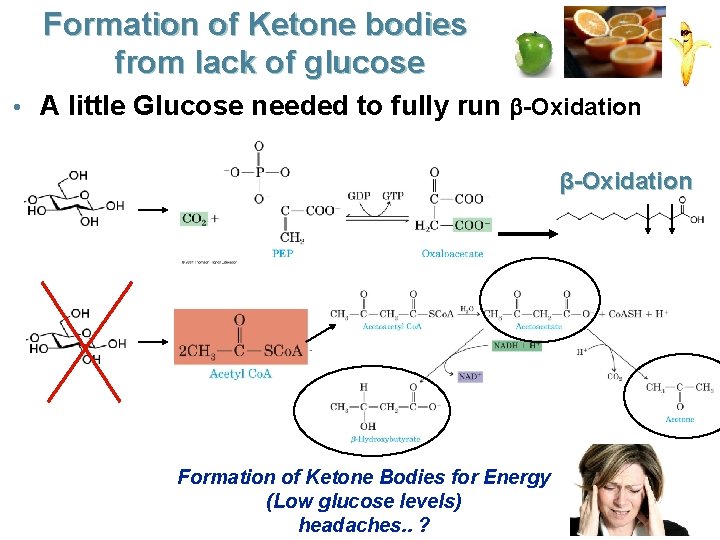
Formation of Ketone bodies from lack of glucose • A little Glucose needed to fully run -Oxidation β-Oxidation Formation of Ketone Bodies for Energy (Low glucose levels) headaches. . ?
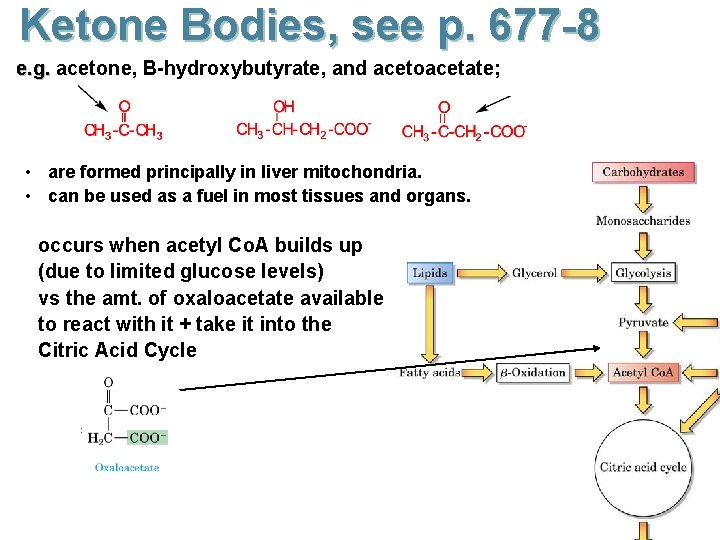
Ketone Bodies, see p. 677 -8 e. g. acetone, B-hydroxybutyrate, and acetoacetate; • are formed principally in liver mitochondria. • can be used as a fuel in most tissues and organs. occurs when acetyl Co. A builds up (due to limited glucose levels) vs the amt. of oxaloacetate available to react with it + take it into the Citric Acid Cycle
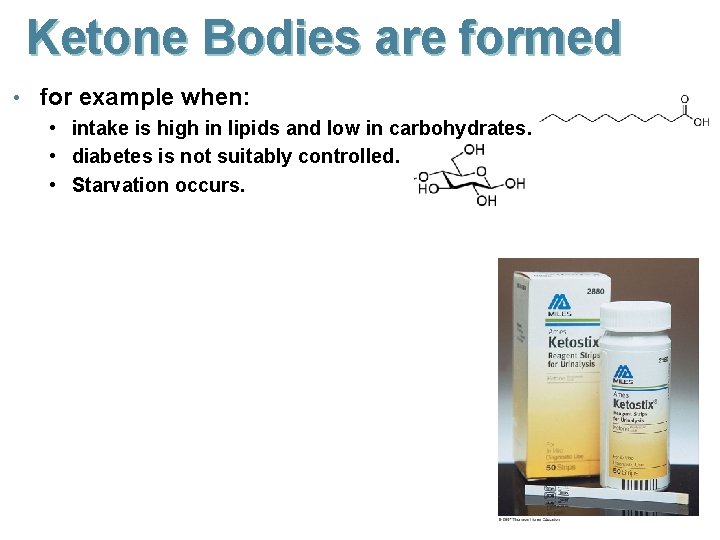
Ketone Bodies are formed • for example when: • intake is high in lipids and low in carbohydrates. • diabetes is not suitably controlled. • Starvation occurs.
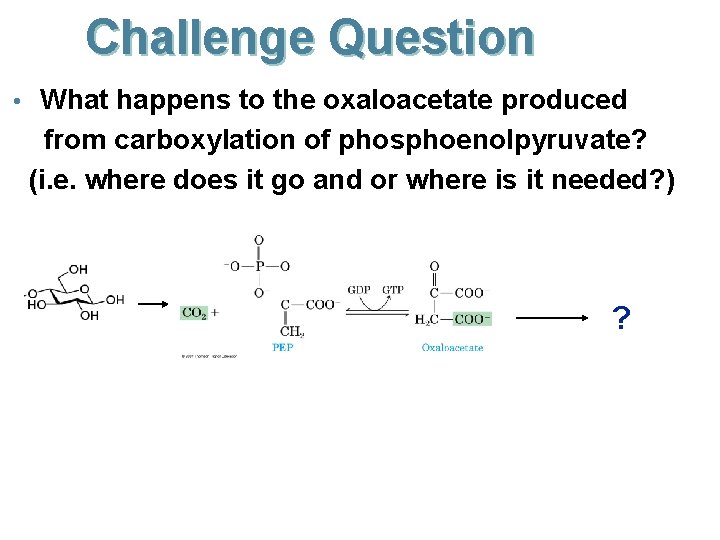
Challenge Question • What happens to the oxaloacetate produced from carboxylation of phosphoenolpyruvate? (i. e. where does it go and or where is it needed? ) ?
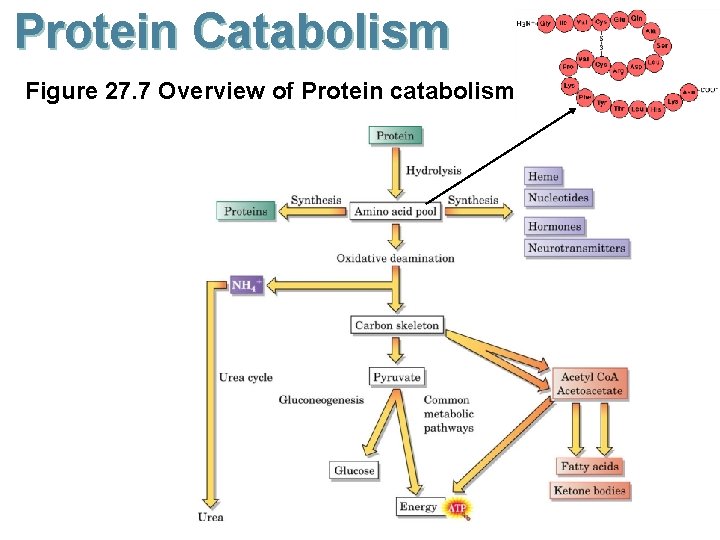
Protein Catabolism Figure 27. 7 Overview of Protein catabolism.
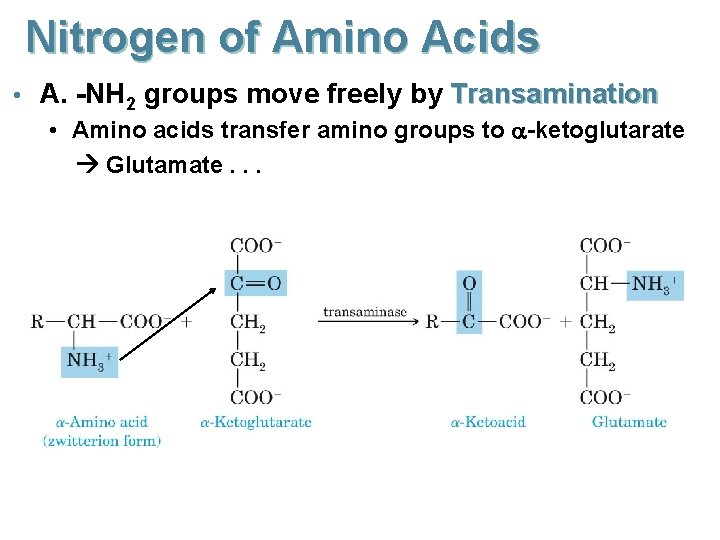
Nitrogen of Amino Acids • A. -NH 2 groups move freely by Transamination • Amino acids transfer amino groups to -ketoglutarate Glutamate. . .
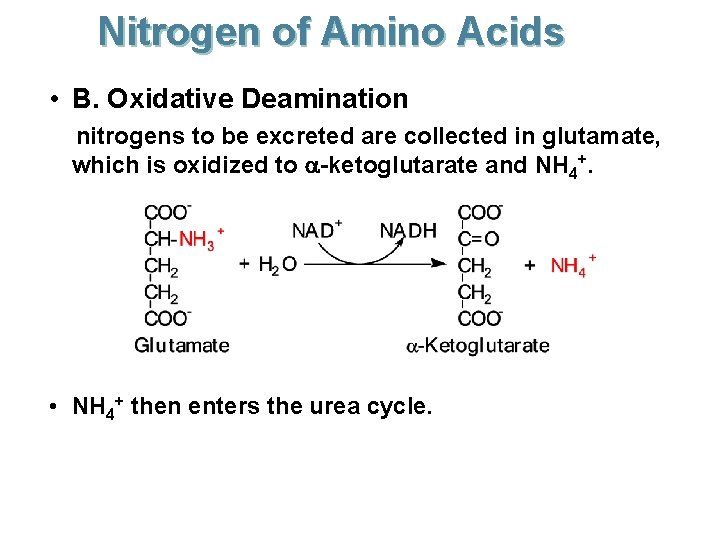
Nitrogen of Amino Acids • B. Oxidative Deamination nitrogens to be excreted are collected in glutamate, which is oxidized to -ketoglutarate and NH 4+. • NH 4+ then enters the urea cycle.
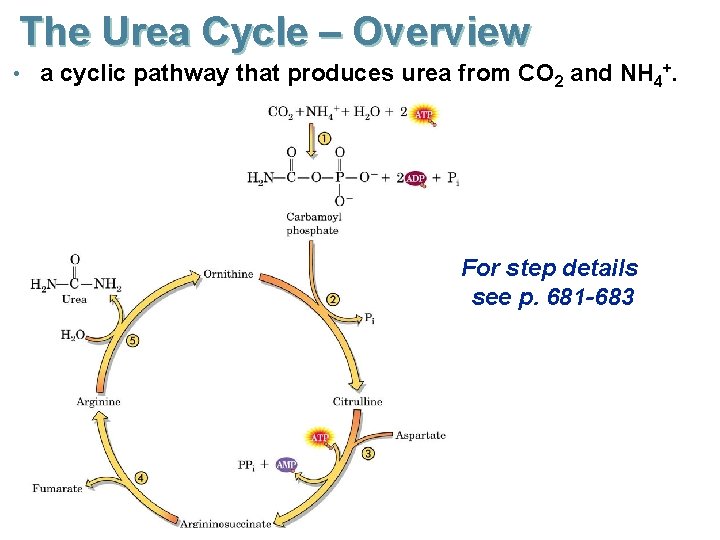
The Urea Cycle – Overview • a cyclic pathway that produces urea from CO 2 and NH 4+. For step details see p. 681 -683
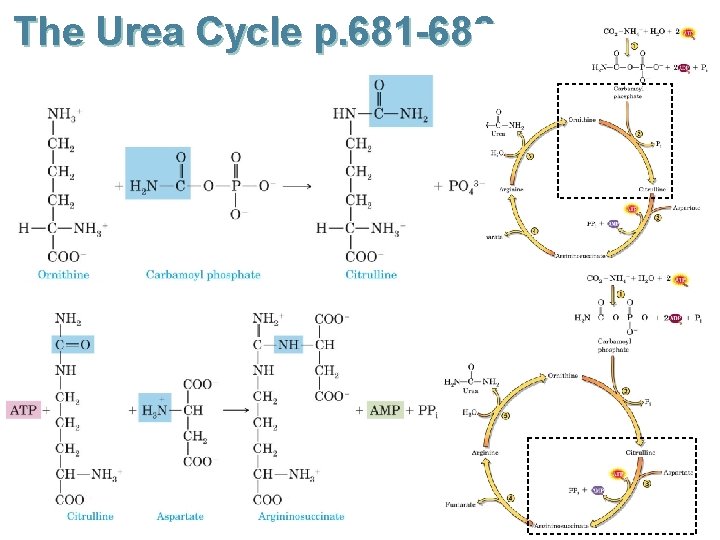
The Urea Cycle p. 681 -682
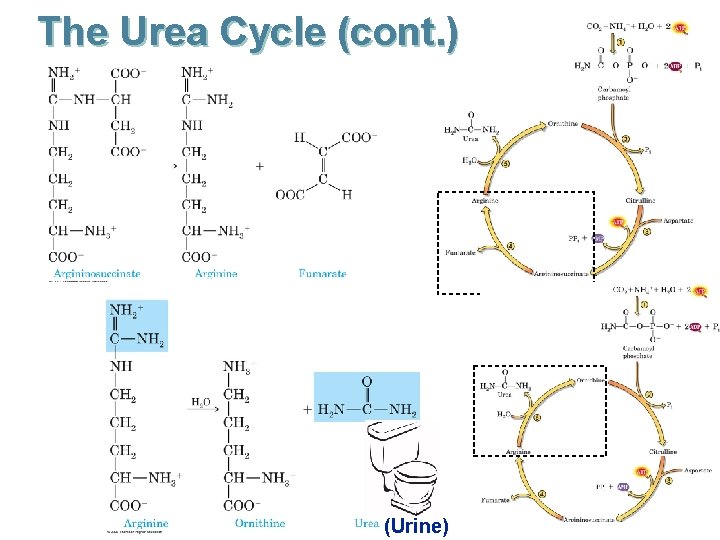
The Urea Cycle (cont. ) (Urine)
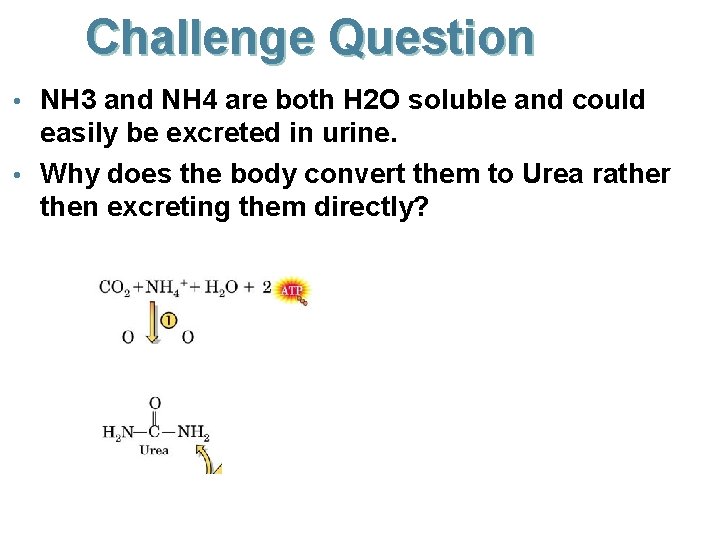
Challenge Question • NH 3 and NH 4 are both H 2 O soluble and could easily be excreted in urine. • Why does the body convert them to Urea rather then excreting them directly?
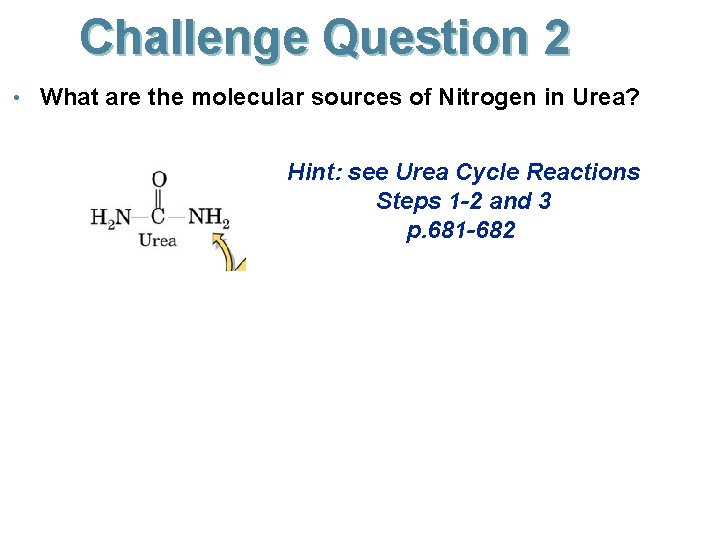
Challenge Question 2 • What are the molecular sources of Nitrogen in Urea? Hint: see Urea Cycle Reactions Steps 1 -2 and 3 p. 681 -682
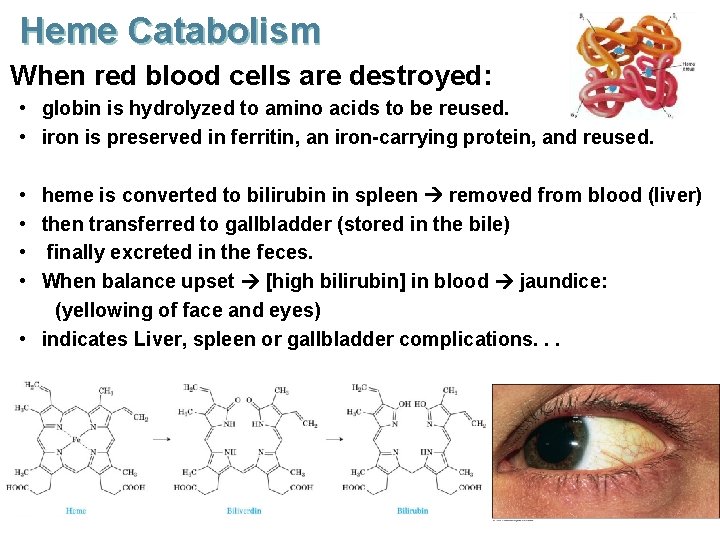
Heme Catabolism When red blood cells are destroyed: • globin is hydrolyzed to amino acids to be reused. • iron is preserved in ferritin, an iron-carrying protein, and reused. • heme is converted to bilirubin in spleen removed from blood (liver) • then transferred to gallbladder (stored in the bile) • finally excreted in the feces. • When balance upset [high bilirubin] in blood jaundice: (yellowing of face and eyes) • indicates Liver, spleen or gallbladder complications. . .
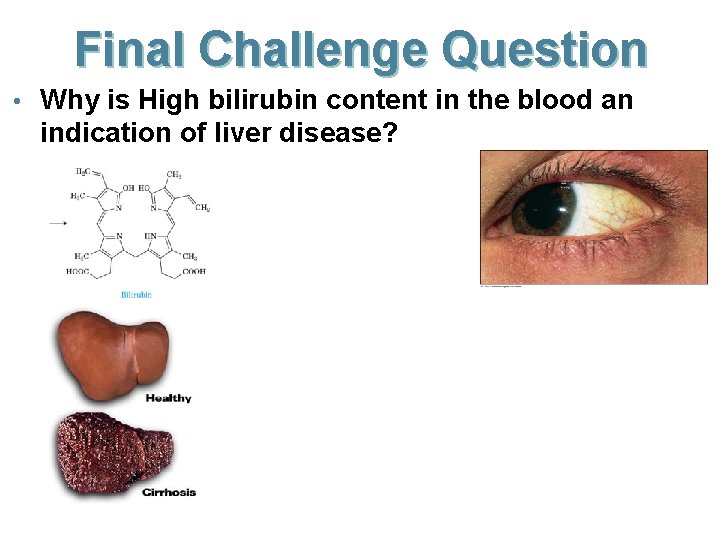
Final Challenge Question • Why is High bilirubin content in the blood an indication of liver disease?
- Slides: 28