
Chapter 27 Color Spectrum of Visible Light Physics
Chapter 27 Color
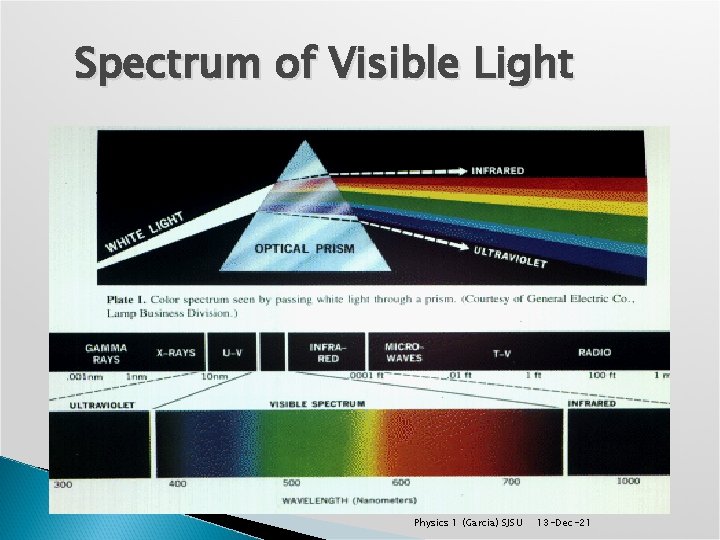
Spectrum of Visible Light Physics 1 (Garcia) SJSU 13 -Dec-21
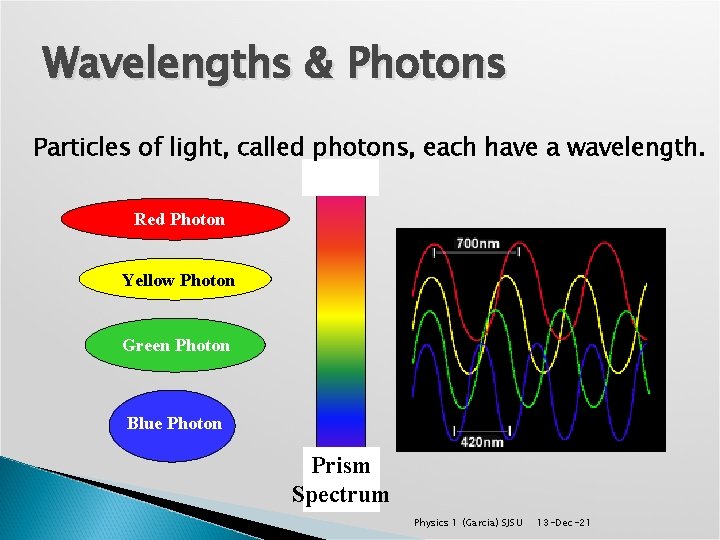
Wavelengths & Photons Particles of light, called photons, each have a wavelength. Red Photon Yellow Photon Green Photon Blue Photon Prism Spectrum Physics 1 (Garcia) SJSU 13 -Dec-21
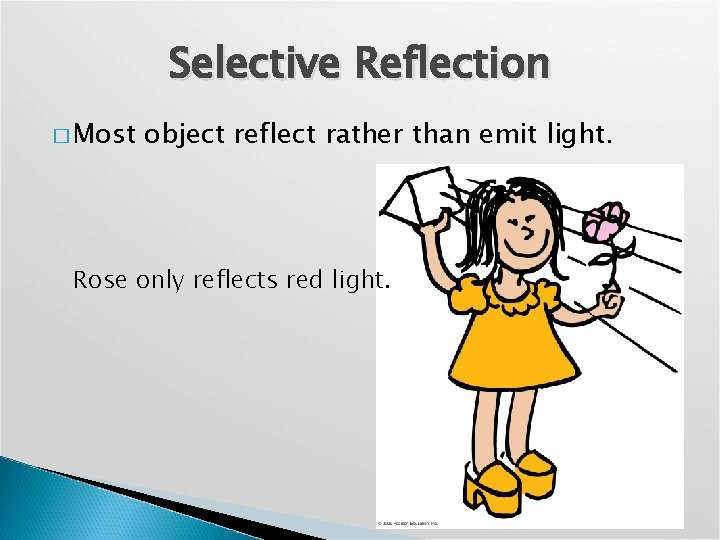
Selective Reflection � Most object reflect rather than emit light. Rose only reflects red light.
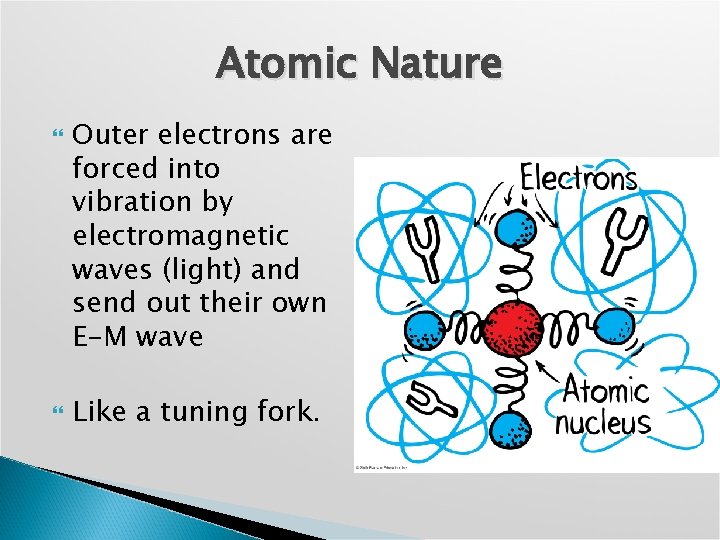
Atomic Nature Outer electrons are forced into vibration by electromagnetic waves (light) and send out their own E-M wave Like a tuning fork.
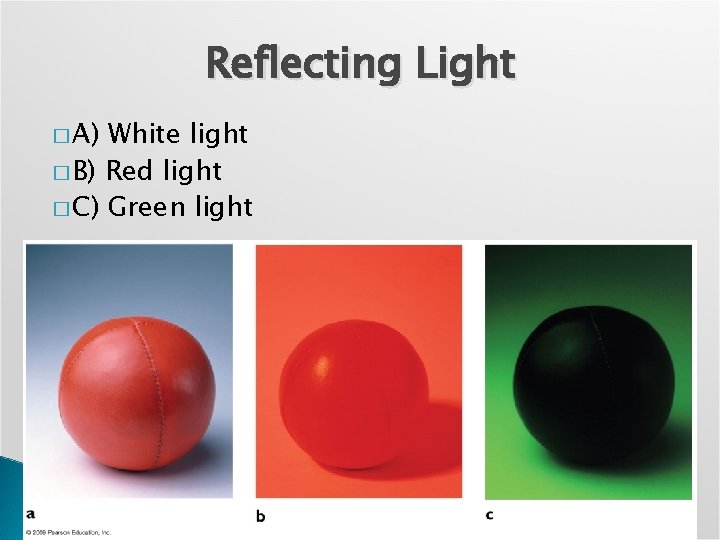
Reflecting Light � A) White light � B) Red light � C) Green light
Absorption and Reflecting Frequencies for Materials � Every material had different natural frequencies for absorbing and reflecting light. � At resonant frequencies – increases amplitude, light is absorbed (heat of object) � Above or below resonant frequencies – light is reemitted.
If a material is: Transparent Reemitted light Passes through it. Opaque Reflected back to source Most objects absorbs at some frequencies and reflects the rest. Rose absorbs all other light but reflects red.
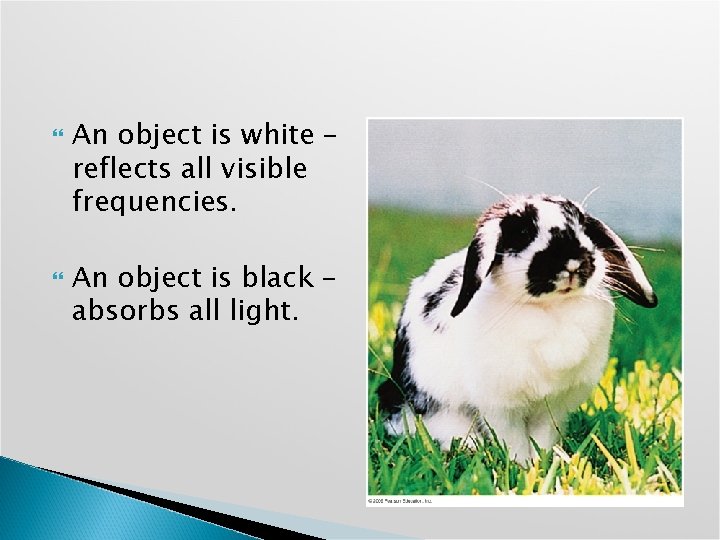
An object is white – reflects all visible frequencies. An object is black – absorbs all light.
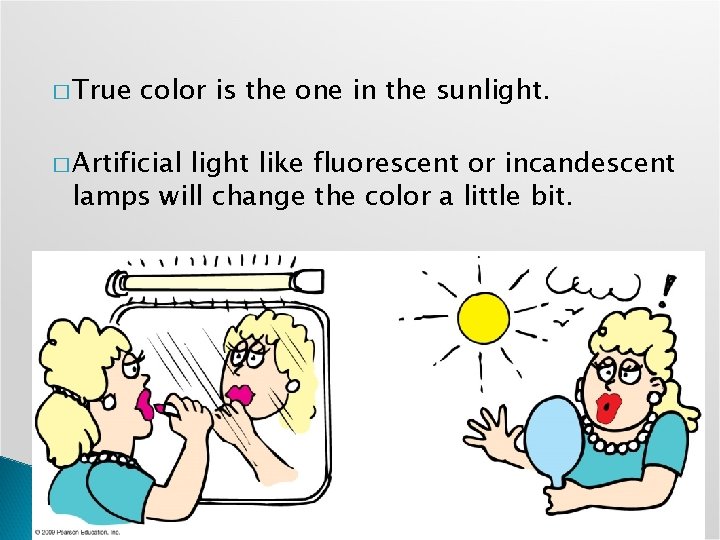
� True color is the one in the sunlight. � Artificial light like fluorescent or incandescent lamps will change the color a little bit.
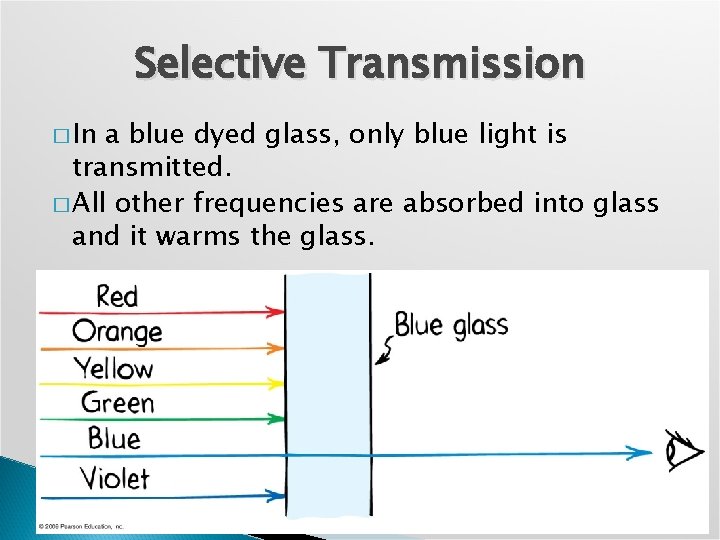
Selective Transmission � In a blue dyed glass, only blue light is transmitted. � All other frequencies are absorbed into glass and it warms the glass.
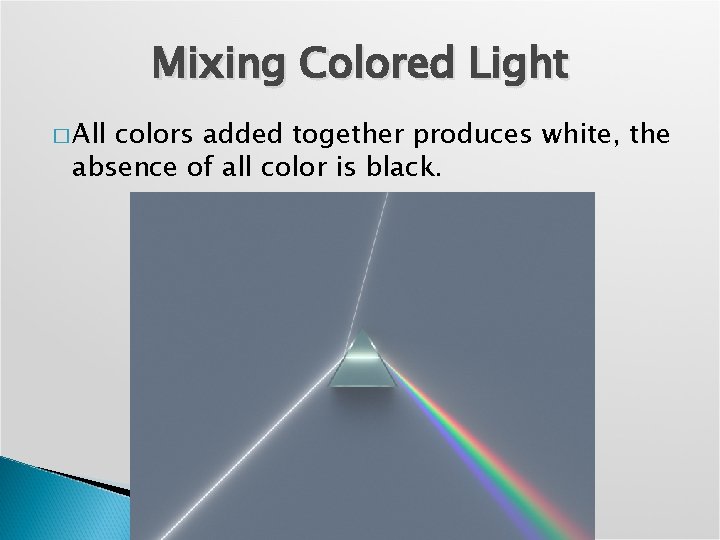
Mixing Colored Light � All colors added together produces white, the absence of all color is black.
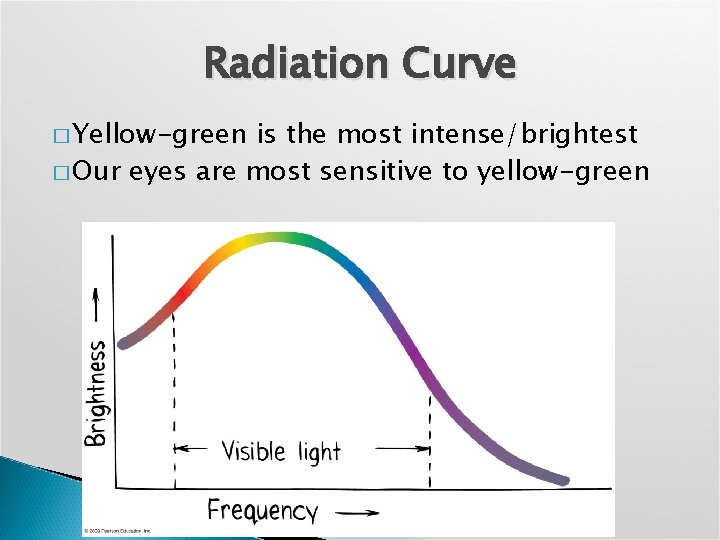
Radiation Curve � Yellow-green is the most intense/brightest � Our eyes are most sensitive to yellow-green
Video: Yellow-Green Peak of Sunlight
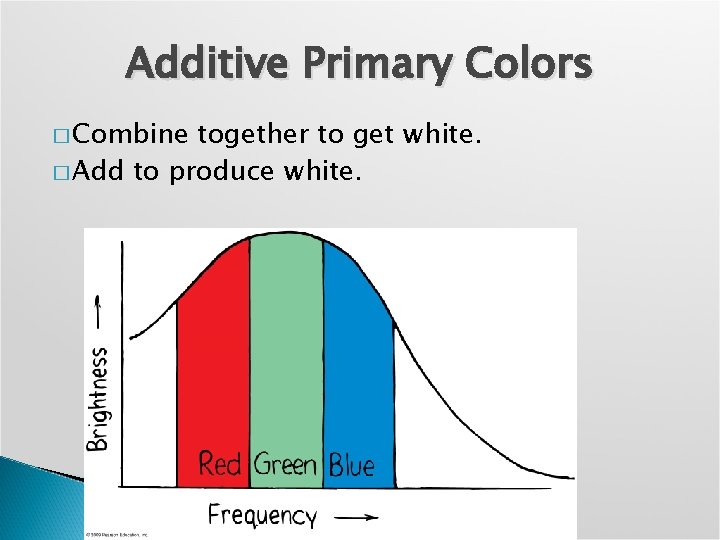
Additive Primary Colors � Combine together to get white. � Add to produce white.
Video: Color Shawdows
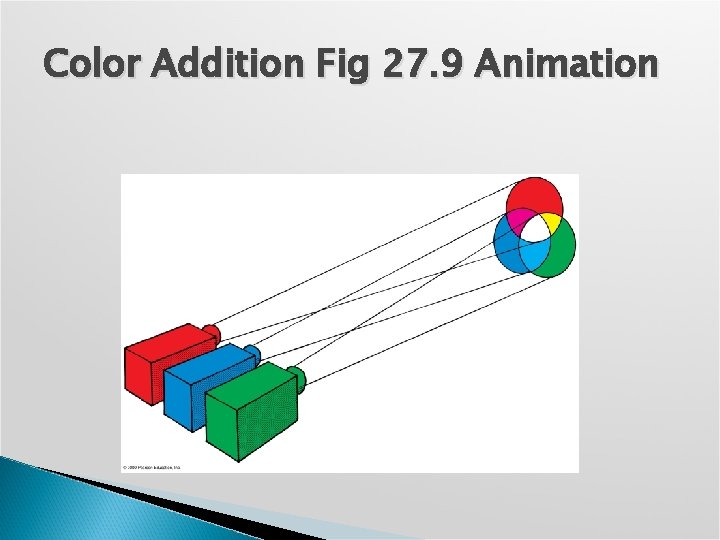
Color Addition Fig 27. 9 Animation
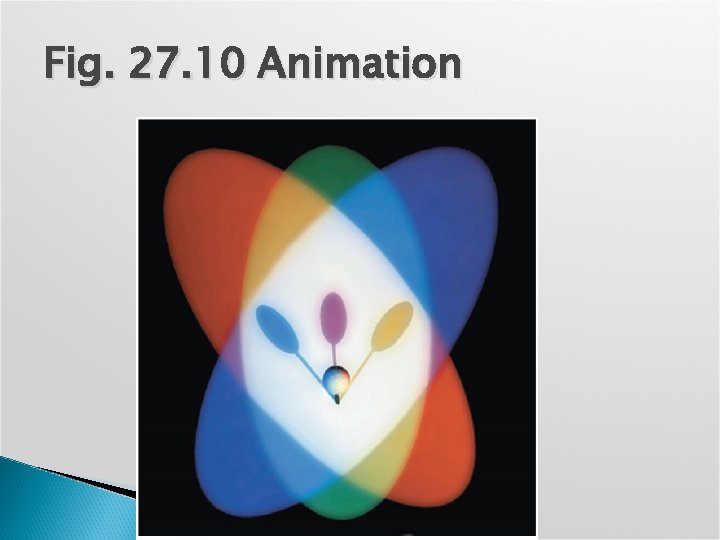
Fig. 27. 10 Animation
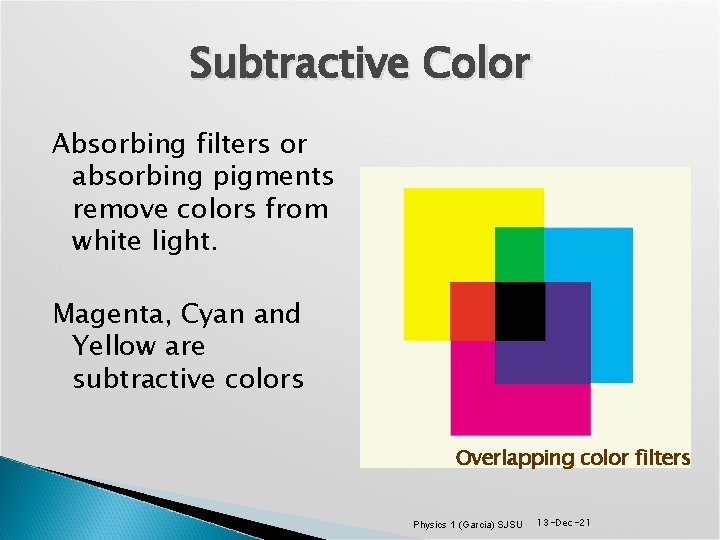
Subtractive Color Absorbing filters or absorbing pigments remove colors from white light. Magenta, Cyan and Yellow are subtractive colors Overlapping color filters Physics 1 (Garcia) SJSU 13 -Dec-21
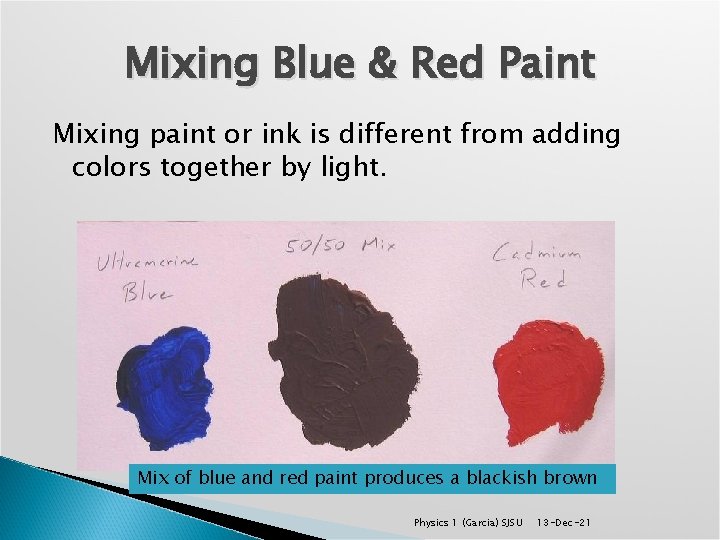
Mixing Blue & Red Paint Mixing paint or ink is different from adding colors together by light. Mix of blue and red paint produces a blackish brown Physics 1 (Garcia) SJSU 13 -Dec-21
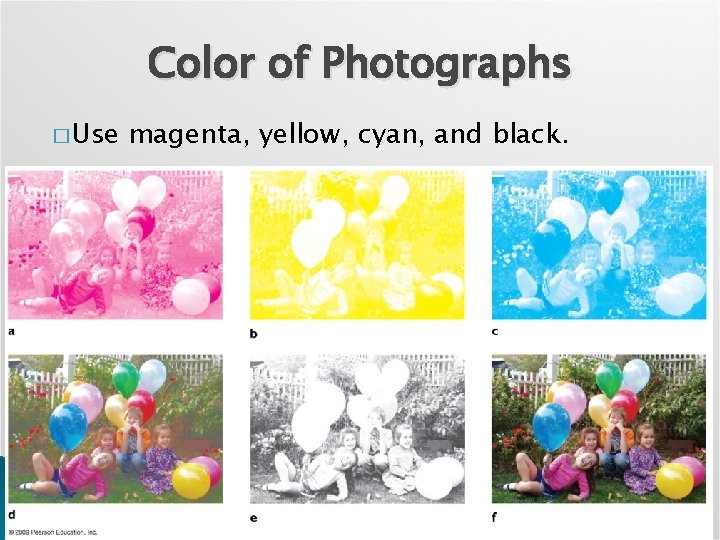
Color of Photographs � Use magenta, yellow, cyan, and black.
Why is the sky blue and Sunset Red?
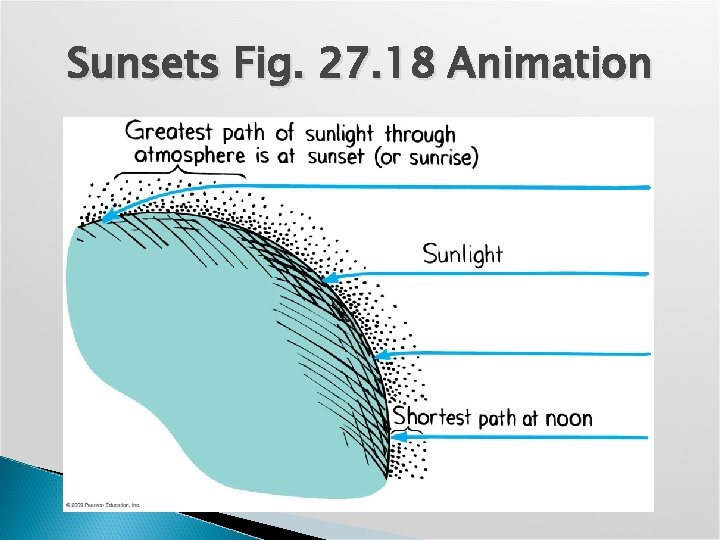
Sunsets Fig. 27. 18 Animation
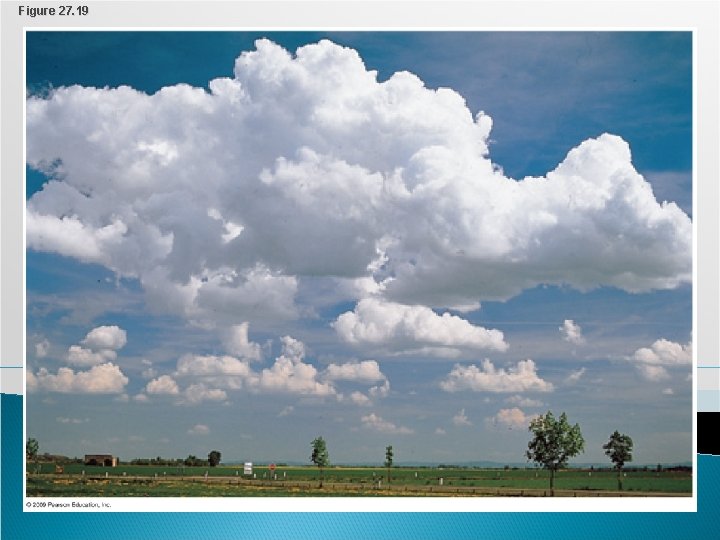
Figure 27. 19
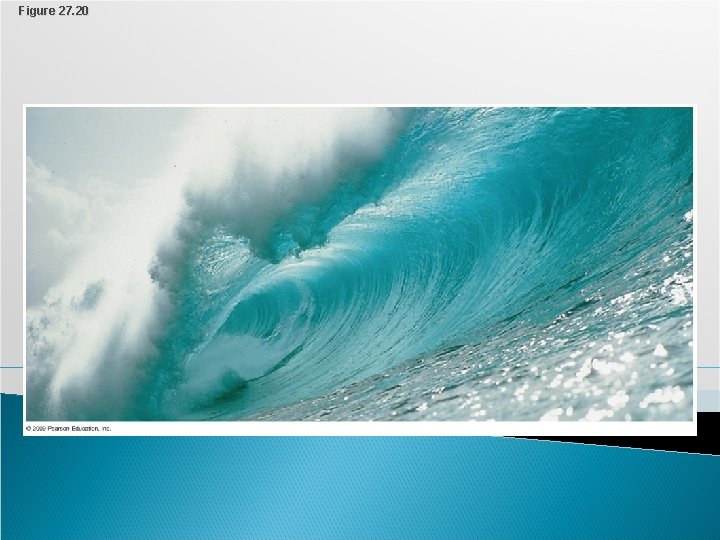
Figure 27. 20
Chapter 27 Homework � Review Questions: 1 -6 All, 8 -10 All, 1315 All, 17, 18, 20, 23, 26, 27, 29, 30 � Exercises: 1, 2 -10 Even, 11 -15 ODD, 16, 18, 22, 25, 27, 28, 44, 45, 46, 50 � Extra Credit: Project 2 � Present by last day of class.
- Slides: 26