
Chapter 27 Care of the Mother and Newborn
Chapter 27 Care of the Mother and Newborn Mosby items and derived items © 2011, 2006, 2003, 1999, 1995, 1991 by Mosby, Inc. , an affiliate of Elsevier Inc.
Overview of Anatomic and Physiological Changes • Reproductive Organs § Uterus • After the delivery of the placenta, oxytocin causes the uterus to contract and compress blood vessels at the site where the placenta separated from the wall; this site is 3 to 4 inches in diameter. • If the uterus does not contract adequately, blood loss can be excessive. • Placental site will heal with sloughing of the uterine lining; this is necessary if more pregnancies are to occur. Mosby items and derived items © 2011, 2006, 2003, 1999, 1995, 1991 by Mosby, Inc. , an affiliate of Elsevier Inc. Slide 2
Overview of Anatomic and Physiological Changes • Reproductive Organs (continued) § Uterus • Immediately after delivery, the fundus is about midway between the umbilicus and symphysis pubis or slightly higher. • Within 12 hours, it rises to the umbilicus; after 24 to 48 hours, it begins a gradual descent; within 1 week, the level is at the symphysis pubis and barely palpable; within 6 weeks, the uterus is at the prepregnant state. Mosby items and derived items © 2011, 2006, 2003, 1999, 1995, 1991 by Mosby, Inc. , an affiliate of Elsevier Inc. Slide 3
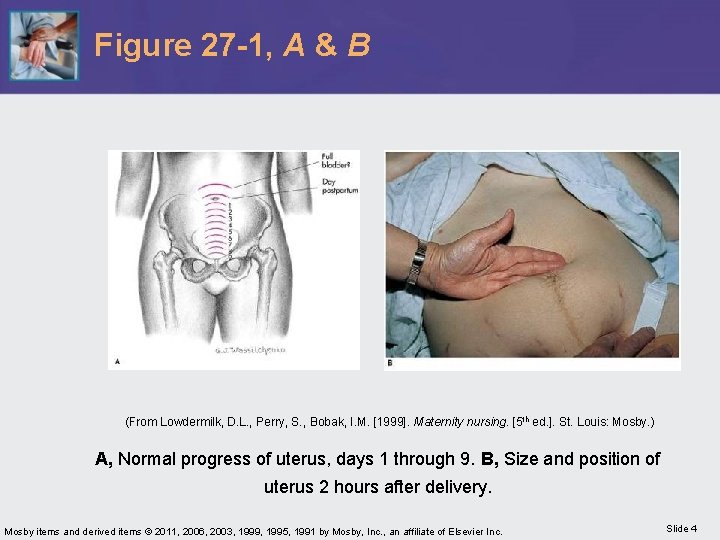
Figure 27 -1, A & B (From Lowdermilk, D. L. , Perry, S. , Bobak, I. M. [1999]. Maternity nursing. [5 th ed. ]. St. Louis: Mosby. ) A, Normal progress of uterus, days 1 through 9. B, Size and position of uterus 2 hours after delivery. Mosby items and derived items © 2011, 2006, 2003, 1999, 1995, 1991 by Mosby, Inc. , an affiliate of Elsevier Inc. Slide 4
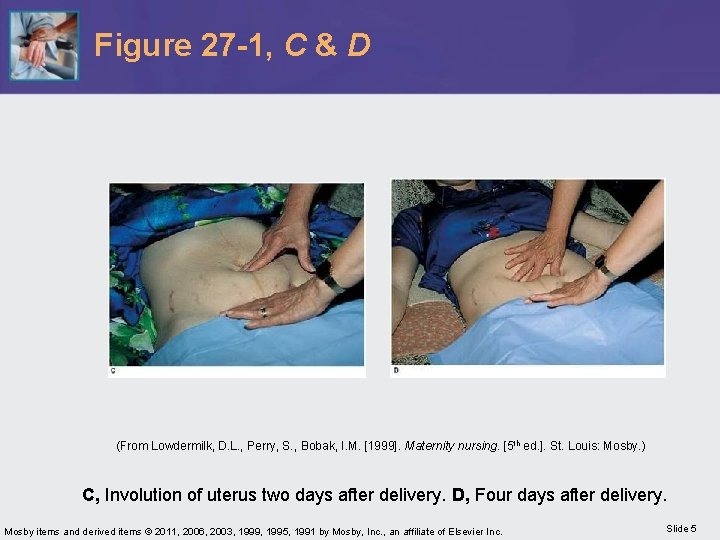
Figure 27 -1, C & D (From Lowdermilk, D. L. , Perry, S. , Bobak, I. M. [1999]. Maternity nursing. [5 th ed. ]. St. Louis: Mosby. ) C, Involution of uterus two days after delivery. D, Four days after delivery. Mosby items and derived items © 2011, 2006, 2003, 1999, 1995, 1991 by Mosby, Inc. , an affiliate of Elsevier Inc. Slide 5

Overview of Anatomic and Physiological Changes • Reproductive Organs (continued) § Uterus • Involution § Autolysis o Self-dissolution or self-digestion that occurs in tissues or cells by enzymes in the cells themselves o Occurs as a result of withdrawal of estrogen and progesterone Mosby items and derived items © 2011, 2006, 2003, 1999, 1995, 1991 by Mosby, Inc. , an affiliate of Elsevier Inc. Slide 6
Overview of Anatomic and Physiological Changes • Reproductive Organs (continued) § Uterus • Lochia: fluid waste discharges after delivery § § § Lochia rubra o Bright-red drainage; first day or two after delivery Lochia serosa o Pink to brown drainage; until day 7 Lochia alba o Yellow to white drainage; continues for an additional 10 days to 2 weeks Mosby items and derived items © 2011, 2006, 2003, 1999, 1995, 1991 by Mosby, Inc. , an affiliate of Elsevier Inc. Slide 7
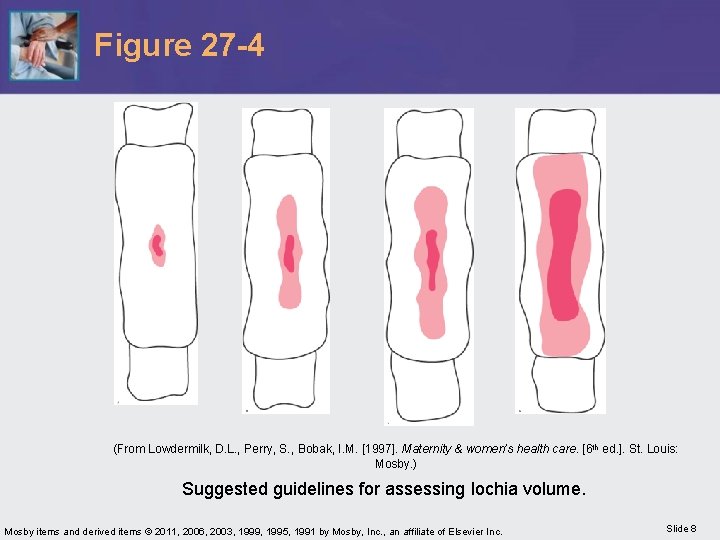
Figure 27 -4 (From Lowdermilk, D. L. , Perry, S. , Bobak, I. M. [1997]. Maternity & women’s health care. [6 th ed. ]. St. Louis: Mosby. ) Suggested guidelines for assessing lochia volume. Mosby items and derived items © 2011, 2006, 2003, 1999, 1995, 1991 by Mosby, Inc. , an affiliate of Elsevier Inc. Slide 8
Overview of Anatomic and Physiological Changes • Cervix/Vagina/Perineum § § § The cervix will appear edematous, with bruising present. The external cervical os will have a ragged, slit-like appearance instead of being round as seen in the nulliparous woman. The vagina will be thin, with an absence of rugae and with dryness present. The perineum may have some edema and bruising. The episiotomy (if present) should be free of erythema, with the edges well approximated. Mosby items and derived items © 2011, 2006, 2003, 1999, 1995, 1991 by Mosby, Inc. , an affiliate of Elsevier Inc. Slide 9
Overview of Anatomic and Physiological Changes • Cervix/Vagina/Perineum (continued) § Cervical injuries • Injury occurs when the cervix retracts over the advancing fetal head. • It occurs at the lateral angles of the external os. • Most are shallow and bleeding is minimal. • Extensive lacerations may be a consequence of a hasty attempt to enlarge the cervical opening artificially or to deliver the fetus before the cervix is fully dilated. Mosby items and derived items © 2011, 2006, 2003, 1999, 1995, 1991 by Mosby, Inc. , an affiliate of Elsevier Inc. Slide 10
Overview of Anatomic and Physiological Changes • Breast Estrogen stimulates the growth of milk ducts to prepare for lactation. § The first secretion produced by the breast is colostrum thin, watery, and slightly yellow; rich in protein, calories, antibodies, and lymphocytes. § Prolactin is responsible for stimulating milk production in the mammary alveolar cells. § Stimulation of nipples, particularly by the infant’s sucking, causes the release of oxytocin; it also stimulates contraction of the mammary ducts and causes milk to be ejected from the breast. § Mosby items and derived items © 2011, 2006, 2003, 1999, 1995, 1991 by Mosby, Inc. , an affiliate of Elsevier Inc. Slide 11
Overview of Anatomic and Physiological Changes • Other Body Systems § Cardiovascular • Blood volume is reduced to nonpregnant levels by 2 to 4 weeks. § § § Diuresis Diaphoresis Blood loss in delivery • Cardiac output declines rapidly; patient is at risk for thrombus due to high level of platelets in the early postpartum period. Mosby items and derived items © 2011, 2006, 2003, 1999, 1995, 1991 by Mosby, Inc. , an affiliate of Elsevier Inc. Slide 12
Overview of Anatomic and Physiological Changes • Other Body Systems (continued) § Urinary • Possible trauma in delivery and regional anesthesia; there may be edema of the bladder, urethra, and meatus, as well as a decreased urge to void. • Much of the excess blood volume is eliminated through diuresis. Mosby items and derived items © 2011, 2006, 2003, 1999, 1995, 1991 by Mosby, Inc. , an affiliate of Elsevier Inc. Slide 13
Overview of Anatomic and Physiological Changes • Other Body Systems (continued) § Gastrointestinal • Appetite returns to normal. • Gastric motility may continue to decrease, leading to constipation. • Normal bowel elimination should return in 2 to 3 days. • Decreased abdominal tone and tenderness resulting from episiotomy or hemorrhoids may make the patient reluctant to strain for a bowel movement. Mosby items and derived items © 2011, 2006, 2003, 1999, 1995, 1991 by Mosby, Inc. , an affiliate of Elsevier Inc. Slide 14
Overview of Anatomic and Physiological Changes • Other Body Systems (continued) § Endocrine • Placental hormone levels rapidly reduce after delivery. • Estrogen and progesterone levels drop markedly following expulsion of the placenta. • Decreased estrogen levels are associated with breast engorgement and diuresis of excess extracellular fluid that has accumulated during pregnancy. • Prolactin is secreted only with nipple stimulation. Mosby items and derived items © 2011, 2006, 2003, 1999, 1995, 1991 by Mosby, Inc. , an affiliate of Elsevier Inc. Slide 15
Overview of Anatomic and Physiological Changes • Other Body Systems (continued) § Musculoskeletal • Abdominal muscle tone and joint stabilization occur during the 6 - to 8 -week period after delivery. • Some pelvic joints may never return to their prepregnant position. • Discomfort may be felt in the joints immediately after delivery because of the hormone relaxin. • There may be a permanent increase in shoe size. Mosby items and derived items © 2011, 2006, 2003, 1999, 1995, 1991 by Mosby, Inc. , an affiliate of Elsevier Inc. Slide 16
Overview of Anatomic and Physiological Changes • Other Body Systems (continued) § Integument • Changes seen in pregnancy recede, with hyperpigmentation gradually disappearing after delivery. • Hair and nail growth returns to normal and skin elasticity returns. • Striae may not fade completely but turn silver-gray. • Diaphoresis is common, especially at night during the first week postpartum. Mosby items and derived items © 2011, 2006, 2003, 1999, 1995, 1991 by Mosby, Inc. , an affiliate of Elsevier Inc. Slide 17
Transfer from the Recovery Area • After the initial recovery period of 1 or 2 hours, the • • woman may be transferred to a postpartum room. Women who have had general or regional anesthesia must be cleared from the recovery room by a member of the anesthesia care team. In some hospitals, the baby stays with the mother wherever she goes; in others, the baby is taken to the nursery for several hours for observation. Mosby items and derived items © 2011, 2006, 2003, 1999, 1995, 1991 by Mosby, Inc. , an affiliate of Elsevier Inc. Slide 18
Nursing Assessment of and Intervention for the Mother • Health Perception/Health Management Women with uncomplicated deliveries remain in the hospital a short time after giving birth. § It may be only hours, or it may be 1 to 2 days after delivery; cesarean rarely requires more than 5 to 7 days. § Because early discharge is increasingly common, it is important to assess the woman’s ability to meet her own needs and those of her infant. § Mosby items and derived items © 2011, 2006, 2003, 1999, 1995, 1991 by Mosby, Inc. , an affiliate of Elsevier Inc. Slide 19
Nursing Assessment of and Intervention for the Mother • Health Perception/Health Management (continued) § Parent-newborn relationships • The mother’s reaction to the sight of her newborn may range from excited outbursts of laughing, talking, and even crying, to apparent apathy. • Whatever the reaction and cause, the mother needs continuing acceptance and support from all of the staff. • Nurses should become knowledgeable about the child-bearing beliefs and practices of diverse cultural and ethnic groups. Mosby items and derived items © 2011, 2006, 2003, 1999, 1995, 1991 by Mosby, Inc. , an affiliate of Elsevier Inc. Slide 20
Nursing Assessment of and Intervention for the Mother • Health Perception/Health Management (continued) § Promoting parenting skills • Stress that parenthood is a learned role; it takes time to master, improves with experience, and evolves gradually and continually as the needs of the parent and child change. • Through the loving and attentive manner nurses exhibit while providing physical care, they act as role models. Mosby items and derived items © 2011, 2006, 2003, 1999, 1995, 1991 by Mosby, Inc. , an affiliate of Elsevier Inc. Slide 21
Nursing Assessment of and Intervention for the Mother • Nutritional and Metabolic Issues § Recovery stage • The length of time spent in labor, and the physical exertion, often result in hunger. • Fluids are very important during the recovery phase to replace the fluids and blood lost during delivery. • The presence of bowel sounds should be verified before solid food is given. • Good oral hygiene should be practiced. • A complete sponge bath enhances well-being and provides comfort. Mosby items and derived items © 2011, 2006, 2003, 1999, 1995, 1991 by Mosby, Inc. , an affiliate of Elsevier Inc. Slide 22
Nursing Assessment of and Intervention for the Mother • Nutritional and Metabolic Issues (continued) § Later postpartum stage • If the woman has not gained an excessive amount of weight, prepregnancy weight is normally achieved in 6 to 8 weeks without dieting. • The nonlactating mother should continue to eat a well-balanced diet; caloric intake should be the same as before pregnancy. • Lactating mothers generally continue with the same diet recommended during pregnancy; calorie intake should increase by 300 to 500 calories per day, with daily fluid intake of 2 to 3 liters. Mosby items and derived items © 2011, 2006, 2003, 1999, 1995, 1991 by Mosby, Inc. , an affiliate of Elsevier Inc. Slide 23

Nursing Assessment of and Intervention for the Mother • Hygiene Good personal hygiene continues to be important during the postpartum stage. § Excessive perspiration and a slight odor from discharge are common. § Regular bathing (shower) should be encouraged. § Sitz baths are sometimes ordered to reduce discomfort and to promote healing of the perineum. § Mosby items and derived items © 2011, 2006, 2003, 1999, 1995, 1991 by Mosby, Inc. , an affiliate of Elsevier Inc. Slide 24
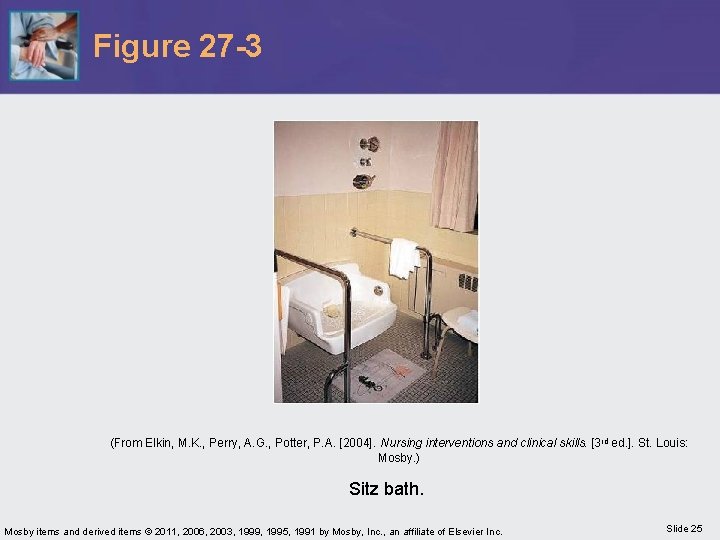
Figure 27 -3 (From Elkin, M. K. , Perry, A. G. , Potter, P. A. [2004]. Nursing interventions and clinical skills. [3 rd ed. ]. St. Louis: Mosby. ) Sitz bath. Mosby items and derived items © 2011, 2006, 2003, 1999, 1995, 1991 by Mosby, Inc. , an affiliate of Elsevier Inc. Slide 25
Nursing Assessment of and Intervention for the Mother • Elimination § Recovery stage • Diuresis and diaphoresis are common immediately after delivery. • Palpate the bladder for fullness • Voiding should be encouraged because a full bladder may interfere with complete contraction of the uterus, potentially causing hemorrhage. • The initial voiding should be within 4 to 6 hours after delivery. Measures to stimulate voiding may be required. • An indwelling catheter may remain in place for 1 to 2 days after cesarean delivery. Mosby items and derived items © 2011, 2006, 2003, 1999, 1995, 1991 by Mosby, Inc. , an affiliate of Elsevier Inc. Slide 26
Nursing Assessment of and Intervention for the Mother • Elimination (continued) § Later postpartum stage • The nurse must encourage the patient to void every 2 to 4 hours. • If patient is voiding frequently in small amounts, the nurse should suspect retention with overflow. • Ask about any symptoms of frequency, urgency, or dysuria. • Review proper cleansing technique after delivery. Mosby items and derived items © 2011, 2006, 2003, 1999, 1995, 1991 by Mosby, Inc. , an affiliate of Elsevier Inc. Slide 27
Nursing Assessment of and Intervention for the Mother • Elimination (continued) § Later postpartum stage (continued) • Bowel elimination § § § Ideally, elimination should occur before discharge. Fear of discomfort may result in the patient resisting the urge to defecate. Bowel peristalsis may be slowed. To prevent constipation, many physicians order bulk enhancers and stool softeners. Occasionally, suppositories are administered to promote bowel evacuation. Adequate bulk in the diet and fluid intake should be stressed. Mosby items and derived items © 2011, 2006, 2003, 1999, 1995, 1991 by Mosby, Inc. , an affiliate of Elsevier Inc. Slide 28
Nursing Assessment of and Intervention for the Mother • Elimination (continued) § Later postpartum stage (continued) • Perineal pads, worn to absorb vaginal drainage, should be changed after each urination or defecation. • Correct and scrupulous handwashing should be stressed to the new mother to prevent crosscontamination. Mosby items and derived items © 2011, 2006, 2003, 1999, 1995, 1991 by Mosby, Inc. , an affiliate of Elsevier Inc. Slide 29
Maintenance of Safety • Activity/Exercise § Recovery stage (1 to 4 hours after delivery of the placenta) • Vital signs should be monitored every 15 minutes for 2 hours during the recovery stage. • A patient who has just given birth may need to remain in bed for a time to allow the body system to adjust to fluid volume changes. • The nurse will decide the appropriate time for the first ambulation. Mosby items and derived items © 2011, 2006, 2003, 1999, 1995, 1991 by Mosby, Inc. , an affiliate of Elsevier Inc. Slide 30
Maintenance of Safety • Activity/Exercise (continued) § Recovery stage (1 to 4 hours after delivery of the placenta) (continued) • Orthostatic hypotension tends to occur when a woman who has recently given birth stands up. • Caution the patient to use her call bell to summon help before she attempts to get out of bed. • The patient who has received conduction anesthesia is kept in bed until she can move her legs fully and blood pressure and pulse are within normal limits. Mosby items and derived items © 2011, 2006, 2003, 1999, 1995, 1991 by Mosby, Inc. , an affiliate of Elsevier Inc. Slide 31
Maintenance of Safety • Activity/Exercise (continued) § Later postpartum stage • Vital signs usually stabilize within the first 2 hours after delivery; any abnormalities lasting longer should be reported. • A temperature of 100. 4° F or higher on 2 successive days during the first 10 days after delivery is considered indicative of a puerperal infection; woman is monitored closely. • Bradycardia may persist up to 10 days following delivery; elevated or decreased blood pressure should be reported. Mosby items and derived items © 2011, 2006, 2003, 1999, 1995, 1991 by Mosby, Inc. , an affiliate of Elsevier Inc. Slide 32
Maintenance of Safety • Activity/Exercise (continued) § Later postpartum stage (continued) • Activity is needed to prevent complications such as thrombophlebitis of the lower extremities. • The flow of lochia may increase suddenly when the patient gets out of bed; secretions that pool in the vagina drain out of the body when the woman stands. • Postpartum exercises suitable for the new mother should begin when the physician identifies the appropriate time. Mosby items and derived items © 2011, 2006, 2003, 1999, 1995, 1991 by Mosby, Inc. , an affiliate of Elsevier Inc. Slide 33
Maintenance of Safety • Rest and Sleep Rest and sleep are important throughout the postpartum period. § After the discomforts at the end of pregnancy, many women enjoy being able to sleep in any position desired. § Sleep should not be disturbed unless it is necessary to protect the patient's well-being. § If she is breastfeeding, instruct the patient on the importance of naps and rest periods during the day to compensate for lost sleep. § Mosby items and derived items © 2011, 2006, 2003, 1999, 1995, 1991 by Mosby, Inc. , an affiliate of Elsevier Inc. Slide 34
Maintenance of Safety • Reproductive Issues § Recovery stage • Fundus and lochia are checked every 15 minutes for the first 2 hours after delivery. • Fundus should remain contracted, firm, and at the midline; this is critical, because severe bleeding may result if the uterus does not contract the placental site. • A full bladder can displace the uterus and prevent contraction of the uterus; encourage the patient to empty her bladder before the nurse checks the fundus. Mosby items and derived items © 2011, 2006, 2003, 1999, 1995, 1991 by Mosby, Inc. , an affiliate of Elsevier Inc. Slide 35
Maintenance of Safety • Reproductive Issues (continued) § Recovery stage (continued) • An atonic uterus feels soft or boggy; the nurse may gently massage the fundus to increase contractility. • On palpation of the uterus, the amount of lochia should be observed. If the uterus is contracted, small to moderate amounts will be seen. If the tone is poor, the lochia will increase. • Always check under the buttocks; many times gravity causes drainage to miss the pad and pool under the patient. Mosby items and derived items © 2011, 2006, 2003, 1999, 1995, 1991 by Mosby, Inc. , an affiliate of Elsevier Inc. Slide 36
Maintenance of Safety • Reproductive Issues (continued) § Later postpartum stage • Postpartum checks § Daily assessments of breasts, fundus, lochia, perineum, rectum, and vascular condition of legs • It is recommended that all new mothers wear a bra; it should be comfortable and fitted. • Nonbreastfeeding mothers should wear a bra that provides adequate compression to inhibit lactation without being uncomfortable. Mosby items and derived items © 2011, 2006, 2003, 1999, 1995, 1991 by Mosby, Inc. , an affiliate of Elsevier Inc. Slide 37
Maintenance of Safety • Reproductive Issues (continued) § Later postpartum stage (continued) • Engorgement § § This uncomfortable fullness of the breasts occurs when the milk supply initially comes in. It is a result of venous and lymphatic stasis that occurs during lactation. Filling of the breast with milk usually occurs in the axillary regions. It is usually seen on the third day postpartum and resolves in about 48 hours. Mosby items and derived items © 2011, 2006, 2003, 1999, 1995, 1991 by Mosby, Inc. , an affiliate of Elsevier Inc. Slide 38
Maintenance of Safety • Reproductive Issues (continued) § Later postpartum stage (continued) • Nipples should be inspected for inflammation, fissures, or tenderness. • If the patient is breastfeeding, nipples should be kept soft and supple. • Avoid the use of soap or other chemicals; plain water and air drying may prevent problems. • Modifications in positioning of the baby may needed if tender or cracked nipples are a problem. • Assist the breastfeeding mother to be successful in establishing lactation. Mosby items and derived items © 2011, 2006, 2003, 1999, 1995, 1991 by Mosby, Inc. , an affiliate of Elsevier Inc. Slide 39
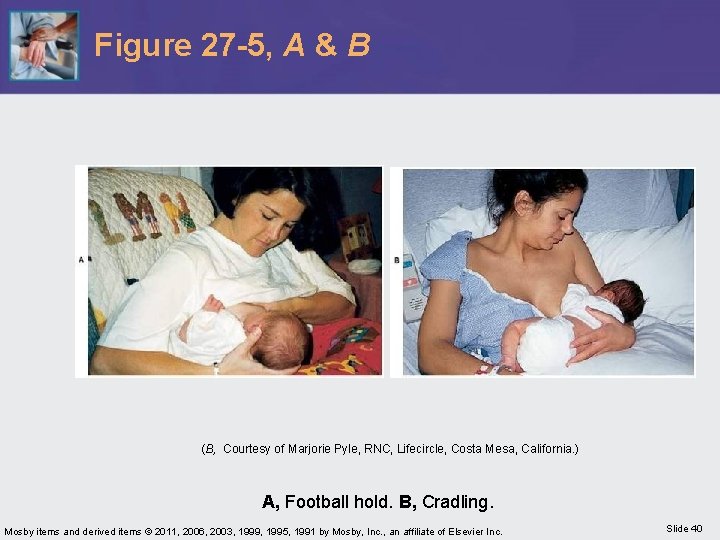
Figure 27 -5, A & B (B, Courtesy of Marjorie Pyle, RNC, Lifecircle, Costa Mesa, California. ) A, Football hold. B, Cradling. Mosby items and derived items © 2011, 2006, 2003, 1999, 1995, 1991 by Mosby, Inc. , an affiliate of Elsevier Inc. Slide 40
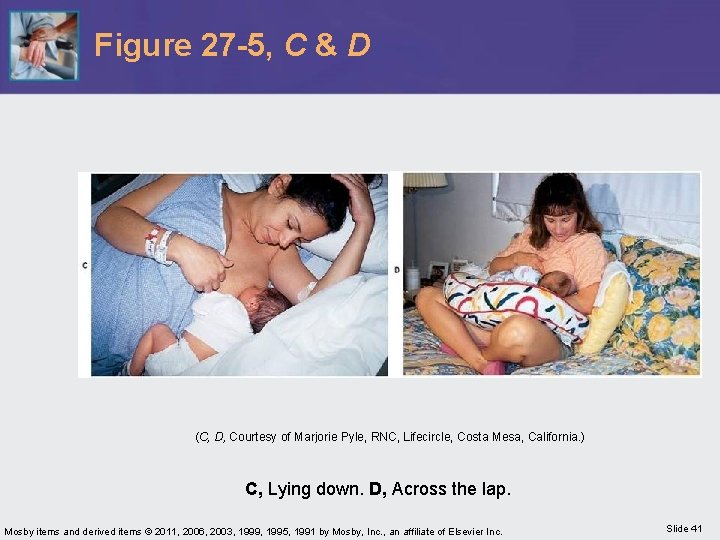
Figure 27 -5, C & D (C, D, Courtesy of Marjorie Pyle, RNC, Lifecircle, Costa Mesa, California. ) C, Lying down. D, Across the lap. Mosby items and derived items © 2011, 2006, 2003, 1999, 1995, 1991 by Mosby, Inc. , an affiliate of Elsevier Inc. Slide 41
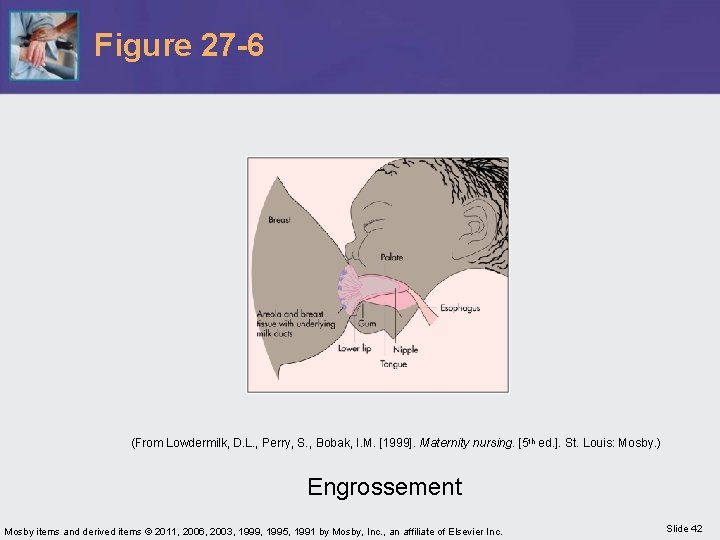
Figure 27 -6 (From Lowdermilk, D. L. , Perry, S. , Bobak, I. M. [1999]. Maternity nursing. [5 th ed. ]. St. Louis: Mosby. ) Engrossement Mosby items and derived items © 2011, 2006, 2003, 1999, 1995, 1991 by Mosby, Inc. , an affiliate of Elsevier Inc. Slide 42
Maintenance of Safety • Reproductive Issues (continued) § Later postpartum stage (continued) • Manual pumping of the breasts may be necessary in some cases, such as an infant who is unable to suckle at the breast or a mother who must spend an extended period of time away from her infant. Mosby items and derived items © 2011, 2006, 2003, 1999, 1995, 1991 by Mosby, Inc. , an affiliate of Elsevier Inc. Slide 43
Maintenance of Safety • Reproductive Issues (continued) § Later postpartum stage (continued) • Benefits of breastfeeding § § There is more rapid involution of the uterus. Mother enjoys social closeness with her infant. Human milk has antibacterial and antiviral properties, immunoglobins, and antiallergy factors to protect the infant. The milk contains growth factors, digestive enzymes, and proteins. Mosby items and derived items © 2011, 2006, 2003, 1999, 1995, 1991 by Mosby, Inc. , an affiliate of Elsevier Inc. Slide 44
Maintenance of Safety • Reproductive Issues (continued) § Later postpartum stage (continued) • Bottle-feeding is another choice of the newly delivered woman. § Lactation must be suppressed. • Fundus should remain firmly contracted. • Lochia may begin to change within the first 2 days from the rubra to the serosa form. Mosby items and derived items © 2011, 2006, 2003, 1999, 1995, 1991 by Mosby, Inc. , an affiliate of Elsevier Inc. Slide 45
Maintenance of Safety • Reproductive Issues (continued) § Later postpartum stage (continued) • Have the woman assume a lateral position with the upper leg toward the chest. • Perineum should be approximated; if an episiotomy was performed, the tissue may appear edematous. • Most physicians order topical anesthetics such as Tucks or Nupercainal ointment. Mosby items and derived items © 2011, 2006, 2003, 1999, 1995, 1991 by Mosby, Inc. , an affiliate of Elsevier Inc. Slide 46
Maintenance of Safety • Reproductive Issues (continued) § Later postpartum stage (continued) • Hemorrhoids (varicosities of the rectum) usually disappear quickly after delivery if there is no longstanding history of this problem. § § Topical anesthetics are used to relieve pain. Sitz baths also provide relief. • Homans’ sign § Positive indicates inflammation of the blood vessels of the leg and possible thrombophlebitis. Mosby items and derived items © 2011, 2006, 2003, 1999, 1995, 1991 by Mosby, Inc. , an affiliate of Elsevier Inc. Slide 47
Psychosocial Assessment • Coping and Stress Tolerance § § § Many new mothers feel overwhelmed by the responsibility of motherhood. They feel intimidated by the nurse’s capability and skill in taking care of the newborn. They often feel inept and may not wish to ask questions that might be viewed as unintelligent. Establishing a rapport is essential; listen for fears and anxieties. Often women experience a period of depression after delivery, triggered by a rapid hormonal shift postpartum depression, or “blues. ” Mosby items and derived items © 2011, 2006, 2003, 1999, 1995, 1991 by Mosby, Inc. , an affiliate of Elsevier Inc. Slide 48

Psychosocial Assessment • Signs of Potential Problems Not all potential psychosocial problems are easily identified. § Some signs may indicate a need for further evaluation by a caregiver skilled in that area. § The presence of one or more of these signs is not proof that a problem actually exists. § Mosby items and derived items © 2011, 2006, 2003, 1999, 1995, 1991 by Mosby, Inc. , an affiliate of Elsevier Inc. Slide 49
Psychosocial Assessment • Roles and Relationships § § § The mother faces the greatest number of changes. She fills the role of primary caregiver to the child. The loss of freedom to come and go as one pleases is difficult. Role conflict can lead to guilt and confusion. Nurse should be sensitive to the mother’s concerns. Mosby items and derived items © 2011, 2006, 2003, 1999, 1995, 1991 by Mosby, Inc. , an affiliate of Elsevier Inc. Slide 50
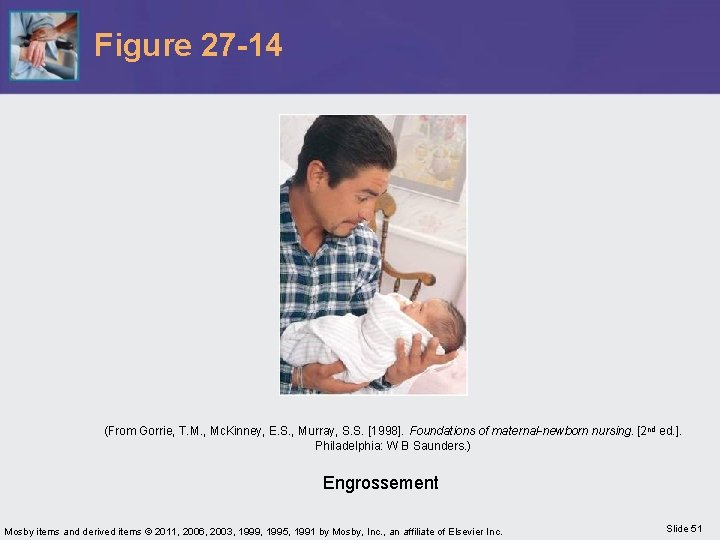
Figure 27 -14 (From Gorrie, T. M. , Mc. Kinney, E. S. , Murray, S. S. [1998]. Foundations of maternal-newborn nursing. [2 nd ed. ]. Philadelphia: W B Saunders. ) Engrossement Mosby items and derived items © 2011, 2006, 2003, 1999, 1995, 1991 by Mosby, Inc. , an affiliate of Elsevier Inc. Slide 51

Psychosocial Assessment • Roles and Relationships (continued) Responsibilities of fatherhood become a reality when they see the child; they can be frightening. § Financial concerns of feeding, clothing, and sheltering his family take on a new significance. § The wife is now also a mother, and many times the needs of the child will supersede the husband’s needs or wishes. § Many men have little knowledge or experience in caring for an infant. § Mosby items and derived items © 2011, 2006, 2003, 1999, 1995, 1991 by Mosby, Inc. , an affiliate of Elsevier Inc. Slide 52
Psychosocial Assessment • Self-Perception It is common for the new mother to wish to discuss her perception of the labor and delivery; explanations may be needed to clarify things in her mind. § “Taking in” stage: new mother may be somewhat passive for the first day or two; needs supportive care. § Mood swings are common early in the postpartum period, related to current stresses, fatigue, and rapid hormonal changes. § Mosby items and derived items © 2011, 2006, 2003, 1999, 1995, 1991 by Mosby, Inc. , an affiliate of Elsevier Inc. Slide 53
Psychosocial Assessment • Cognitive and Perceptual Issues § Control of discomforts during the postpartum period is important. • Episiotomy pain • Afterbirth pains: cramping sensations Most physicians prescribe analgesics for these discomforts. § The new mother needs to know how to care for herself and how to care for the newborn; teaching should be paced throughout the hospital stay. § Mosby items and derived items © 2011, 2006, 2003, 1999, 1995, 1991 by Mosby, Inc. , an affiliate of Elsevier Inc. Slide 54
Nursing Process • Nursing Diagnoses for the Postpartum Mother § § § § § Fluid volume, risk for deficient Infection, risk for Urinary elimination, impaired Constipation Nutrition: less than body requirements Nutrition: more than body requirements Pain, acute Tissue integrity, impaired Sleep pattern, disturbed Mosby items and derived items © 2011, 2006, 2003, 1999, 1995, 1991 by Mosby, Inc. , an affiliate of Elsevier Inc. Slide 55
Nursing Process • Nursing Diagnoses for the Postpartum Mother § § § Knowledge, deficient Anxiety Parenting, risk for impaired Family processes, interrupted Parenting, impaired Self-esteem, situational low Mosby items and derived items © 2011, 2006, 2003, 1999, 1995, 1991 by Mosby, Inc. , an affiliate of Elsevier Inc. Slide 56
Nursing Assessment of and Interventions for the Newborn • Health Management and Health Perception Check identification bracelets to prevent giving the baby to the wrong mother. § Instruct mother about handwashing when caring for the baby. § Instruct the new mother on safety practices to reduce the likelihood of injury to the infant. § State laws require certain diagnostic tests be performed on the newborn: phenylketonuria (PKU), maple sugar urine disease, galactosemia, and hypothyroidism. § Mosby items and derived items © 2011, 2006, 2003, 1999, 1995, 1991 by Mosby, Inc. , an affiliate of Elsevier Inc. Slide 57
Overview of Anatomy and Physiology of the Normal Newborn • Assessment Immediately after Delivery § Characteristics • Body size and shape § § § Head is disproportionately large for its body. The abdomen is prominent, with a smaller chest and narrow hips. Average weight: 3400 g (7 lb, 8 oz) Average length: 20 inches (50 cm) Head circumference: 13 to 14 inches (33 to 35. 5 cm) Mosby items and derived items © 2011, 2006, 2003, 1999, 1995, 1991 by Mosby, Inc. , an affiliate of Elsevier Inc. Slide 58
Overview of Anatomy and Physiology of the Normal Newborn • Assessment Immediately after Delivery (continued) § Characteristics • Vital signs § § Respiratory rate: 30 to 60 breaths per minute with brief periods of apnea Pulse rate: 120 to 160 beats per minute Blood pressure: 60 to 80/40 to 50 mm Hg Axillary temperature: 97. 6° F to 98. 6° F Mosby items and derived items © 2011, 2006, 2003, 1999, 1995, 1991 by Mosby, Inc. , an affiliate of Elsevier Inc. Slide 59
Overview of Anatomy and Physiology of the Normal Newborn • Assessment Immediately after Delivery (continued) § Characteristics • Skin: color § § § Caucasian: pink to slightly reddish African-American: pink or yellowish brown Spanish: olive tint or a slight yellow Asian: rosy or yellowish tan American Indian: light pink to dark, reddish brown Mosby items and derived items © 2011, 2006, 2003, 1999, 1995, 1991 by Mosby, Inc. , an affiliate of Elsevier Inc. Slide 60
Overview of Anatomy and Physiology of the Normal Newborn • Assessment Immediately after Delivery (continued) § Characteristics • Skin: appearance § § § Vernix caseosa: yellowish-white cream-cheese–like substance covering the skin at birth Lanugo: downy, fine hair, characteristic of the fetus between 20 weeks of gestation and birth Good turgor and tissue elasticity Mosby items and derived items © 2011, 2006, 2003, 1999, 1995, 1991 by Mosby, Inc. , an affiliate of Elsevier Inc. Slide 61
Overview of Anatomy and Physiology of the Normal Newborn • Assessment Immediately after Delivery (continued) § Characteristics • Head § § Fontanels should be palpable. Head may have molding, caput succedaneum, or cephalhematoma. • Face § § Chin is receding; cheeks are full and round; oral cavity should be intact with a closed palate. Epstein’s pearls may be observed. Mosby items and derived items © 2011, 2006, 2003, 1999, 1995, 1991 by Mosby, Inc. , an affiliate of Elsevier Inc. Slide 62
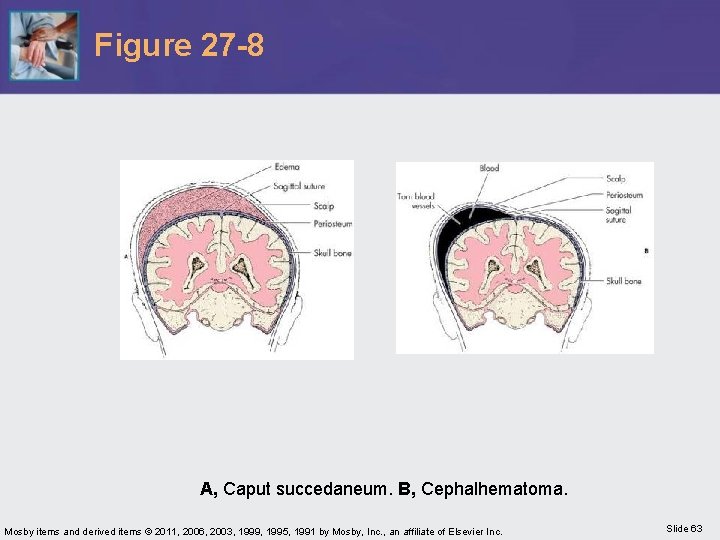
Figure 27 -8 A, Caput succedaneum. B, Cephalhematoma. Mosby items and derived items © 2011, 2006, 2003, 1999, 1995, 1991 by Mosby, Inc. , an affiliate of Elsevier Inc. Slide 63
Overview of Anatomy and Physiology of the Normal Newborn • Assessment Immediately after Delivery (continued) § Characteristics • Eyes § § § Eyelids may appear edematous. Strabismus and nystagmus are commonly seen. Nearsighted • Ears § Upper insertion of the pinna should be even with the outer canthus of the eye. Mosby items and derived items © 2011, 2006, 2003, 1999, 1995, 1991 by Mosby, Inc. , an affiliate of Elsevier Inc. Slide 64
Overview of Anatomy and Physiology of the Normal Newborn • Assessment Immediately after Delivery (continued) § Characteristics • Umbilical cord § Whitish blue-gray with three vessels; may contain a gelatinous tissue called Wharton’s jelly • Reflexes § Rooting, sucking, gag, swallow, blink, burp, hiccup, and sneeze Mosby items and derived items © 2011, 2006, 2003, 1999, 1995, 1991 by Mosby, Inc. , an affiliate of Elsevier Inc. Slide 65
Overview of Anatomy and Physiology of the Normal Newborn • Assessment Immediately after Delivery (continued) § Characteristics • Genitals § § § Female may be edematous. Scrotum in the male may be enlarged and edematous, indicating a hydrocele. Penis should be inspected for position of the urethral meatus. • Spine § Straight without curves Mosby items and derived items © 2011, 2006, 2003, 1999, 1995, 1991 by Mosby, Inc. , an affiliate of Elsevier Inc. Slide 66
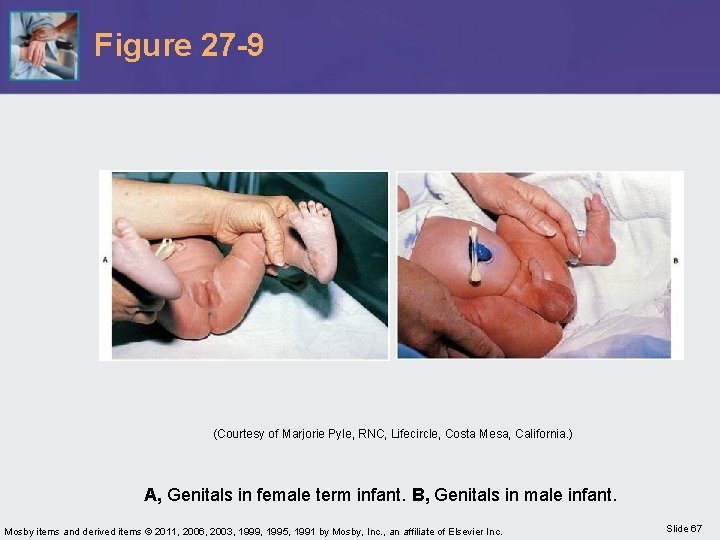
Figure 27 -9 (Courtesy of Marjorie Pyle, RNC, Lifecircle, Costa Mesa, California. ) A, Genitals in female term infant. B, Genitals in male infant. Mosby items and derived items © 2011, 2006, 2003, 1999, 1995, 1991 by Mosby, Inc. , an affiliate of Elsevier Inc. Slide 67
Overview of Anatomy and Physiology of the Normal Newborn • Assessment Immediately after Delivery (continued) § Characteristics • Extremities § § § Arms and hands are generally flexed against the body; both arms should move evenly. Legs should be the same length; hips move freely. Hands and feet should be assessed for syndactyly or polydactyly. Mosby items and derived items © 2011, 2006, 2003, 1999, 1995, 1991 by Mosby, Inc. , an affiliate of Elsevier Inc. Slide 68
Nursing Assessment of and Interventions for the Newborn • Nutritional and Metabolic Issues § Nutritional requirements • Requires approximately 120 calories per kilogram of body weight each day. • Breast milk and prepared formulas are balanced to meet the needs of the newborn. • Fluid needs: 140 to 160 m. L/kg per day • The frequency of feeding will depend on the type of feeding. Mosby items and derived items © 2011, 2006, 2003, 1999, 1995, 1991 by Mosby, Inc. , an affiliate of Elsevier Inc. Slide 69

Nursing Assessment of and Interventions for the Newborn • Nutritional and Metabolic Issues (continued) § Hypothermia • Maintenance of body temperature is a major concern when caring for a newborn. • The newborn has a large surface area and a limited amount of protective adipose tissue. • Heat is lost through radiation, evaporation, conduction, and convection. Mosby items and derived items © 2011, 2006, 2003, 1999, 1995, 1991 by Mosby, Inc. , an affiliate of Elsevier Inc. Slide 70
Nursing Assessment of and Interventions for the Newborn • Nutritional and Metabolic Issues (continued) § Hygiene • Body temperature must be stabilized. • Bathing serves a number of purposes. § § Provides opportunity for complete cleansing of the infant Observation of the infant’s condition Promotion of comfort Parent/child/family socialization Mosby items and derived items © 2011, 2006, 2003, 1999, 1995, 1991 by Mosby, Inc. , an affiliate of Elsevier Inc. Slide 71
Nursing Assessment of and Interventions for the Newborn • Nutritional and Metabolic Issues (continued) § Hygiene • The nurse should discuss the choice of cloth or disposable diapers with parents. • Care of the umbilical area: Avoid getting cord wet, use alcohol or other substances to promote drying and inhibit microbial growth. • Circumcision care: Keep clean and assess for bleeding; sterile petroleum gauze may be applied to the penis. Mosby items and derived items © 2011, 2006, 2003, 1999, 1995, 1991 by Mosby, Inc. , an affiliate of Elsevier Inc. Slide 72
Nursing Assessment of and Interventions for the Newborn • Elimination Infant should void within 24 hours of delivery. § Infant usually voids small amounts of poorly concentrated urine; as the fluid intake increases and kidney function improves, urination becomes more frequent. § Bowel elimination should occur within 24 hours of birth. § Initial stools of the newborn are odorless, black-green in color, and sticky in consistency meconium. § Mosby items and derived items © 2011, 2006, 2003, 1999, 1995, 1991 by Mosby, Inc. , an affiliate of Elsevier Inc. Slide 73
Nursing Assessment of and Interventions for the Newborn • Elimination (continued) Once the infant begins to take nourishment, the stool changes to greenish and loose. § Breastfed babies tend to pass stool frequently; it is pale yellow and sweet-smelling. § The skin of the perineum and buttocks can become irritated if waste products are left in contact for too long; skin should be washed, wiping from front to back after each voiding or stool. § Mosby items and derived items © 2011, 2006, 2003, 1999, 1995, 1991 by Mosby, Inc. , an affiliate of Elsevier Inc. Slide 74
Nursing Assessment of and Interventions for the Newborn • Rest and Sleep Infants spend 16 to 20 hours per day sleeping. § The time awake is spent crying, eating, or in quiet alertness. § Most infants do not exceed 5 continuous hours of sleep for some months; this can be very disruptive to the mother’s need for sleep. § Mosby items and derived items © 2011, 2006, 2003, 1999, 1995, 1991 by Mosby, Inc. , an affiliate of Elsevier Inc. Slide 75
Nursing Assessment of and Interventions for the Newborn • Activity and Exercise Maintenance of a clear airway is critical. § Suctioning may be required to remove mucus from the nose and mouth. § Infants are obligate nose breathers; the nasal passageway must be kept open and free of mucus; a small bulb syringe is commonly used. § Crying is the newborn’s only means of communication; it may indicate hunger, pain, or simply the need for attention. § Mosby items and derived items © 2011, 2006, 2003, 1999, 1995, 1991 by Mosby, Inc. , an affiliate of Elsevier Inc. Slide 76
Nursing Assessment of and Interventions for the Newborn • Parent-Child Attachment The initial phase in a relationship is characterized by strong attraction and a desire to interact. § Without bonding, it would be difficult to maintain the energy required to meet the newborn’s needs. § Early contact with the infant is important to establish bonding. § The nurse should encourage early and frequent interaction between the newborn and the parents. § Mosby items and derived items © 2011, 2006, 2003, 1999, 1995, 1991 by Mosby, Inc. , an affiliate of Elsevier Inc. Slide 77
- Slides: 77