
Chapter 27 Alterations of Pulmonary Function in Children
- Slides: 30
Chapter 27 Alterations of Pulmonary Function in Children
Disorders of the Upper Airways • Croup • Acute laryngotracheobronchitis • Common in children from 6 months to 5 years • Commonly caused by a virus • Causes subglottic edema • Spasmodic croup • Older children; sudden night onset without prior illness • Bacterial laryngotracheitis • Most common life-threatening form • High fever
Disorders of the Upper Airways • Croup (cont’d) • Usually occurs after an episode of rhinorrhea, sore throat, low-grade fever, inspiratory stridor, and hoarse voice • Causes seal-like barking cough • Self-limiting condition • Most resolve within 24 -48 hours • Severe cases are treated with nebulized epinephrine
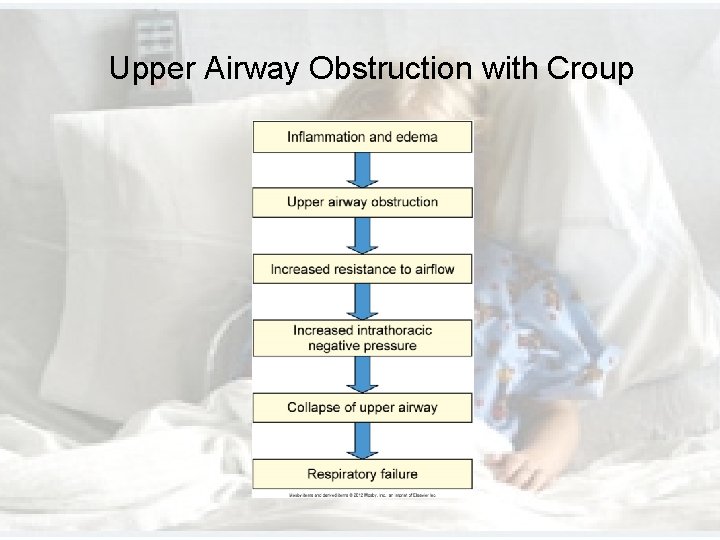
Upper Airway Obstruction with Croup
Disorders of the Upper Airways • Acute epiglottitis • Severe, rapidly progressive, life-threatening infection of the epiglottis and surrounding area • Historically caused by Haemophilus influenzae type B • 80%-90% decreased incidence due to HIB vaccination
Disorders of the Upper Airways • Acute epiglottitis (cont’d) • Manifestations: • High fever • Irritability • Sore throat • Inspiratory stridor • Muffled voice • Severe respiratory distress • Treatment • Emergency airway and antibiotics
Disorders of the Upper Airways • Tonsilar infections • Incidence of tonsillitis secondary to GABHS (group A strep) and MRSA has risen in the past 15 years • Complication of infectious mononucleosis • Can lead to upper airway obstruction
Disorders of the Upper Airways • Aspiration of foreign bodies • Foreign body aspiration in children occurs frequently between the ages of 1 and 3 • Manifestations: • Coughing • Choking • Gagging • Wheezing • Symptoms depend on foreign body size • Aspirated foreign bodies can be removed by bronchoscopy
Disorders of the Upper Airways • Obstructive sleep apnea syndrome • Partial or complete upper airway obstruction during sleep • Obstructive sleep apnea disrupts normal ventilation and sleep patterns • The most common cause for childhood obstructive sleep apnea is adenotonsillar hypertrophy • Likely in children who have had a clinically significant episode of RSV bronchiolitis in infancy
Disorders of the Upper Respiratory Track • Obstructive sleep apnea syndrome (cont’d) • Manifestations: • Snoring and labored breathing during sleep • Daytime sleepiness • Chronic mouth breathing • Treatment: tonsillectomy and adenoidectomy, or CPAP
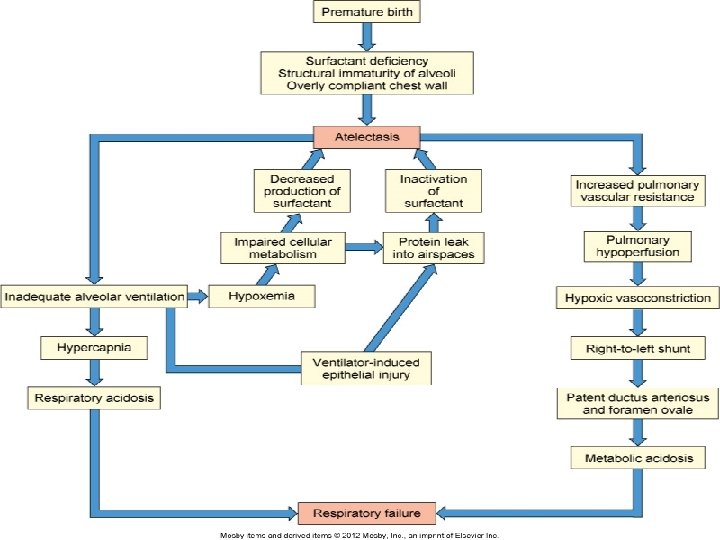
Disorders of the Lower Respiratory System • Respiratory distress syndrome (RDS) of newborn • Also known as hyaline membrane disease (HMD) • Poor lung structure and lack of adequate surfactant • Primarily a disease of preterm infants • Causes widespread atelectasis, respiratory distress, and pulmonary hypertension
Disorders of the Lower Respiratory Track • Respiratory distress syndrome of the newborn (cont’d) • Pulmonary hypertension causes continued shunting of blood away from the lungs (ductus arteriosus) • Symptoms: • Tachypnea • Expiratory grunting • Nasal flaring • Dusky skin
Disorders of the Lower Respiratory Track • Respiratory distress syndrome of the newborn (cont’d) • Treatment • Prevention of preterm birth • Mechanical ventilation, surfactant administration, glucocorticoid administration to women in preterm labor
RDS in the Newborn
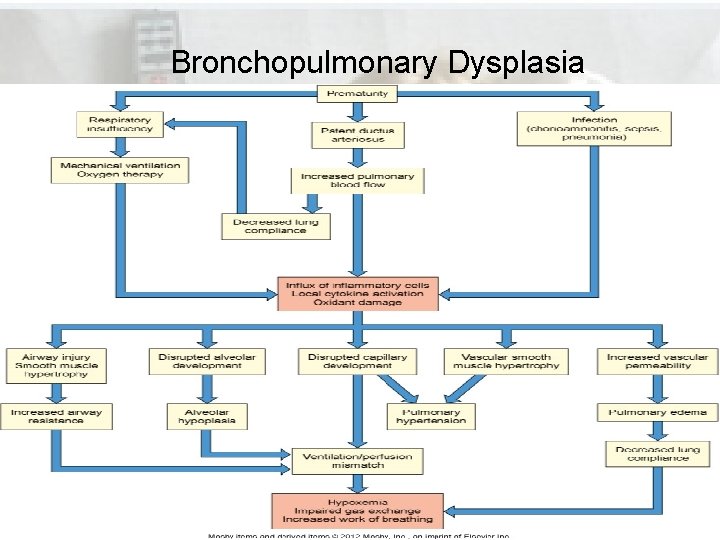
Disorders of the Lower Respiratory System • Bronchopulmonary dysplasia • Chronic disease; result of acute respiratory disease in the neonatal period • Caused by premature birth, immature lungs, infections, genetics, poor formation of alveoli, ventilatory support at birth, etc.
Disorders of the Lower Respiratory System (cont’d) • Bronchopulmonary dysplasia (cont’d) • Manifestations: • Hypoxemia • Hypercapnia • Elevated work of breathing • Bronchospasm • Mucus plugging • Pulmonary hypertension • Bronchopulmonary dysplasia is not as common because of the availability of exogenous surfactant and antenatal glucocorticoids
Bronchopulmonary Dysplasia
Disorders of the Lower Respiratory Track • Respiratory Infections: • Bronchiolitis • Most common associated pathogen is respiratory syncytial virus (RSV) • Major reason for hospitalization of infants and young children • Manifestations: • • Rhinorrhea Tight cough Decreased appetite, lethargy, and fever Wheezing
Disorders of the Lower Respiratory Track • Respiratory infections (cont’d) • Pneumonia • Bacterial pneumonia • Most common: streptococci and staphylococci • Pneumococcal (Streptococcus pneumonia) pneumonia is the most common cause of community-acquired bacterial pneumonia • May follow viral illness or viral pneumonia • Viral pneumonia • Most common viral pneumonia in young children is RSV (respiratory syncytial virus) • Also parainfluenza, and adenovirus
Respiratory • Respiratory infections (cont’d) • Pneumonia (cont’d) • Atypical (Mycoplasma pneumoniae) • Most common cause of community-acquired pneumonia for school age and young adults • Onset is usually gradual, resembling a typical upper respiratory infection but with low-grade fever and prominent cough • Usually not severe and self-limiting
Disorders of the Lower Respiratory Track • Aspiration pneumonitis • Caused by a foreign substance, such as food, meconium, secretions (saliva or gastric), or environmental compounds, entering the lung and resulting in inflammation of the lung tissue • Leading cause of death in children who are neurologically compromised • Lung damage depends on volume and p. H of aspirate
Disorders of the Lower Respiratory Track • Bronchiolitis obliterans • Fibrotic obstruction of the respiratory bronchioles and alveolar ducts secondary to intense inflammation • Most often occurs as a sequelae of a severe viral pulmonary infection • Progression of disease demonstrates: • Increasing tachypnea • Dyspnea • Cough • Sputum production • Crackles • Wheezing • Increased APD • Hypoxemia
Disorders of the Lower Respiratory Track • Asthma • Characterized by bronchial hyperreactivity and reversible airflow obstruction, usually in response to an allergen (Type I hypersensitivity reaction) • Most prevalent chronic disease in childhood • Results from a complex interaction between genetic susceptibility and environmental factors (e. g. , allergens including air pollution, dust mites, cockroach antigen, cat exposure, tobacco smoke) and infections, particularly viral (e. g. , rhinovirus and RSV)
Disorders of the Lower Respiratory Track • Asthma (cont’d) • Manifestations: • Cough • Expiratory wheeze • Shortness of breath, tachypnea • Nasal flaring • Use of accessory muscles • Exercise intolerance
Disorders of the Lower Respiratory Track • Acute respiratory distress syndrome (ARDS) • Life-threatening condition resulting from a direct pulmonary insult (pneumonia, aspiration, near drowning, smoke inhalation) or a systemic insult (sepsis or multiple trauma) • Inflammatory response activation causes alveolocapillary injury • Hallmark is lung inflammation leading to fluid in air spaces and alveolar collapse
Disorders of the Lower Respiratory Track • Acute respiratory distress syndrome (ARDS) • Manifestations: • Develops acutely after the initial insult, usually within 24 hours • Progressive respiratory distress, severe hypoxemia, decreased pulmonary compliance • Hyperventilation • Treatment: • Mechanical ventilation • Supportive care
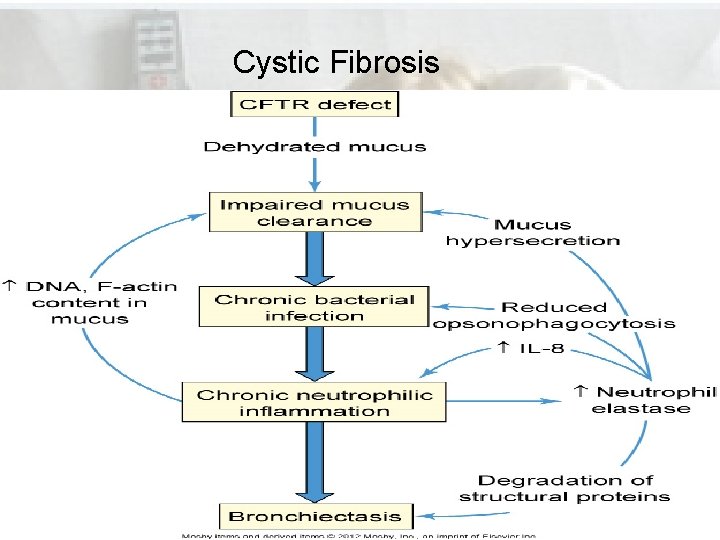
Disorders of the Lower Respiratory Track • Cystic fibrosis • Autosomal recessive multisystem disease • Exocrine or mucus-producing glands secrete abnormally thick mucus because of defective epithelial ion transport • In the lungs, thick secretions obstruct the bronchioles and predispose the lungs to chronic infections • Chronic inflammation leads to hyperplasia of goblet cells, bronchiectasis, pneumonia, hypoxia, fibrosis, etc.
Cystic Fibrosis
Sudden Infant Death Syndrome (SIDS) • Defined as “sudden death of an infant under 1 year of age which remains unexplained” • Incidence • Lower during first month of life, increases in the second month, and peaks at 3 to 4 months • More common in male infants
Sudden Infant Death Syndrome (SIDS) • Seasonal variation • Possible relationship to respiratory infections • Wide range of risk factors • Etiology unknown