
Chapter 26 Genetics Genes and chromosomes Eye color
- Slides: 19
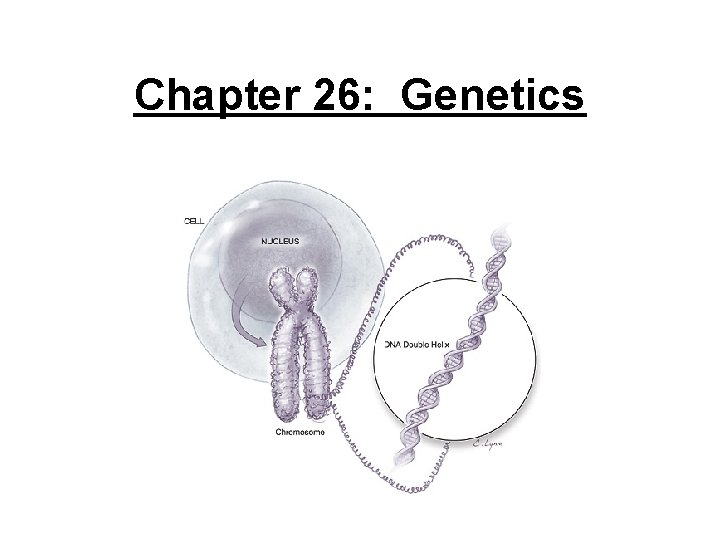
Chapter 26: Genetics
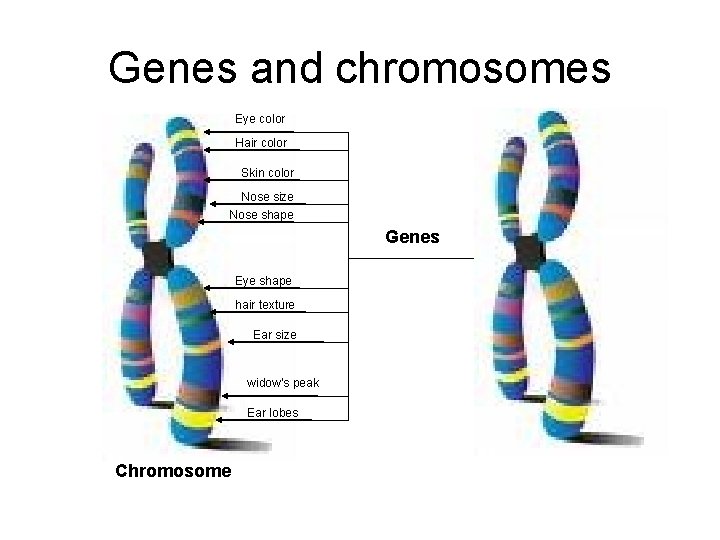
Genes and chromosomes Eye color Hair color Skin color Nose size Nose shape Genes Eye shape hair texture Ear size widow’s peak Ear lobes Chromosome
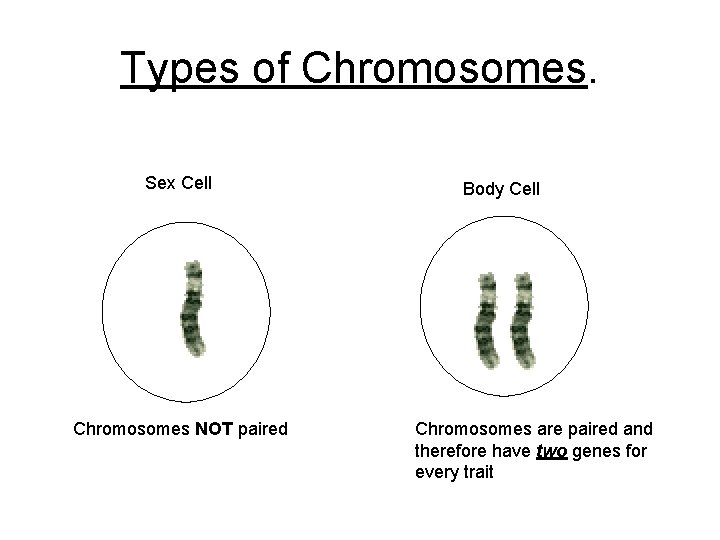
Types of Chromosomes. Sex Cell Chromosomes NOT paired Body Cell Chromosomes are paired and therefore have two genes for every trait
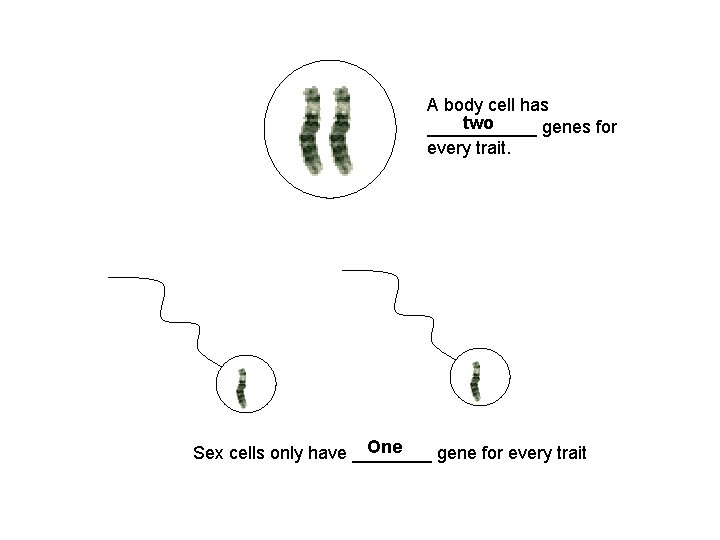
A body cell has two ______ genes for every trait. One Sex cells only have ____ gene for every trait
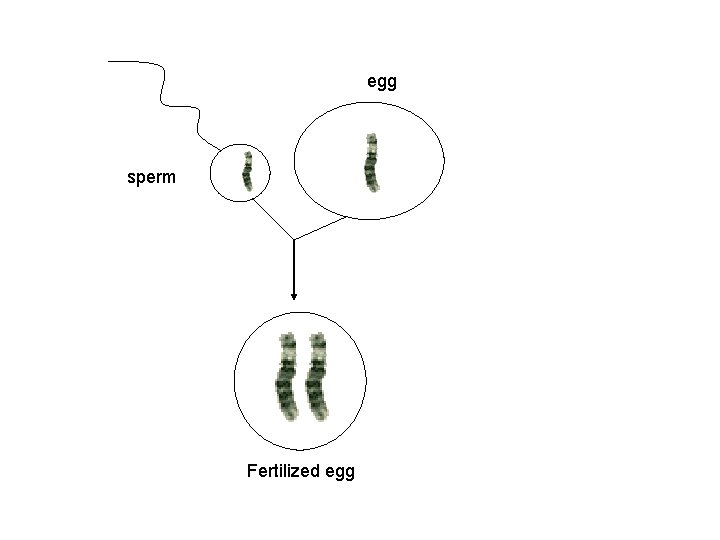
egg sperm Fertilized egg
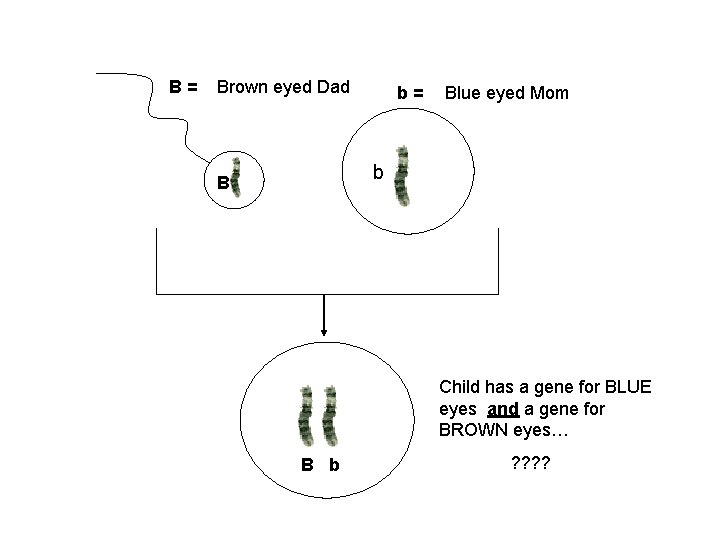
B= Brown eyed Dad b= Blue eyed Mom b B Child has a gene for BLUE eyes and a gene for BROWN eyes… B b ? ?
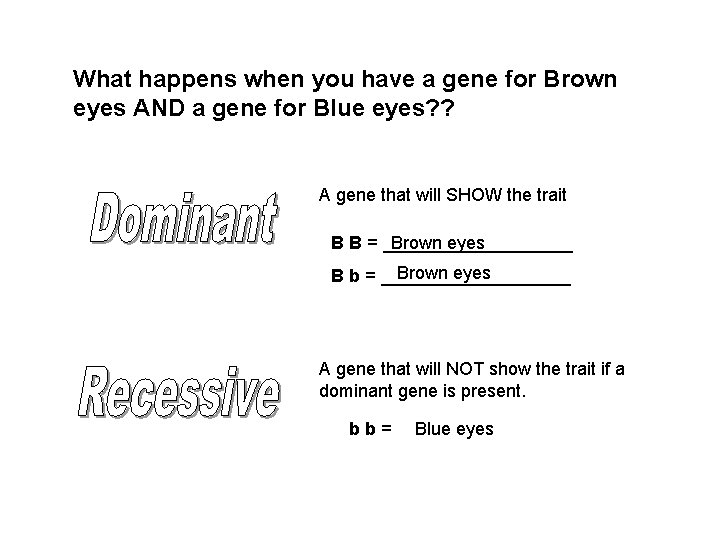
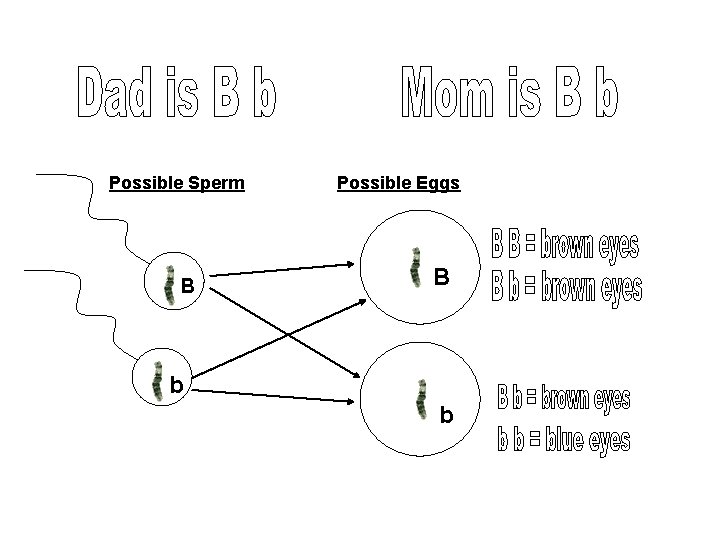
What happens when you have a gene for Brown eyes AND a gene for Blue eyes? ? A gene that will SHOW the trait B B = __________ Brown eyes B b = __________ A gene that will NOT show the trait if a dominant gene is present. bb= Blue eyes
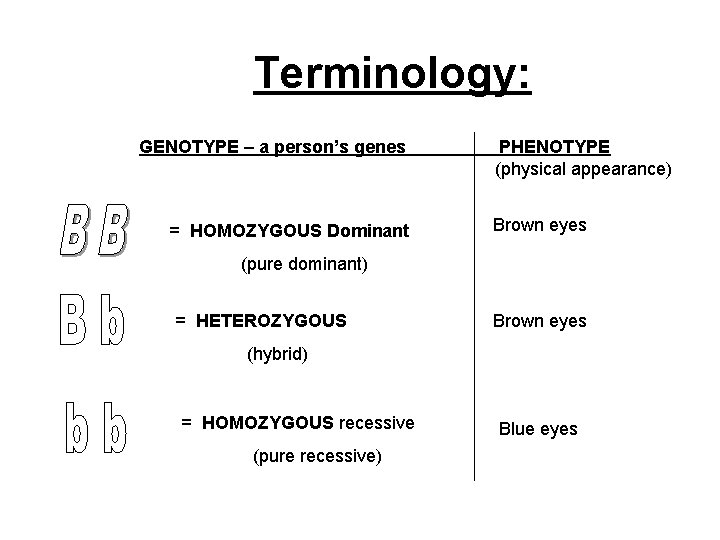
Terminology: GENOTYPE – a person’s genes = HOMOZYGOUS Dominant PHENOTYPE (physical appearance) Brown eyes (pure dominant) = HETEROZYGOUS Brown eyes (hybrid) = HOMOZYGOUS recessive (pure recessive) Blue eyes
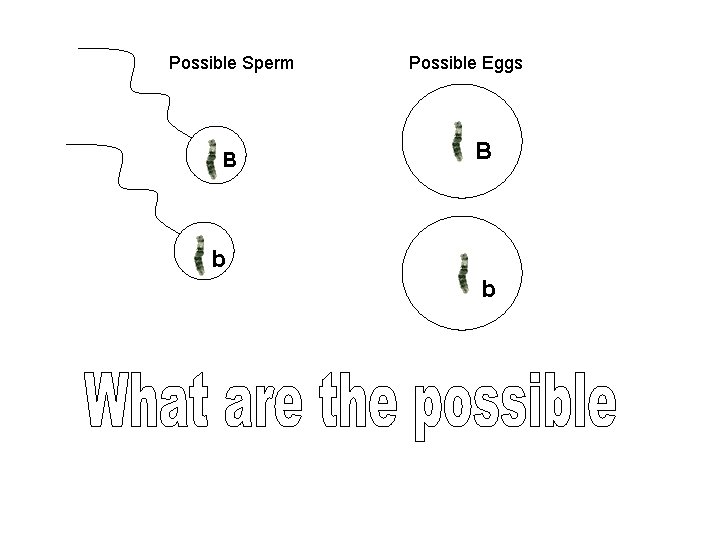
Possible Sperm B Possible Eggs B b b
Possible Sperm B Possible Eggs B b b
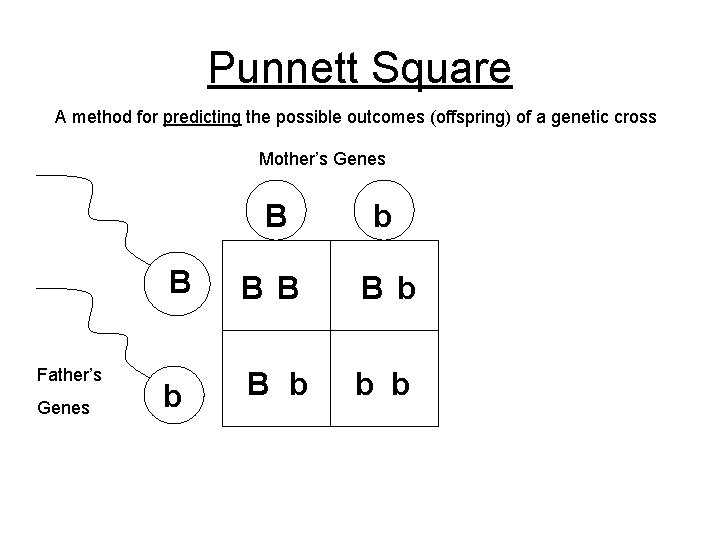
Punnett Square A method for predicting the possible outcomes (offspring) of a genetic cross Mother’s Genes Father’s Genes B b B B b b b
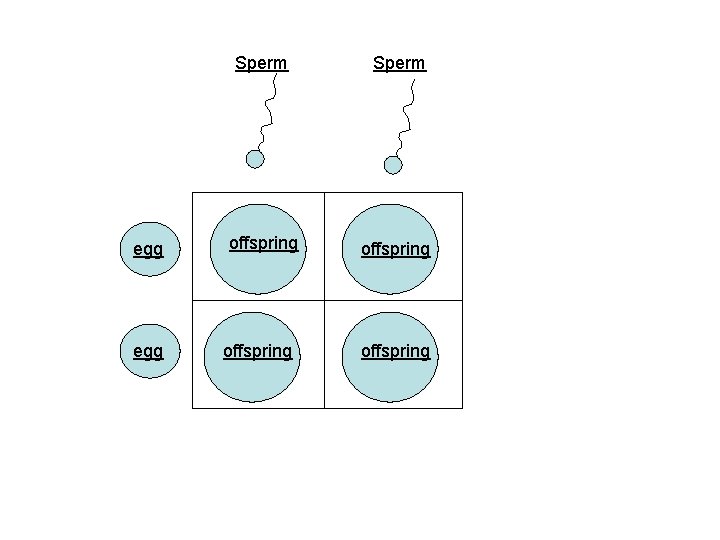
egg Sperm offspring
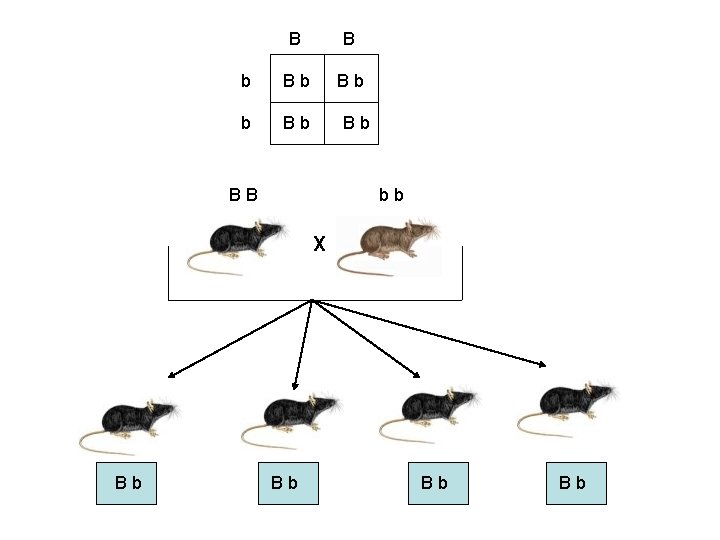
B B b Bb Bb BB bb X Bb Bb
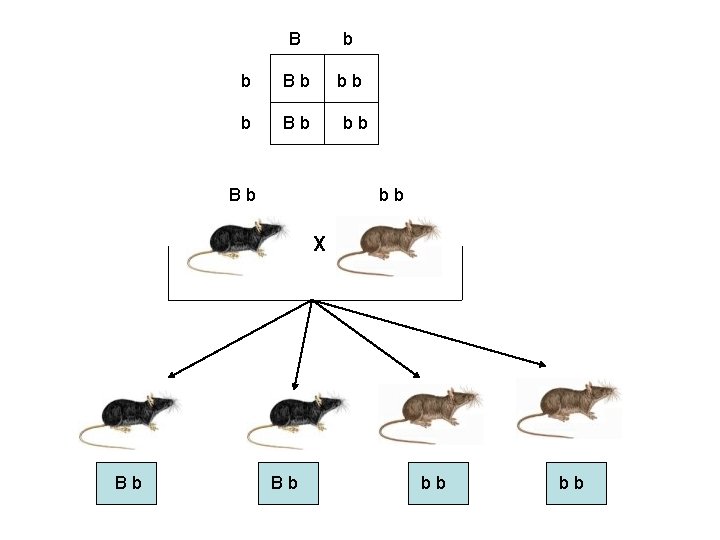
B b b Bb bb X Bb Bb bb bb
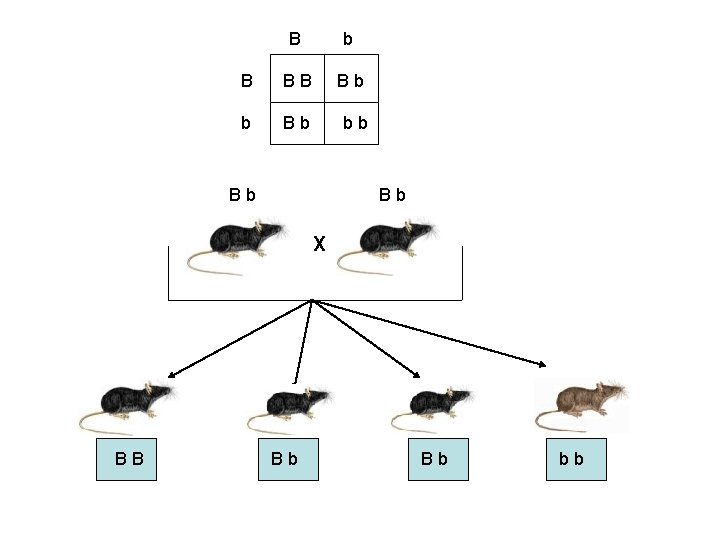
B b B BB Bb bb Bb Bb X BB Bb Bb bb
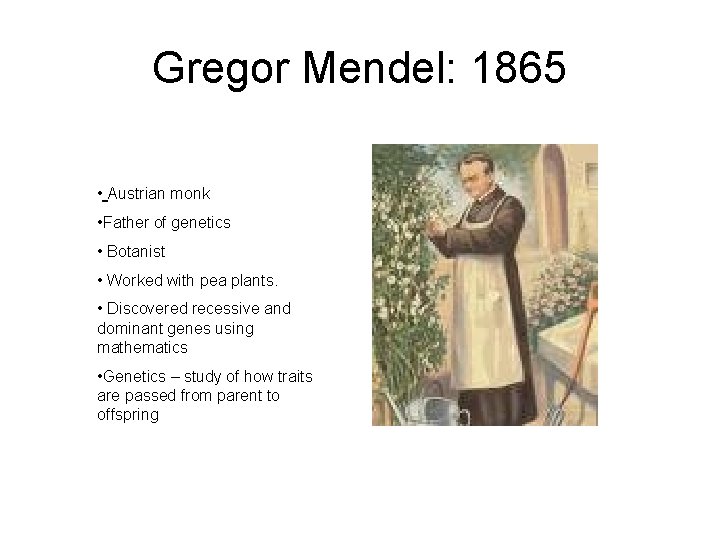
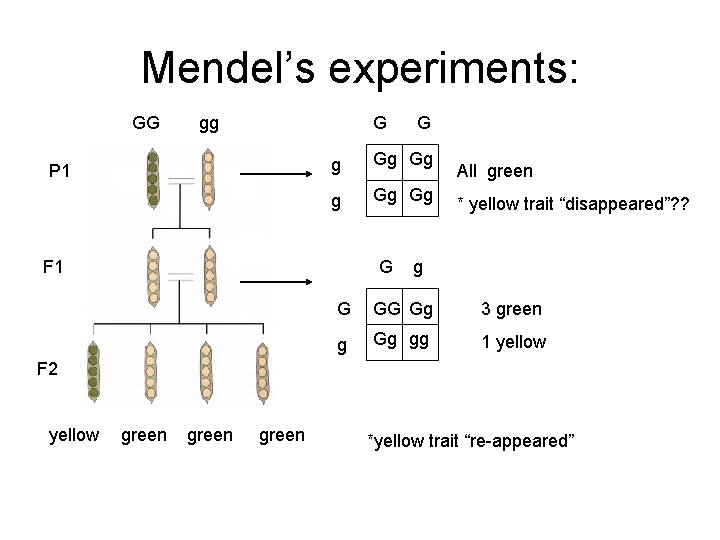
Gregor Mendel: 1865 • Austrian monk • Father of genetics • Botanist • Worked with pea plants. • Discovered recessive and dominant genes using mathematics • Genetics – study of how traits are passed from parent to offspring
Mendel’s experiments: GG gg G P 1 G g Gg Gg F 1 G All green * yellow trait “disappeared”? ? g G GG Gg 3 green g Gg gg 1 yellow F 2 yellow green *yellow trait “re-appeared”
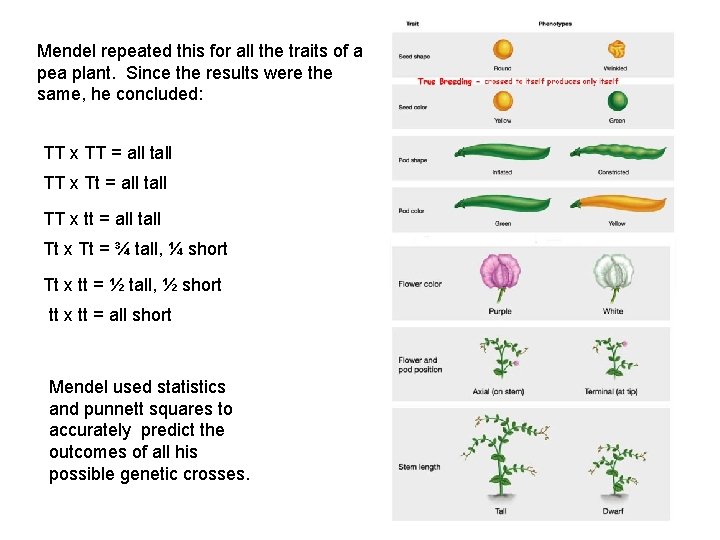
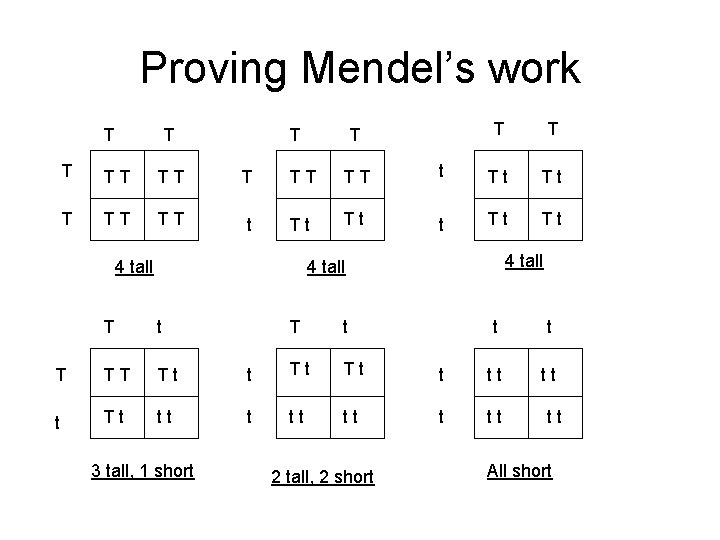
Mendel repeated this for all the traits of a pea plant. Since the results were the same, he concluded: TT x TT = all tall TT x Tt = all tall TT x tt = all tall Tt x Tt = ¾ tall, ¼ short Tt x tt = ½ tall, ½ short tt x tt = all short Mendel used statistics and punnett squares to accurately predict the outcomes of all his possible genetic crosses.
Proving Mendel’s work T T T TT TT TT t Tt Tt 4 tall T t T TT Tt tt 3 tall, 1 short T t t Tt Tt t tt tt 2 tall, 2 short t tt tt tt All short