
Chapter 26 Baking Techniques Contents Has a note
Chapter 26 Baking Techniques Contents Has a note taker to accompany the pp Glencoe Culinary Essentials Chapter 26 Baking Techniques 1
Chapter 26 Baking Techniques Contents § Section 26. 1 Bakeshop Formulas and Equipment § Section 26. 2 Bakeshop Ingredients Glencoe Culinary Essentials Chapter 26 Baking Techniques 2

Chapter 26 Baking Techniques Bakeshop Formulas • Baking requires: • precise measurements and accuracy. • special baking equipment and smallwares. • adding ingredients in the exact order of the formula. • Bakeshop ingredients are measured by weight or volume. Glencoe Culinary Essentials Chapter 26 Baking Techniques 5
Chapter 26 Baking Techniques Bakeshop Formulas • Most bakers use a balance scale to accurately weigh flour and other dry ingredients. • Many professional bakers use percentages when using formulas because they allow comparison of the weight of each ingredient. percentage A rate or proportion of 100. Glencoe Culinary Essentials Chapter 26 Baking Techniques 6
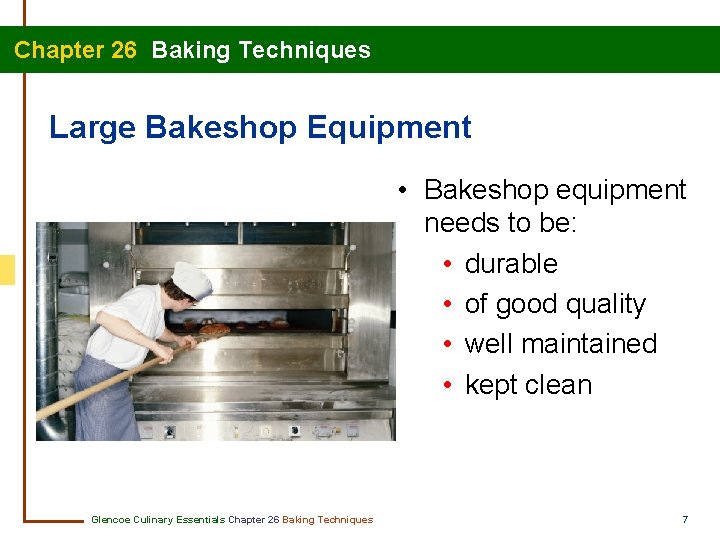
Chapter 26 Baking Techniques Large Bakeshop Equipment • Bakeshop equipment needs to be: • durable • of good quality • well maintained • kept clean Glencoe Culinary Essentials Chapter 26 Baking Techniques 7

Chapter 26 Baking Techniques Large Bakeshop Equipment • Baking equipment includes: • mixers • sheeters • proofing cabinets • bakery ovens sheeter A piece of equipment that rolls out large pieces of dough to a desired thickness. Glencoe Culinary Essentials Chapter 26 Baking Techniques proofing cabinet Also called a proofer, a freestanding metal box on wheels that is temperatureand humidity-controlled. 8
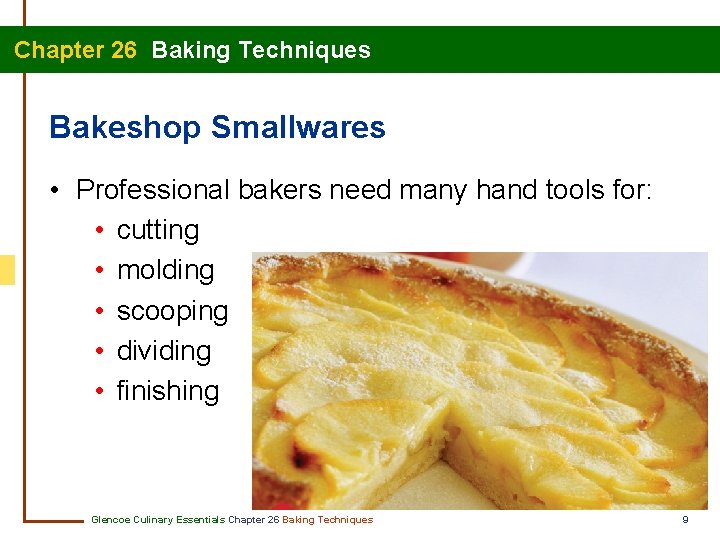
Chapter 26 Baking Techniques Bakeshop Smallwares • Professional bakers need many hand tools for: • cutting • molding • scooping • dividing • finishing Glencoe Culinary Essentials Chapter 26 Baking Techniques 9
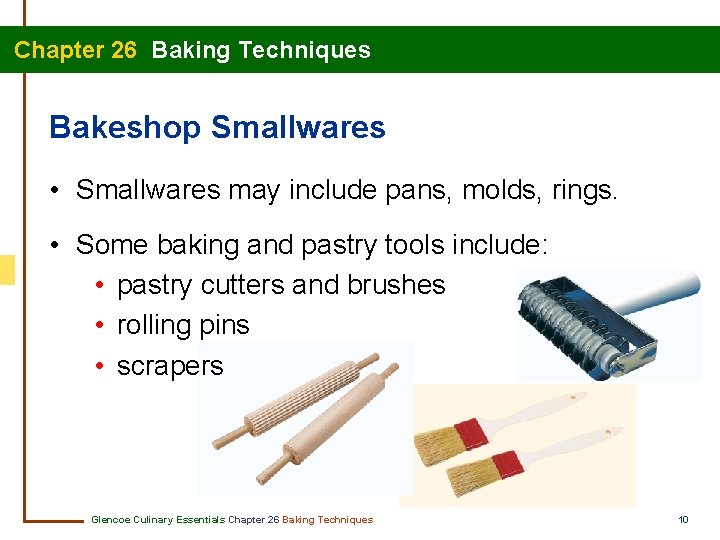
Chapter 26 Baking Techniques Bakeshop Smallwares • Smallwares may include pans, molds, rings. • Some baking and pastry tools include: • pastry cutters and brushes • rolling pins • scrapers Glencoe Culinary Essentials Chapter 26 Baking Techniques 10
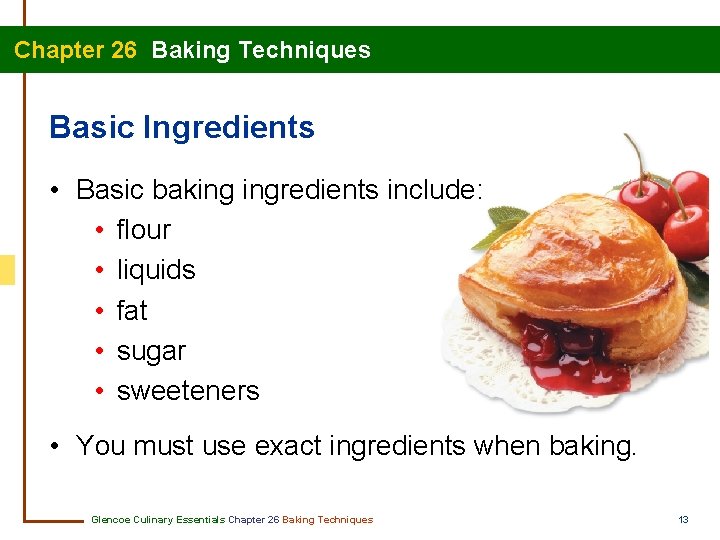
Chapter 26 Baking Techniques Basic Ingredients • Basic baking ingredients include: • flour • liquids • fat • sugar • sweeteners • You must use exact ingredients when baking. Glencoe Culinary Essentials Chapter 26 Baking Techniques 13
Chapter 26 Baking Techniques Basic Ingredients • Wheat flour, the main ingredient in many baked goods can be: • hard wheat flour • bread flour • cake flour • pastry flour Glencoe Culinary Essentials Chapter 26 Baking Techniques hard wheat flour Flour that comes from kernels that are firm, tough, and difficult to cut. bread flour Flour that has a high glutenforming protein content to allow bread to rise fully. 14
Chapter 26 Baking Techniques Basic Ingredients • Wheat flour, the main ingredient in many baked goods can be: • hard wheat flour • bread flour • cake flour • pastry flour Glencoe Culinary Essentials Chapter 26 Baking Techniques cake flour Flour that is lower in protein than bread flour and pastry flour and produces a softer and more tender product than bread flour. pastry flour Flour that has a protein content between bread and cake flour. 15
Chapter 26 Baking Techniques Basic Ingredients • Liquids can be in the form of water, milk, or cream. • Fats in baking prevent long strands of gluten from forming and add to the: • flavor • moistness gluten • browning A firm, elastic substance that affects the texture of baked • flakiness products. • leavening Glencoe Culinary Essentials Chapter 26 Baking Techniques 16
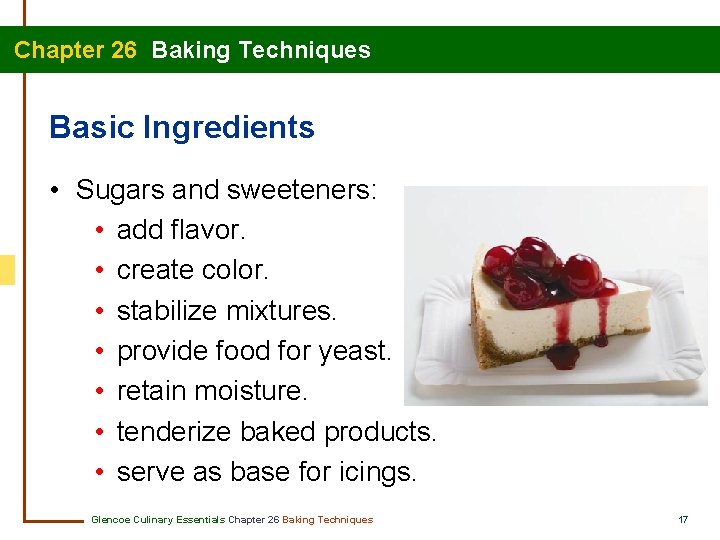
Chapter 26 Baking Techniques Basic Ingredients • Sugars and sweeteners: • add flavor. • create color. • stabilize mixtures. • provide food for yeast. • retain moisture. • tenderize baked products. • serve as base for icings. Glencoe Culinary Essentials Chapter 26 Baking Techniques 17
Chapter 26 Baking Techniques Basic Ingredients • Eggs provide: • structure leavening agents • emulsification A substance that causes a baked good to rise by introducing carbon • aeration dioxide (CO ) or other gases into the mixture. • flavor • color • Using leavening agents results in a light, tender texture and good volume. 2 Glencoe Culinary Essentials Chapter 26 Baking Techniques 18
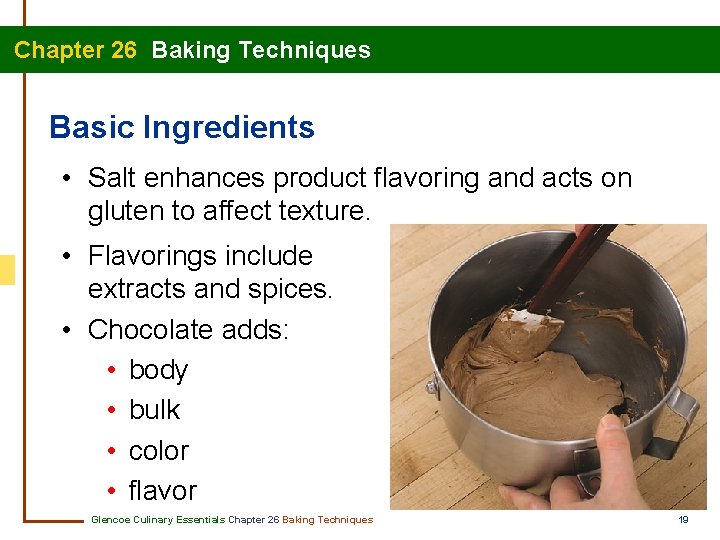
Chapter 26 Baking Techniques Basic Ingredients • Salt enhances product flavoring and acts on gluten to affect texture. • Flavorings include extracts and spices. • Chocolate adds: • body • bulk • color • flavor Glencoe Culinary Essentials Chapter 26 Baking Techniques 19
Chapter 26 Baking Techniques • Worksheet: Baking Ingredients Glencoe Culinary Essentials Chapter 26 Baking Techniques 20
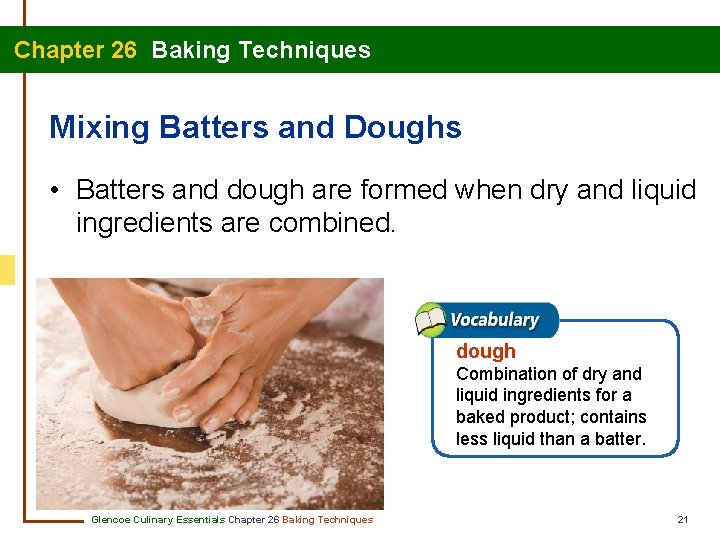
Chapter 26 Baking Techniques Mixing Batters and Doughs • Batters and dough are formed when dry and liquid ingredients are combined. dough Combination of dry and liquid ingredients for a baked product; contains less liquid than a batter. Glencoe Culinary Essentials Chapter 26 Baking Techniques 21
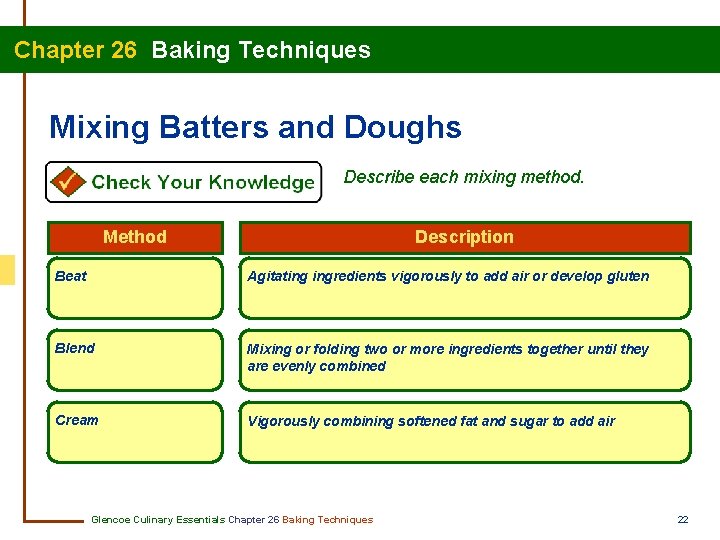
Chapter 26 Baking Techniques Mixing Batters and Doughs Describe each mixing method. Method Description Beat Agitating ingredients vigorously to add air or develop gluten Blend Mixing or folding two or more ingredients together until they are evenly combined Cream Vigorously combining softened fat and sugar to add air Glencoe Culinary Essentials Chapter 26 Baking Techniques 22
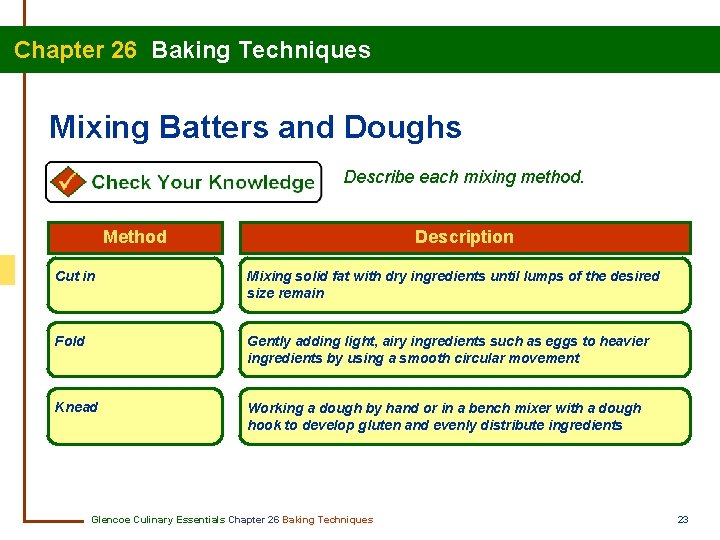
Chapter 26 Baking Techniques Mixing Batters and Doughs Describe each mixing method. Method Description Cut in Mixing solid fat with dry ingredients until lumps of the desired size remain Fold Gently adding light, airy ingredients such as eggs to heavier ingredients by using a smooth circular movement Knead Working a dough by hand or in a bench mixer with a dough hook to develop gluten and evenly distribute ingredients Glencoe Culinary Essentials Chapter 26 Baking Techniques 23
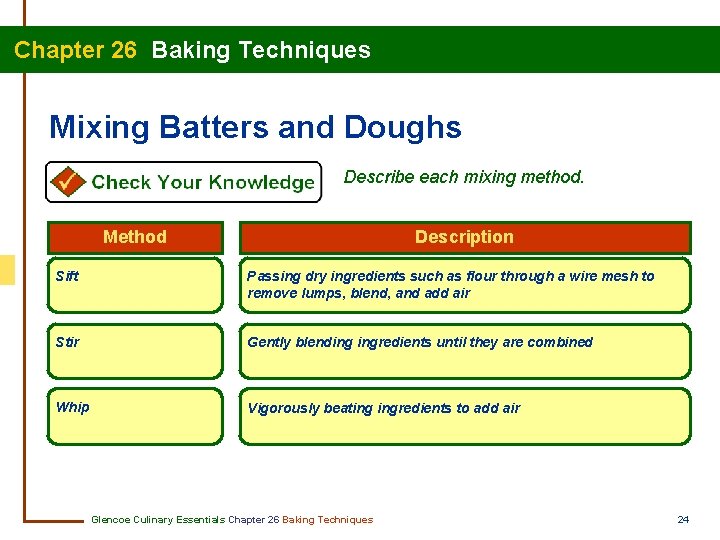
Chapter 26 Baking Techniques Mixing Batters and Doughs Describe each mixing method. Method Description Sift Passing dry ingredients such as flour through a wire mesh to remove lumps, blend, and add air Stir Gently blending ingredients until they are combined Whip Vigorously beating ingredients to add air Glencoe Culinary Essentials Chapter 26 Baking Techniques 24
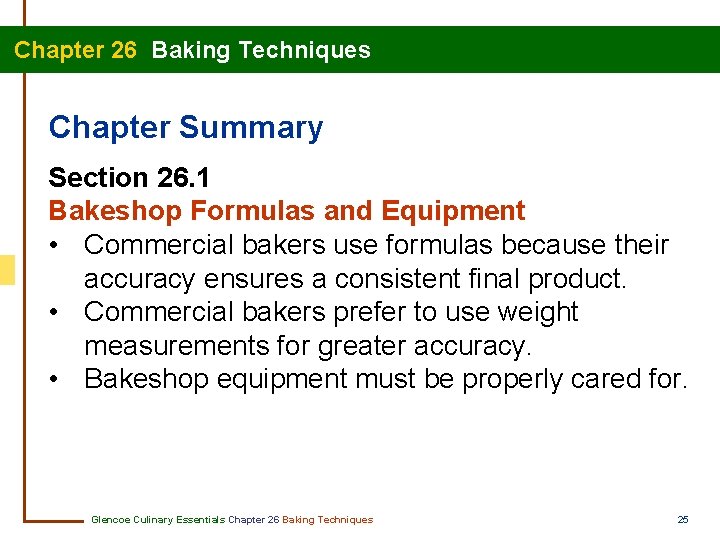
Chapter 26 Baking Techniques Chapter Summary Section 26. 1 Bakeshop Formulas and Equipment • Commercial bakers use formulas because their accuracy ensures a consistent final product. • Commercial bakers prefer to use weight measurements for greater accuracy. • Bakeshop equipment must be properly cared for. Glencoe Culinary Essentials Chapter 26 Baking Techniques 25
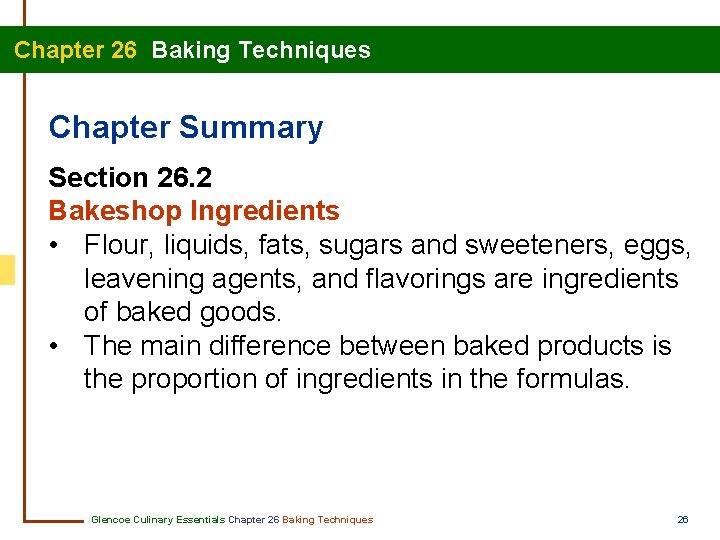
Chapter 26 Baking Techniques Chapter Summary Section 26. 2 Bakeshop Ingredients • Flour, liquids, fats, sugars and sweeteners, eggs, leavening agents, and flavorings are ingredients of baked goods. • The main difference between baked products is the proportion of ingredients in the formulas. Glencoe Culinary Essentials Chapter 26 Baking Techniques 26
Chapter 26 Baking Techniques • Desserts and Sweets Quiz • http: //www. delish. com/food-fun/quizzes/dessertsquiz-trivia Glencoe Culinary Essentials Chapter 26 Baking Techniques 27
Chapter 26 Baking Techniques • Ending Activity: Baker Bingo Glencoe Culinary Essentials Chapter 26 Baking Techniques 28
End of Chapter 26 Baking Techniques
- Slides: 25