
Chapter 25 Electromagnetic Induction Can electricity be produced
Chapter 25 Electromagnetic Induction Can electricity be produced from magnetism?
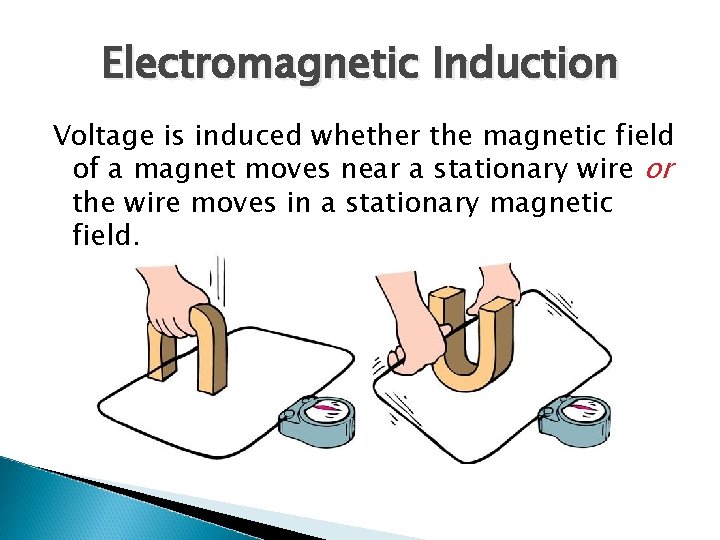
Electromagnetic Induction Voltage is induced whether the magnetic field of a magnet moves near a stationary wire or the wire moves in a stationary magnetic field.
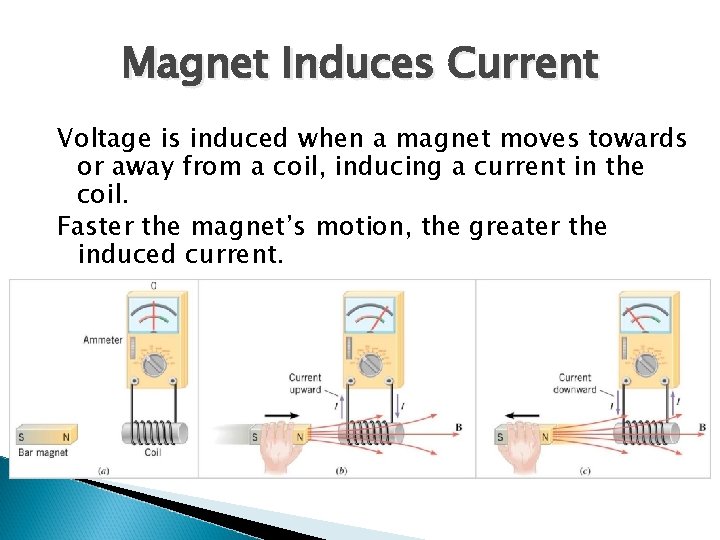
Magnet Induces Current Voltage is induced when a magnet moves towards or away from a coil, inducing a current in the coil. Faster the magnet’s motion, the greater the induced current.
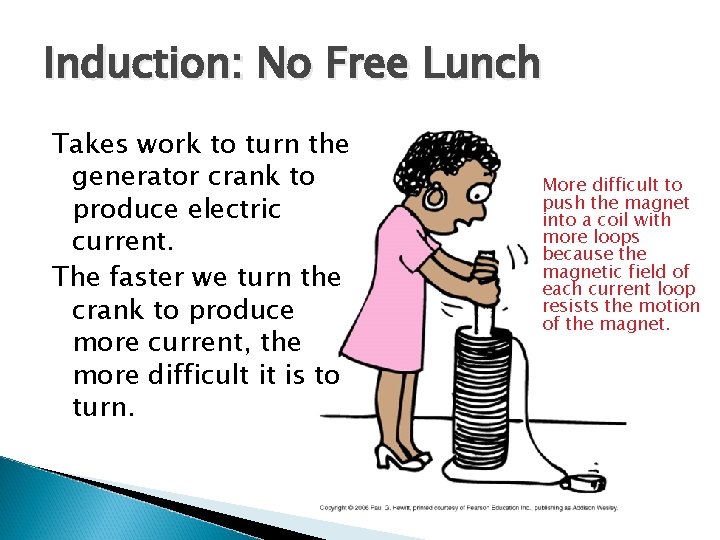
Induction: No Free Lunch Takes work to turn the generator crank to produce electric current. The faster we turn the crank to produce more current, the more difficult it is to turn. More difficult to push the magnet into a coil with more loops because the magnetic field of each current loop resists the motion of the magnet.
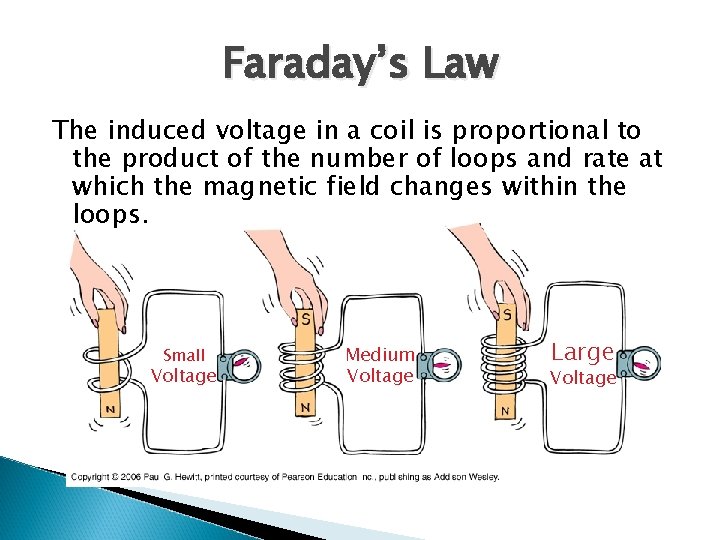
Faraday’s Law The induced voltage in a coil is proportional to the product of the number of loops and rate at which the magnetic field changes within the loops. Small Voltage Medium Voltage Large Voltage
Video: Faraday’s Law
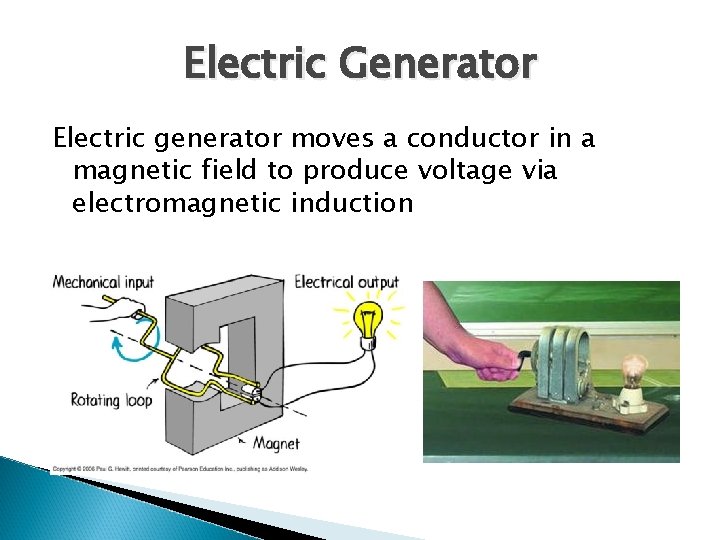
Electric Generator Electric generator moves a conductor in a magnetic field to produce voltage via electromagnetic induction
Applications of Electromagnetic Induction
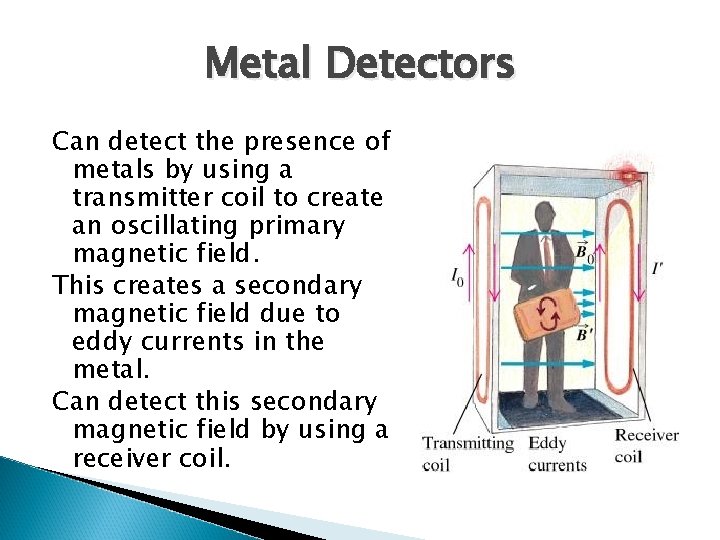
Metal Detectors Can detect the presence of metals by using a transmitter coil to create an oscillating primary magnetic field. This creates a secondary magnetic field due to eddy currents in the metal. Can detect this secondary magnetic field by using a receiver coil.
Other Applications Shake Flashlight Hybrid cars – break energy into electrical energy Atm card magnetic strip
Intro to Chapter 26 Light is an electromagnetic wave When an electric charge has a particular frequency of vibration the waves that are created are light.
- Slides: 11