
Chapter 25 Beyond our Solar System Constellations Patterns
Chapter 25 Beyond our Solar System
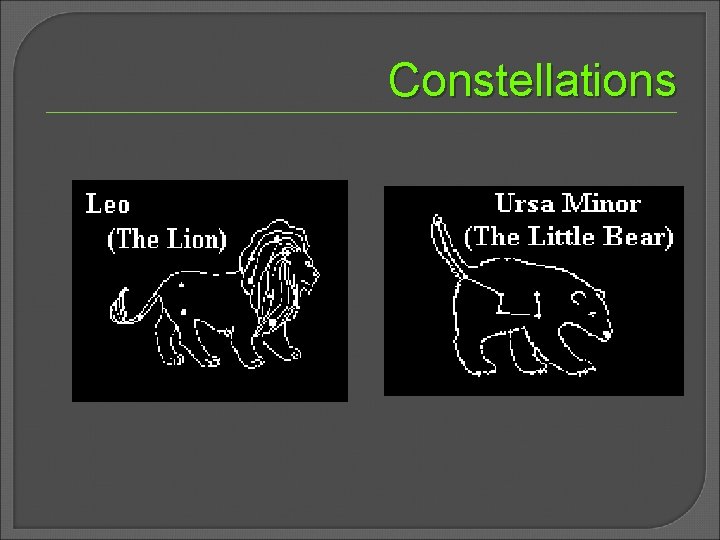
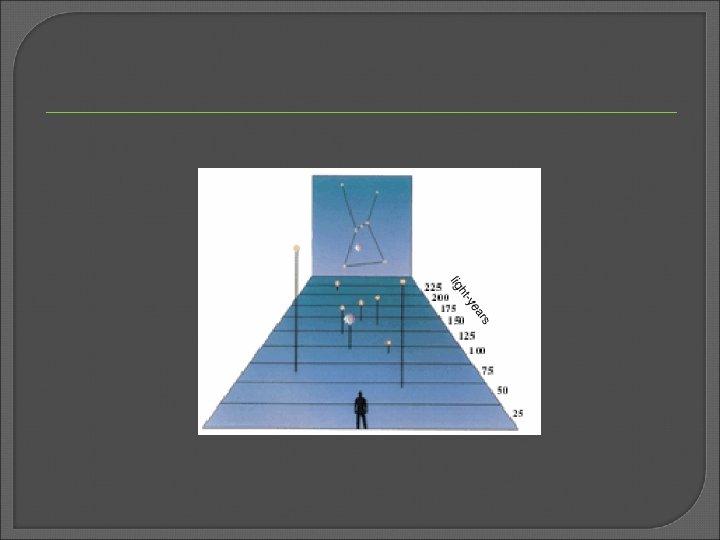
Constellations Patterns in the sky Mostly named for mythological characters 88 recognized constellations Not all stars that make up a constellation are equal distance away Can be used as maps
Constellations
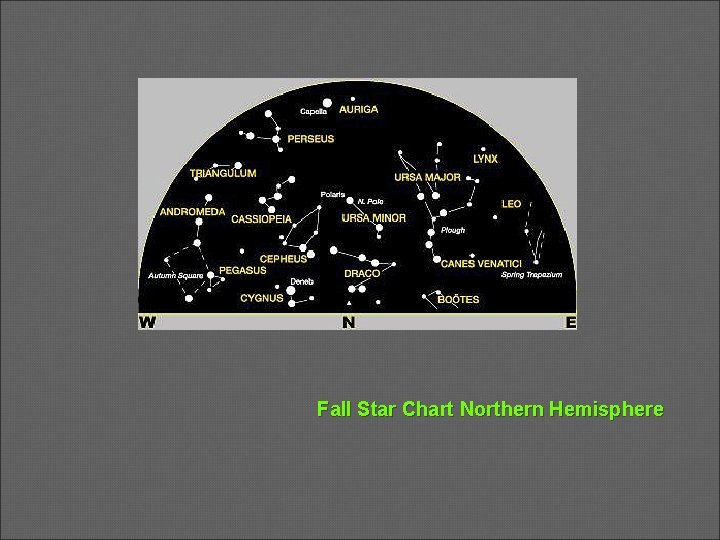
Fall Star Chart Northern Hemisphere
Star Color and Temperature Color is due to a star’s temperature Hot stars appear blue • Have more energy, short waves are blue spectrum Cold stars are red • Have less energy, longer waves, long waves are red spectrum
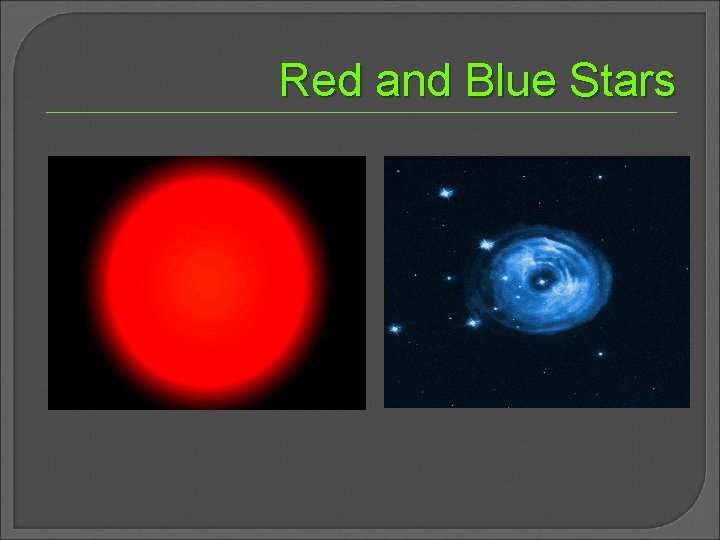
Red and Blue Stars
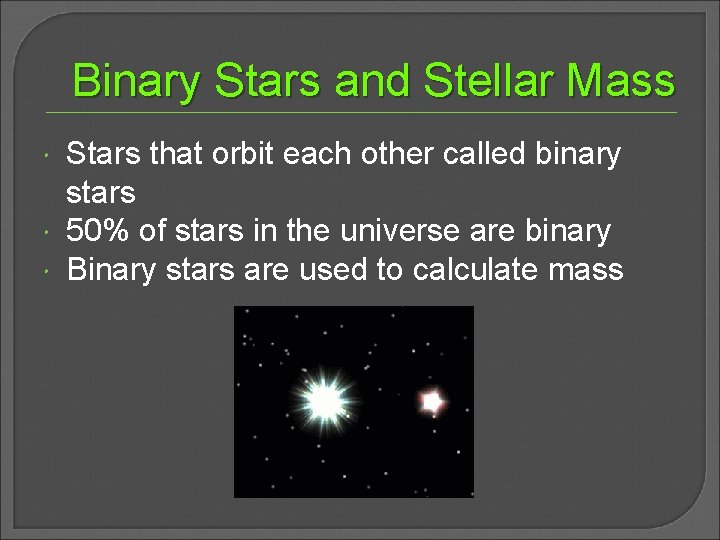
Binary Stars and Stellar Mass Stars that orbit each other called binary stars 50% of stars in the universe are binary Binary stars are used to calculate mass
Measuring Distance To Stars Parallax – the most basic way to measure stellar distance Nearest stars have the largest parallax distant stars parallax is to small to measure
Light Year Distances in space are so large that kilometers or AUs are to hard to use Scientists use Light Years to measure distances in space A light year is the distance that light can travel in one year 9. 5 trillion km = 1 light year
Light Years 9, 500, 000, 000 kilometers Next closest star besides the sun Proxima Centauri is 4. 22 ly away. Light that we see today from Proxima Centauri left the star 4. 22 years ago.
Stellar Brightness APPARENT MAGNITUDE A star’s brightness as it appears from Earth 3 factors control apparent magnitude • Size, temperature, distance Use numbers to rank • Larger the number dimmer the star ABSOLUTE MAGNITUDE How bright a star actually is Brightness if stars were all the same distance from the Earth (32. 6 ly) Stars with a ranking above 5 are brighter than the sun
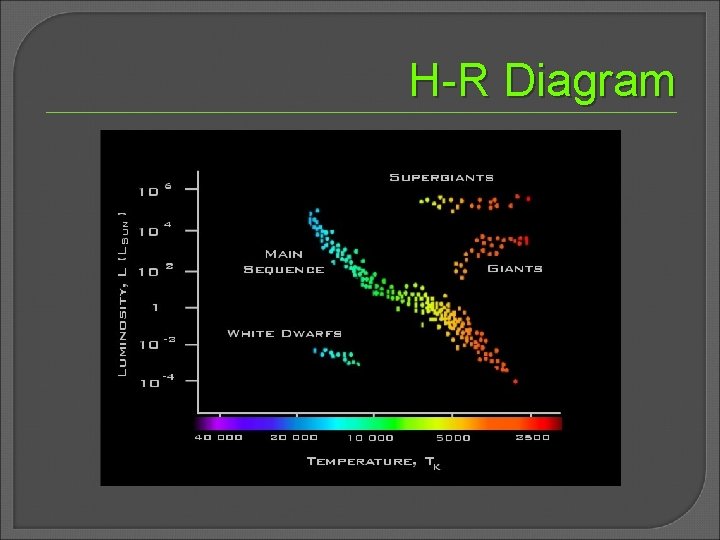
Hertzsprung-Russell Diagram H-R Diagram show the relationship between the absolute magnitude and temperature of stars 90% of stars are main sequence stars Hot main sequence stars are bright More mass the brighter the star If stars are the same temperature the bigger star will be brighter
H-R Diagram
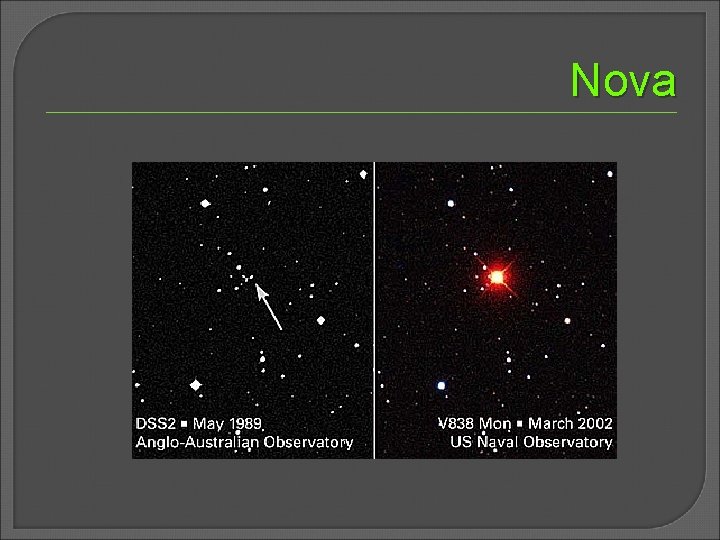
Variable Stars Cepheid Variable • Get brighter and fainter in a regular pattern Nova • Sudden brightening of a star • Last a few days • Within a year back to normal
Nova
Interstellar Matter Nebulae are clouds of dust and gas If nebulae is close to a star it glows and is called a bright nebulae
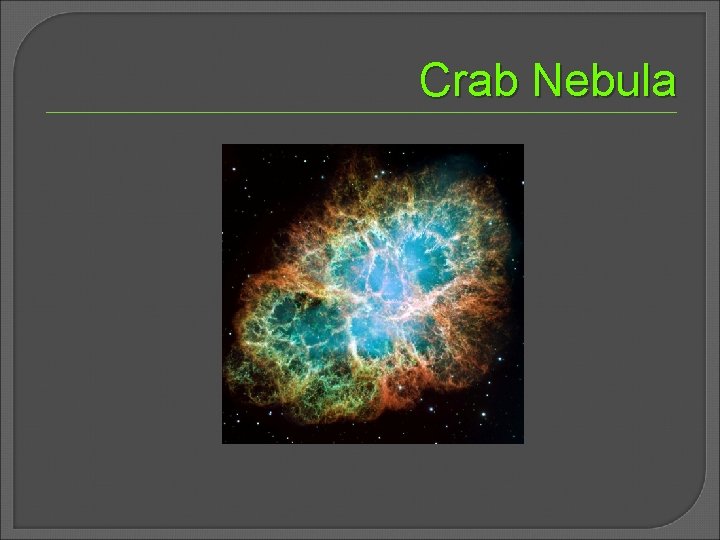
Crab Nebula
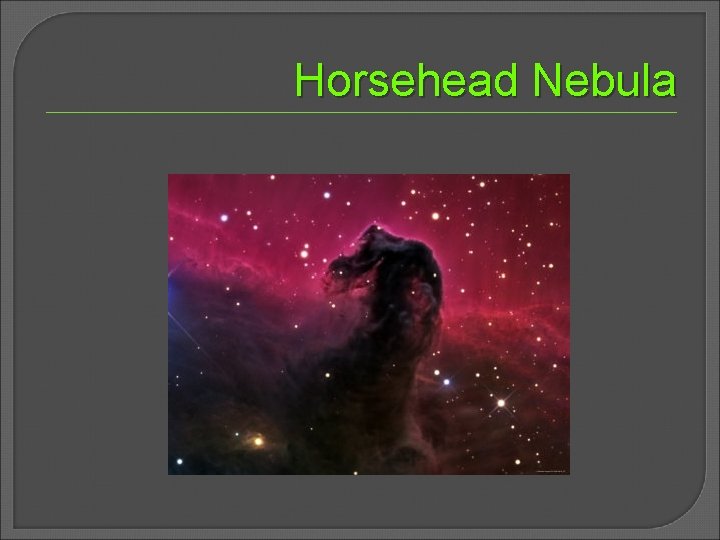
Horsehead Nebula
Stellar Evolution
Star Birth Born in nebulae Nebulae are 92% Hydrogen and 7% Helium Nebulae become dense and begin to contract Gravity brings material to middle, nebulae shrinks and heat increases
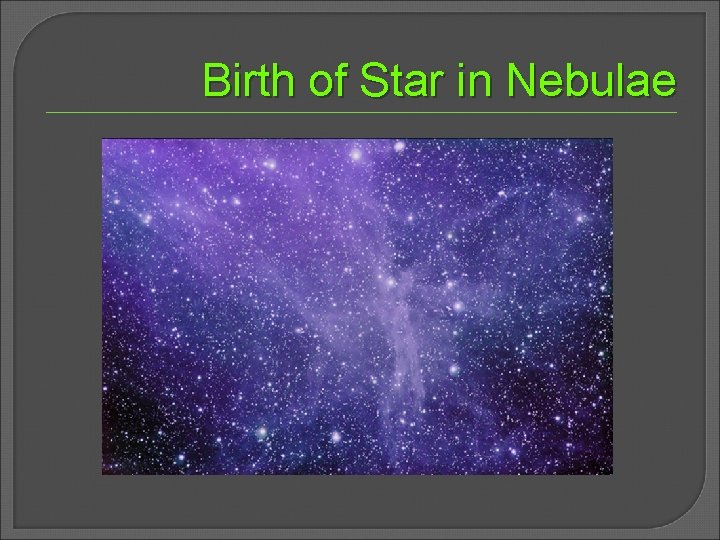
Birth of Star in Nebulae
Protostar Stage Takes millions of years Temperature slowly rises Not hot enough in the beginning to undergo fusion When the core reaches 10 million K fusion will begin
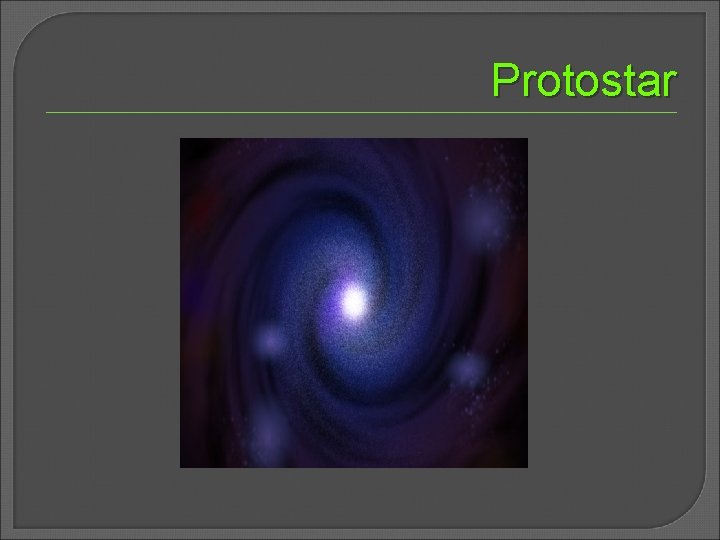
Protostar
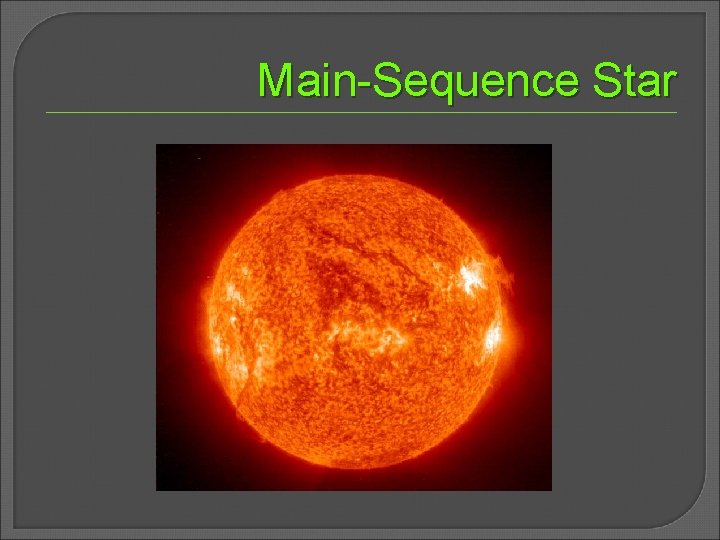
Main-Sequence Stage Fusion contiues Lasts billions of years High mass stars burn fuel faster and die quicker and more violently Low mass stars stay in this stage longer burn fuel slower (1/2 mass of sun) 90% of a stars life is in this stage
Main-Sequence Star
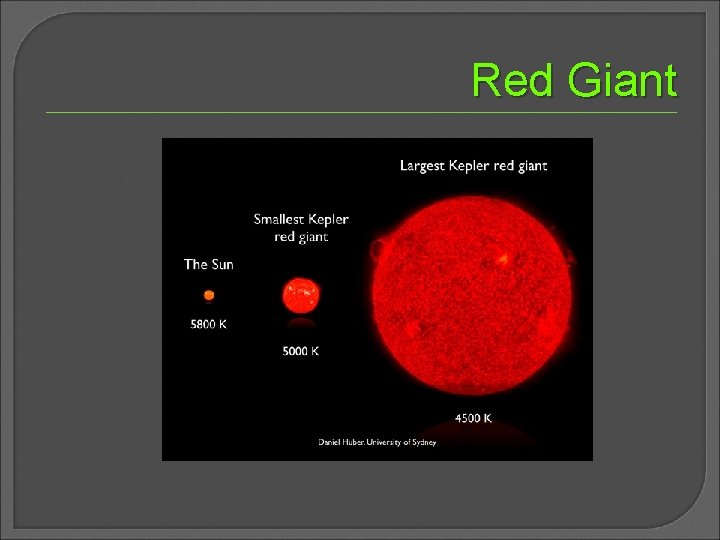
Red Giant Occurs when all the hydrogen for fusion is used up Star expands and surface cools Helium begins to turn into Carbon Low Mass Stars do not become Red Giants
Red Giant
White Dwars Death of low mass stars Extremly small very high densites Very hot Over time become so small and cold they turn into a black dwarf
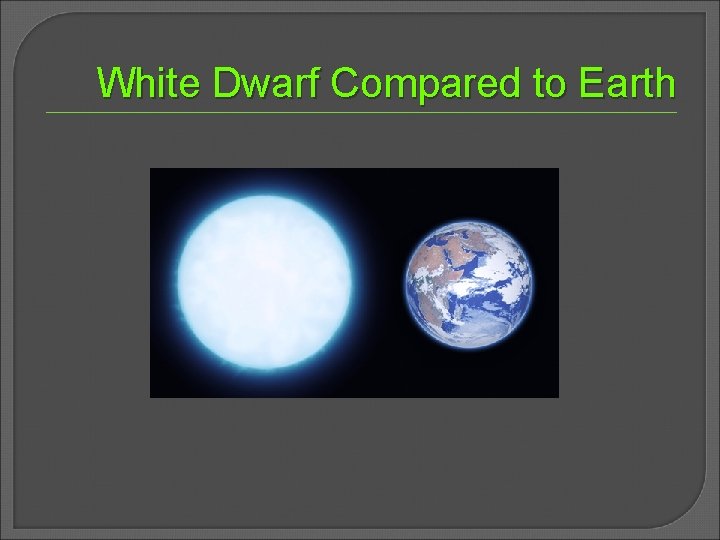
White Dwarf Compared to Earth
Supernova High mass stars only go through this stage Huge explosion of a star Extremely bright
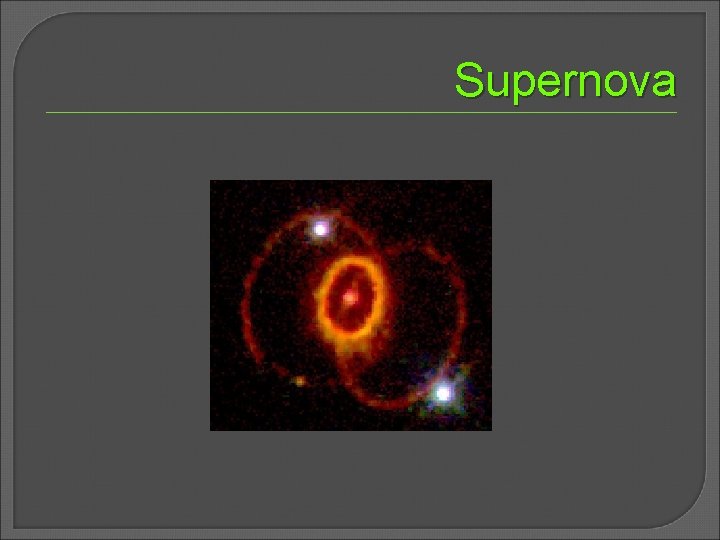
Supernova
Neutron Star What is left after a Supernova Only occurs with high mass stars Very dense
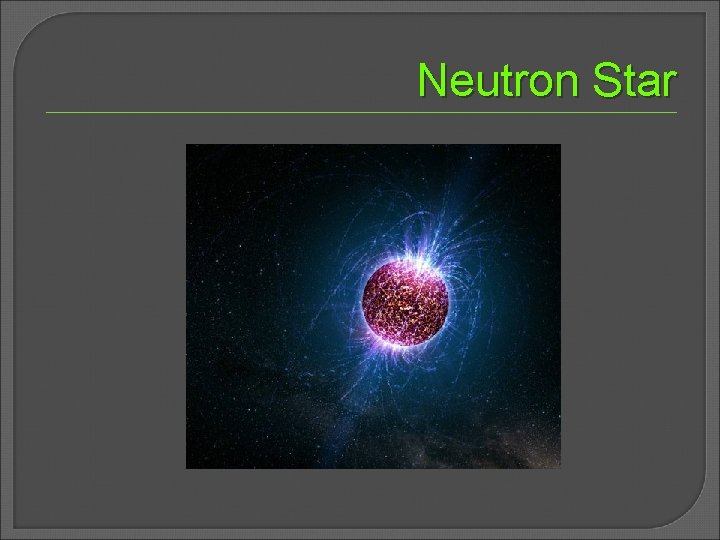
Neutron Star
Black Hole Only the most massive stars will end in this phase. Occurs after supernova So dense that light waves cannot escape Very high gravity Objects near by are swept in Use X-Rays to study them
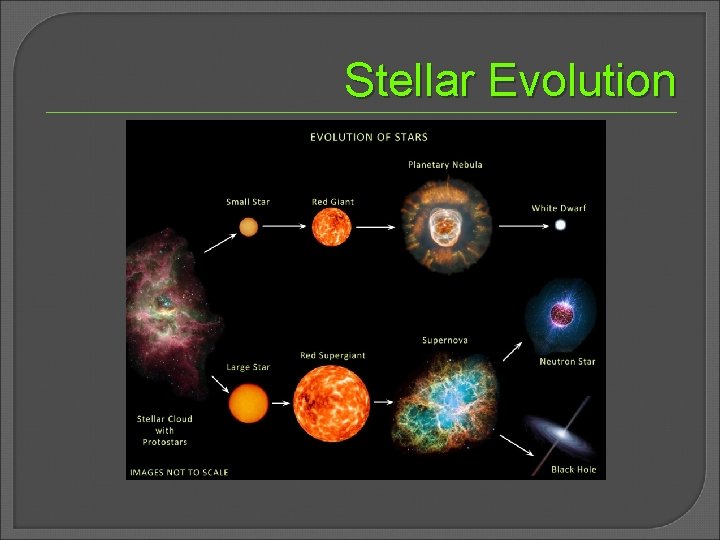
Stellar Evolution

The Universe
The Milky Way Galaxy Our galaxy (group of stars, dust, and gases held together by gravity) Spiral Galaxy 100, 000 ly across 10, 000 ly thick Has 3 spiral arms Sun is in one of the spiral arms 30, 000 ly from the center of the galaxy
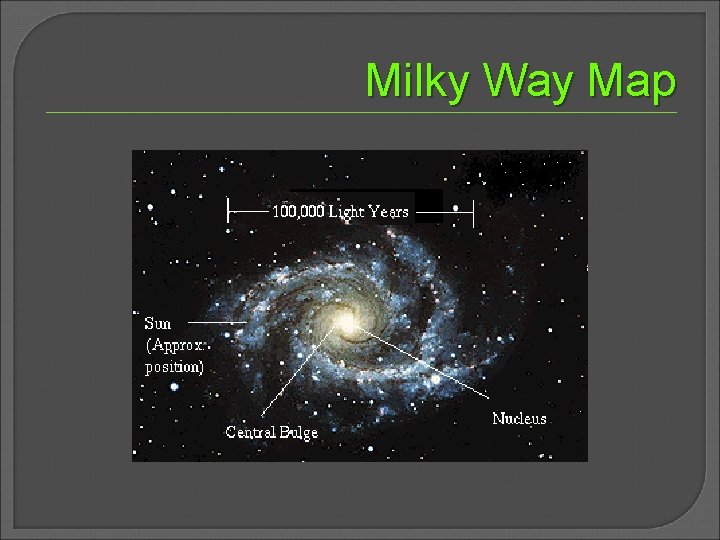
Milky Way Map
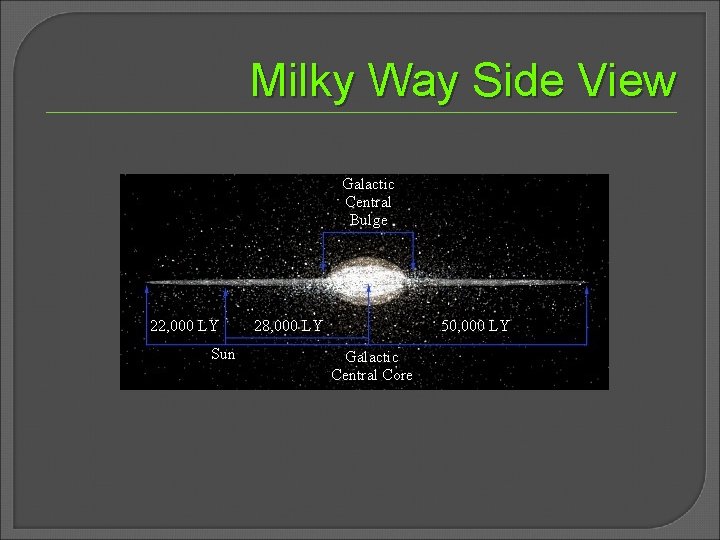
Milky Way Side View
Types Of Galaxies Spiral Elliptical Irregular There are billions of galaxies in our universe
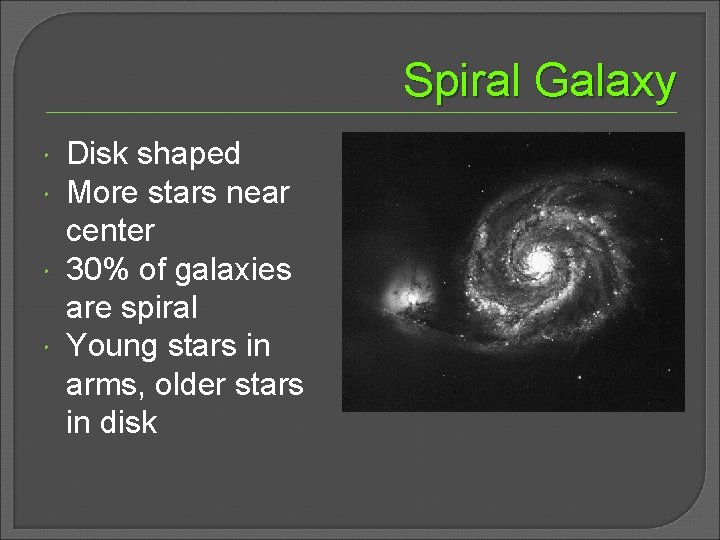
Spiral Galaxy Disk shaped More stars near center 30% of galaxies are spiral Young stars in arms, older stars in disk
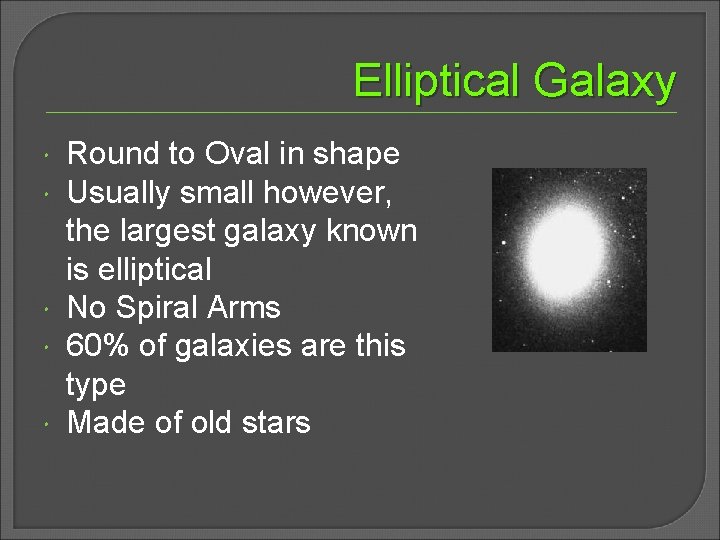
Elliptical Galaxy Round to Oval in shape Usually small however, the largest galaxy known is elliptical No Spiral Arms 60% of galaxies are this type Made of old stars
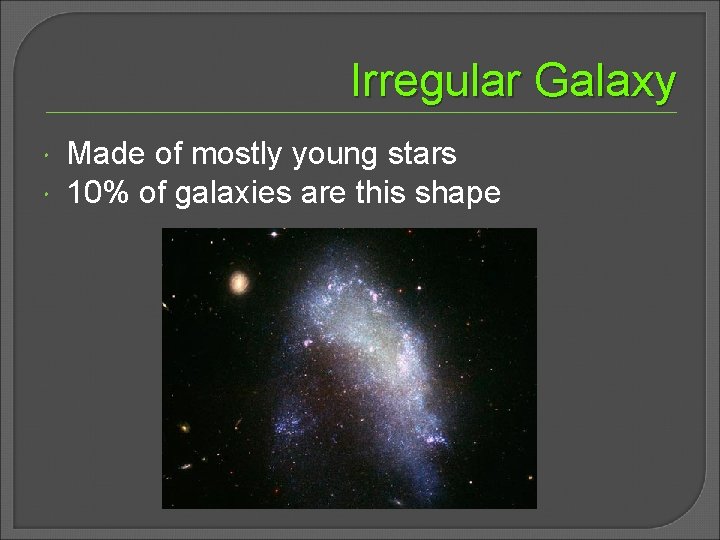
Irregular Galaxy Made of mostly young stars 10% of galaxies are this shape
Galaxy Clusters Galaxies group together to make clusters We are part of the local group • • 28 galaxies make up the local group 3 are spiral 11 irregular 14 elliptical
The Expanding Universe Most galaxies are red shifted indicating that they are moving away from Earth Galaxies that are farther away are moving quicker The Universe is Expanding • Discovered by Hubble
Big Bang Theory Universe began as a violent explosion from which the universe continues to expand, evolve, and cool Occurred about 13. 7 billion years ago Supporting Evidence • Red shift • Cosmic background information
- Slides: 47