
Chapter 24 The Origin of Species AP Biology
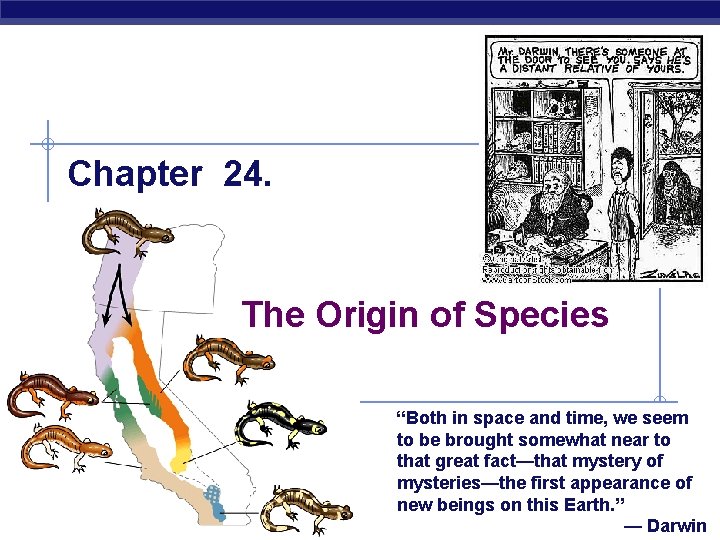
Chapter 24. The Origin of Species AP Biology “Both in space and time, we seem to be brought somewhat near to that great fact—that mystery of mysteries—the first appearance of new beings on this Earth. ” — Darwin
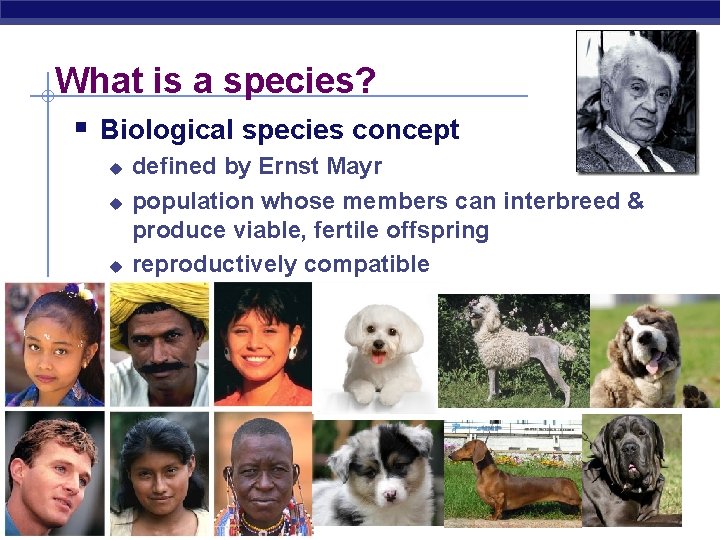
What is a species? § Biological species concept u u u AP Biology defined by Ernst Mayr population whose members can interbreed & produce viable, fertile offspring reproductively compatible
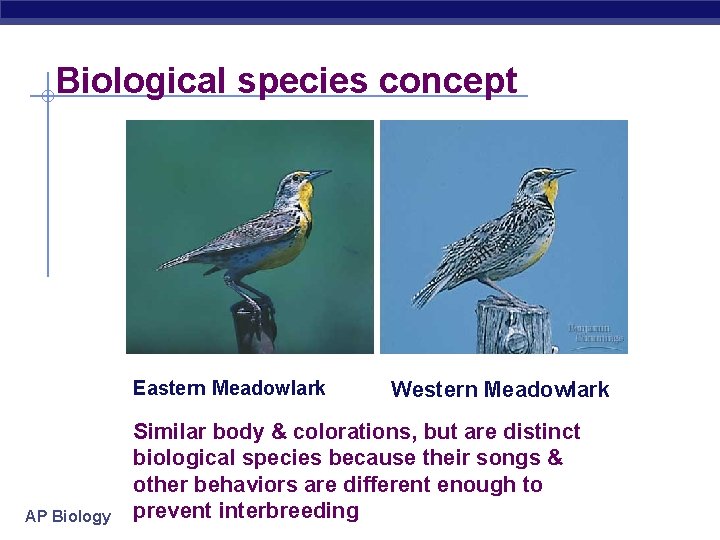
Biological species concept Eastern Meadowlark AP Biology Western Meadowlark Similar body & colorations, but are distinct biological species because their songs & other behaviors are different enough to prevent interbreeding
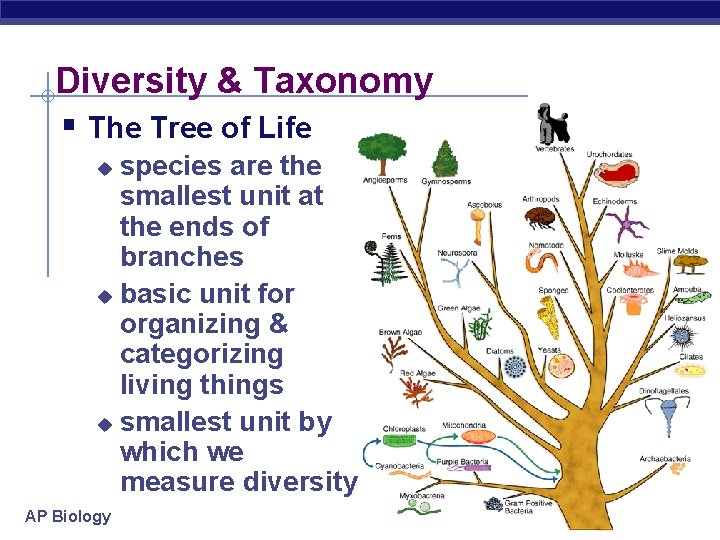
Diversity & Taxonomy § The Tree of Life species are the smallest unit at the ends of branches u basic unit for organizing & categorizing living things u smallest unit by which we measure diversity u AP Biology
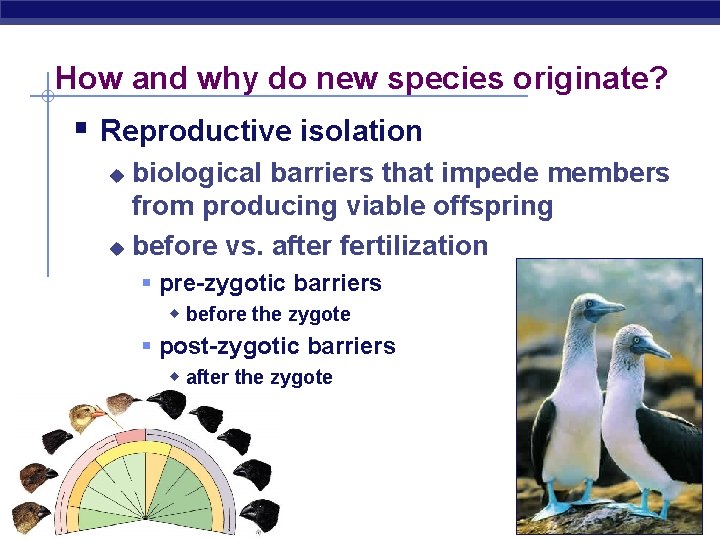
How and why do new species originate? § Reproductive isolation biological barriers that impede members from producing viable offspring u before vs. after fertilization u § pre-zygotic barriers w before the zygote § post-zygotic barriers w after the zygote AP Biology
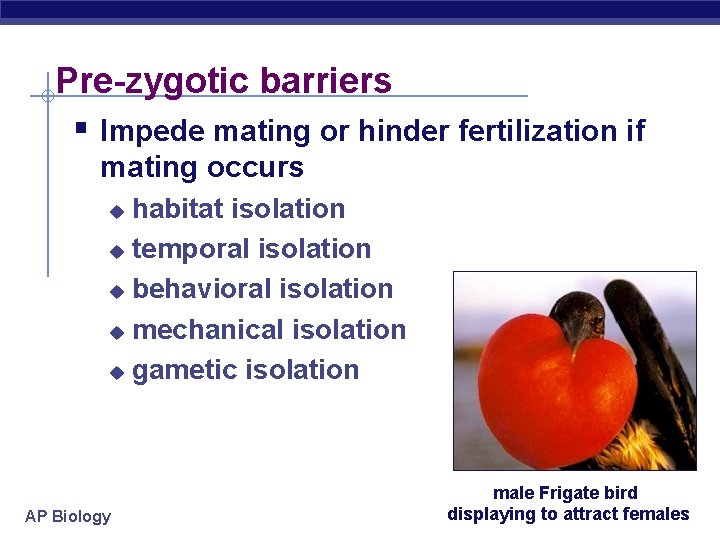
Pre-zygotic barriers § Impede mating or hinder fertilization if mating occurs habitat isolation u temporal isolation u behavioral isolation u mechanical isolation u gametic isolation u AP Biology male Frigate bird displaying to attract females
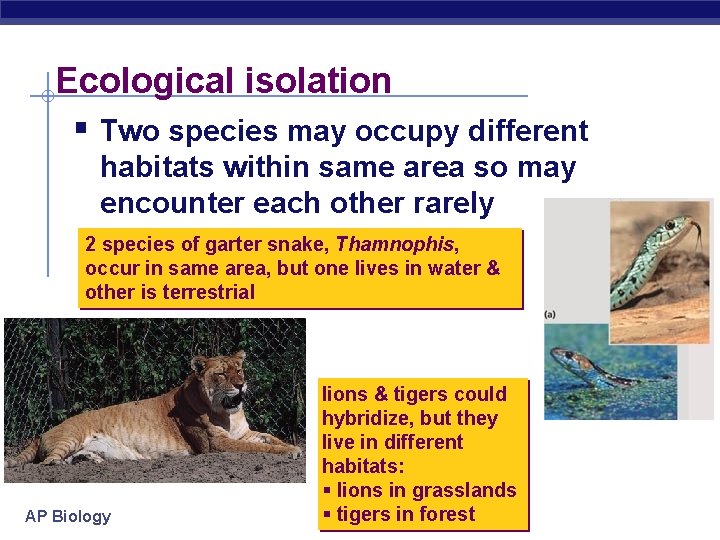
Ecological isolation § Two species may occupy different habitats within same area so may encounter each other rarely 2 species of garter snake, Thamnophis, occur in same area, but one lives in water & other is terrestrial AP Biology lions & tigers could hybridize, but they live in different habitats: § lions in grasslands § tigers in forest

Temporal isolation § Species that breed during different times of day, different seasons, or different years cannot mix gametes Eastern spotted skunk (L) & western spotted skunk (R) overlap in range but eastern mates in late winter & western mates in late summer AP Biology
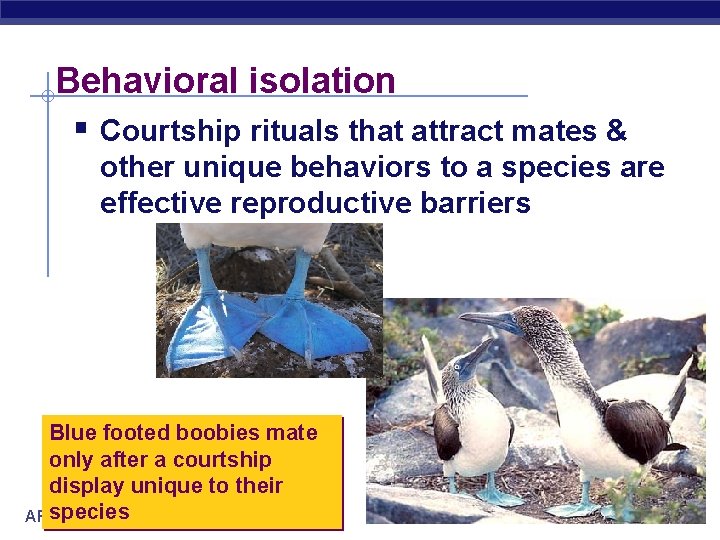
Behavioral isolation § Courtship rituals that attract mates & other unique behaviors to a species are effective reproductive barriers Blue footed boobies mate only after a courtship display unique to their AP species Biology
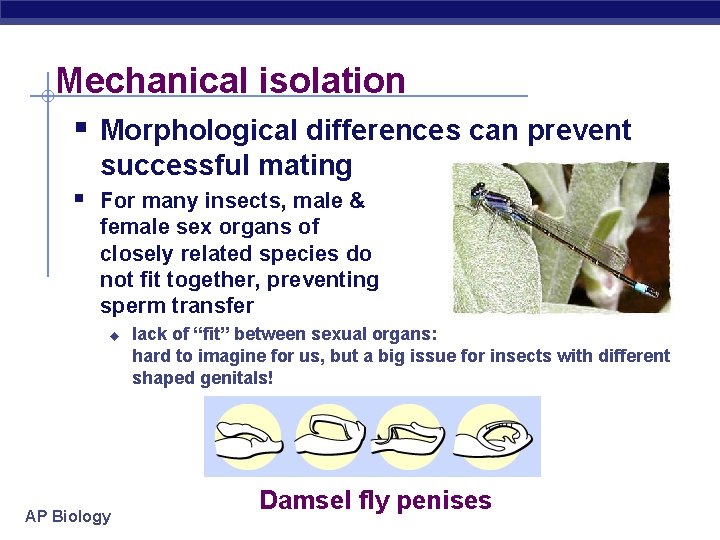
Mechanical isolation § Morphological differences can prevent successful mating § For many insects, male & female sex organs of closely related species do not fit together, preventing sperm transfer u AP Biology lack of “fit” between sexual organs: hard to imagine for us, but a big issue for insects with different shaped genitals! Damsel fly penises
Gametic isolation § Sperm of 1 species may not be able to fertilize eggs of another species u variety of mechanisms § chemical incompatibility w sperm cannot survive in female reproductive tract § biochemical barrier so sperm cannot penetrate egg w receptor recognition: lock & key between egg & sperm Sea urchins release sperm & eggs into surrounding waters where they fuse & form zygotes. Gametes of different species—red & purple —are unable to fuse. AP Biology
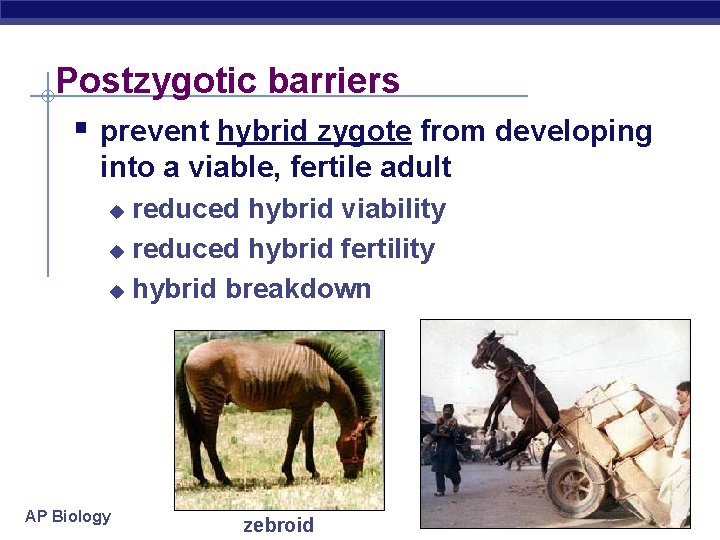
Postzygotic barriers § prevent hybrid zygote from developing into a viable, fertile adult reduced hybrid viability u reduced hybrid fertility u hybrid breakdown u AP Biology zebroid
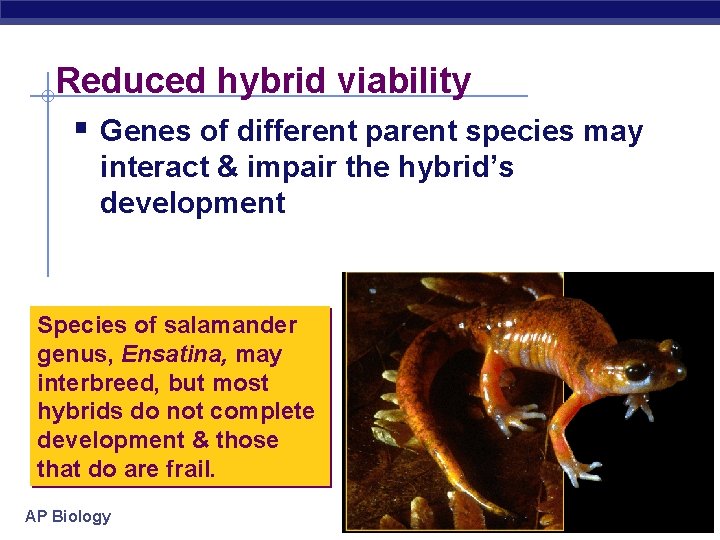
Reduced hybrid viability § Genes of different parent species may interact & impair the hybrid’s development Species of salamander genus, Ensatina, may interbreed, but most hybrids do not complete development & those that do are frail. AP Biology
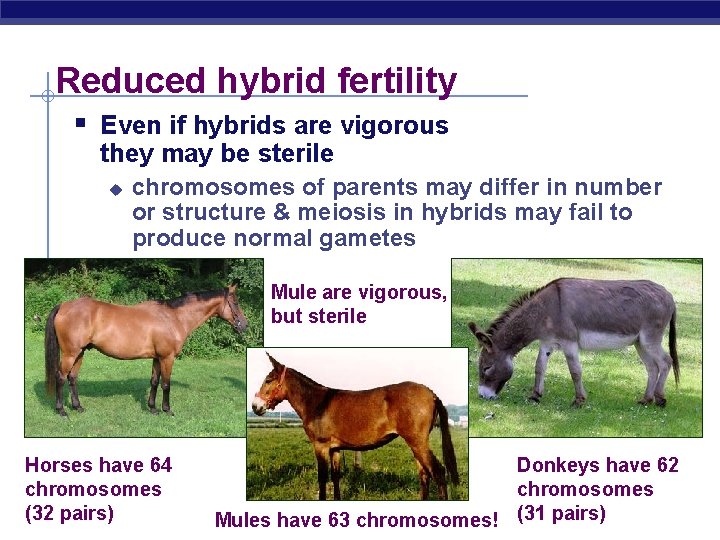
Reduced hybrid fertility § Even if hybrids are vigorous they may be sterile u chromosomes of parents may differ in number or structure & meiosis in hybrids may fail to produce normal gametes Mule are vigorous, but sterile Horses have 64 chromosomes (32 pairs) AP Biology Donkeys have 62 chromosomes Mules have 63 chromosomes! (31 pairs)
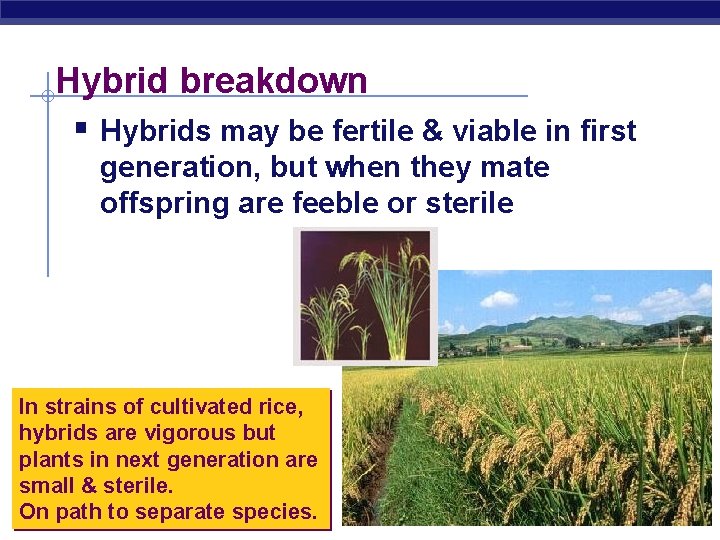
Hybrid breakdown § Hybrids may be fertile & viable in first generation, but when they mate offspring are feeble or sterile In strains of cultivated rice, hybrids are vigorous but plants in next generation are small & sterile. On path to separate species. AP Biology
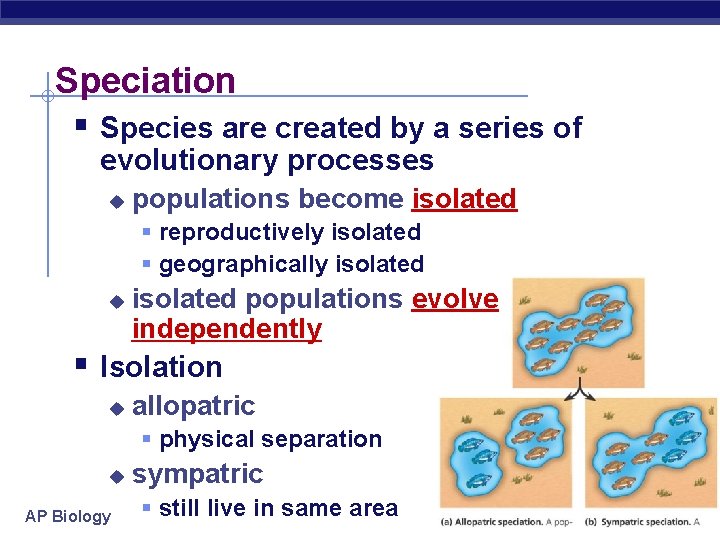
Speciation § Species are created by a series of evolutionary processes u populations become isolated § reproductively isolated § geographically isolated u isolated populations evolve independently § Isolation u allopatric § physical separation u AP Biology sympatric § still live in same area
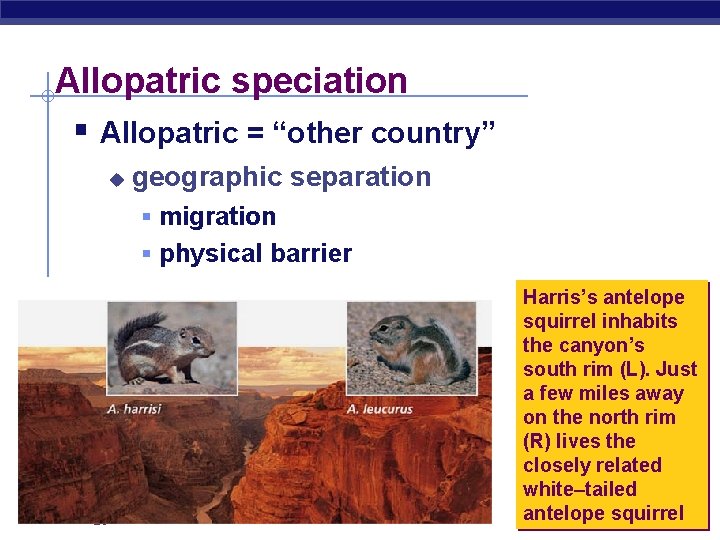
Allopatric speciation § Allopatric = “other country” u geographic separation § migration § physical barrier AP Biology Harris’s antelope squirrel inhabits the canyon’s south rim (L). Just a few miles away on the north rim (R) lives the closely related white–tailed antelope squirrel
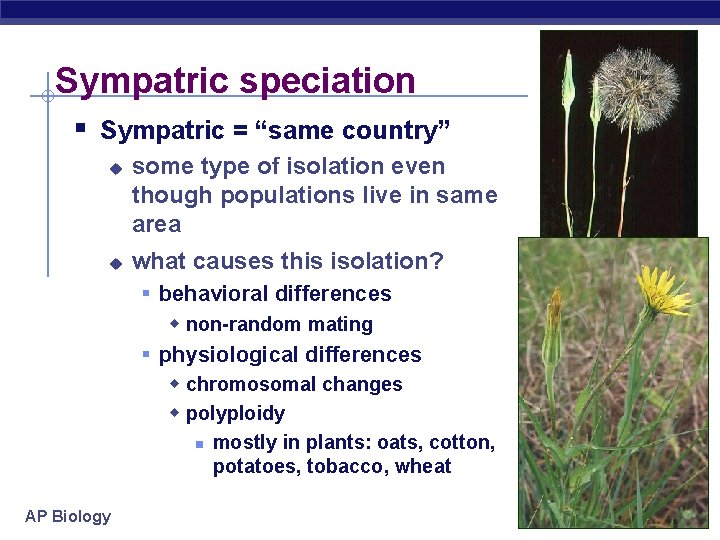
Sympatric speciation § Sympatric = “same country” u u some type of isolation even though populations live in same area what causes this isolation? § behavioral differences w non-random mating § physiological differences w chromosomal changes w polyploidy n AP Biology mostly in plants: oats, cotton, potatoes, tobacco, wheat
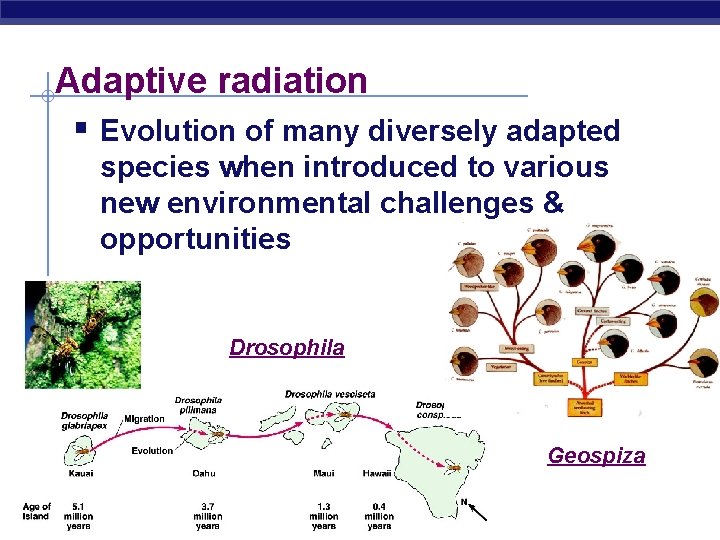
Adaptive radiation § Evolution of many diversely adapted species when introduced to various new environmental challenges & opportunities Drosophila Geospiza AP Biology
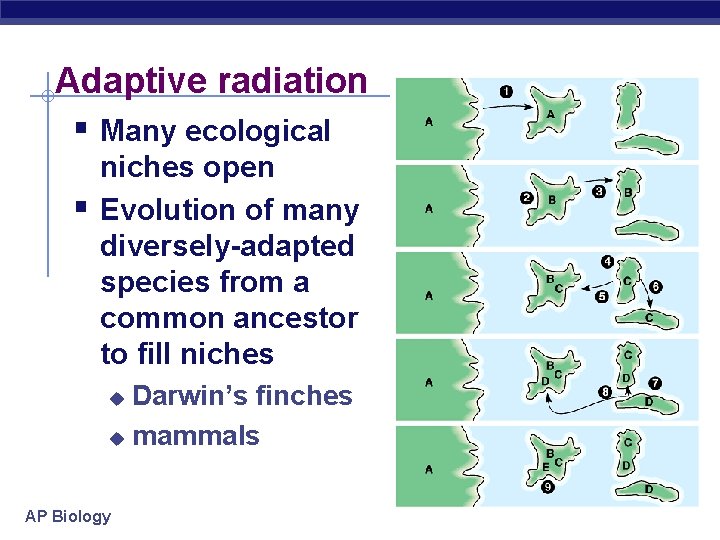
Adaptive radiation § Many ecological § niches open Evolution of many diversely-adapted species from a common ancestor to fill niches Darwin’s finches u mammals u AP Biology
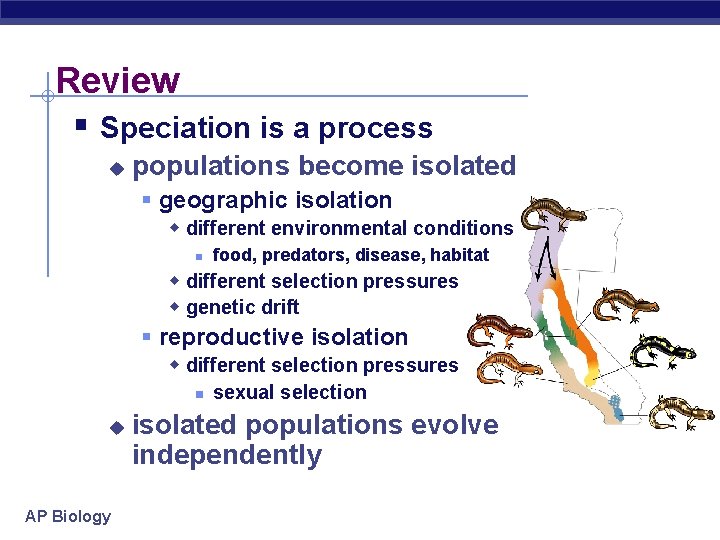
Review § Speciation is a process u populations become isolated § geographic isolation w different environmental conditions n food, predators, disease, habitat w different selection pressures w genetic drift § reproductive isolation w different selection pressures n u AP Biology sexual selection isolated populations evolve independently
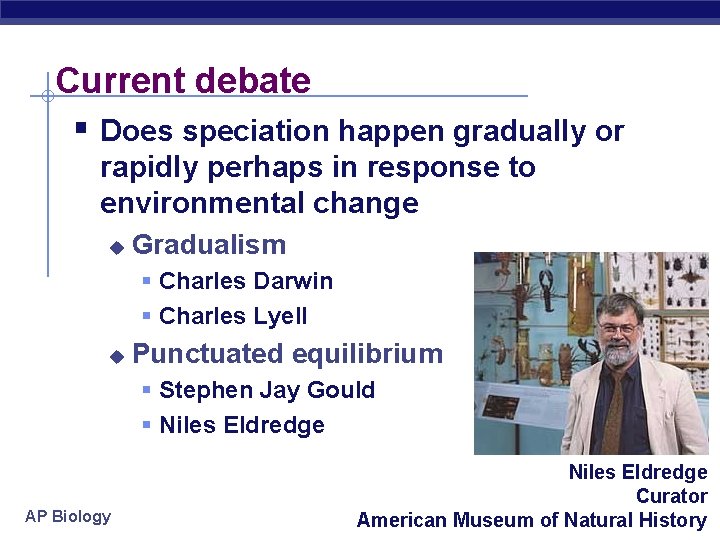
Current debate § Does speciation happen gradually or rapidly perhaps in response to environmental change u Gradualism § Charles Darwin § Charles Lyell u Punctuated equilibrium § Stephen Jay Gould § Niles Eldredge AP Biology Niles Eldredge Curator American Museum of Natural History
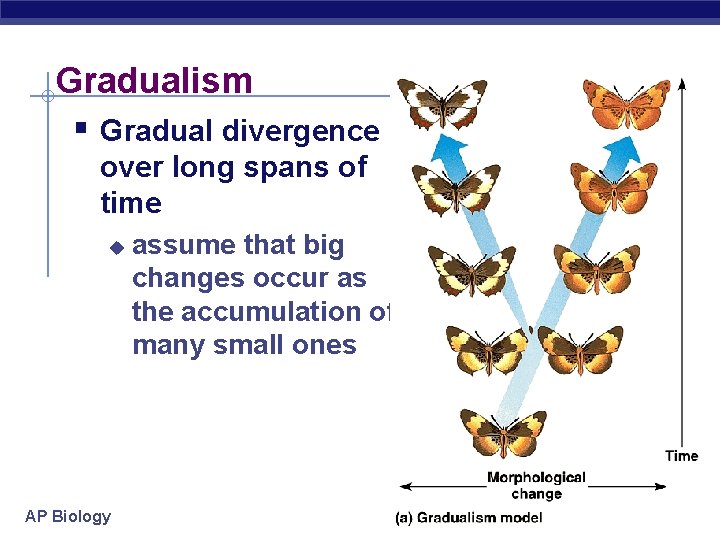
Gradualism § Gradual divergence over long spans of time u AP Biology assume that big changes occur as the accumulation of many small ones
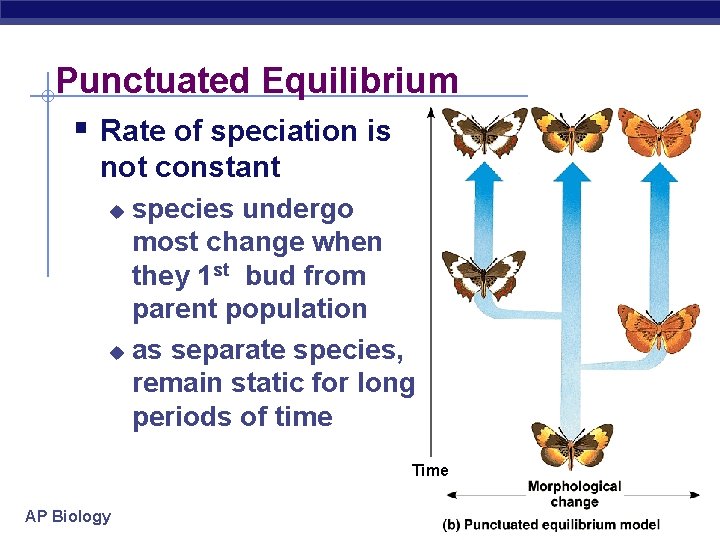
Punctuated Equilibrium § Rate of speciation is not constant species undergo most change when they 1 st bud from parent population u as separate species, remain static for long periods of time u Time AP Biology
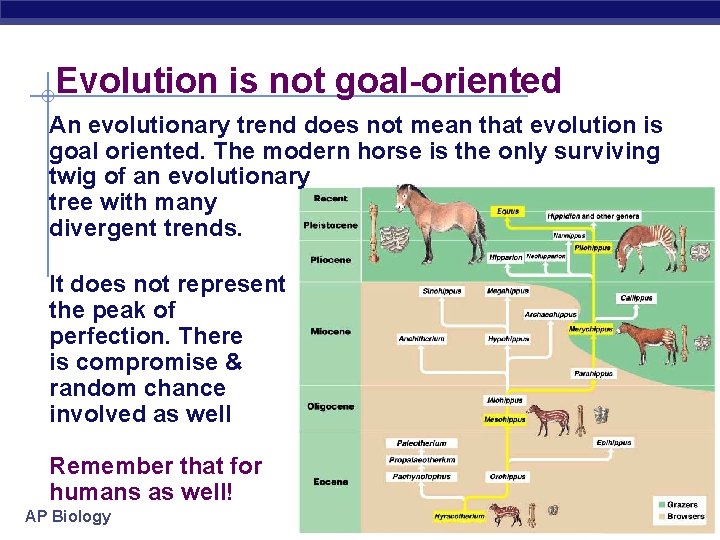
Evolution is not goal-oriented An evolutionary trend does not mean that evolution is goal oriented. The modern horse is the only surviving twig of an evolutionary tree with many divergent trends. It does not represent the peak of perfection. There is compromise & random chance involved as well Remember that for humans as well! AP Biology
Some interesting evolutionary trends…. AP Biology
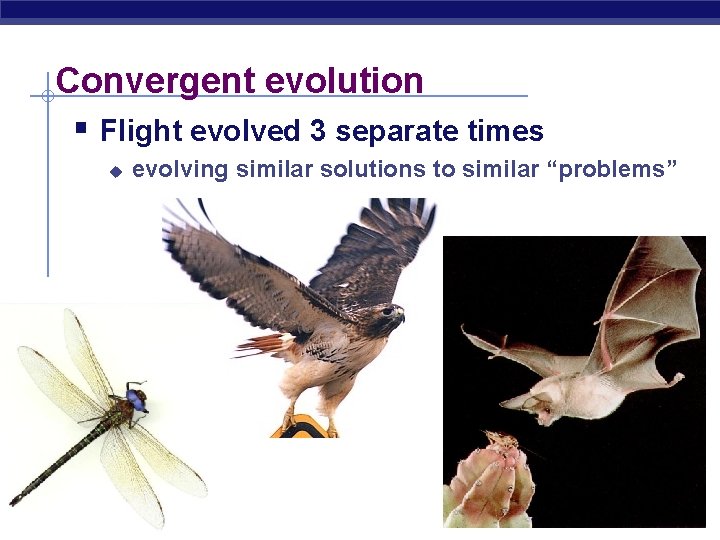
Convergent evolution § Flight evolved 3 separate times u AP Biology evolving similar solutions to similar “problems”
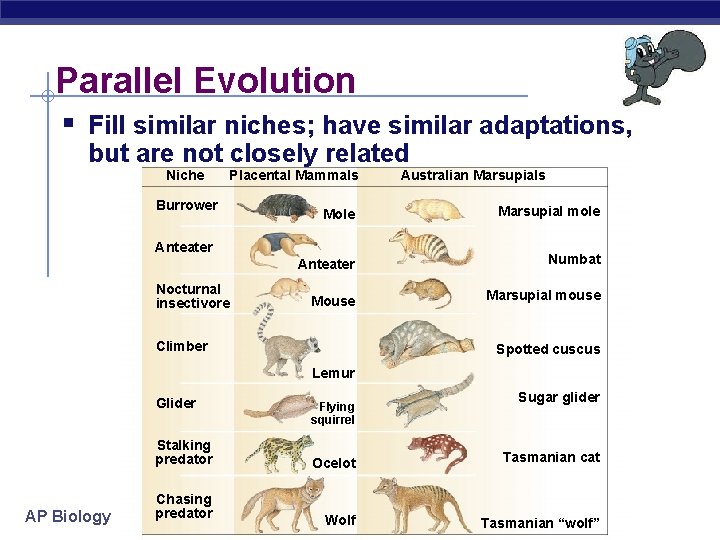
Parallel Evolution § Fill similar niches; have similar adaptations, but are not closely related Niche Placental Mammals Burrower Mole Marsupial mole Anteater Numbat Mouse Marsupial mouse Anteater Nocturnal insectivore Australian Marsupials Climber Spotted cuscus Lemur Glider Stalking predator AP Biology Chasing predator Flying squirrel Sugar glider Ocelot Tasmanian cat Wolf Tasmanian “wolf”
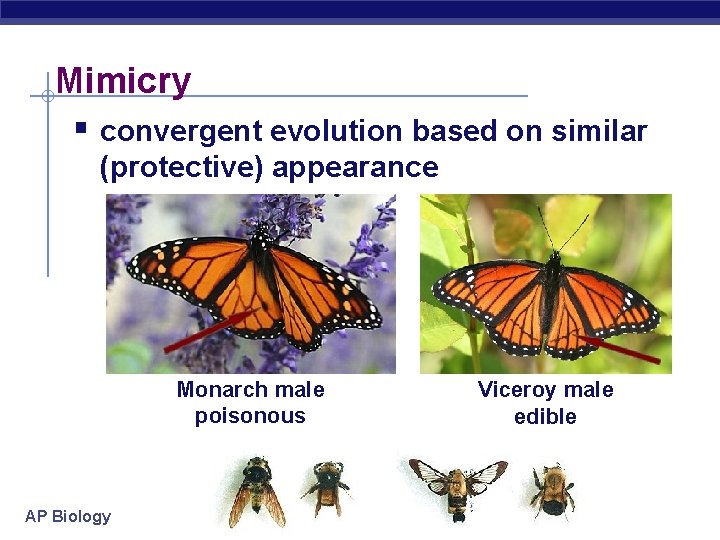
Mimicry § convergent evolution based on similar (protective) appearance Monarch male poisonous AP Biology Viceroy male edible
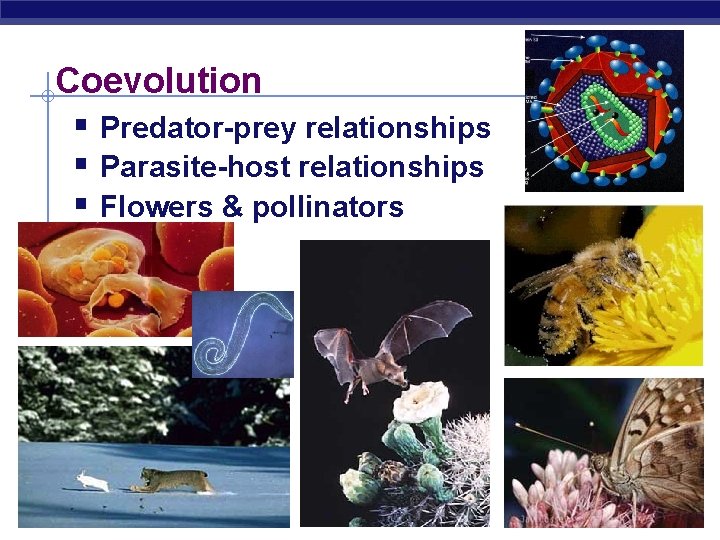
Coevolution § Predator-prey relationships § Parasite-host relationships § Flowers & pollinators AP Biology
Darwin Awards Named in honor of Charles Darwin, the father of evolution, the Darwin Awards commemorate those who improve our gene pool by removing themselves from it. The Darwin Awards salute the improvement of the human genome by honoring those who accidentally kill themselves in really stupid ways. Of necessity, this honor is bestowed posthumously. www. Darwin. Awards. com AP Biology
Any Questions? It's pretty much my favorite animal. It's like a lion and a tiger mixed. . . bred for its skills in magic. AP Biology
- Slides: 32