
Chapter 24 Nuclear Reactions and Their Applications 24

- Slides: 28
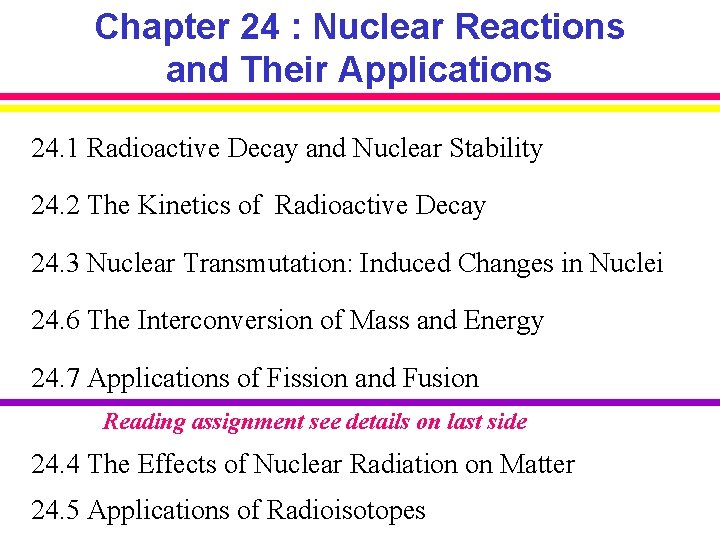
Chapter 24 : Nuclear Reactions and Their Applications 24. 1 Radioactive Decay and Nuclear Stability 24. 2 The Kinetics of Radioactive Decay 24. 3 Nuclear Transmutation: Induced Changes in Nuclei 24. 6 The Interconversion of Mass and Energy 24. 7 Applications of Fission and Fusion Reading assignment see details on last side 24. 4 The Effects of Nuclear Radiation on Matter 24. 5 Applications of Radioisotopes
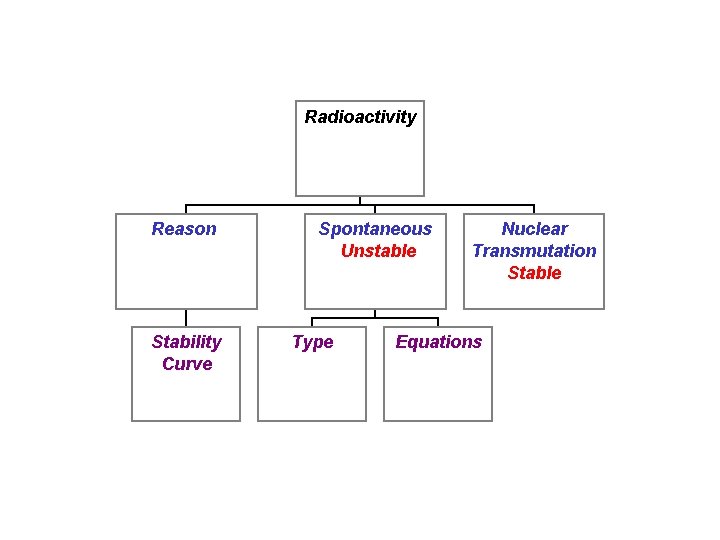
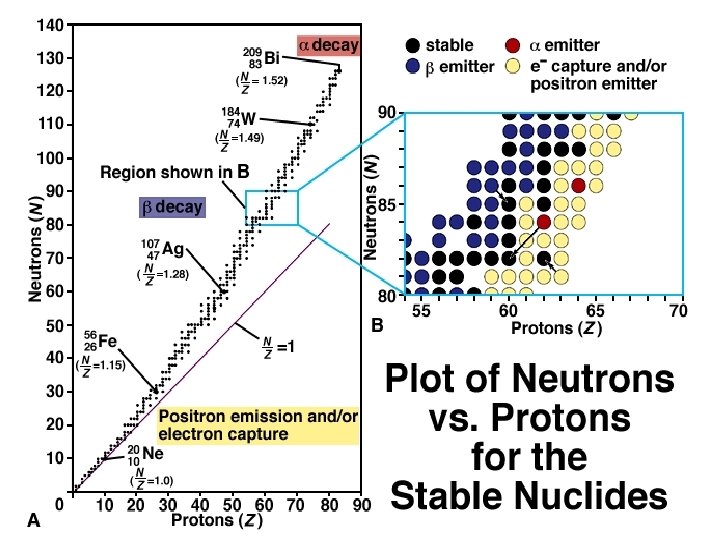
Radioactivity Reason Stability Curve Spontaneous Unstable Type Nuclear Transmutation Stable Equations
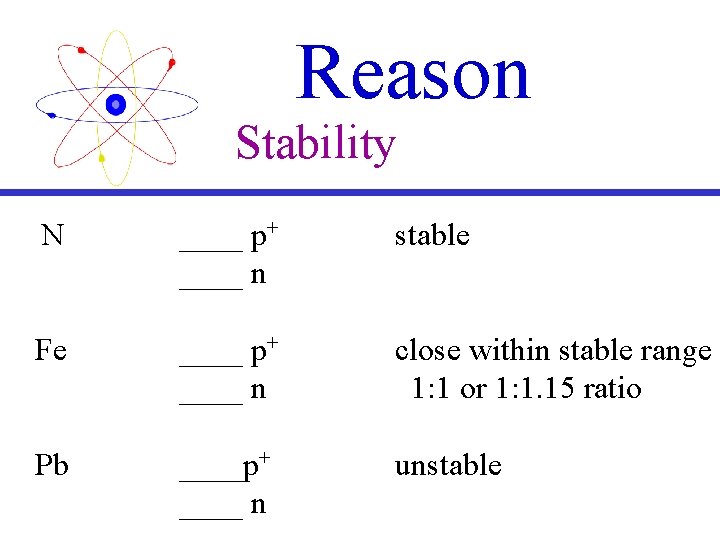
Reason Stability N ____ p+ ____ n stable Fe ____ p+ ____ n close within stable range 1: 1 or 1: 1. 15 ratio Pb ____p+ ____ n unstable
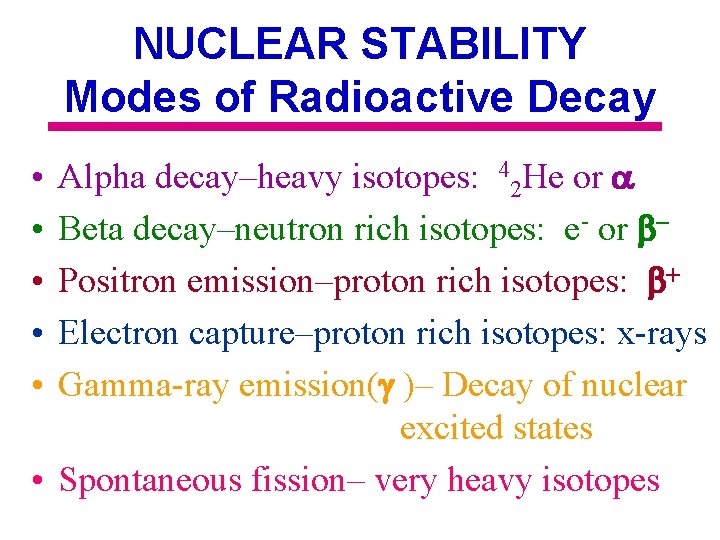
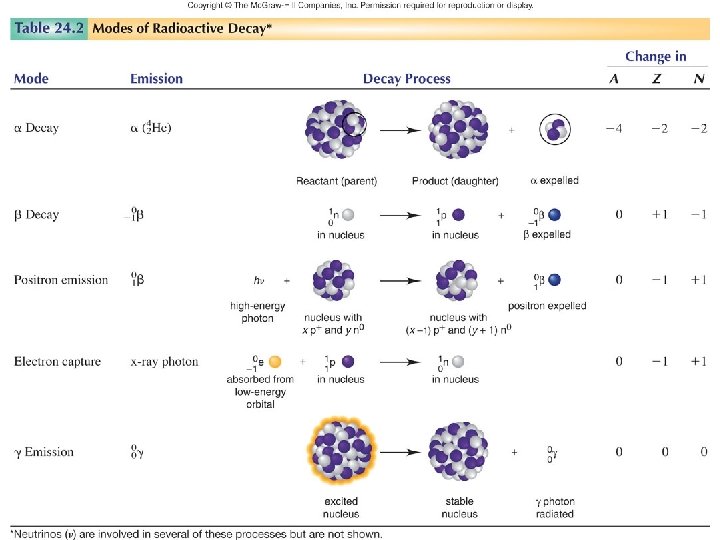
NUCLEAR STABILITY Modes of Radioactive Decay Alpha decay–heavy isotopes: 42 He or Beta decay–neutron rich isotopes: e- or Positron emission–proton rich isotopes: Electron capture–proton rich isotopes: x-rays Gamma-ray emission( – Decay of nuclear excited states • Spontaneous fission– very heavy isotopes • • •
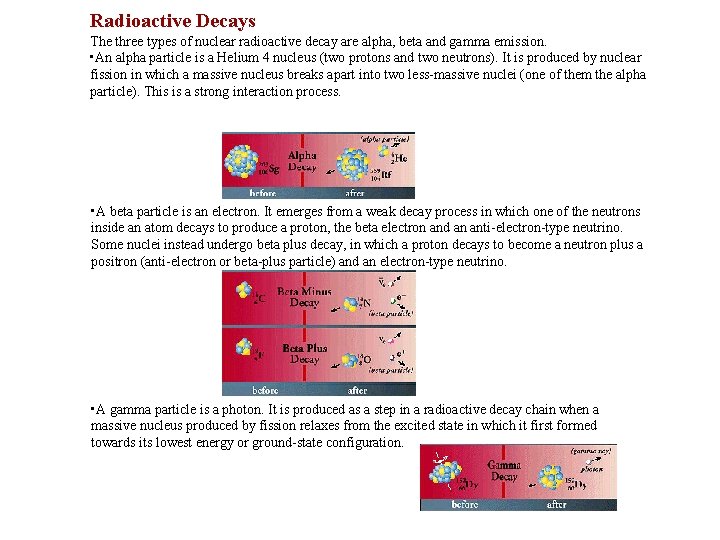
Radioactive Decays The three types of nuclear radioactive decay are alpha, beta and gamma emission. • An alpha particle is a Helium 4 nucleus (two protons and two neutrons). It is produced by nuclear fission in which a massive nucleus breaks apart into two less-massive nuclei (one of them the alpha particle). This is a strong interaction process. • A beta particle is an electron. It emerges from a weak decay process in which one of the neutrons inside an atom decays to produce a proton, the beta electron and an anti-electron-type neutrino. Some nuclei instead undergo beta plus decay, in which a proton decays to become a neutron plus a positron (anti-electron or beta-plus particle) and an electron-type neutrino. • A gamma particle is a photon. It is produced as a step in a radioactive decay chain when a massive nucleus produced by fission relaxes from the excited state in which it first formed towards its lowest energy or ground-state configuration.
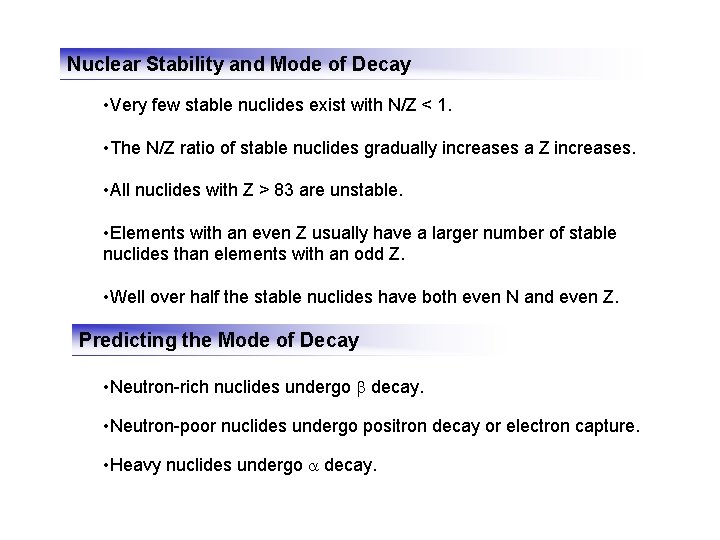
Nuclear Stability and Mode of Decay • Very few stable nuclides exist with N/Z < 1. • The N/Z ratio of stable nuclides gradually increases a Z increases. • All nuclides with Z > 83 are unstable. • Elements with an even Z usually have a larger number of stable nuclides than elements with an odd Z. • Well over half the stable nuclides have both even N and even Z. Predicting the Mode of Decay • Neutron-rich nuclides undergo decay. • Neutron-poor nuclides undergo positron decay or electron capture. • Heavy nuclides undergo decay.
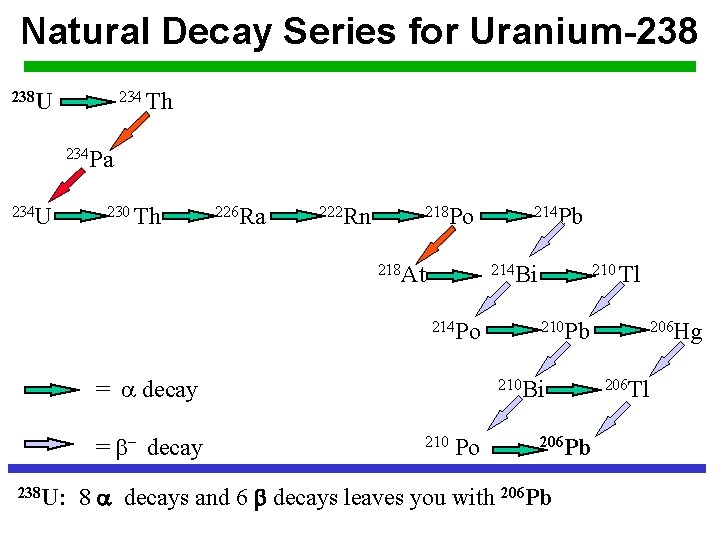
Natural Decay Series for Uranium-238 238 U 234 Th 234 Pa 234 U 230 Th 226 Ra 222 Rn 218 Po 218 At 214 Bi 214 Po = decay = decay 238 U: 214 Pb 210 Tl 210 Pb 210 Bi 210 Po 206 Pb 8 decays and 6 decays leaves you with 206 Pb 206 Hg 206 Tl
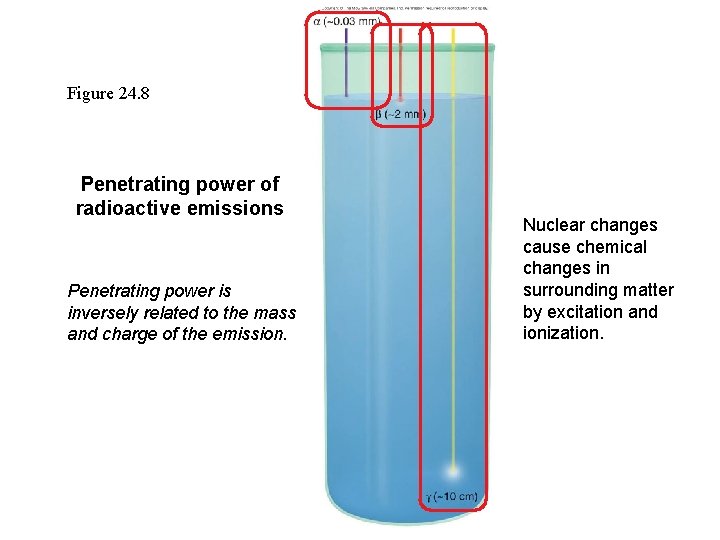
Figure 24. 8 Penetrating power of radioactive emissions Penetrating power is inversely related to the mass and charge of the emission. Nuclear changes cause chemical changes in surrounding matter by excitation and ionization.
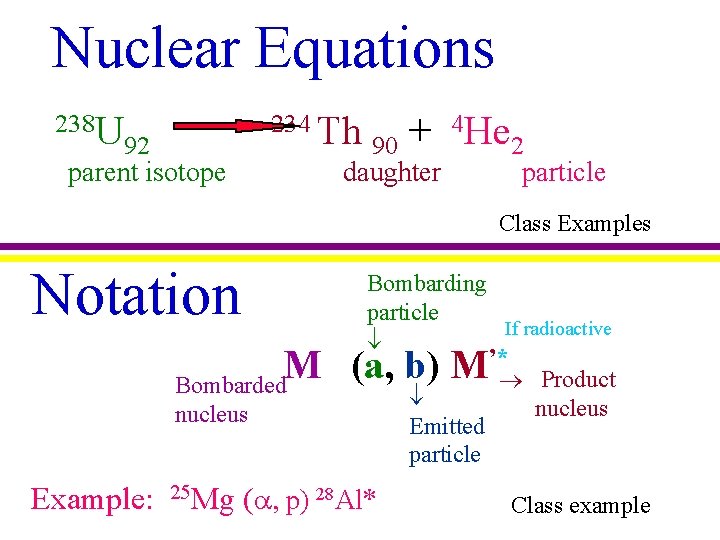
Nuclear Equations 238 U 234 Th 92 parent isotope 4 He + 90 2 daughter particle Class Examples Notation Bombarding particle If radioactive ’* M (a, b) M Bombarded nucleus Example: 25 Mg ( , p) 28 Al* Emitted particle Product nucleus Class example
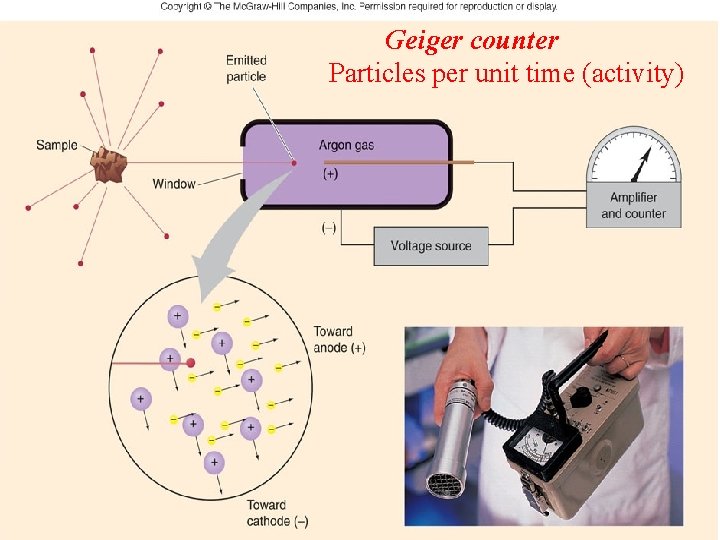
Geiger counter Particles per unit time (activity)
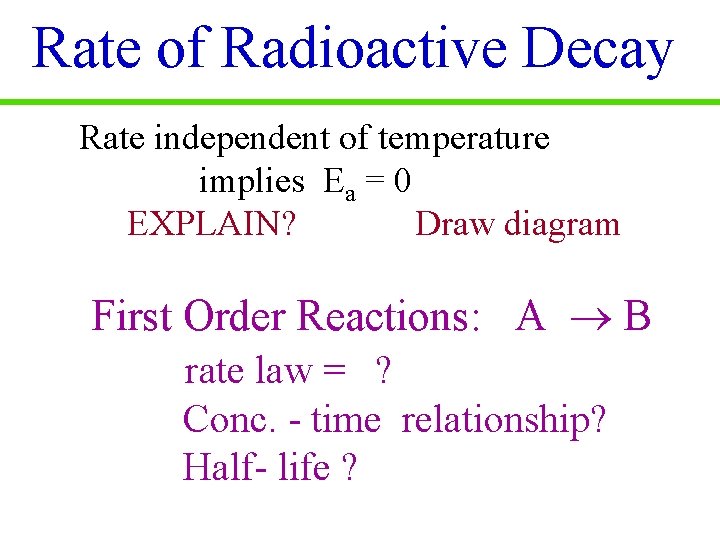
Rate of Radioactive Decay Rate independent of temperature implies Ea = 0 EXPLAIN? Draw diagram First Order Reactions: A B rate law = ? Conc. - time relationship? Half- life ?
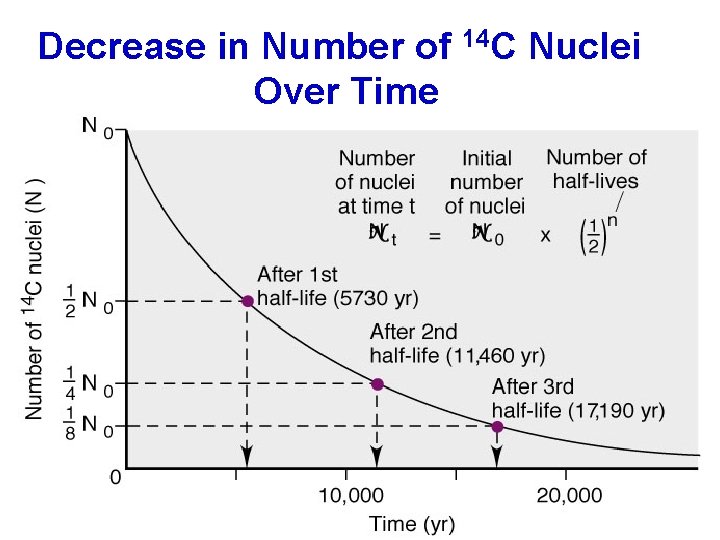
Decrease in Number of 14 C Nuclei Over Time
Decay Constants (k) and Half-lives (t 1/2) of Beryllium Isotopes and others Nuclide k t 1/2 7 Be 4 1. 30 x 10 -2/day 53. 3 day 8 Be 4 1. 0 x 1016/s 6. 7 x 10 -17 s 9 Be 4 Stable 10 Be 4 4. 3 x 10 -7/yr 1. 6 x 10⁶ yr 5. 02 x 10 -2/s 13. 8 s 11 4 238 U Be t 1/2 = 4. 5 X 10⁹ yrs 214 Po t 1/2 = 1. 6 X 10 -4 yrs
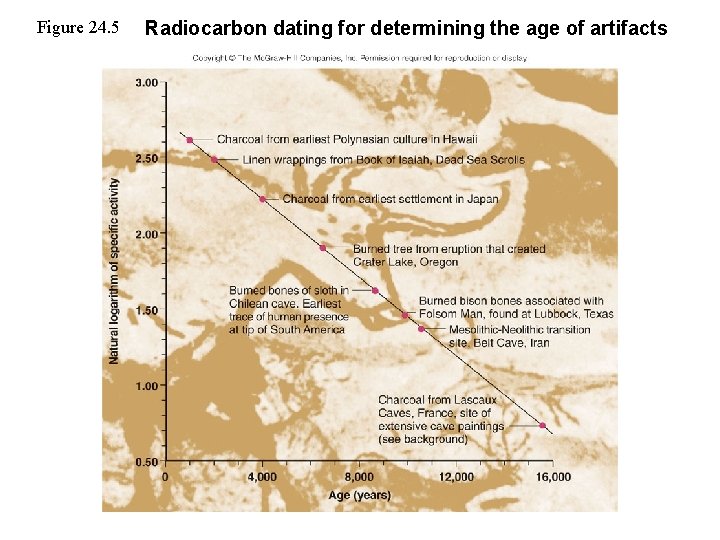
Figure 24. 5 Radiocarbon dating for determining the age of artifacts
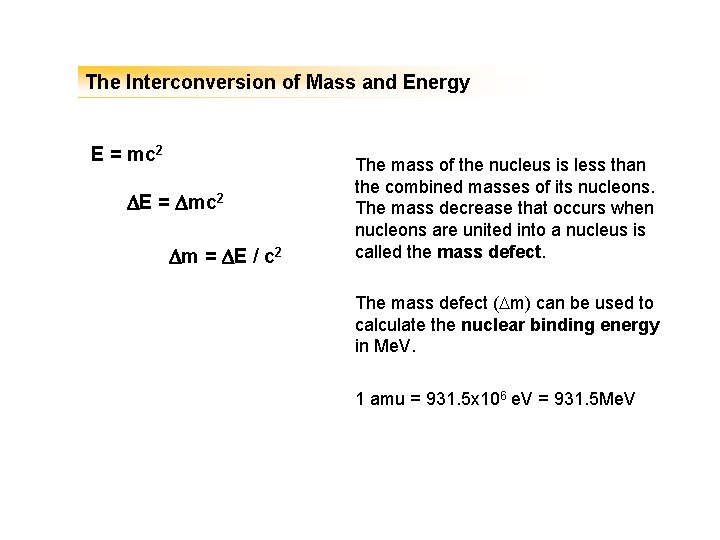
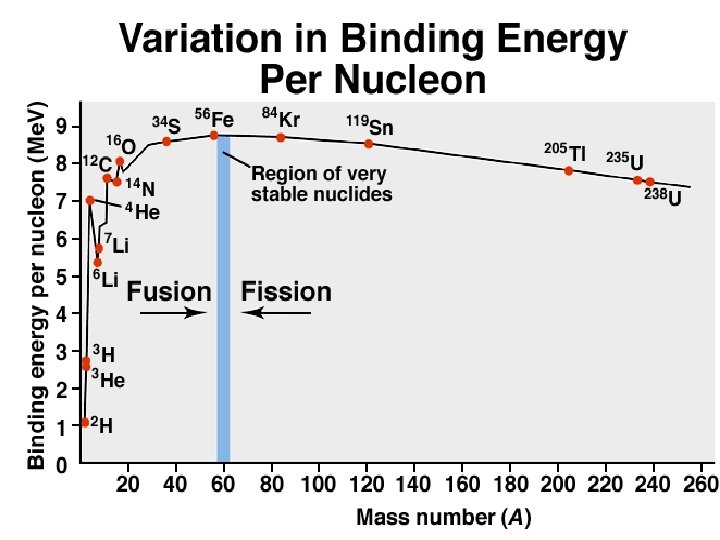
The Interconversion of Mass and Energy E = mc 2 DE = Dmc 2 Dm = DE / c 2 The mass of the nucleus is less than the combined masses of its nucleons. The mass decrease that occurs when nucleons are united into a nucleus is called the mass defect. The mass defect ( m) can be used to calculate the nuclear binding energy in Me. V. 1 amu = 931. 5 x 10⁶ e. V = 931. 5 Me. V
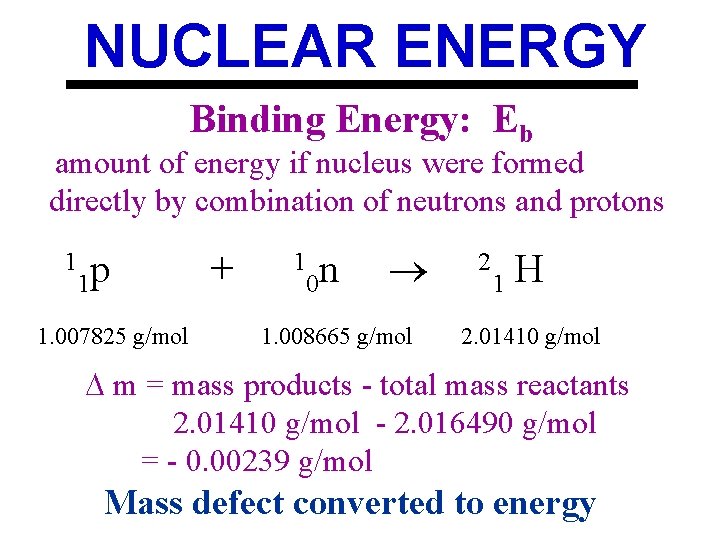
NUCLEAR ENERGY Binding Energy: Eb amount of energy if nucleus were formed directly by combination of neutrons and protons 1 p 1 1. 007825 g/mol + 1 0 n 1. 008665 g/mol 2 1 H 2. 01410 g/mol m = mass products - total mass reactants 2. 01410 g/mol - 2. 016490 g/mol = - 0. 00239 g/mol Mass defect converted to energy
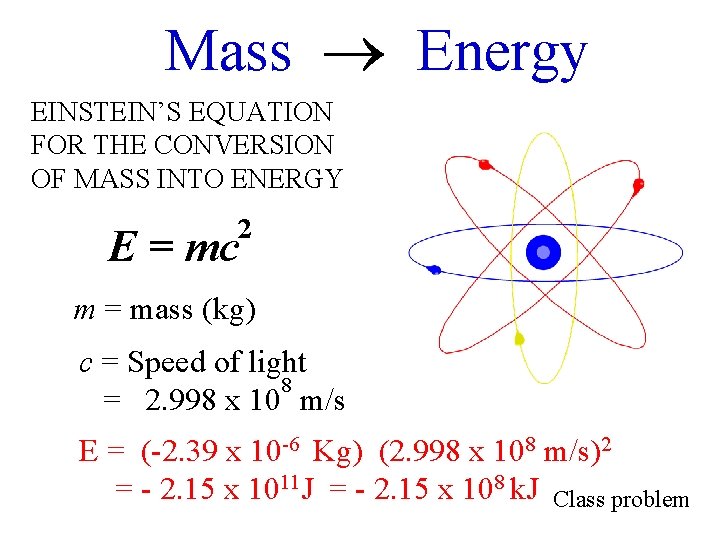
Mass Energy EINSTEIN’S EQUATION FOR THE CONVERSION OF MASS INTO ENERGY E = mc 2 m = mass (kg) c = Speed of light 8 = 2. 998 x 10 m/s E = (-2. 39 x 10 -6 Kg) (2. 998 x 108 m/s)2 = - 2. 15 x 1011 J = - 2. 15 x 108 k. J Class problem
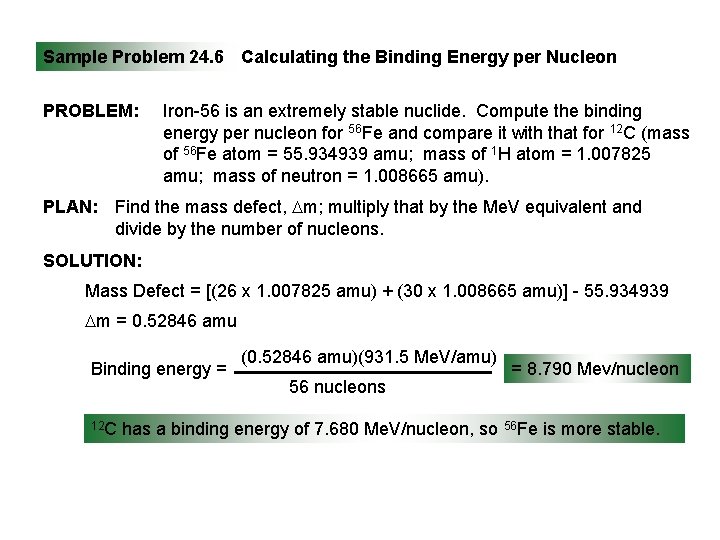
Sample Problem 24. 6 Calculating the Binding Energy per Nucleon PROBLEM: Iron-56 is an extremely stable nuclide. Compute the binding energy per nucleon for 56 Fe and compare it with that for 12 C (mass of 56 Fe atom = 55. 934939 amu; mass of 1 H atom = 1. 007825 amu; mass of neutron = 1. 008665 amu). PLAN: Find the mass defect, m; multiply that by the Me. V equivalent and divide by the number of nucleons. SOLUTION: Mass Defect = [(26 x 1. 007825 amu) + (30 x 1. 008665 amu)] - 55. 934939 m = 0. 52846 amu Binding energy = 12 C (0. 52846 amu)(931. 5 Me. V/amu) 56 nucleons = 8. 790 Mev/nucleon has a binding energy of 7. 680 Me. V/nucleon, so 56 Fe is more stable.
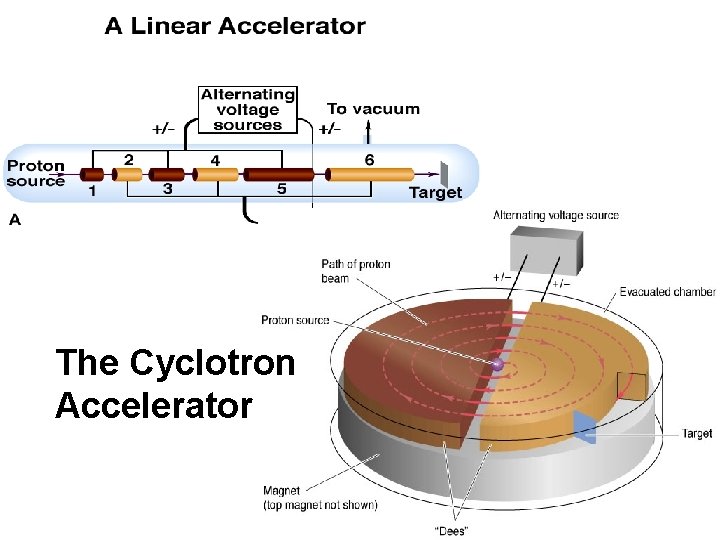
The Cyclotron Accelerator
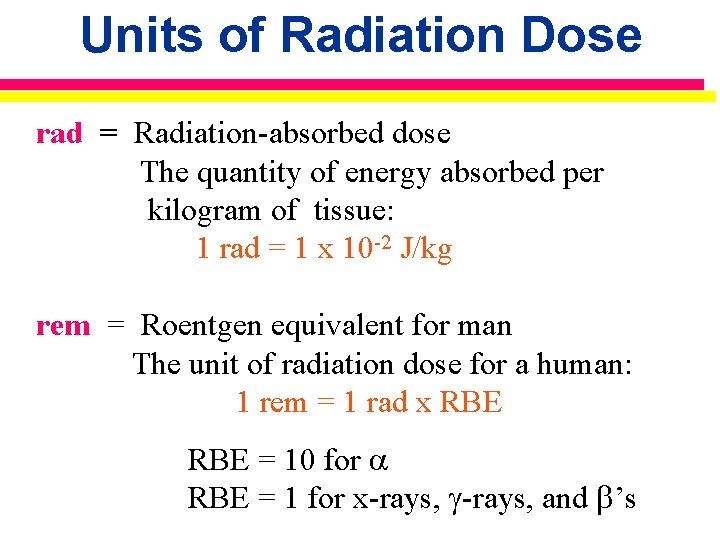
Units of Radiation Dose rad = Radiation-absorbed dose The quantity of energy absorbed per kilogram of tissue: 1 rad = 1 x 10 -2 J/kg rem = Roentgen equivalent for man The unit of radiation dose for a human: 1 rem = 1 rad x RBE = 10 for RBE = 1 for x-rays, and ’s
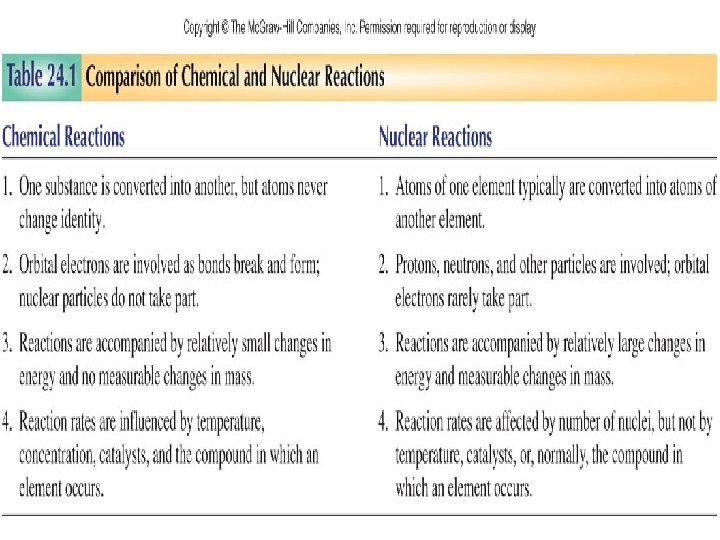
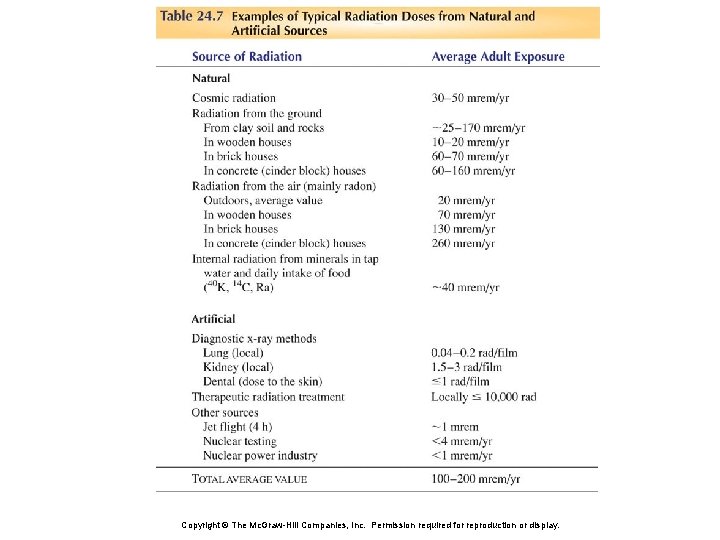
Copyright © The Mc. Graw-Hill Companies, Inc. Permission required for reproduction or display.
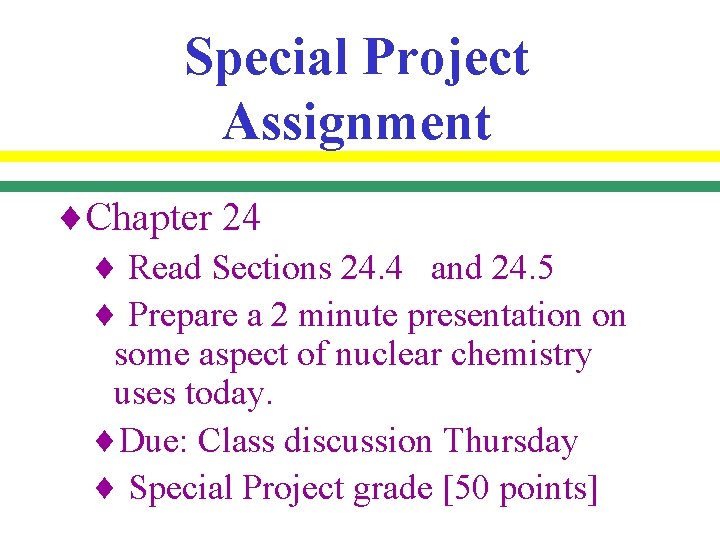
Special Project Assignment ¨Chapter 24 ¨ Read Sections 24. 4 and 24. 5 ¨ Prepare a 2 minute presentation on some aspect of nuclear chemistry uses today. ¨Due: Class discussion Thursday ¨ Special Project grade [50 points]