
Chapter 24 Magnetic Fields Magnet A substance that
Chapter 24 Magnetic Fields
Magnet • A substance that has polarity
Polarity • Charge separation that results in one end being positive & the other end being negative
Magnets • The ends are called the north & south poles
Magnets • North pole = (+) • South pole = (-)
Magnets • Opposite poles attract & like poles repel
Some metals can become temporary magnets by bringing them close to a strong magnet
Most Permanent magnets are made of ALNICO, an alloy of Al, Ni, & Co
Very strong, but expensive permanent magnets are made of neodymium
Magnetic Field • Space where attractive & repulsive forces act around a magnet
Magnetic Field • Force fields similar to gravitational & electric fields
Magnetic Flux • The number of field lines passing through a surface
Field Strength • Magnetic field strength is proportional to the flux per unit area
A temporary magnet concentrates magnetic field lines and is attracted to a permanent magnet
A temporary magnet repels magnetic field lines and is repelled from a permanent magnet
Electromagnetism • Electric current generates a magnetic field & vice versa
Hans Christian Oersted • First to observe electromagnetic properties
Electromagnetism • Electric field lines & magnetic field lines are perpendicular
First Right-Hand Rule • Explain • (page 497)
Passing a current through a wire wrapped around a piece of metal generates a magnetic field
Electromagnet • Magnet generated by passing a current through a coiled wire
Second Right. Hand Rule • Explain • (page 498)
Magnetism at the atomic level • Results from magnetic fields of electrons
Domain • A group of about 20 10 atoms acting together electromagnetically
Domain • Each domain acts like a dipole (polar unit)
Magnitism • Magnetism occurs when domains are aligned
Passing a current through a wire in a magnetic field exerts a force
Third Right-Hand Rule • Explain • (page 503)
Magnetic Induction (B) • Strength of a magnetic field
Magnetic Force • Proportional to current, field strength, & length of the wire
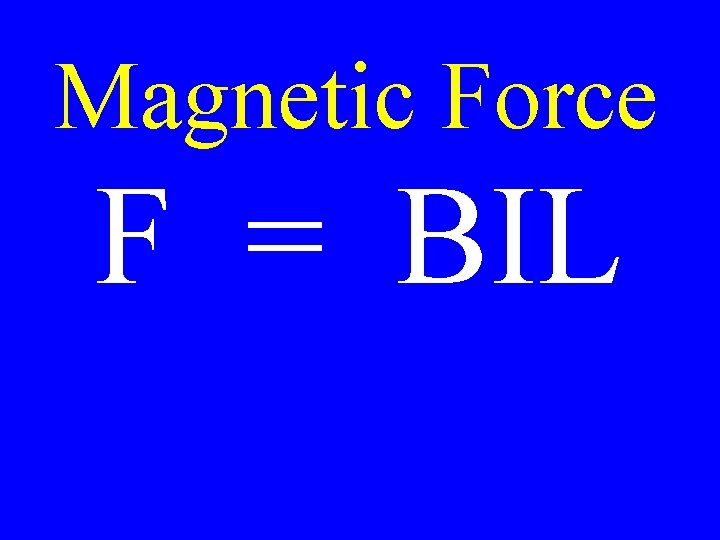
Magnetic Force F = BIL
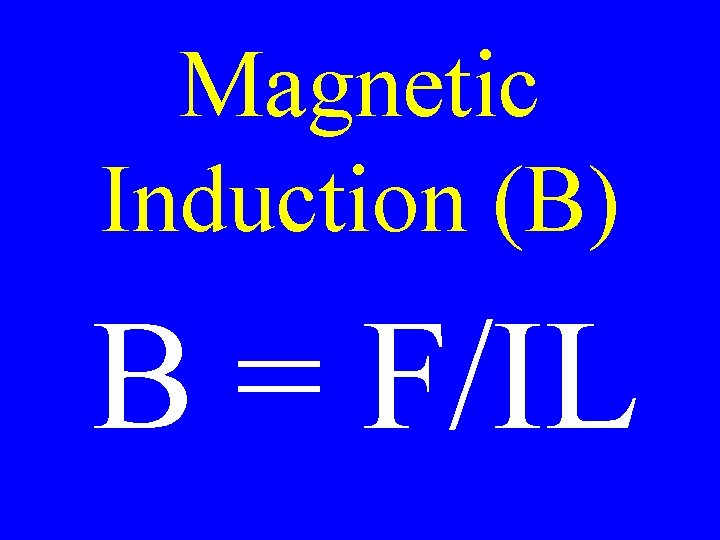
Magnetic Induction (B) B = F/IL
Magnetic Induction (B) Measured in teslas (T)
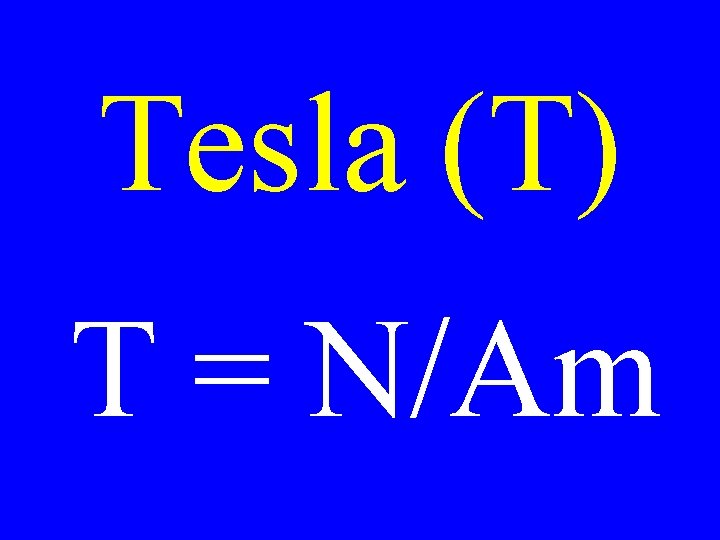
Tesla (T) T = N/Am
Galvanometer • Device used to measure very small currents
Galvanometer • Passing current through a looped wire in a magnetic field creates a force causing the wire to rotate (page 505)
Galvanometers • Use 3 RHR to force a needle to move as current passes through a MF
Galvanometers • Can measure currents as small as -6 10 A
Galvanometers • Cannot rotate more o than 180 or more o than 90 from parallel to B
Electric Motors • Must be able to o spin 360 • Explain (page 506)
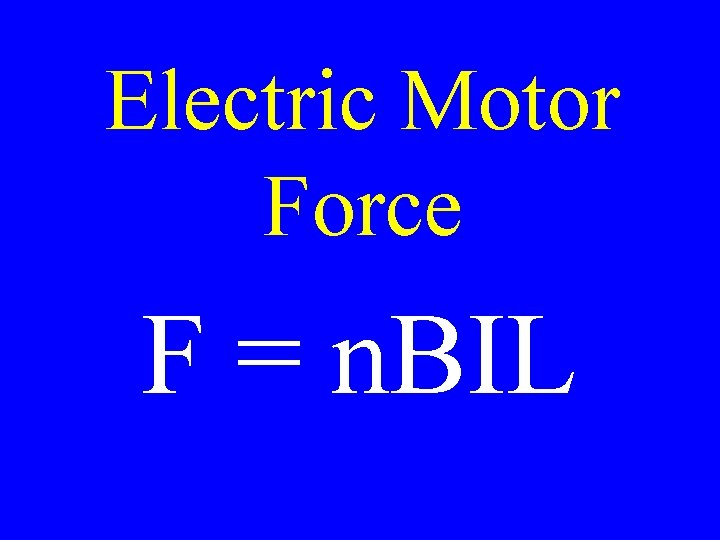
Electric Motor Force F = n. BIL
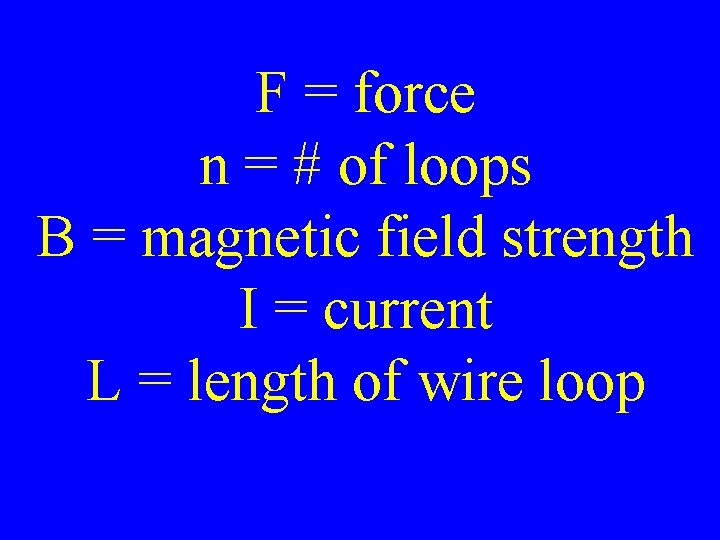
F = force n = # of loops B = magnetic field strength I = current L = length of wire loop
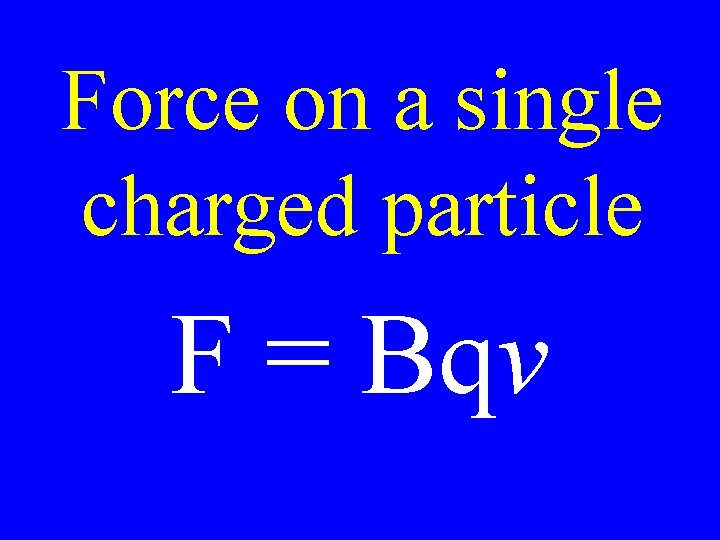
Force on a single charged particle F = Bqv
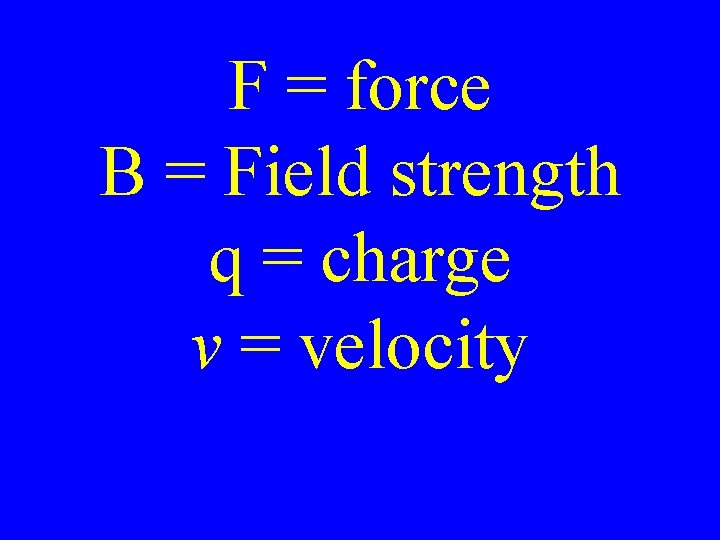
F = force B = Field strength q = charge v = velocity
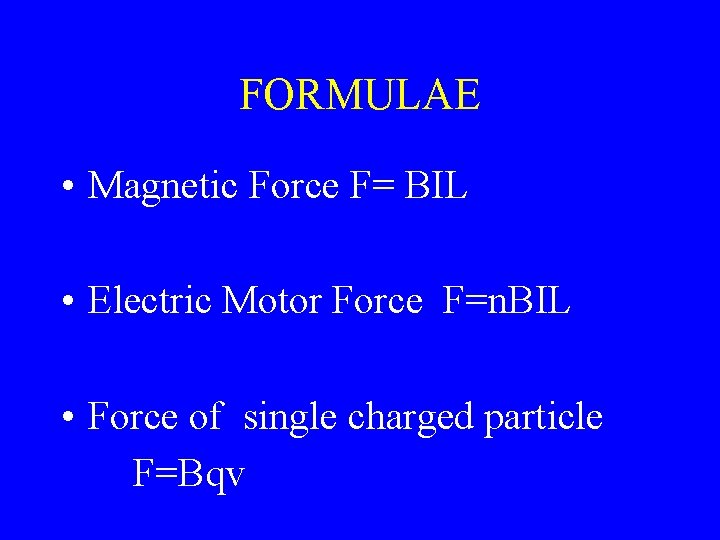
FORMULAE • Magnetic Force F= BIL • Electric Motor Force F=n. BIL • Force of single charged particle F=Bqv
- Slides: 45