
Chapter 24 Lipids Hydrophobic nonpolar soluble in organic
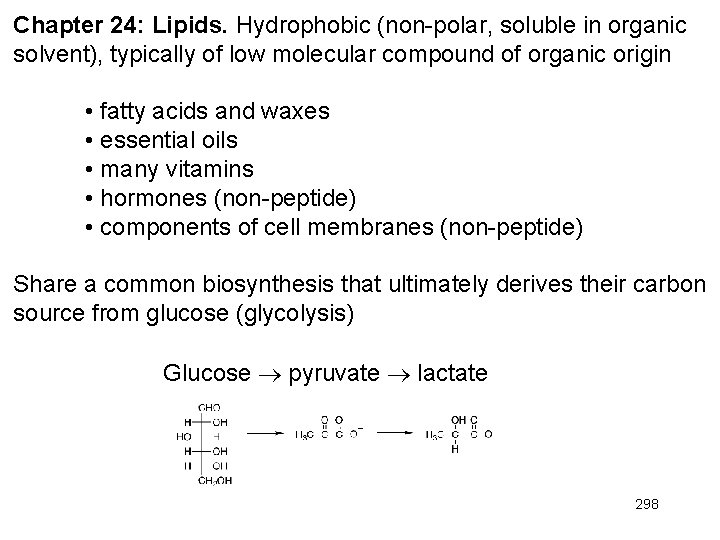
Chapter 24: Lipids. Hydrophobic (non-polar, soluble in organic solvent), typically of low molecular compound of organic origin • fatty acids and waxes • essential oils • many vitamins • hormones (non-peptide) • components of cell membranes (non-peptide) Share a common biosynthesis that ultimately derives their carbon source from glucose (glycolysis) Glucose pyruvate lactate 298
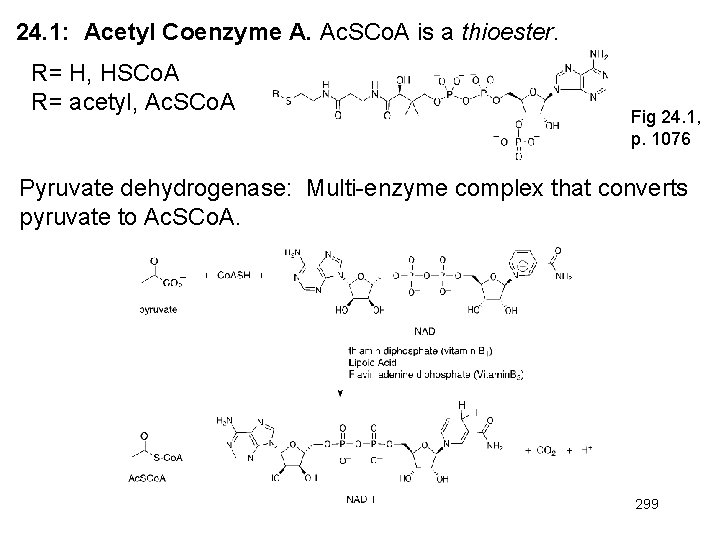
24. 1: Acetyl Coenzyme A. Ac. SCo. A is a thioester. R= H, HSCo. A R= acetyl, Ac. SCo. A Fig 24. 1, p. 1076 Pyruvate dehydrogenase: Multi-enzyme complex that converts pyruvate to Ac. SCo. A. _ 299
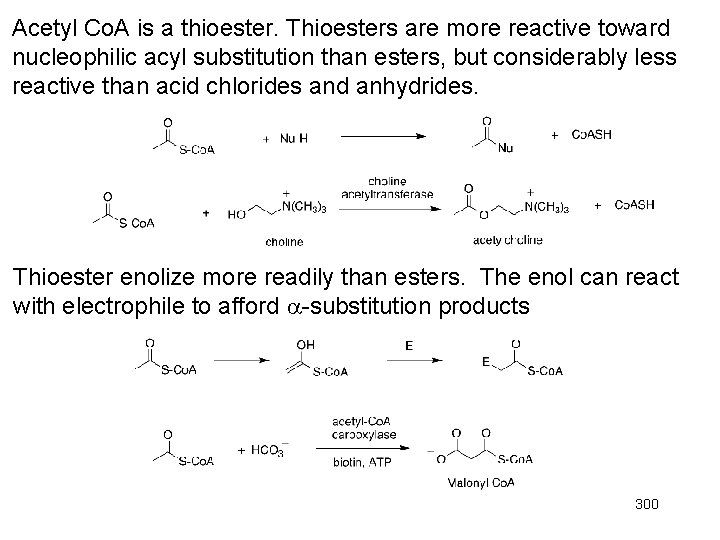
Acetyl Co. A is a thioester. Thioesters are more reactive toward nucleophilic acyl substitution than esters, but considerably less reactive than acid chlorides and anhydrides. Thioester enolize more readily than esters. The enol can react with electrophile to afford -substitution products 300
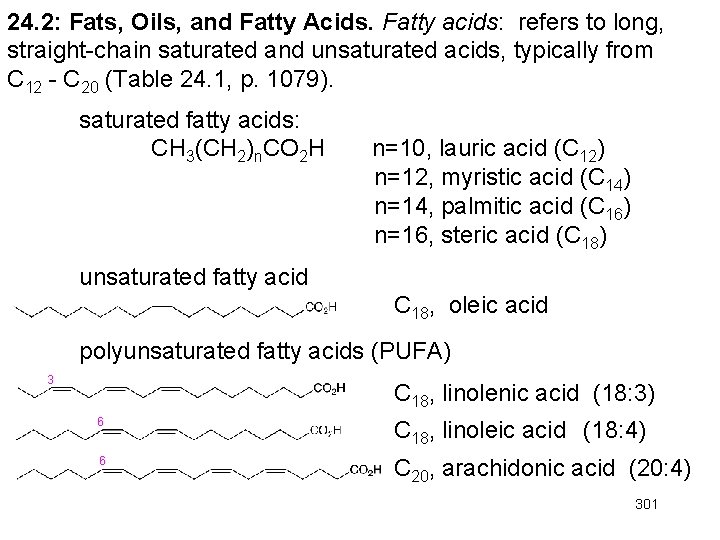
24. 2: Fats, Oils, and Fatty Acids. Fatty acids: refers to long, straight-chain saturated and unsaturated acids, typically from C 12 - C 20 (Table 24. 1, p. 1079). saturated fatty acids: CH 3(CH 2)n. CO 2 H n=10, lauric acid (C 12) n=12, myristic acid (C 14) n=14, palmitic acid (C 16) n=16, steric acid (C 18) unsaturated fatty acid C 18, oleic acid polyunsaturated fatty acids (PUFA) 3 C 18, linolenic acid (18: 3) 6 C 18, linoleic acid (18: 4) 6 C 20, arachidonic acid (20: 4) 301
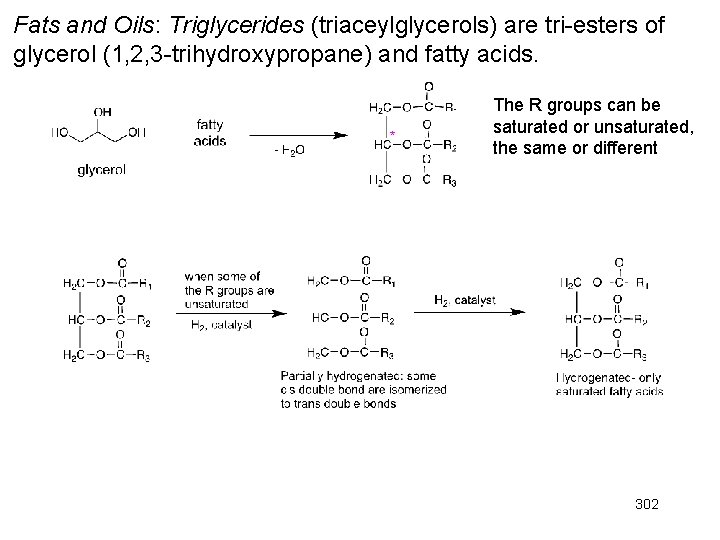
Fats and Oils: Triglycerides (triaceylglycerols) are tri-esters of glycerol (1, 2, 3 -trihydroxypropane) and fatty acids. The R groups can be saturated or unsaturated, the same or different 302
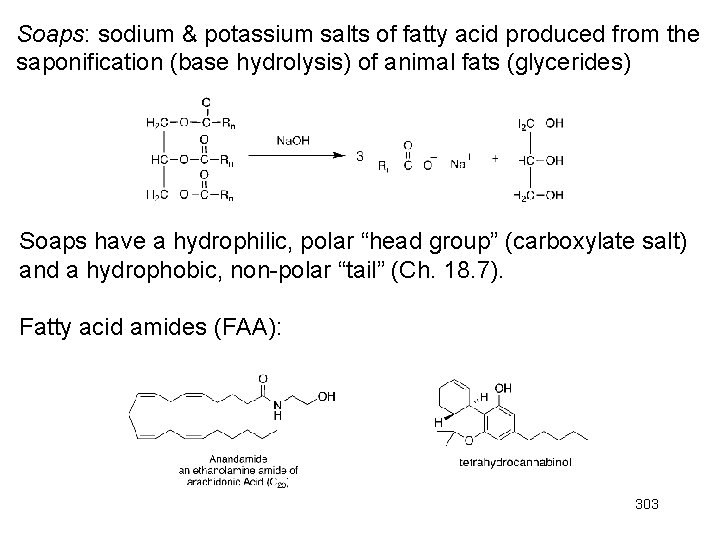
Soaps: sodium & potassium salts of fatty acid produced from the saponification (base hydrolysis) of animal fats (glycerides) Soaps have a hydrophilic, polar “head group” (carboxylate salt) and a hydrophobic, non-polar “tail” (Ch. 18. 7). Fatty acid amides (FAA): 303
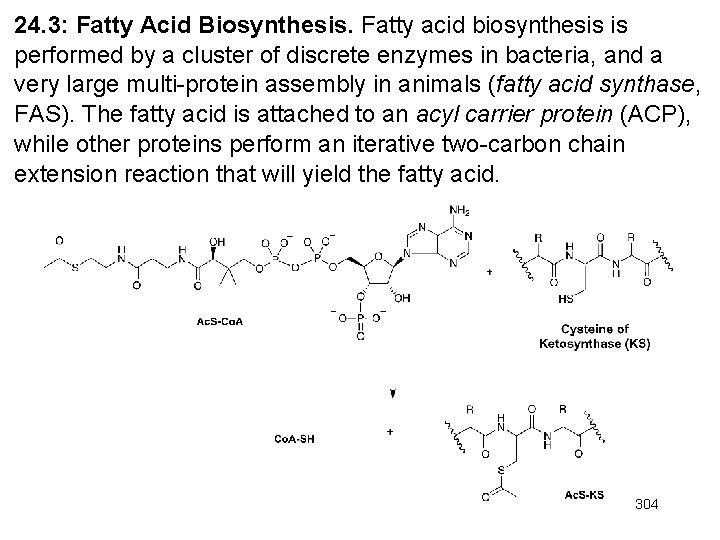
24. 3: Fatty Acid Biosynthesis. Fatty acid biosynthesis is performed by a cluster of discrete enzymes in bacteria, and a very large multi-protein assembly in animals (fatty acid synthase, FAS). The fatty acid is attached to an acyl carrier protein (ACP), while other proteins perform an iterative two-carbon chain extension reaction that will yield the fatty acid. 304
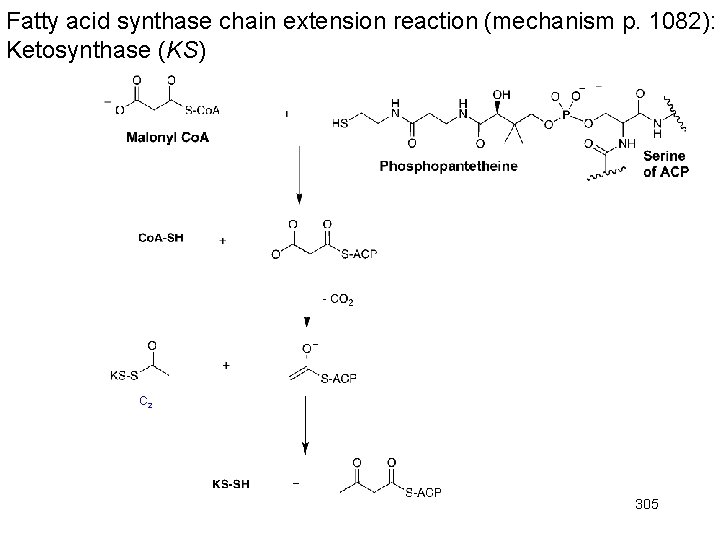
Fatty acid synthase chain extension reaction (mechanism p. 1082): Ketosynthase (KS) C 2 305
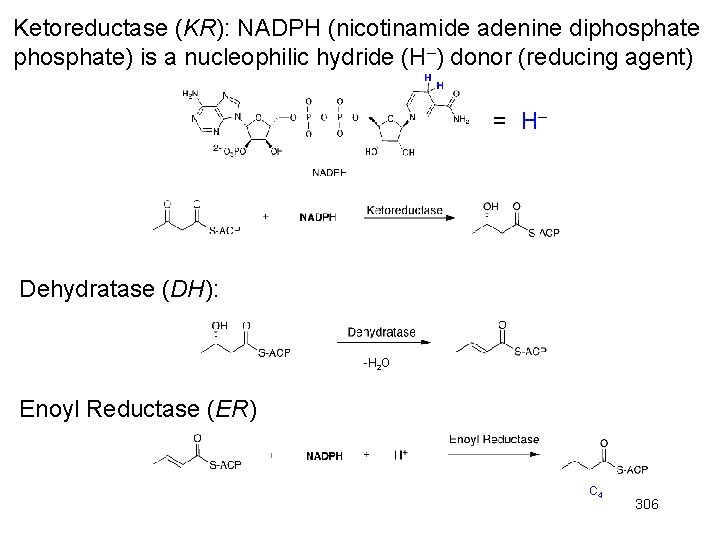
Ketoreductase (KR): NADPH (nicotinamide adenine diphosphate) is a nucleophilic hydride (H–) donor (reducing agent) = H– Dehydratase (DH): -H 2 O Enoyl Reductase (ER) C 4 306
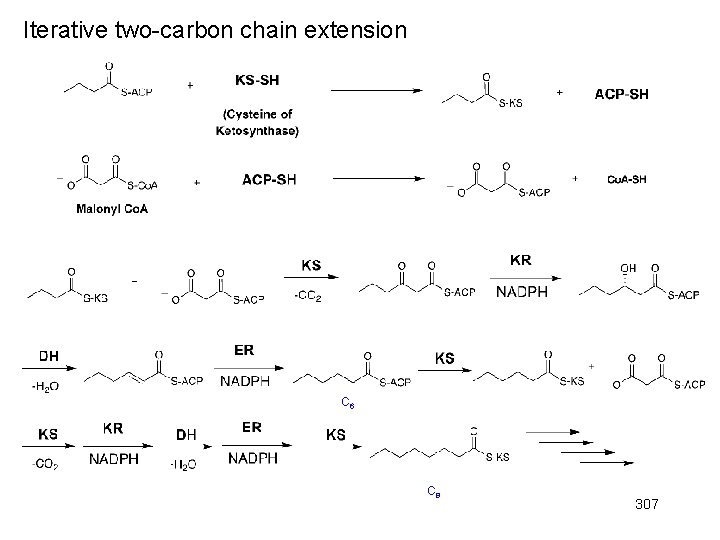
Iterative two-carbon chain extension C 6 C 8 307
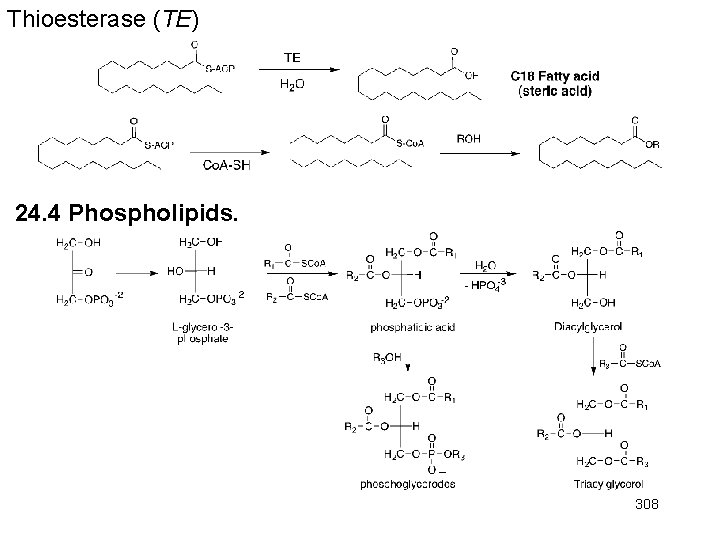
Thioesterase (TE) 24. 4 Phospholipids. 308
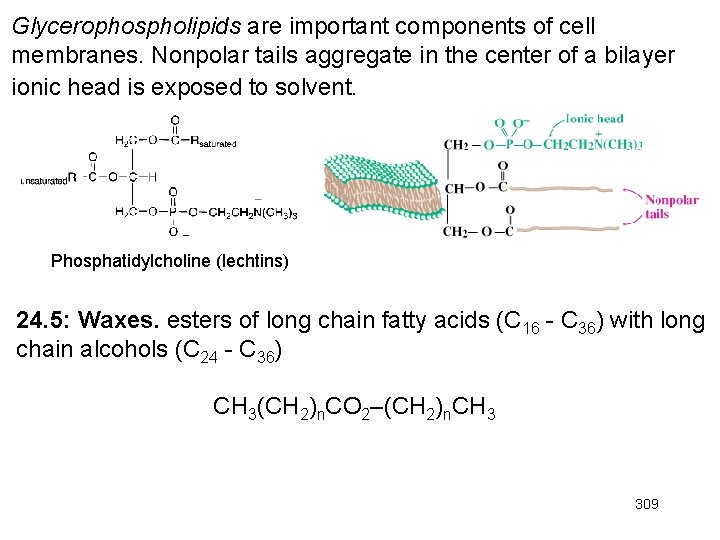
Glycerophospholipids are important components of cell membranes. Nonpolar tails aggregate in the center of a bilayer ionic head is exposed to solvent. Phosphatidylcholine (lechtins) 24. 5: Waxes. esters of long chain fatty acids (C 16 - C 36) with long chain alcohols (C 24 - C 36) CH 3(CH 2)n. CO 2–(CH 2)n. CH 3 309
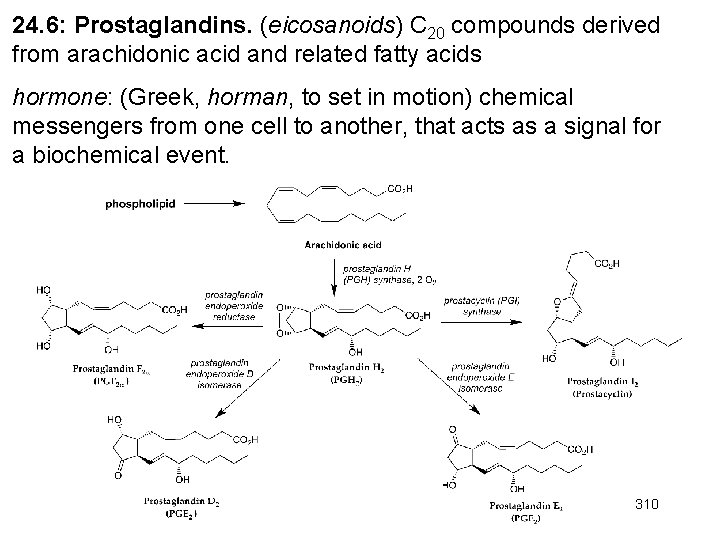
24. 6: Prostaglandins. (eicosanoids) C 20 compounds derived from arachidonic acid and related fatty acids hormone: (Greek, horman, to set in motion) chemical messengers from one cell to another, that acts as a signal for a biochemical event. 310
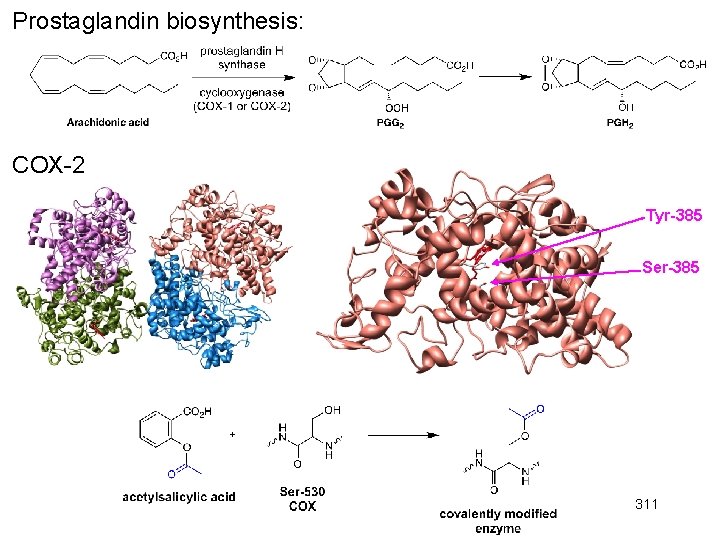
Prostaglandin biosynthesis: COX-2 Tyr-385 Ser-385 311
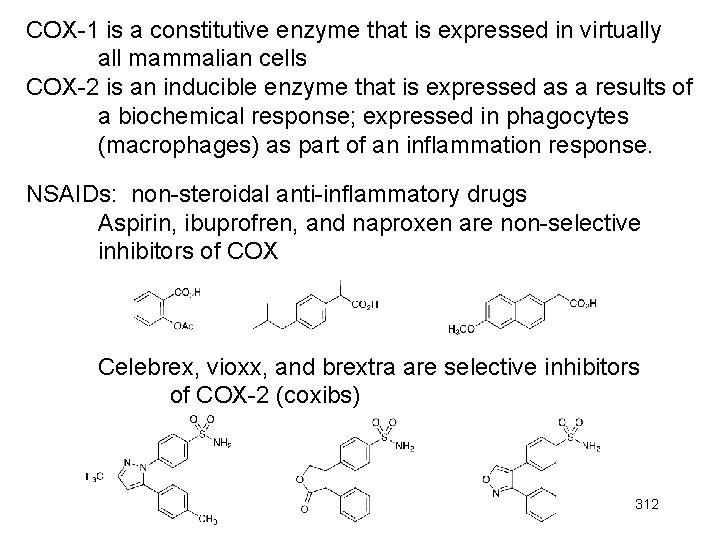
COX-1 is a constitutive enzyme that is expressed in virtually all mammalian cells COX-2 is an inducible enzyme that is expressed as a results of a biochemical response; expressed in phagocytes (macrophages) as part of an inflammation response. NSAIDs: non-steroidal anti-inflammatory drugs Aspirin, ibuprofren, and naproxen are non-selective inhibitors of COX Celebrex, vioxx, and brextra are selective inhibitors of COX-2 (coxibs) 312
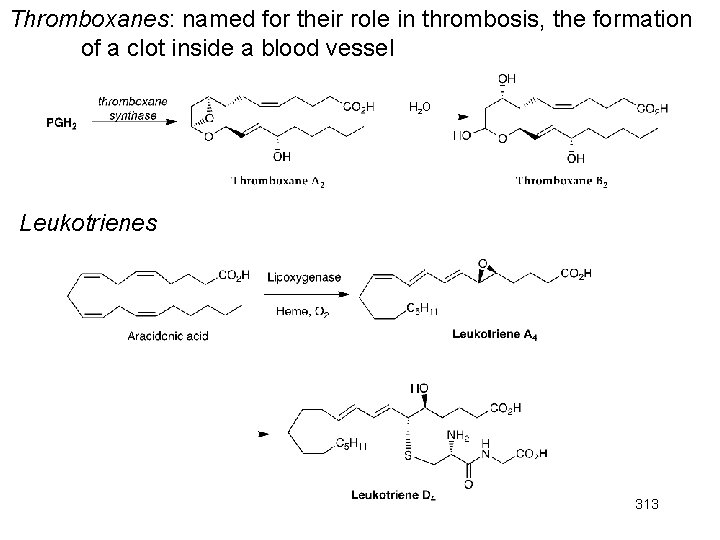
Thromboxanes: named for their role in thrombosis, the formation of a clot inside a blood vessel H 2 O Leukotrienes 313
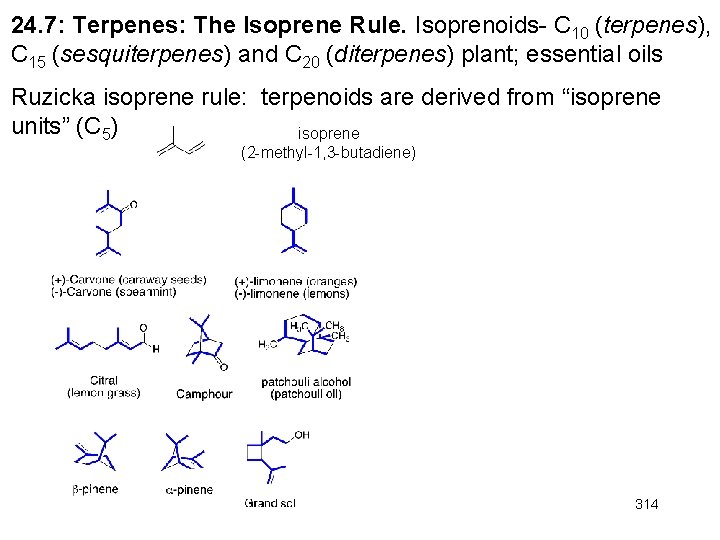
24. 7: Terpenes: The Isoprene Rule. Isoprenoids- C 10 (terpenes), C 15 (sesquiterpenes) and C 20 (diterpenes) plant; essential oils Ruzicka isoprene rule: terpenoids are derived from “isoprene units” (C 5) isoprene (2 -methyl-1, 3 -butadiene) 314
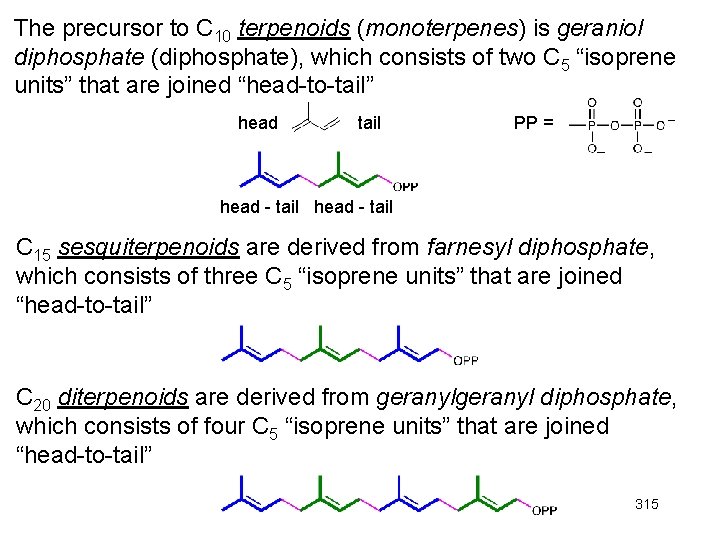
The precursor to C 10 terpenoids (monoterpenes) is geraniol diphosphate (diphosphate), which consists of two C 5 “isoprene units” that are joined “head-to-tail” head tail PP = head - tail C 15 sesquiterpenoids are derived from farnesyl diphosphate, which consists of three C 5 “isoprene units” that are joined “head-to-tail” C 20 diterpenoids are derived from geranyl diphosphate, which consists of four C 5 “isoprene units” that are joined “head-to-tail” 315
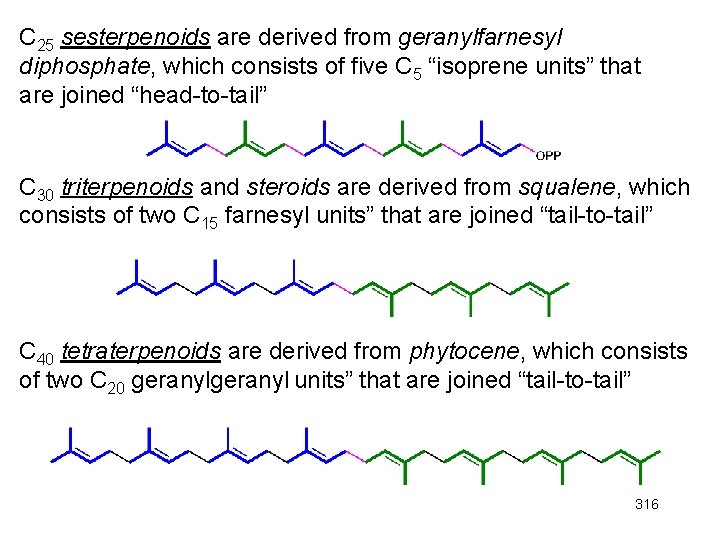
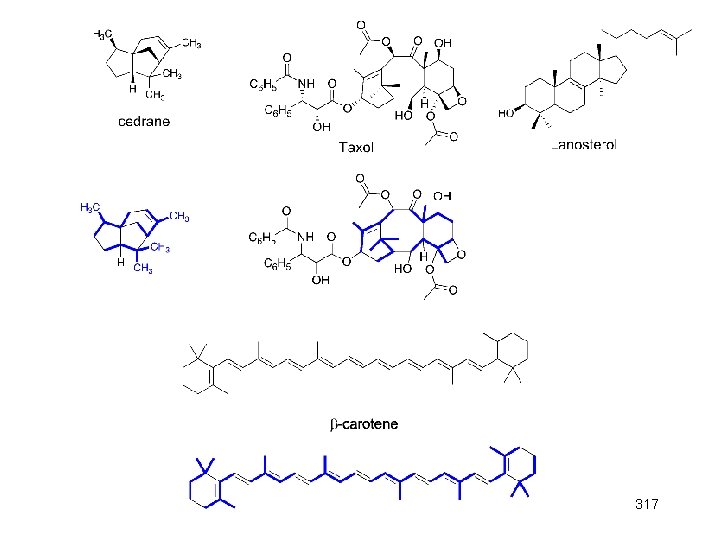
C 25 sesterpenoids are derived from geranylfarnesyl diphosphate, which consists of five C 5 “isoprene units” that are joined “head-to-tail” C 30 triterpenoids and steroids are derived from squalene, which consists of two C 15 farnesyl units” that are joined “tail-to-tail” C 40 tetraterpenoids are derived from phytocene, which consists of two C 20 geranyl units” that are joined “tail-to-tail” 316
317
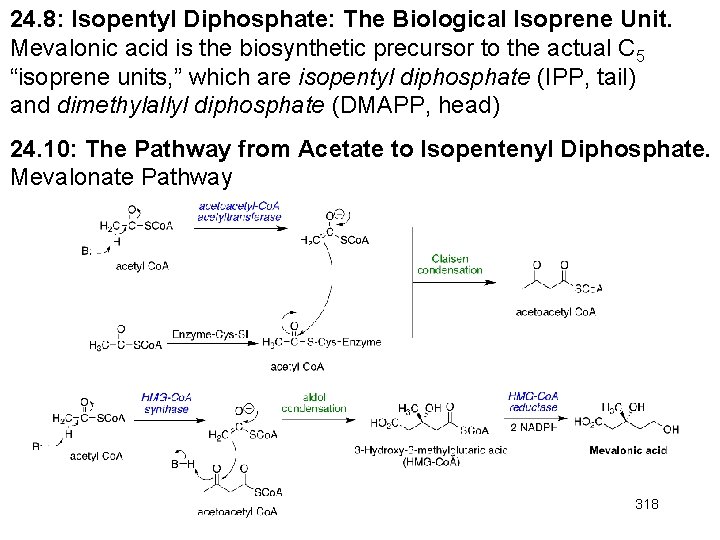
24. 8: Isopentyl Diphosphate: The Biological Isoprene Unit. Mevalonic acid is the biosynthetic precursor to the actual C 5 “isoprene units, ” which are isopentyl diphosphate (IPP, tail) and dimethylallyl diphosphate (DMAPP, head) 24. 10: The Pathway from Acetate to Isopentenyl Diphosphate. Mevalonate Pathway 318
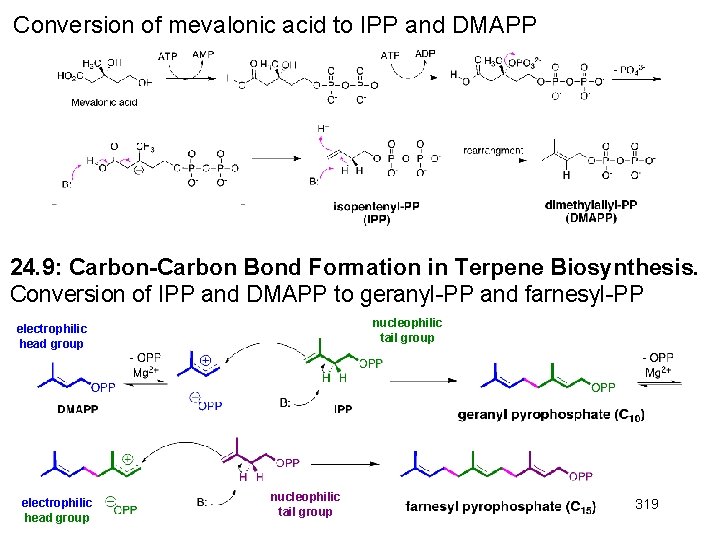
Conversion of mevalonic acid to IPP and DMAPP 24. 9: Carbon-Carbon Bond Formation in Terpene Biosynthesis. Conversion of IPP and DMAPP to geranyl-PP and farnesyl-PP nucleophilic tail group electrophilic head group nucleophilic tail group 319
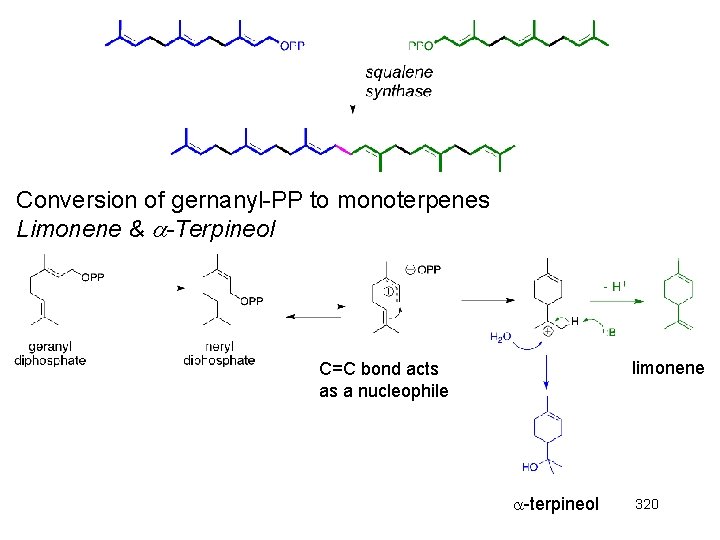
Conversion of gernanyl-PP to monoterpenes Limonene & -Terpineol limonene C=C bond acts as a nucleophile -terpineol 320
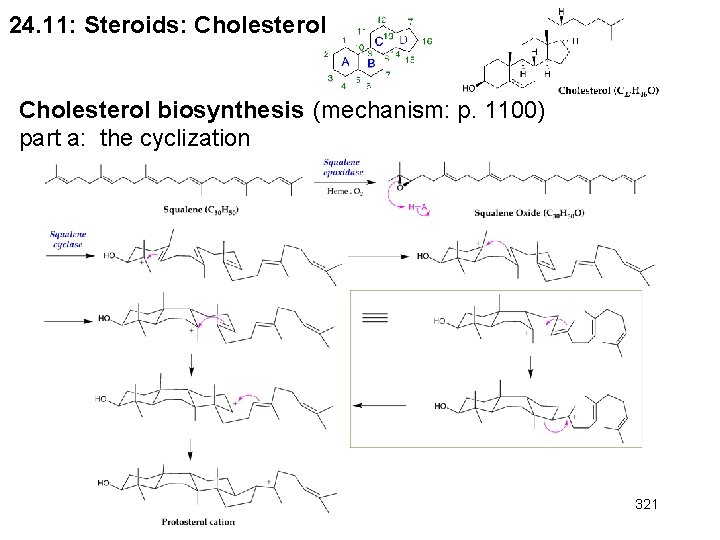
24. 11: Steroids: Cholesterol biosynthesis (mechanism: p. 1100) part a: the cyclization 321
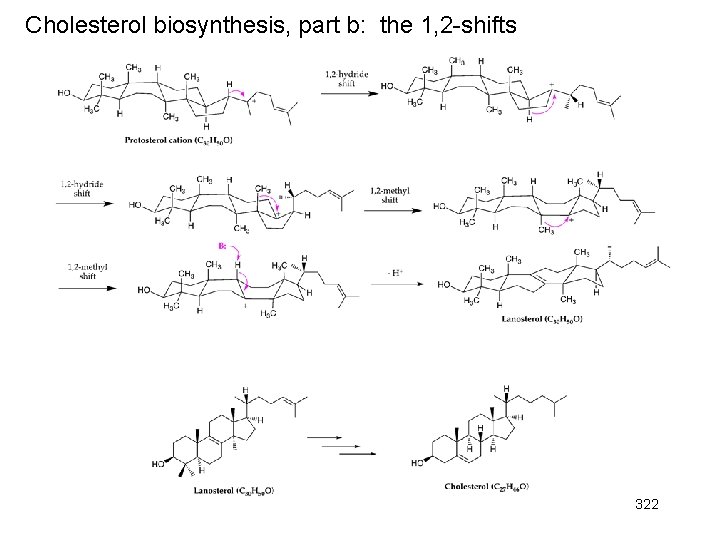
Cholesterol biosynthesis, part b: the 1, 2 -shifts 322
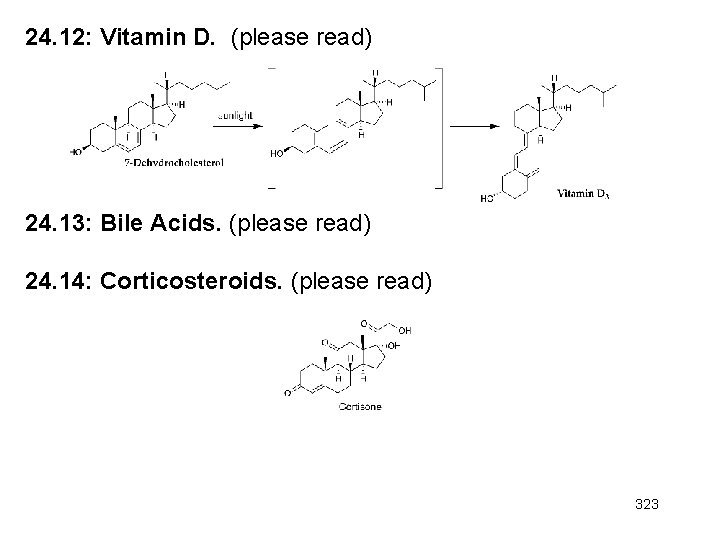
24. 12: Vitamin D. (please read) 24. 13: Bile Acids. (please read) 24. 14: Corticosteroids. (please read) 323
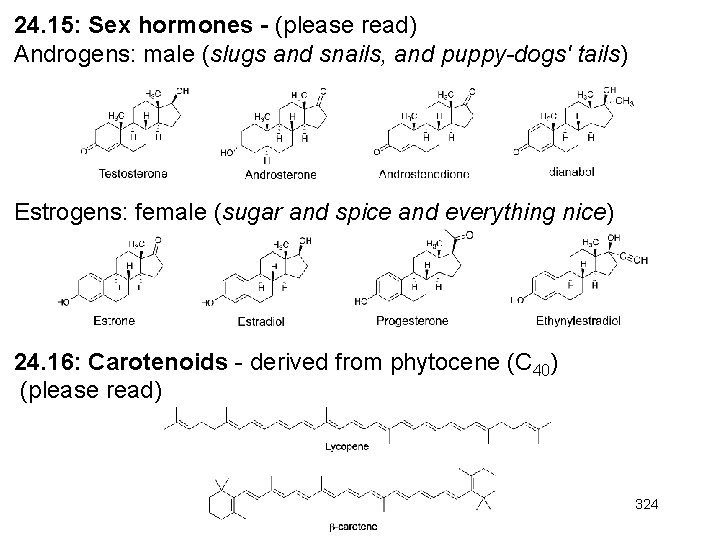
24. 15: Sex hormones - (please read) Androgens: male (slugs and snails, and puppy-dogs' tails) Estrogens: female (sugar and spice and everything nice) 24. 16: Carotenoids - derived from phytocene (C 40) (please read) 324
- Slides: 27