
Chapter 24 Lesson 1 Chemical Reactions Describing Chemical
Chapter 24 Lesson 1 Chemical Reactions
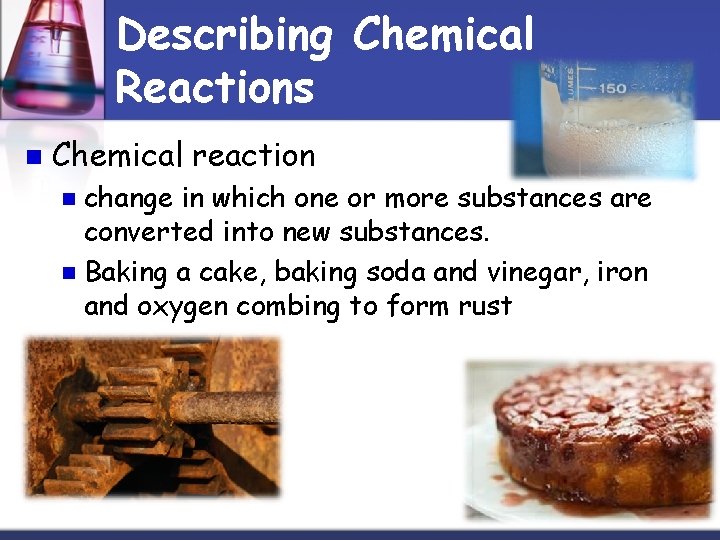
Describing Chemical Reactions n Chemical reaction change in which one or more substances are converted into new substances. n Baking a cake, baking soda and vinegar, iron and oxygen combing to form rust n

Describing Chemical Reactions n Reactants n n substances that react are called Products n new substances produced are called
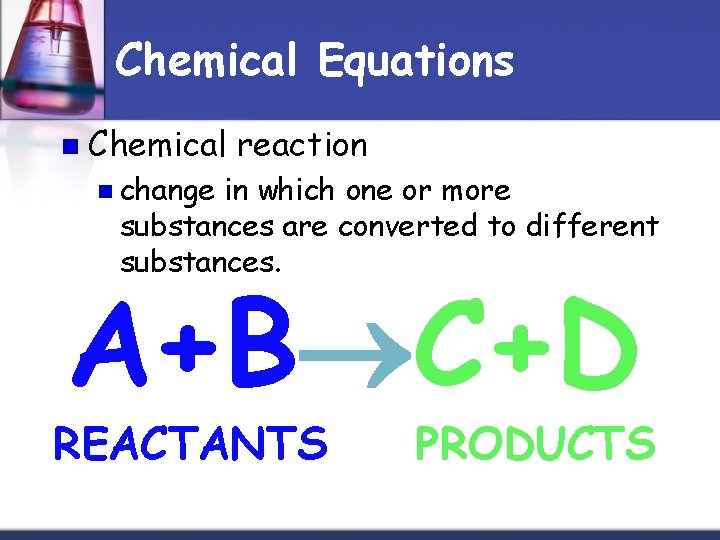
Chemical Equations n Chemical reaction n change in which one or more substances are converted to different substances. A+B C+D REACTANTS PRODUCTS
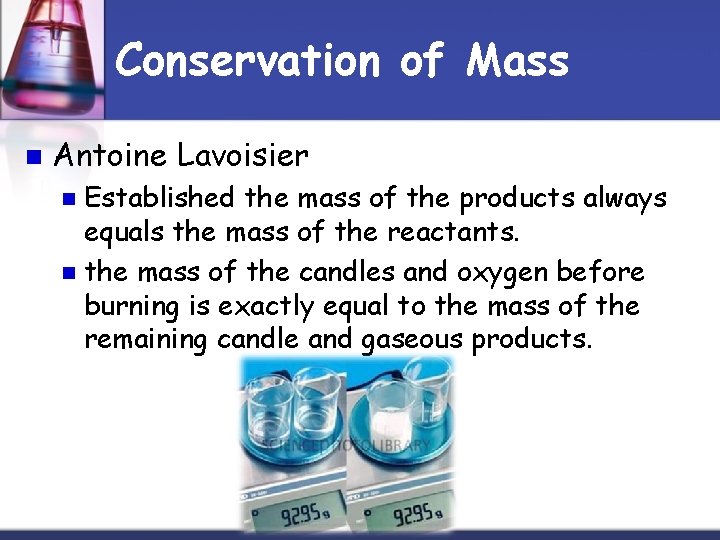
Conservation of Mass n Antoine Lavoisier Established the mass of the products always equals the mass of the reactants. n the mass of the candles and oxygen before burning is exactly equal to the mass of the remaining candle and gaseous products. n
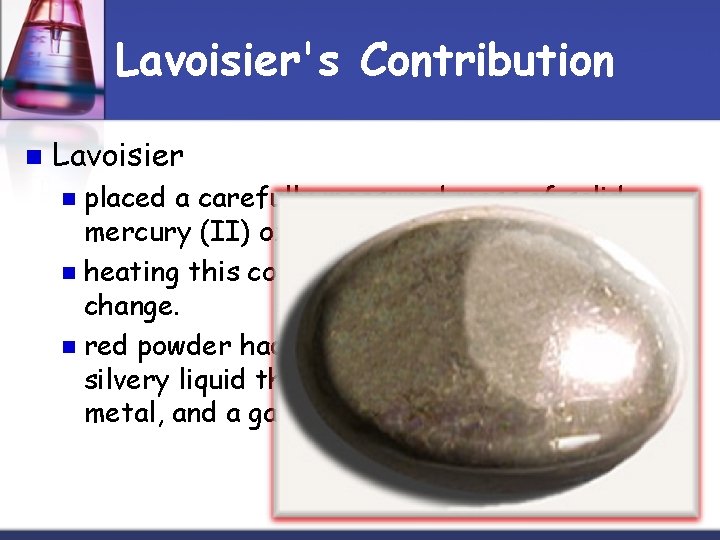
Lavoisier's Contribution n Lavoisier placed a carefully measured mass of solid mercury (II) oxide into a sealed container. n heating this container, he noted a dramatic change. n red powder had been transformed into a silvery liquid that he recognized as mercury metal, and a gas was produced. n
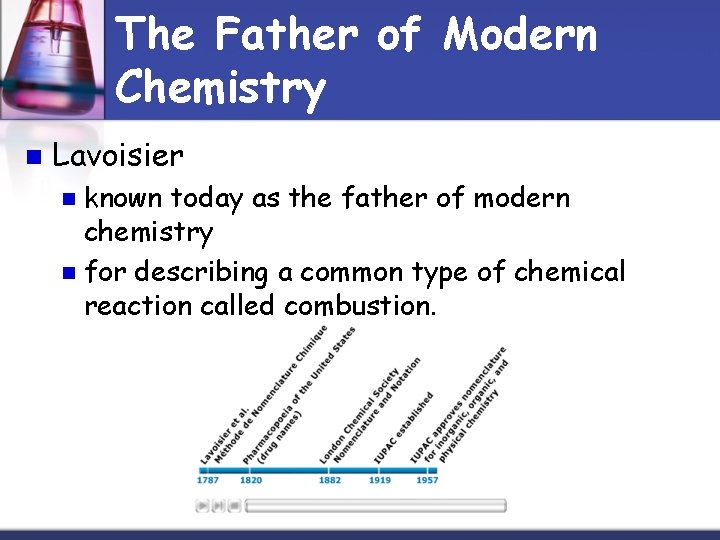
The Father of Modern Chemistry n Lavoisier known today as the father of modern chemistry n for describing a common type of chemical reaction called combustion. n
Writing Equations n Chemical equation way to describe a chemical reaction using chemical formulas and other symbols n scientists have developed a shorthand method to describe chemical reactions. n
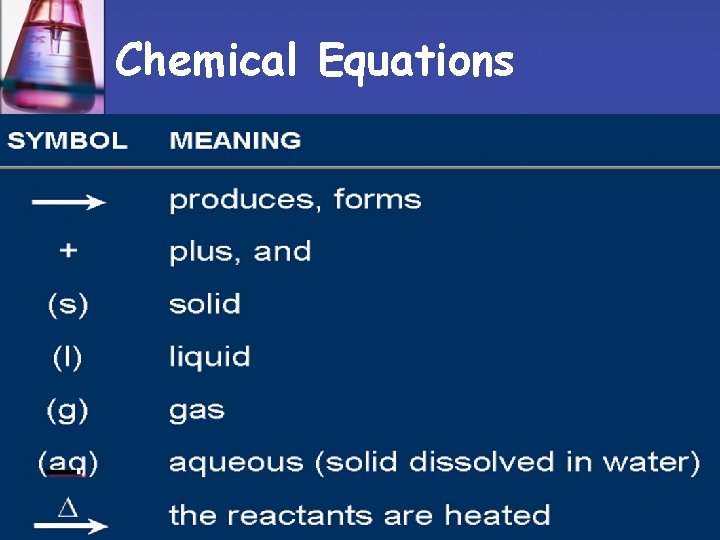
Chemical Equations
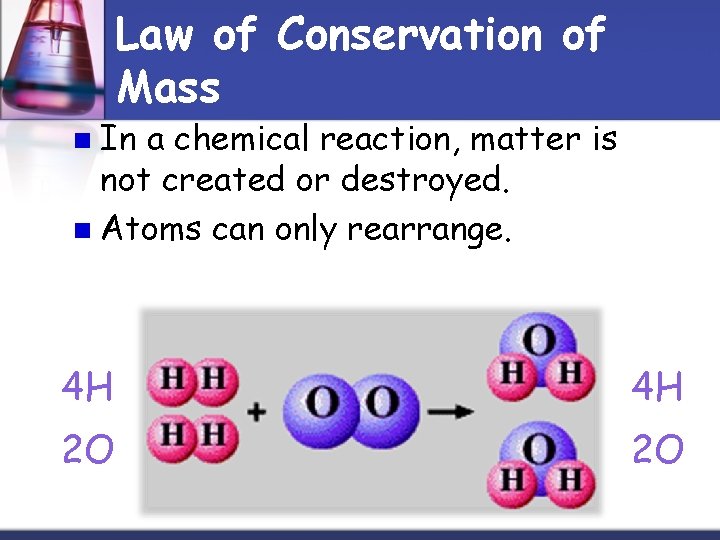
Law of Conservation of Mass n In a chemical reaction, matter is not created or destroyed. n Atoms can only rearrange. 4 H 4 H 2 O 2 O
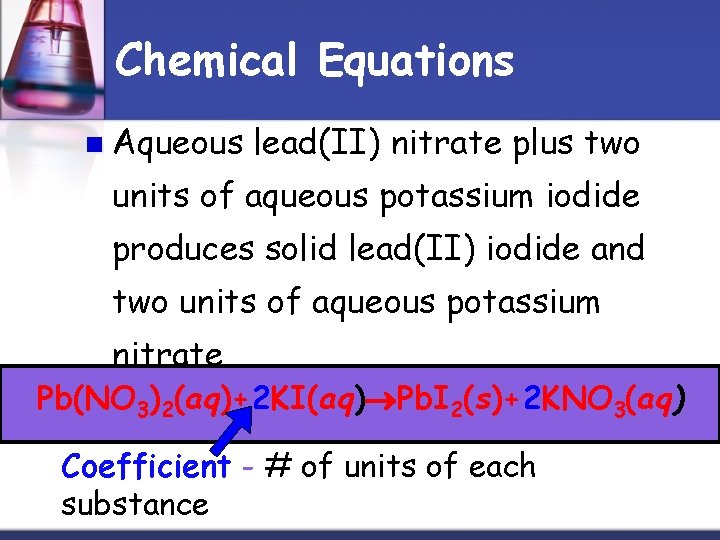
Chemical Equations n Aqueous lead(II) nitrate plus two units of aqueous potassium iodide produces solid lead(II) iodide and two units of aqueous potassium nitrate. Pb(NO 3)2(aq)+2 KI(aq) Pb. I 2(s)+2 KNO 3(aq) Coefficient - # of units of each substance
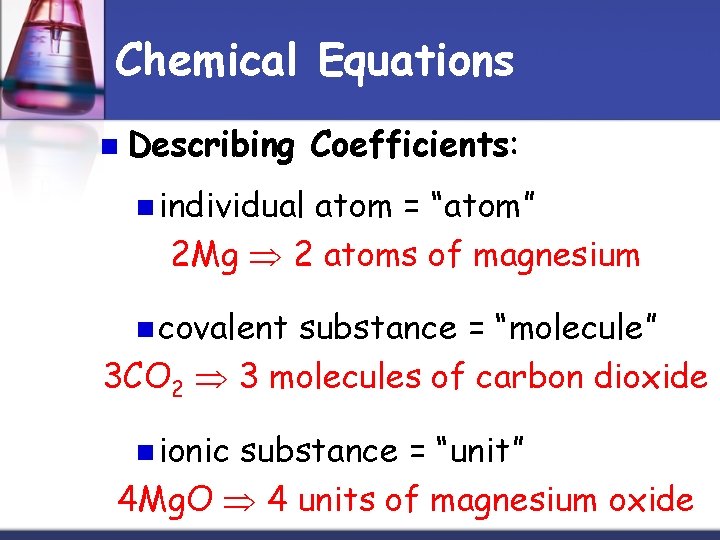
Chemical Equations n Describing Coefficients: n individual atom = “atom” 2 Mg 2 atoms of magnesium n covalent substance = “molecule” 3 CO 2 3 molecules of carbon dioxide n ionic substance = “unit” 4 Mg. O 4 units of magnesium oxide
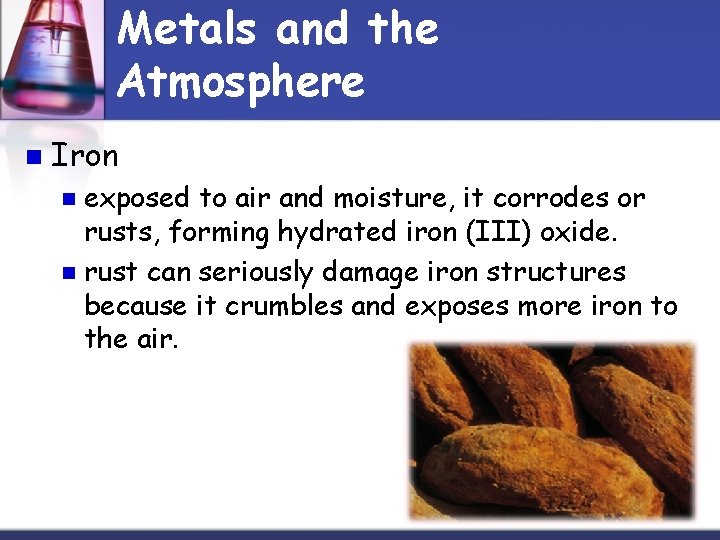
Metals and the Atmosphere n Iron exposed to air and moisture, it corrodes or rusts, forming hydrated iron (III) oxide. n rust can seriously damage iron structures because it crumbles and exposes more iron to the air. n
Metals and the Atmosphere n Aluminum also reacts with oxygen in the air to form aluminum oxide. n adheres to the aluminum surface, forming an extremely thin layer that protects the aluminum from further attack. n
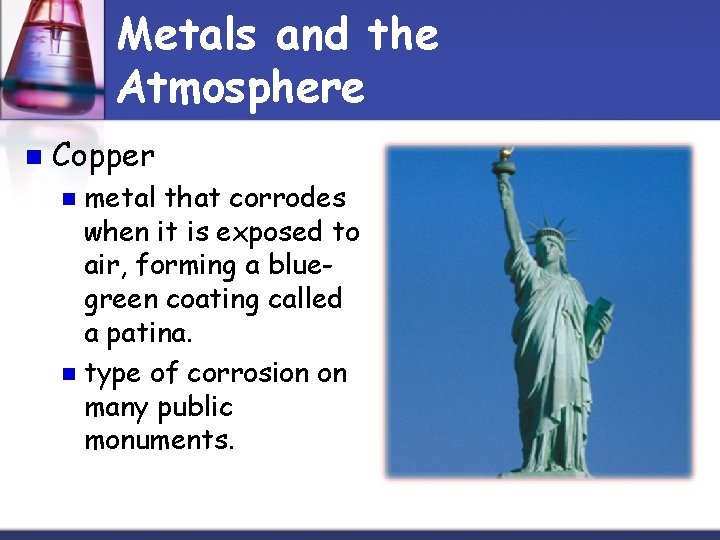
Metals and the Atmosphere n Copper metal that corrodes when it is exposed to air, forming a bluegreen coating called a patina. n type of corrosion on many public monuments. n
- Slides: 15