
Chapter 24 Lecture Outline Flowering Plants and Civilization
- Slides: 35
Chapter 24 Lecture Outline Flowering Plants and Civilization Copyright © The Mc. Graw-Hill Companies, Inc. Permission required for reproduction or display.
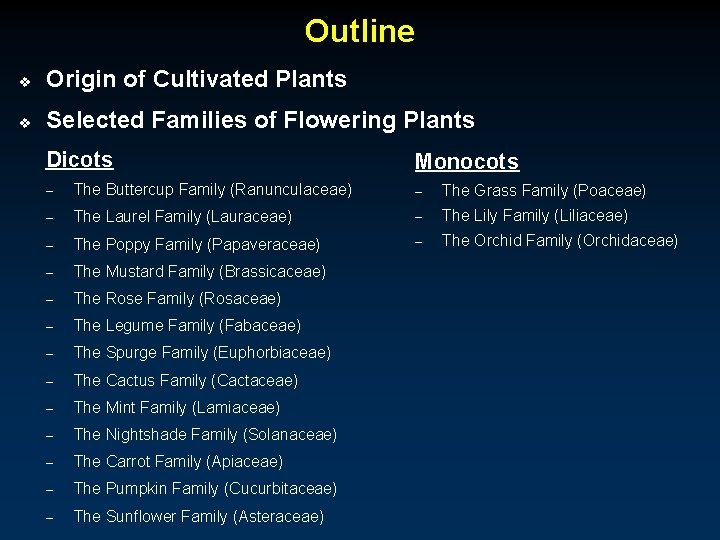
Outline v Origin of Cultivated Plants v Selected Families of Flowering Plants Dicots Monocots – The Buttercup Family (Ranunculaceae) – The Grass Family (Poaceae) – The Laurel Family (Lauraceae) – The Lily Family (Liliaceae) – The Poppy Family (Papaveraceae) – The Orchid Family (Orchidaceae) – The Mustard Family (Brassicaceae) – The Rose Family (Rosaceae) – The Legume Family (Fabaceae) – The Spurge Family (Euphorbiaceae) – The Cactus Family (Cactaceae) – The Mint Family (Lamiaceae) – The Nightshade Family (Solanaceae) – The Carrot Family (Apiaceae) – The Pumpkin Family (Cucurbitaceae) – The Sunflower Family (Asteraceae)
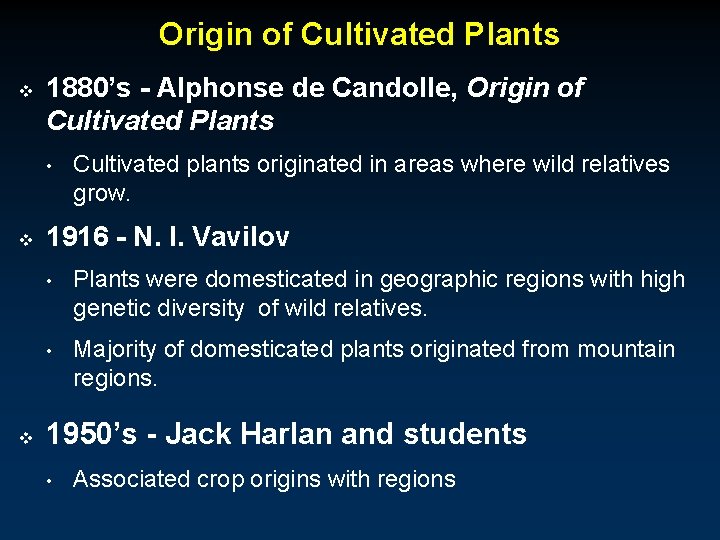
Origin of Cultivated Plants v 1880’s - Alphonse de Candolle, Origin of Cultivated Plants • v v Cultivated plants originated in areas where wild relatives grow. 1916 - N. I. Vavilov • Plants were domesticated in geographic regions with high genetic diversity of wild relatives. • Majority of domesticated plants originated from mountain regions. 1950’s - Jack Harlan and students • Associated crop origins with regions
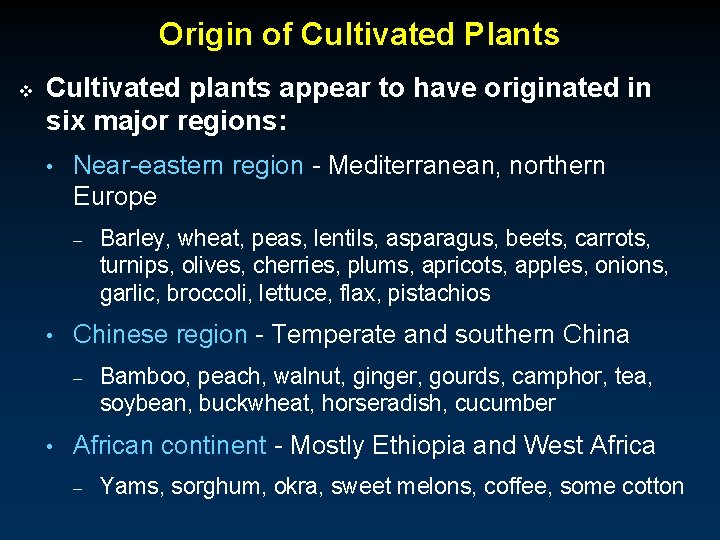
Origin of Cultivated Plants v Cultivated plants appear to have originated in six major regions: • Near-eastern region - Mediterranean, northern Europe – • Chinese region - Temperate and southern China – • Barley, wheat, peas, lentils, asparagus, beets, carrots, turnips, olives, cherries, plums, apricots, apples, onions, garlic, broccoli, lettuce, flax, pistachios Bamboo, peach, walnut, ginger, gourds, camphor, tea, soybean, buckwheat, horseradish, cucumber African continent - Mostly Ethiopia and West Africa – Yams, sorghum, okra, sweet melons, coffee, some cotton
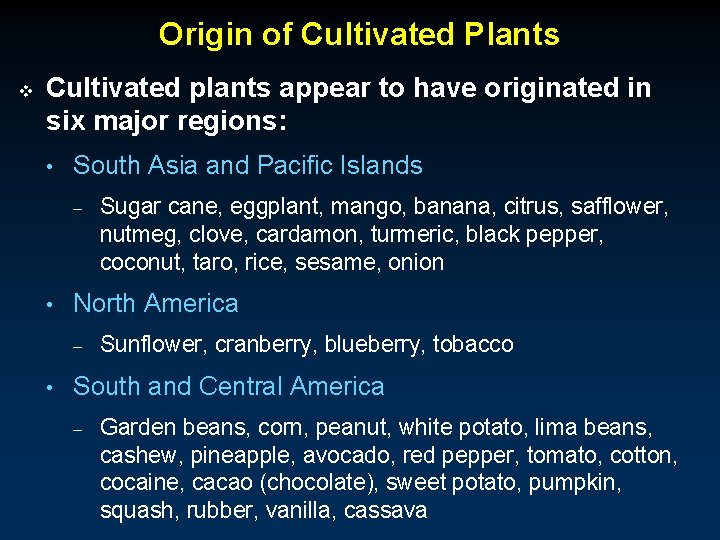
Origin of Cultivated Plants v Cultivated plants appear to have originated in six major regions: • South Asia and Pacific Islands – • North America – • Sugar cane, eggplant, mango, banana, citrus, safflower, nutmeg, clove, cardamon, turmeric, black pepper, coconut, taro, rice, sesame, onion Sunflower, cranberry, blueberry, tobacco South and Central America – Garden beans, corn, peanut, white potato, lima beans, cashew, pineapple, avocado, red pepper, tomato, cotton, cocaine, cacao (chocolate), sweet potato, pumpkin, squash, rubber, vanilla, cassava
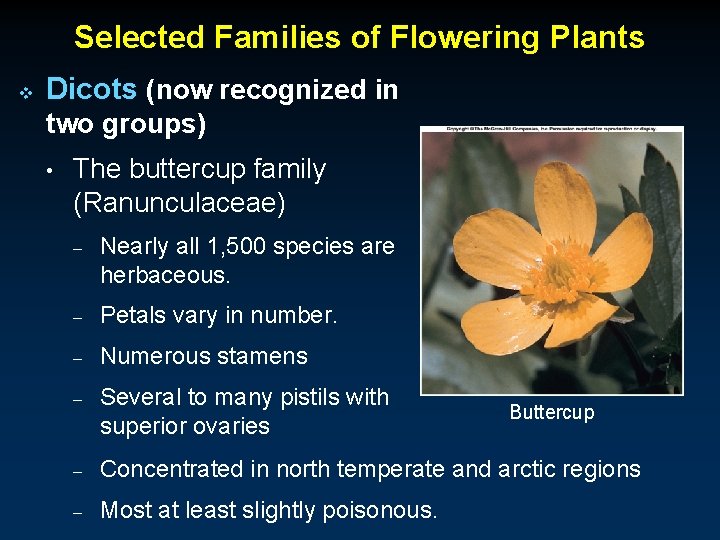
Selected Families of Flowering Plants v Dicots (now recognized in two groups) • The buttercup family (Ranunculaceae) – Nearly all 1, 500 species are herbaceous. – Petals vary in number. – Numerous stamens – Several to many pistils with superior ovaries – Concentrated in north temperate and arctic regions – Most at least slightly poisonous. Buttercup
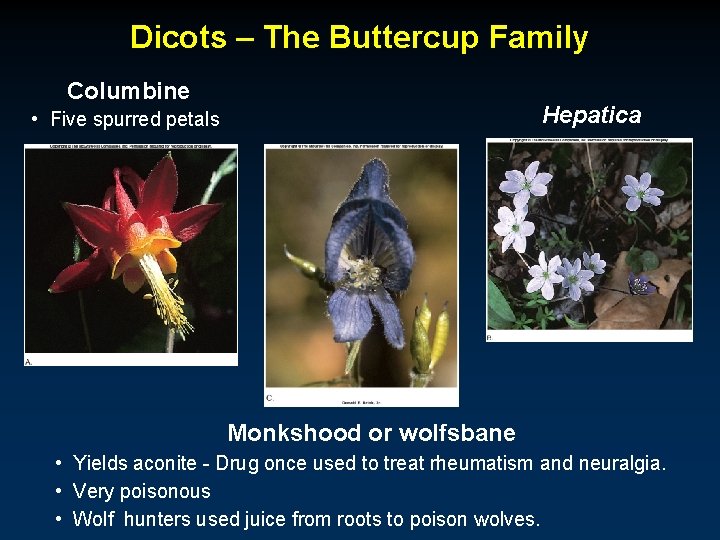
Dicots – The Buttercup Family Columbine Hepatica • Five spurred petals Monkshood or wolfsbane • Yields aconite - Drug once used to treat rheumatism and neuralgia. • Very poisonous • Wolf hunters used juice from roots to poison wolves.
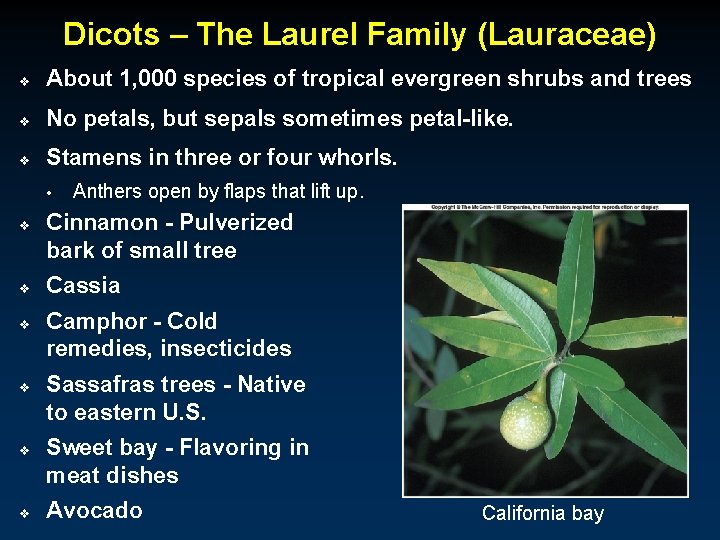
Dicots – The Laurel Family (Lauraceae) v About 1, 000 species of tropical evergreen shrubs and trees v No petals, but sepals sometimes petal-like. v Stamens in three or four whorls. • v v v Anthers open by flaps that lift up. Cinnamon - Pulverized bark of small tree Cassia Camphor - Cold remedies, insecticides Sassafras trees - Native to eastern U. S. Sweet bay - Flavoring in meat dishes Avocado California bay
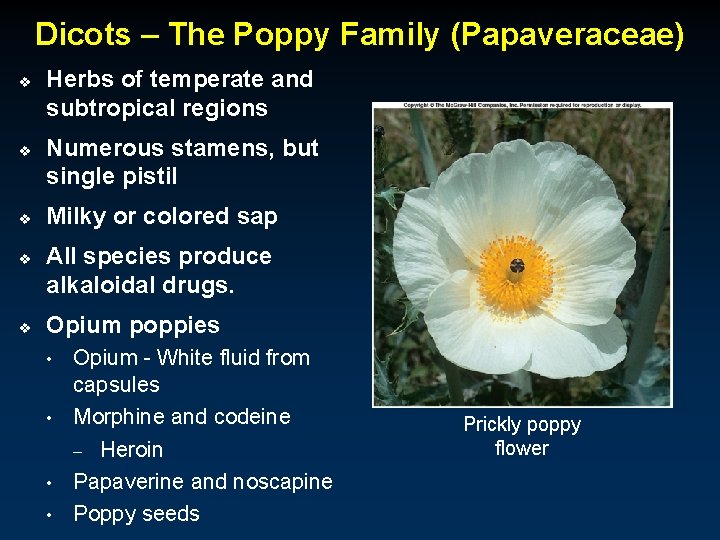
Dicots – The Poppy Family (Papaveraceae) v v v Herbs of temperate and subtropical regions Numerous stamens, but single pistil Milky or colored sap All species produce alkaloidal drugs. Opium poppies • • Opium - White fluid from capsules Morphine and codeine – Heroin Papaverine and noscapine Poppy seeds Prickly poppy flower
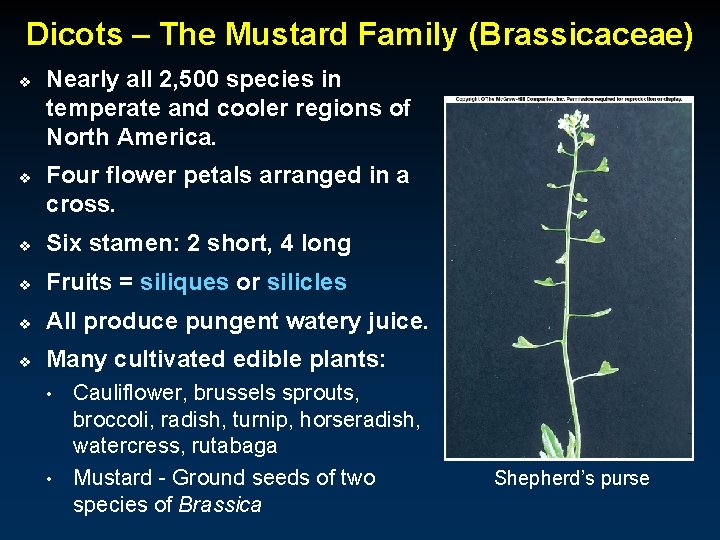
Dicots – The Mustard Family (Brassicaceae) v v Nearly all 2, 500 species in temperate and cooler regions of North America. Four flower petals arranged in a cross. v Six stamen: 2 short, 4 long v Fruits = siliques or silicles v All produce pungent watery juice. v Many cultivated edible plants: • • Cauliflower, brussels sprouts, broccoli, radish, turnip, horseradish, watercress, rutabaga Mustard - Ground seeds of two species of Brassica Shepherd’s purse
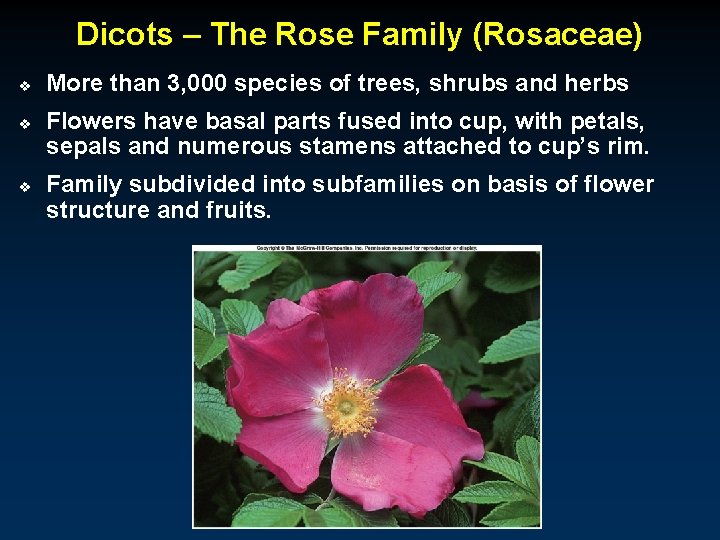
Dicots – The Rose Family (Rosaceae) v v v More than 3, 000 species of trees, shrubs and herbs Flowers have basal parts fused into cup, with petals, sepals and numerous stamens attached to cup’s rim. Family subdivided into subfamilies on basis of flower structure and fruits.
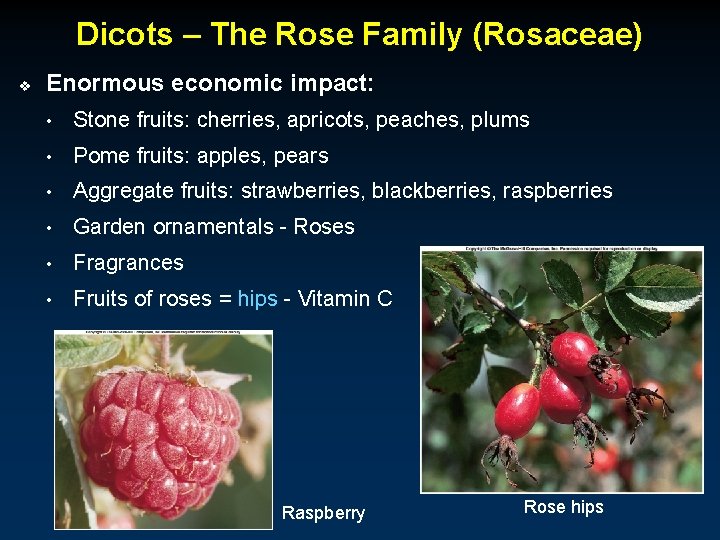
Dicots – The Rose Family (Rosaceae) v Enormous economic impact: • Stone fruits: cherries, apricots, peaches, plums • Pome fruits: apples, pears • Aggregate fruits: strawberries, blackberries, raspberries • Garden ornamentals - Roses • Fragrances • Fruits of roses = hips - Vitamin C Raspberry Rose hips
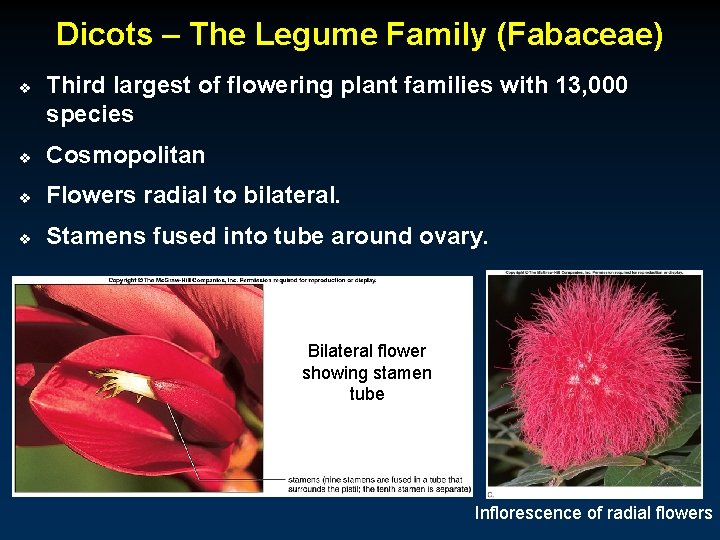
Dicots – The Legume Family (Fabaceae) v Third largest of flowering plant families with 13, 000 species v Cosmopolitan v Flowers radial to bilateral. v Stamens fused into tube around ovary. Bilateral flower showing stamen tube Inflorescence of radial flowers
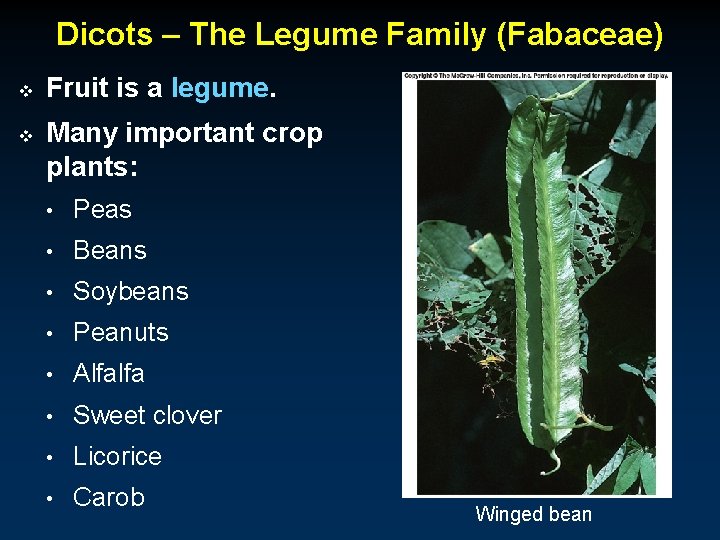
Dicots – The Legume Family (Fabaceae) v v Fruit is a legume. Many important crop plants: • Peas • Beans • Soybeans • Peanuts • Alfalfa • Sweet clover • Licorice • Carob Winged bean
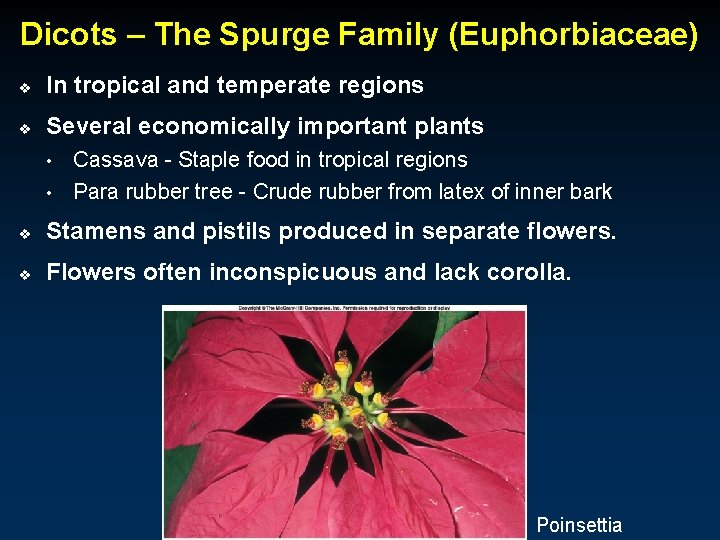
Dicots – The Spurge Family (Euphorbiaceae) v In tropical and temperate regions v Several economically important plants • • Cassava - Staple food in tropical regions Para rubber tree - Crude rubber from latex of inner bark v Stamens and pistils produced in separate flowers. v Flowers often inconspicuous and lack corolla. Poinsettia
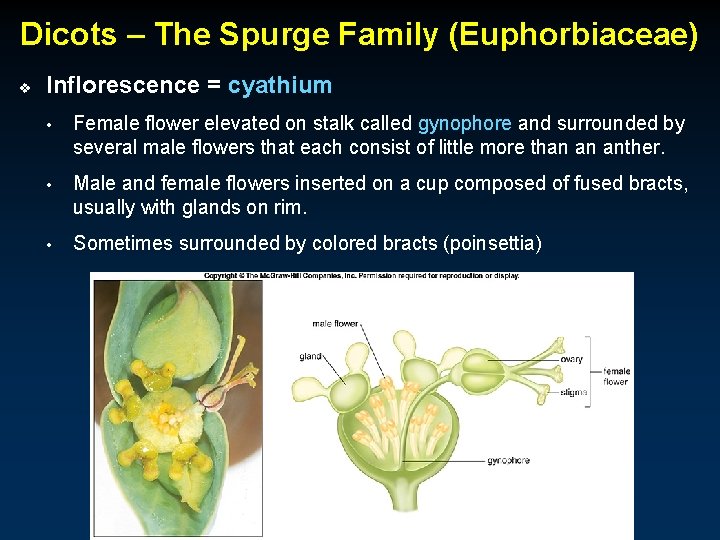
Dicots – The Spurge Family (Euphorbiaceae) v Inflorescence = cyathium • Female flower elevated on stalk called gynophore and surrounded by several male flowers that each consist of little more than an anther. • Male and female flowers inserted on a cup composed of fused bracts, usually with glands on rim. • Sometimes surrounded by colored bracts (poinsettia)
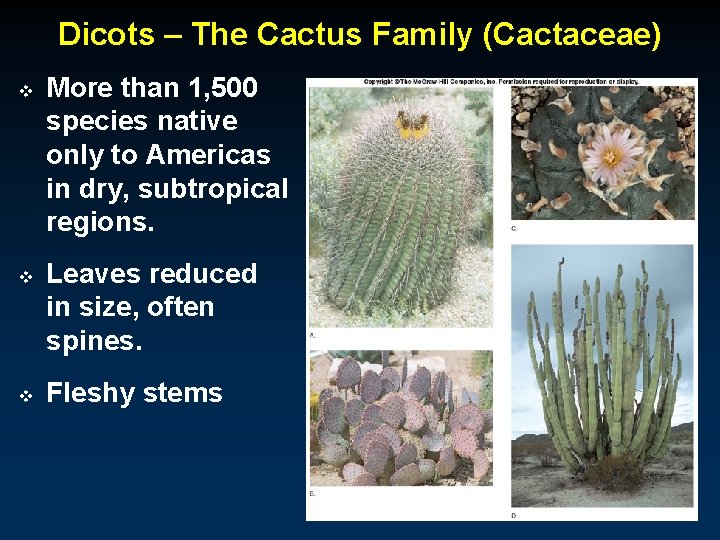
Dicots – The Cactus Family (Cactaceae) v v v More than 1, 500 species native only to Americas in dry, subtropical regions. Leaves reduced in size, often spines. Fleshy stems
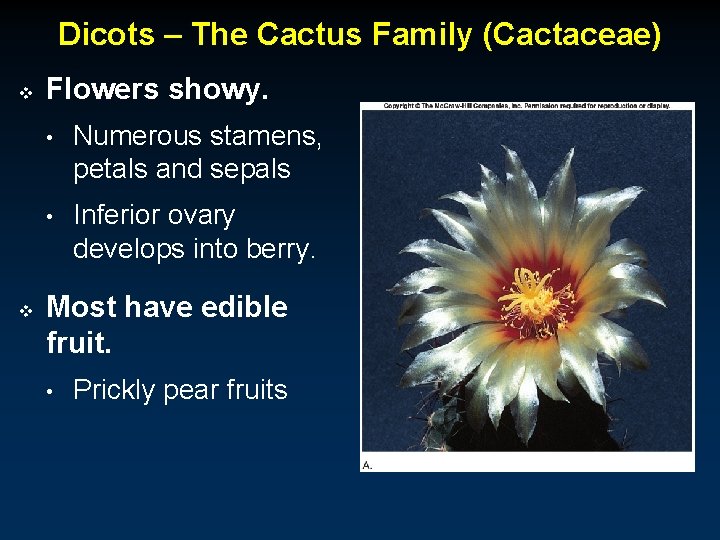
Dicots – The Cactus Family (Cactaceae) v v Flowers showy. • Numerous stamens, petals and sepals • Inferior ovary develops into berry. Most have edible fruit. • Prickly pear fruits
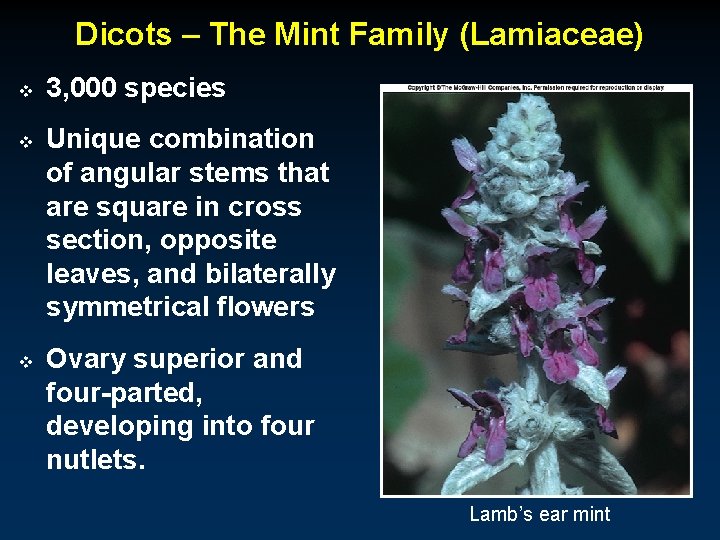
Dicots – The Mint Family (Lamiaceae) v v v 3, 000 species Unique combination of angular stems that are square in cross section, opposite leaves, and bilaterally symmetrical flowers Ovary superior and four-parted, developing into four nutlets. Lamb’s ear mint
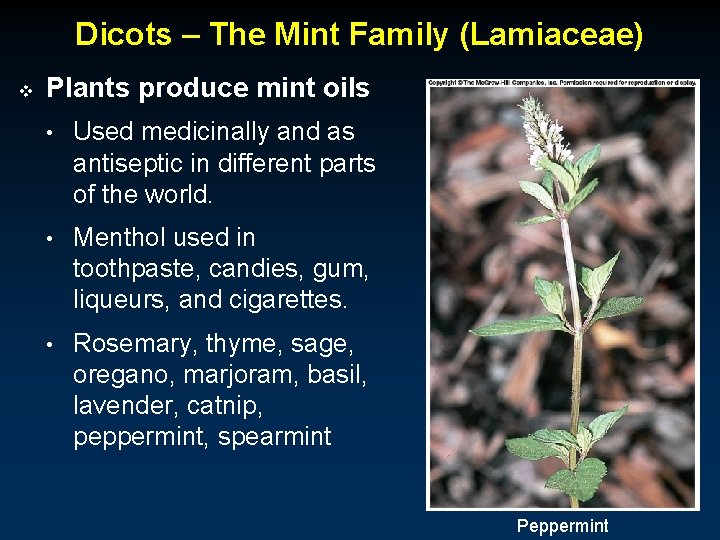
Dicots – The Mint Family (Lamiaceae) v Plants produce mint oils • Used medicinally and as antiseptic in different parts of the world. • Menthol used in toothpaste, candies, gum, liqueurs, and cigarettes. • Rosemary, thyme, sage, oregano, marjoram, basil, lavender, catnip, peppermint, spearmint Peppermint
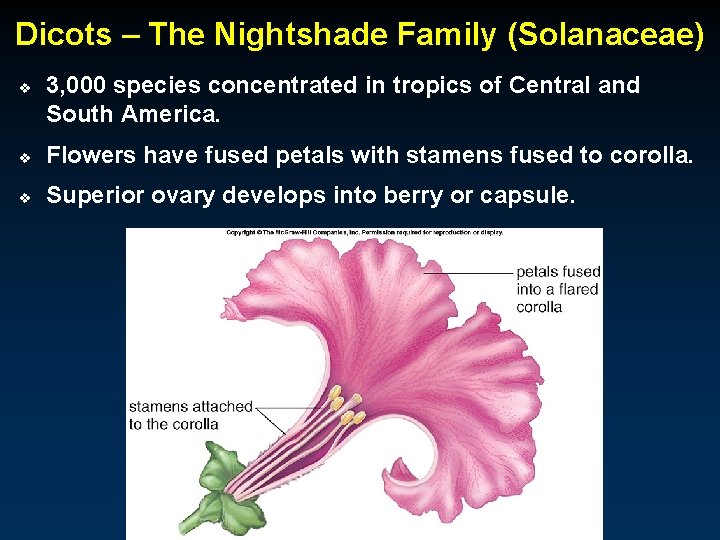
Dicots – The Nightshade Family (Solanaceae) v 3, 000 species concentrated in tropics of Central and South America. v Flowers have fused petals with stamens fused to corolla. v Superior ovary develops into berry or capsule.
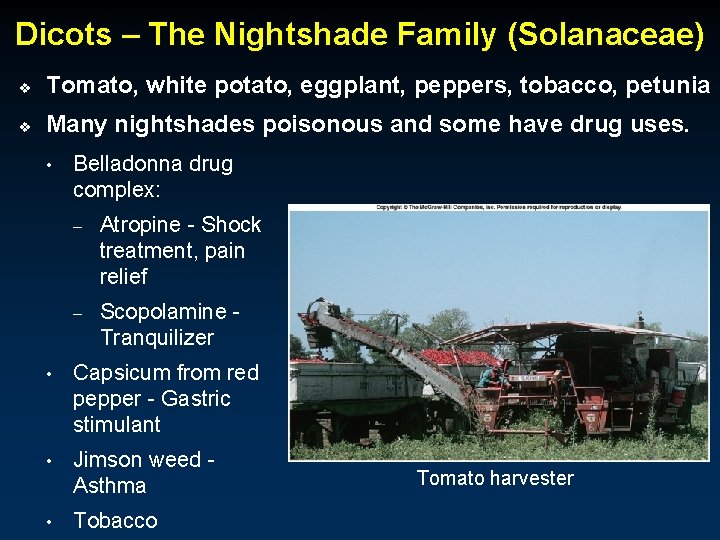
Dicots – The Nightshade Family (Solanaceae) v Tomato, white potato, eggplant, peppers, tobacco, petunia v Many nightshades poisonous and some have drug uses. • Belladonna drug complex: – Atropine - Shock treatment, pain relief – Scopolamine Tranquilizer • Capsicum from red pepper - Gastric stimulant • Jimson weed Asthma • Tobacco Tomato harvester
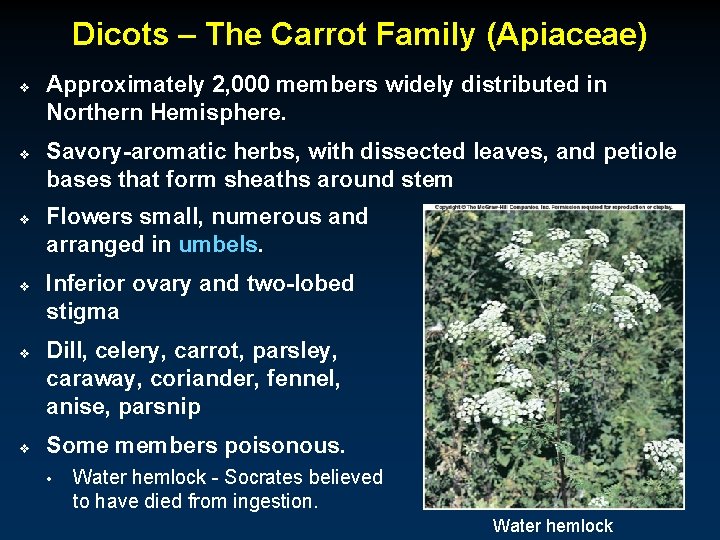
Dicots – The Carrot Family (Apiaceae) v v v Approximately 2, 000 members widely distributed in Northern Hemisphere. Savory-aromatic herbs, with dissected leaves, and petiole bases that form sheaths around stem Flowers small, numerous and arranged in umbels. Inferior ovary and two-lobed stigma Dill, celery, carrot, parsley, caraway, coriander, fennel, anise, parsnip Some members poisonous. • Water hemlock - Socrates believed to have died from ingestion. Water hemlock
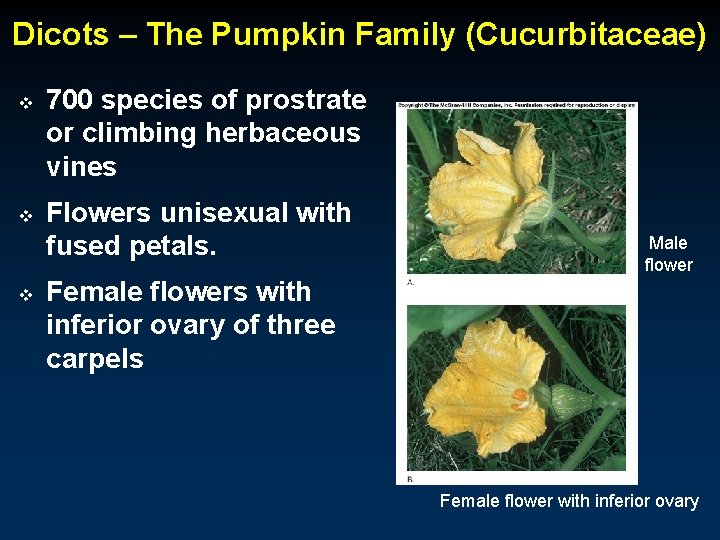
Dicots – The Pumpkin Family (Cucurbitaceae) v v v 700 species of prostrate or climbing herbaceous vines Flowers unisexual with fused petals. Male flower Female flowers with inferior ovary of three carpels Female flower with inferior ovary
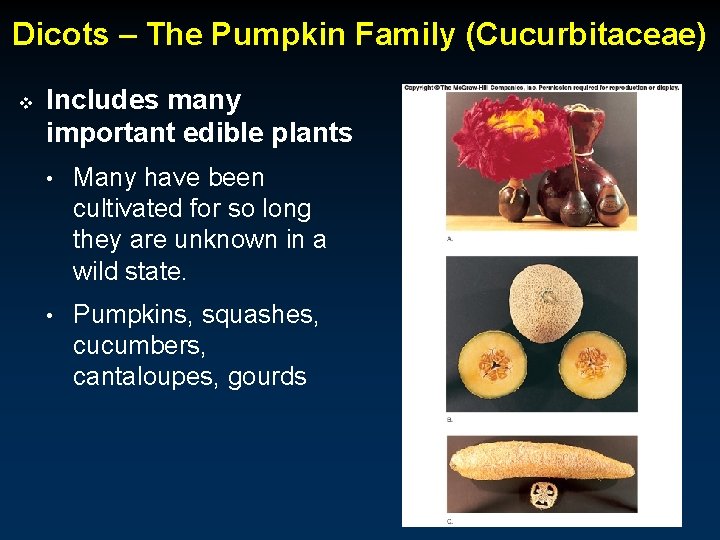
Dicots – The Pumpkin Family (Cucurbitaceae) v Includes many important edible plants • Many have been cultivated for so long they are unknown in a wild state. • Pumpkins, squashes, cucumbers, cantaloupes, gourds
Dicots – The Sunflower Family (Asteraceae) v v v Second largest flowering plant family with about 20, 000 species Dandelions, lettuce, endive, chicory, artichoke, dahlia, chrysanthemum, marigold, sunflower, thistle Tarragon - Spice in meat and pickle
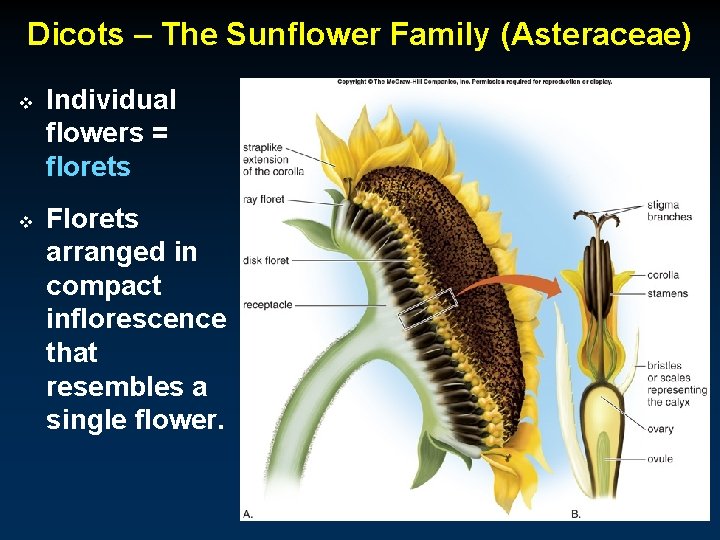
Dicots – The Sunflower Family (Asteraceae) v v Individual flowers = florets Florets arranged in compact inflorescence that resembles a single flower.
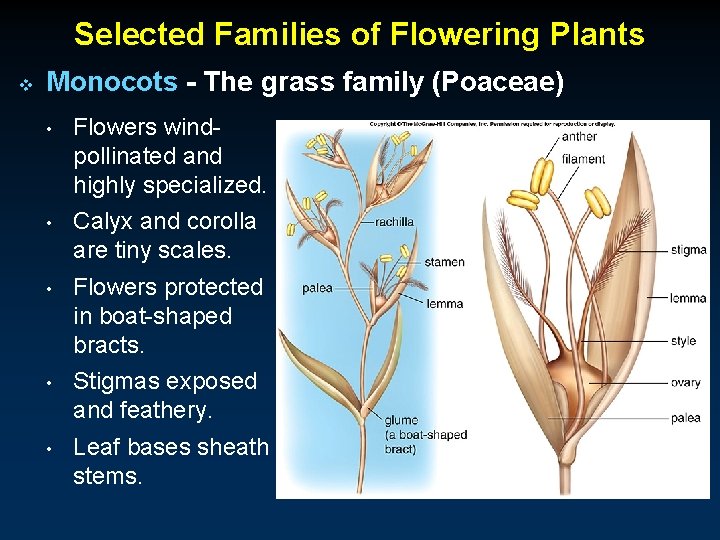
Selected Families of Flowering Plants v Monocots - The grass family (Poaceae) • Flowers windpollinated and highly specialized. • Calyx and corolla are tiny scales. • Flowers protected in boat-shaped bracts. • Stigmas exposed and feathery. • Leaf bases sheath stems.
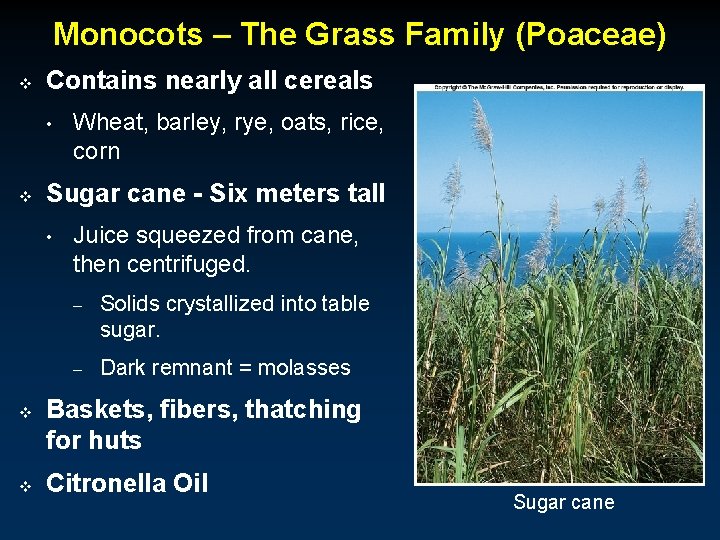
Monocots – The Grass Family (Poaceae) v Contains nearly all cereals • v Sugar cane - Six meters tall • v v Wheat, barley, rye, oats, rice, corn Juice squeezed from cane, then centrifuged. – Solids crystallized into table sugar. – Dark remnant = molasses Baskets, fibers, thatching for huts Citronella Oil Sugar cane
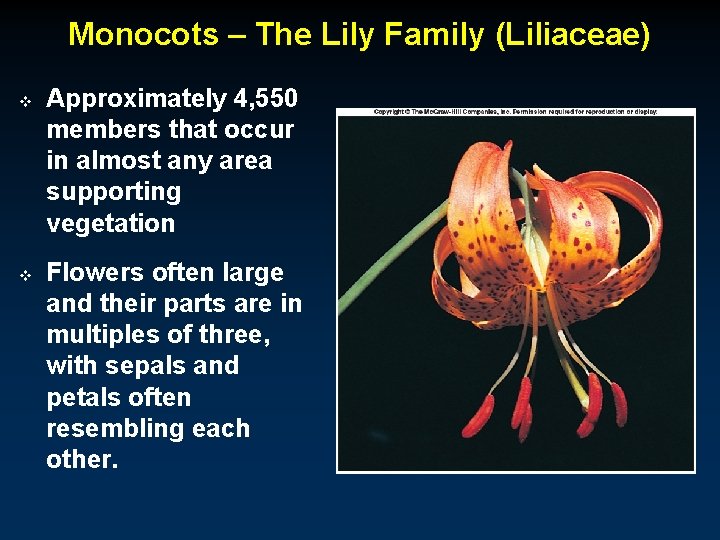
Monocots – The Lily Family (Liliaceae) v v Approximately 4, 550 members that occur in almost any area supporting vegetation Flowers often large and their parts are in multiples of three, with sepals and petals often resembling each other.
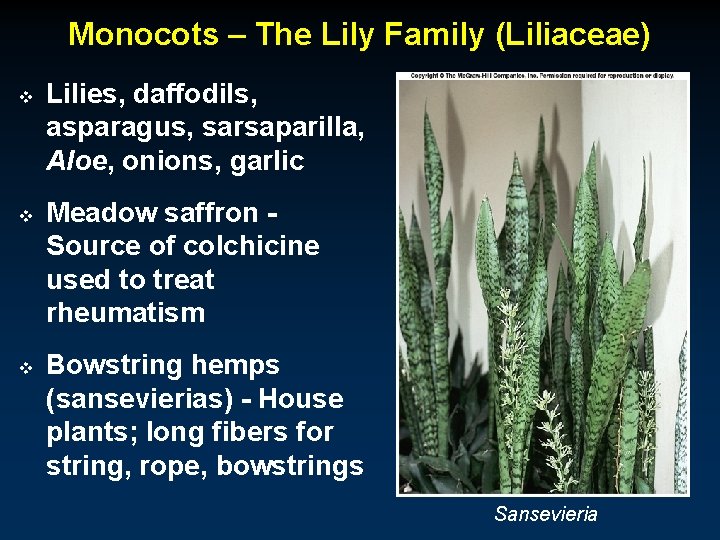
Monocots – The Lily Family (Liliaceae) v v v Lilies, daffodils, asparagus, sarsaparilla, Aloe, onions, garlic Meadow saffron Source of colchicine used to treat rheumatism Bowstring hemps (sansevierias) - House plants; long fibers for string, rope, bowstrings Sansevieria
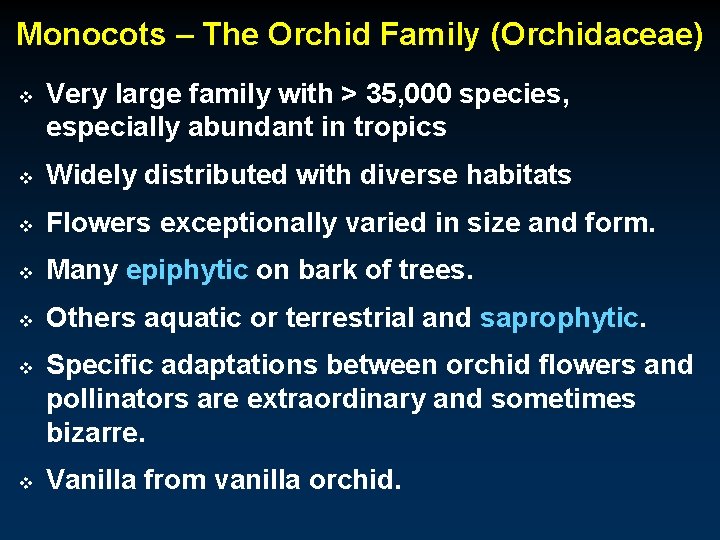
Monocots – The Orchid Family (Orchidaceae) v Very large family with > 35, 000 species, especially abundant in tropics v Widely distributed with diverse habitats v Flowers exceptionally varied in size and form. v Many epiphytic on bark of trees. v Others aquatic or terrestrial and saprophytic. v v Specific adaptations between orchid flowers and pollinators are extraordinary and sometimes bizarre. Vanilla from vanilla orchid.
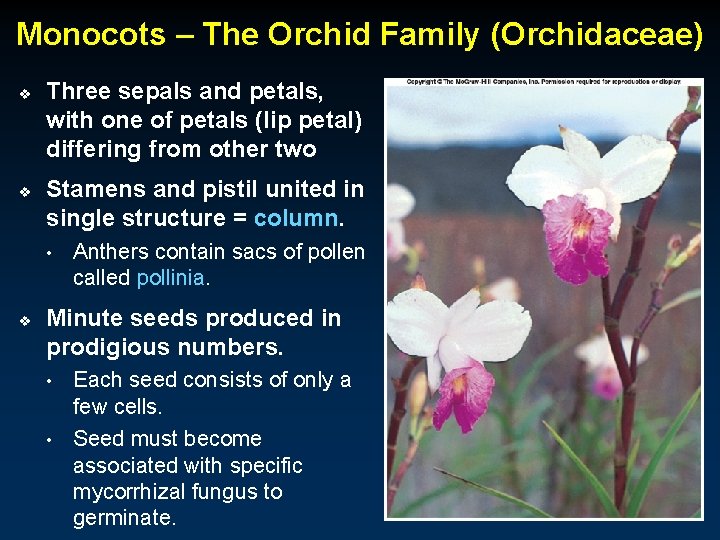
Monocots – The Orchid Family (Orchidaceae) v v Three sepals and petals, with one of petals (lip petal) differing from other two Stamens and pistil united in single structure = column. • v Anthers contain sacs of pollen called pollinia. Minute seeds produced in prodigious numbers. • • Each seed consists of only a few cells. Seed must become associated with specific mycorrhizal fungus to germinate.
Review v Origin of Cultivated Plants v Selected Families of Flowering Plants Dicots Monocots – The Buttercup Family (Ranunculaceae) – The Grass Family (Poaceae) – The Laurel Family (Lauraceae) – The Lily Family (Liliaceae) – The Poppy Family (Papaveraceae) – The Orchid Family (Orchidaceae) – The Mustard Family (Brassicaceae) – The Rose Family (Rosaceae) – The Legume Family (Fabaceae) – The Spurge Family (Euphorbiaceae) – The Cactus Family (Cactaceae) – The Mint Family (Lamiaceae) – The Nightshade Family (Solanaceae) – The Carrot Family (Apiaceae) – The Pumpkin Family (Cucurbitaceae) – The Sunflower Family (Asteraceae)