
Chapter 24 Introduction to Elevations Elevation Basics Surface
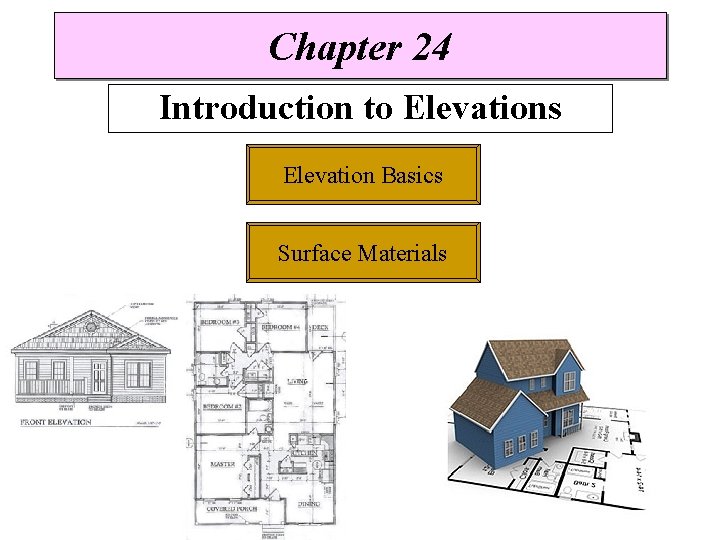
Chapter 24 Introduction to Elevations Elevation Basics Surface Materials
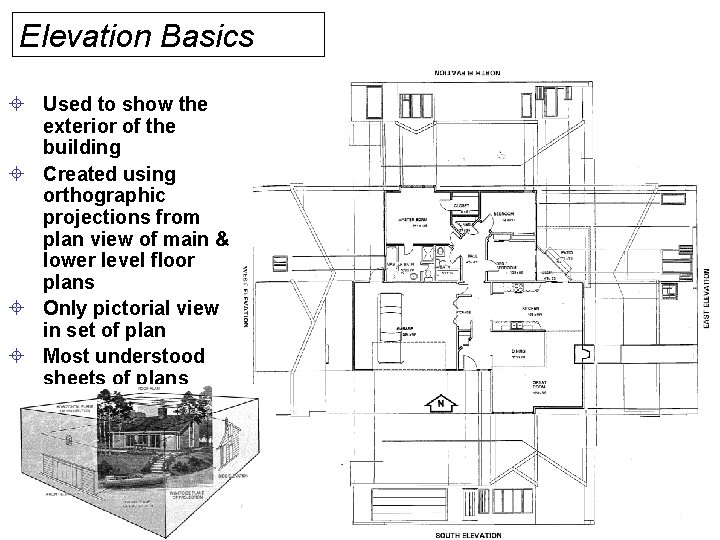
Elevation Basics ± Used to show the exterior of the building ± Created using orthographic projections from plan view of main & lower level floor plans ± Only pictorial view in set of plan ± Most understood sheets of plans ± How plan is sold
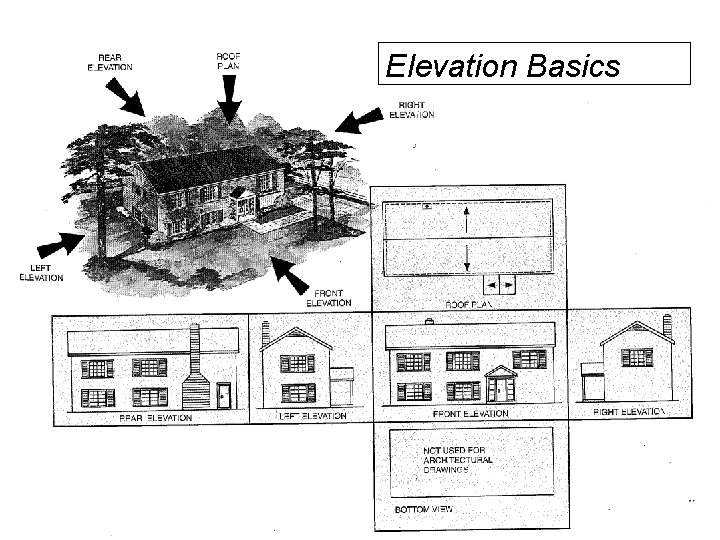
Elevation Basics
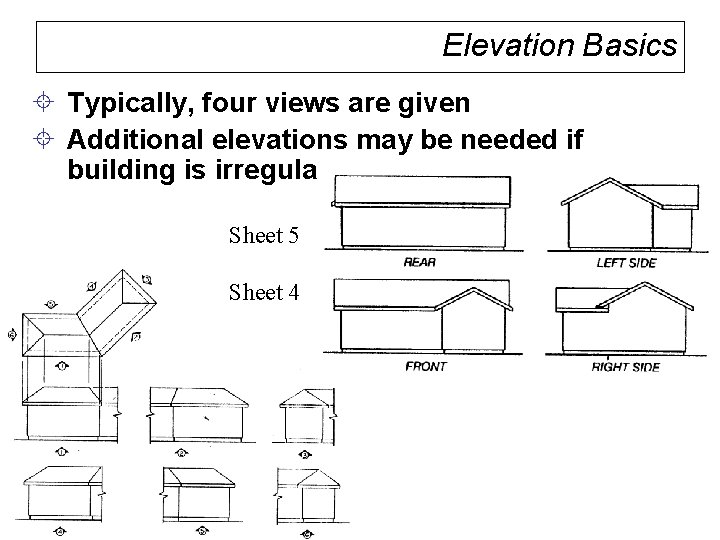
Elevation Basics ± Typically, four views are given ± Additional elevations may be needed if building is irregular shaped Sheet 5 Sheet 4
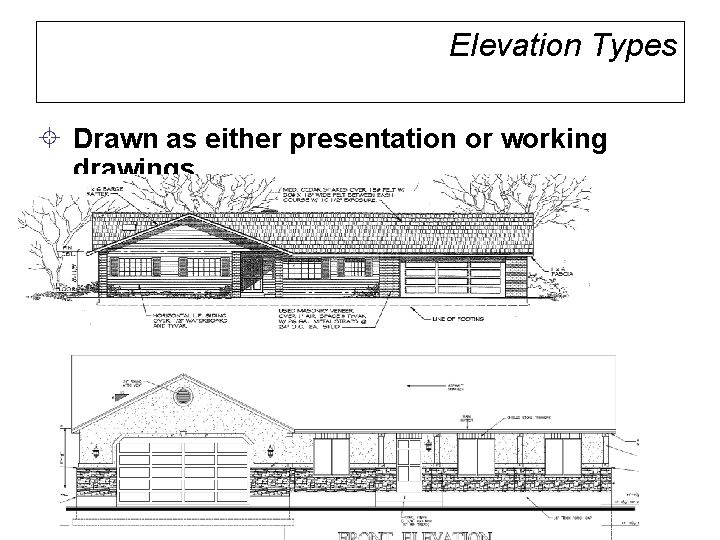
Elevation Types ± Drawn as either presentation or working drawings
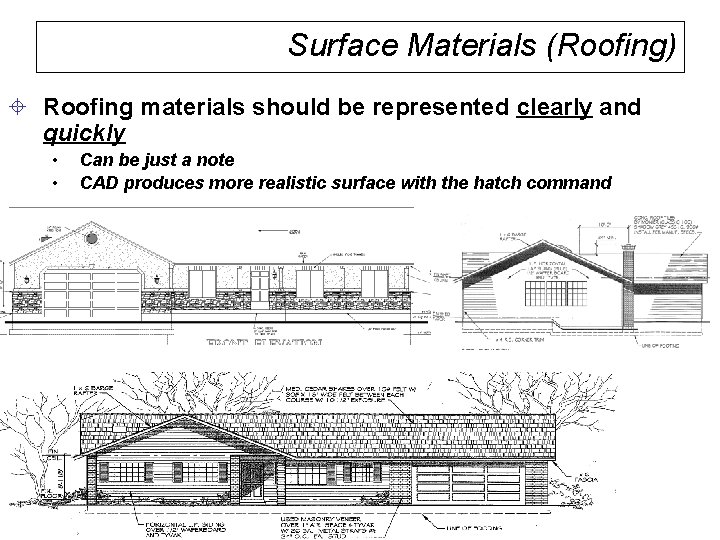
Surface Materials (Roofing) ± Roofing materials should be represented clearly and quickly • • • Can be just a note CAD produces more realistic surface with the hatch command Not typically shown in working drawings
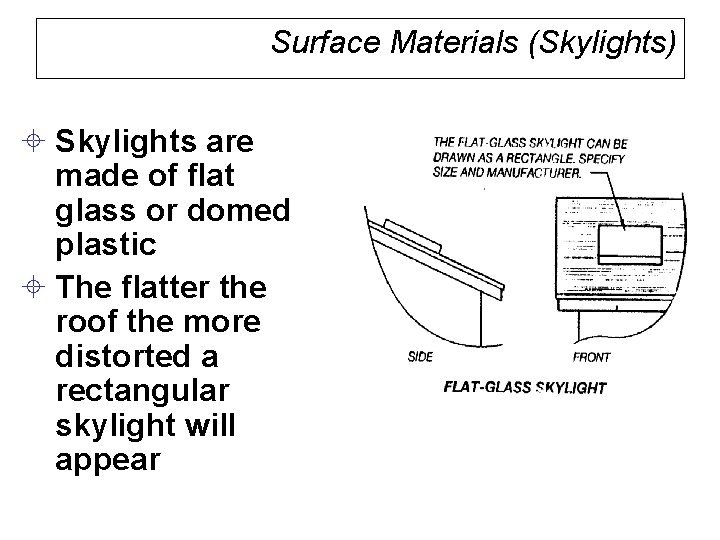
Surface Materials (Skylights) ± Skylights are made of flat glass or domed plastic ± The flatter the roof the more distorted a rectangular skylight will appear
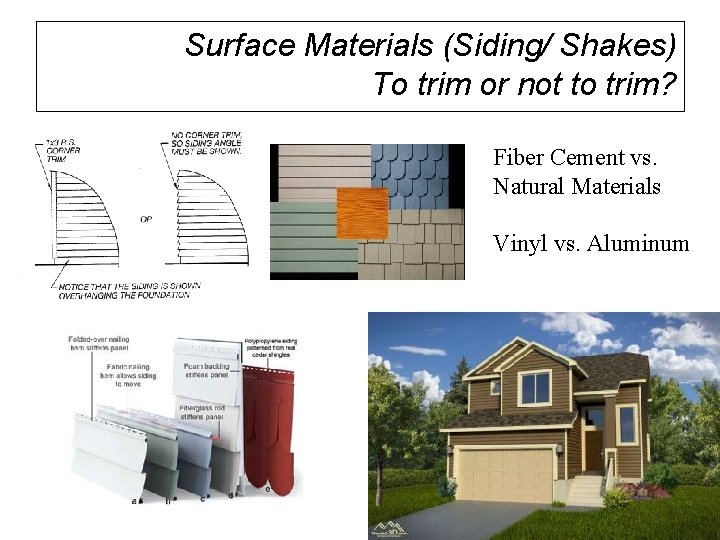
Surface Materials (Siding/ Shakes) To trim or not to trim? Fiber Cement vs. Natural Materials Vinyl vs. Aluminum
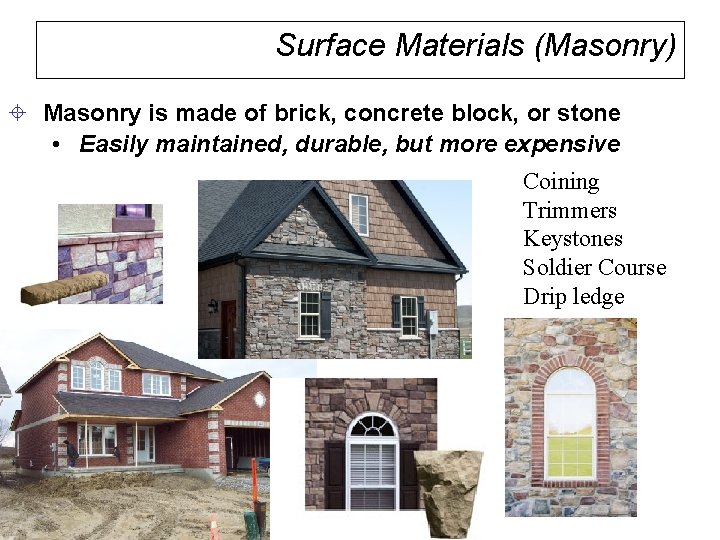
Surface Materials (Masonry) ± Masonry is made of brick, concrete block, or stone • Easily maintained, durable, but more expensive Coining Trimmers Keystones Soldier Course Drip ledge
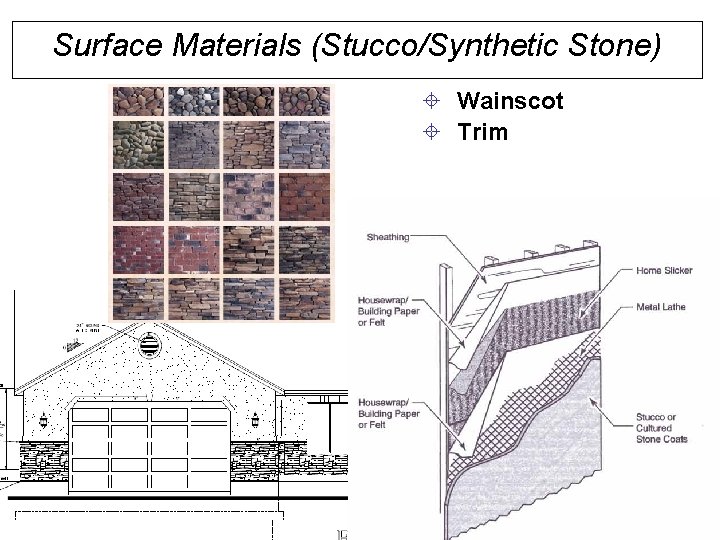
Surface Materials (Stucco/Synthetic Stone) ± Wainscot ± Trim
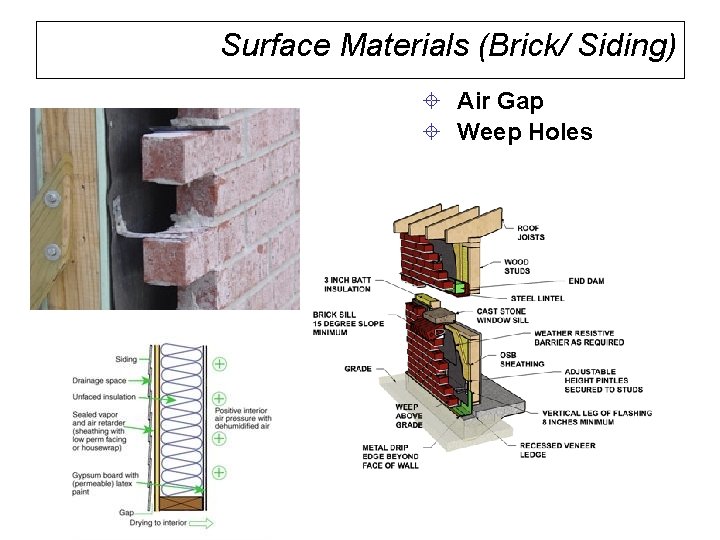
Surface Materials (Brick/ Siding) ± Air Gap ± Weep Holes
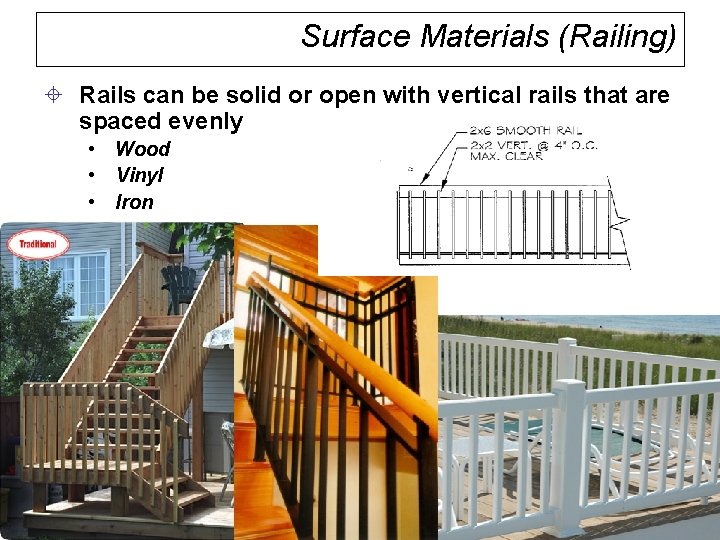
Surface Materials (Railing) ± Rails can be solid or open with vertical rails that are spaced evenly • Wood • Vinyl • Iron
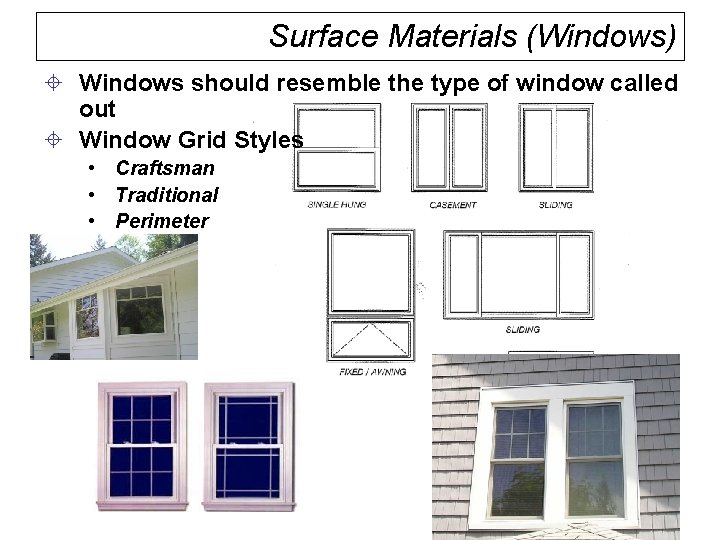
Surface Materials (Windows) ± Windows should resemble the type of window called out ± Window Grid Styles • Craftsman • Traditional • Perimeter
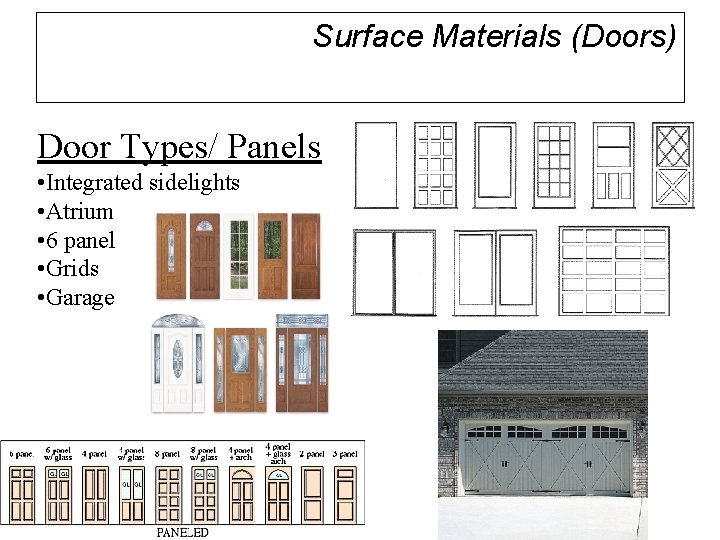
Surface Materials (Doors) Door Types/ Panels • Integrated sidelights • Atrium • 6 panel • Grids • Garage
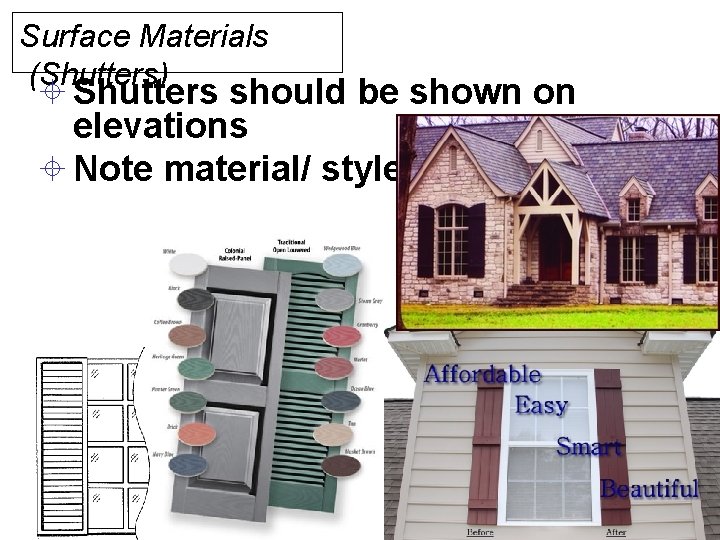
Surface Materials (Shutters) ± Shutters should be shown on elevations ± Note material/ style
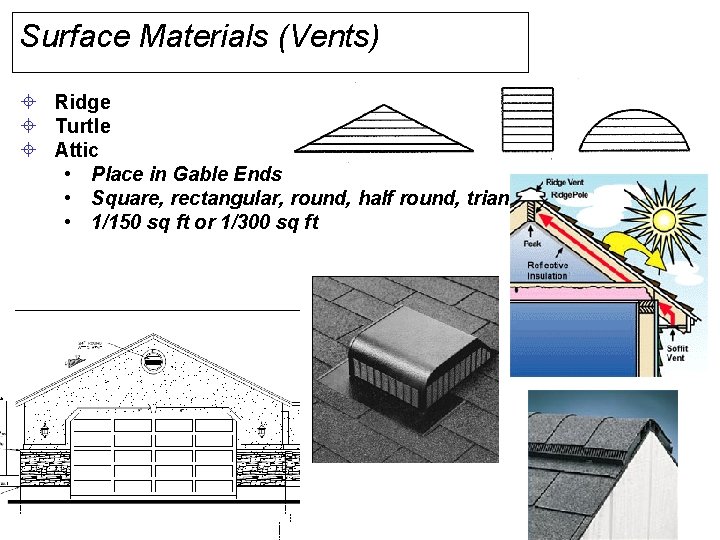
Surface Materials (Vents) ± Ridge ± Turtle ± Attic • Place in Gable Ends • Square, rectangular, round, half round, triangle. • 1/150 sq ft or 1/300 sq ft
- Slides: 16