
Chapter 24 Introduction to Animals Section 1 Animal

- Slides: 25
Chapter 24 Introduction to Animals Section 1: Animal Characteristics Section 2: Animal Body Plans Click on a lesson name to select.
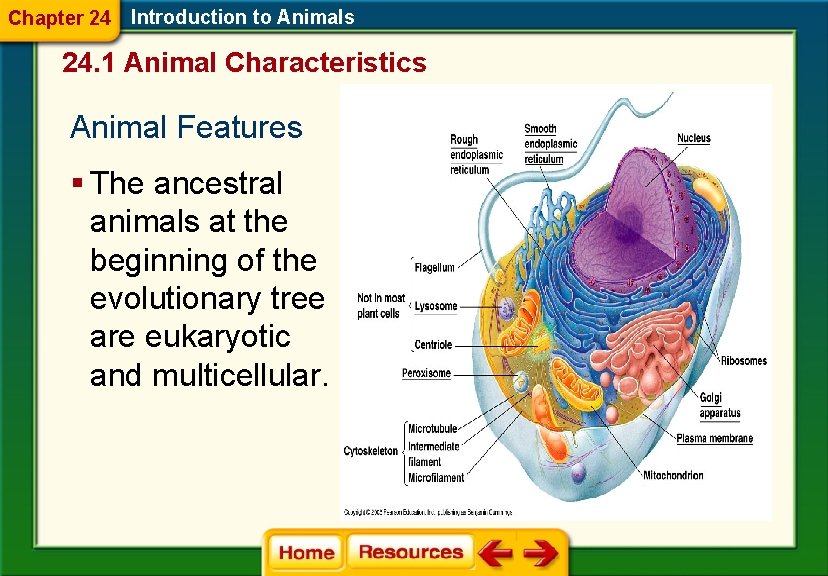
Chapter 24 Introduction to Animals 24. 1 Animal Characteristics Animal Features § The ancestral animals at the beginning of the evolutionary tree are eukaryotic and multicellular.
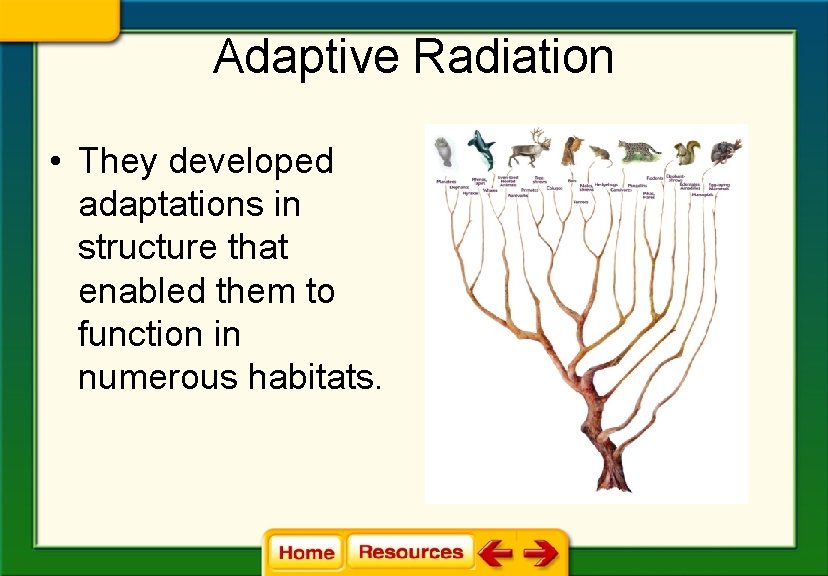
Adaptive Radiation • They developed adaptations in structure that enabled them to function in numerous habitats.
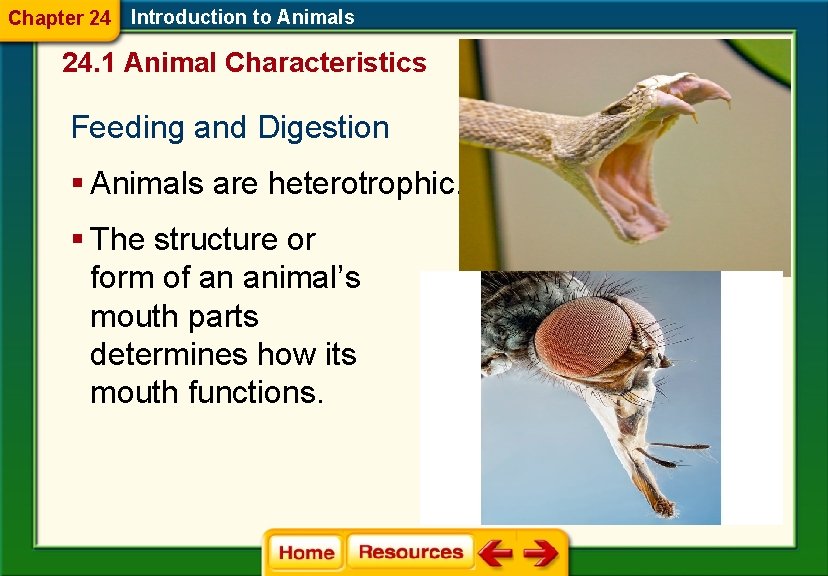
Chapter 24 Introduction to Animals 24. 1 Animal Characteristics Feeding and Digestion § Animals are heterotrophic. § The structure or form of an animal’s mouth parts determines how its mouth functions.
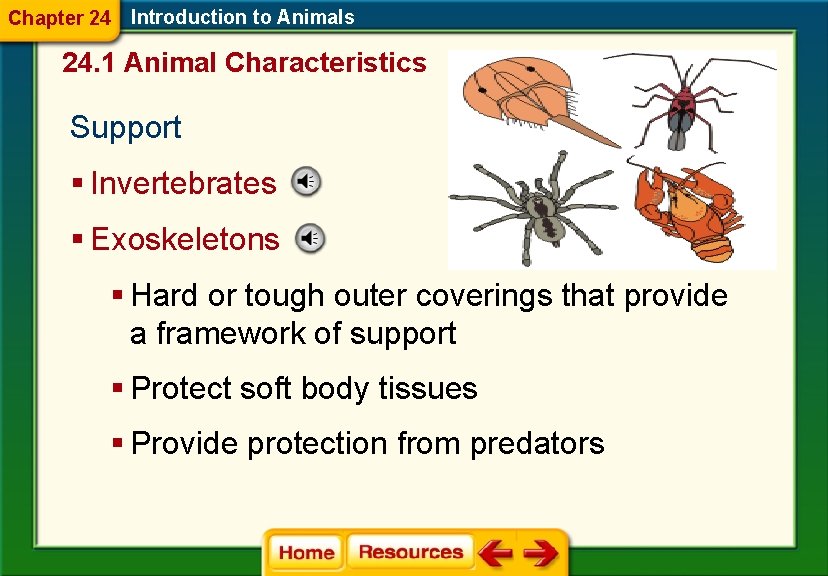
Chapter 24 Introduction to Animals 24. 1 Animal Characteristics Support § Invertebrates § Exoskeletons § Hard or tough outer coverings that provide a framework of support § Protect soft body tissues § Provide protection from predators
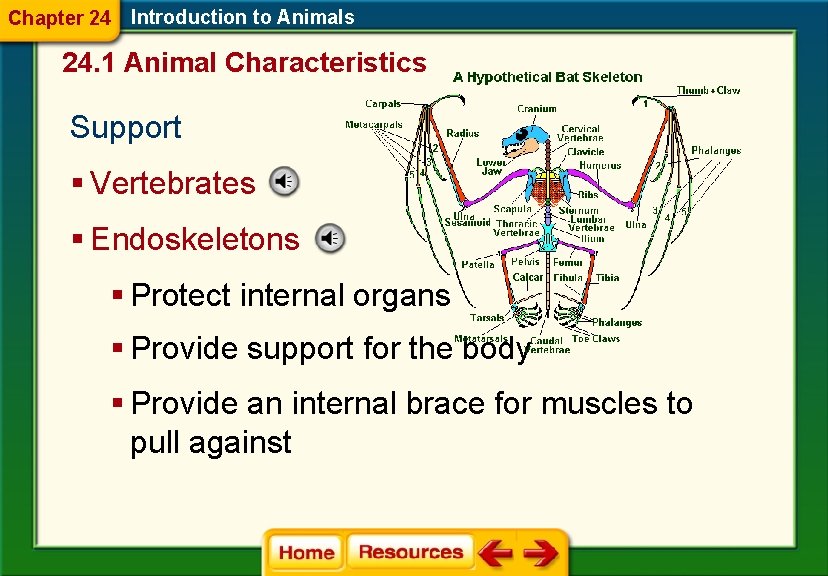
Chapter 24 Introduction to Animals 24. 1 Animal Characteristics Support § Vertebrates § Endoskeletons § Protect internal organs § Provide support for the body § Provide an internal brace for muscles to pull against
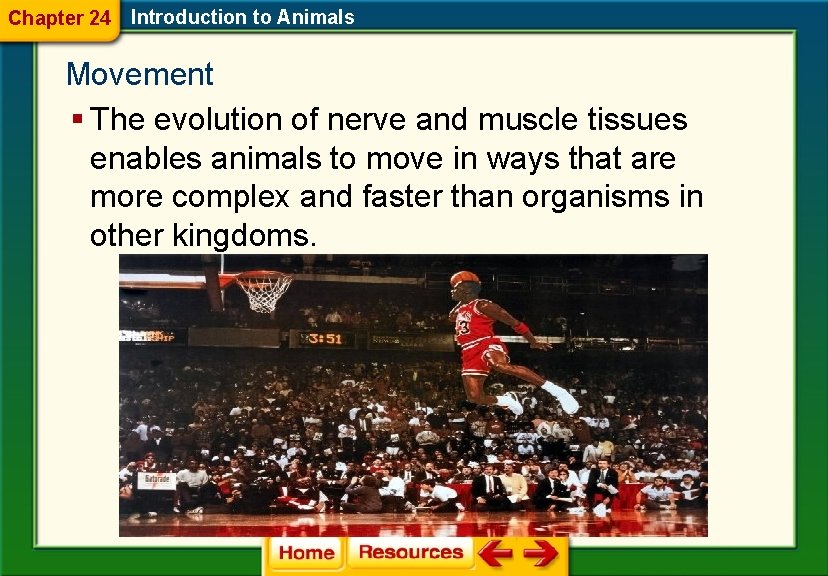
Chapter 24 Introduction to Animals Movement § The evolution of nerve and muscle tissues enables animals to move in ways that are more complex and faster than organisms in other kingdoms.
Chapter 24 Introduction to Animals 24. 1 Animal Characteristics Reproduction § Fertilization occurs when the sperm penetrates the egg to form a fertilized egg cell called the zygote. § Internal fertilization § External fertilization
Chapter 24 Introduction to Animals 24. 1 Animal Characteristics § Asexual reproduction means that a single parent produces offspring that are genetically identical to itself. § Budding § Fragmentation § Regeneration § Parthenogenesis
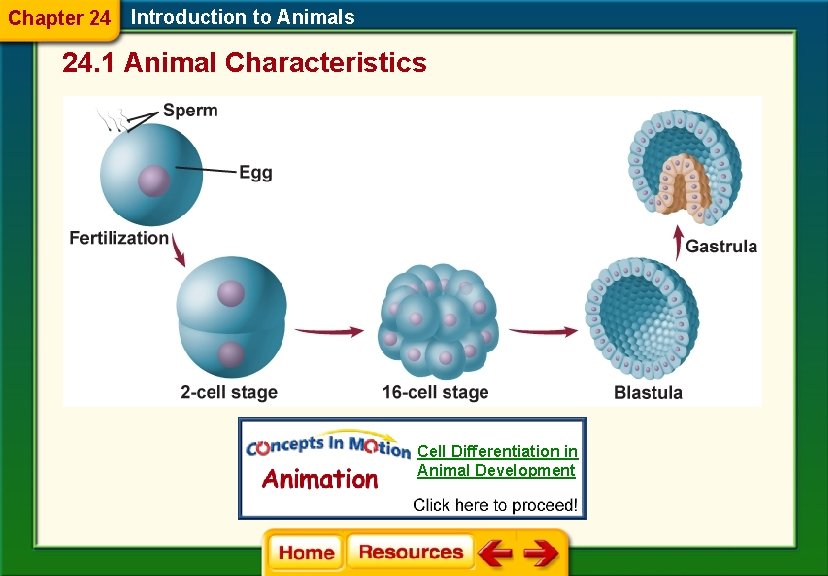
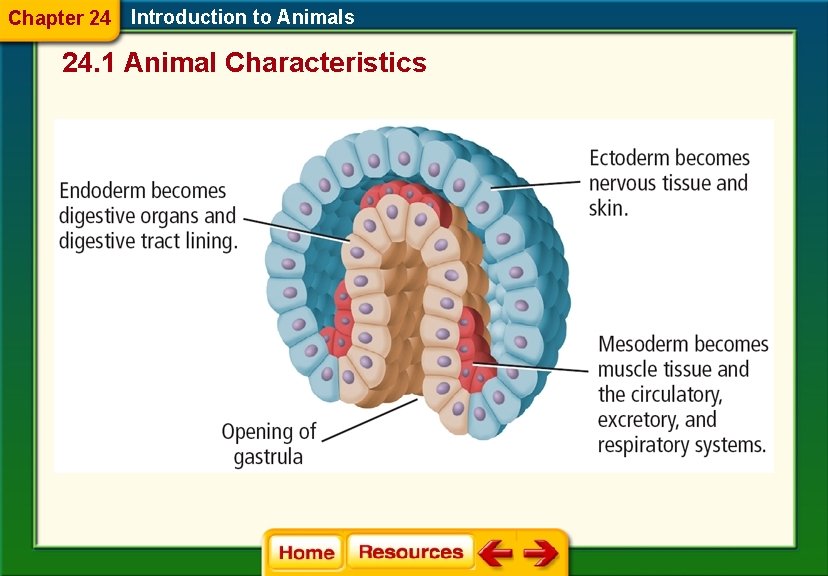
Chapter 24 Introduction to Animals 24. 1 Animal Characteristics Early Development § The zygote undergoes mitosis and a series of cell divisions to form new cells. § The cells continue to divide, forming a fluidfilled ball of cells called the blastula. § The blastula continues to undergo cell division as some cells move inward to form a gastrula.
Chapter 24 Introduction to Animals 24. 1 Animal Characteristics Cell Differentiation in Animal Development
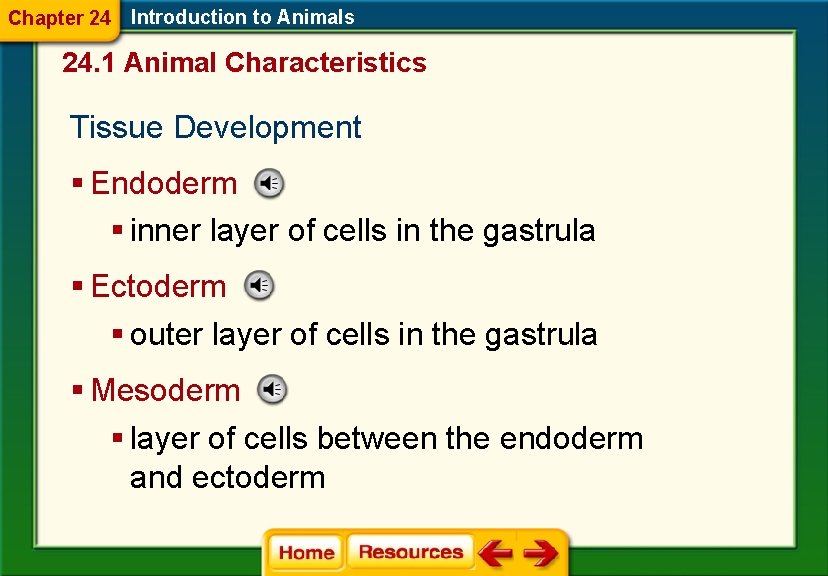
Chapter 24 Introduction to Animals 24. 1 Animal Characteristics Tissue Development § Endoderm § inner layer of cells in the gastrula § Ectoderm § outer layer of cells in the gastrula § Mesoderm § layer of cells between the endoderm and ectoderm
Chapter 24 Introduction to Animals 24. 1 Animal Characteristics
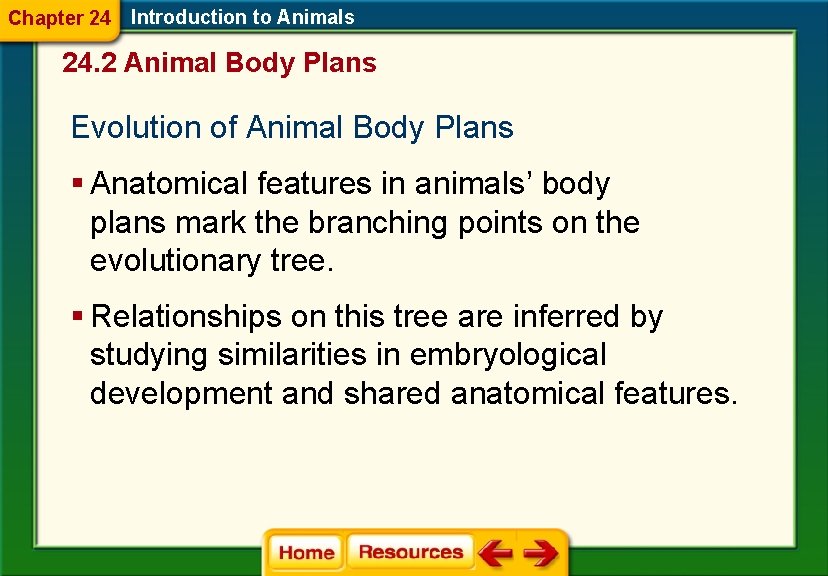
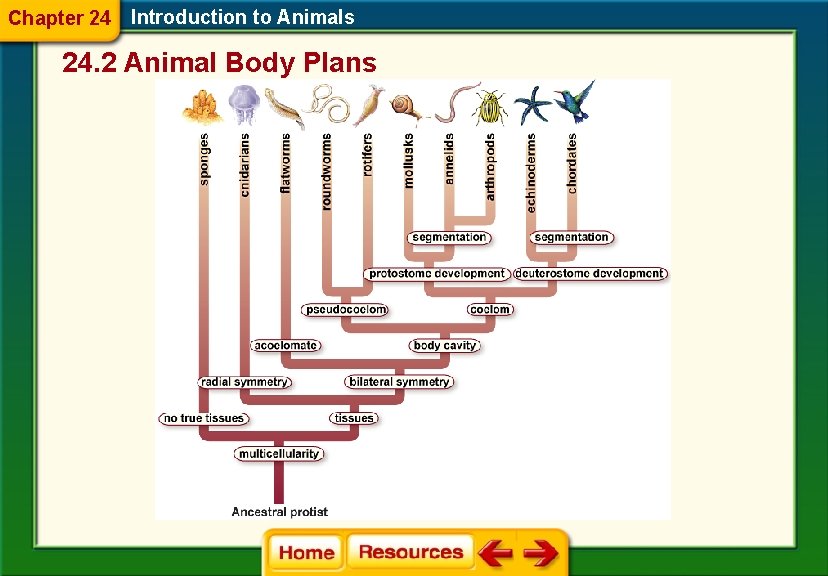
Chapter 24 Introduction to Animals 24. 2 Animal Body Plans Evolution of Animal Body Plans § Anatomical features in animals’ body plans mark the branching points on the evolutionary tree. § Relationships on this tree are inferred by studying similarities in embryological development and shared anatomical features.
Chapter 24 Introduction to Animals 24. 2 Animal Body Plans
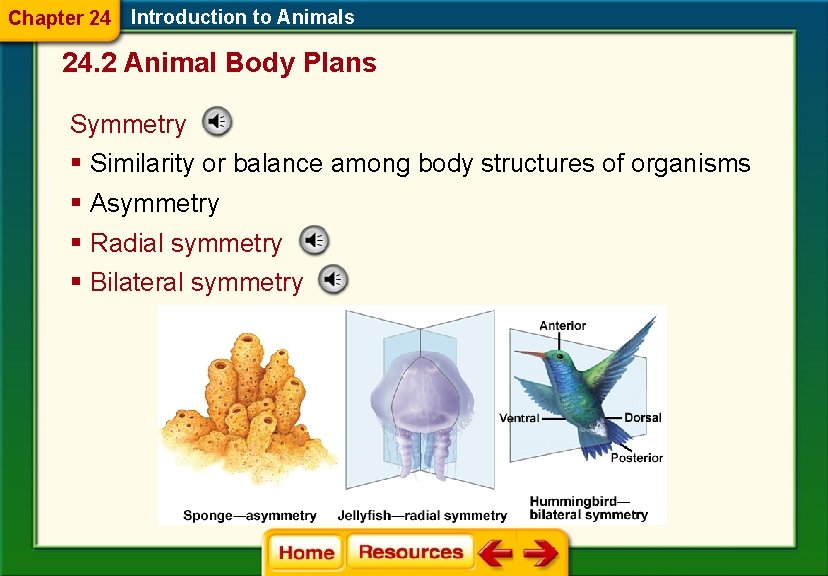
Chapter 24 Introduction to Animals 24. 2 Animal Body Plans Symmetry § Similarity or balance among body structures of organisms § Asymmetry § Radial symmetry § Bilateral symmetry
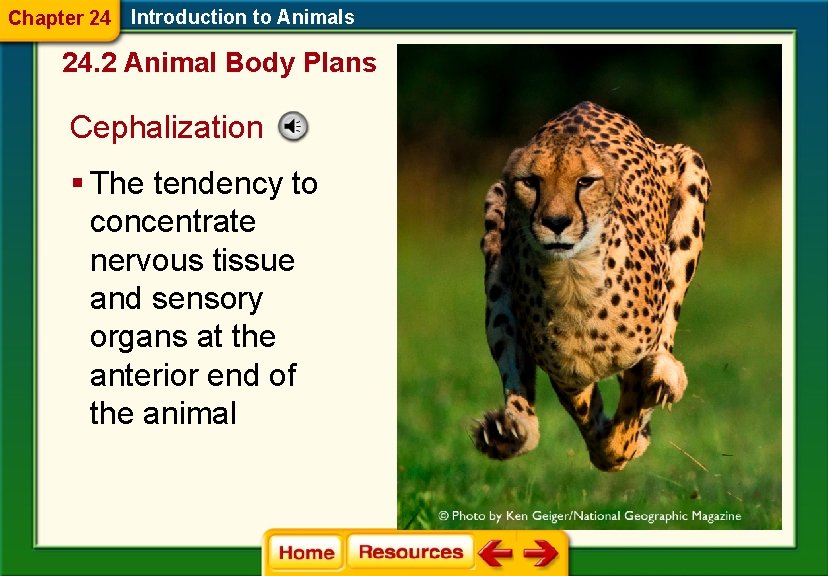
Chapter 24 Introduction to Animals 24. 2 Animal Body Plans Cephalization § The tendency to concentrate nervous tissue and sensory organs at the anterior end of the animal
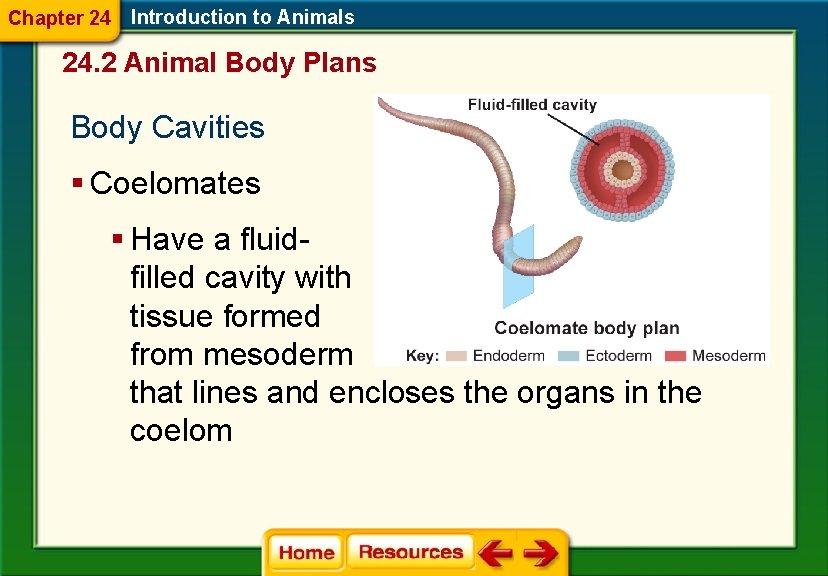
Chapter 24 Introduction to Animals 24. 2 Animal Body Plans Body Cavities § Coelomates § Have a fluidfilled cavity with tissue formed from mesoderm that lines and encloses the organs in the coelom
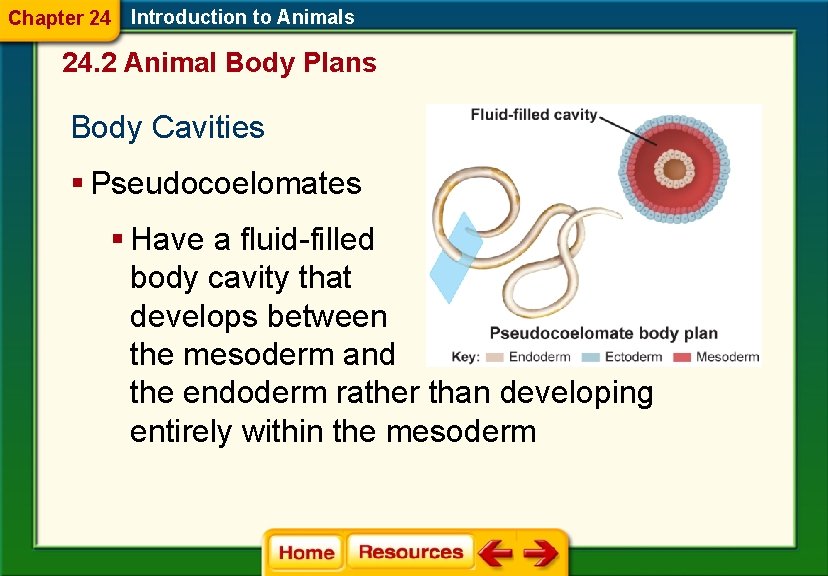
Chapter 24 Introduction to Animals 24. 2 Animal Body Plans Body Cavities § Pseudocoelomates § Have a fluid-filled body cavity that develops between the mesoderm and the endoderm rather than developing entirely within the mesoderm
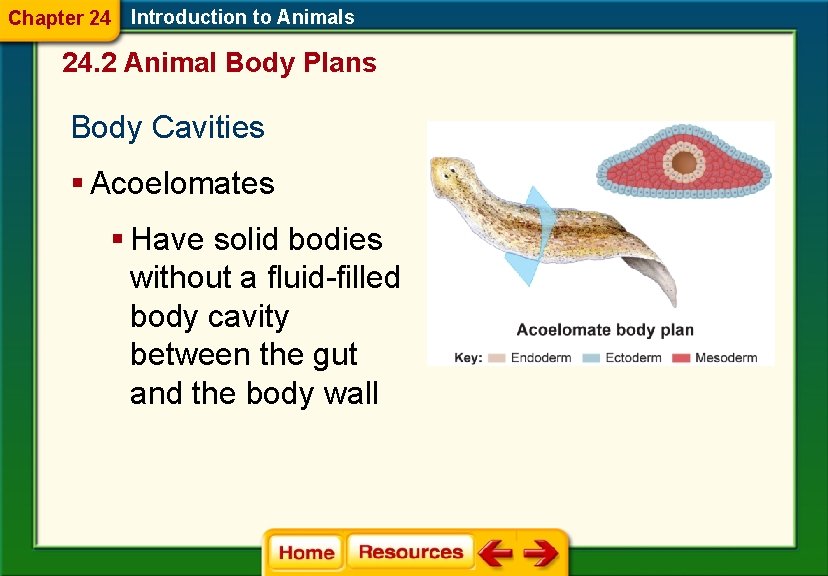
Chapter 24 Introduction to Animals 24. 2 Animal Body Plans Body Cavities § Acoelomates § Have solid bodies without a fluid-filled body cavity between the gut and the body wall
Chapter 24 Introduction to Animals 24. 2 Animal Body Plans Development in Coelomate Animals § Protostomes § The mouth develops from the first opening in the gastrula. § Deuterostomes § The anus develops from the first opening in the gastrula. Visualizing Protostomes and Deuterostomes
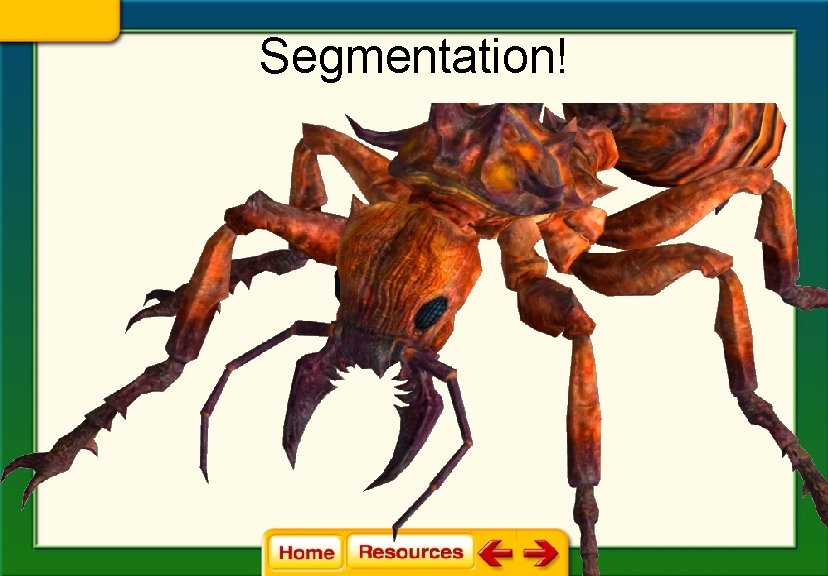
Chapter 24 Introduction to Animals 24. 2 Animal Body Plans Segmentation § Segmented animals can be “put together” from a succession of similar parts. § Can survive damage to one segment § Movement is more effective
Segmentation!
Michel Angelo’s David