
chapter 24 Exercise Related to ECG and Medications
- Slides: 30
chapter 24 Exercise Related to ECG and Medications David R. Bassett, Jr.
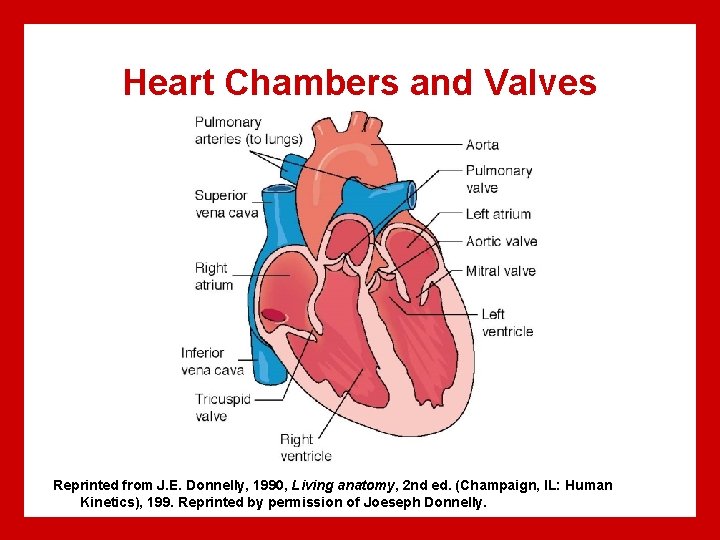
Heart Chambers and Valves Reprinted from J. E. Donnelly, 1990, Living anatomy, 2 nd ed. (Champaign, IL: Human Kinetics), 199. Reprinted by permission of Joeseph Donnelly.
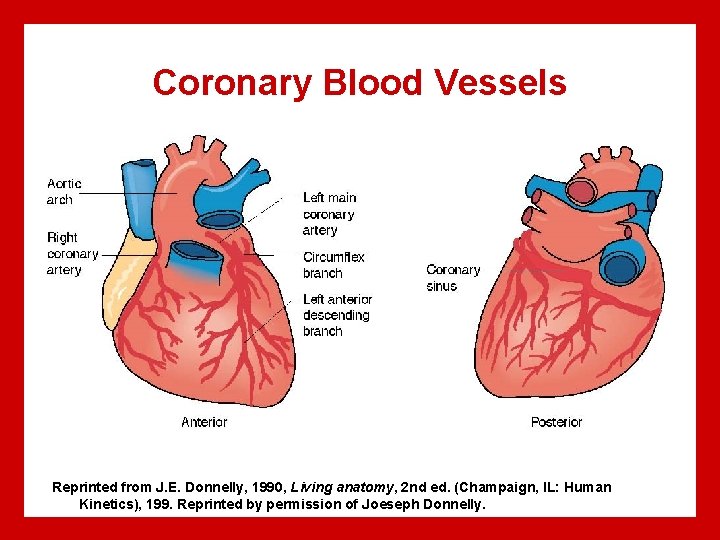
Coronary Blood Vessels Reprinted from J. E. Donnelly, 1990, Living anatomy, 2 nd ed. (Champaign, IL: Human Kinetics), 199. Reprinted by permission of Joeseph Donnelly.
Oxygen Use by the Heart • The myocardium relies on ATP for contraction. • In the heart, 40% of the muscle cells are mitochondria. • Even at rest, the heart muscle extracts 75% of the O 2 delivered to it.
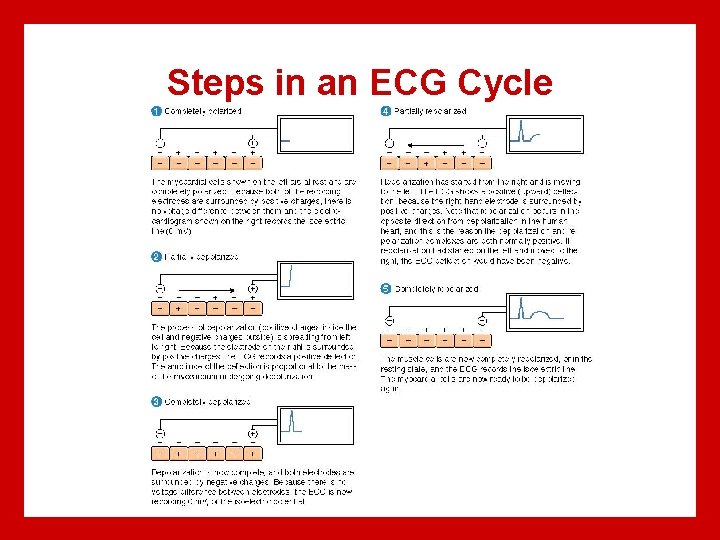
Electrophysiology of the Heart • At rest, the insides of heart muscle cells are negatively charged. • When depolarized, the insides of the cells become positively charged. • If a wave of depolarization travels toward a positive electrode on the ECG, an upward deflection occurs.
Steps in an ECG Cycle
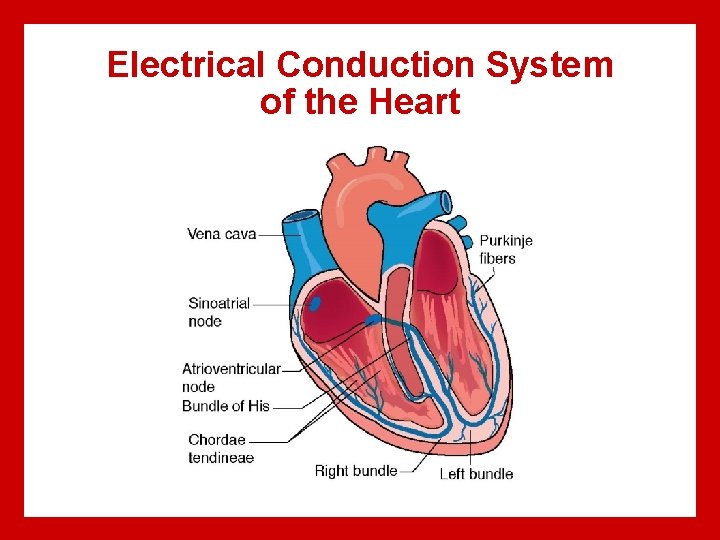
Electrical Conduction System of the Heart
Electrocardiogram (ECG) A graphical recording of the heart’s electrical activity, obtained through the use of skin electrodes.
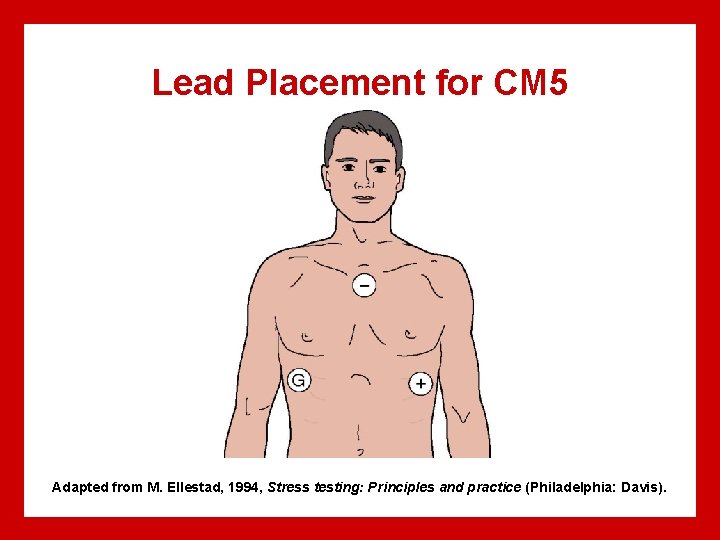
Lead Placement for CM 5 Adapted from M. Ellestad, 1994, Stress testing: Principles and practice (Philadelphia: Davis).
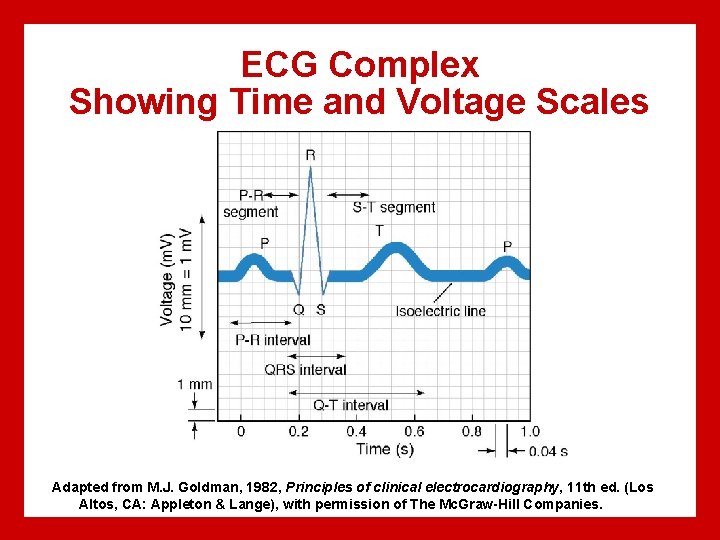
ECG Complex Showing Time and Voltage Scales Adapted from M. J. Goldman, 1982, Principles of clinical electrocardiography, 11 th ed. (Los Altos, CA: Appleton & Lange), with permission of The Mc. Graw-Hill Companies.
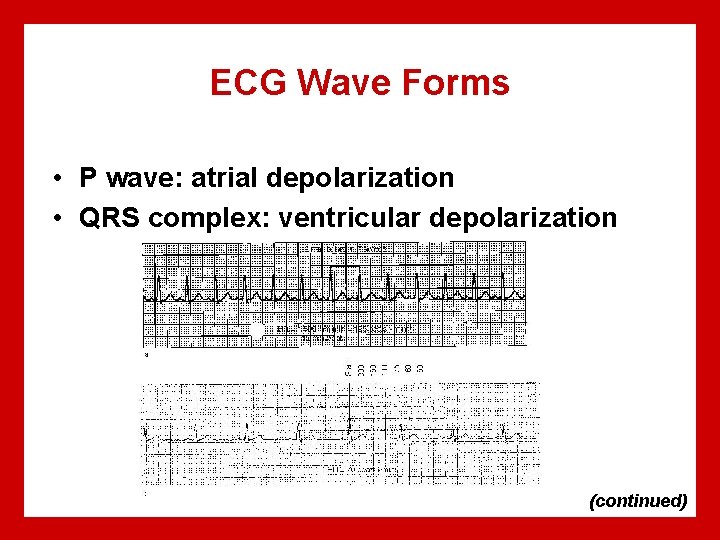
ECG Wave Forms • P wave: atrial depolarization • QRS complex: ventricular depolarization (continued)
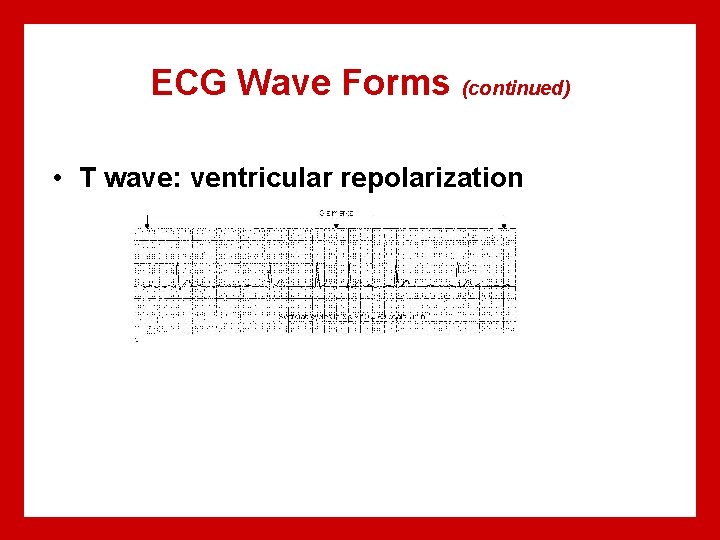
ECG Wave Forms (continued) • T wave: ventricular repolarization
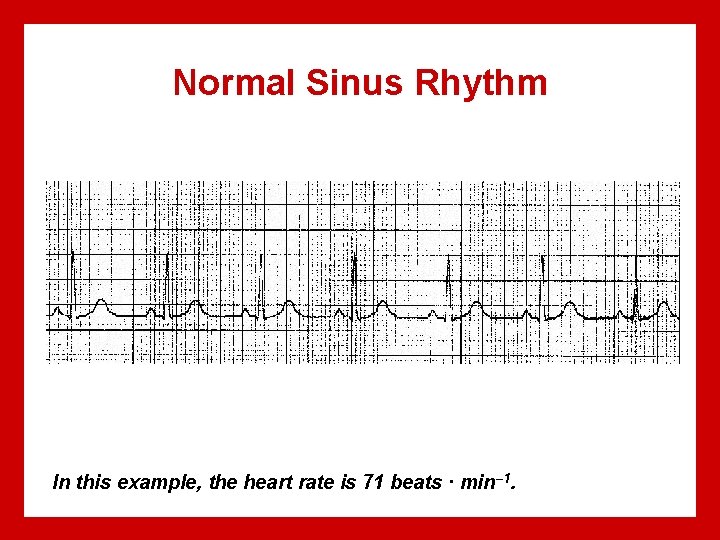
Normal Sinus Rhythm In this example, the heart rate is 71 beats · min– 1.
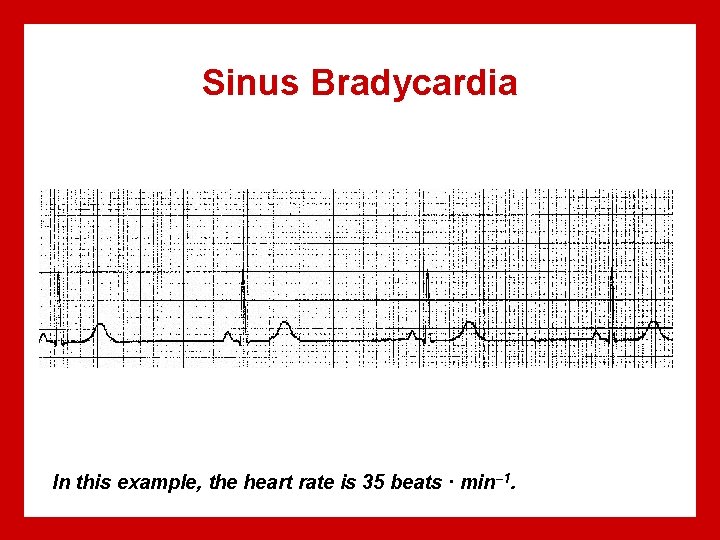
Sinus Bradycardia In this example, the heart rate is 35 beats · min– 1.
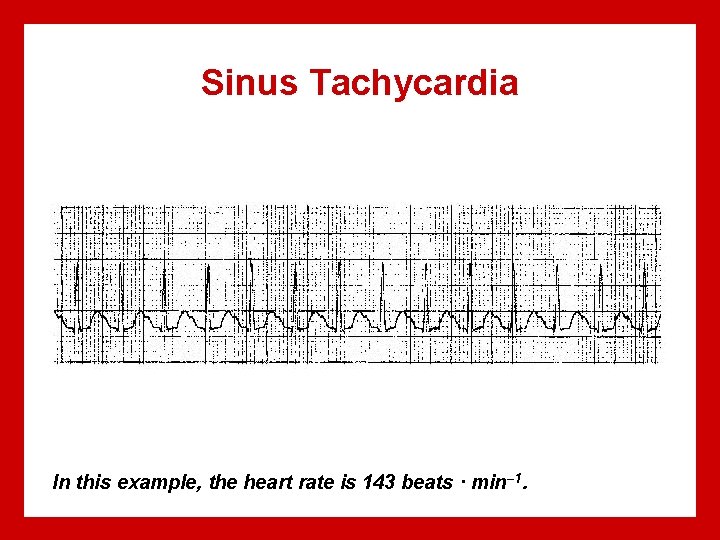
Sinus Tachycardia In this example, the heart rate is 143 beats · min– 1.
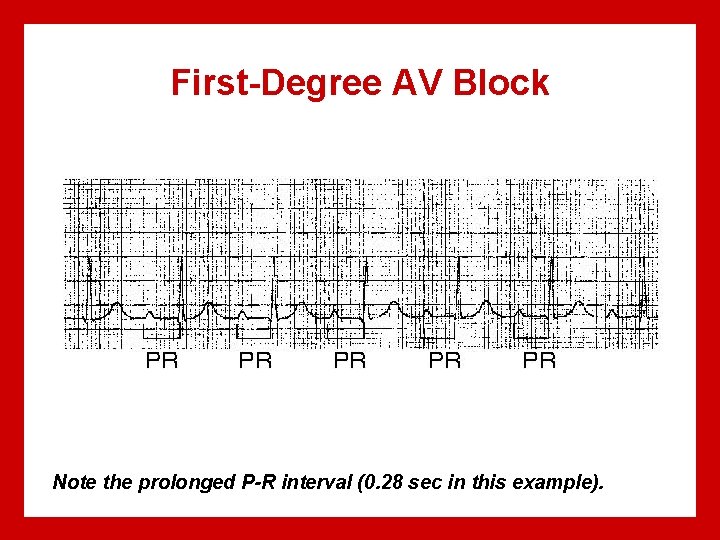
First-Degree AV Block Note the prolonged P-R interval (0. 28 sec in this example).
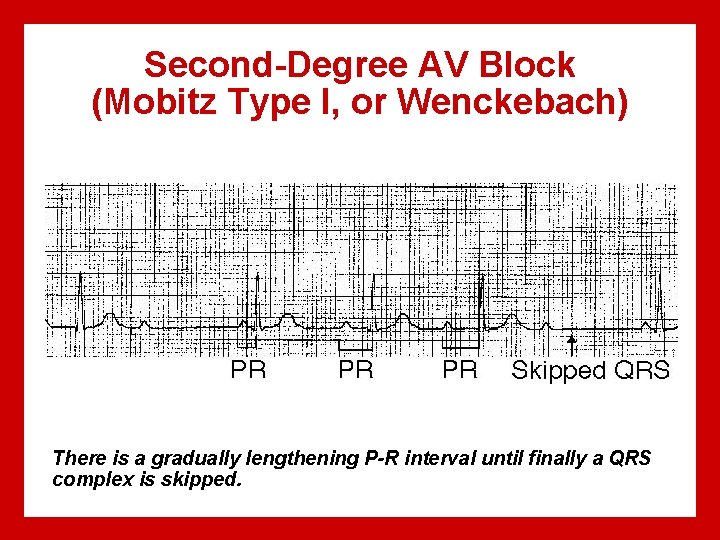
Second-Degree AV Block (Mobitz Type I, or Wenckebach) There is a gradually lengthening P-R interval until finally a QRS complex is skipped.
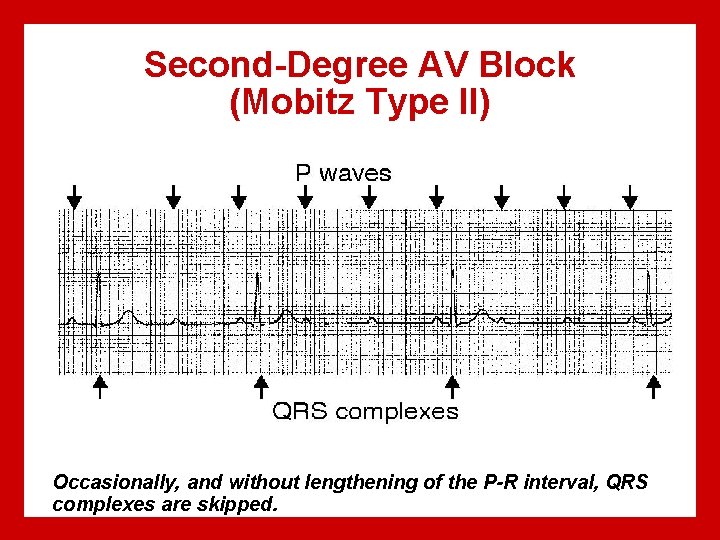
Second-Degree AV Block (Mobitz Type II) Occasionally, and without lengthening of the P-R interval, QRS complexes are skipped.
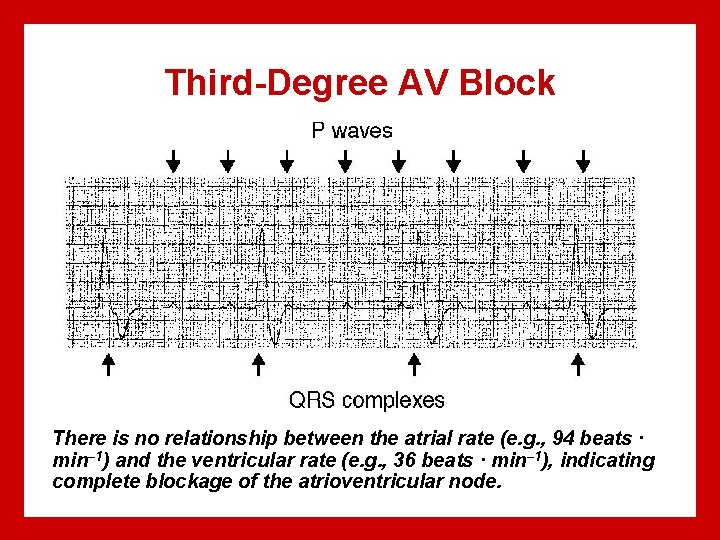
Third-Degree AV Block There is no relationship between the atrial rate (e. g. , 94 beats · min– 1) and the ventricular rate (e. g. , 36 beats · min– 1), indicating complete blockage of the atrioventricular node.
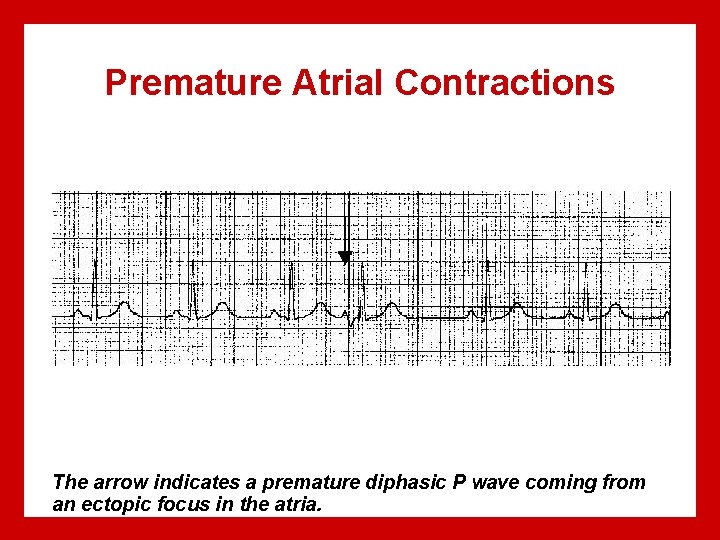
Premature Atrial Contractions The arrow indicates a premature diphasic P wave coming from an ectopic focus in the atria.
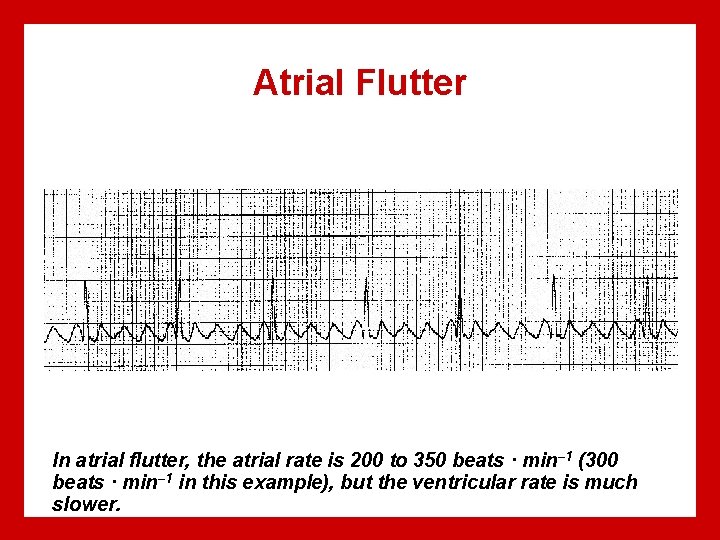
Atrial Flutter In atrial flutter, the atrial rate is 200 to 350 beats · min– 1 (300 beats · min– 1 in this example), but the ventricular rate is much slower.
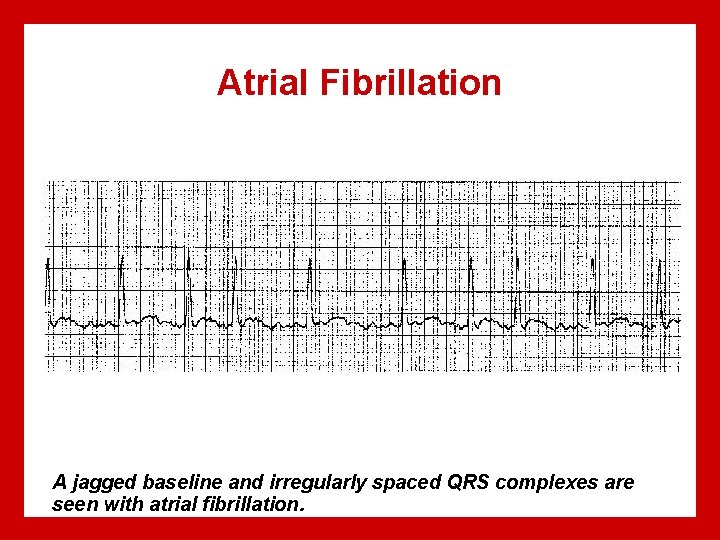
Atrial Fibrillation A jagged baseline and irregularly spaced QRS complexes are seen with atrial fibrillation.
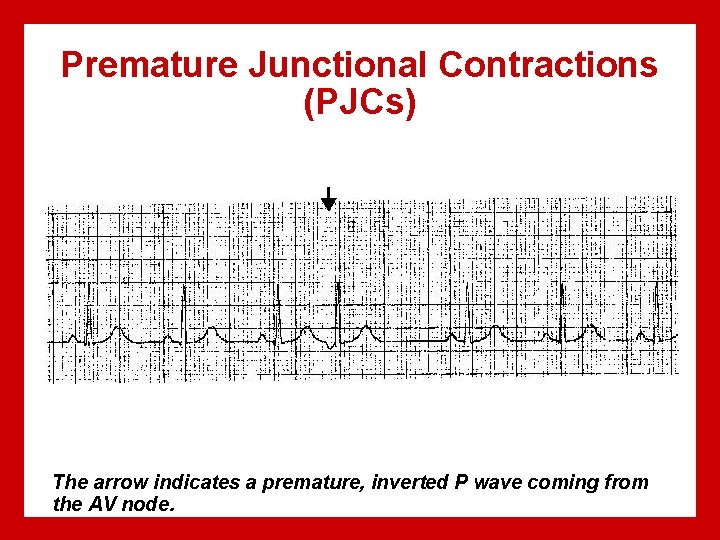
Premature Junctional Contractions (PJCs) The arrow indicates a premature, inverted P wave coming from the AV node.
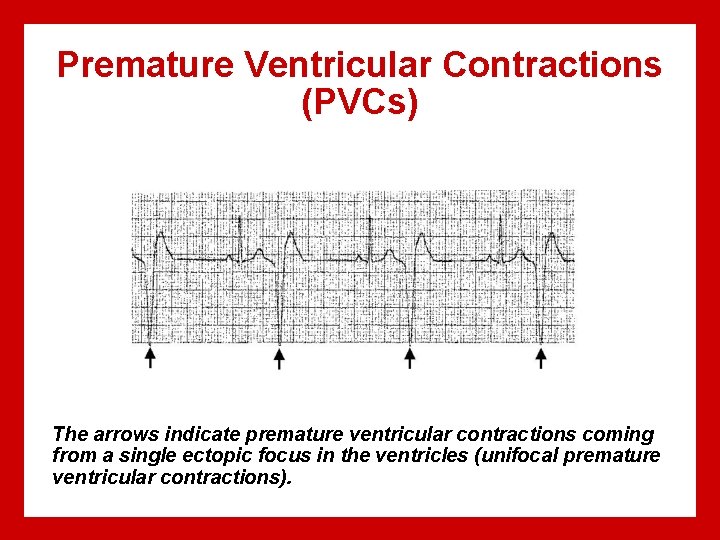
Premature Ventricular Contractions (PVCs) The arrows indicate premature ventricular contractions coming from a single ectopic focus in the ventricles (unifocal premature ventricular contractions).
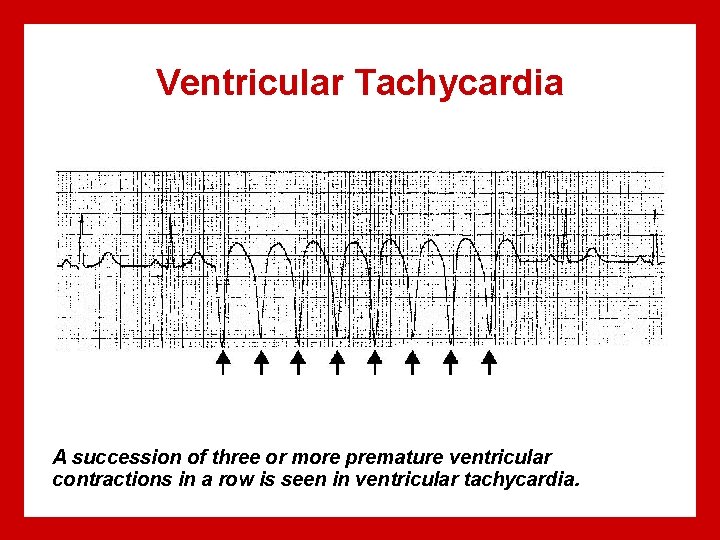
Ventricular Tachycardia A succession of three or more premature ventricular contractions in a row is seen in ventricular tachycardia.
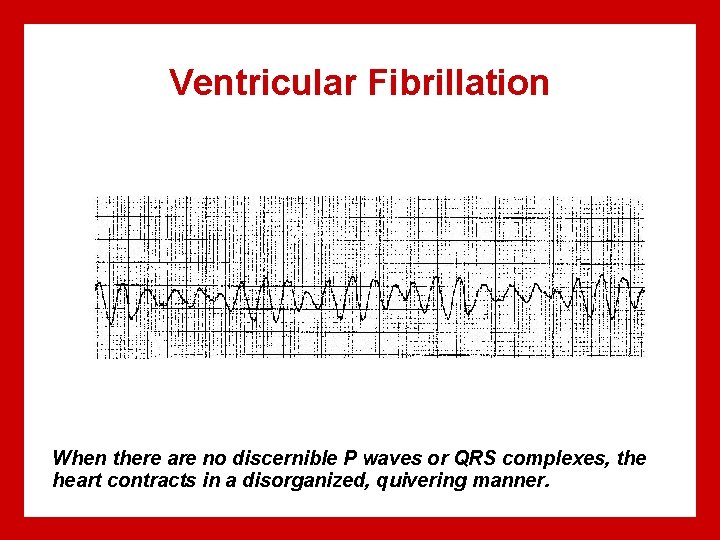
Ventricular Fibrillation When there are no discernible P waves or QRS complexes, the heart contracts in a disorganized, quivering manner.
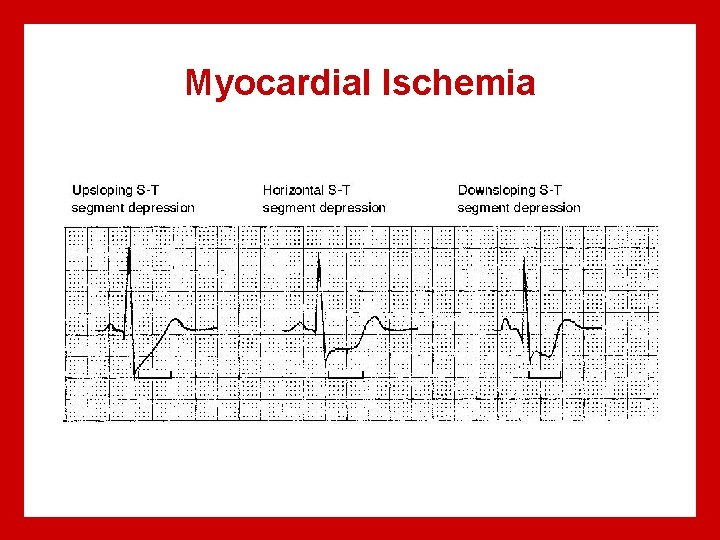
Myocardial Ischemia
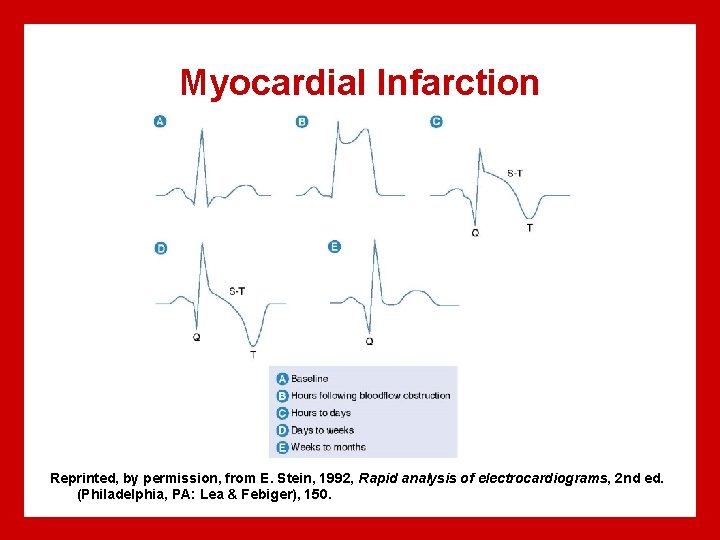
Myocardial Infarction Reprinted, by permission, from E. Stein, 1992, Rapid analysis of electrocardiograms, 2 nd ed. (Philadelphia, PA: Lea & Febiger), 150.
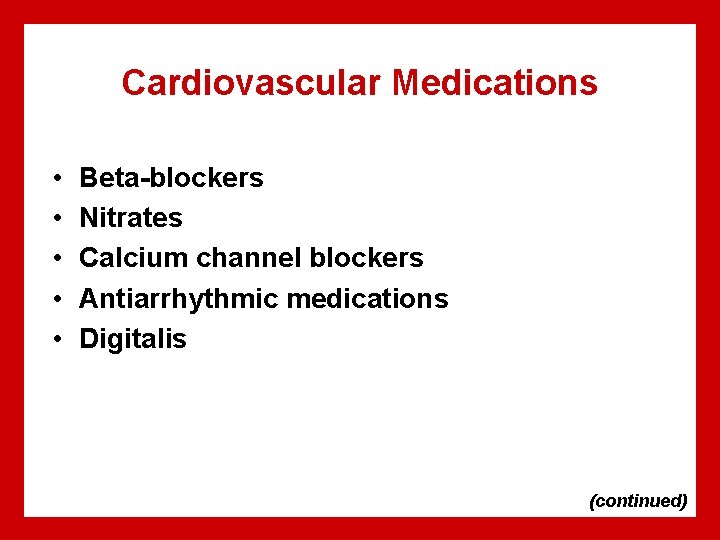
Cardiovascular Medications • • • Beta-blockers Nitrates Calcium channel blockers Antiarrhythmic medications Digitalis (continued)
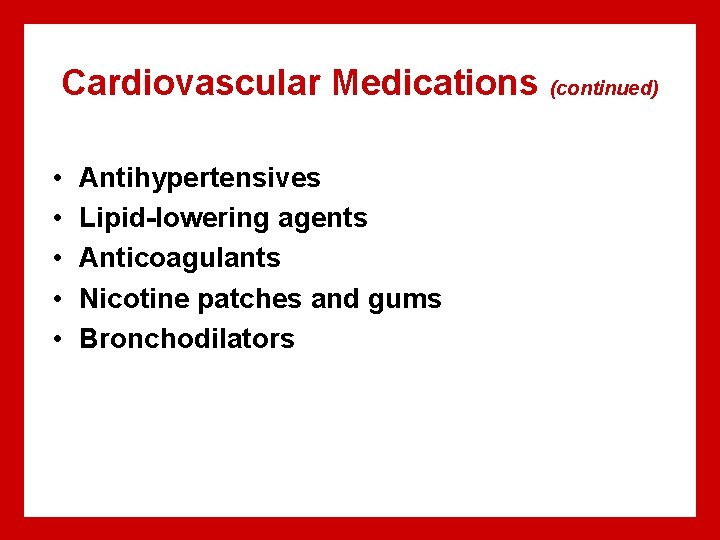
Cardiovascular Medications (continued) • • • Antihypertensives Lipid-lowering agents Anticoagulants Nicotine patches and gums Bronchodilators