
Chapter 24 Air Pollution A Brief History of
Chapter 24: Air Pollution
A Brief History of Air Pollution • The atmosphere has long been a sink for waste disposal. • Long history of recognition of the existence of atmospheric pollutants – Natural photochemical smog recognized in 1550 – Acid rain first described in 17 th century – World smog introduced in 1905 • Mixture of smoke and fog
A Brief History of Air Pollution • Two events sparked research on air pollution and regulations to control air quality. – Donora fog in 1948 – London smog event in 1952 – Both cause by pollutants being trapped by weather events. Both killed numerous people. – Could happen again in cities like Beijing or Mexico City
Stationary Source of Air Pollution • Stationary sources are those that have a relatively fixed location. – Point sources emit pollutants from one or more controllable sites. – Fugitive sources generate air pollutants from open areas exposed to wind processes. – Area sources are well defined areas within which are several sources of air pollutants.
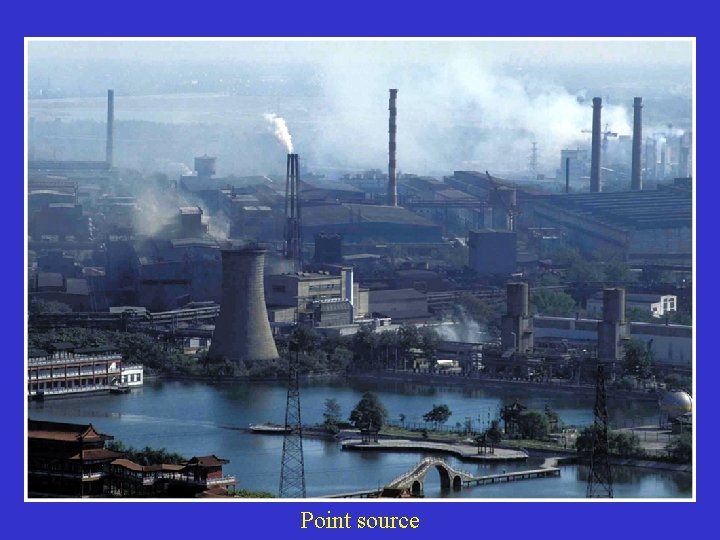
Point source
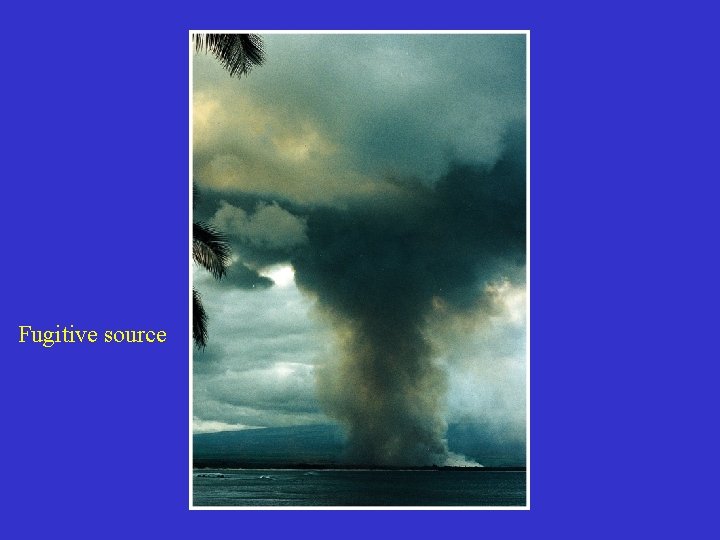
Fugitive source
Mobile Source of Air Pollution • Mobile source of air pollutants move from place to place while emitting pollutants. – Automobiles, trucks, buses, aircraft, ships, and trains.
General Effects of Air Pollution • Affects many aspects of our environment – Visual qualities – Vegetation – Animals – Soil – Water quality – Natural and artificial structures – Human health
General Effects of Air Pollution • Significant factor in human death rate for many large cities – Athens, Greece- # of deaths higher on bad air quality days – Hungary- 1 in 17 deaths contributed to air pollution – US- 300, 000 deaths/year, health cost $50 billion – China- health cost $50 - $100 billion
General Effects of Air Pollution • Affect human health in several ways – Toxic poisoning, cancer, birth defects, eye irritation, and irritation of respiratory system. – Increased susceptibility to viral infections. – Increased susceptibility to heart disease. – Aggravation of chronic diseases, such as asthma.
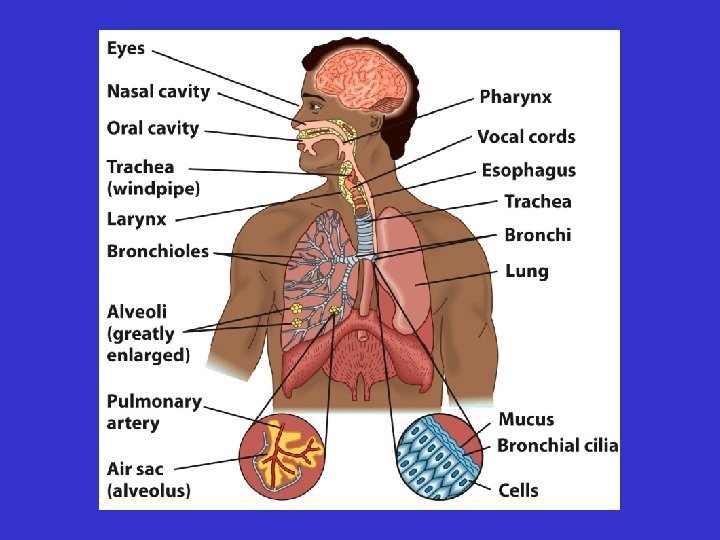
General Effects of Air Pollution • Many air pollutants have synergistic effects – Do greater damage to the lungs than a combination of the two pollutants would be expected to do based on their separate effects.
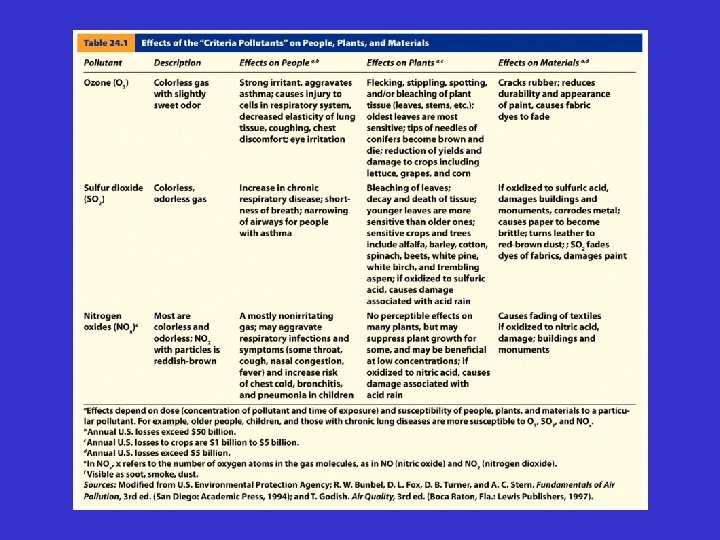
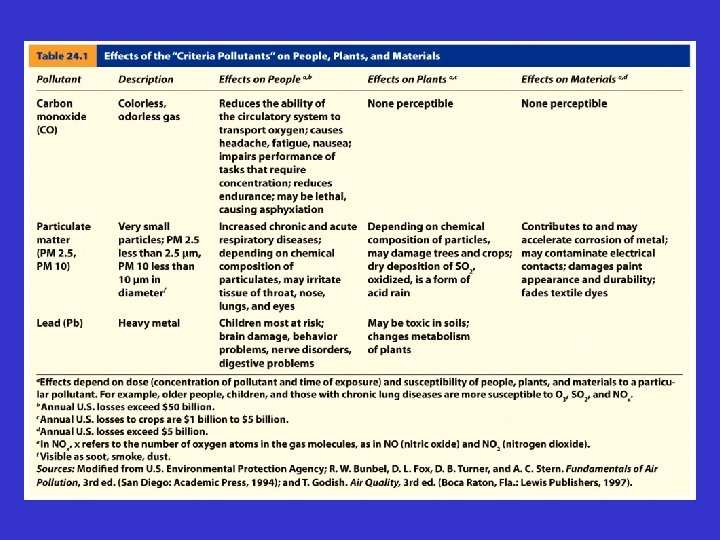
Air Pollutants • 200 air pollutants recognized and assessed by US EP and listed in Clean Water Act – Six called critical pollutants
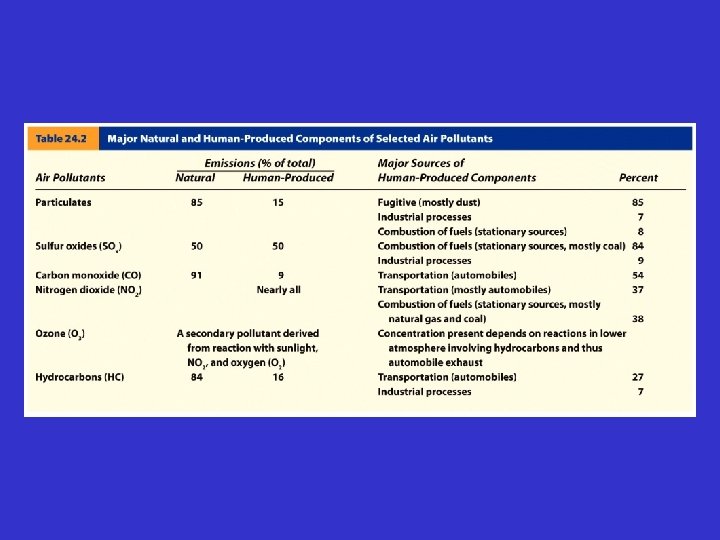
Primary and Secondary Pollutants • Major air pollutants occur either in gaseous forms or as particulate matter. • Classified as primary or secondary – Primary pollutants- emitted directly into the air – Secondary pollutants- produced through reactions between primary pollutants and normal atmospheric compounds.
Primary and Secondary Pollutants • In addition to human sources, our atmosphere contains many pollutants of natural origin. – Release of sulfur dioxide from volcanic eruptions. – Release of hydrogen sulfide from geysers and hot springs and from biological decay in bogs and marshes. – Release of ozone in the lower atmosphere as a result of unstable meteorological conditions. – Emission of a variety of particles from wildfires and – windstorms. – Natural hydrocarbon seeps.
Criteria Pollutants • There are six criteria pollutants – Sulfur dioxide – Nitrogen oxides – Carbon monoxide – Ozone – Particulates – Lead
Sulfur Dioxide • SO 2 – Colorless odorless gas – Once emitted can be converted to sulfate. SO 4 – Removed from atmosphere by wet or dry deposition – Major human sources; coal power plants, industrial processes
Sulfur Dioxide • Adverse effects depend on dose and concentration present – Injury or death to animals and plants – Corrosion of paint and metals – Important precursor to acid rain
Nitrogen Oxides • Occur in many forms in the atmosphere but largely emitted in two forms: – Nitric oxide- NO – Nitrogen dioxide- NO 2 • A yellow-brown to reddish-brown gas • May be converted to NO 32 - – Both subject to emissions regulation and contribute to smog – NO 2 major contributor to acid rain
Nitrogen Oxides • Nearly all NO 2 emitted from human sources – Automobiles and power plants that burn fossil fuels • Environmental effects – Irritate eyes and mucous membranes – Suppress plant growth • However when convert to nitrate may promote plant growth
Carbon Monoxide • CO is a colorless, odorless gas – Even at low concentrations is extremely toxic to humans • Binds to hemoglobin in blood. – 90% of CO in atmosphere comes from natural sources – 10% comes from fires, cars, and incomplete burning of organic compounds
Ozone and Other Photochemical Oxidants • Photochemical oxidants result from atmospheric interactions of nitrogen dioxide and sunlight. – Most common is ozone- O 3 – Colorless gas w/ slightly sweet odor – Very active chemically, oxidizes or burns • Beneficial in the upper atmosphere
Ozone and Other Photochemical Oxidants • Because ozone is a secondary pollutant it is difficult to regulate. – Health standards often exceeded in urban areas • Effects include – Kills leaf tissue at high concentration – Damage eyes and respiratory system – Even young, healthy people may have breathing difficulty on polluted days
Particulate Matter • PM 10 is made up of particles less than 10μm in diameter – Present everywhere but high concentrations and/or specific types dangerous – Much particulate matter easily visible as smoke, soot, or dust – Includes airborne asbestos and heavy metals
Particulate Matter • Of particular concern are very fine pollutants – PM 2. 5 - less than 2. 5 μm in diameter – Easily inhaled into the lungs, then absorbed into the bloodstream – Ultrafine particles- <0. 18 μm released by automobiles. • Related to heart disease
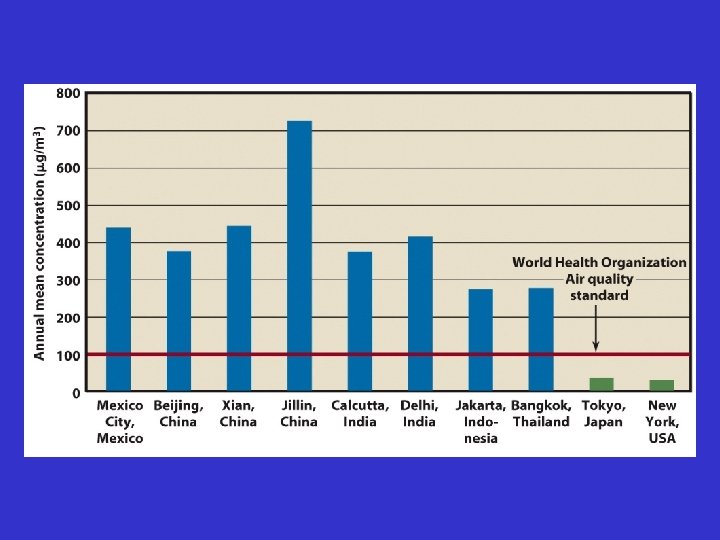
Particulate Matter • When measured often referred to as total suspended particles (TSPs) – Tend to be highest in large cities in developing countries
Particulate Matter • Recent studies estimate that 2 to 9% of human mortality in cites is associated w/ PM – Linked to both lung cancer and bronchitis – Especially hazardous to elderly and those w/ asthma • Dust can be deposited on plants – Interferes w/ absorption of CO 2 and transpiration
Particulate Matter • Block sunlight and may cause climate change. • Global dimming – Gradual reduction in the solar energy that reaches the surface of Earth – Cools the atmosphere – Lessens global warming
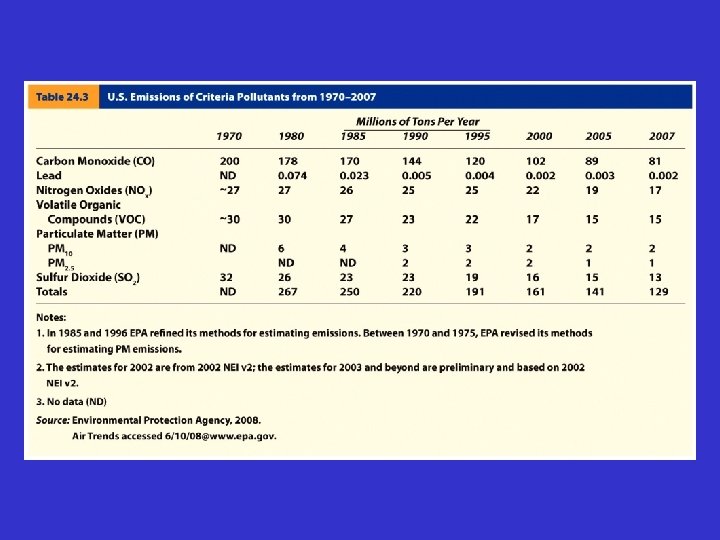
Lead • Lead is constituent of auto batteries and used to be added to gasoline. – Lead in gas emitted into air w/ exhaust – Spread widely around world in soils and water along roadways – Once in soil can enter the food chain – Lead now removed from gas in US, CAN, EU • 98% reduction in emissions since 1970 s
Air Toxics • Among pollutants that are known or suspected to cause cancer or other serious health problems. – Associated w/ long-term and short-term exposures – Gases, metals, and organic chemicals that are emitted in relatively small volumes – Cause respiratory, neurological, reproductive, or immune diseases
Air Toxics • Standards have been set for more than 150 air toxics – E. g. hydrogen sulfide, hydrogen fluoride, chlorine gases, benzene, methanol, ammonia – EPA estimates that the average risk for cancer from exposure to air toxics is about 1 in 21, 000
Hydrogen sulfide • Highly toxic corrosive gas easily identified by its rotten egg odor. • Produced from – Natural sources such as geysers, swamps, and bogs – Human sources such as industrial plants that produce petroleum or that smelt metals. • Effects of hydrogen sulfide include – Functional damage to plants – Health problems ranging from toxicity to death for humans and other animals.
Volatile Organic Compounds • Variety of organic compounds used as solvents in industrial processes – Dry cleaning, degreasing, and graphic arts. • Hydrocarbons – Comprise one group of VOCs. – Thousands of hydrocarbon compounds exist, including natural gas, or methane (CH 4); butane (C 4 H 10); and propane (C 3 H 8).
Potential for Urban Air Pollution • Determined by the following factors: – 1. The rate of emission of pollutants per unit area. – 2. The downwind distance that a mass of air moves through an urban area. – 3. The average speed of the wind. – 4. The elevation to which potential pollutants can be thoroughly mixed by naturally moving air in the lower atmosphere.
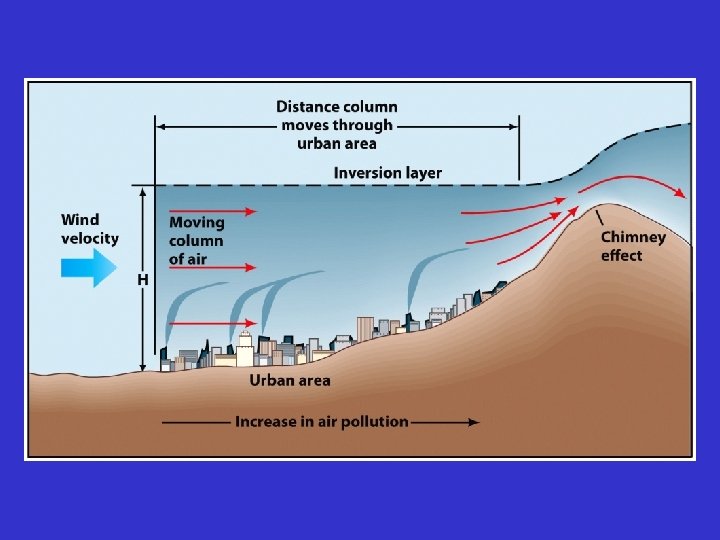
Potential for Urban Air Pollution • Concentration of pollutants in the air is directly proportional to the first two factors. – As either emission rate or down wind travel distance increase, so will the concentration of pollutants • City air pollution decreases w/ increases in third and forth factors. – The stronger the wind and the higher the mixing layer, the lower the pollution.
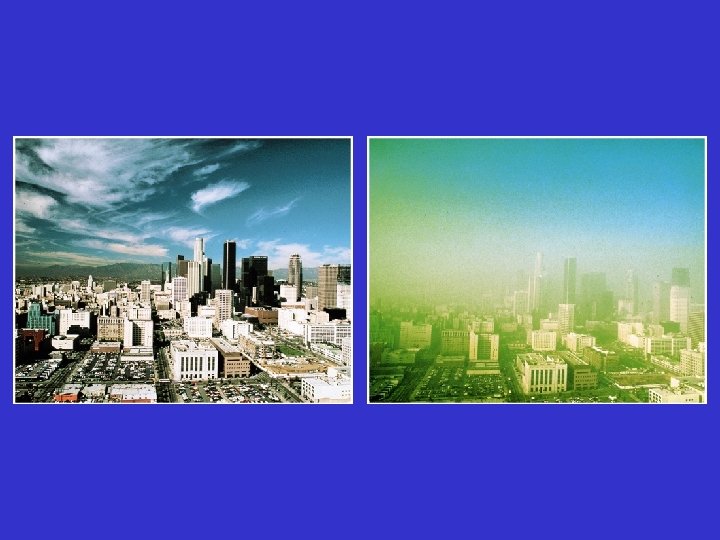
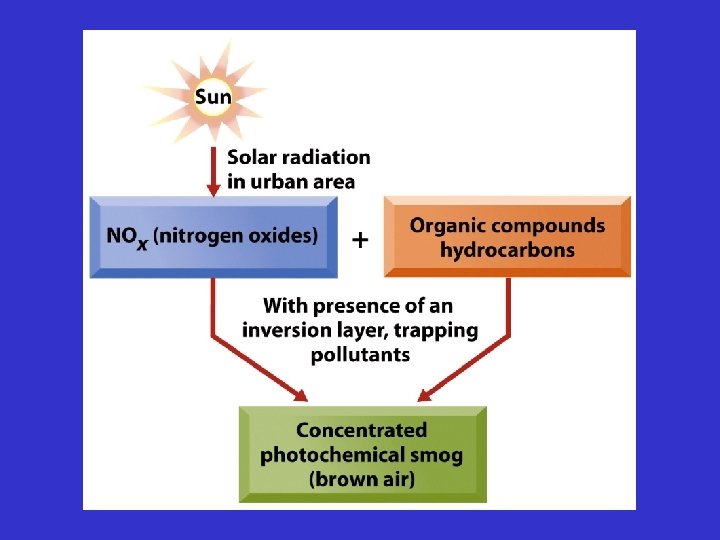
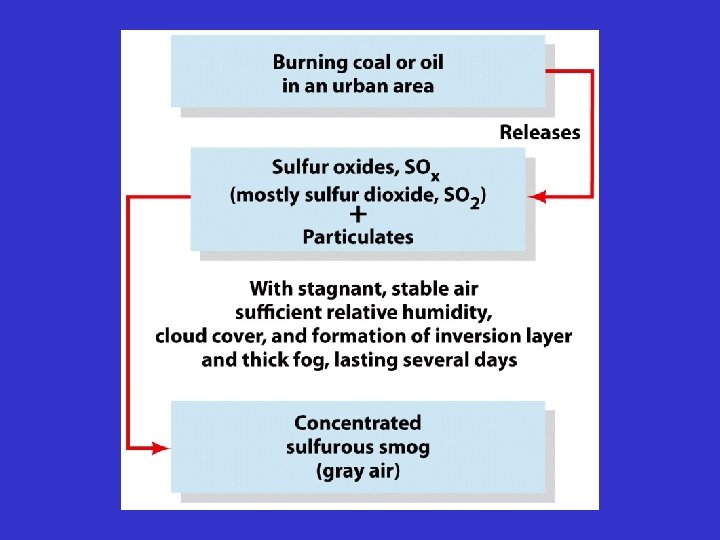
Smog • Term first used in 1905 as mixture of smoke and fog that produced unhealthy air. • Two major types – Photochemical smog (LA type smog or brown air) – Sulfurous smog (London type smog, gray air, or industrial smog)
Smog • Photochemical smog reaction involves sunlight, nitric oxides and VOCs – Directly related to automobile use • Sulfurous smog is produced by the burning of coal or oil at large power plants.
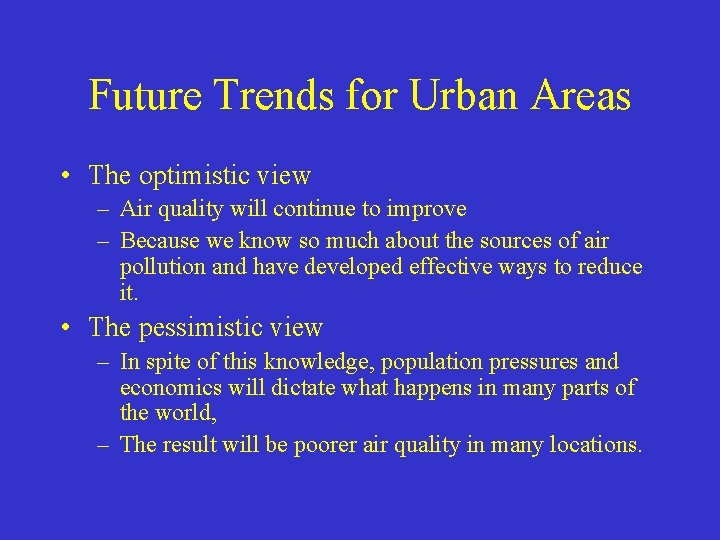
Future Trends for Urban Areas • The optimistic view – Air quality will continue to improve – Because we know so much about the sources of air pollution and have developed effective ways to reduce it. • The pessimistic view – In spite of this knowledge, population pressures and economics will dictate what happens in many parts of the world, – The result will be poorer air quality in many locations.
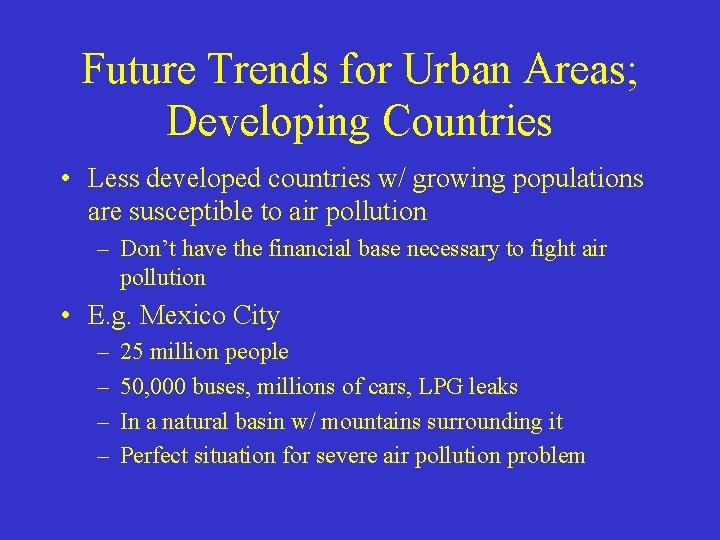
Future Trends for Urban Areas; Developing Countries • Less developed countries w/ growing populations are susceptible to air pollution – Don’t have the financial base necessary to fight air pollution • E. g. Mexico City – – 25 million people 50, 000 buses, millions of cars, LPG leaks In a natural basin w/ mountains surrounding it Perfect situation for severe air pollution problem
Future Trends for Urban Areas; Developing Countries • Attempts to reduce air pollution – Shutting down oil refinery – Ordering industrial plants to relocate • Air pollution however will continue to be a problem if unable to control vehicle use and LPG leaks.
Pollution Control • The most reasonable strategies for control have been to reduce, collect, capture, or retain the pollutants before they enter the atmosphere. – Reduction of emissions through energy efficiency and conservation measures is preferred.
Pollution Control: Automobiles • Control of pollutants such as carbon monoxide, nitrogen oxides, and hydrocarbons is best achieved through pollution control for automobiles. – Nitrogen oxides controlled by recirculating exhaust gas – CO and hydrocarbons reduced by catalytic converter
Pollution Control: Automobiles • Automobile emission regulations plan in US has not been effective – Pollutants may be low when car is new – But many people do not maintain them properly – Suggested that effluent fees replace emission controls – Other strategies reduce the number or type of cars
Pollution Control: Sulfur Dioxide • Cleaner coal technology available but makes fuel more expensive. • Switch to low-sulfur coal – But transportation is an issue • Washing it to remove sulfur – Iron sulfide settles out – Ineffective for removing organic sulfur • Coal gasification – Converts coal to gas in order to remove sulfur – Gas obtained is clean
Pollution Control: Sulfur Dioxide • Emissions from power plants can be reduced by removing the oxides from the gases in the stack – Occurs after coal is burned – Gases treated w/ a slurry of lime or limestone – Reacts to form calcium sulfite – Can then be process into building materials
Air Quality Index • AQI is used to describe air pollution on a given day. • AQI is determined from measurements of the concentration of five major pollutants: – Particulate matter, sulfur dioxide, carbon monoxide, ozone, and nitrogen dioxide.
Air Quality Index • An AQI value of greater than 100 is unhealthy. • Air pollution alert is issued if the AQI exceeds 200. • Air pollution warning is issued if the AQI exceeds 300, hazardous to all people. • If the AQI exceeds 400, an air pollution emergency is declared, and people are requested to remain indoors and minimize physical exertion.
Cost of Air Pollution Control • Cost for incremental control in fossil fuelburning may be a few hundred dollars per additional ton of particulates removed. • For aluminum plant, may be several thousand per ton. • Also, a point is reached at which the cost of incremental control is very high in relation to additions benefits.
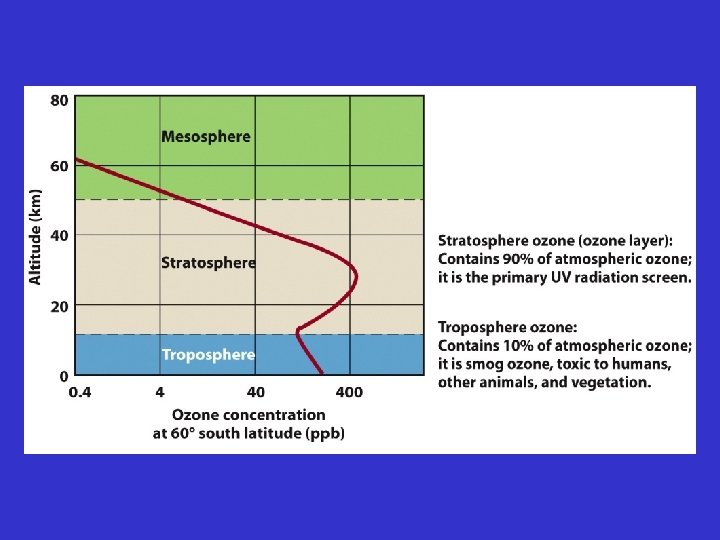
Ozone Depletion • Ozone (O 3) – Triatomic form of oxygen in which three atoms of oxygen are bonded. – Strong oxidant and chemically reacts with many materials in the atmosphere. – In the lower atmosphere, ozone is a pollutant. – Highest concentration of ozone in the stratosphere
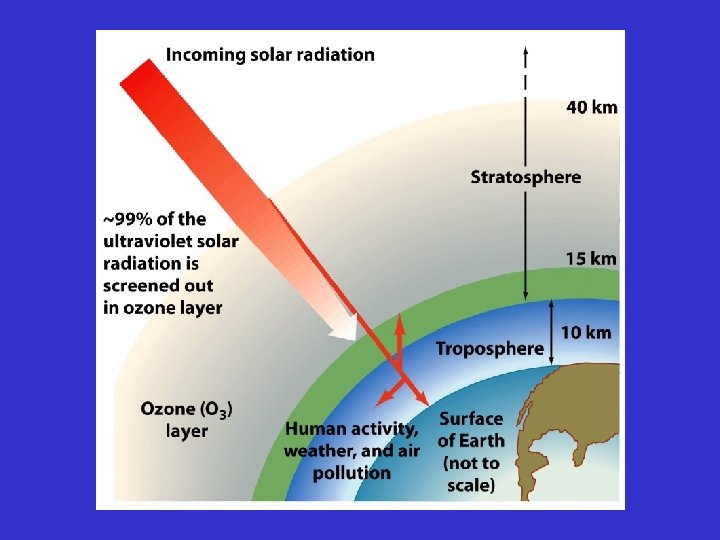
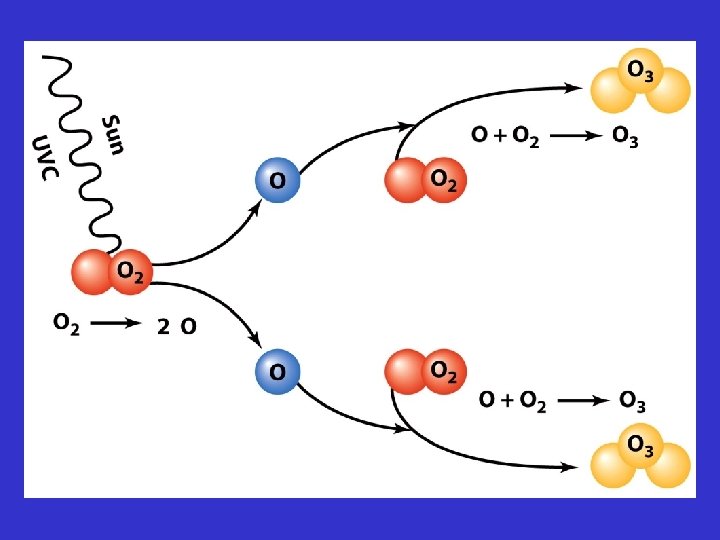
Ultraviolet Radiation and Ozone • Approximately 99% of all ultraviolet solar radiation (all UVC and most UVB) is absorbed by the ozone layer. – Natural service function – Protects us from the potentially harmful effects of ultraviolet radiation.
Ozone Depletion and CFCs • Hypothesis that ozone in the stratosphere is being depleted by CFCs – First suggested in 1974 by Molina and Rowland. – Based on physical and chemical properties of CFCs and knowledge about atmospheric conditions. – Vigorously debated by scientists, companies producing CFCs, and other interested parties.
Ozone Depletion and CFCs • The major features of the hypothesis: – CFCs emitted in the lower atmosphere are extremely stable. Unreactive in the and therefore have a very long residence time (about 100 years). – CFCs eventually wander upward and enter the stratosphere. – Once above the stratospheric ozone, they may be destroyed by UV radiation, releasing chlorine, a highly reactive atom.
Ozone Depletion and CFCs – The chlorine released then depletes the ozone. – Depletion increases the amount of UVB radiation that reaches Earth’s surface. – UVB is a cause of human skin cancers and is also thought to be harmful to the human immune system.
The Antarctic Ozone Hole • Since 1958 ozone depletion has been observed in the Antarctic every Oct. – Thickness decreasing and geographic area increasing
Environmental Effects • Several serious potential environmental effects – Damage to food chain on land in oceans (loss of primary production ) – Damage to human health (skin cancers, cataracts, and suppression of immune system) • UV Index measure of UV radiation on a given day
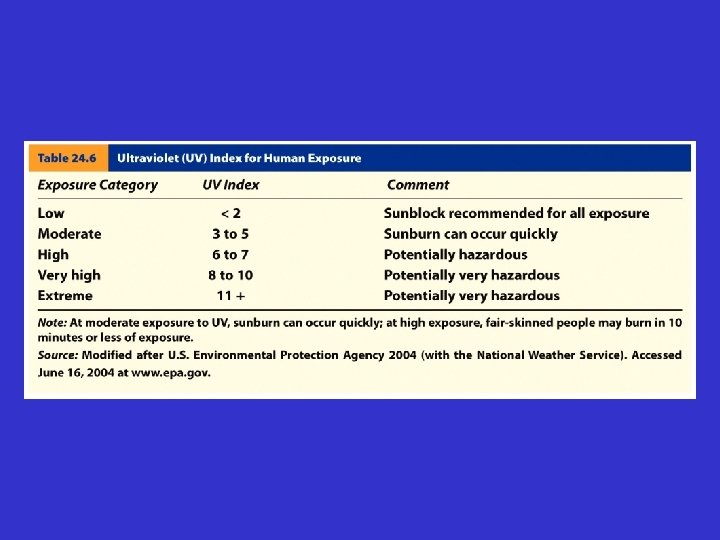
Environmental Effects • Reduce the risk of skin cancer and other skin damage from UV exposure by: – Limit exposure to the sun between the hours of 10 A. M. and 4 P. M. – When possible, remain in the shade. – Use a sunscreen with an SPF of at least 30. – Wear a wide-brimmed hat and, where possible, tightly woven full-length clothing. – Wear UV-protective sunglasses. – Avoid tanning salons and sun lamps. – Consult the UV Index before going out
Management Issues • The Montreal Protocol – Outlined a plan for the eventual reduction of global emissions of CFCs to 50% of 1986 emissions – Elimination of the production of CFCs by 1999 – Assessment of the protocol suggest that CFCs will return to pre-1980 levels by 2050
Management Issues • Substitutes for CFCs – hydrofluorocarbons (HFCs) and • Do not contain chlorine. However, fluorine atoms participate in reactions similar to those of chlorine but approximately 1, 000 times less efficient in those reactions – hydrochlorofluorocarbons (HCFCs). • Contain an atom of hydrogen in place of a chlorine atom. Can be broken down in the lower atmosphere. However, cause ozone depletion if they do reach the stratosphere before being broken down.
Management Issues • Short-term Adaptation to Ozone Depletion – Given the nature of problem and the atmospheric lifetimes of the chemicals that produce the depletion – people will be learning to live with higher levels of exposure to ultraviolet radiation. • In the long term, achievement of sustainability w/ respect to stratospheric ozone will require management of human-produced ozone-depleting chemicals.
- Slides: 72