
Chapter 24 Adults Severe and persistent mental illness
- Slides: 13
Chapter 24 Adults
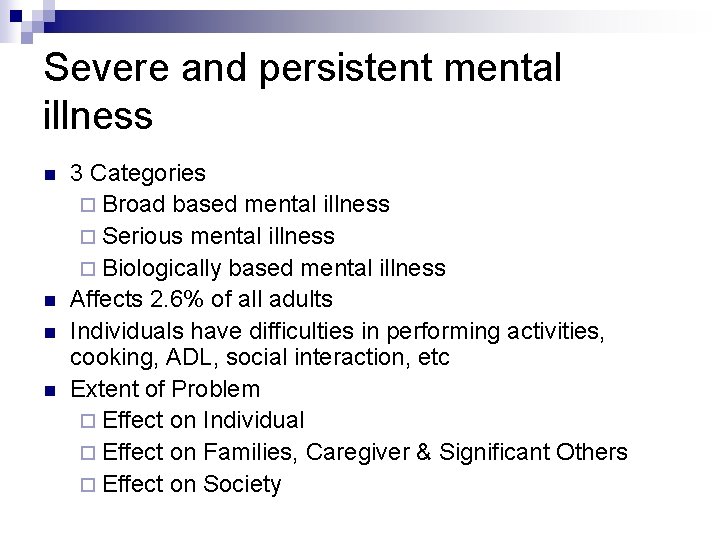
Severe and persistent mental illness n n 3 Categories ¨ Broad based mental illness ¨ Serious mental illness ¨ Biologically based mental illness Affects 2. 6% of all adults Individuals have difficulties in performing activities, cooking, ADL, social interaction, etc Extent of Problem ¨ Effect on Individual ¨ Effect on Families, Caregiver & Significant Others ¨ Effect on Society
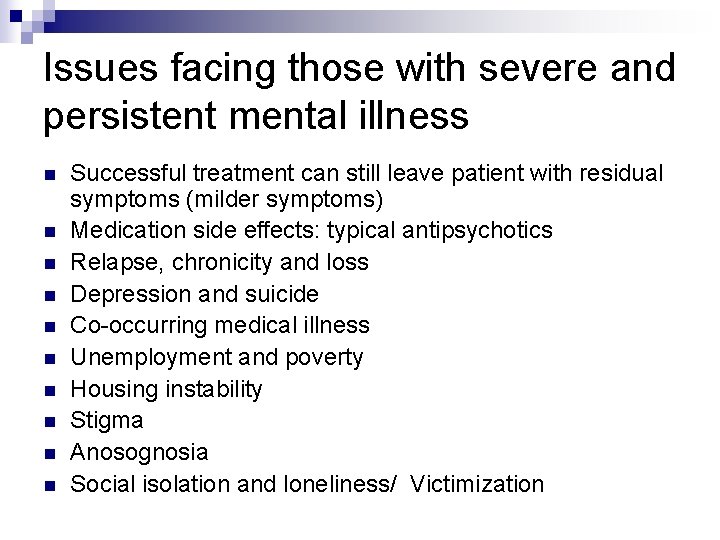
Issues facing those with severe and persistent mental illness n n n n n Successful treatment can still leave patient with residual symptoms (milder symptoms) Medication side effects: typical antipsychotics Relapse, chronicity and loss Depression and suicide Co-occurring medical illness Unemployment and poverty Housing instability Stigma Anosognosia Social isolation and loneliness/ Victimization
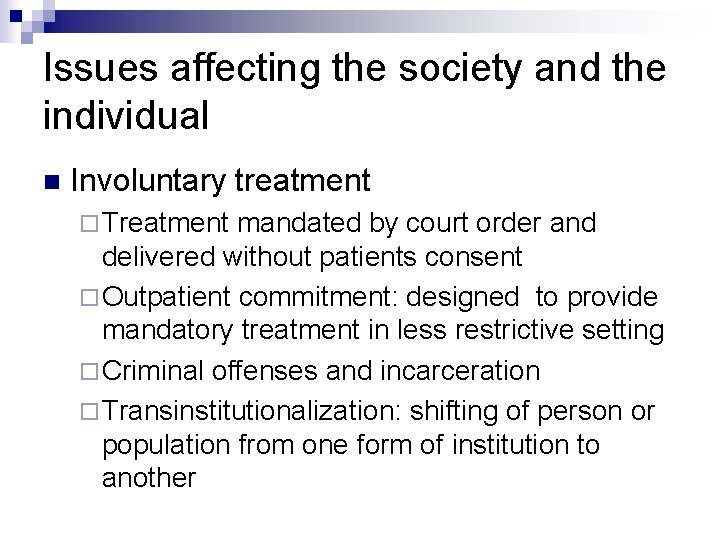
Issues affecting the society and the individual n Involuntary treatment ¨ Treatment mandated by court order and delivered without patients consent ¨ Outpatient commitment: designed to provide mandatory treatment in less restrictive setting ¨ Criminal offenses and incarceration ¨ Transinstitutionalization: shifting of person or population from one form of institution to another
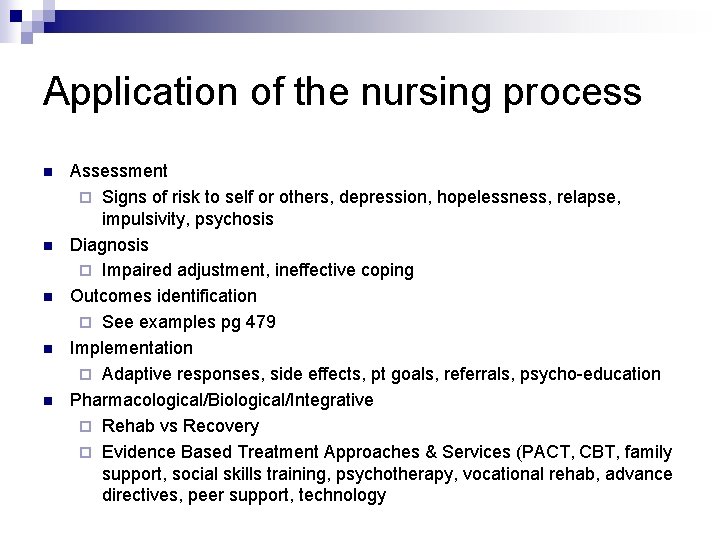
Application of the nursing process n n n Assessment ¨ Signs of risk to self or others, depression, hopelessness, relapse, impulsivity, psychosis Diagnosis ¨ Impaired adjustment, ineffective coping Outcomes identification ¨ See examples pg 479 Implementation ¨ Adaptive responses, side effects, pt goals, referrals, psycho-education Pharmacological/Biological/Integrative ¨ Rehab vs Recovery ¨ Evidence Based Treatment Approaches & Services (PACT, CBT, family support, social skills training, psychotherapy, vocational rehab, advance directives, peer support, technology
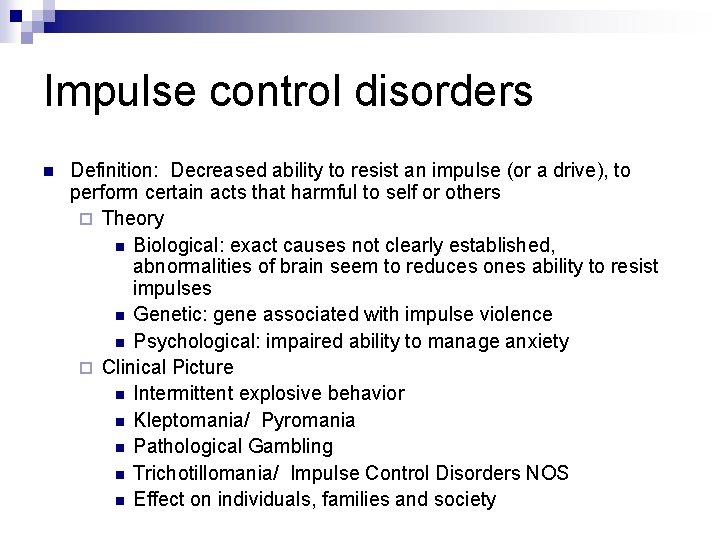
Impulse control disorders n Definition: Decreased ability to resist an impulse (or a drive), to perform certain acts that harmful to self or others ¨ Theory n Biological: exact causes not clearly established, abnormalities of brain seem to reduces ones ability to resist impulses n Genetic: gene associated with impulse violence n Psychological: impaired ability to manage anxiety ¨ Clinical Picture n Intermittent explosive behavior n Kleptomania/ Pyromania n Pathological Gambling n Trichotillomania/ Impulse Control Disorders NOS n Effect on individuals, families and society
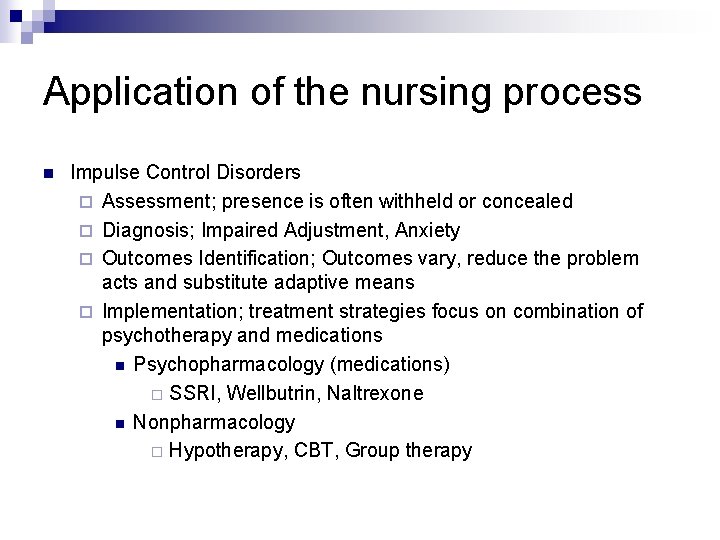
Application of the nursing process n Impulse Control Disorders ¨ Assessment; presence is often withheld or concealed ¨ Diagnosis; Impaired Adjustment, Anxiety ¨ Outcomes Identification; Outcomes vary, reduce the problem acts and substitute adaptive means ¨ Implementation; treatment strategies focus on combination of psychotherapy and medications n Psychopharmacology (medications) ¨ SSRI, Wellbutrin, Naltrexone n Nonpharmacology ¨ Hypotherapy, CBT, Group therapy
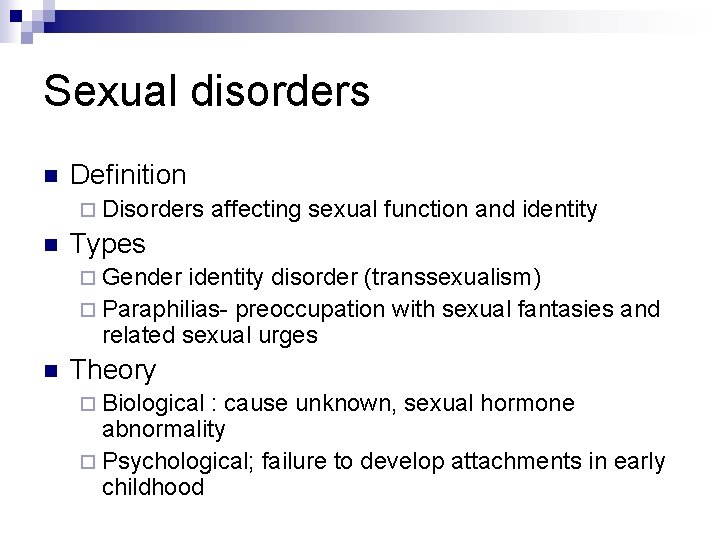
Sexual disorders n Definition ¨ Disorders n affecting sexual function and identity Types ¨ Gender identity disorder (transsexualism) ¨ Paraphilias- preoccupation with sexual fantasies and related sexual urges n Theory ¨ Biological : cause unknown, sexual hormone abnormality ¨ Psychological; failure to develop attachments in early childhood
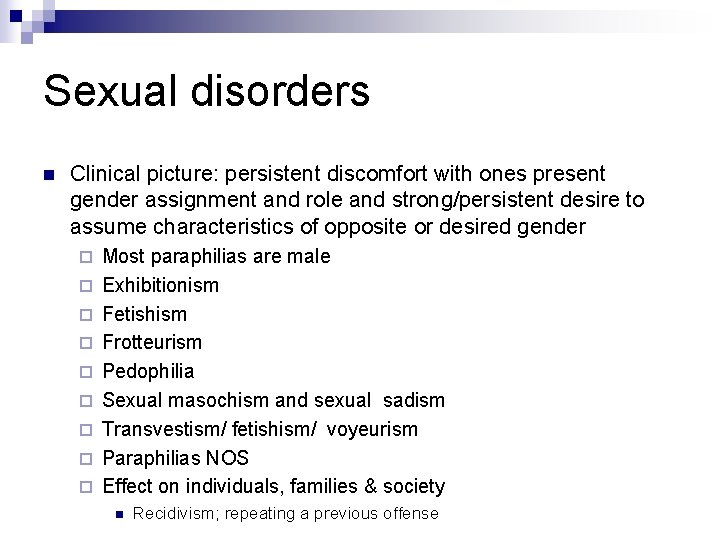
Sexual disorders n Clinical picture: persistent discomfort with ones present gender assignment and role and strong/persistent desire to assume characteristics of opposite or desired gender ¨ ¨ ¨ ¨ ¨ Most paraphilias are male Exhibitionism Fetishism Frotteurism Pedophilia Sexual masochism and sexual sadism Transvestism/ fetishism/ voyeurism Paraphilias NOS Effect on individuals, families & society n Recidivism; repeating a previous offense
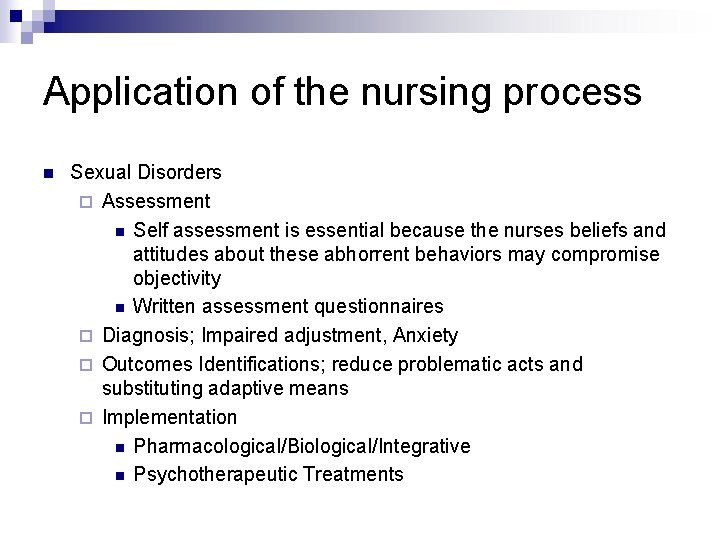
Application of the nursing process n Sexual Disorders ¨ Assessment n Self assessment is essential because the nurses beliefs and attitudes about these abhorrent behaviors may compromise objectivity n Written assessment questionnaires ¨ Diagnosis; Impaired adjustment, Anxiety ¨ Outcomes Identifications; reduce problematic acts and substituting adaptive means ¨ Implementation n Pharmacological/Biological/Integrative n Psychotherapeutic Treatments
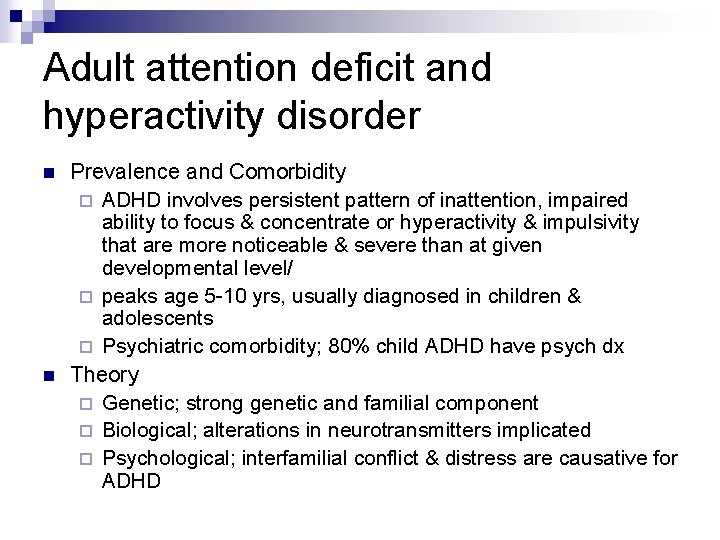
Adult attention deficit and hyperactivity disorder n n Prevalence and Comorbidity ¨ ADHD involves persistent pattern of inattention, impaired ability to focus & concentrate or hyperactivity & impulsivity that are more noticeable & severe than at given developmental level/ ¨ peaks age 5 -10 yrs, usually diagnosed in children & adolescents ¨ Psychiatric comorbidity; 80% child ADHD have psych dx Theory ¨ Genetic; strong genetic and familial component ¨ Biological; alterations in neurotransmitters implicated ¨ Psychological; interfamilial conflict & distress are causative for ADHD
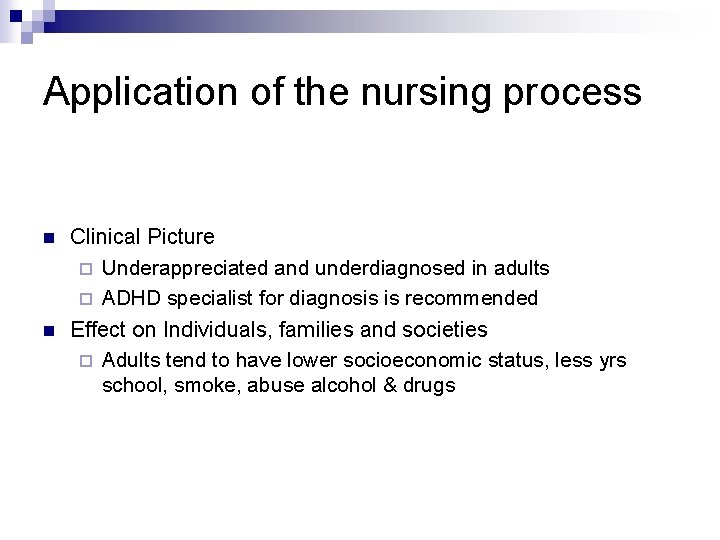
Application of the nursing process n n Clinical Picture ¨ Underappreciated and underdiagnosed in adults ¨ ADHD specialist for diagnosis is recommended Effect on Individuals, families and societies ¨ Adults tend to have lower socioeconomic status, less yrs school, smoke, abuse alcohol & drugs
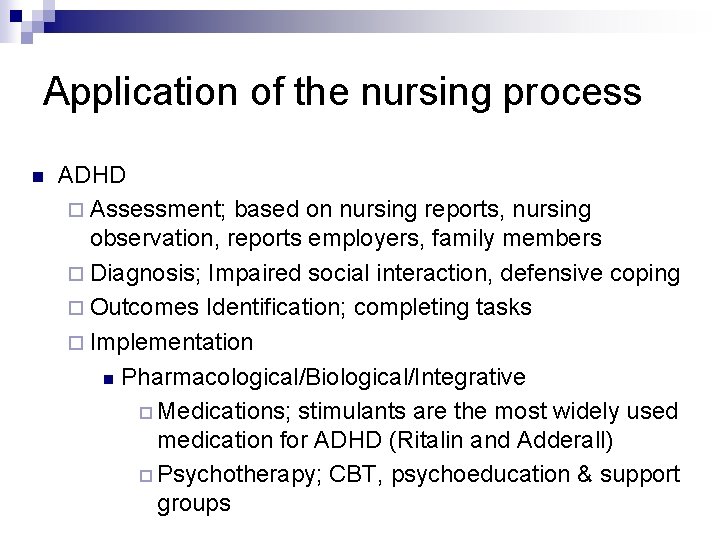
Application of the nursing process n ADHD ¨ Assessment; based on nursing reports, nursing observation, reports employers, family members ¨ Diagnosis; Impaired social interaction, defensive coping ¨ Outcomes Identification; completing tasks ¨ Implementation n Pharmacological/Biological/Integrative ¨ Medications; stimulants are the most widely used medication for ADHD (Ritalin and Adderall) ¨ Psychotherapy; CBT, psychoeducation & support groups