
Chapter 23 The Fungi 2 Outline Characteristics Structure
- Slides: 32
Chapter 23 The Fungi
2 Outline Characteristics Structure Reproduction Evolution Sac Fungi Yeasts Club Fungi Smuts and Rusts Imperfect Fungi Symbiotic Relationships
3 Characteristics of the Fungi Kingdom Fungi contains 80, 000 spp Mostly multicellular eukaryotes that share a common mode of nutrition Heterotrophic Cells release digestive enzymes and then absorb resultant nutrient molecules Some are parasitic Several have mutualistic relationship
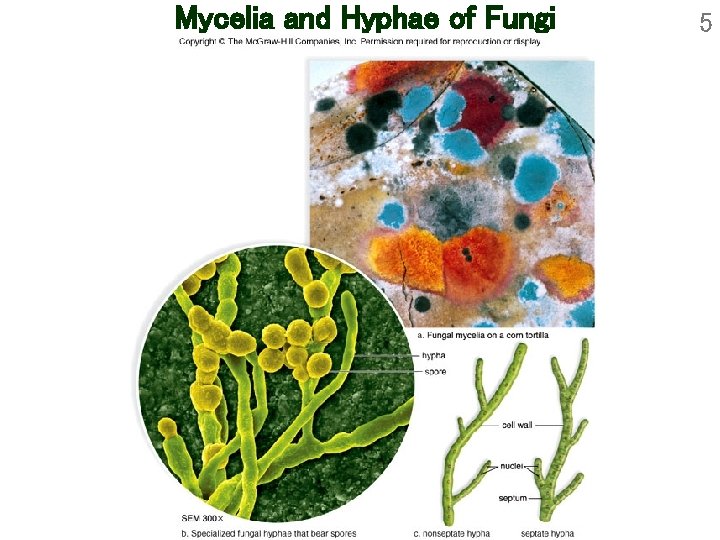
4 Structure of Fungi Body (thallus) of most fungi is multicellular mycelium (yeasts are unicellular) Consists of a vast network of thread-like hyphae Septate fungi have hyphae with cross walls Nonseptate fungi are multinucleated Hyphae grow from tip Give the mycelium a large surface area per unit volume Cell walls of chitin, like insect exoskeleton Excess food stored as glycogen as in animals Possibly evolved from red algae - both lack flagella
Mycelia and Hyphae of Fungi 5
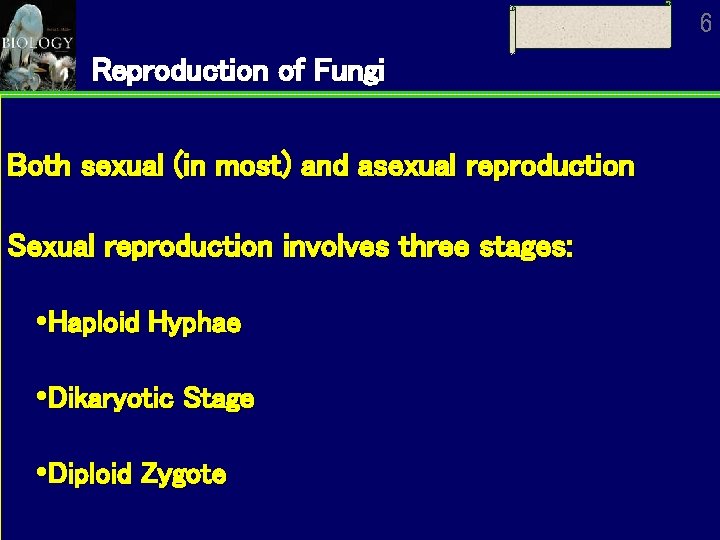
6 Reproduction of Fungi Both sexual (in most) and asexual reproduction Sexual reproduction involves three stages: Haploid Hyphae Dikaryotic Stage Diploid Zygote
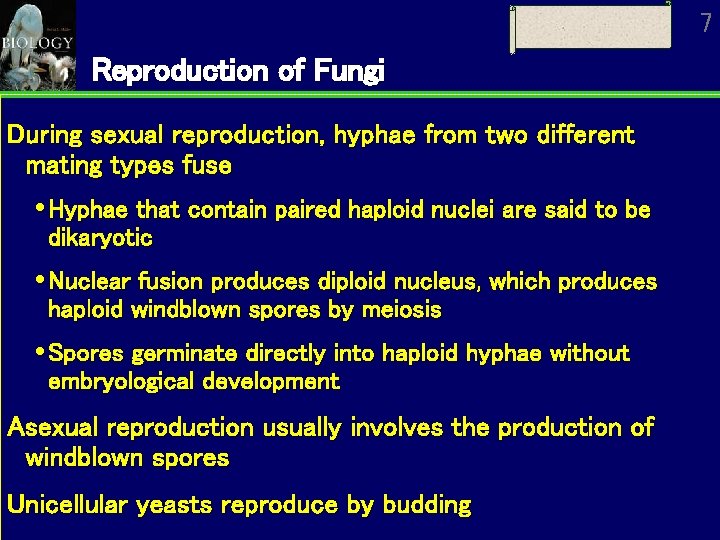
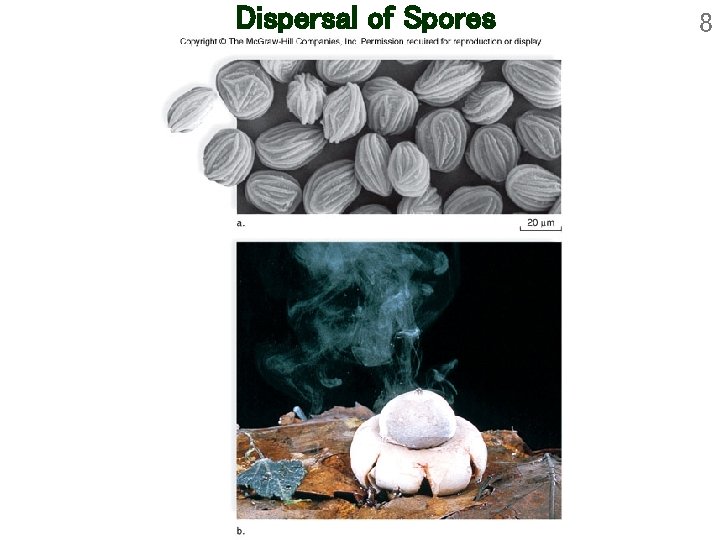
7 Reproduction of Fungi During sexual reproduction, hyphae from two different mating types fuse Hyphae that contain paired haploid nuclei are said to be dikaryotic Nuclear fusion produces diploid nucleus, which produces haploid windblown spores by meiosis Spores germinate directly into haploid hyphae without embryological development Asexual reproduction usually involves the production of windblown spores Unicellular yeasts reproduce by budding
Dispersal of Spores 8
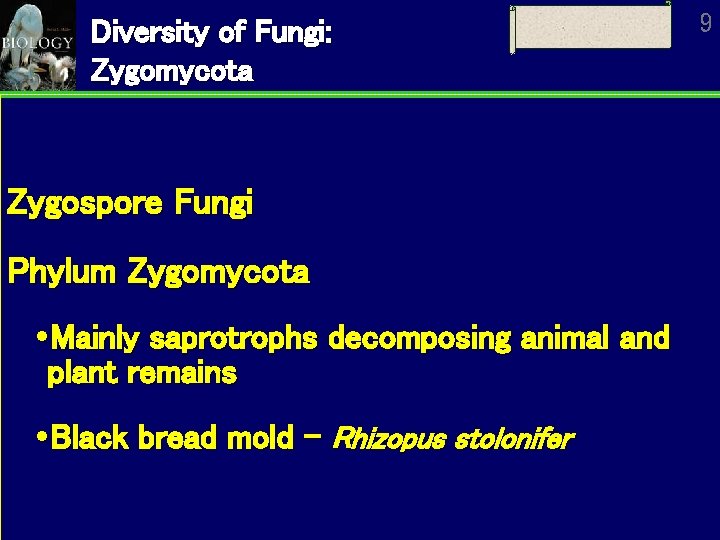
Diversity of Fungi: Zygomycota Zygospore Fungi Phylum Zygomycota Mainly saprotrophs decomposing animal and plant remains Black bread mold - Rhizopus stolonifer 9
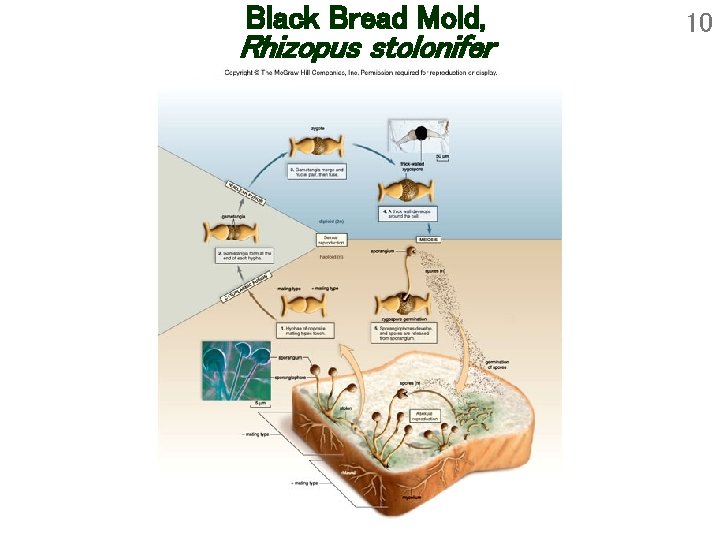
Black Bread Mold, Rhizopus stolonifer 10
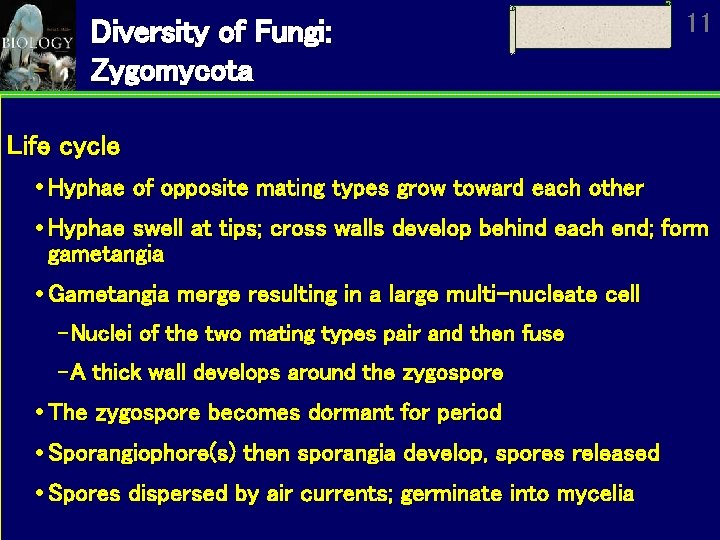
Diversity of Fungi: Zygomycota 11 Life cycle Hyphae of opposite mating types grow toward each other Hyphae swell at tips; cross walls develop behind each end; form gametangia Gametangia merge resulting in a large multi-nucleate cell Nuclei of the two mating types pair and then fuse A thick wall develops around the zygospore The zygospore becomes dormant for period Sporangiophore(s) then sporangia develop, spores released Spores dispersed by air currents; germinate into mycelia
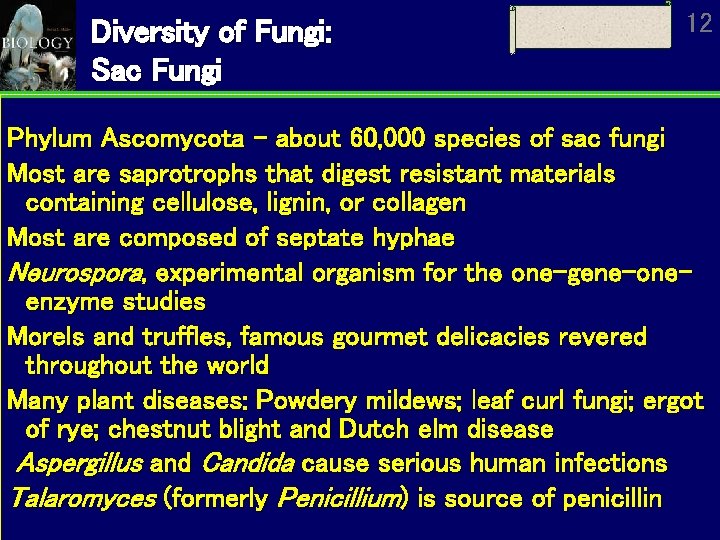
Diversity of Fungi: Sac Fungi 12 Phylum Ascomycota - about 60, 000 species of sac fungi Most are saprotrophs that digest resistant materials containing cellulose, lignin, or collagen Most are composed of septate hyphae Neurospora, experimental organism for the one-gene-oneenzyme studies Morels and truffles, famous gourmet delicacies revered throughout the world Many plant diseases: Powdery mildews; leaf curl fungi; ergot of rye; chestnut blight and Dutch elm disease Aspergillus and Candida cause serious human infections Talaromyces (formerly Penicillium) is source of penicillin
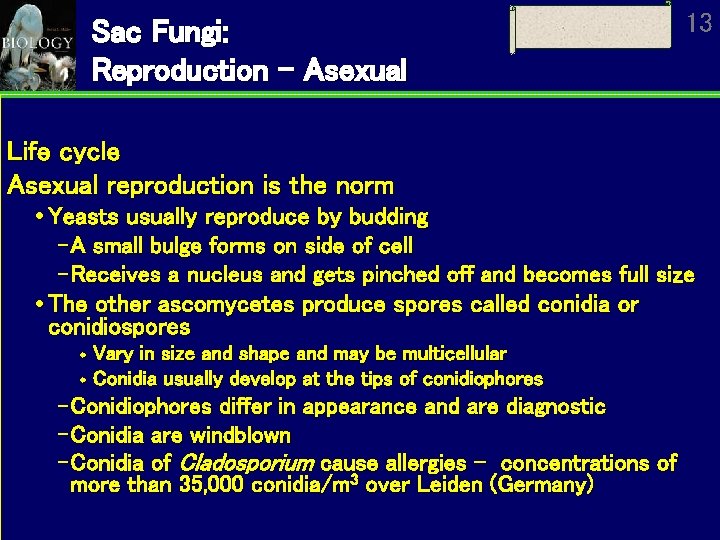
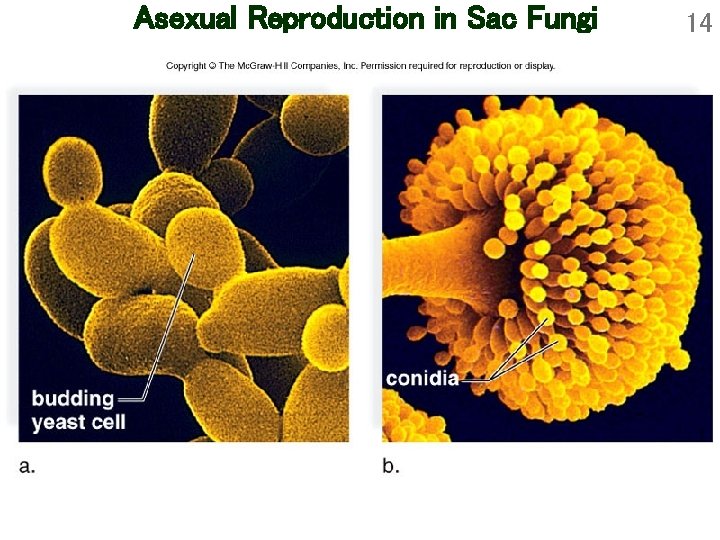
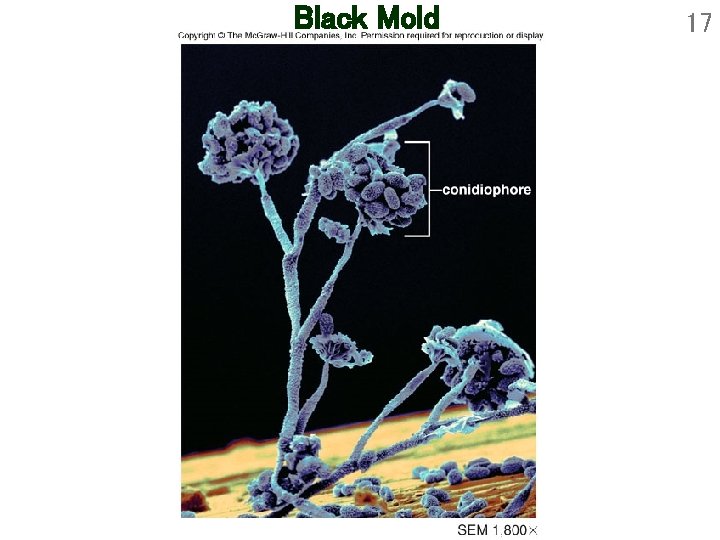
Sac Fungi: Reproduction - Asexual 13 Life cycle Asexual reproduction is the norm Yeasts usually reproduce by budding A small bulge forms on side of cell Receives a nucleus and gets pinched off and becomes full size The other ascomycetes produce spores called conidia or conidiospores Vary in size and shape and may be multicellular w Conidia usually develop at the tips of conidiophores w Conidiophores differ in appearance and are diagnostic Conidia are windblown Conidia of Cladosporium cause allergies - concentrations of more than 35, 000 conidia/m 3 over Leiden (Germany)
Asexual Reproduction in Sac Fungi 14
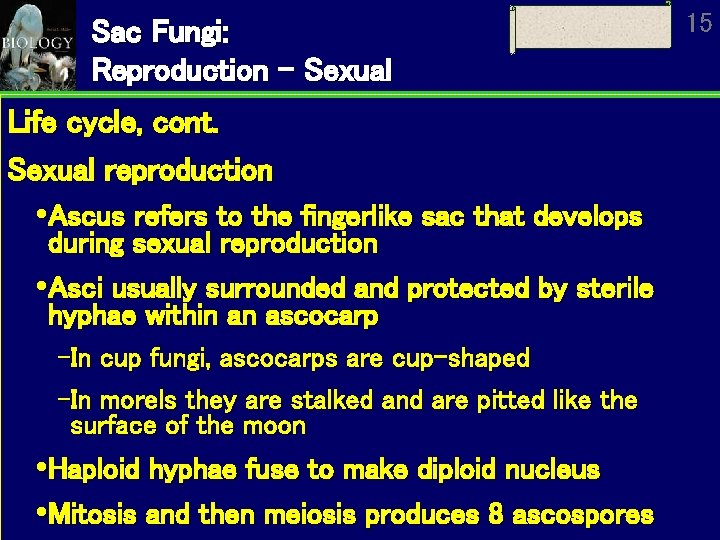
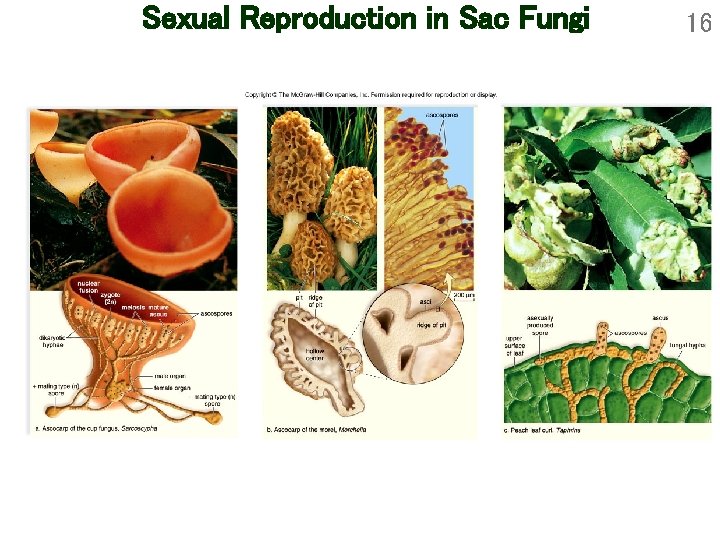
Sac Fungi: Reproduction - Sexual Life cycle, cont. Sexual reproduction Ascus refers to the fingerlike sac that develops during sexual reproduction Asci usually surrounded and protected by sterile hyphae within an ascocarp In cup fungi, ascocarps are cup-shaped In morels they are stalked and are pitted like the surface of the moon Haploid hyphae fuse to make diploid nucleus Mitosis and then meiosis produces 8 ascospores 15
Sexual Reproduction in Sac Fungi 16
Black Mold 17
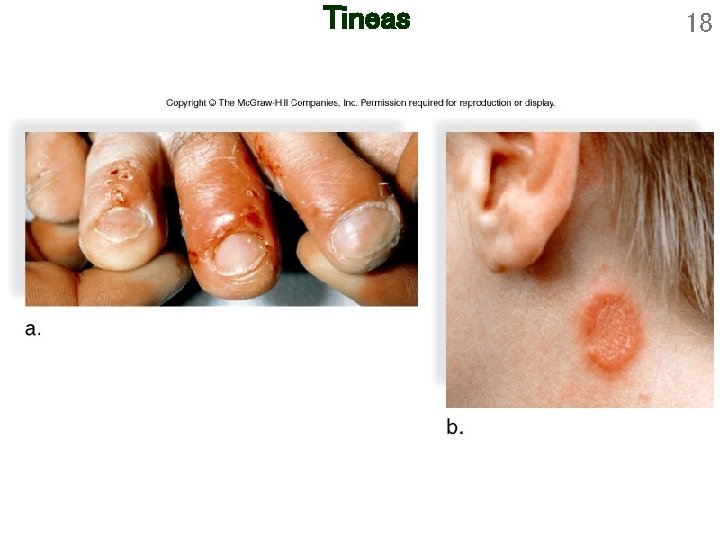
Tineas 18
Sac Fungi: Reproduction - Yeasts 19 Term “yeasts” is loosely applied to unicellular fungi, many of which are ascomycetes Budding is common form of asexual reproduction Sexual reproduction results in the formation of asci and ascospores When some yeasts ferment, they produce ethanol and carbon dioxide
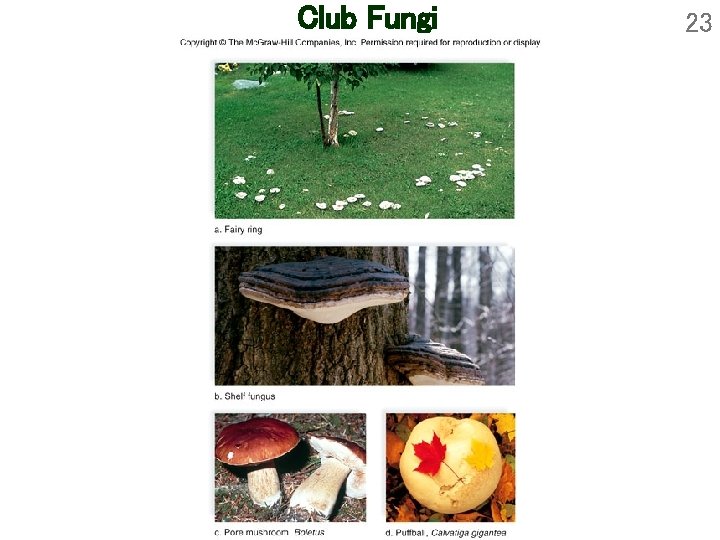
Diversity of Fungi: The Club Fungi Phylum Basidomycota – 22, 000 spp Familiar toadstools, mushrooms, bracket fungi, puffballs, stinkhorns – some deadly poisonous Also plant diseases such as the smuts and rusts Mycelium composed of septate hyphae 20
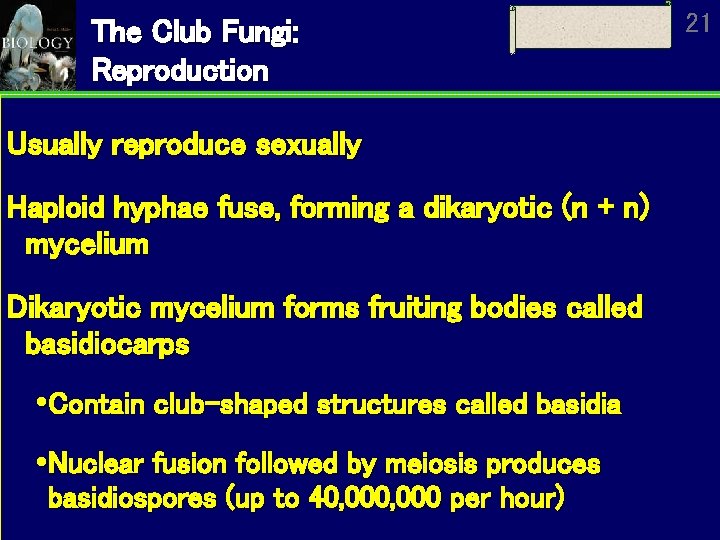
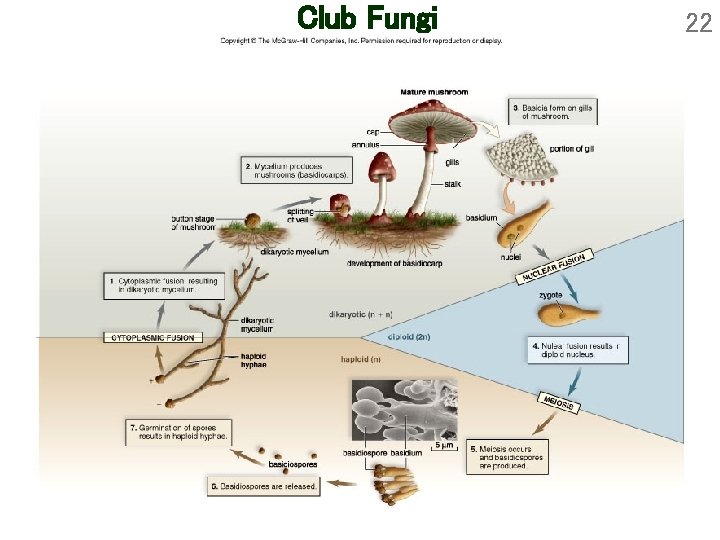
The Club Fungi: Reproduction Usually reproduce sexually Haploid hyphae fuse, forming a dikaryotic (n + n) mycelium Dikaryotic mycelium forms fruiting bodies called basidiocarps Contain club-shaped structures called basidia Nuclear fusion followed by meiosis produces basidiospores (up to 40, 000 per hour) 21
Club Fungi 22
Club Fungi 23
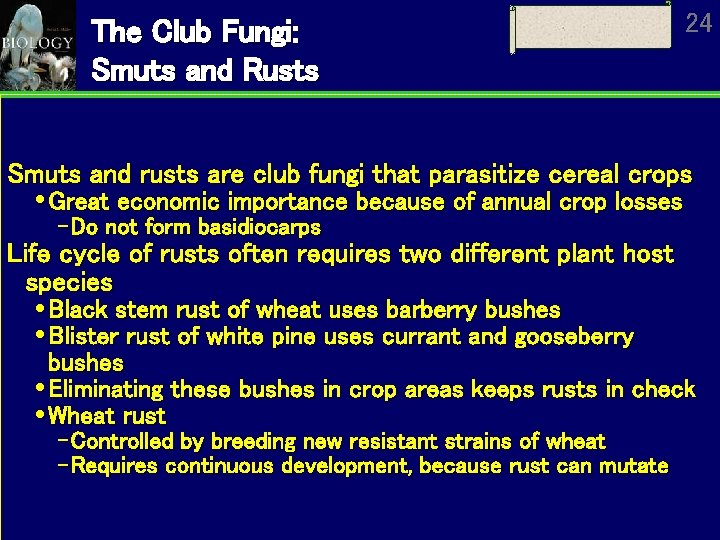
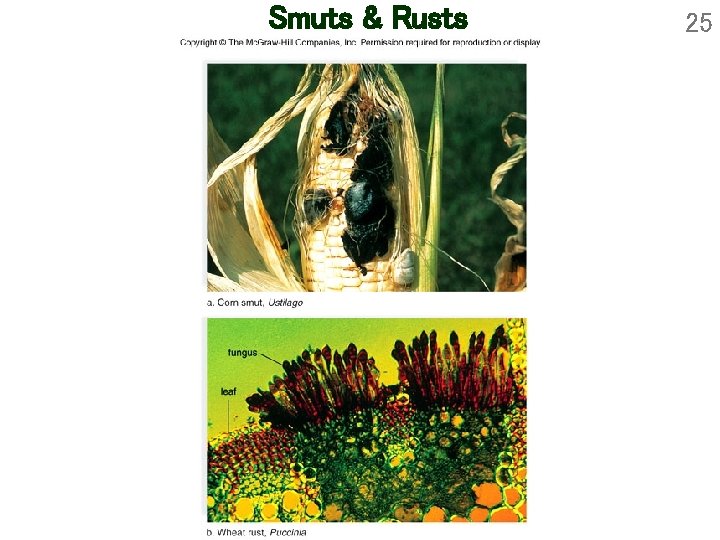
The Club Fungi: Smuts and Rusts 24 Smuts and rusts are club fungi that parasitize cereal crops Great economic importance because of annual crop losses Do not form basidiocarps Life cycle of rusts often requires two different plant host species Black stem rust of wheat uses barberry bushes Blister rust of white pine uses currant and gooseberry bushes Eliminating these bushes in crop areas keeps rusts in check Wheat rust Controlled by breeding new resistant strains of wheat Requires continuous development, because rust can mutate
Smuts & Rusts 25
Symbiotic Relationships: Lichens 26 Symbiotic association between a fungus and a cyanobacterium or green alga Specialized fungal hyphae penetrate photosynthetic symbiont Transfer nutrients directly to the fungus Possibly mutualistic, but fungal symbiont probably a parasite of photosynthetic symbiont Photosynthetic symbiont independent Fungal symbiont usually can’t grow alone
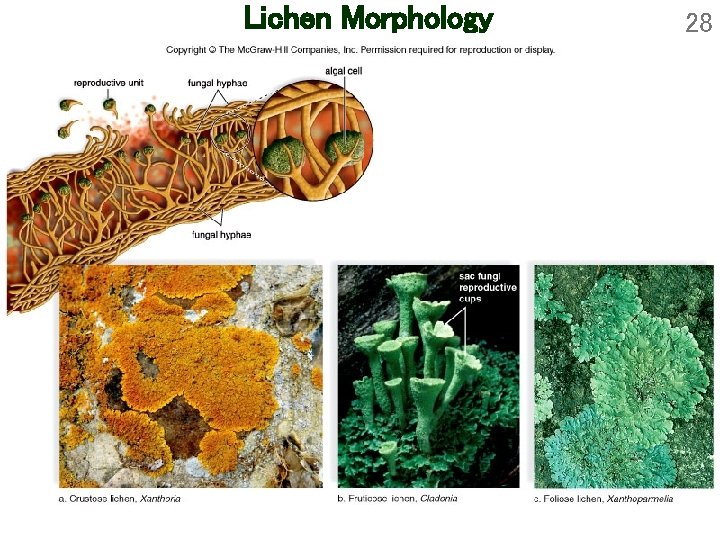
Symbiotic Relationships: Lichens Three morphological types Compact crustose lichens - seen on bare rocks or on tree bark Fruticose lichens – shrub-like Foliose lichens - leaf-like Can live in areas of extreme conditions and contribute to soil formation Sensitive indicators of air pollution 27
Lichen Morphology 28
Symbiotic Relationships: Mycorrhizae 29 Mutualistic relationships between soil fungi and the roots of most familiar plants Give plant greater absorptive surface Help plants acquire mineral nutrients in poor soil Fungal symbiont usually a sac fungus Hyphae may enter cortex of root, but not cytoplasm Ectomycorrhizae form a mantle that is exterior to the root, and they grow between cell walls. Endomycorrhizae penetrate only the cell walls Earliest fossil plants have mycorrhizae associated with them
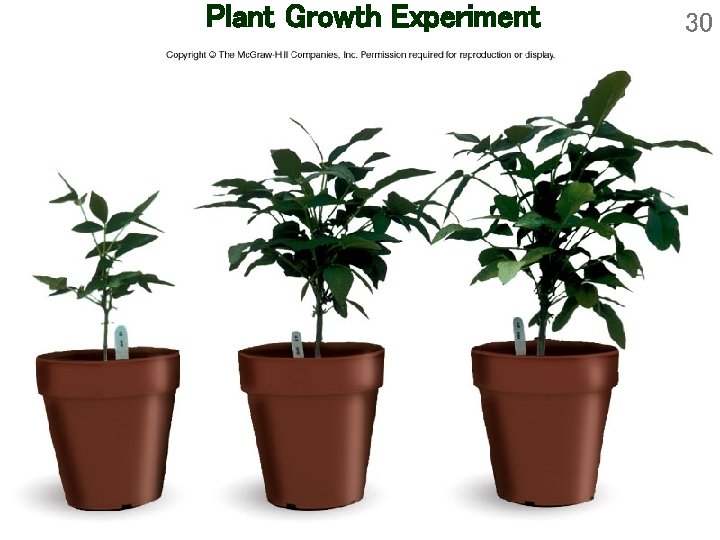
Plant Growth Experiment 30
31 Review Characteristics Structure Reproduction Evolution Sac Fungi Yeasts Club Fungi Smuts and Rusts Imperfect Fungi Symbiotic Relationships
Ending Slide Chapter 23 The Fungi