
Chapter 23 Section 2 THE OCEAN FLOOR PLATE
- Slides: 29
Chapter 23 Section 2 THE OCEAN FLOOR
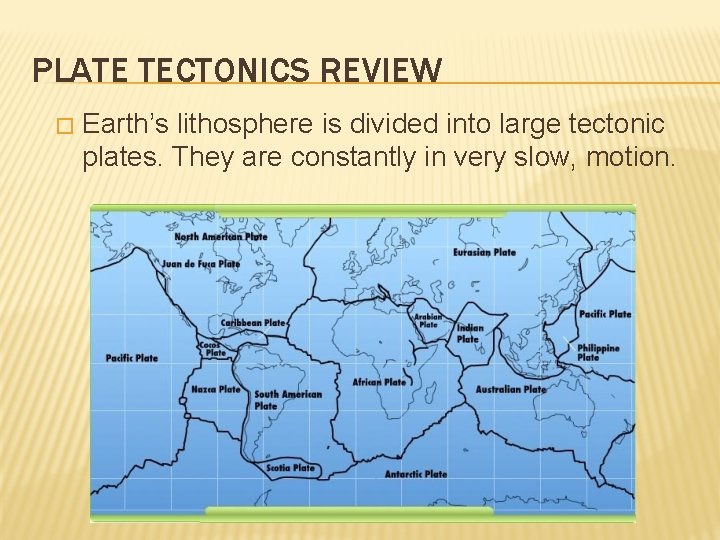
PLATE TECTONICS REVIEW � Earth’s lithosphere is divided into large tectonic plates. They are constantly in very slow, motion.
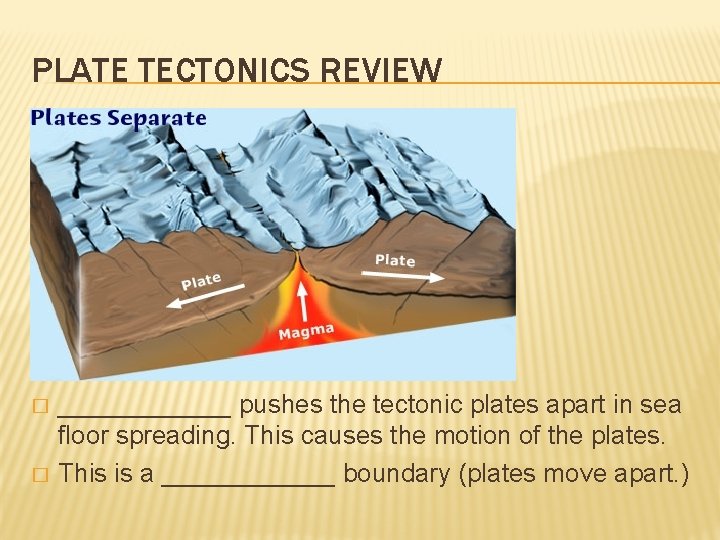
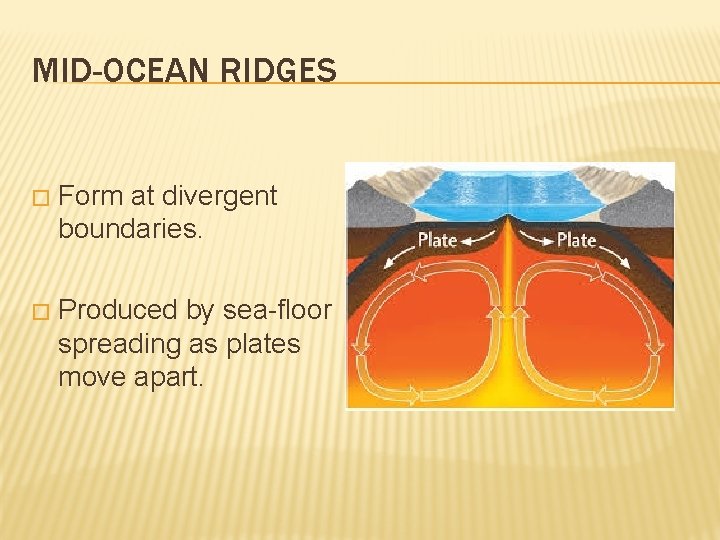
PLATE TECTONICS REVIEW � � ______ pushes the tectonic plates apart in sea floor spreading. This causes the motion of the plates. This is a ______ boundary (plates move apart. )
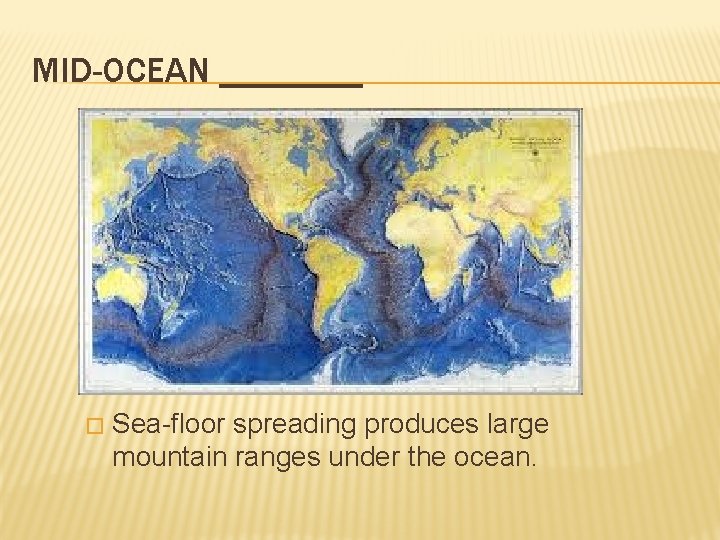
MID-OCEAN ____ � Sea-floor spreading produces large mountain ranges under the ocean.
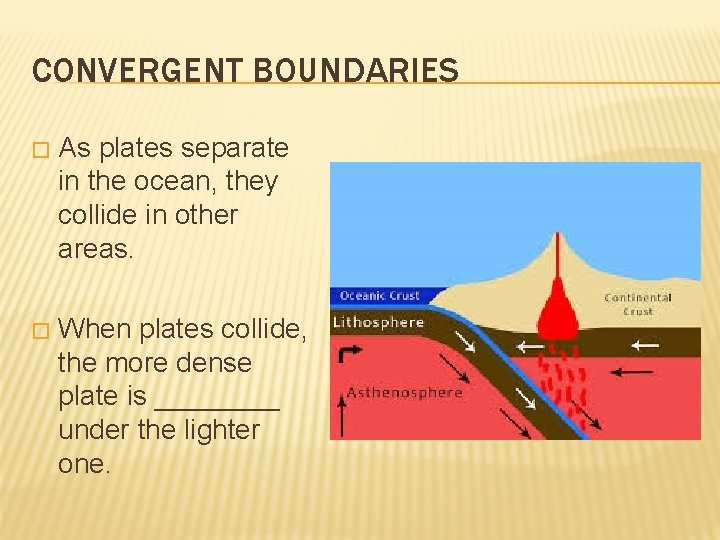
CONVERGENT BOUNDARIES � As plates separate in the ocean, they collide in other areas. � When plates collide, the more dense plate is ____ under the lighter one.
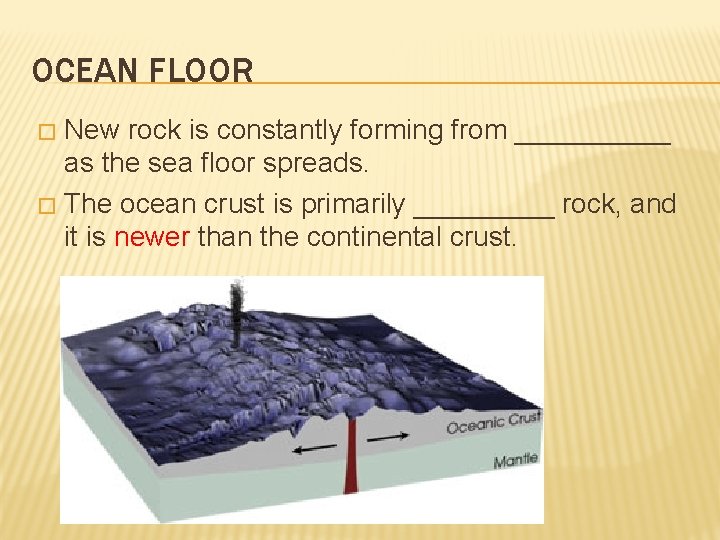
OCEAN FLOOR New rock is constantly forming from _____ as the sea floor spreads. � The ocean crust is primarily _____ rock, and it is newer than the continental crust. �
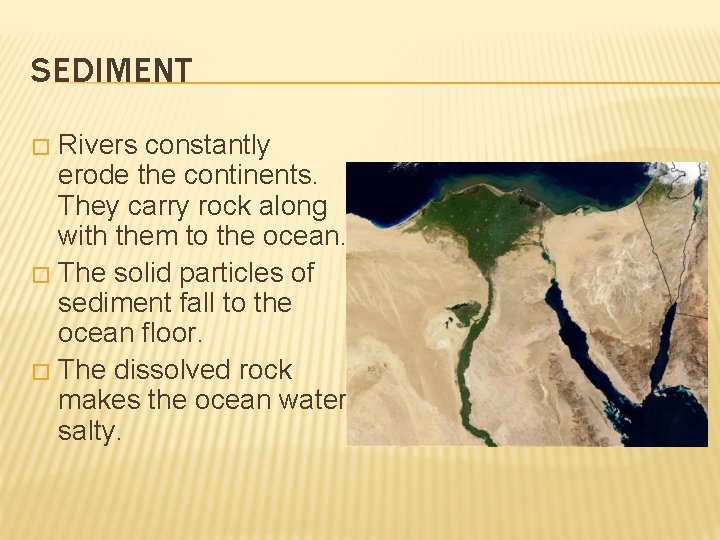
SEDIMENT Rivers constantly erode the continents. They carry rock along with them to the ocean. � The solid particles of sediment fall to the ocean floor. � The dissolved rock makes the ocean water salty. �
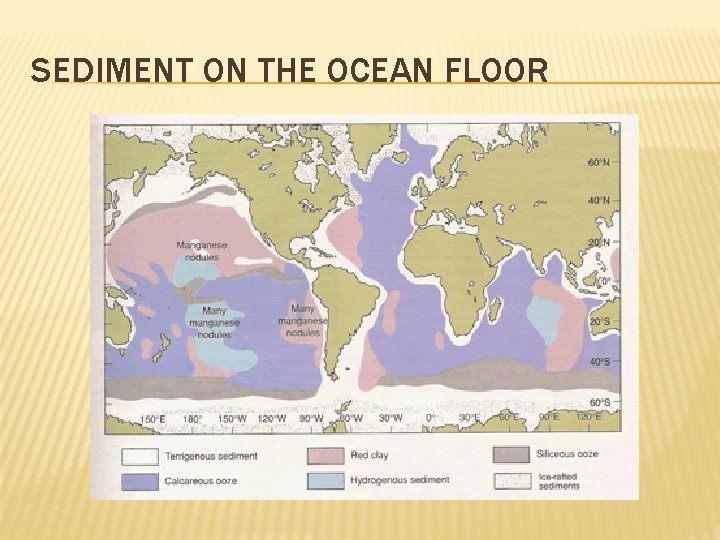
SEDIMENT ON THE OCEAN FLOOR
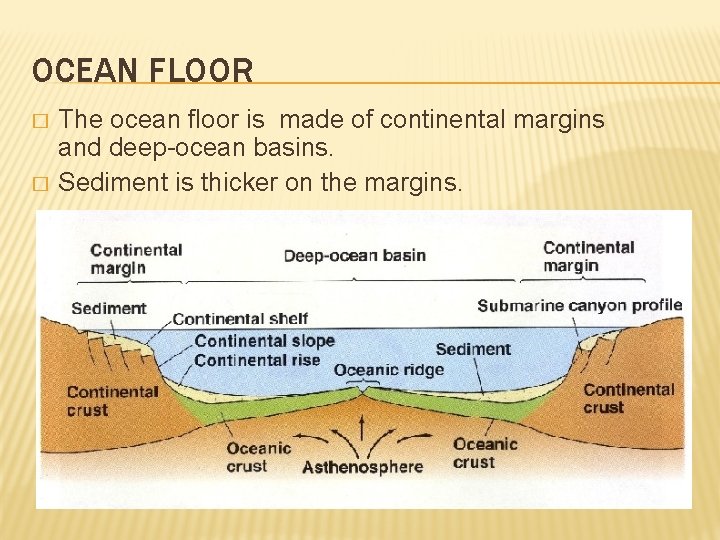
OCEAN FLOOR � � The ocean floor is made of continental margins and deep-ocean basins. Sediment is thicker on the margins.
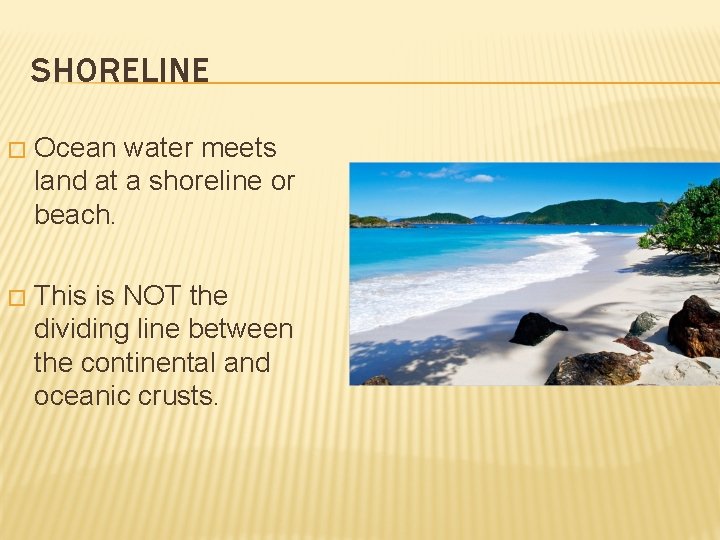
SHORELINE � Ocean water meets land at a shoreline or beach. � This is NOT the dividing line between the continental and oceanic crusts.
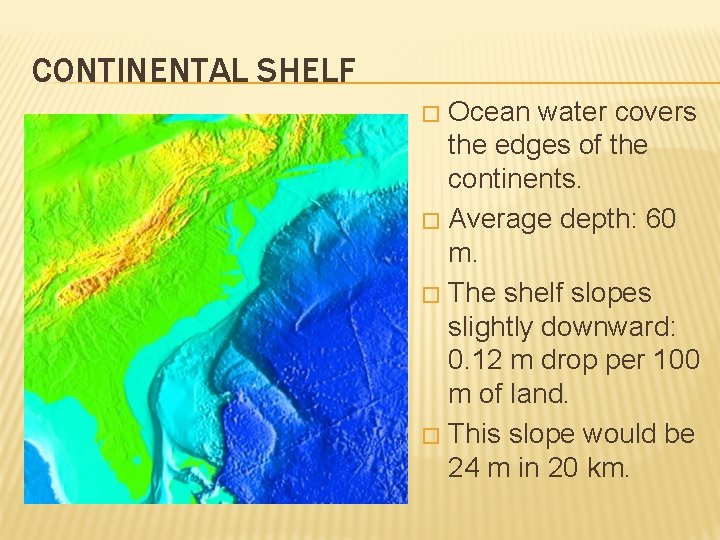
CONTINENTAL SHELF Ocean water covers the edges of the continents. � Average depth: 60 m. � The shelf slopes slightly downward: 0. 12 m drop per 100 m of land. � This slope would be 24 m in 20 km. �
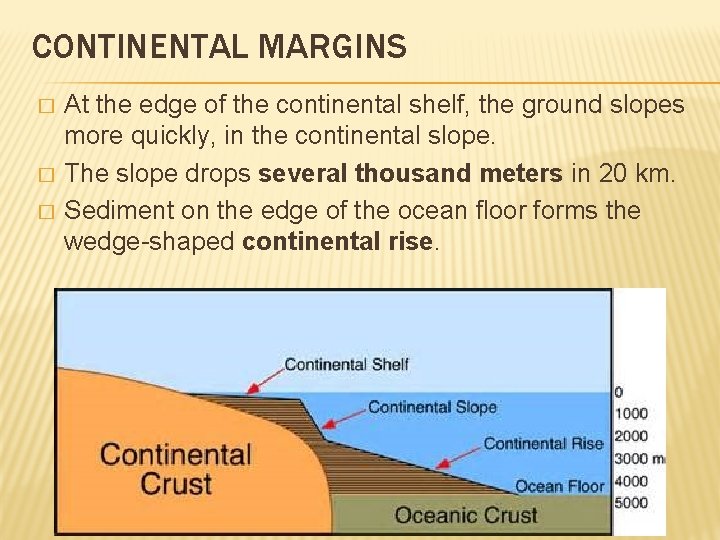
CONTINENTAL MARGINS � � � At the edge of the continental shelf, the ground slopes more quickly, in the continental slope. The slope drops several thousand meters in 20 km. Sediment on the edge of the ocean floor forms the wedge-shaped continental rise.
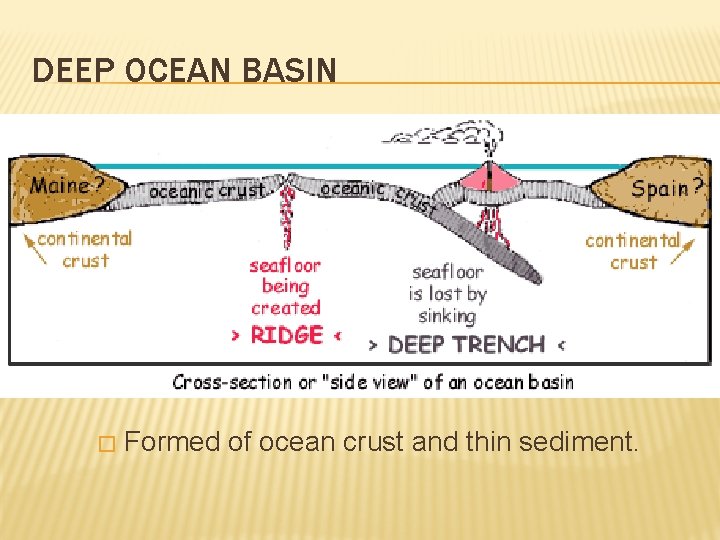
DEEP OCEAN BASIN � Formed of ocean crust and thin sediment.
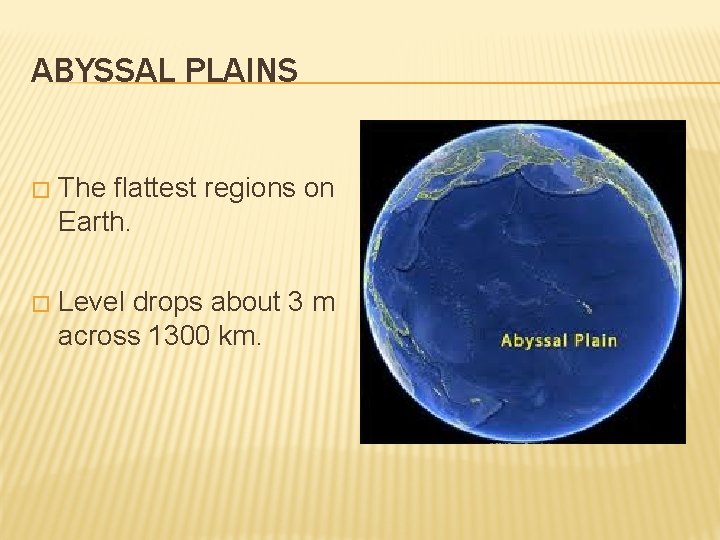
ABYSSAL PLAINS � The flattest regions on Earth. � Level drops about 3 m across 1300 km.
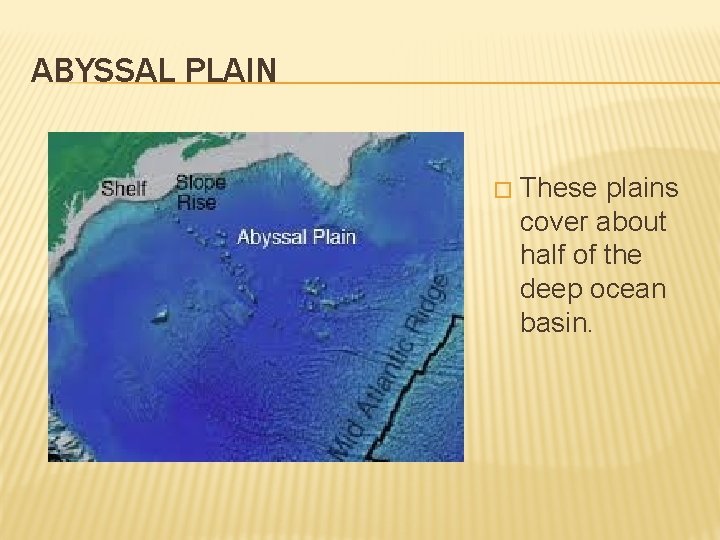
ABYSSAL PLAIN � These plains cover about half of the deep ocean basin.
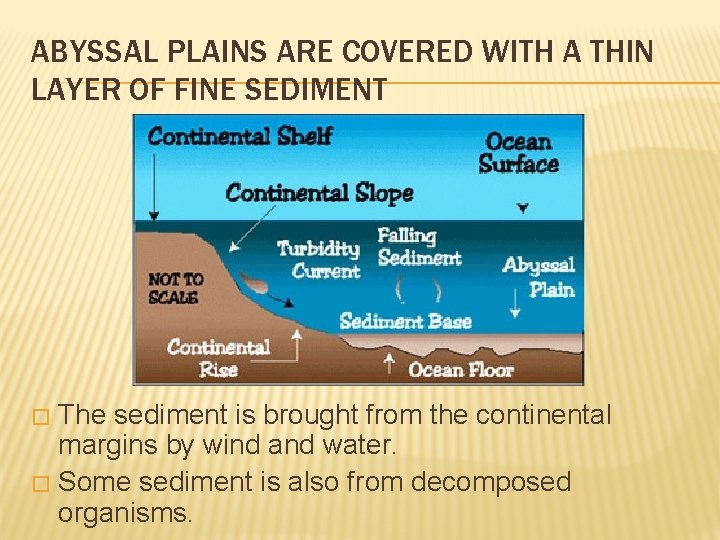
ABYSSAL PLAINS ARE COVERED WITH A THIN LAYER OF FINE SEDIMENT The sediment is brought from the continental margins by wind and water. � Some sediment is also from decomposed organisms. �
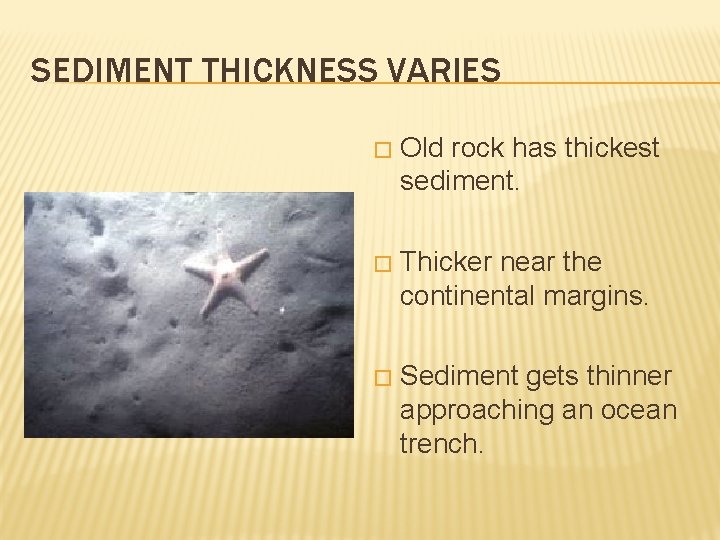
SEDIMENT THICKNESS VARIES � Old rock has thickest sediment. � Thicker near the continental margins. � Sediment gets thinner approaching an ocean trench.
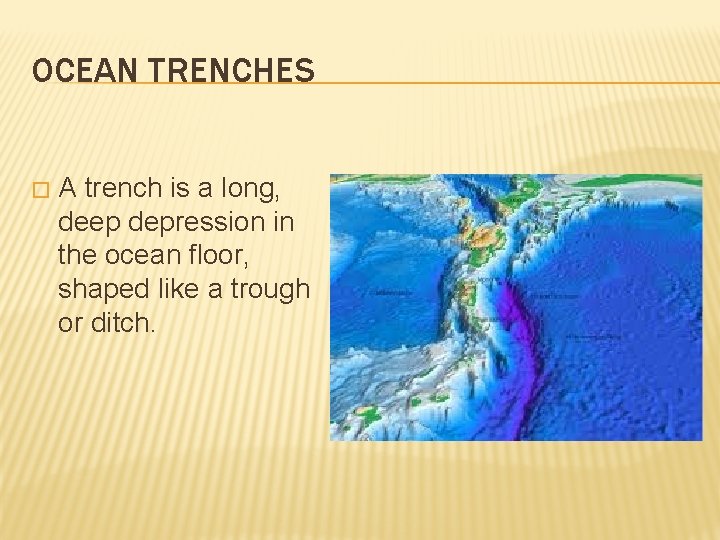
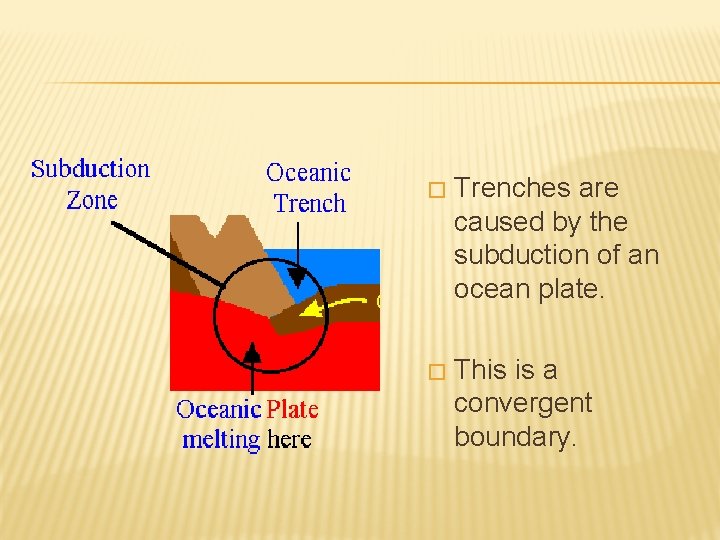
OCEAN TRENCHES � A trench is a long, deep depression in the ocean floor, shaped like a trough or ditch.
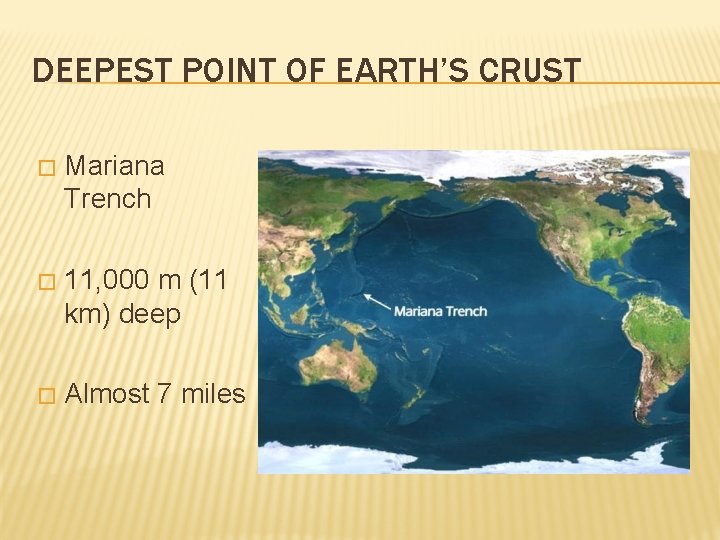
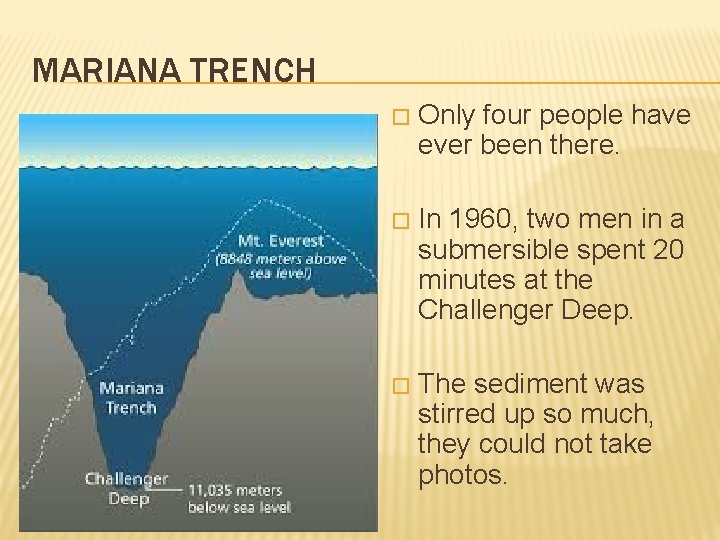
DEEPEST POINT OF EARTH’S CRUST � Mariana Trench � 11, 000 m (11 km) deep � Almost 7 miles
MARIANA TRENCH � Only four people have ever been there. � In 1960, two men in a submersible spent 20 minutes at the Challenger Deep. � The sediment was stirred up so much, they could not take photos.
� Trenches are caused by the subduction of an ocean plate. � This is a convergent boundary.
MID-OCEAN RIDGES � Form at divergent boundaries. � Produced by sea-floor spreading as plates move apart.
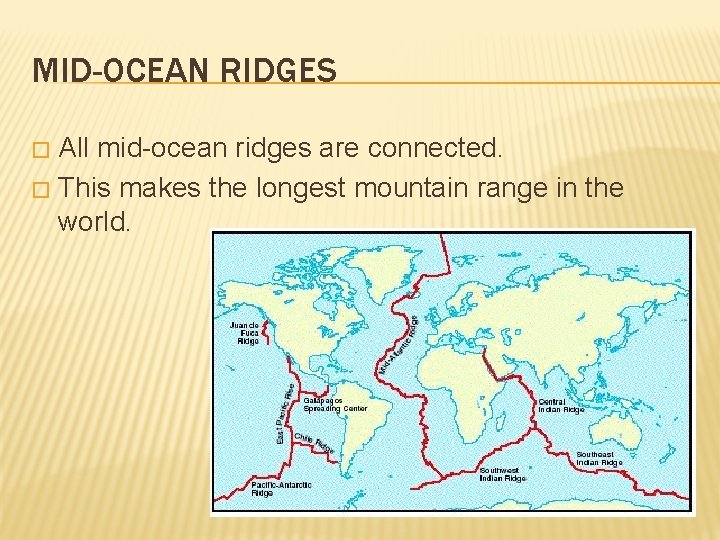
MID-OCEAN RIDGES All mid-ocean ridges are connected. � This makes the longest mountain range in the world. �
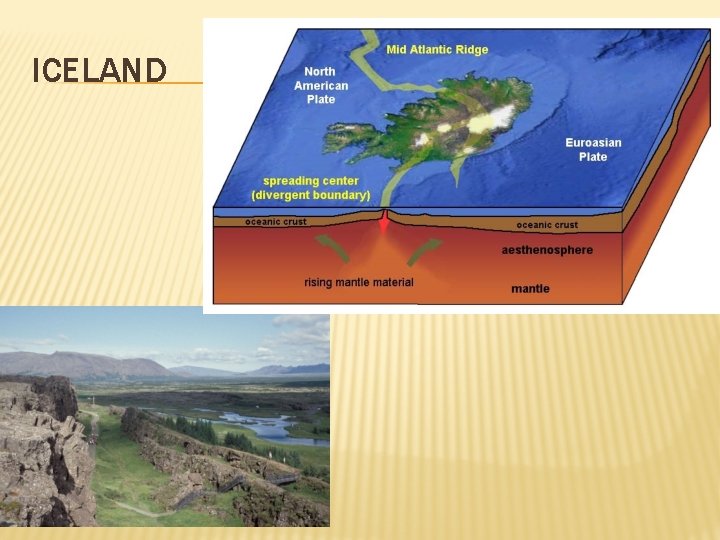
ICELAND
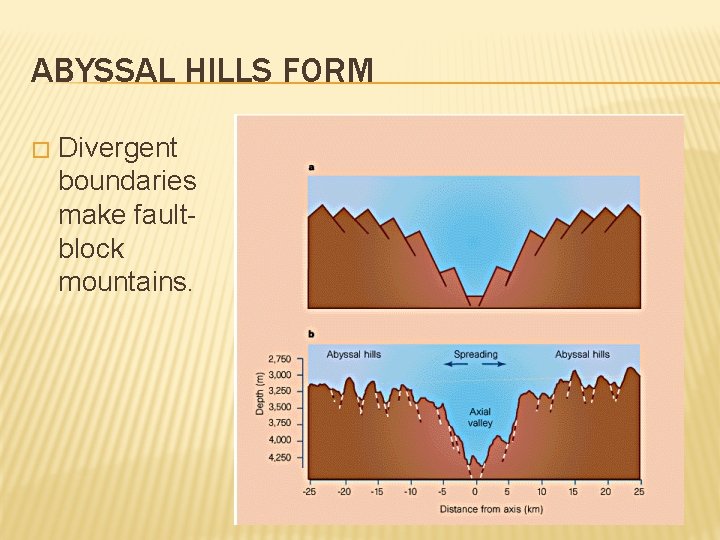
ABYSSAL HILLS FORM � Divergent boundaries make faultblock mountains.
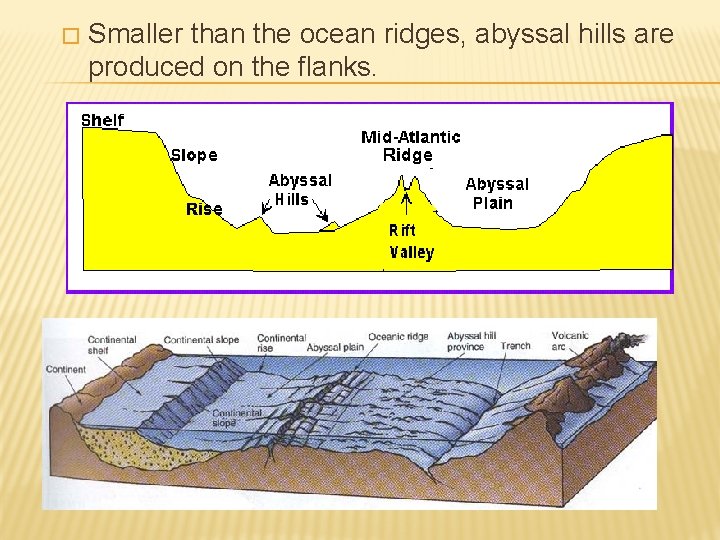
� Smaller than the ocean ridges, abyssal hills are produced on the flanks.
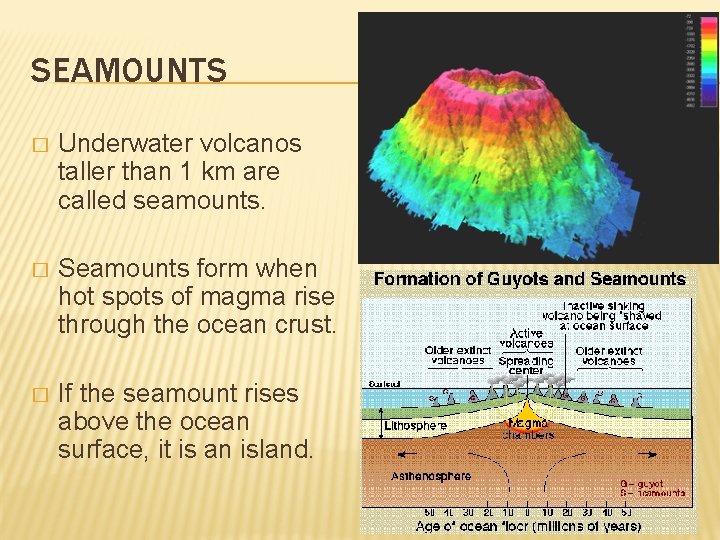
SEAMOUNTS � Underwater volcanos taller than 1 km are called seamounts. � Seamounts form when hot spots of magma rise through the ocean crust. � If the seamount rises above the ocean surface, it is an island.
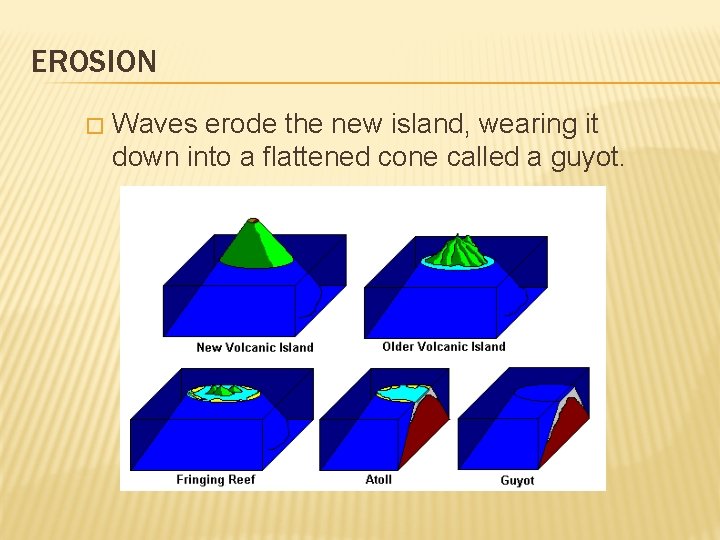
EROSION � Waves erode the new island, wearing it down into a flattened cone called a guyot.