
Chapter 23 ProcesstoProcess Delivery UDP TCP Mc GrawHill
- Slides: 29
Chapter 23 Process-to-Process Delivery: UDP, TCP Mc. Graw-Hill Copyright © The Mc. Graw-Hill Companies, Inc. Permission required for reproduction or display.
23 -1 PROCESS-TO-PROCESS DELIVERY The transport layer is responsible for process-toprocess delivery—the delivery of a packet, part of a message, from one process to another. Two processes communicate in a client/server relationship, In Client/Server communication, four entities must be defined: • Sending Node • Local Host IP • Local Process Port number • Receiving Node • Remote host IP • Remote Process ID Port number Mc. Graw-Hill
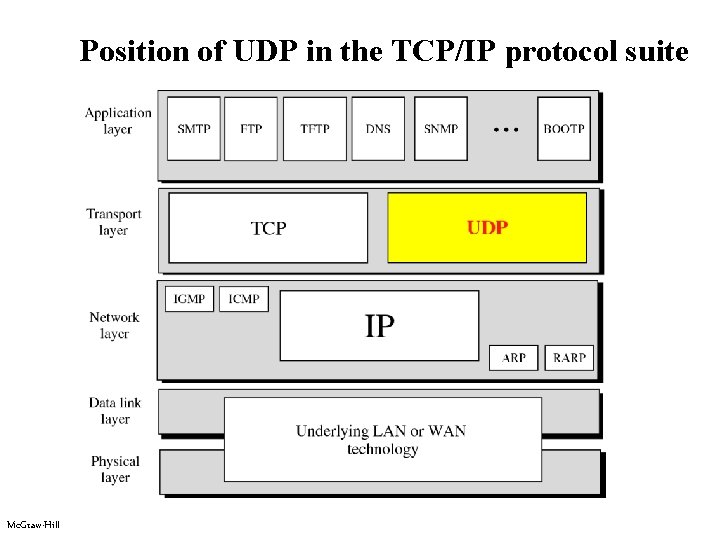
Position of UDP in the TCP/IP protocol suite Mc. Graw-Hill
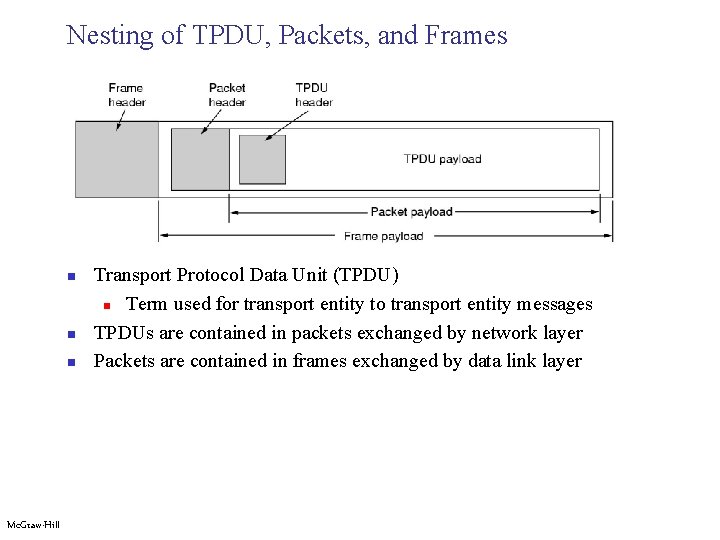
Nesting of TPDU, Packets, and Frames n n n Mc. Graw-Hill Transport Protocol Data Unit (TPDU) n Term used for transport entity to transport entity messages TPDUs are contained in packets exchanged by network layer Packets are contained in frames exchanged by data link layer
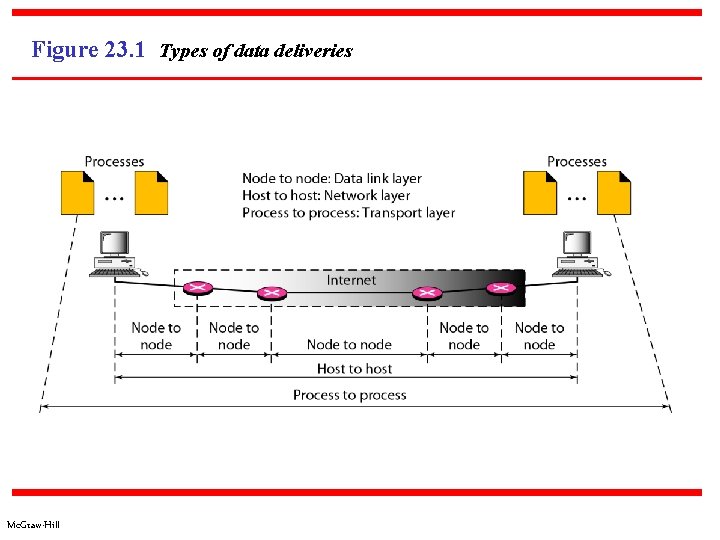
Figure 23. 1 Types of data deliveries Mc. Graw-Hill
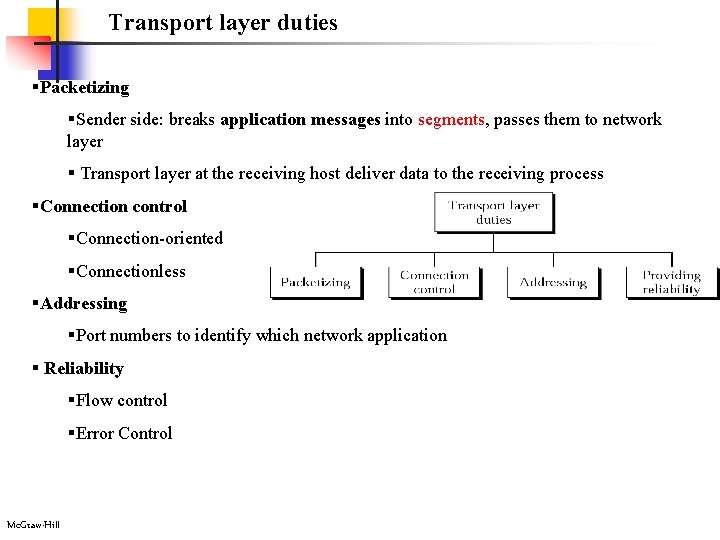
Transport layer duties §Packetizing §Sender side: breaks application messages into segments, passes them to network layer § Transport layer at the receiving host deliver data to the receiving process §Connection control §Connection-oriented §Connectionless §Addressing §Port numbers to identify which network application § Reliability §Flow control §Error Control §transport -end transport Mc. Graw-Hill
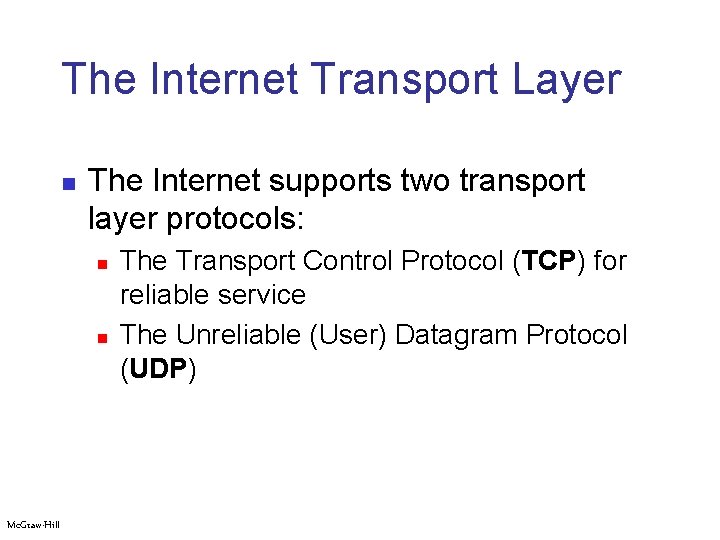
The Internet Transport Layer n The Internet supports two transport layer protocols: n n Mc. Graw-Hill The Transport Control Protocol (TCP) for reliable service The Unreliable (User) Datagram Protocol (UDP)
Processes communicating across network § § § Mc. Graw-Hill Process is an instance of a program in execution. Processes on two hosts communicate with each other by sending and receiving messages The process receives messages from, and sends messages into the network through its socket A socket is the interface between the application layer and the transport layer within a host. Sockets are the programming interface used to build network applications over the internet. Programmers can select which transport layer protocol (UDP or TCP) to be used by the application and select few transport-layer parameters (maximum buffer size, Maximum segment size, starting sequence number of segment).
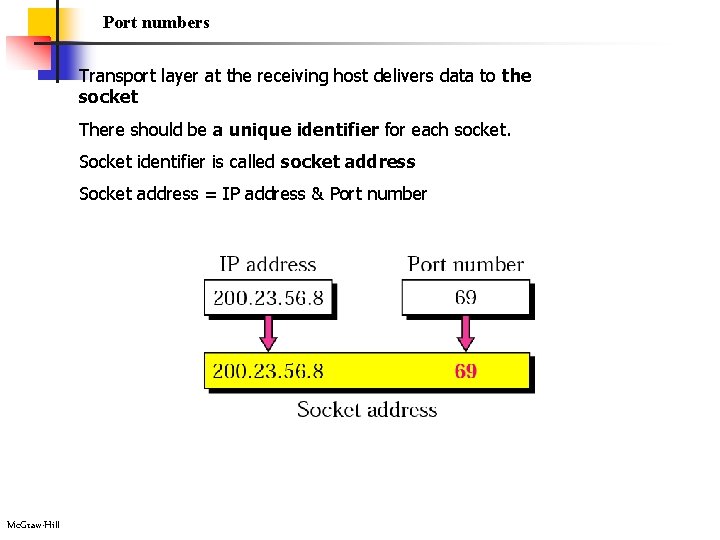
Port numbers Transport layer at the receiving host delivers data to the socket There should be a unique identifier for each socket. Socket identifier is called socket address Socket address = IP address & Port number Mc. Graw-Hill
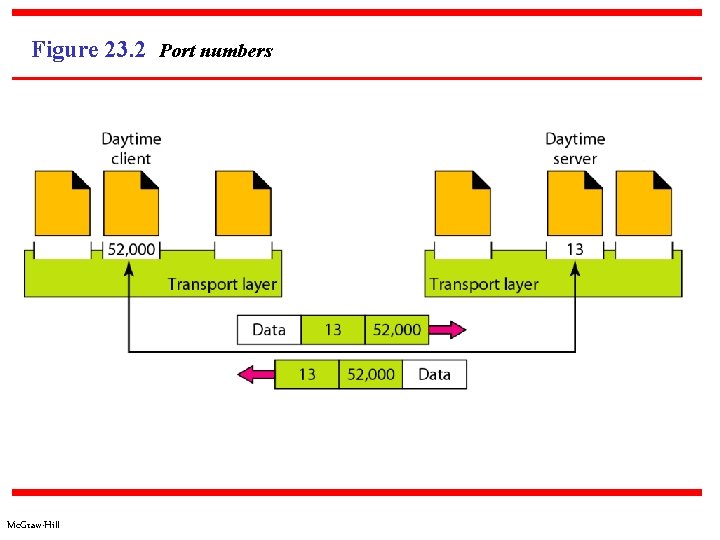
Figure 23. 2 Port numbers Mc. Graw-Hill
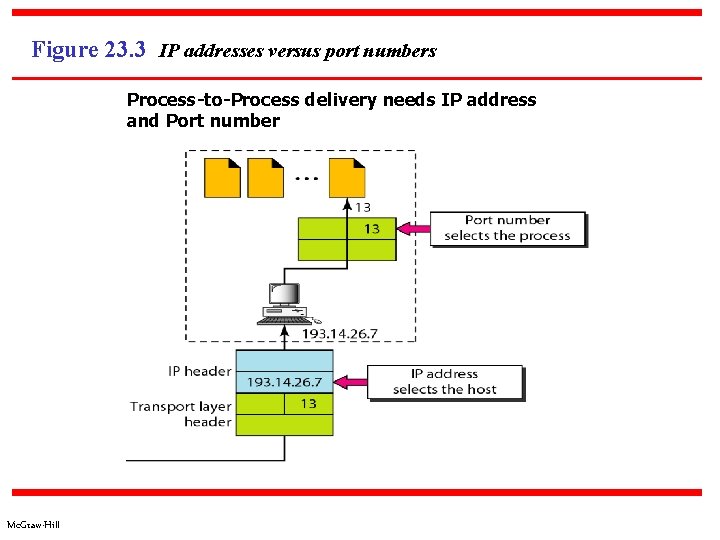
Figure 23. 3 IP addresses versus port numbers Process-to-Process delivery needs IP address and Port number Mc. Graw-Hill
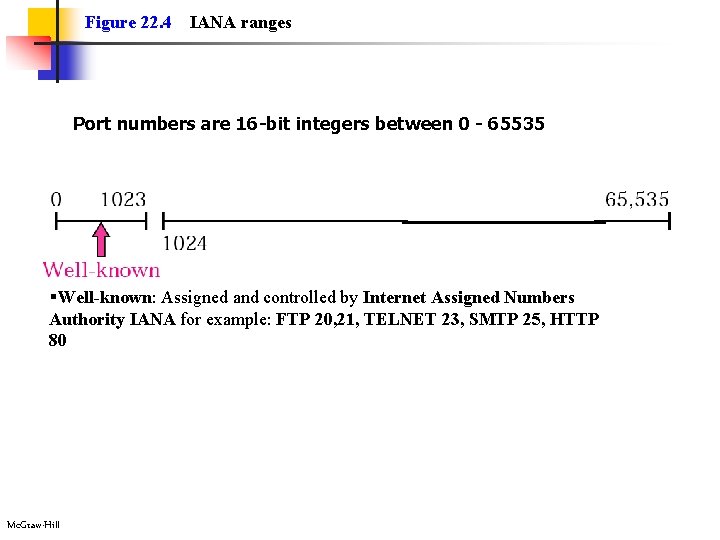
Figure 22. 4 IANA ranges Port numbers are 16 -bit integers between 0 - 65535 §Well-known: Assigned and controlled by Internet Assigned Numbers Authority IANA for example: FTP 20, 21, TELNET 23, SMTP 25, HTTP 80 Mc. Graw-Hill
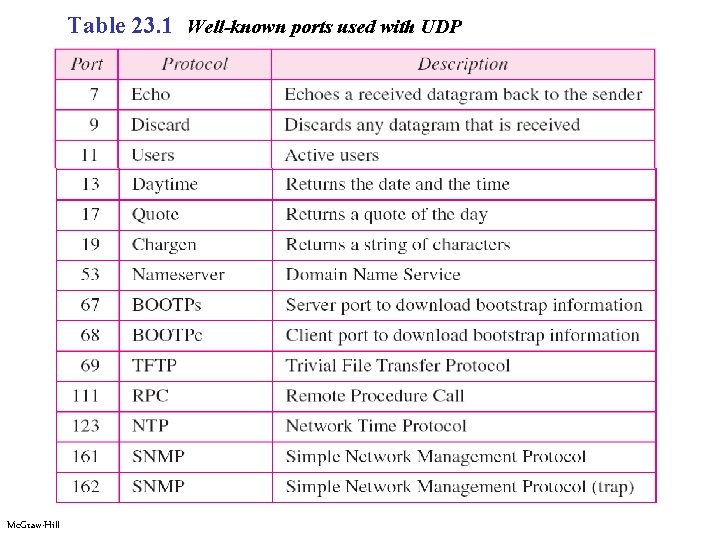
Table 23. 1 Well-known ports used with UDP Mc. Graw-Hill
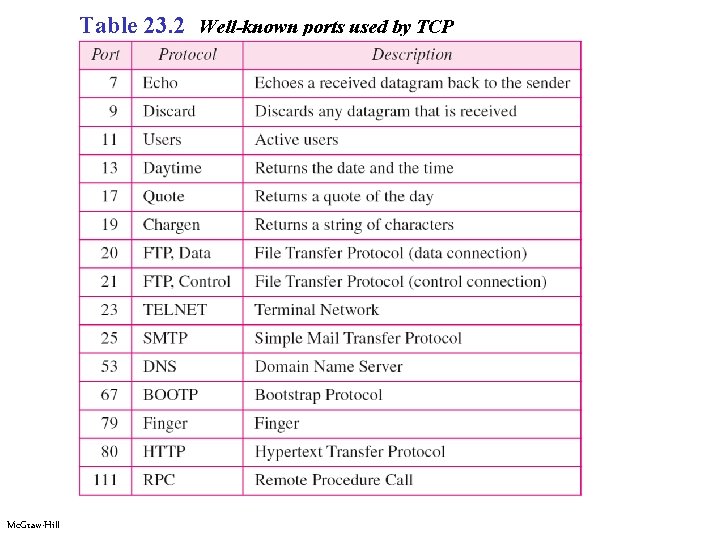
Table 23. 2 Well-known ports used by TCP Mc. Graw-Hill
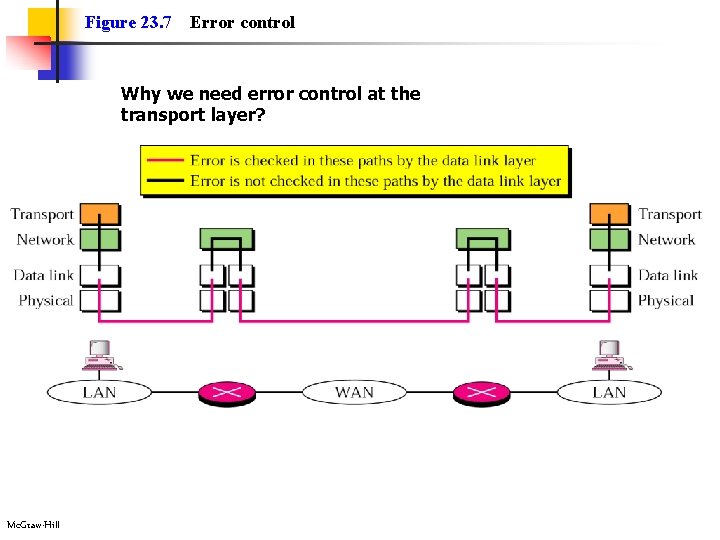
Figure 23. 7 Error control Why we need error control at the transport layer? Mc. Graw-Hill
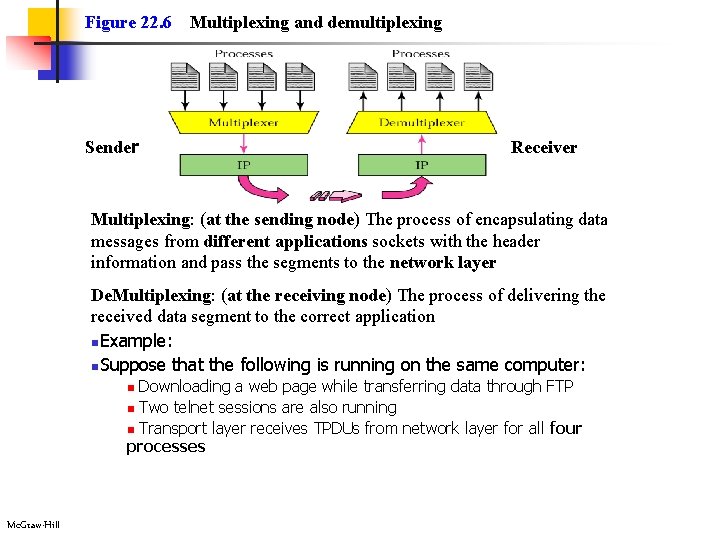
Figure 22. 6 Sender Multiplexing and demultiplexing Receiver Multiplexing: (at the sending node) The process of encapsulating data messages from different applications sockets with the header information and pass the segments to the network layer De. Multiplexing: (at the receiving node) The process of delivering the received data segment to the correct application n. Example: n. Suppose that the following is running on the same computer: Downloading a web page while transferring data through FTP n Two telnet sessions are also running n Transport layer receives TPDUs from network layer for all four processes n Mc. Graw-Hill
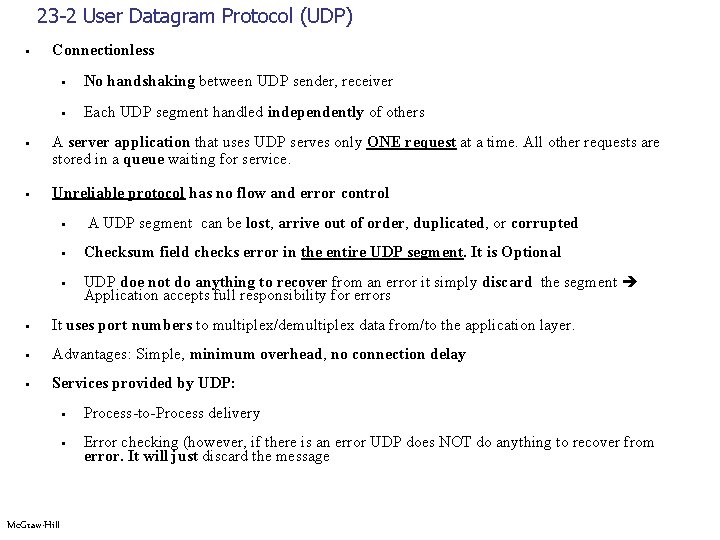
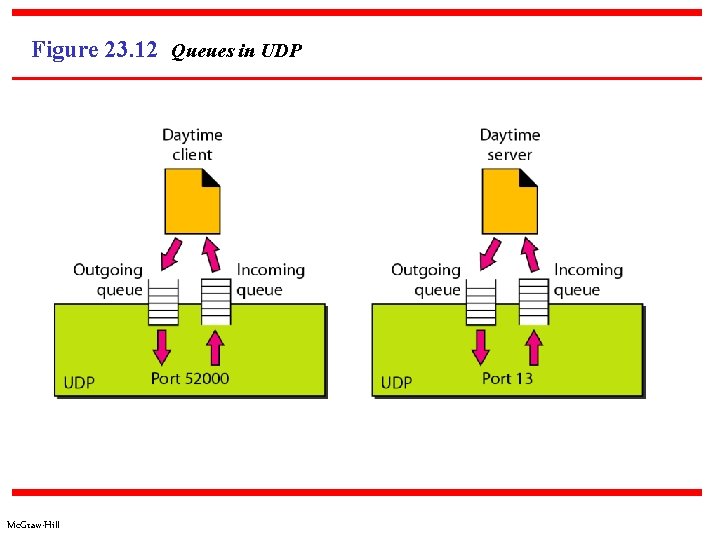
23 -2 User Datagram Protocol (UDP) § § § Connectionless § No handshaking between UDP sender, receiver § Each UDP segment handled independently of others A server application that uses UDP serves only ONE request at a time. All other requests are stored in a queue waiting for service. Unreliable protocol has no flow and error control § A UDP segment can be lost, arrive out of order, duplicated, or corrupted § Checksum field checks error in the entire UDP segment. It is Optional § UDP doe not do anything to recover from an error it simply discard the segment Application accepts full responsibility for errors § It uses port numbers to multiplex/demultiplex data from/to the application layer. § Advantages: Simple, minimum overhead, no connection delay § Services provided by UDP: Mc. Graw-Hill § Process-to-Process delivery § Error checking (however, if there is an error UDP does NOT do anything to recover from error. It will just discard the message
Figure 23. 12 Queues in UDP Mc. Graw-Hill
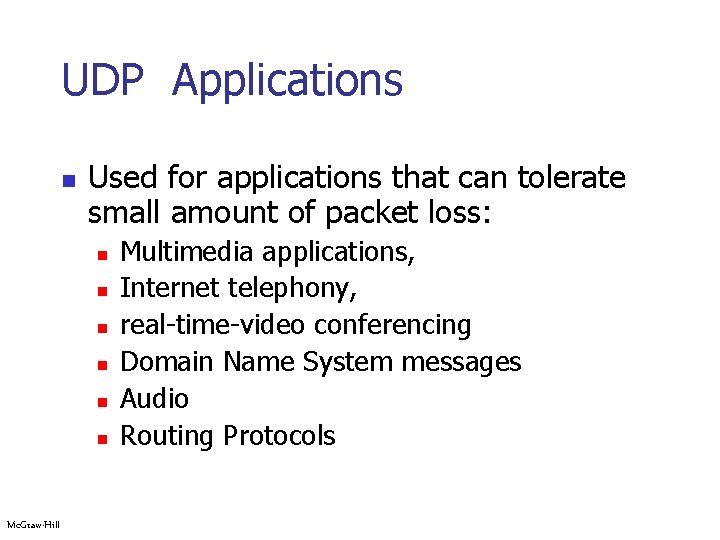
UDP Applications n Used for applications that can tolerate small amount of packet loss: n n n Mc. Graw-Hill Multimedia applications, Internet telephony, real-time-video conferencing Domain Name System messages Audio Routing Protocols
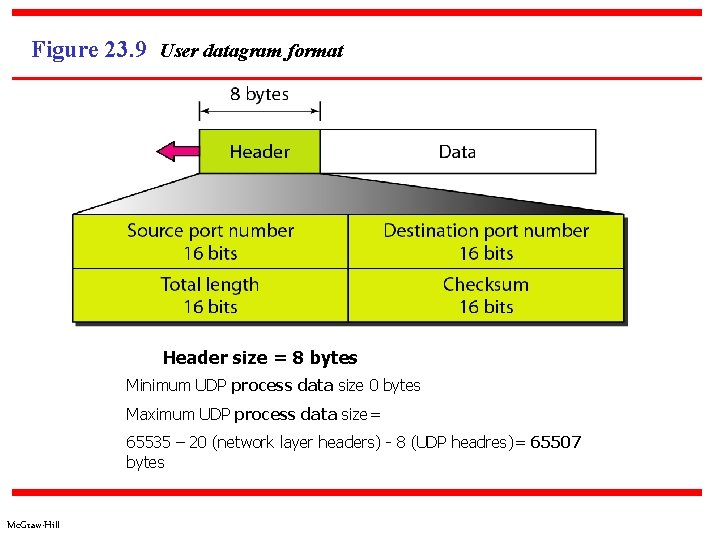
Figure 23. 9 User datagram format Header size = 8 bytes Minimum UDP process data size 0 bytes Maximum UDP process data size= 65535 – 20 (network layer headers) - 8 (UDP headres)= 65507 bytes Mc. Graw-Hill
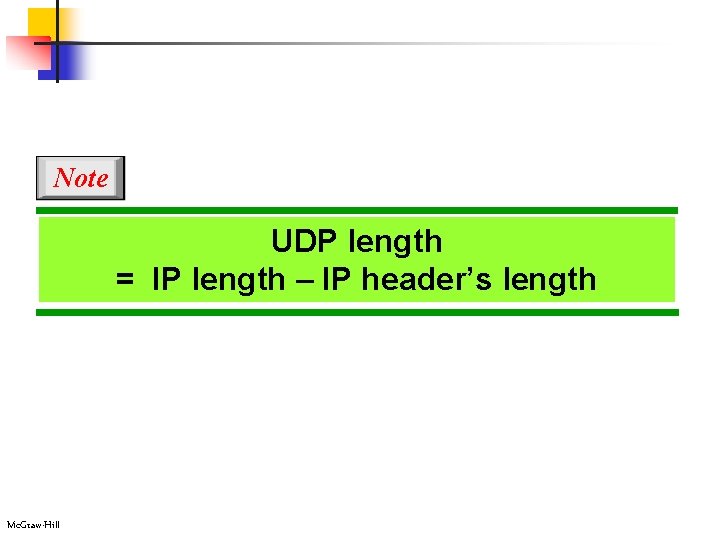
Note UDP length = IP length – IP header’s length Mc. Graw-Hill
23 -3 Transmission Control Protocol (TCP) n Mc. Graw-Hill Transmission Control Protocol properties: n Connection-oriented (establishment & termination) n Reliable n Full-duplex
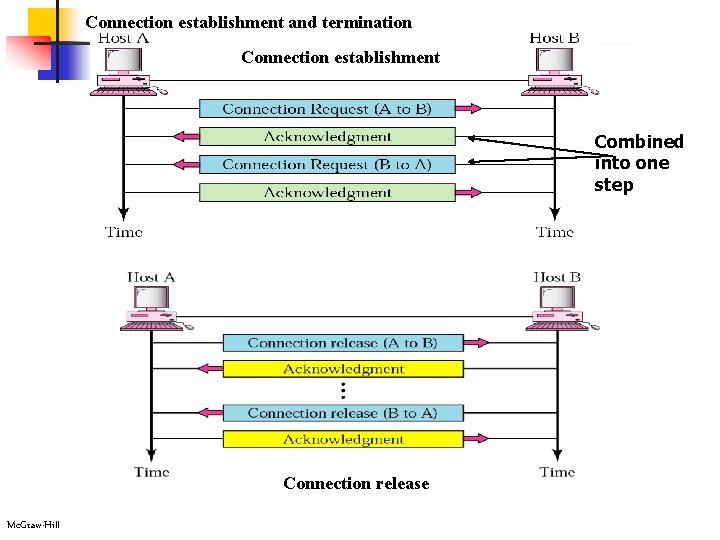
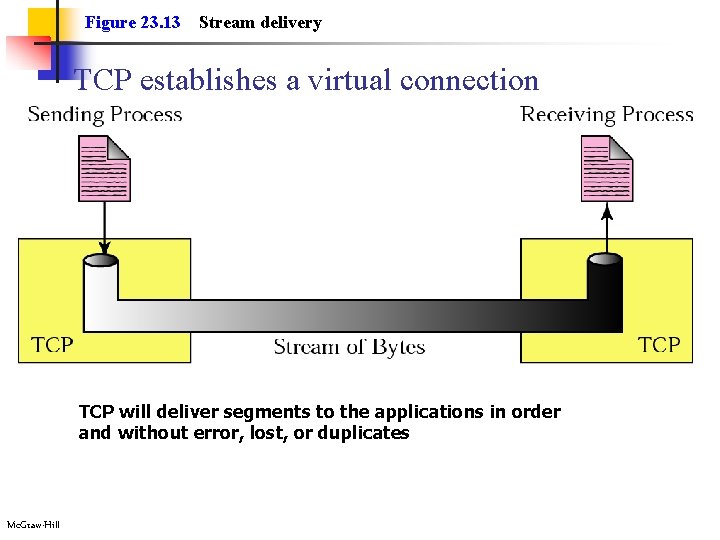
Connection-Oriented n n n Mc. Graw-Hill Connection oriented means that a virtual connection is established before any data is transferred. Connection ensures that the receiving process is available and ready before the data is sent Three-way handshaking connection establishment procedure because TCP is full-duplex both side must initialize communication and get approval from the other side before any data transfer, Virtual connection since TCP protocol will make sure that segments are given to the receiver application in the same order as they were sent by the sender even if they travel through different physical paths A server application that uses TCP can handle many client requests at the same time each has its own connection.
Connection establishment and termination Connection establishment Combined into one step Connection release Mc. Graw-Hill
Figure 23. 13 Stream delivery TCP establishes a virtual connection TCP will deliver segments to the applications in order and without error, lost, or duplicates Mc. Graw-Hill
Full Duplex n n Mc. Graw-Hill Data segments can flow in both directions at the same time. Each TCP connection has its own sending and receiving buffers.
Flow control and Reliability n Flow control (process-to-process): TCP makes sure that the sender does not cause the receiver buffer to overflow n n Error control (process-to-process): entire message arrives at the receiving transport layer without error, loss, duplication and in the same order they were sent n n n n Mc. Graw-Hill By defining the amount of data that can be sent before receiving an acknowledgement from the receiver (sliding – window protocols) Error detection is done using checksum and correction by retransmission Implemented by a sliding window ARQ Every transmission of data is acknowledged by the receiver. Acknowledgements are cumulative. If the sender does not receive ACK within a specified amount of time, the sender retransmits the data. Accepts out of order but does Not send negative acknowledgements, if a segment is not acknowledged before time-out, it is considered to be either corrupted or lost and the sender will retransmit the segment only when it times-out
TCP Applications n Following applications require reliable data transfer through TCP: n n Mc. Graw-Hill WWW using HTTP Electronic mail using SMTP Telnet File transfer using FTP
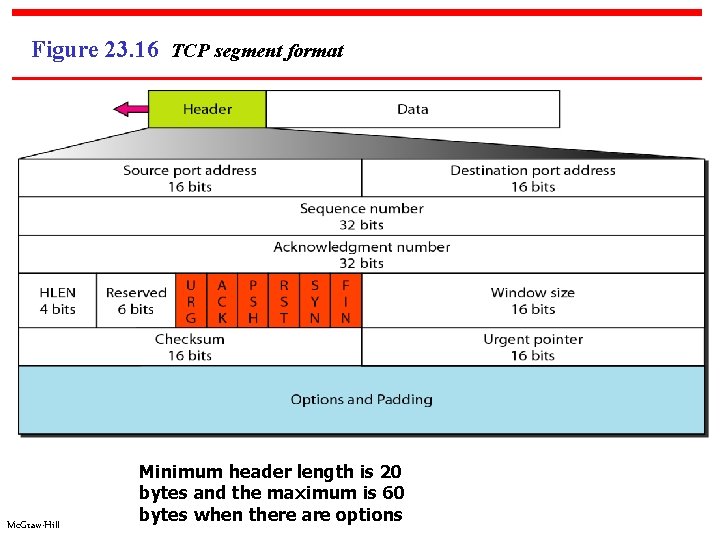
Figure 23. 16 TCP segment format Mc. Graw-Hill Minimum header length is 20 bytes and the maximum is 60 bytes when there are options