
Chapter 23 Practice Quiz Tutorial Federal Deficits Surpluses
- Slides: 17
Chapter 23 Practice Quiz Tutorial Federal Deficits, Surpluses and the National Debt © 2000 South-Western College Publishing 1
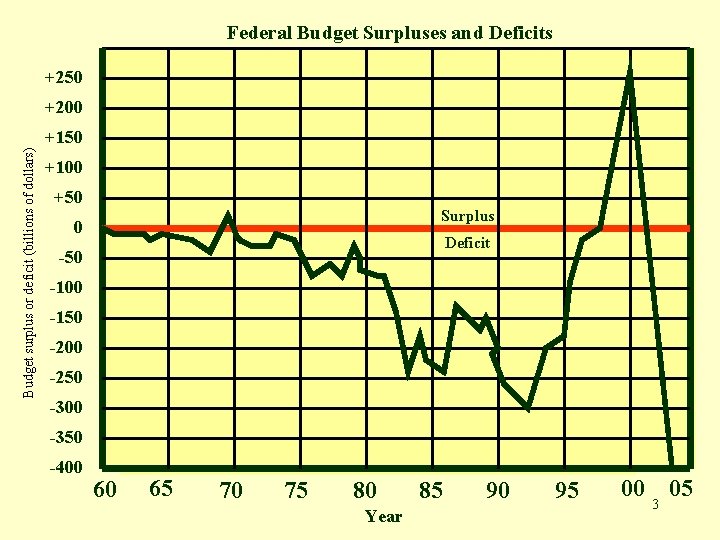
1. During the late 1990 s, federal government budget deficits a. were completely removed. b. dropped significantly from a high of $300 billion. c. remained fairly stable at about $150 billion per year. d. exceeded $200 billion in each year. A. 2
Federal Budget Surpluses and Deficits +250 +200 Budget surplus or deficit (billions of dollars) +150 +100 +50 Surplus 0 Deficit -50 -100 -150 -200 -250 -300 -350 -400 60 65 70 75 80 Year 85 90 95 00 3 05
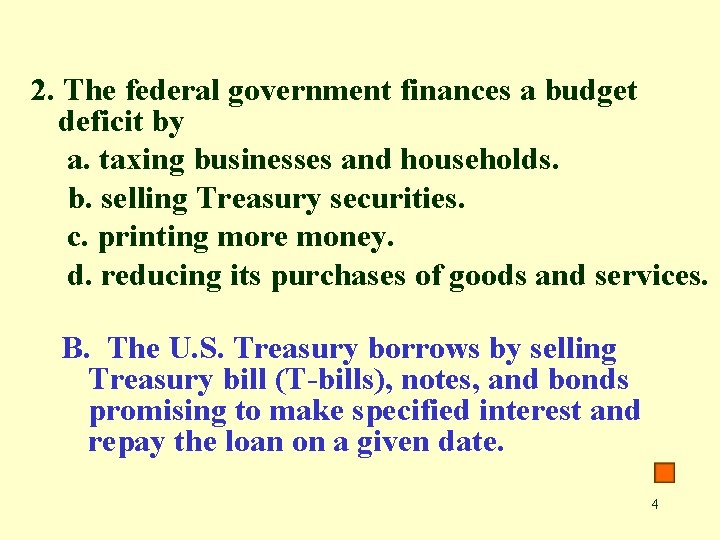
2. The federal government finances a budget deficit by a. taxing businesses and households. b. selling Treasury securities. c. printing more money. d. reducing its purchases of goods and services. B. The U. S. Treasury borrows by selling Treasury bill (T-bills), notes, and bonds promising to make specified interest and repay the loan on a given date. 4
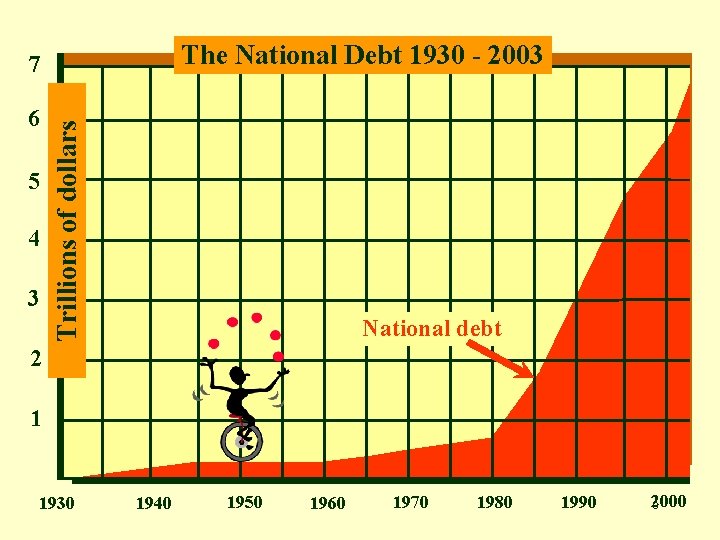
3. In 2003, the national debt was approximately a. $70 billion. b. $700 billion. c. $7 trillion. d. $6 trillion. C. 5
The National Debt 1930 - 2003 6 5 4 3 Trillions of dollars 7 National debt 2 1 1930 1940 1950 1960 1970 1980 1990 2000 6
4. The national debt a. was about seven times its size in 1980. b. Was twice as large in 1980. c. was approximately the same size in 1980. d. was none of the above. D. See previous graph. 7
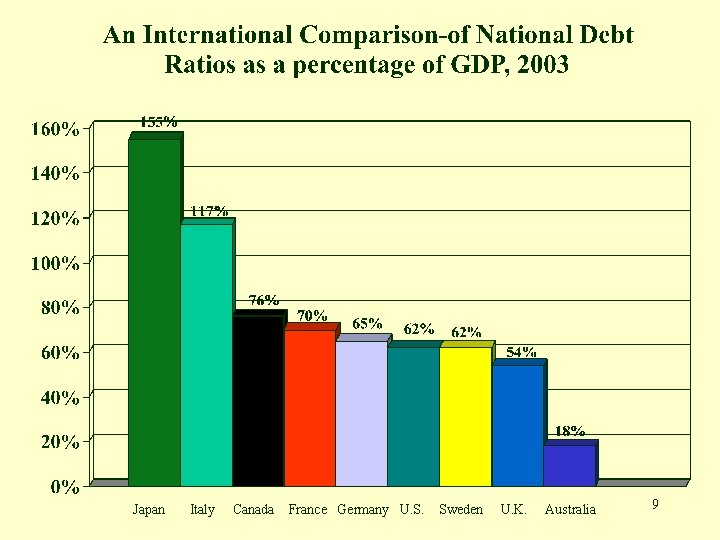
5. Which of the following countries has the smallest national debt as a percentage of GDP? a. Italy. b. Canada. c. Australia. d. Japan. e. France. C. 8
Japan Italy Canada France Germany U. S. Sweden U. K. Australia 9
6. Which of the following is false? a. The national debt’s size decreased steadily after World War II until 1980 and then increased sharply each year. b. The national debt increases in size whenever the federal government has a budget surplus. c. The national debt is currently about the same size as it was during World War II. d. All of the above are false. D. 10
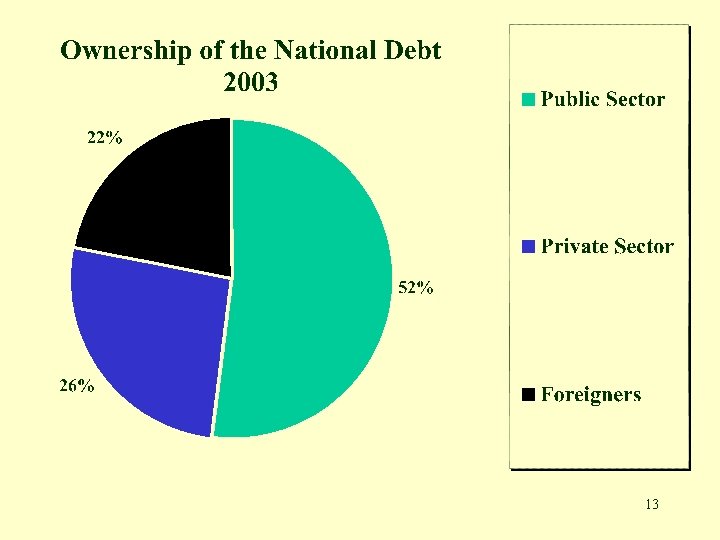
7. In 2003, approximately what percent of the U. S. national debt was owed to foreigners? a. About 2. 5 percent. b. About 22 percent. c. About 32 percent. d. About 59 percent. B. 11
8. Which of the following own a portion of the national debt? a. Federal, state, and local governments. b. Private U. S. citizens. c. Banks. d. Foreigners. e. All of the above. E. Treasury bills are widely held throughout the public and private sectors both domestically and overseas. 12
13
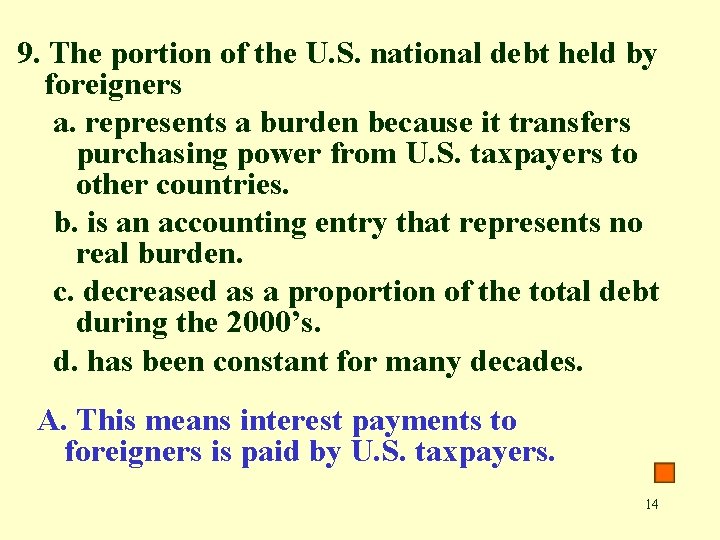
9. The portion of the U. S. national debt held by foreigners a. represents a burden because it transfers purchasing power from U. S. taxpayers to other countries. b. is an accounting entry that represents no real burden. c. decreased as a proportion of the total debt during the 2000’s. d. has been constant for many decades. A. This means interest payments to foreigners is paid by U. S. taxpayers. 14
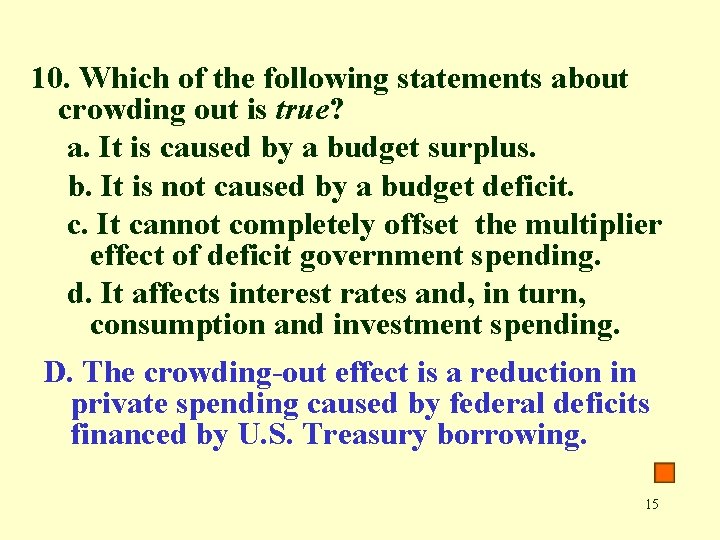
10. Which of the following statements about crowding out is true? a. It is caused by a budget surplus. b. It is not caused by a budget deficit. c. It cannot completely offset the multiplier effect of deficit government spending. d. It affects interest rates and, in turn, consumption and investment spending. D. The crowding-out effect is a reduction in private spending caused by federal deficits financed by U. S. Treasury borrowing. 15
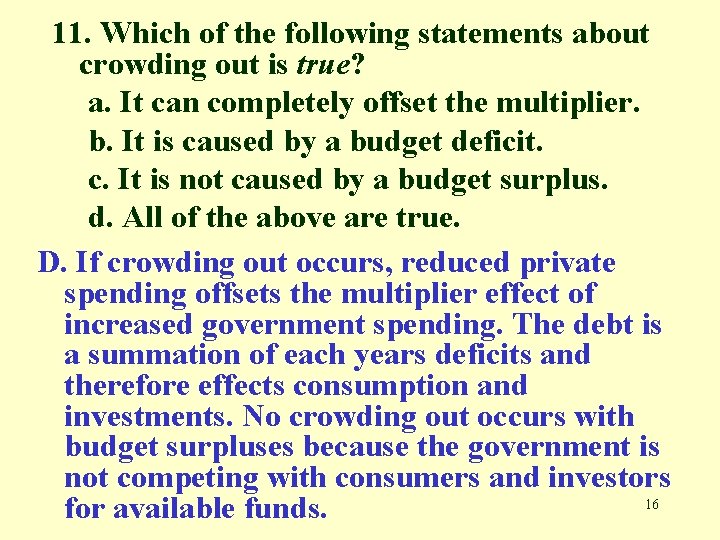
11. Which of the following statements about crowding out is true? a. It can completely offset the multiplier. b. It is caused by a budget deficit. c. It is not caused by a budget surplus. d. All of the above are true. D. If crowding out occurs, reduced private spending offsets the multiplier effect of increased government spending. The debt is a summation of each years deficits and therefore effects consumption and investments. No crowding out occurs with budget surpluses because the government is not competing with consumers and investors 16 for available funds.
END 17