
Chapter 23 Newborn Feeding Elsevier items and derived
Chapter 23 Newborn Feeding Elsevier items and derived items © 2013, 2009, 2005 by Saunders, an imprint of Elsevier Inc.
Nutritional Needs of the Newborn Full-term breastfed infants Ø Formula fed infants Ø 85 -100 kcal per kg (39 -45 kcal per lb) daily 100 -110 kcal per kg (45 -50 kcal per lb) daily Newborns may lose weight in the first 2 days of life as a result of insufficient intake and normal loss of extracellular fluid. Elsevier items and derived items © 2013, 2009, 2005 by Saunders, an imprint of Elsevier Inc. 2
Composition of Breast Milk Colostrum Ø Transitional milk Ø Rich in protein, vitamins, minerals, and immunoglobulins Appears between colostrum and mature milk Mature milk Nutrients in proportions needed by newborns in an easily digested form Ø Contain factors that help establish normal intestinal flora and prevent infection Ø Elsevier items and derived items © 2013, 2009, 2005 by Saunders, an imprint of Elsevier Inc. 3
Formulas A variety of commercial formulas are available. Modified cow's milk Ø Soy-based Ø Hydrolysed Ø Formula for special indications Galactosemia Ø Lactase deficiency Ø Elsevier items and derived items © 2013, 2009, 2005 by Saunders, an imprint of Elsevier Inc. 4
Considerations in Choosing a Feeding Method American Academy of Pediatrics (AAP) recommendation Exclusive breastfeeding for the first 6 months Ø Continued breastfeeding with the addition of foods until 12 months of age Ø Elsevier items and derived items © 2013, 2009, 2005 by Saunders, an imprint of Elsevier Inc. 5
Considerations in Choosing a Feeding Method (cont. ) Factors that influence the choice of feeding Knowledge about each feeding method Ø Cultural influences Ø Employment Ø Elsevier items and derived items © 2013, 2009, 2005 by Saunders, an imprint of Elsevier Inc. 6
Question Parents have been asked by the neonatologist to provide breast milk for their newborn son, who was born prematurely at 32 weeks of gestation. The nurse who instructs them about pumping, storing, and transporting the milk needs to assess their knowledge of lactation. Which statement is valid? Elsevier items and derived items © 2013, 2009, 2005 by Saunders, an imprint of Elsevier Inc. 7
Question (cont. ) A premature infant more easily digests breast milk than formula. B. A glass of wine just before pumping will help reduce stress and anxiety. C. The mother should only pump as much as the infant can drink. D. The mother should pump every 2 -3 hours, including during the night. A. Elsevier items and derived items © 2013, 2009, 2005 by Saunders, an imprint of Elsevier Inc. 8
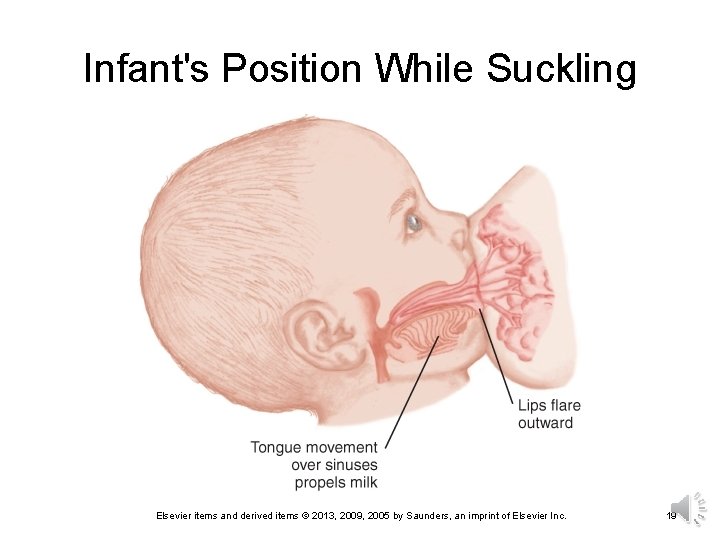
Milk Production Suckling causes the mother's posterior pituitary to release oxytocin, which triggers the let-down reflex. Suckling also causes the anterior pituitary to release prolactin, which increases milk production. "Supply and demand" applies to breastfeeding. Elsevier items and derived items © 2013, 2009, 2005 by Saunders, an imprint of Elsevier Inc. 9
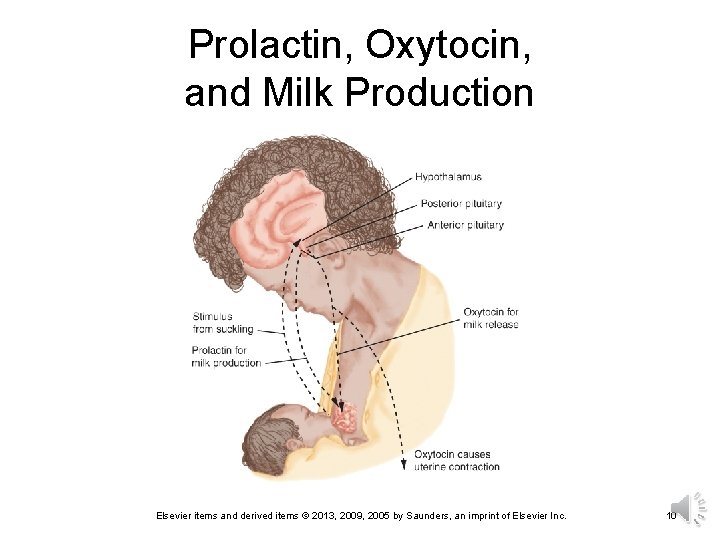
Prolactin, Oxytocin, and Milk Production Elsevier items and derived items © 2013, 2009, 2005 by Saunders, an imprint of Elsevier Inc. 10
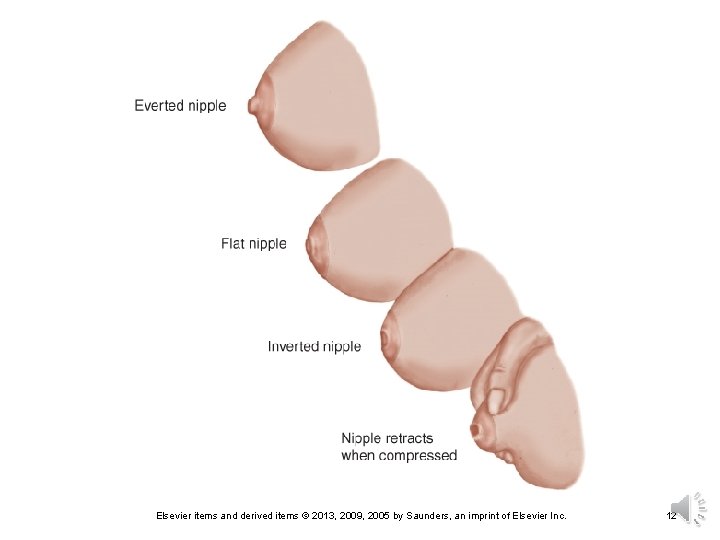
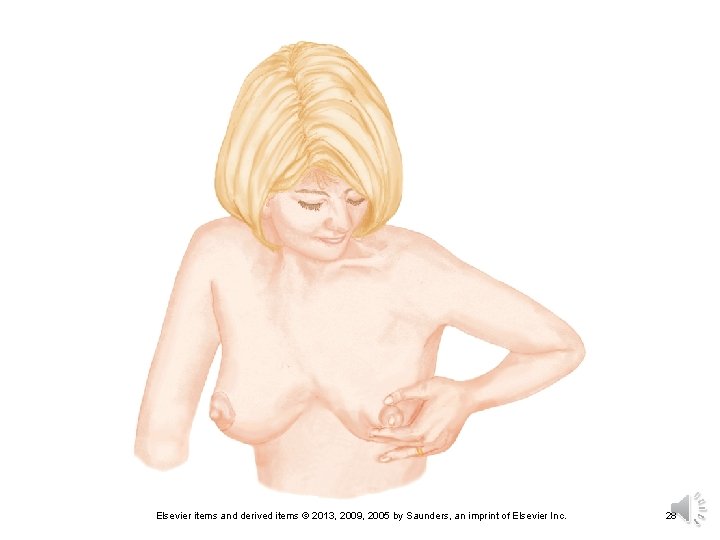
Preparation of the Breasts for Breastfeeding Little preparation is needed during pregnancy for breastfeeding. The mother should avoid soap on her nipples to prevent removal of the natural protective oils. Ø Cream and "nipple rolling" are not necessary. Ø Breasts should be assessed during pregnancy to identify flat or inverted nipples. Elsevier items and derived items © 2013, 2009, 2005 by Saunders, an imprint of Elsevier Inc. 11
Elsevier items and derived items © 2013, 2009, 2005 by Saunders, an imprint of Elsevier Inc. 12
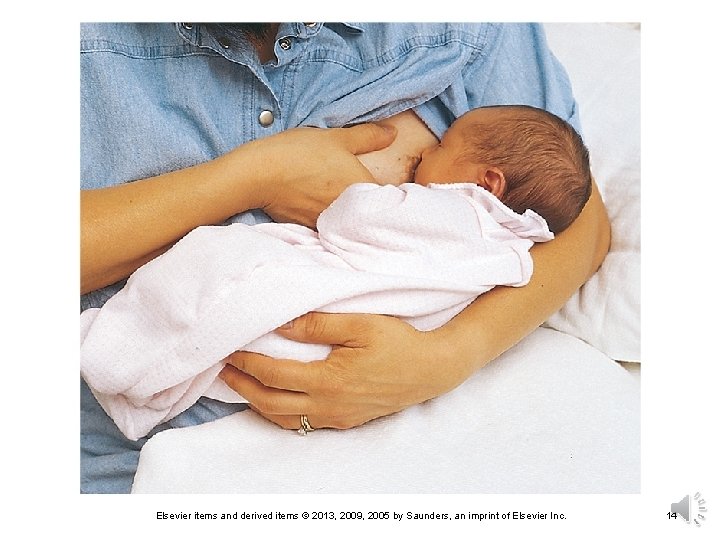
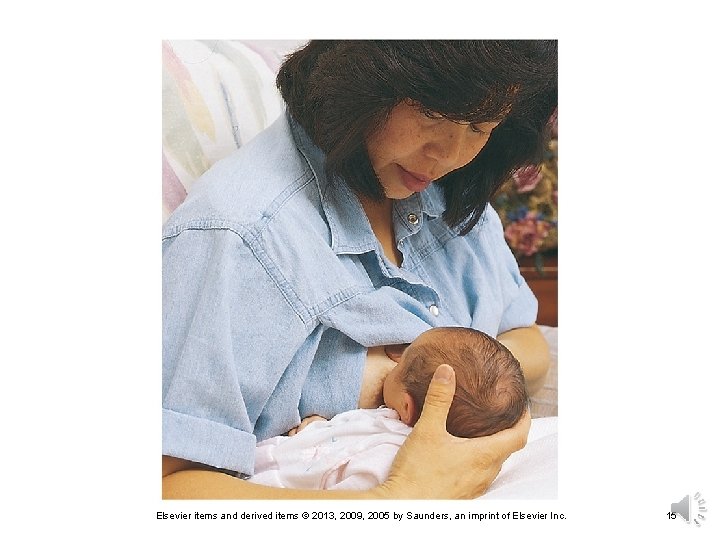
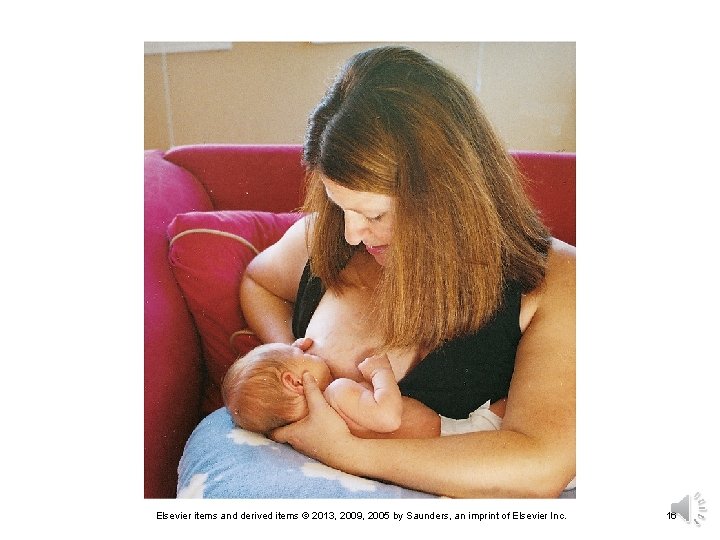
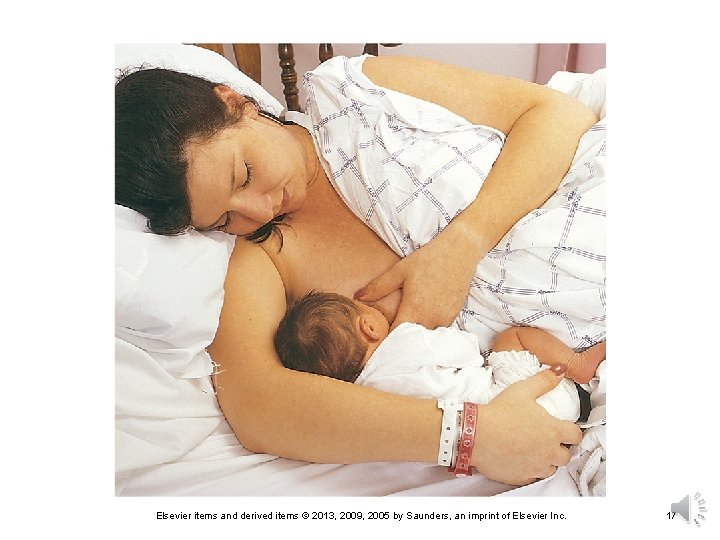
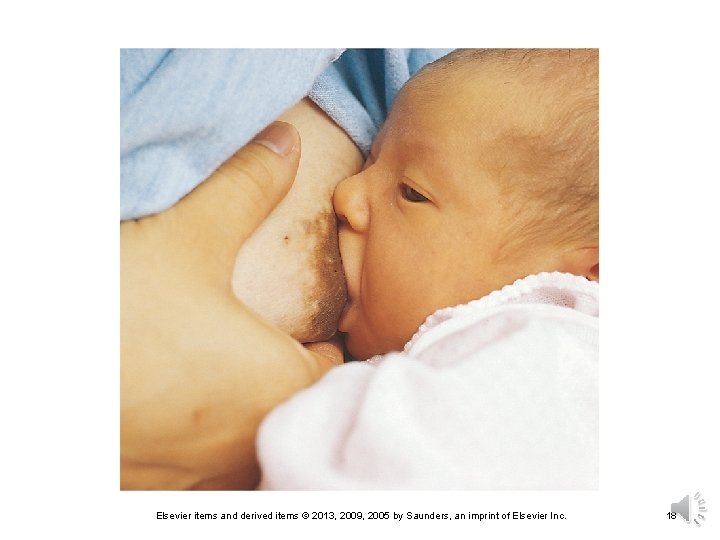
Assisting with Breastfeeding Position of the mother Position of the infant Position of the mother's hands Latch-on techniques Suckling pattern Removal from the breast Elsevier items and derived items © 2013, 2009, 2005 by Saunders, an imprint of Elsevier Inc. 13
Elsevier items and derived items © 2013, 2009, 2005 by Saunders, an imprint of Elsevier Inc. 14
Elsevier items and derived items © 2013, 2009, 2005 by Saunders, an imprint of Elsevier Inc. 15
Elsevier items and derived items © 2013, 2009, 2005 by Saunders, an imprint of Elsevier Inc. 16
Elsevier items and derived items © 2013, 2009, 2005 by Saunders, an imprint of Elsevier Inc. 17
Elsevier items and derived items © 2013, 2009, 2005 by Saunders, an imprint of Elsevier Inc. 18
Infant's Position While Suckling Elsevier items and derived items © 2013, 2009, 2005 by Saunders, an imprint of Elsevier Inc. 19
Feeding Techniques Frequency of feeding Ø 8 -12 times each day until satisfied Sleepy infants Unwrapping the blankets Ø Placing the infant skin to skin with the mother Ø Talking to the infant Ø Changing the diaper Ø Rubbing the baby's back Ø Elsevier items and derived items © 2013, 2009, 2005 by Saunders, an imprint of Elsevier Inc. 20
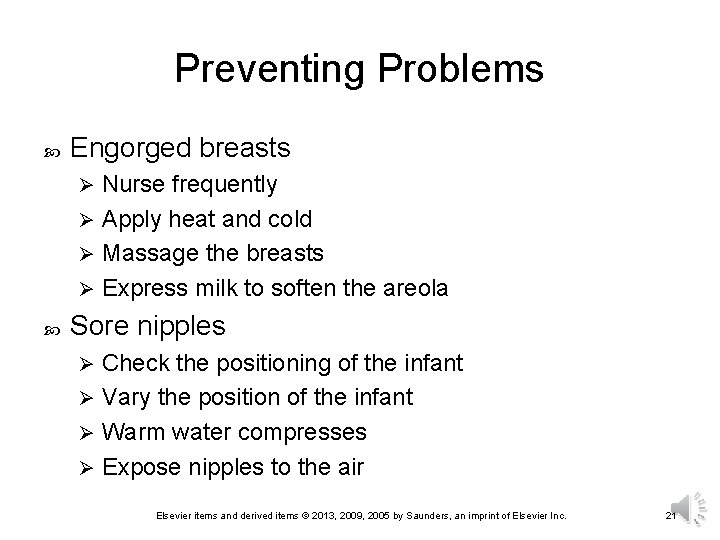
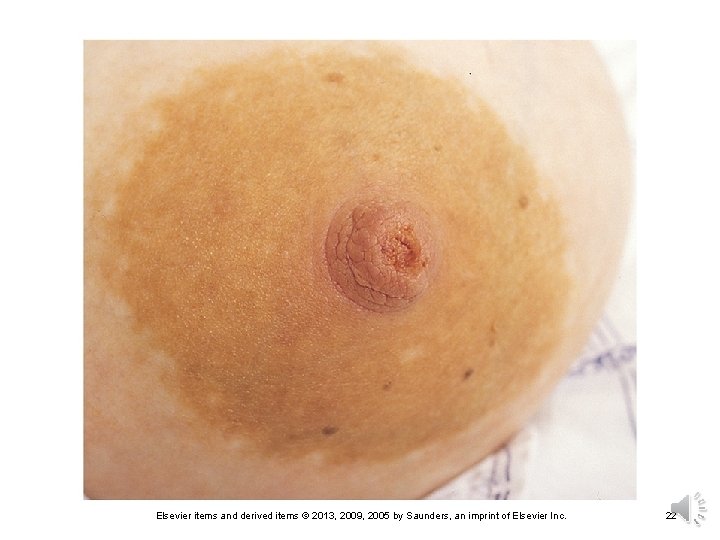
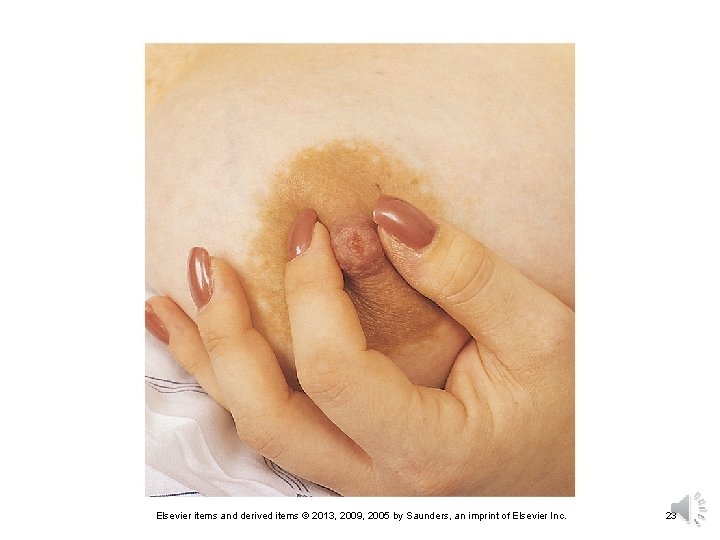
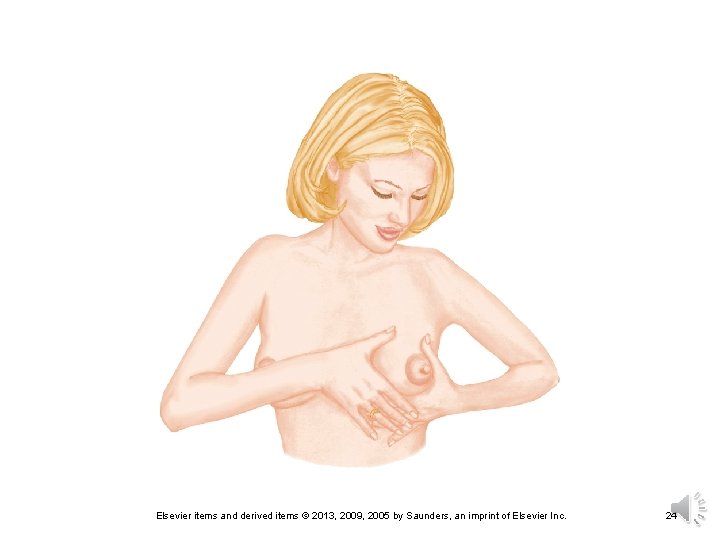
Preventing Problems Engorged breasts Nurse frequently Ø Apply heat and cold Ø Massage the breasts Ø Express milk to soften the areola Ø Sore nipples Check the positioning of the infant Ø Vary the position of the infant Ø Warm water compresses Ø Expose nipples to the air Ø Elsevier items and derived items © 2013, 2009, 2005 by Saunders, an imprint of Elsevier Inc. 21
Elsevier items and derived items © 2013, 2009, 2005 by Saunders, an imprint of Elsevier Inc. 22
Elsevier items and derived items © 2013, 2009, 2005 by Saunders, an imprint of Elsevier Inc. 23
Elsevier items and derived items © 2013, 2009, 2005 by Saunders, an imprint of Elsevier Inc. 24
Signs of Infant Problems with Breastfeeding Falling asleep within 5 minutes Refusal to breastfeed Tongue thrusting Smacking or clicking sounds Dimpling of cheeks Failure to open mouth wide at latch-on No audible swallowing Short choppy motions of the jaw Elsevier items and derived items © 2013, 2009, 2005 by Saunders, an imprint of Elsevier Inc. 25
Signs of Maternal Breastfeeding Problems Hard, tender breasts Painful, red, cracked, blistered, or bleeding nipples Flat or inverted nipples Localized edema or pain in either breast Fever, generalized aching, or malaise Elsevier items and derived items © 2013, 2009, 2005 by Saunders, an imprint of Elsevier Inc. 26
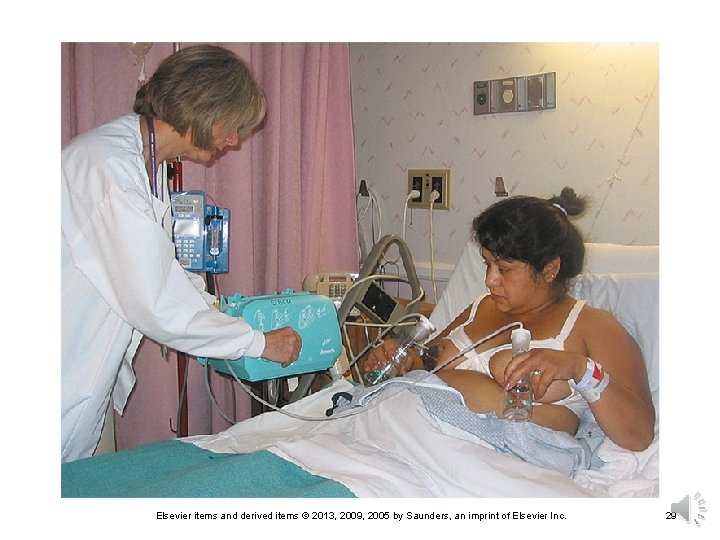
Employment Breastfeeding offers many advantages for working women. Ø Breast pumping Ø They are less likely to miss work because of illness of the infant. Hand or electric pump Milk storage Elsevier items and derived items © 2013, 2009, 2005 by Saunders, an imprint of Elsevier Inc. 27
Elsevier items and derived items © 2013, 2009, 2005 by Saunders, an imprint of Elsevier Inc. 28
Elsevier items and derived items © 2013, 2009, 2005 by Saunders, an imprint of Elsevier Inc. 29
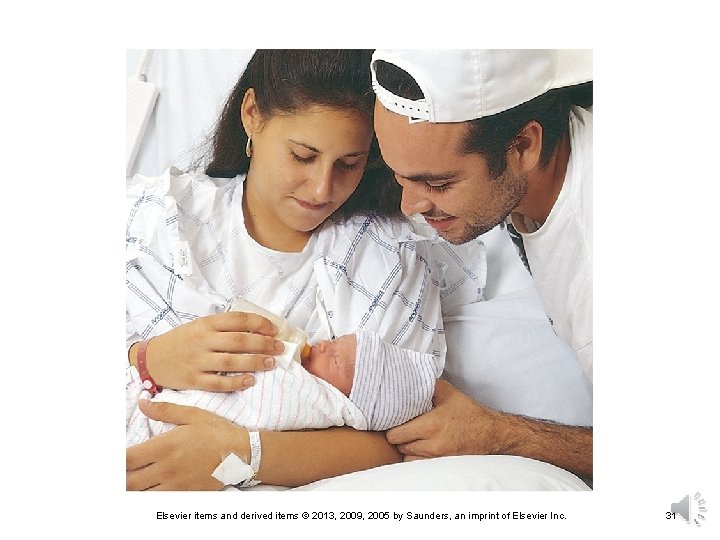
Formula Feeding Types of formula Ready to use Ø Concentrated liquid Ø Powdered Ø Preparation Should be diluted exactly according to directions Ø Should not be heated in the microwave Ø Feeding techniques Elsevier items and derived items © 2013, 2009, 2005 by Saunders, an imprint of Elsevier Inc. 30
Elsevier items and derived items © 2013, 2009, 2005 by Saunders, an imprint of Elsevier Inc. 31
- Slides: 31