
Chapter 23 Metamorphic Textures n Textures are smallscale
- Slides: 12
Chapter 23: Metamorphic Textures n Textures are small-scale features of rocks http: //en. wikipedia. org/wiki/List_of_rock_textures We have already examined the progressive metamorphism of Pelites, mudrocks.
Relict Textures – Inherited from original rock Porphyroclast is a mineral fragment of the original rock before dynamic recrystallization produced the YOUNGER groundmass. A porphyroblast is a large mineral crystal in a metamorphic rock which has grown within the finer grained groundmass.
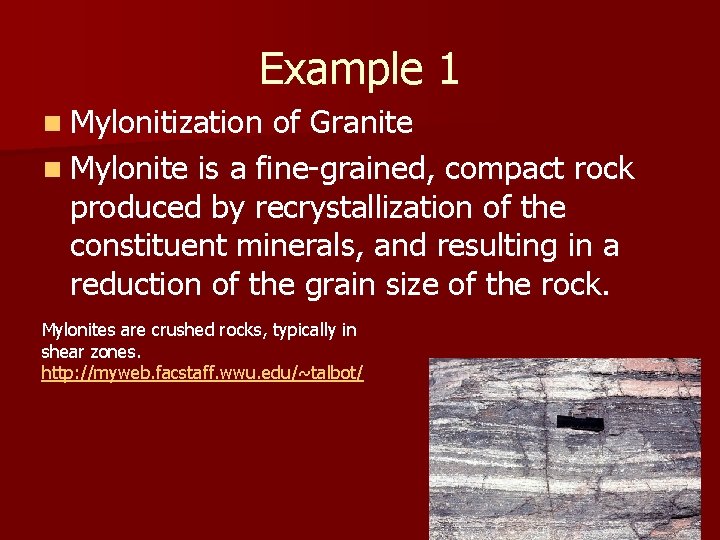
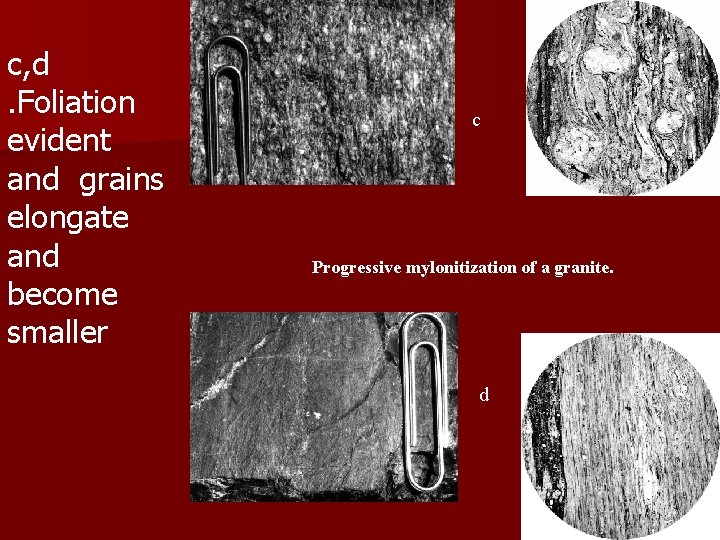
Example 1 n Mylonitization of Granite n Mylonite is a fine-grained, compact rock produced by recrystallization of the constituent minerals, and resulting in a reduction of the grain size of the rock. Mylonites are crushed rocks, typically in shear zones. http: //myweb. facstaff. wwu. edu/~talbot/
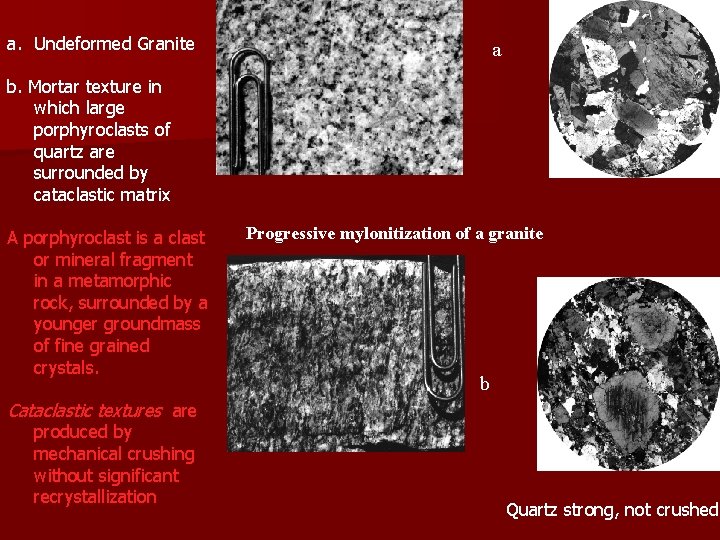
a. Undeformed Granite a b. Mortar texture in which large porphyroclasts of quartz are surrounded by cataclastic matrix A porphyroclast is a clast or mineral fragment in a metamorphic rock, surrounded by a younger groundmass of fine grained crystals. Progressive mylonitization of a granite b Cataclastic textures are produced by mechanical crushing without significant recrystallization Quartz strong, not crushed
c, d. Foliation evident and grains elongate and become smaller c Progressive mylonitization of a granite. d
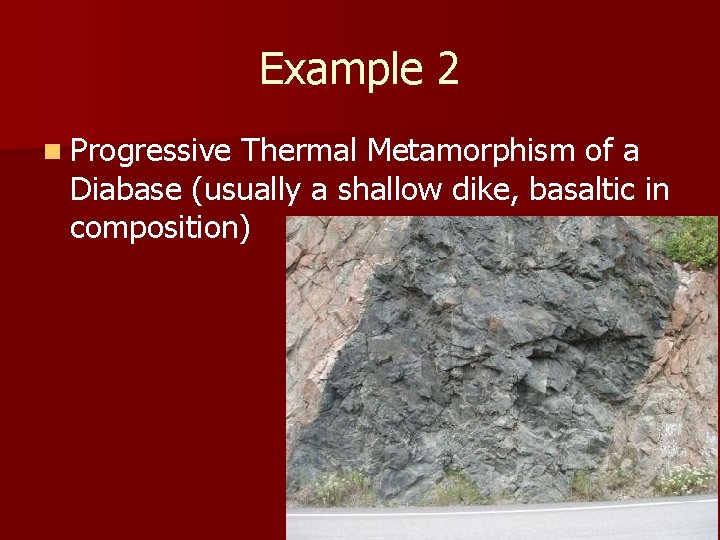
Example 2 n Progressive Thermal Metamorphism of a Diabase (usually a shallow dike, basaltic in composition)
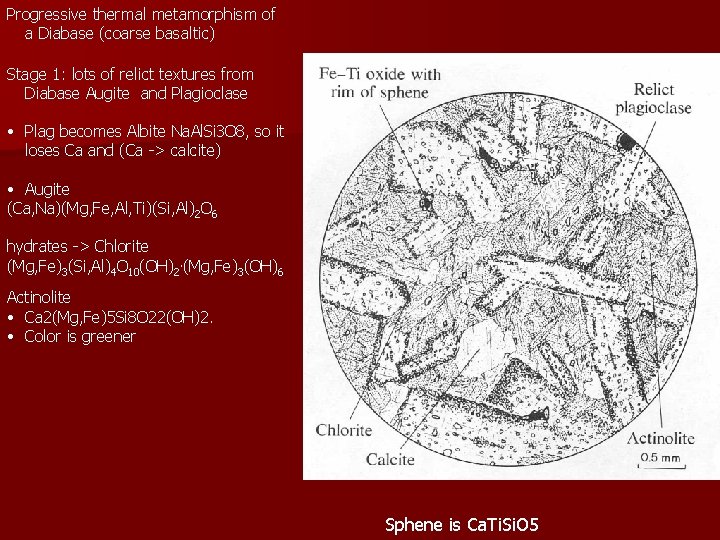
Progressive thermal metamorphism of a Diabase (coarse basaltic) Stage 1: lots of relict textures from Diabase Augite and Plagioclase • Plag becomes Albite Na. Al. Si 3 O 8, so it loses Ca and (Ca -> calcite) • Augite (Ca, Na)(Mg, Fe, Al, Ti)(Si, Al)2 O 6 hydrates -> Chlorite (Mg, Fe)3(Si, Al)4 O 10(OH)2. (Mg, Fe)3(OH)6 Actinolite • Ca 2(Mg, Fe)5 Si 8 O 22(OH)2. • Color is greener Sphene is Ca. Ti. Si. O 5
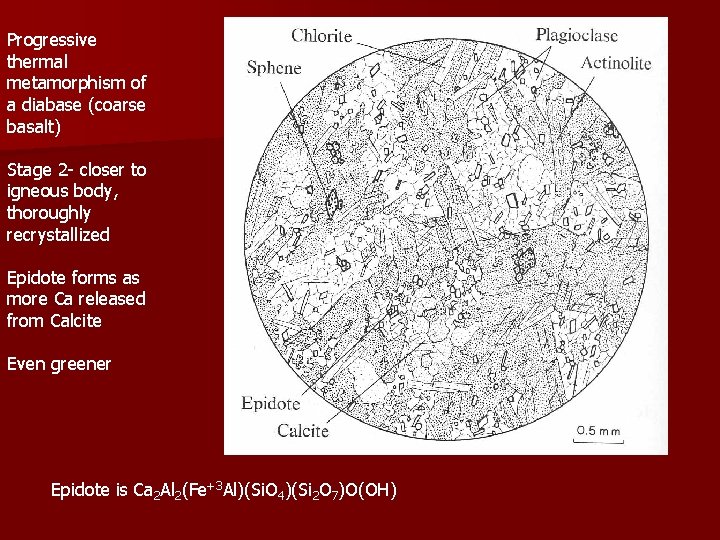
Progressive thermal metamorphism of a diabase (coarse basalt) Stage 2 - closer to igneous body, thoroughly recrystallized Epidote forms as more Ca released from Calcite Even greener Epidote is Ca 2 Al 2(Fe+3 Al)(Si. O 4)(Si 2 O 7)O(OH)
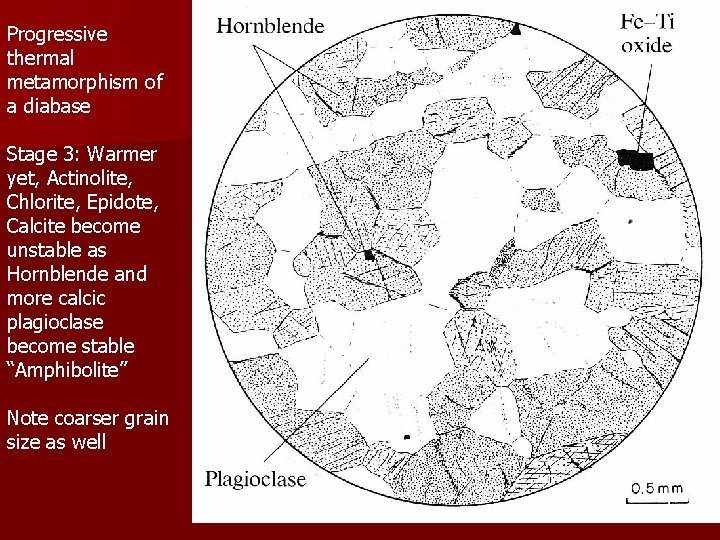
Progressive thermal metamorphism of a diabase Stage 3: Warmer yet, Actinolite, Chlorite, Epidote, Calcite become unstable as Hornblende and more calcic plagioclase become stable “Amphibolite” Note coarser grain size as well
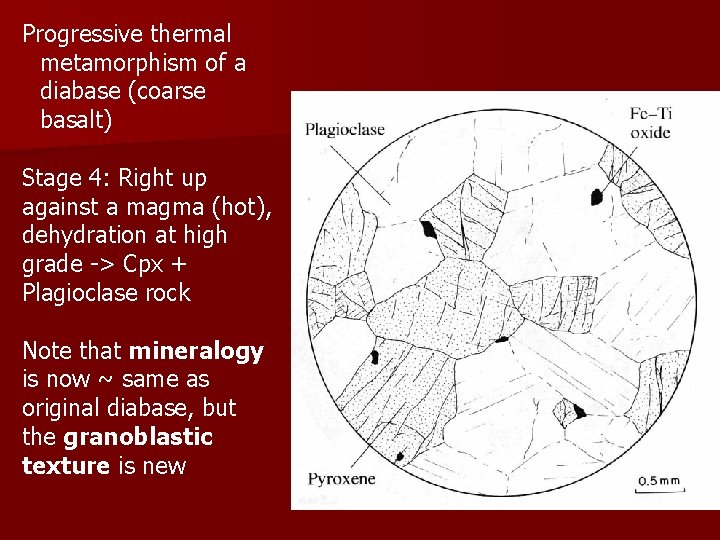
Progressive thermal metamorphism of a diabase (coarse basalt) Stage 4: Right up against a magma (hot), dehydration at high grade -> Cpx + Plagioclase rock Note that mineralogy is now ~ same as original diabase, but the granoblastic texture is new
Porphyroblasts n n n A porphyroblast is a large mineral crystal in a metamorphic rock which has grown within the finer grained groundmass. Porphyroblasts have difficulty nucleating, are separated by large distances Surrounding matrix gets depleted in components Components must therefore travel long distances by diffusion. Crystallization occurs via single diffusing ions, not by assembly of clumps as in crystallization from liquids.
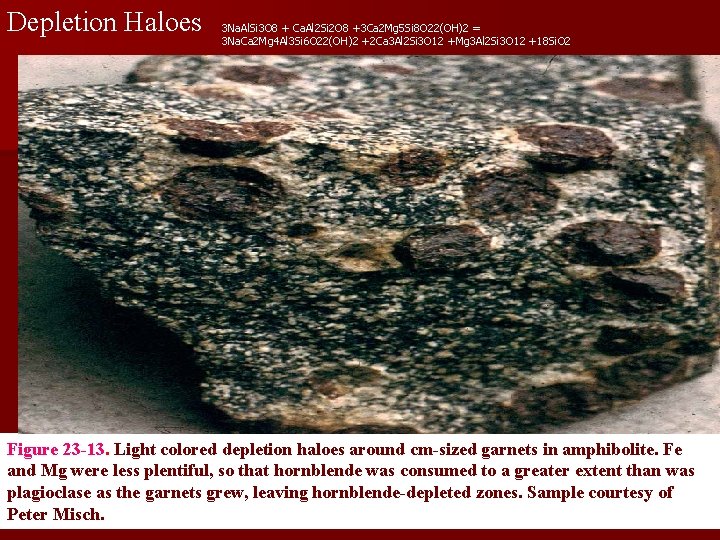
Depletion Haloes 3 Na. Al. Si 3 O 8 + Ca. Al 2 Si 2 O 8 +3 Ca 2 Mg 5 Si 8 O 22(OH)2 = 3 Na. Ca 2 Mg 4 Al 3 Si 6 O 22(OH)2 +2 Ca 3 Al 2 Si 3 O 12 +Mg 3 Al 2 Si 3 O 12 +18 Si. O 2 Figure 23 -13. Light colored depletion haloes around cm-sized garnets in amphibolite. Fe and Mg were less plentiful, so that hornblende was consumed to a greater extent than was plagioclase as the garnets grew, leaving hornblende-depleted zones. Sample courtesy of Peter Misch.