
Chapter 23 Interior Walls Partitions Interior Partitions Performance
- Slides: 28
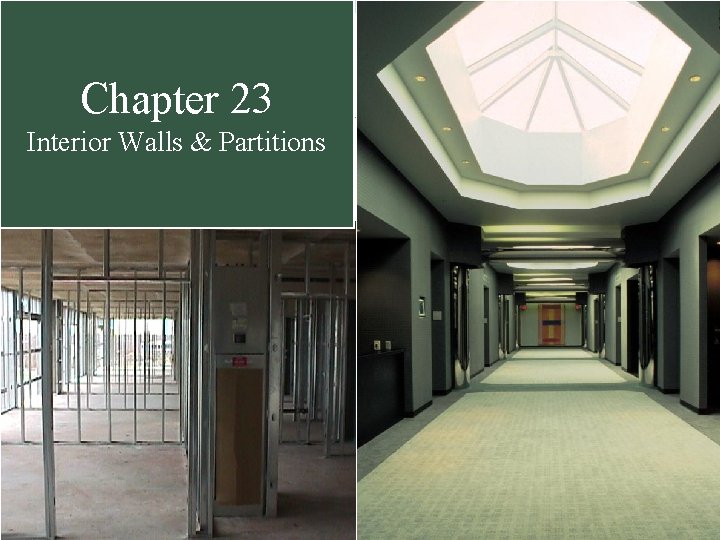
Chapter 23 Interior Walls & Partitions
Interior Partitions Performance Criteria èStrength èFire Resistance èDurability èAcoustical Isolation Materials èMetal or wood studs faced with plaster or gypsum board èConcrete block (CMU) or structural clay tiles
Types of Interior Partitions Fire Walls Shaft Walls Fire-Rated Walls Smoke Barriers “Other” Non-bearing and/or non-rated
Elements common to Fire Walls, Shaft Walls, Rated Walls & Smoke Walls Wall Assembly is tested (often by UL) èMaterials (type, size, composition, etc. ) èInstallation (method, application, anchorage, etc) èActual construction must comply Extend from rated assembly to rated assembly Wall Penetrations are Restricted èOpening size, material used, installation, operation èOpening assembly also rated èEX: fire dampers, pipe selves, door closures, etc.
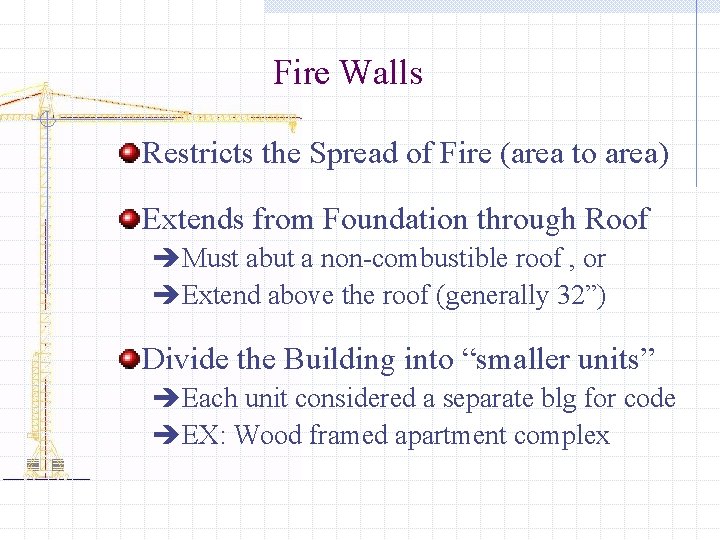
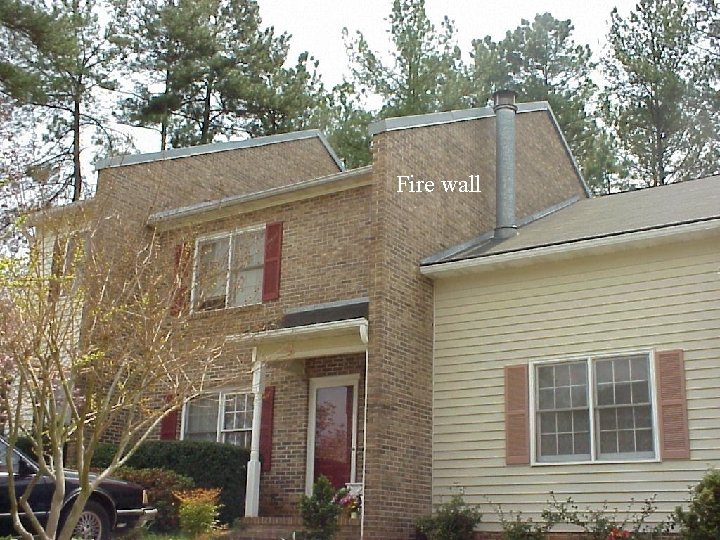
Fire Walls Restricts the Spread of Fire (area to area) Extends from Foundation through Roof èMust abut a non-combustible roof , or èExtend above the roof (generally 32”) Divide the Building into “smaller units” èEach unit considered a separate blg for code èEX: Wood framed apartment complex
Fire wall
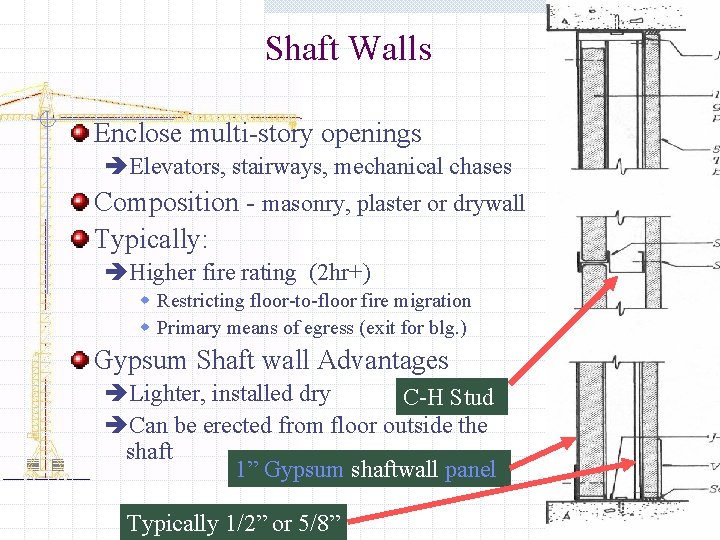
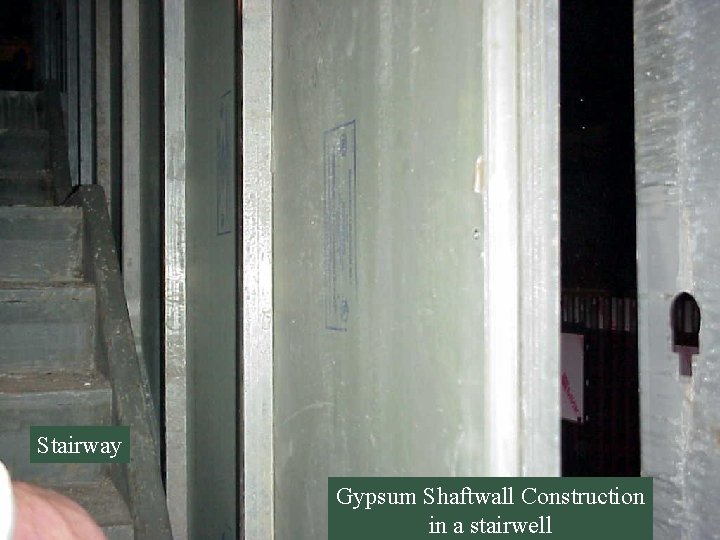
Shaft Walls Enclose multi-story openings èElevators, stairways, mechanical chases Composition - masonry, plaster or drywall Typically: èHigher fire rating (2 hr+) w Restricting floor-to-floor fire migration w Primary means of egress (exit for blg. ) Gypsum Shaft wall Advantages èLighter, installed dry C-H Stud èCan be erected from floor outside the shaft 1” Gypsum shaftwall panel Typically 1/2” or 5/8”
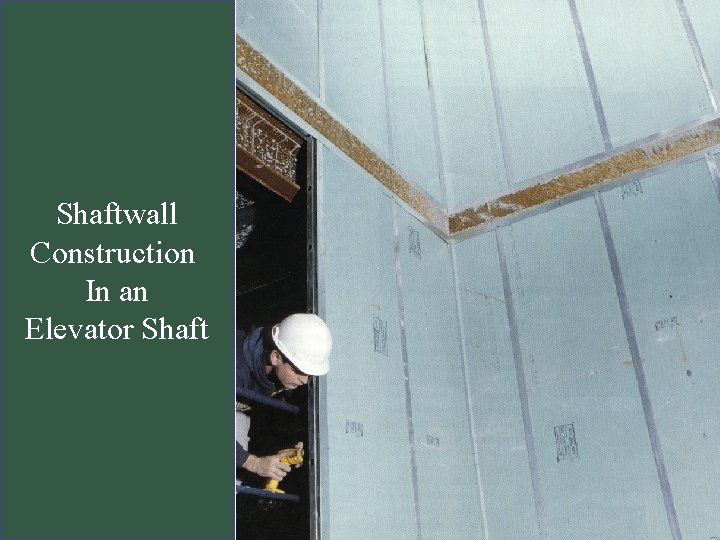
Shaftwall Construction In an Elevator Shaft
Stairway Gypsum Shaftwall Construction in a stairwell
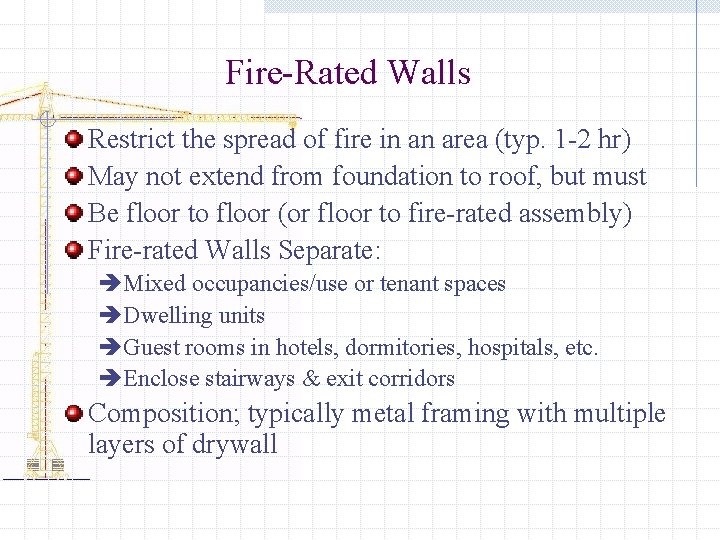
Fire-Rated Walls Restrict the spread of fire in an area (typ. 1 -2 hr) May not extend from foundation to roof, but must Be floor to floor (or floor to fire-rated assembly) Fire-rated Walls Separate: èMixed occupancies/use or tenant spaces èDwelling units èGuest rooms in hotels, dormitories, hospitals, etc. èEnclose stairways & exit corridors Composition; typically metal framing with multiple layers of drywall
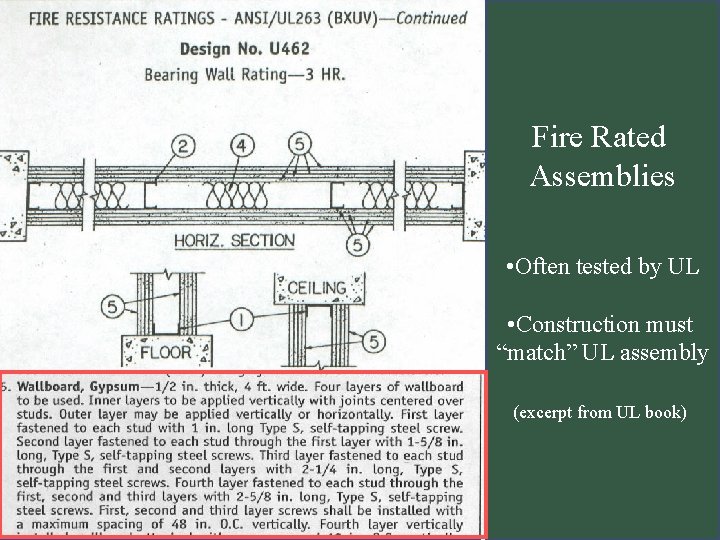
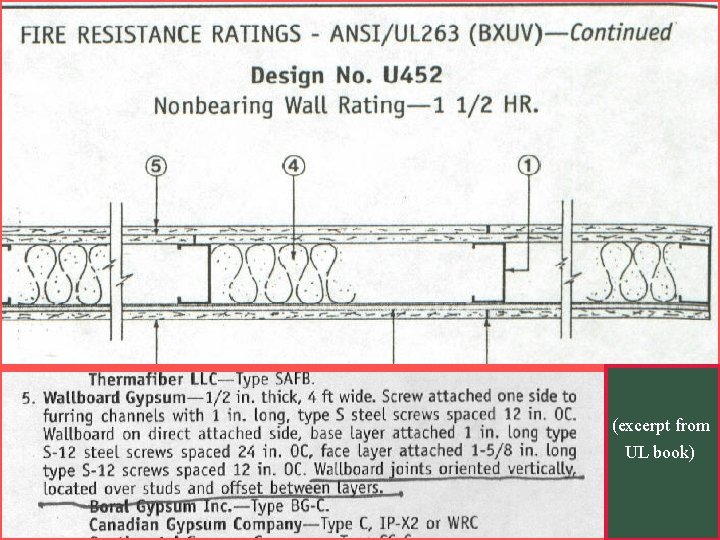
Fire Rated Assemblies • Often tested by UL • Construction must “match” UL assembly (excerpt from UL book)
(excerpt from UL book)
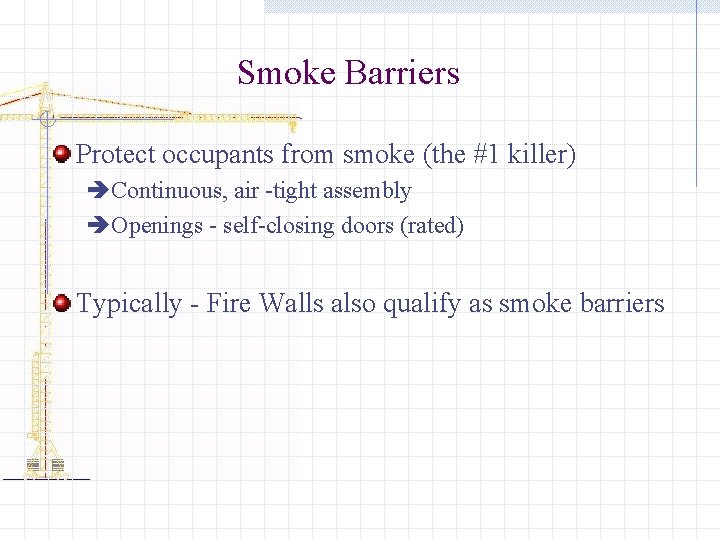
Smoke Barriers Protect occupants from smoke (the #1 killer) èContinuous, air -tight assembly èOpenings - self-closing doors (rated) Typically - Fire Walls also qualify as smoke barriers
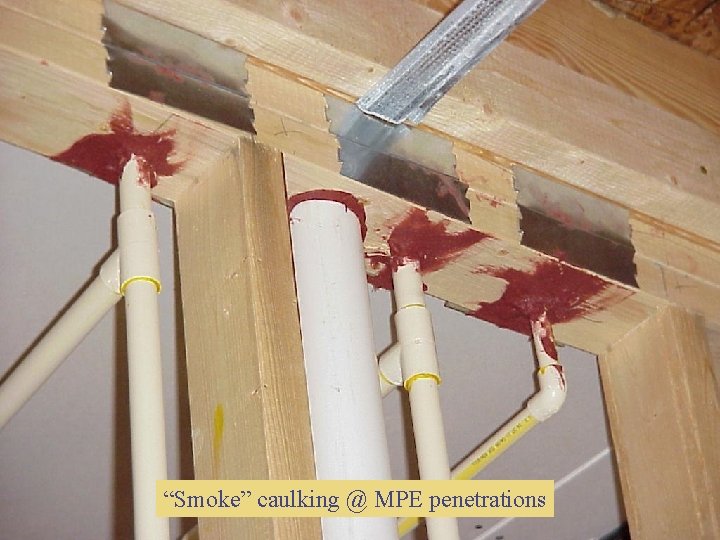
“Smoke” caulking @ MPE penetrations
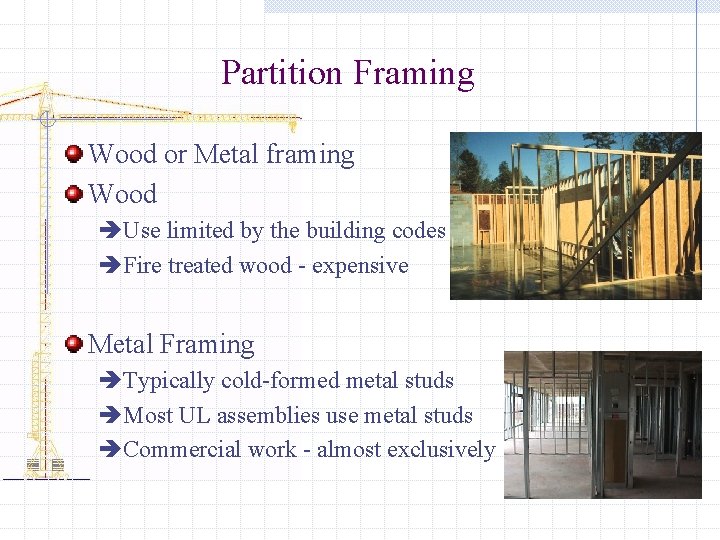
Partition Framing Wood or Metal framing Wood èUse limited by the building codes èFire treated wood - expensive Metal Framing èTypically cold-formed metal studs èMost UL assemblies use metal studs èCommercial work - almost exclusively
Plaster Generic term - Cementitious substances (w/ or w/o gypsum) Plaster Systems èOver Expanded Metal Lath (3 -coat) w Scratch coat - cover lath w Brown coat - add thickness, smooth base w Finish Coat èApplied to CMU (lath or bonding agent) èVeneer Plaster - thin coat over a gypsum board base èStucco - similar, but accessories must resist the elements
Plaster Wet System Relatively expensive system Typical uses èSpaces with High Moisture èSurfaces where Impact Resistance is req’d
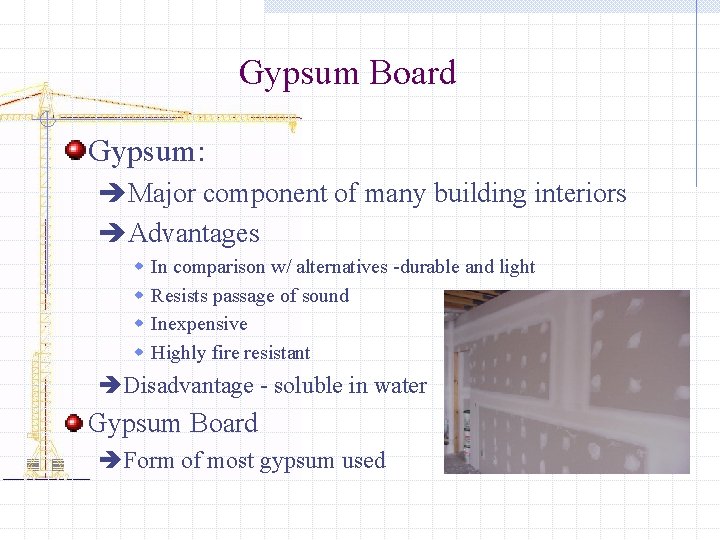
Gypsum Board Gypsum: èMajor component of many building interiors èAdvantages w w In comparison w/ alternatives -durable and light Resists passage of sound Inexpensive Highly fire resistant èDisadvantage - soluble in water Gypsum Board èForm of most gypsum used
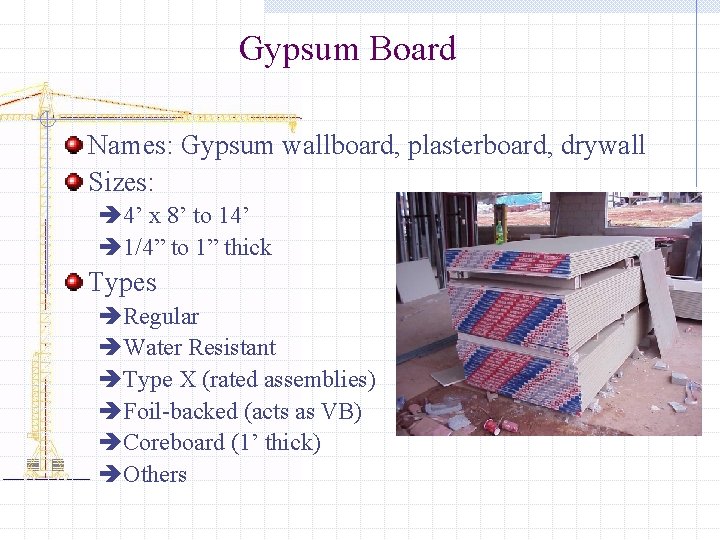
Gypsum Board Names: Gypsum wallboard, plasterboard, drywall Sizes: è 4’ x 8’ to 14’ è 1/4” to 1” thick Types èRegular èWater Resistant èType X (rated assemblies) èFoil-backed (acts as VB) èCoreboard (1’ thick) èOthers
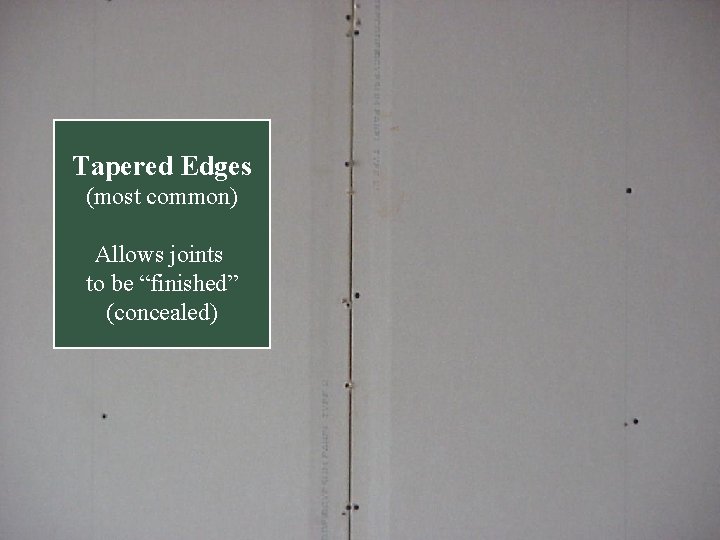
Gypsum Board Edges: Tapered Edges (most common) Allows joints to be “finished” (concealed)
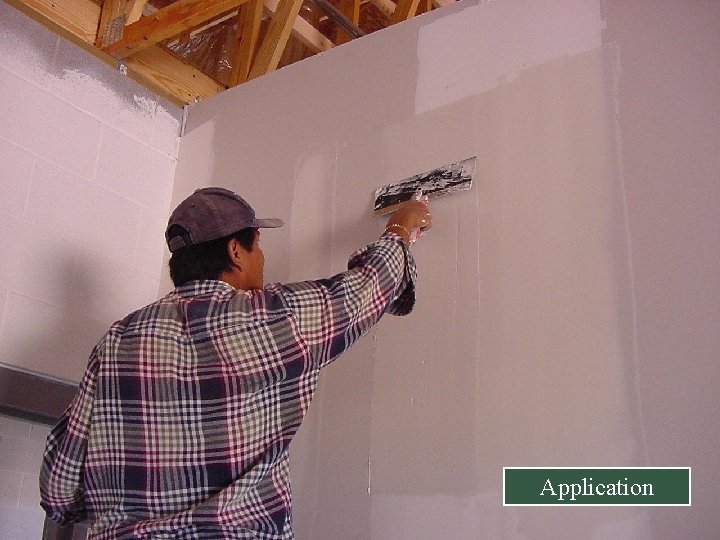
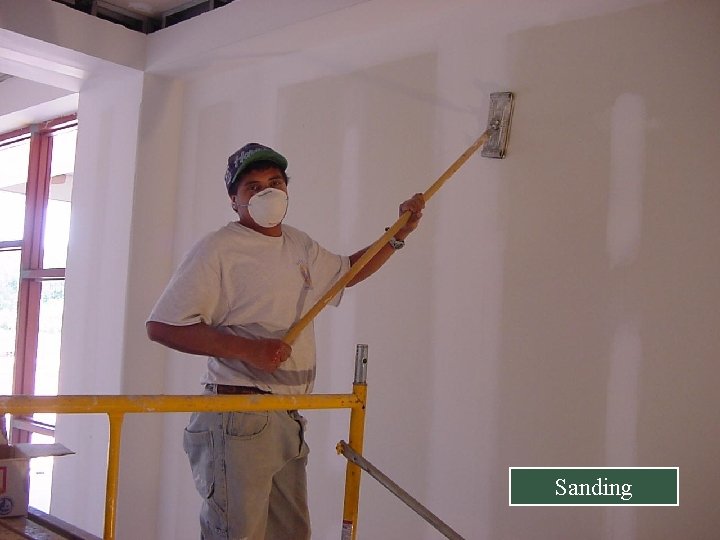
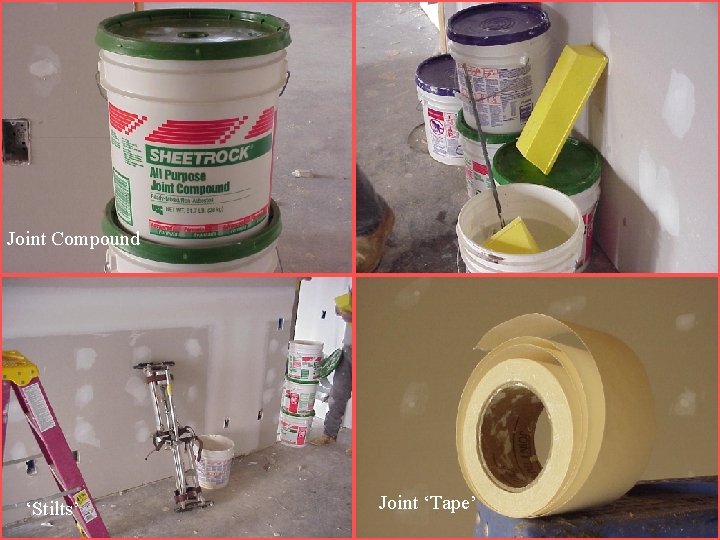
Gypsum Board Installation Install partition framing MPE partition rough-in Hang gypsum drywall (screws, ring-shank nails) Finish gypsum drywall joints, edges, & corners ècorner beads, metal trim, and accessories èTape (& bed)- 1 st coat & tape è 2 nd coat èFinish - 3 rd/final coat (may require sanding 1 st) èSand
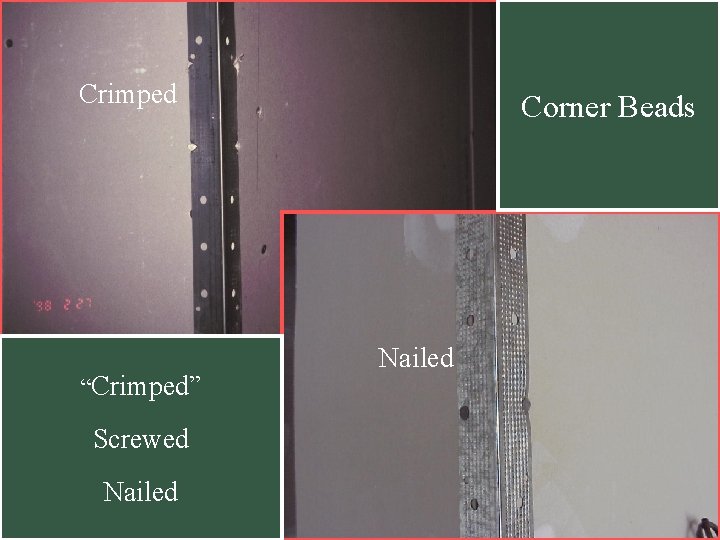
Crimped “Crimped” Screwed Nailed Corner Beads Nailed
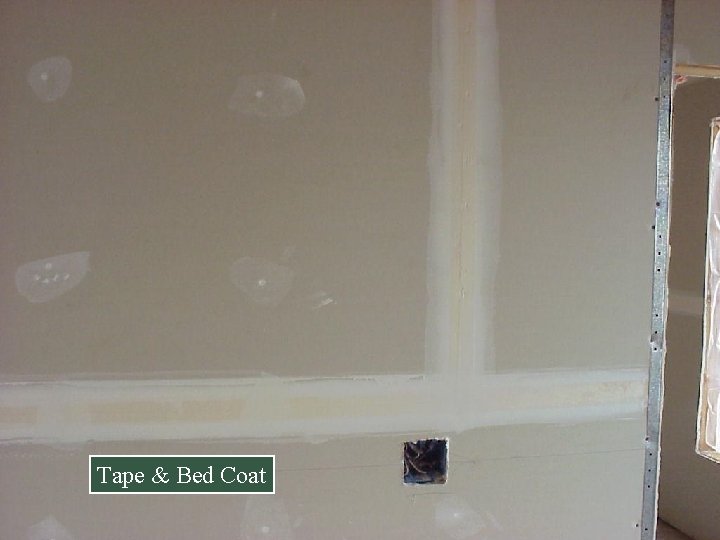
Tape & Bed Coat
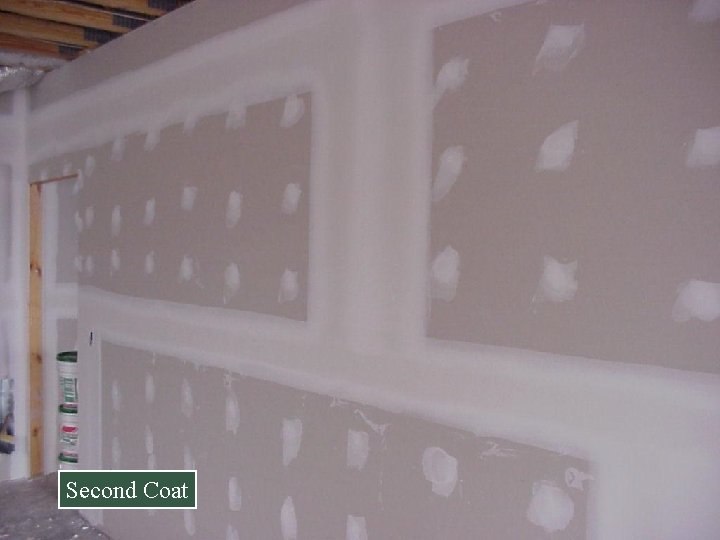
Second Coat
Application
Sanding
Joint Compound ‘Stilts’ Joint ‘Tape’
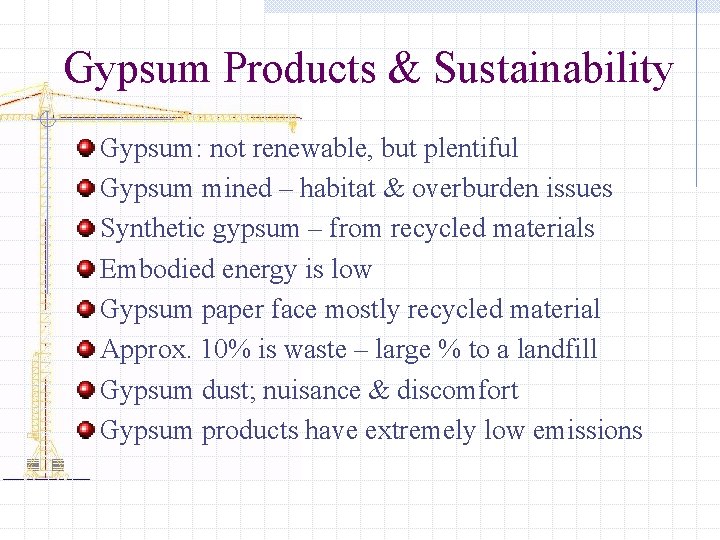
Gypsum Products & Sustainability Gypsum: not renewable, but plentiful Gypsum mined – habitat & overburden issues Synthetic gypsum – from recycled materials Embodied energy is low Gypsum paper face mostly recycled material Approx. 10% is waste – large % to a landfill Gypsum dust; nuisance & discomfort Gypsum products have extremely low emissions