
Chapter 23 Growth of Western Democracies 1815 1914
- Slides: 35
Chapter 23: Growth of Western Democracies (1815 -1914)
Section 1: Democratic Reform in Britain
Reforming Parliament l l l 1815 - Britain was a constitutional monarchy with a Parliament and two political parties House of Commons- only 5% of the people had the right to vote House of Lords- hereditary nobles- could veto any bill passed by the House of Commons
Reformers Press for Change l l Laws kept people from voting Catholics and non-Anglican Protestants could not vote Parliament changed who had the right to vote Population shift due to Industrial Rev.
Reform Act of 1832 l l l Whigs and Tories Whig- middle class Tory- nobles, landowners, and others who had high income Reform Act- redistributed seats in the House of Commons Act gave representation to large towns and cities and eliminated rotten boroughs
Reform Act of 1832 l l l Enlarged the electorate Kept landowning as a requirement to vote Did not bring full democracy
Chartist Movement l l l Reform Act did not help rural or urban workers People’s Charter- document- demanded universal male suffrage and annual Parliamentary elections Demand for secret ballot Government moved to suppress the march Movement was declined
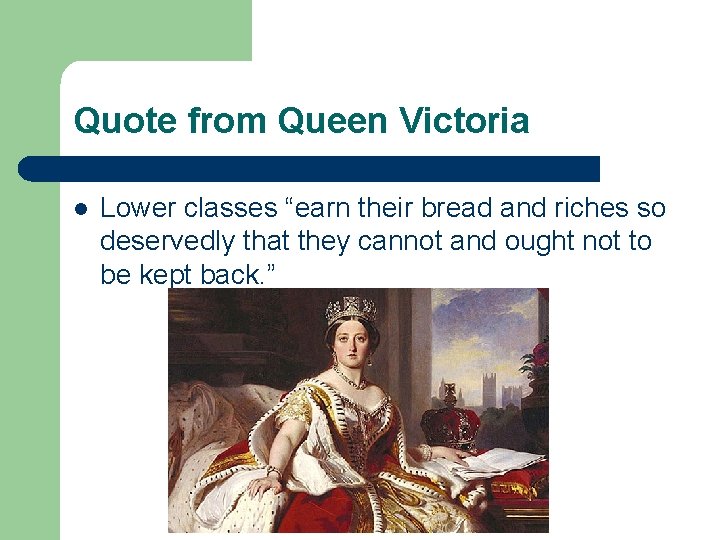
Victorian Age l l l 1837 -1901: Queen Victoria was the great symbol of Great Britain Reign was the longest in British history Victorian ideals: duty, thrift, honesty, hard work, respect Strict code of morals Middle Class was at the center
Quote from Queen Victoria l Lower classes “earn their bread and riches so deservedly that they cannot and ought not to be kept back. ”
New Era in British Politics l l 1860 s- Old political parties regrouped under new leadership Benjamin Disraeli- forged Tories into modern Conservative Party William Gladstone- Whigs became the liberal party 1868 -1880: parliament was between two parties
New Era in British Politics l l Disraeli gave the right to vote to working class men- doubled the size of the electorate Gladstone extended suffrage to farmers By the end of the century- almost universal male suffrage Constitutional Monarchy with a prime minister and cabinet
Limiting the Lords l l l 1900 s- House of Commons men defeated the House of Lords 1911 - Liberal gov. restricted power of lords Lords backed down House of Lords lost power House of Commons was supreme
Section 2: Social and Economic Reform in Britain
A Series of Reforms l l l Mid 1800 s Parliament passed a variety of new laws Free trade began between countries Corn laws- imposed high tariffs on imported grain – – Corn- all cereal grains Farmers and wealthy landowners supported corn laws
Campaign Against Slavery l l Enlightenment thinkers- against slavery British carried more Africans than any other country 1807 - Britain was the first European country to abolish the slave trade 1833 - Parliament passed a law banning slavery
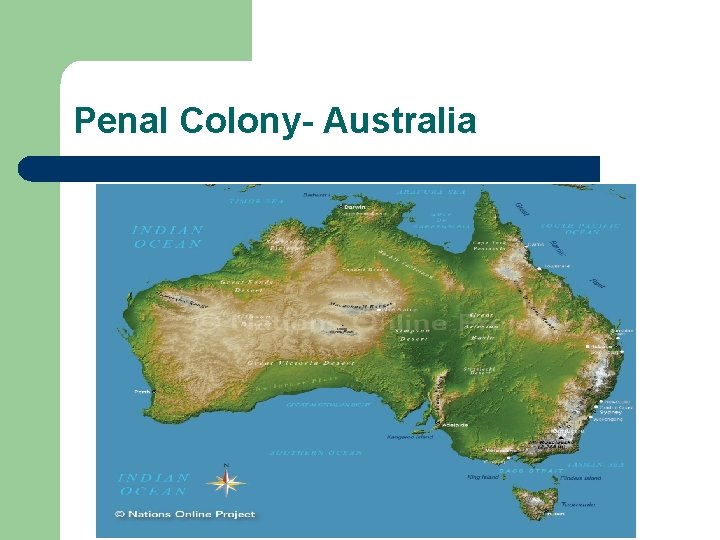
Crime and Punishment l l l Early 1800 s- more than 200 crimes were punishable by death 1850 - death penalty was reserved for murder, piracy, treason, and arson Penal colonies- settlements for convicts
Penal Colony- Australia
Victories for the Working Class l l 1840 s- Parliament passed laws to improve social conditions 1847 - Law limited women and children to a 10 -hour workday Parliament sent inspectors to see that the laws were enforced Unions- won higher wages, shorter working hours, improved the lives of the working class
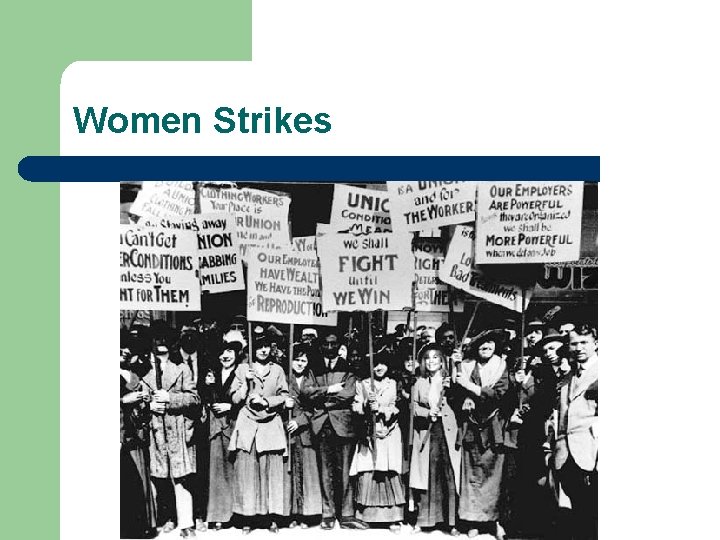
Women Strikes
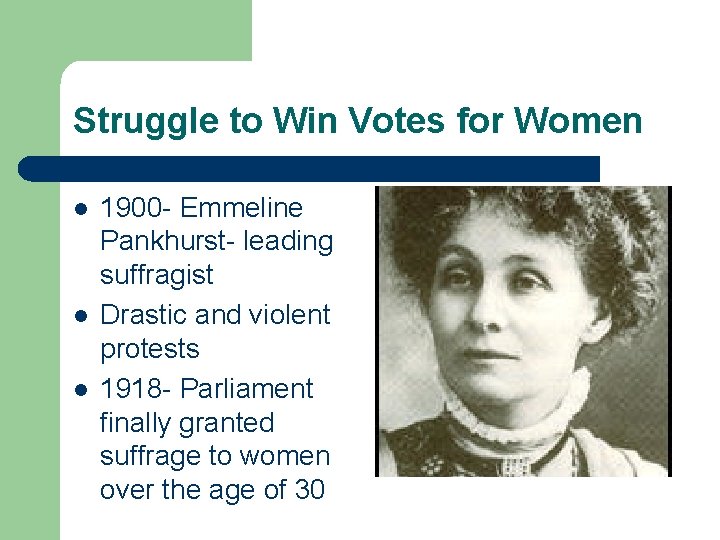
Struggle to Win Votes for Women l l l 1900 - Emmeline Pankhurst- leading suffragist Drastic and violent protests 1918 - Parliament finally granted suffrage to women over the age of 30
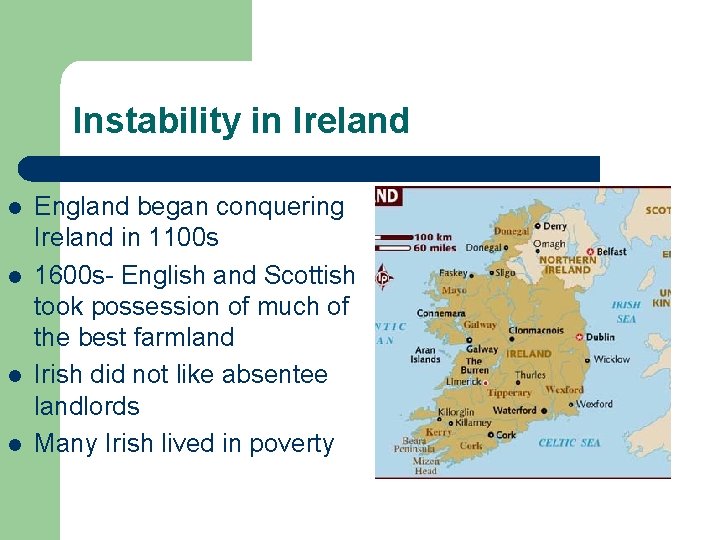
Instability in Ireland l l England began conquering Ireland in 1100 s 1600 s- English and Scottish took possession of much of the best farmland Irish did not like absentee landlords Many Irish lived in poverty
Irish Nationalism l l l 1800 s- Irish campaigned for freedom Daniel O’Connel “the liberator” 1829 - Parliament passed the Catholic Emancipation Act- Irish Catholics got the right to vote and to hold political office
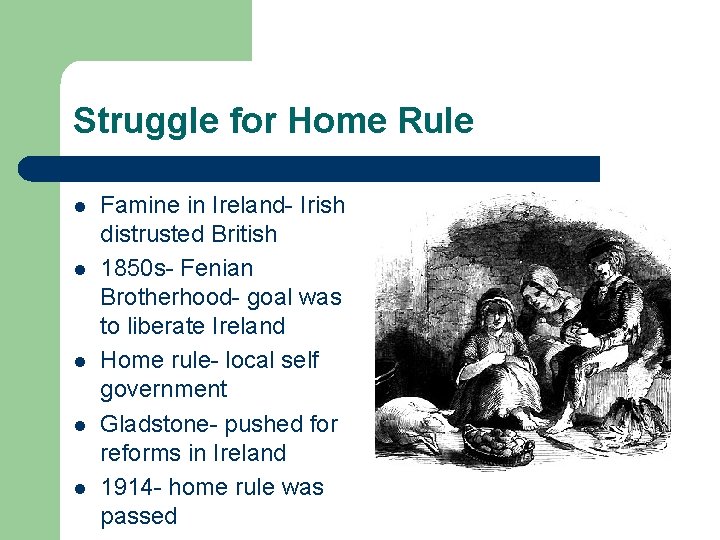
Struggle for Home Rule l l l Famine in Ireland- Irish distrusted British 1850 s- Fenian Brotherhood- goal was to liberate Ireland Home rule- local self government Gladstone- pushed for reforms in Ireland 1914 - home rule was passed
Section 3: Division and Democracy in France
France after Franco-Prussian War l After the war, France was no longer the dominate power in Europe
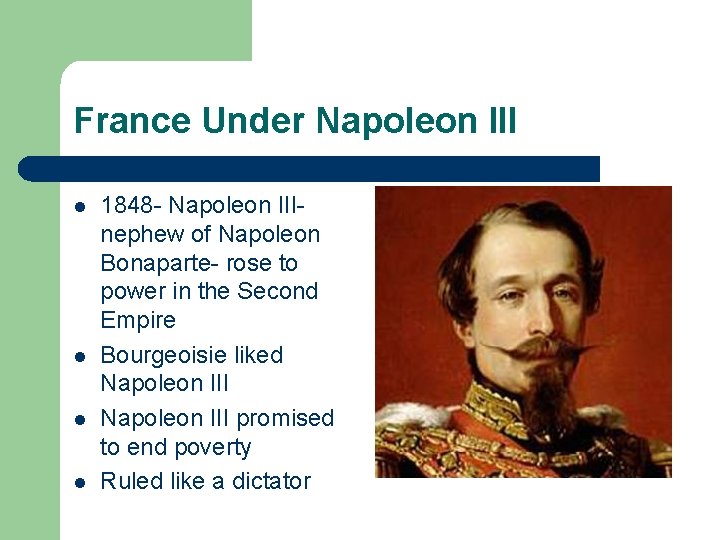
France Under Napoleon III l l 1848 - Napoleon IIInephew of Napoleon Bonaparte- rose to power in the Second Empire Bourgeoisie liked Napoleon III promised to end poverty Ruled like a dictator
France Under Napoleon III l l l Napoleon appointed his cabinet, upper house of the legislature, and many officials Debate was limited, newspapers had strict censorship Napoleon III issues a new constitution and democratic rights
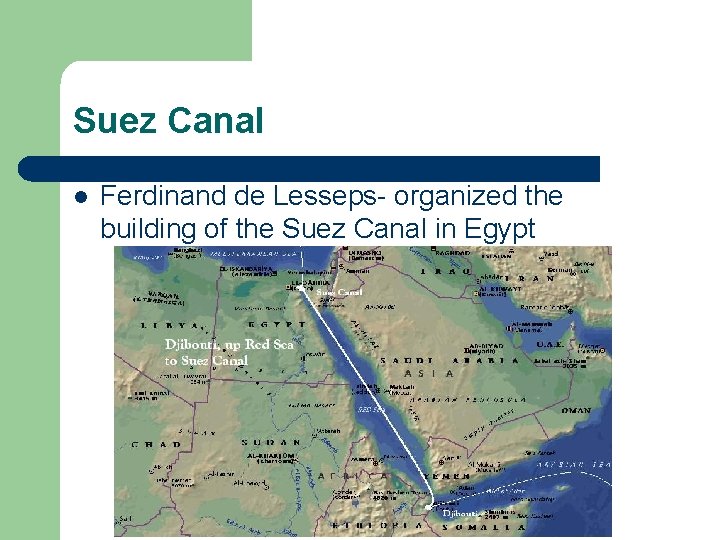
Suez Canal l Ferdinand de Lesseps- organized the building of the Suez Canal in Egypt
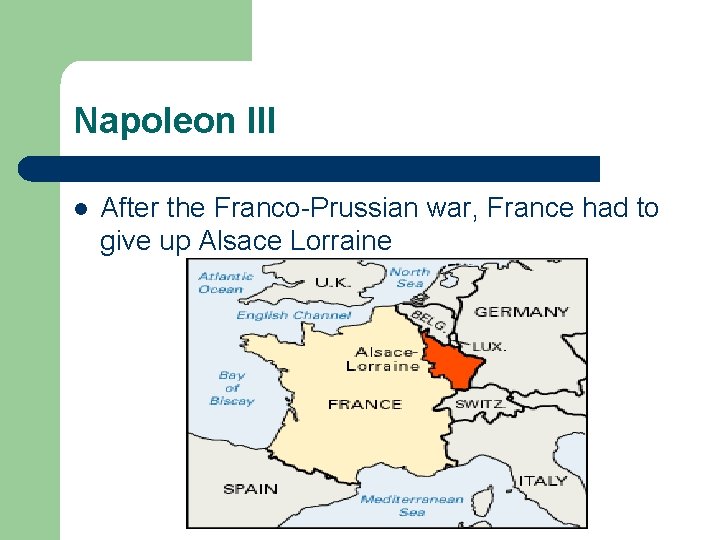
Napoleon III l After the Franco-Prussian war, France had to give up Alsace Lorraine
Challenges of the Third Republic l l l Napoleon was captured Republicans take over starting the Third Republicans bring in new National Assembly Radicals wanted new socialist order National Assembly ordered Paris Commune to be disband
New Government form for France l New republic had 2 house legislature – Chamber of Deputies and Senate – Parties: royalists, constitutional monarchists, moderate republicans, radicals No single party could win a majority in the legislature –
Anti-Semitism and Dreyfus Affair l l 1894 - Alfred Dreyfus- high ranking army officer- accused of spying on Germany Dreyfus was Jewish Dreyfus stated he was innocent but was sent to Devil’s Island 1896 - government found the actual spy; no new trial for Dreyfus
Anti-Semitism and Dreyfus Affair l l 1898 - Emile Zola- charged army and gov. with suppressing the truth Zola was convicted of libel 1906 - Court cleared Dreyfus Anti-Semites- members of the lower middle class
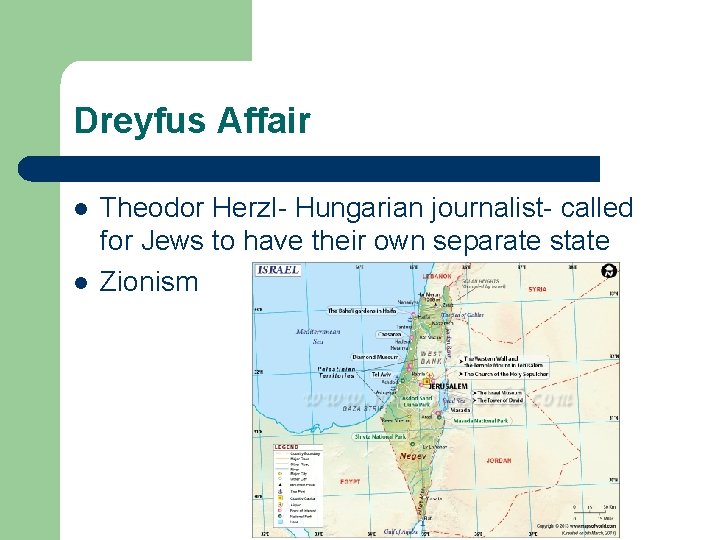
Dreyfus Affair l l Theodor Herzl- Hungarian journalist- called for Jews to have their own separate state Zionism
Reforms in France l l 1900 s- France passed laws regulating wages, hours, and safety conditions of workers Free public schooling Tried to remove Church involvement in government 1909 - Jeanne-Elizabeth Schmahl- French Union for Women’s Suffrage