
Chapter 23 Faradays Law Two Ways to Produce
- Slides: 20
Chapter 23 Faraday’s Law
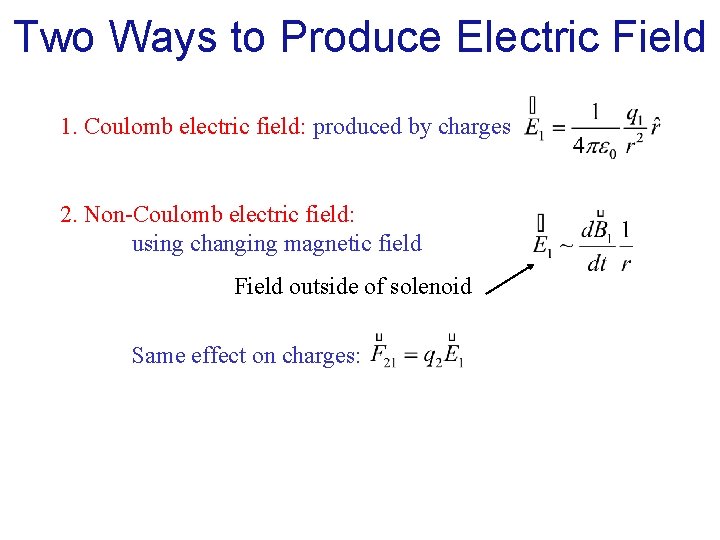
Two Ways to Produce Electric Field 1. Coulomb electric field: produced by charges 2. Non-Coulomb electric field: using changing magnetic field Field outside of solenoid Same effect on charges:
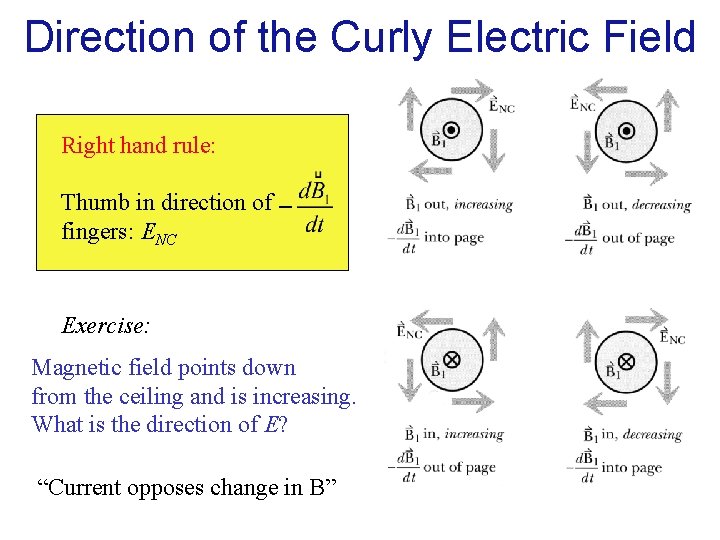
Direction of the Curly Electric Field Right hand rule: Thumb in direction of fingers: ENC Exercise: Magnetic field points down from the ceiling and is increasing. What is the direction of E? “Current opposes change in B”
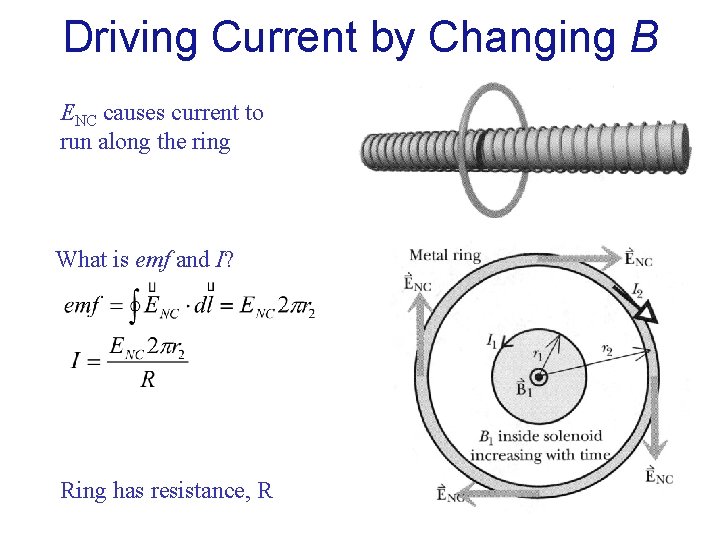
Driving Current by Changing B ENC causes current to run along the ring What is emf and I? Ring has resistance, R
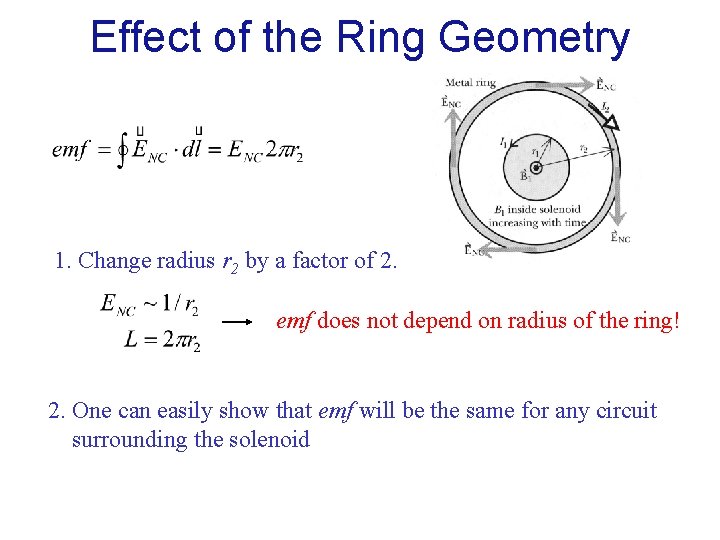
Effect of the Ring Geometry 1. Change radius r 2 by a factor of 2. emf does not depend on radius of the ring! 2. One can easily show that emf will be the same for any circuit surrounding the solenoid
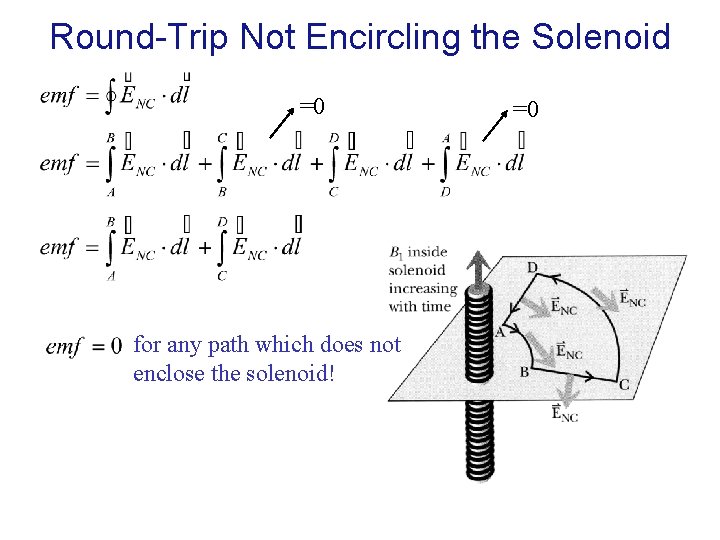
Round-Trip Not Encircling the Solenoid =0 for any path which does not enclose the solenoid! =0
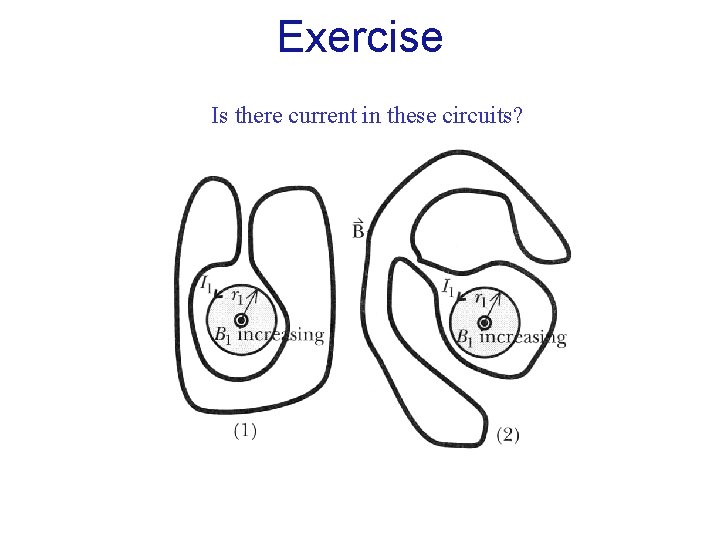
Exercise Is there current in these circuits?
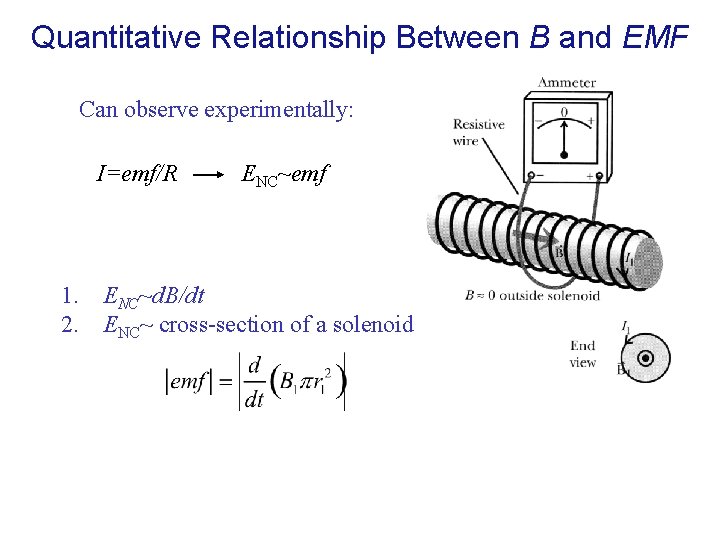
Quantitative Relationship Between B and EMF Can observe experimentally: I=emf/R ENC~emf 1. ENC~d. B/dt 2. ENC~ cross-section of a solenoid
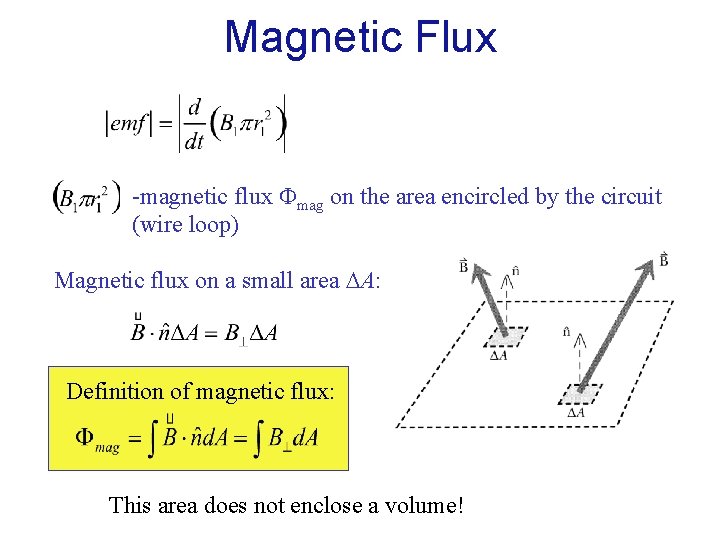
Magnetic Flux -magnetic flux mag on the area encircled by the circuit (wire loop) Magnetic flux on a small area A: Definition of magnetic flux: This area does not enclose a volume!
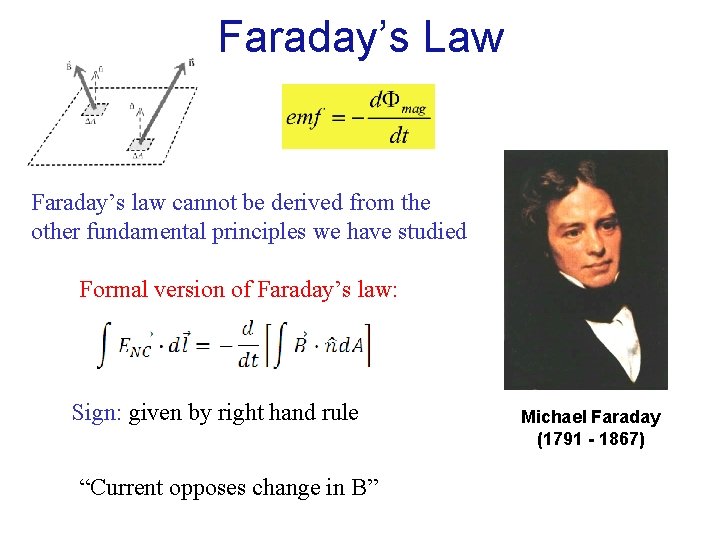
Faraday’s Law Faraday’s law cannot be derived from the other fundamental principles we have studied Formal version of Faraday’s law: Sign: given by right hand rule “Current opposes change in B” Michael Faraday (1791 - 1867)
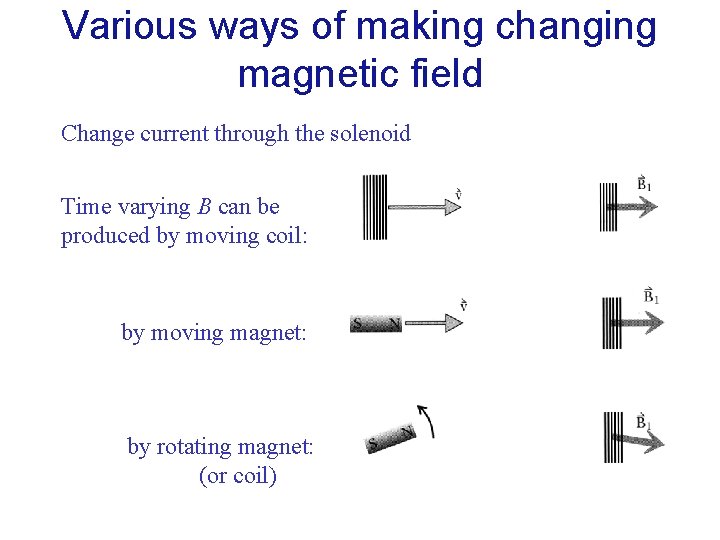
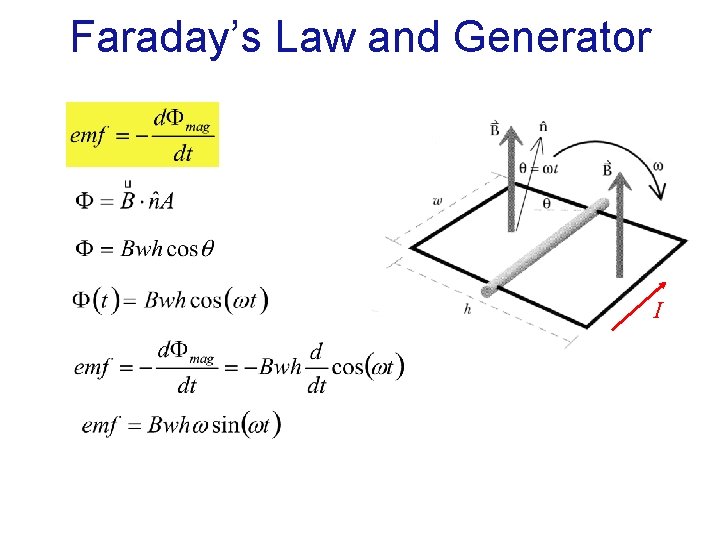
Various ways of making changing magnetic field Change current through the solenoid Time varying B can be produced by moving coil: by moving magnet: by rotating magnet: (or coil)
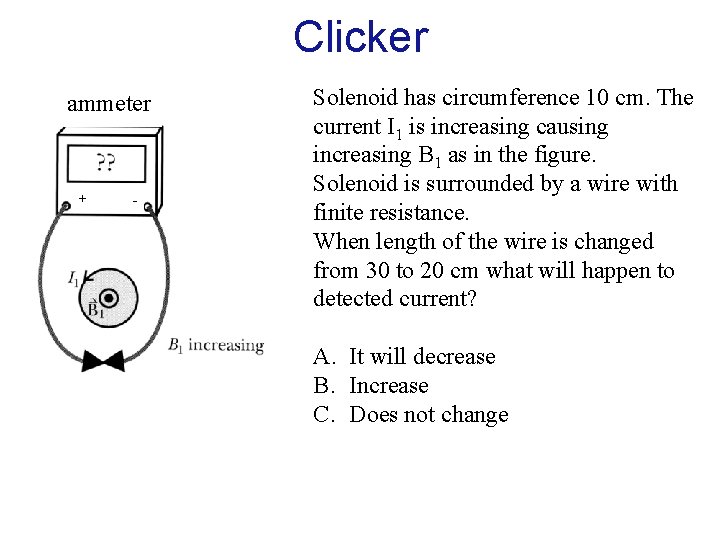
Clicker ammeter + - Solenoid has circumference 10 cm. The current I 1 is increasing causing increasing B 1 as in the figure. Solenoid is surrounded by a wire with finite resistance. When length of the wire is changed from 30 to 20 cm what will happen to detected current? A. It will decrease B. Increase C. Does not change
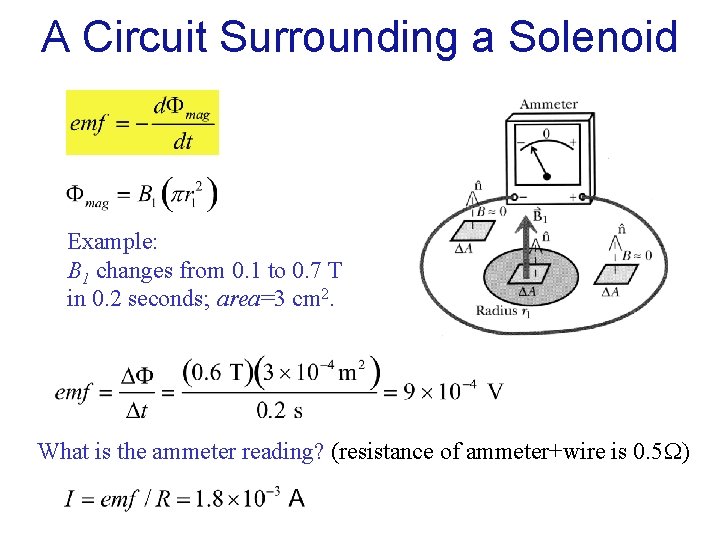
A Circuit Surrounding a Solenoid Example: B 1 changes from 0. 1 to 0. 7 T in 0. 2 seconds; area=3 cm 2. What is the ammeter reading? (resistance of ammeter+wire is 0. 5 )
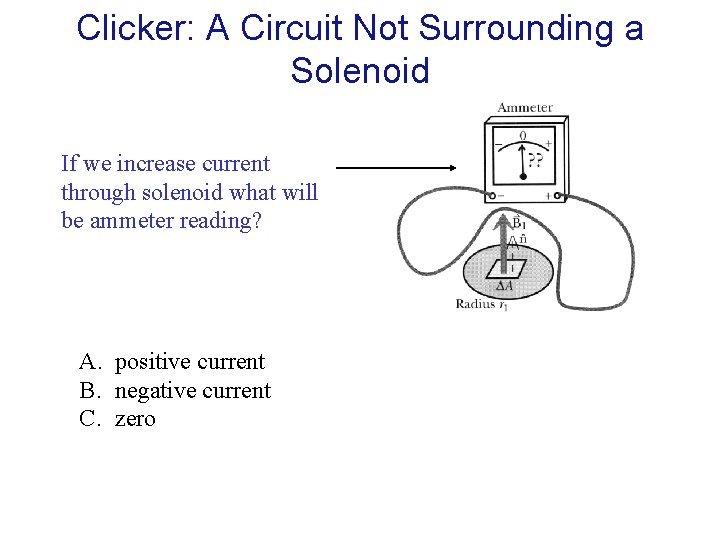
Clicker: A Circuit Not Surrounding a Solenoid If we increase current through solenoid what will be ammeter reading? A. positive current B. negative current C. zero
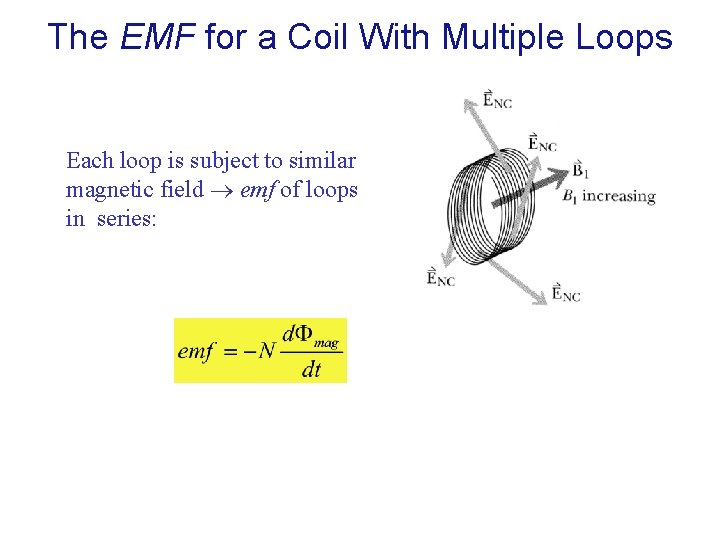
The EMF for a Coil With Multiple Loops Each loop is subject to similar magnetic field emf of loops in series:
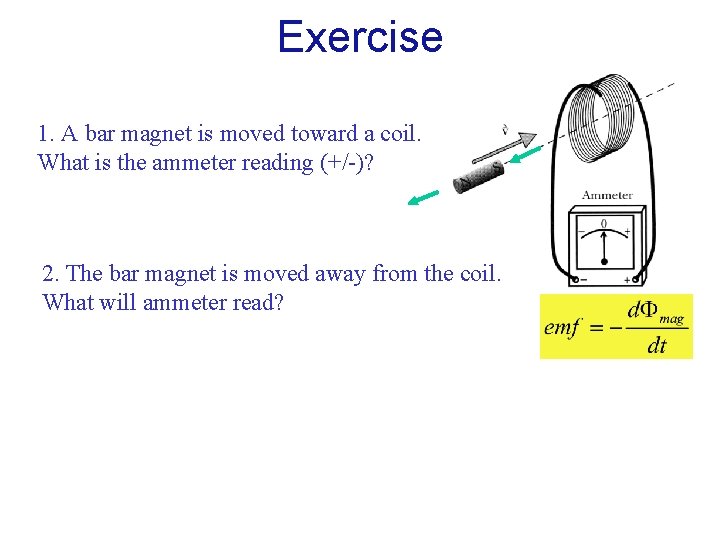
Exercise 1. A bar magnet is moved toward a coil. What is the ammeter reading (+/-)? 2. The bar magnet is moved away from the coil. What will ammeter read?
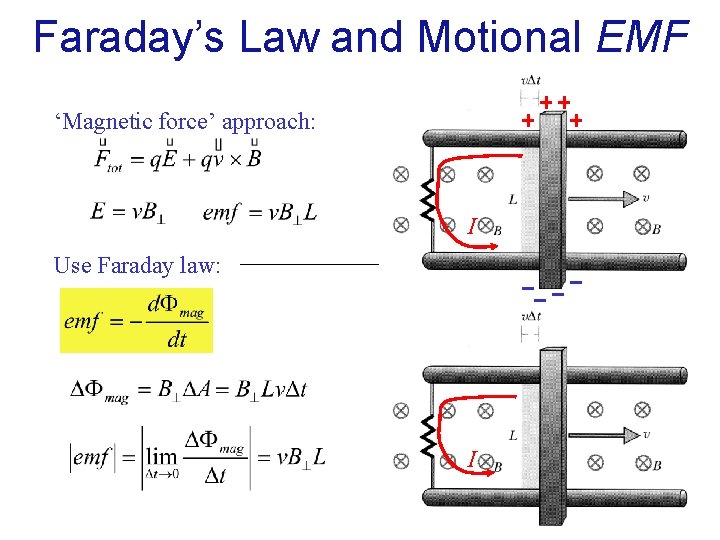
Faraday’s Law and Motional EMF ‘Magnetic force’ approach: I Use Faraday law: I
Faraday’s Law and Generator I
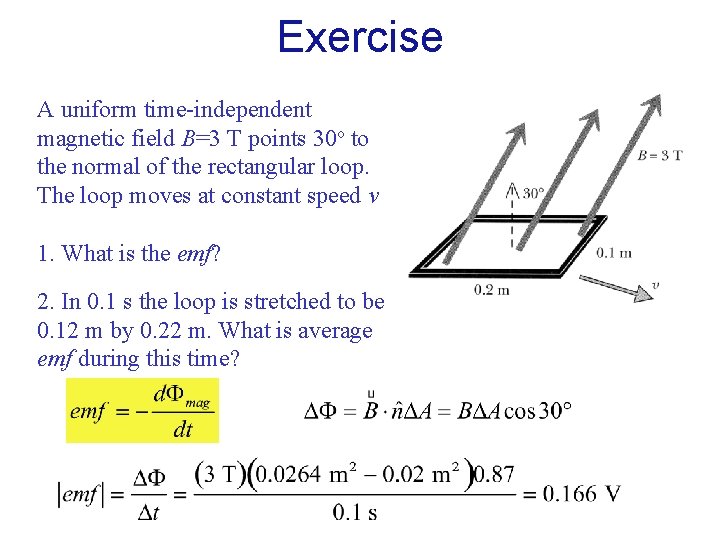
Exercise A uniform time-independent magnetic field B=3 T points 30 o to the normal of the rectangular loop. The loop moves at constant speed v 1. What is the emf? 2. In 0. 1 s the loop is stretched to be 0. 12 m by 0. 22 m. What is average emf during this time?
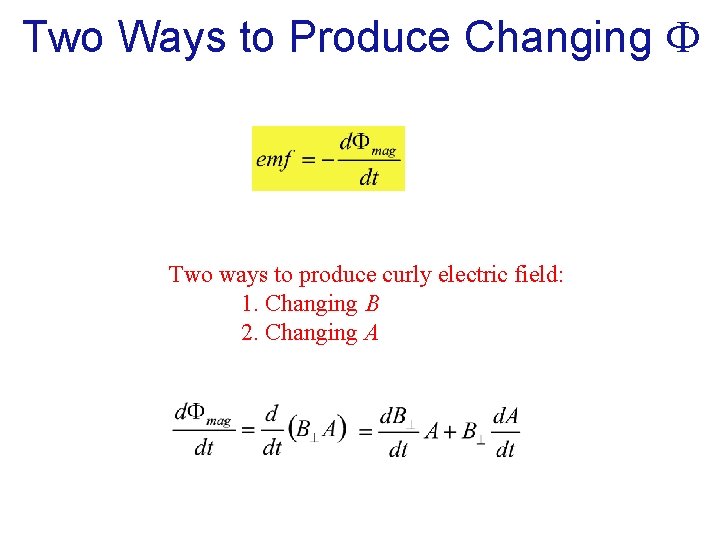
Two Ways to Produce Changing Two ways to produce curly electric field: 1. Changing B 2. Changing A